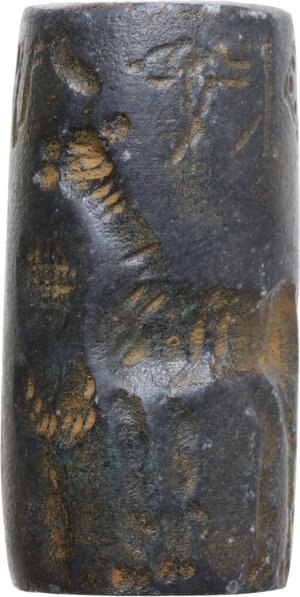
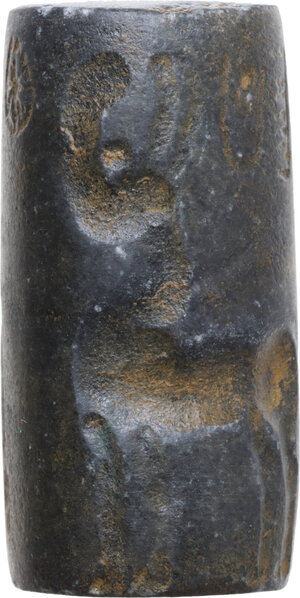
929 - LARGE INDUS VALLEY SEAL Indus Valley Civilization, c. 2nd millennium BC. Large cylindric seal with the depiction of bulls and farmers. Above: pseudo-alphabet. Height: 48 mm. Intact and complete, minor wears. From a Belgian collection. Ex Concordia Numismatics. Sold as is, no return.
Info & contatti
Le mie offerte
Lotti osservati
Conferimento
Condizioni di vendita
Prezzi di spedizione
Metodi di pagamento
Tabella rilanci
Esito stampabile
Sessione Live 1/2/2025 15:00:00 CET
Greek Coins (1-216)
Ancient and Medieval Asia (217-219)
The Roman Republic (220-317)
The Roman Empire (318-500)
Sessione Live 2/2/2025 15:00:00 CET
The Roman Empire (501-656)
Barbaric and Migration Period Coinage (657-662)
The Byzantine Empire (663-677)
Islam (678-680)
Lead From The Ancient World (681-686)
Modern & Contemporary (687-692)
World Coins (693-895)
Large Lots (896-928)
Antiquities (929-970)

Risultati: 42
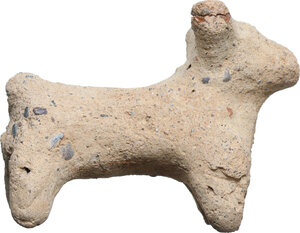
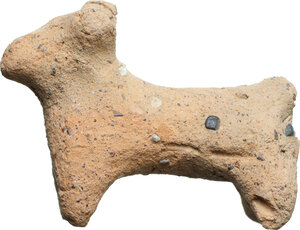
930 - TERRACOTTA BULL Ancient Near East, c. late 2nd - 1st Millennium BC. Terracotta figurine in the shape of a standing bull. Dimensions: 79 x 58 mm. Fascinating item, almost fully intact and complete. The function of these models could have been either a votive figurine or they could have served as children's toys.


931 - RARE LURISTAN BRONZE Iran, c. 7th century BC. Rare bronze from the Luristan culture, tubular in shape with moldings in the external parts and robes in relief in the central part. Dimensions: 175x26 mm. Encrustations removed. Leather patina with minor reddish deposits.
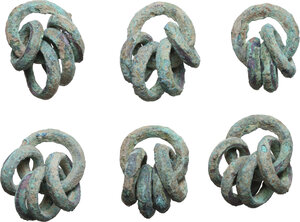
932 - SIX SMALL BRONZE CHAINS Ancient World, c. 8th - 6th century BC. Six bronze rings, each with four smaller rings closed in the inside. Weights: between 14 and 10 g. each group. Minor corrosions.
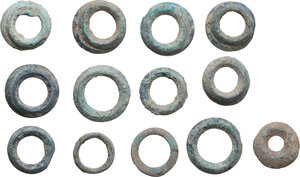
933 - THIRTEEN SMALL RINGS Greek World, c. 6th century BC. Lot of thirteen small bronze rings; seven single and six double rings. Diameter: around 20 mm.
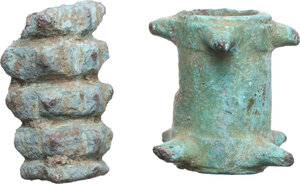
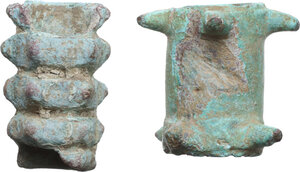
934 - TWO MACE HEADS Greek World, c. 6th to 4th century BC. Lot of two small bronze mace heads; one with two rows of four spikes, the other with five rows of six spikes. Heights: 31.5 and 29 mm. Height: 13 mm. AE. Damages.
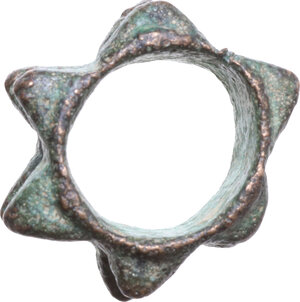
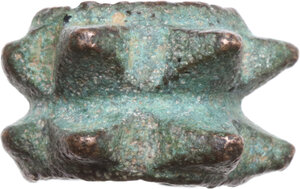
935 - BRONZE 'PASSAREDINI' OR MACE HEAD Italic culture, c. 6th to 4th century BC. Masculine ring forged from leaded bronze. The circular accessory features a relatively smooth interior surface as well as columns of two spikes surrounding the exterior. Diameter: 24.5 mm. Height: 13 mm. AE. 10.56 g. Intact and complete. Generally referred to as 'passaredini' and thus related to the equestrian sphere, this type of bronze object apparently has no certain function. Another hypothesis of use sees these objects as belonging to the military or domestic sphere.
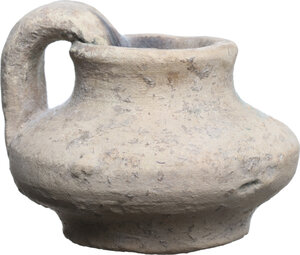
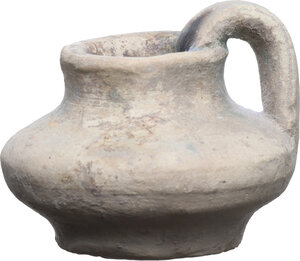
936 - MINIATURE POTTERY JUG Greek World, c. 5th - 4th century BC. Miniature squatted jug. Dimensions: 68 x 54 mm.
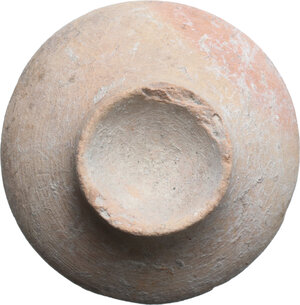
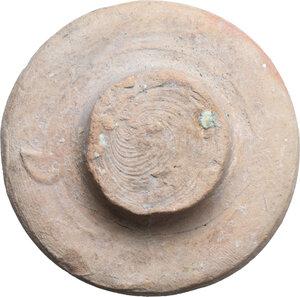
937 - MINIATURE VESSEL Greek World, c. 5th - 4th century BC. Miniature jar with a small concave top, a body widened downwards and a flat cylindrical foot. Dimensions: 30 x 47 mm. Complete, minor damages.
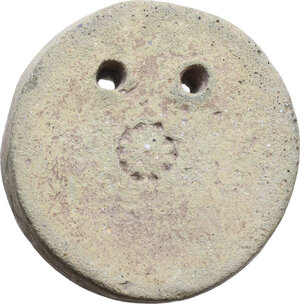
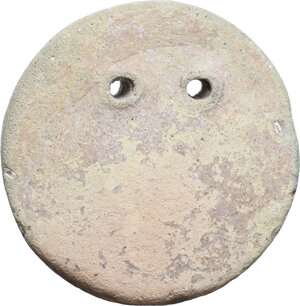
938 - LARGE FRAME WEIGHT Greek World, c. 5th - 3rd century BC. Large round pottery frame weight with two suspension holes. Punched stamp on one side. Diameter: 64 mm. Weight: 135.72 g. Intact and complete.
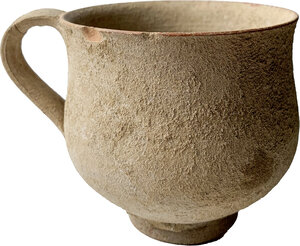
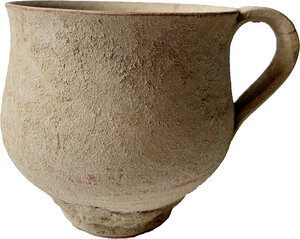
939 - DAUNIAN MUG Daunian culture, c. 4th century BC. Daunian mug with ribbon handle and low truncated cone foot. Orange band decoration on lip, body and foot. Dimensions: 90 x 117 mm. Complete, with small restoration on handle.
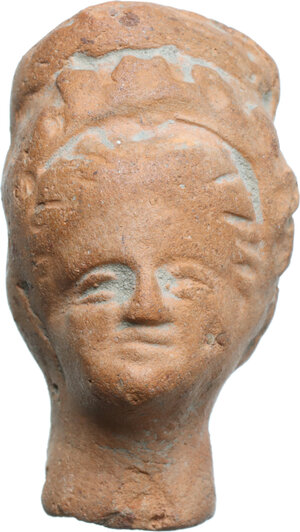
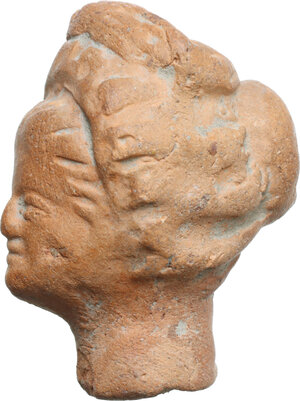
940 - FEMALE TERRACOTTA HEAD Greek World, c. 4th-3rd century BC. Female head in terracotta, resting slightly on one side and with hair gathered in a chignon at the back. Height: 59 mm. Intact and complete.
Important Etruscan Gemstone
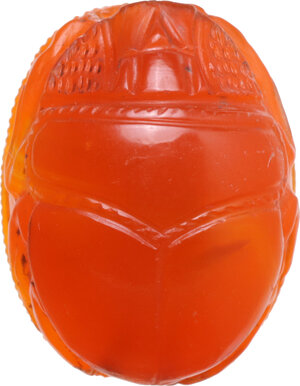
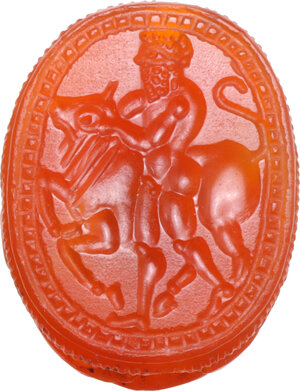
941 - ETRUSCAN CARNELIAN SCARABOID Etruscan culture, 4th - 3rd century BC. Important Etruscan scarab beetle in orange carnelian. The curved part is engraved in relief with anatomical details of the scarab, while the flat part depicts a scene from the Twelve Labors of Heracles (the Capturing of the Cretan Bull). Dimensions: 18.5 x 14 mm. Rare and fascinating item, intact and complete. With the sales document of the shop 'à la reine margot', Paris. Ex George Zacos collection. The seventh labour of Heracles, also categorised as the first of the non-Peloponneisan labours, was to capture the Cretan Bull, father of the Minotaur. According to Apollodorus, Heracles sailed to Crete, asked King Minos for help, but Minos told Heracles to capture the bull himself, which he did. After showing the bull to Eurystheus, Heracles released the bull which ended up at Marathon.
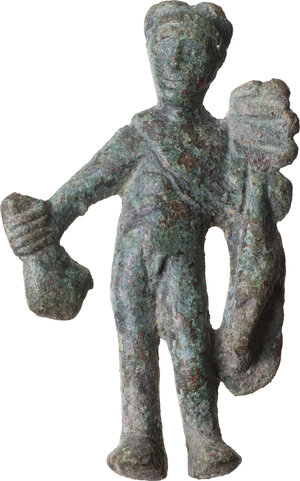
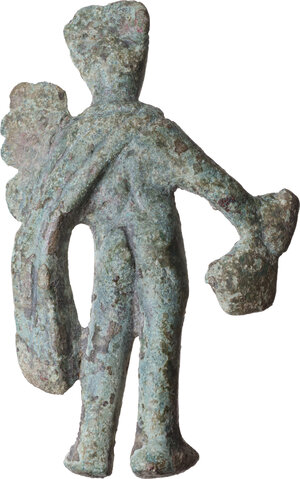
942 - BRONZE HERMES Italic culture, c. 4th - 2nd century BC. Bronze statuette of Hermes/Mercury with winged petasos and mantle, holding caduceus and bag. Dimensions: 69 mm. 64.83 g. Intact and complete.
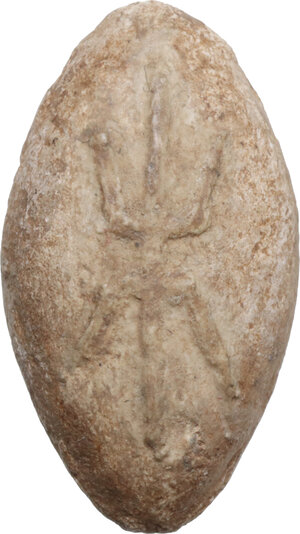
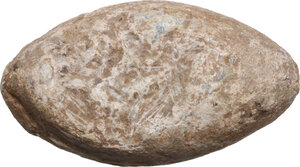
943 - GREEK LEAD SLINGSHOT Greek World, c. 4th - 3rd century BC. Lead slingshot with thunderbolt Dimensions: 29 mm, 29,18 mm.
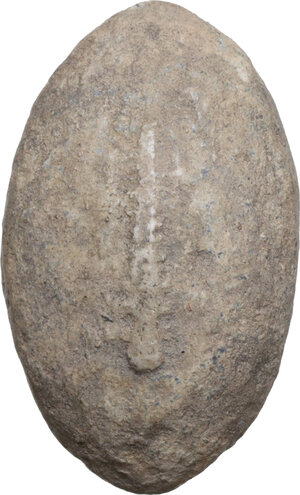
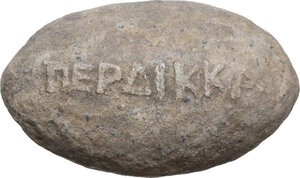
944 - GREEK LEAD SLINGSHOT Greek World, c. 4th - 3rd century BC. Lead slingshot with club and ΠΕΡΔIKKA Dimensions: 31 mm, 38,00 g.
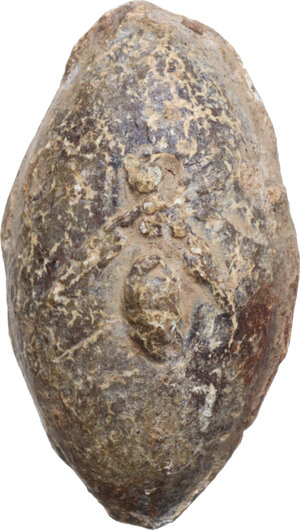
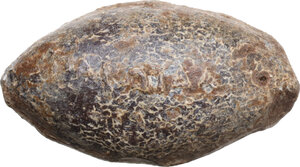
945 - GREEK LEAD SLINGSHOT Greek World, c. 4th - 3rd century BC. Lead slingshot with bee and inscription. Dimensions: 29 mm, 32,19 g.
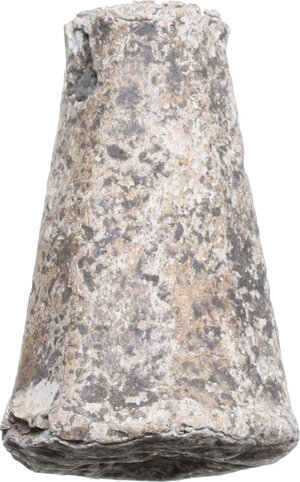
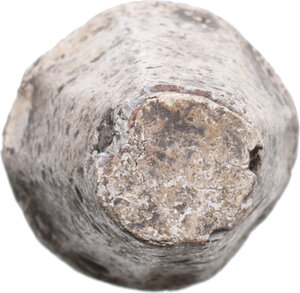
946 - ANCIENT LEAD WEIGHT Ancient world, c. 5th century BC - 5th century AD. Antique lead weight of truncated cone shape with suspension hole. Dimensions: 48 x 32 mm. Weight: 209 g.
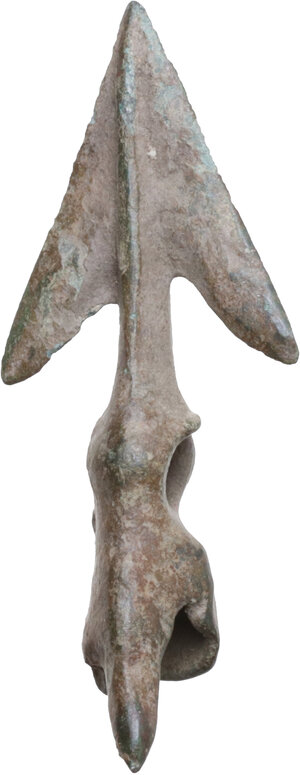
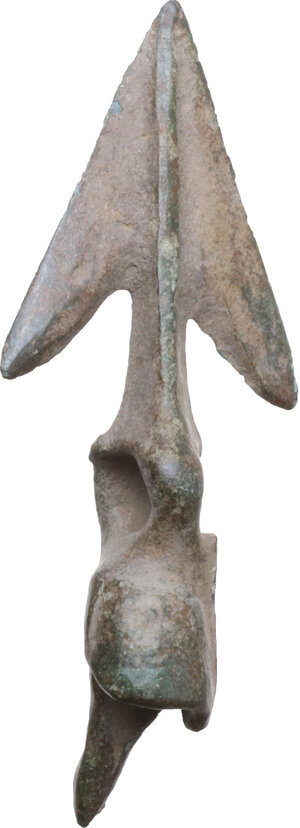
947 - ANCIENT BRONZE ARROW Ancient world, c. 3rd century BC - 3rd century AD. Large bronze arrow, with locking hole Dimensions: 56 x 22 mm. 9.81 g.
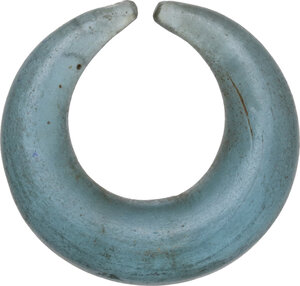
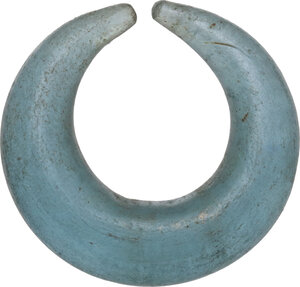
948 - ANCIENT GLASS EARRING South East Asia, Vietnam or Cambodia, c. 3rd - 1st century BC. Light blue glass earring, with thicker body and thin ends. Dimensions: 23 x 21.5 mm. Rare, intact and complete.
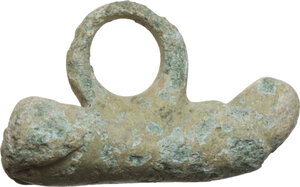
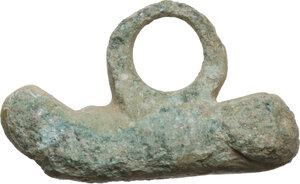
949 - ROMAN PHALLIC AMULET Roman period, c. 1st - 2nd century AD. Cast bronze pendant in the form of male genitals with realistic rendered details, surmounted by a suspension loop. Lenght: 31 mm. Slightly corroded.
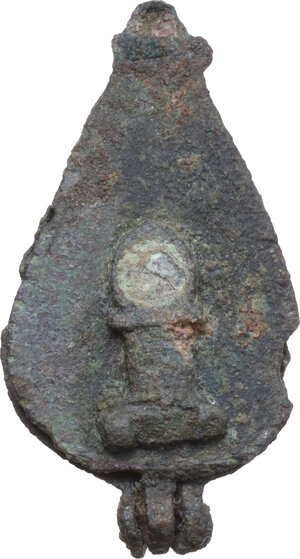
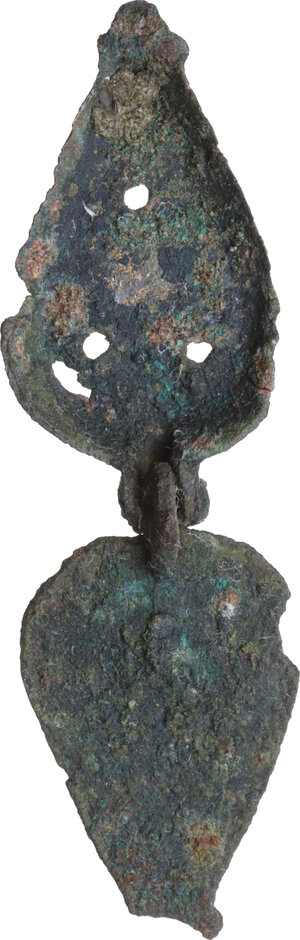
950 - SMALL PENDANT-BOX Roman period, c. 1st - 3rd century AD Small bronze container pendant consisting of a valve with three holes and a lid with a raised phallus. Dimensions: 31 x 16.5 mm. Extremely rare item. Minor damages. A similar item in the Archaeological Museum of Iuvanum.
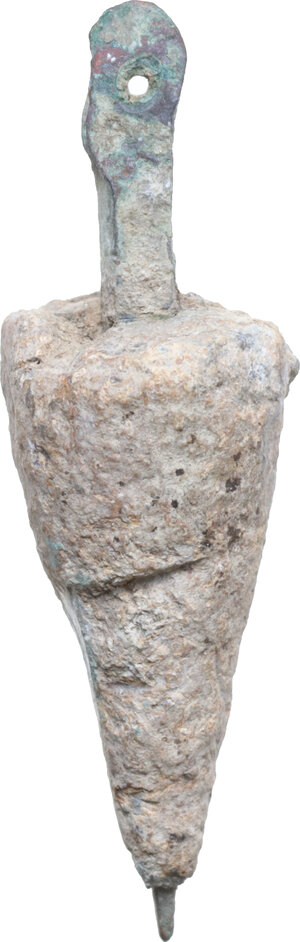
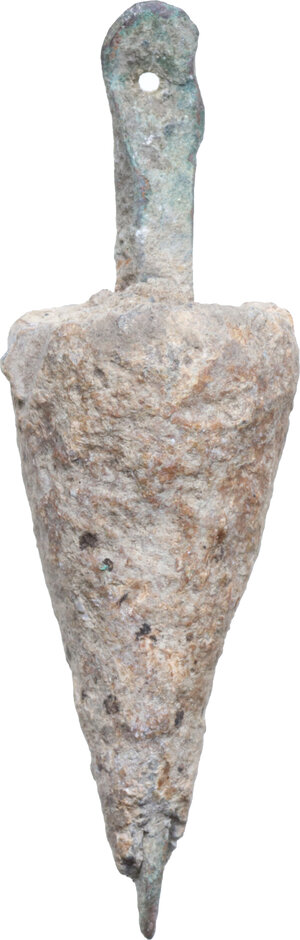
951 - ROMAN PLUMB LINE Roman period, c. 1st - 3rd century AD. Ancient plumb line, made in lead and bronze. Dimensions: 53 x 17 mm. Weight: 35.94 g.
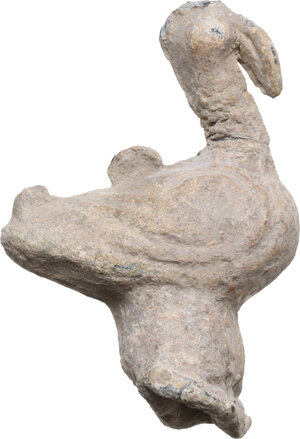
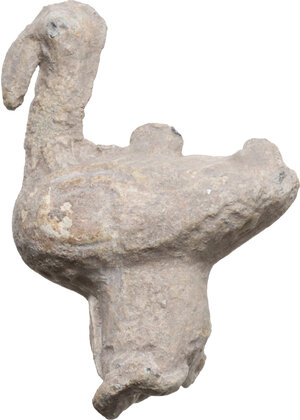
952 - LEAD BIRD Roman period, c. 1st - 3rd century AD. Roman lead figurine in the shape of a bird. Dimensions: 40 x 30 mm.
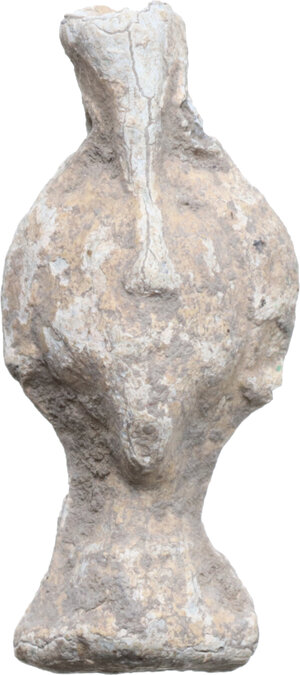
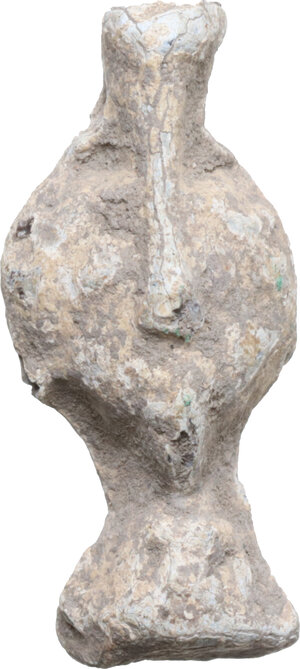
953 - 'GROMA' HEAD WEIGHT Roman period, 1st - 4th century AD. Weight in the shape of a janiform head with suspension loop. Dimensions: 34 x 15 mm. Weight: 22.12 g. Intact and complete.
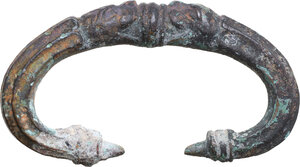

954 - BRONZE BOX HANDLE Roman period, c. 1st - 4th century AD. (?) Bronze box handle, with two animal faces facing each other, with a geometric element dividing them. Dimensions: 75.5 x 41.5 mm. Uncertain period. Minor deposits.
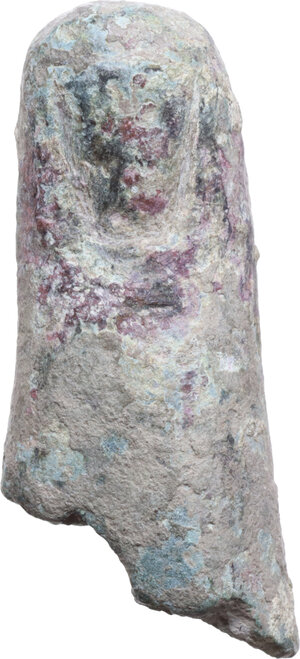
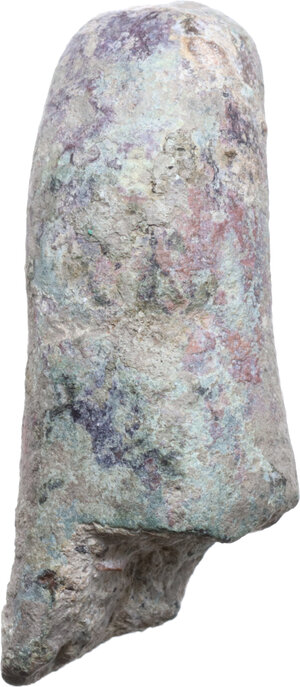
955 - BRONZE LIFE-SIZE FINGER Roman period, c. 1st - 4th century AD. Roman bronze life-size finger, originally belonging to a statue. Dimensions: 54 x 21 mm. Weight: 80.73 g.


956 - SMALL BRONZE ROD Roman period, c. 1st - 4th century AD. (?) Bronze rod with a round section stem, with a bird on the top (perhaps a dove) and a flat point towards the top, probably suitable for the handle of the instrument. Lenght: 112 mm. Lack at the bottom.
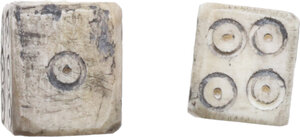
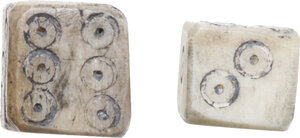
957 - TWO ROMAN BONE DICE Roman period, c. 1st - 4th century AD. Pair of six-sided bone Roman dice with engraved numeral signs. Dimensions: 8.5 to 10 mm. Fascinating items. Intact and complete.
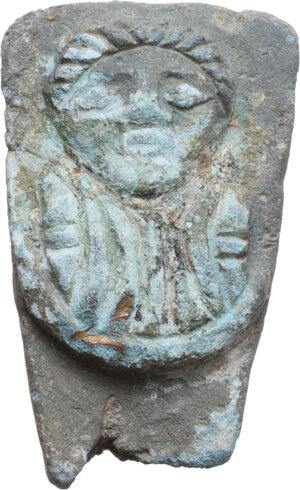
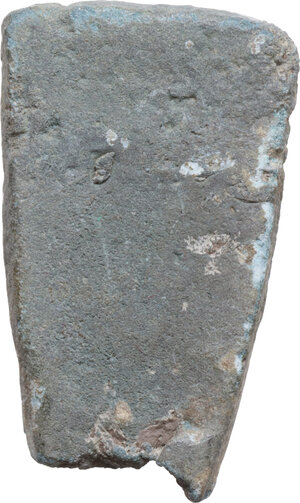
958 - ANCIENT BRONZE ITEM Late Roman or Early medieval, c. 4th - 8th century AD. Fragment of a larger bronze object, with frontal bust in relief, covered with drapery. Dimensions: 31 x 19 mm. 17.01 g. 31.5 mm.
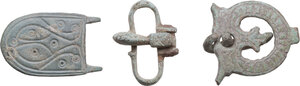
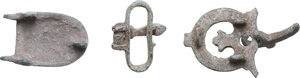
959 - THREE BRONZE BUCKLES Byzantine to Medieval period, c. 6th - 11th century AD. Lot of three ancient bronze buckles, in various shapes. Dimensions: 37, 36 and 31 mm.
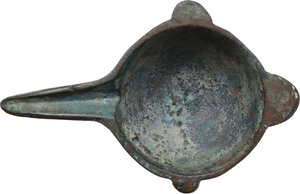
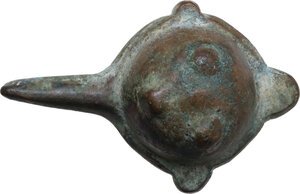
960 - BRONZE ARAB-BYZANTINE ITEM Byzantine, c. 5th - 10th century AD. Arab-Byzantine oil lamp filler or cosmetic mortar with hemispherical body, deep rounded bowl with three feet, from which extends a long channelled spout, a flat short handle and smaller lateral lugs. Dimensions: 82 x 52 mm. Intact and complete, minor deposits. Objects like this, with a small rounded bowl, flanged handles and a long channelled spout, have been speculated to be many different things, from oil lamps to baby feeders. It seems most likely, however, that the hemispherical body was used for as a mortar for crushing cosmetic materials, which would then have been poured down the spout into small flasks, or as a oil lamp filler, the terracotta lamp would be filled with oil through the pouring hole.
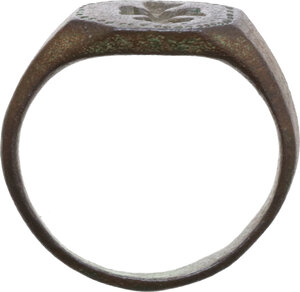
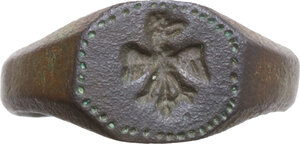
961 - BRONZE MEDIEVAL RING Medieval period, c. 9th - 12th century AD. Bronze medieval ring with an (Imperial?) eagle punched on the bezel. Inner size: 23 mm.
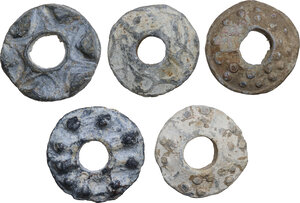
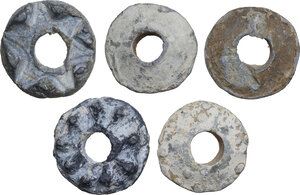
962 - FIVE LEAD SPINDLE WHORLS Medieval England, c. 10th-13th century AD. Lot of five lead Medieval spindle whorls from England, decorated with dots and triangles in relief. Dimensions: from 31 to 29 mm.
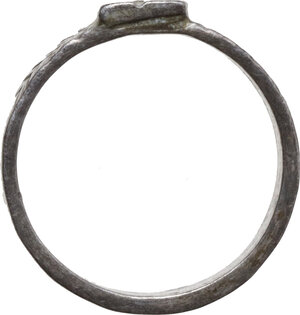
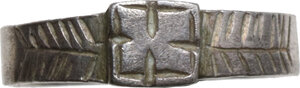
963 - MEDIEVAL RING Medieval period, c. 10th - 14th century AD. Silver medieval ring, with engraved branches and squared bezel. Inner size: 19 mm. Weight: 3.62.
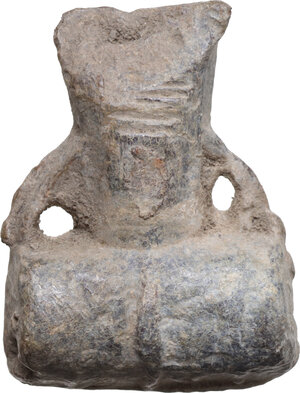
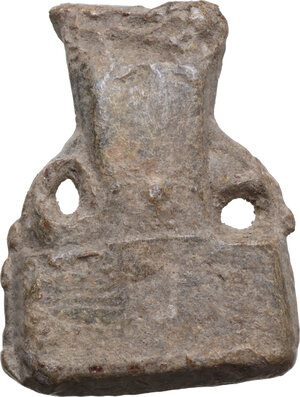
964 - PILGRIM'S FLASK Medieval period, c. 12th - 15th century AD. Lead Holy Water pilgrim's flask, in the shape of a figure holding a barrel. Dimensions: 35 x 27 mm. PB. 36.6 g. Peculiar shape, rare as such.
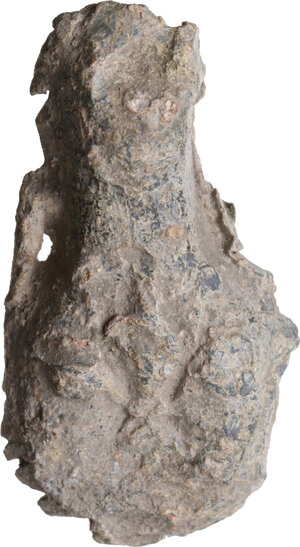
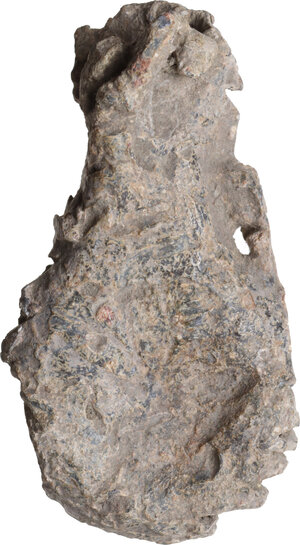
965 - PILGRIM'S FLASK Medieval period, c. 12th - 15th century AD. Lead Holy Water pilgrim's flask. Dimensions: 47.5 x 26.5 mm. PB. 47.77 g. 47.5 mm. Damages.
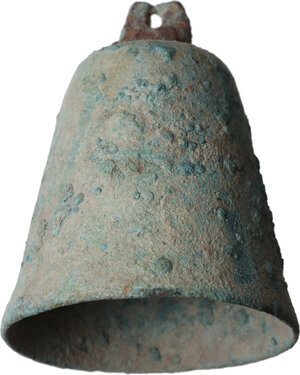
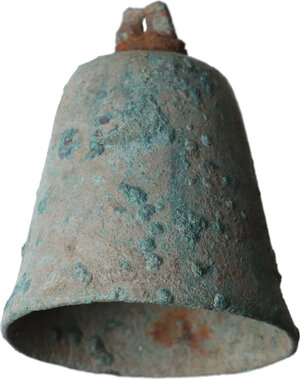
966 - BRONZE BELL Medieval to Renaissance, c. 11th - 17th century AD. Bronze bell of truncated cone shape, with loop on top. Dimesions: 75 x 61 mm. Weight: 164.13 g.
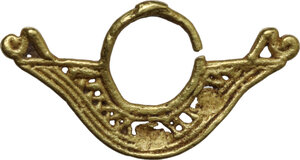
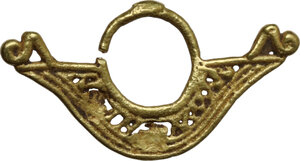
967 - TAIRONA GOLD NOSE RING Colombia, Tairona culture, c. 10th - 17th century AD. Tairona culture nose ring in gold. Dimensions: 25.5 x 13.5 mm. Weight: 1.17 g. Sold as is, no return.
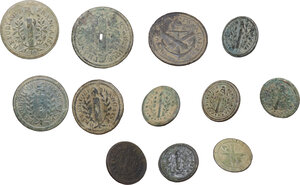
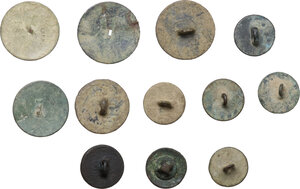
968 - TWELVE ANTIQUE BUTTONS France Republic and Italy, late 19th cent. Lot of twelve (12) bronze buttons; eleven of the French Republic and one of the Artiglieria Ligure. Various dimensions. Most complete. Few missings.
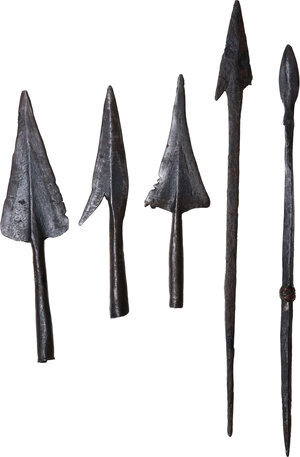
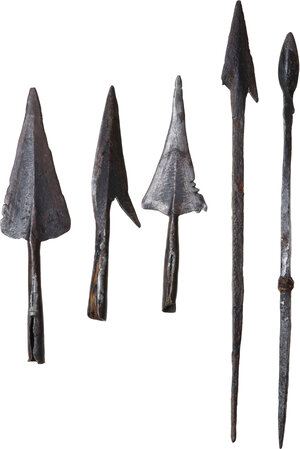
969 - FIVE OLD ARROWS Africa and USA, c. 19th to 20th century AD. Lot of five (5) iron arrows; three African and two of the American Indians. Lenghts: from 160 to 83 mm. Minor damages.
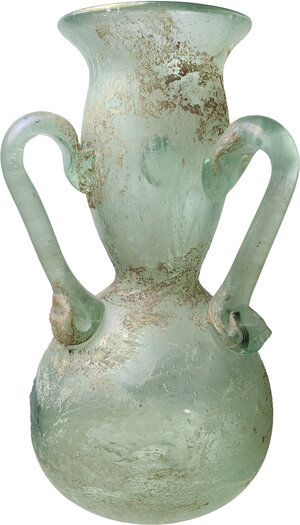
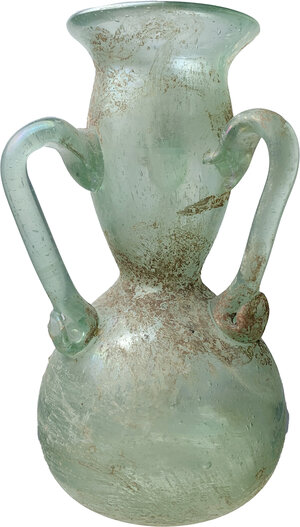
970 - ROMAN GLASS REPLICA Contemporary Era, 20th century. Green glass bottle with three handles, imitating Roman prototypes. Dimensions: 141 x 76 mm. Very accurate replica, with iridescent hues and minor earthy deposits on the surface. Shipment management at the buyer's expense.
Caricamento altri risultati...