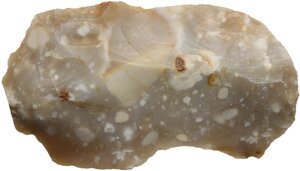
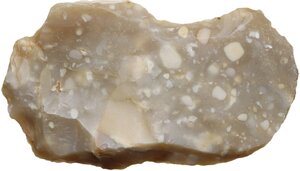
920 - STONE CHISEL Probably Neolithic period, c. 40,000 - 10,000 years ago. Neolithic stone chisel. Dimensions: 64 x 37 mm.
Info & contatti
Le mie offerte
Lotti osservati
Conferimento
Condizioni di vendita
Prezzi di spedizione
Metodi di pagamento
Tabella rilanci
Esito stampabile
Sessione Live 31/5/2025 15:00:00 CET
Greek Coins (1-198)
Ancient and Medieval Asia (199-214)
The Roman Republic (215-324)
The Roman Empire (325-500)
Sessione Live 1/6/2025 15:00:00 CET
The Roman Empire (501-639)
Barbaric and Migration Period Coinage (640-640)
The Byzantine Empire (641-651)
Tessere e Gettoni (652-659)
World Coins (660-877)
Large Lots (878-919)
Antiquities (920-980)

Risultati: 61
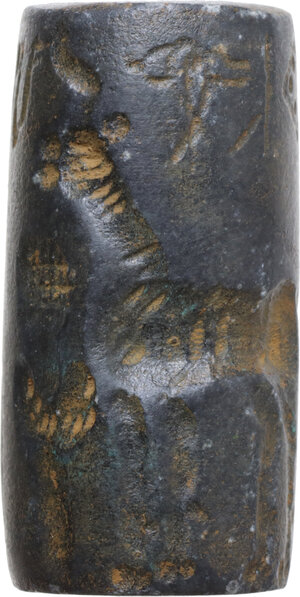
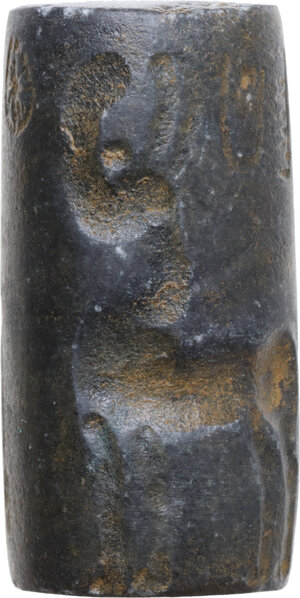
921 - LARGE INDUS VALLEY SEAL Indus Valley Civilization, c. 2nd millennium BC or modern reproduction. Large cylindrical seal with the depiction of bulls and farmers. Above: pseudo-alphabet. Height: 48 mm. Intact and complete, minor wear. From a Belgian collection. Ex Concordia Numismatics. Sold as is, no return.
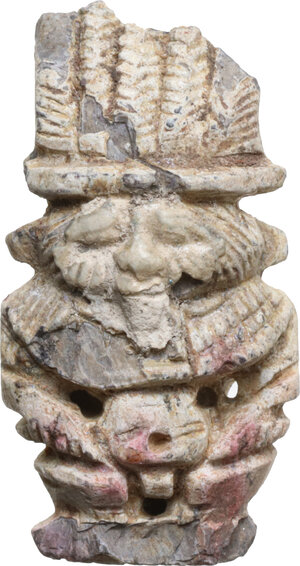
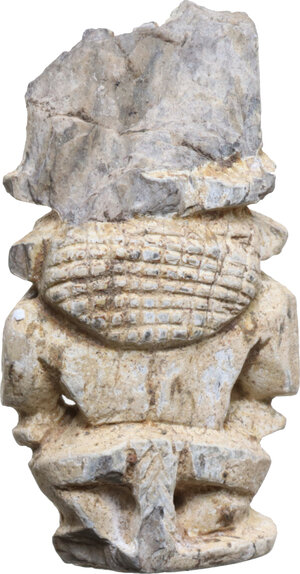
922 - BES STEATITE FIGURINE Egyptian Culture, Late Period, 716-30 BC. Egyptian steatite stone figurine depicting the god Bes in his classical representation with a crown of feathers on his head, a broad bearded face and a flattened nose. Eye of Horus engraved below his feet. Dimensions: 43.5 x 23 mm. Height: 33 mm. Restored, with damages. The god Bes, depicted as a fat, bearded, feral dwarf, was considered by the ancient Egyptians to be the protector of the home, of sleep and of women in labour.
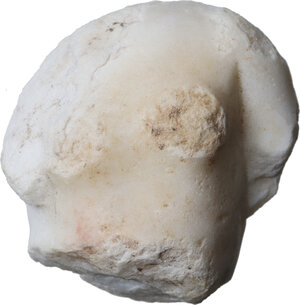
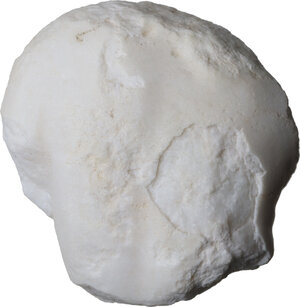
923 - VENUS MARBLE TORSO FRAGMENT Roman period, c. 1st - 3rd century AD. Marble fragment depicting the upper part of a naked female bust, probably Venus. Dimensions: 66 x 61 x 40 mm. Corrosions. Holed at the bottom in modern times.
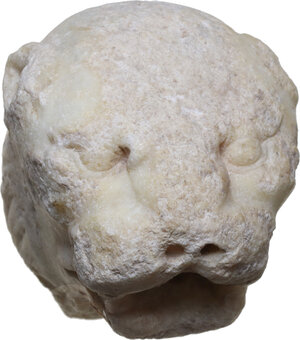
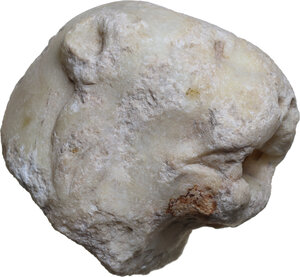
924 - LION MARBLE HEAD Roman period, c. 1st - 4th century AD. Marble lion's head, with hole through mouth, as probably an end part of a fountain. Dimensions: 97 x 94 x 77 mm. Of good craftsmanship. Corroded.
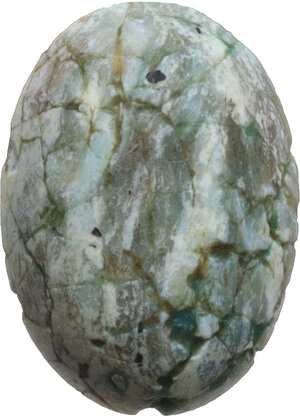
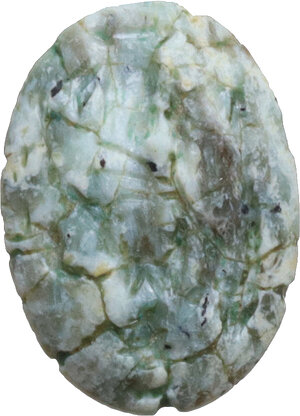
925 - ROMAN GEMSTONE Roman period, c. 1st - 3rd century AD. Roman gemstone depicting Victory standing right, holding victoriola (?) in hand. Height: 15 mm. Rough surface, but good quality engraving.
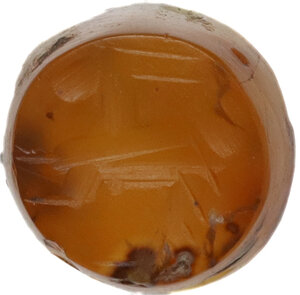
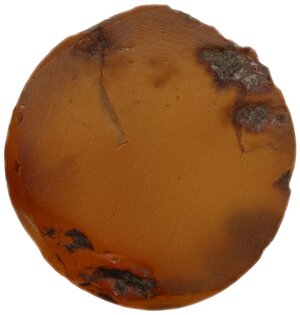
926 - SASANIAN ENGRAVED GEMSTONE Sasanian Empire, 3rd - 6th century AD. Engraved ring gem of a truncated cone shape, depicting a running goat on the left. Width: 9 mm. Height: 4.75 mm. In generally good conditions, minor damages.
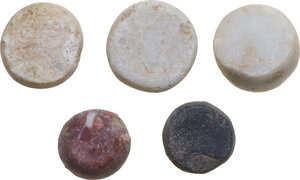
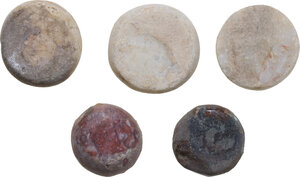
927 - FIVE ROMAN GAMING PIECES Roman period, c. 1st - 4th century AD. Lot of five (5) Roman gaming pieces, three in white marble, one in red stone and one in black stone. Diameters: from 20 to 26 mm. Few damages.
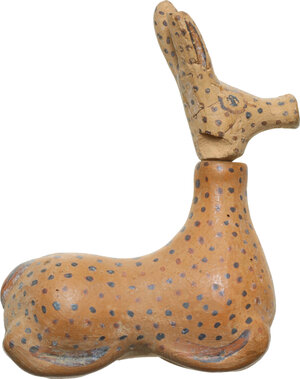
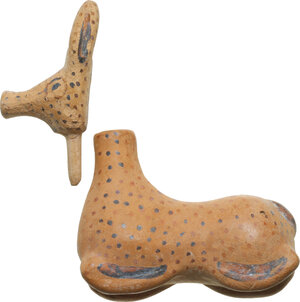
928 - CORINTHIAN UNGUENTARIUM Corinth or Ionia, first half of the 6th century BC. Corinthian unguentarium configured in the form of a crouching fawn, with removable head serving as a cap. Dotted decoration on body and head, with synthetic but good rendering of anatomical details. Length: 70 mm. Height (with head/cap): 97 mm. Restorations at the head/cap and minor missing on it, otherwise intact and complete item.
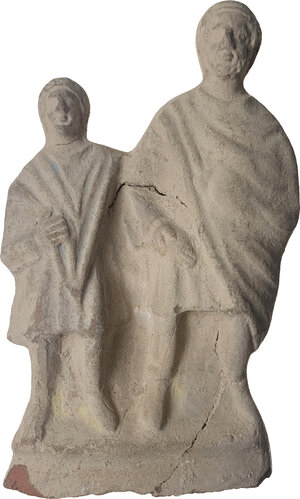
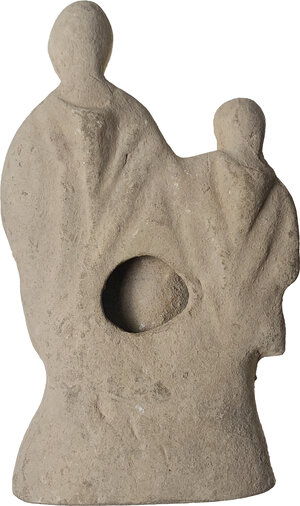
929 - STATUETTE OF THE PENATES GODS Roman period, c. 1st - 3rd century AD. Terracotta figurine depicting husband and wife holding hands (classic depiction of penates gods). Dimensions: 163 x 100 mm. Object of great charm and rarity. Traces of polychromy in red, yellow, and blue. Slight cracks from firing. Penates originally designated the protective spirits of the family's food supply, i.e., the household closet; then, by extension, they took on the role of protectors of the family.
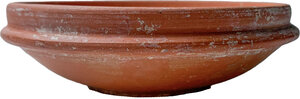
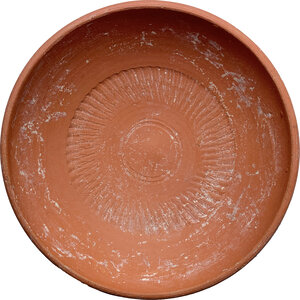
930 - TERRA SIGILLATA BOWL Late Roman Empire, North Africa, c. 4th - 6th century AD. Red slip ware hemispherical bowl, with ray decoration stamped on the inside of the bowl. Diameter: 141 mm. Height: 41 mm. Intact and complete, with minor earthy deposits.
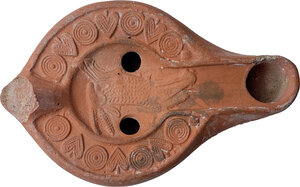
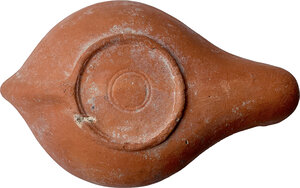
931 - ROMAN OIL LAMP Roman period, North Africa, c. 4th - 6th century AD. Roman oil lamp with running goat on the central basin, surrounded by leaf motifs and concentric circles. Low ring foot. Length: 136 mm. Missing handle.
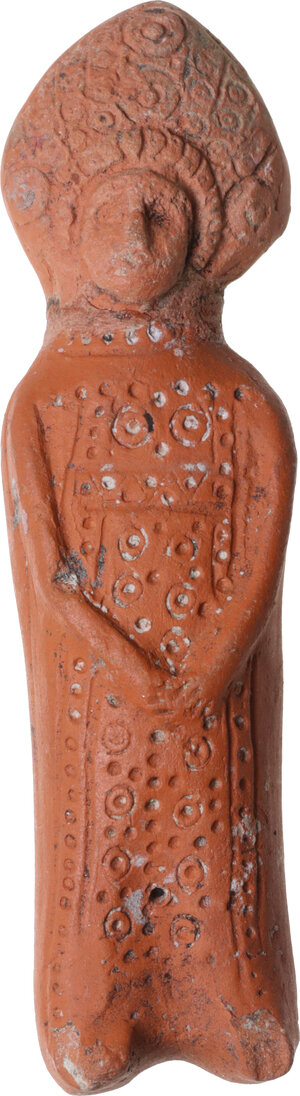
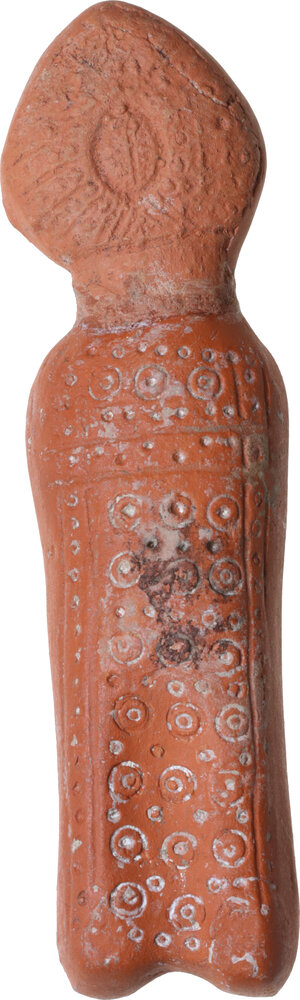
932 - POTTERY FEMALE STATUETTE Roman period, North Africa, c. 4th - 6th century AD. Late Roman terracotta figurine, depicting a frontal female figure with crossed hands. Interesting stylistic rendering of the hair and dress decoration, both front and back. Height: 116 mm. Composite figure; head and torso from different sources.
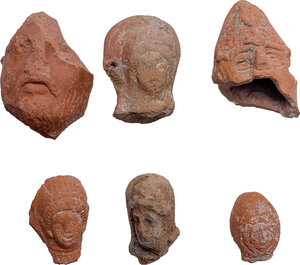
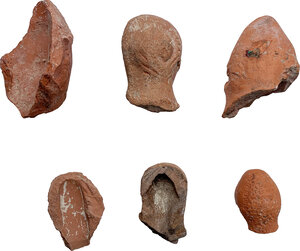
933 - SIX TERRA SIGILLATA HEADS Late Roman period, North Africa, c. 4th - 6th century AD. Lot of six (6) red slip ware heads, mostly part of figurines. Heights: from 30 to 55 mm. Missing parts and damages.
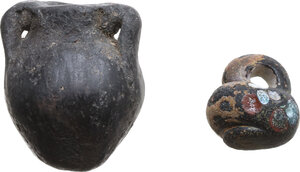
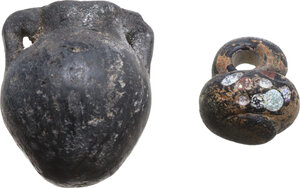
934 - SMALL AMPHORA AND GLASS CAP Ancient Mediterranean, c. 6th - 4th century BC. Lot of two (2) items; a miniaturistic black pottery amphora and a dark glass paste cap (?). Heights: 29 and 17 mm.
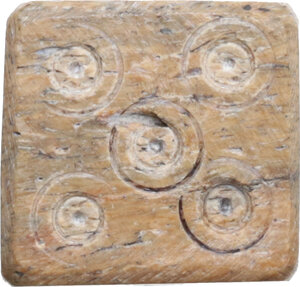
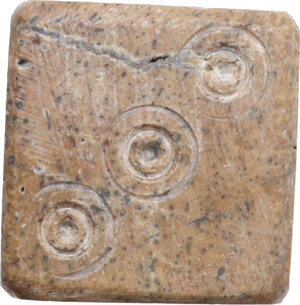
935 - ROMAN BONE DICE Roman period, c. 1st - 4th century AD. Six-sided bone Roman dice with engraved numeral signs. Dimensions: 14 x 13.5 mm. 5.27 g. 14 mm. The proceeds from the sale of this object will be allocated to charitable purposes, as designated by the owner.
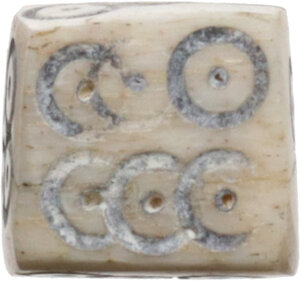
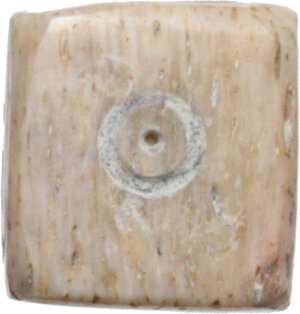
936 - ROMAN BONE DICE Roman period, c. 1st - 4th century AD. Six-sided bone Roman dice with engraved numeral signs. Dimensions: 8.5 mm. 0.66 g. 8.5 mm. The proceeds from the sale of this object will be allocated to charitable purposes, as designated by the owner.
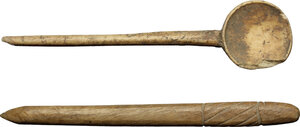
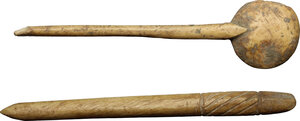
937 - ROMAN BONE UTENSILS Roman period, 1st - 4th century AD. Lot of 2 bone utensils: spoon and spindle. Dimensions: 32 and 17 mm. Minor missings.
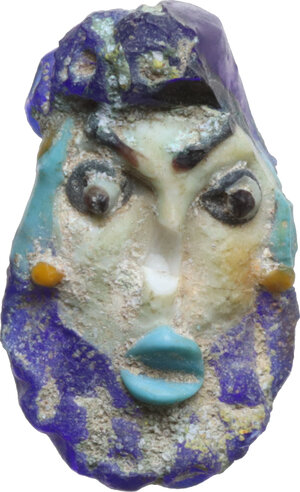
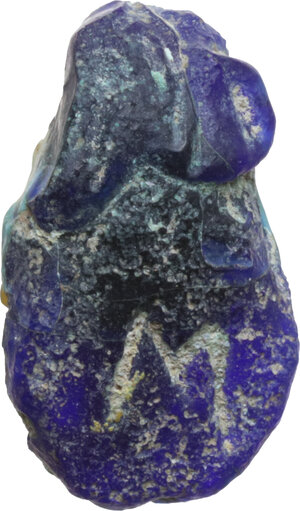
938 - PHOENICIAN GLASS PASTE HEAD Punic culture, c. 5th century BC. White blue and yellow glass paste pendant, depicting a bearded face with curled hair. 'Σ' or 'M' engraved on back. Dimensions: 26 x 16 mm. Damaged. Sold as is, no returns.
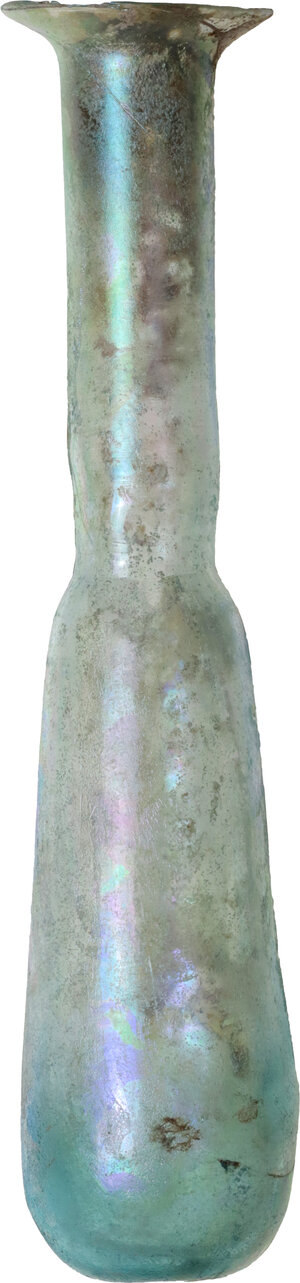
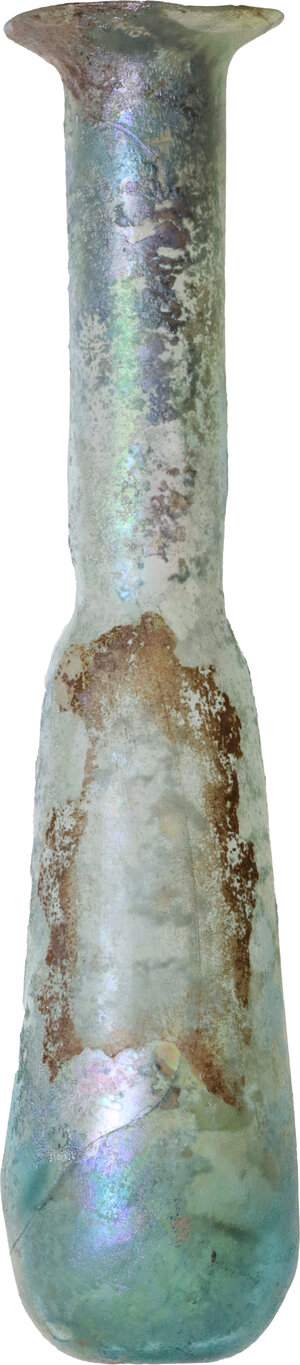
939 - ROMAN GLASS UNGUENTARIUM Roman period, 1st - 2nd century AD. Elongated unguentarium with a cut everted lip, a long cylindrical neck with a slight constriction at the base, a pyriform body, a flat bottom. Height: 120 mm. Intact and complete, with enchanting iridescence.
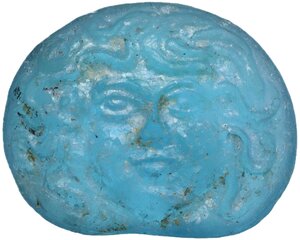
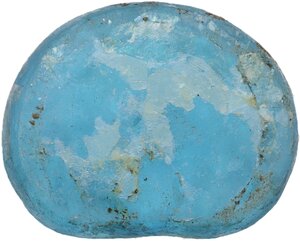
940 - BLUE GLASS PASTE GORGONEION Roman period, c. 2nd - 3rd century AD. Glass paste Gorgoneion applique mask. Dimensions: 42 x 35 mm. Superb and important item, very fascinating. Visual impact enhanced when viewed directly.
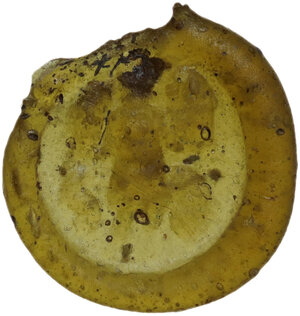
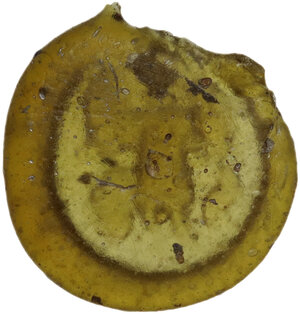
941 - ROMAN GLASS SEAL Late Roman period, c. 4th-5th century AD. Roman yellow glass seal depicting a flying Victory (?) with two hounds around, one each side. Dimensions: 20 mm. Interesting and complete.
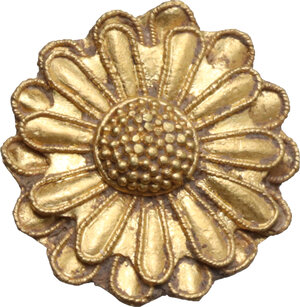
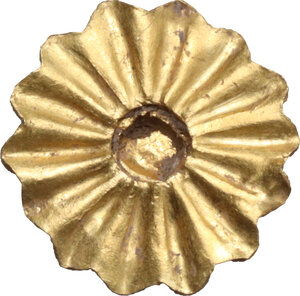
942 - GREEK GOLD ROSETTE Greek World, c. 4th - 3rd century BC. Gold rosette composed of two embossed worked laminettes. Details are rendered by spheres in the center and a braided decoration on the edge of the petals. 1.08 g. 14.5 mm. Fascinating item.
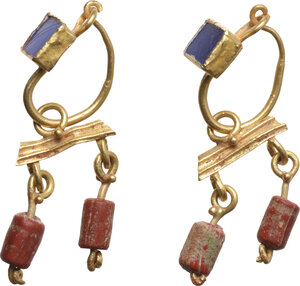
943 - GREEK GOLD EARRINGS Greek World, c. 4th - 3rd century BC. Pair of gold earrings with square blue glass paste gems and carnelian barrels. Height: 35 mm. Total weight: 4.48 g. Intact and complete.
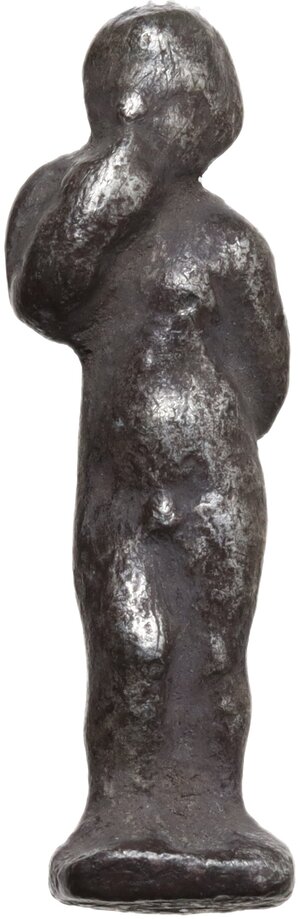
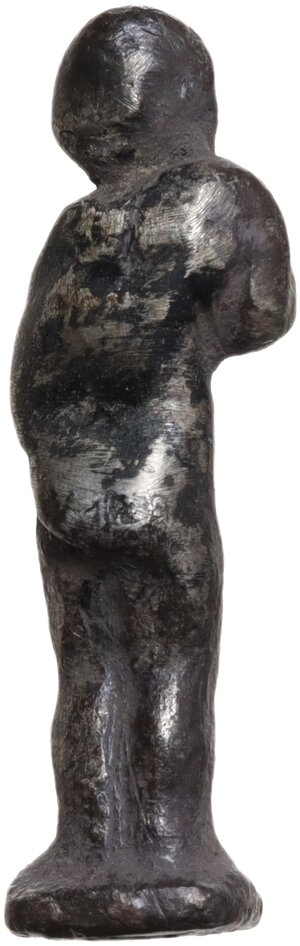
944 - SILVER STATUETTE OF ARPOKRATES Roman period, 1st - 3rd century AD. Silver votive figure of Harpokrates. Height: 27 mm. 4.5 g. Intact and complete, with pleasant tone.
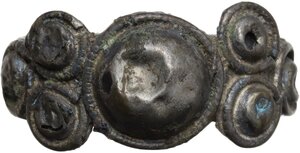
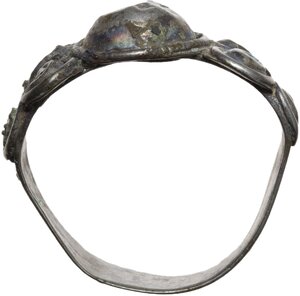
945 - BYZANTINE SILVER RING Byzantine period, Balcanic-danubian area, c. 5th - 6th century AD. Silver ring with a large embossed bulla in the center and three smaller ones on either side. Inner diameter: 19 mm. 4.28 g. Well preserved. Minor damages.
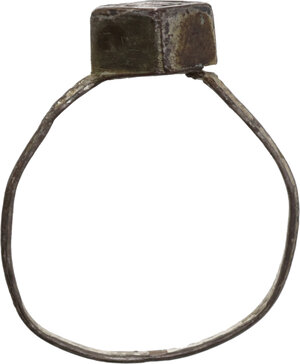
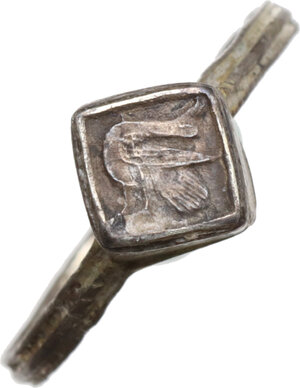
946 - SILVERED DOVE RING Medieval period, c. 13th - 15th century AD. Silvered ring with square bezel with a dove engraved on the top. Inner size: 18 mm.
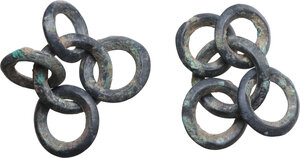
947 - TWO BRONZE CHAINS Ancient World, c. 8th century BC. Two bronze rings, each with four smaller rings closed in the inside.
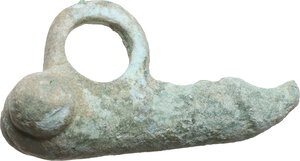
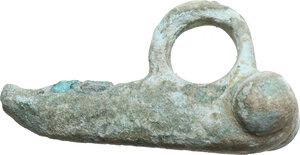
948 - ROMAN PHALLIC AMULET Roman period, c. 1st - 2nd century AD. Cast bronze pendant in the form of male genitals with realistically rendered details, surmounted by a suspension loop. Lenght: 34 mm. Intact and complete.
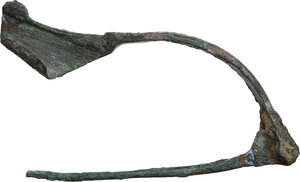
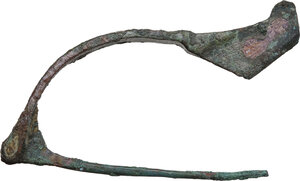
949 - ROMAN 'AUCISSA' BROOCH Roman period, c. 1st century AD. Roman bronze brooch with low arched bow, elongated foot and not pronounced knob. Lenght: 83 mm. Slightly corroded. The needle is blocked in an open position.
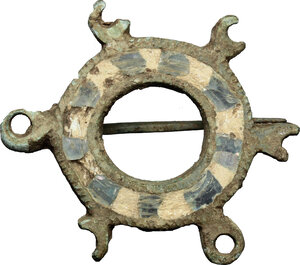
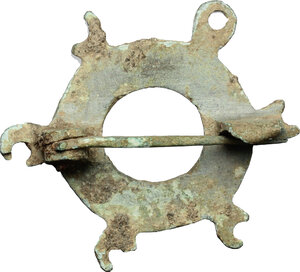
950 - ROMAN ENAMELLED DISC FIBULA Roman period, c. 2nd century AD. Roman bronze fibula in the shape of a disc. Decoration in blue glass paste and bone (?). Dimensions: 34 mm. Minor missings.
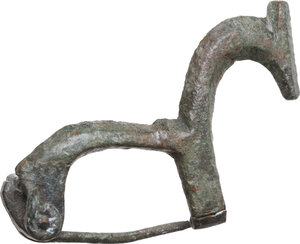
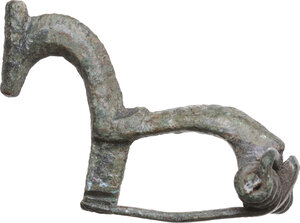
951 - ROMAN HORSE FIBULA Roman period, c. 2nd century AD. Roman bronze fibula depicting an animal, probably a horse. Lenght: 40 mm. Intact and complete.
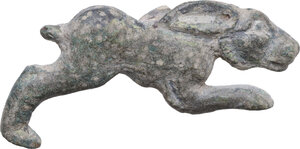
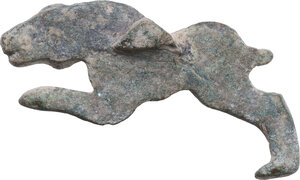
952 - BIG HARE FIGURINE Roman period, c. 1st - 3rd century AD. Roman bronze figurine in the shape of a big leaping hare, with realistic engraved details. Dimensions: 57 x 22 mm. Probably part of a decorated forniture.
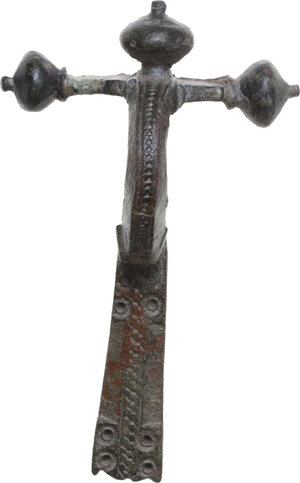
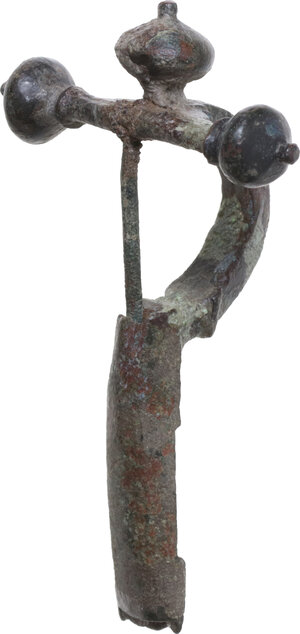
953 - AMAZING CROSSBOW FIBULA Roman period, c. 3rd century AD. Roman bronze 'crossbow' fibula with incised decoration with punched triangles on the bow and circles on the foot. Dimensions: 80 x 49 mm. Intact and complete, without corrosion spots. This type of fibula, used to fasten a cloak around the neck, became part of the standard insignia of military personnel during the third century A.D.
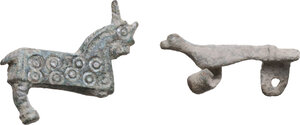
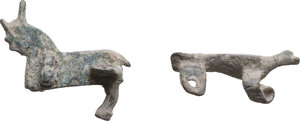
954 - TWO ROMAN FIBULAE Roman period, c. 1st - 4th century AD. Lot of two fibulae; one in the shape of a horse and the other of a dove. Lenghts: 32 and 30 mm. Missings and damages.
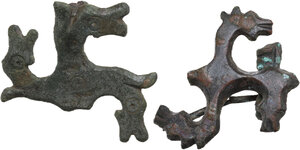
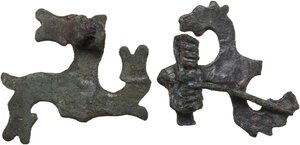
955 - TWO ROMAN BRONZE SWASTIKA FIBULAE Roman period, Balkan area, c. 3rd-4th century AD. Lot of two Roman bronze swastika fibulae with the depiction of a stylised horse's head on each arm of the hooked cross. Dimensions: both 36 mm. Both fibulae are missing the swastika arm opposite the spring from which the pin starts (one is missing the pin as well). A deliberate defunctionalisation cannot be excluded. The ends of the garment clips, shaped like horse heads, may be due to the influence of the inhabitants of Thrace or Dacia.
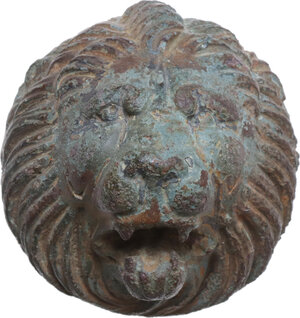
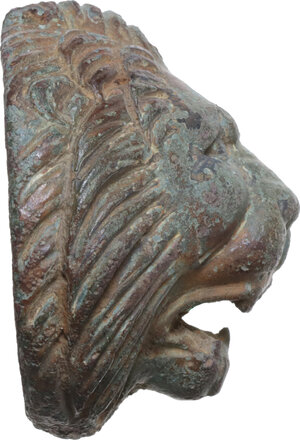
956 - LION BRONZE DECORATION Roman period, c. 1st - 3rd century AD. Frontal head of Roman bronze lion, with open jaws and thick mane. Diameter: 56 mm. Depth: 37.5 mm. 161.44 g. 55 mm. Item of high craftsmanship. Minor spots of superficial corrosion.
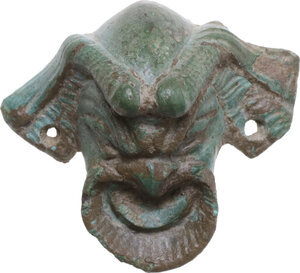
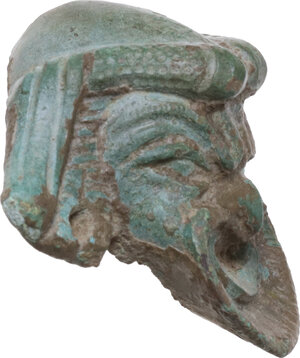
957 - BRONZE THEATRICAL MASK Roman period, c. 1st - 4th century AD. Roman small bronze theater mask with grotesquely deformed face. Probably part of the decoration of a cabinet or casket. Dimensions: 46 x 41 x 20 mm. 45.71 g. Of high craftsmanship. Enchanting green patina.
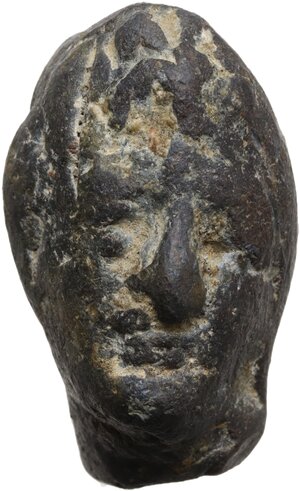
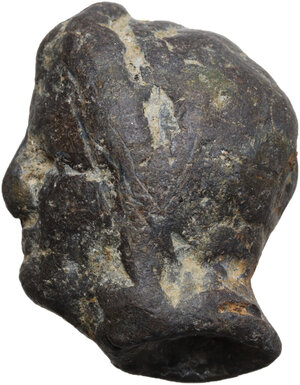
958 - BRONZE HEAD Roman period, c. 1st - 3rd century AD. Roman bronze head of a deity, with neck tilted slightly to the left. Dimensions: 35 x 22 mm. 117 g. The oxides present in the neck socket and the grayish color of the patina suggest the presence of lead in the copper alloy.
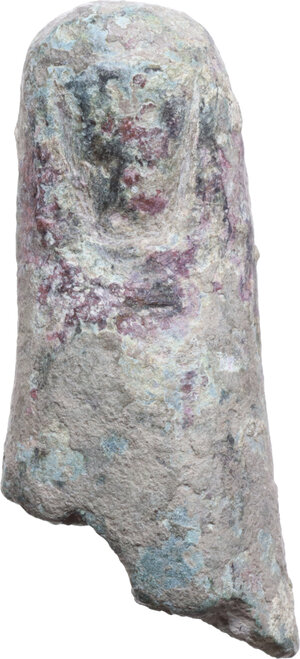
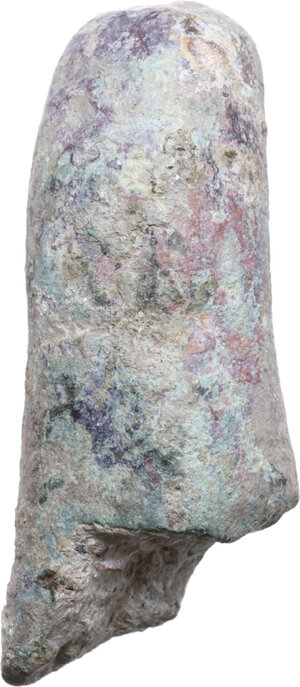
959 - BRONZE LIFE-SIZE FINGER Roman period, c. 1st - 4th century AD. Roman bronze life-size finger, originally belonging to a statue. Dimensions: 54 x 21 mm. Weight: 80.73 g.
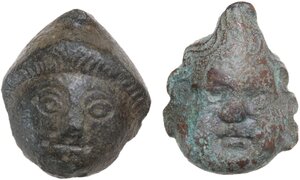
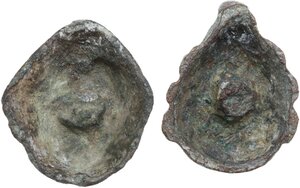
960 - TWO ROMAN BRONZE MASKS Roman period, c. 1st-3rd century AD. Lot of two roman bronze faces, probably part of the decorative motif of a casket. Anatomical details rendered by engraving. Dimensions: both 21 x 18 mm. Interesting and curious items.
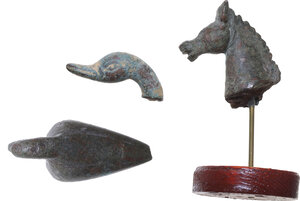
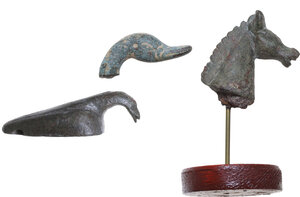
961 - THREE BRONZES Roman period, c. 1st - 4th century AD. Lot of three bronzes; a horse's head (with stand), a bird and a goose's head. Dimensions: from 57 to 40 mm. Missings.
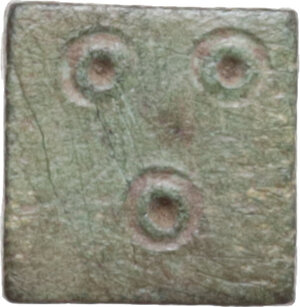
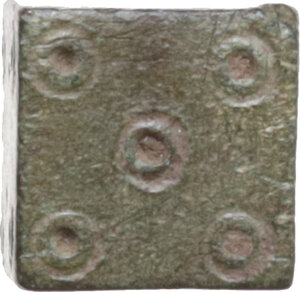
962 - ROMAN BRONZE DICE Roman period, c. 1st - 4th century AD. Six-sided bronze Roman dice with punched numeral signs. Dimensions: 8 mm. 4.27 g. 8 mm. The proceeds from the sale of this object will be allocated to charitable purposes, as designated by the owner.
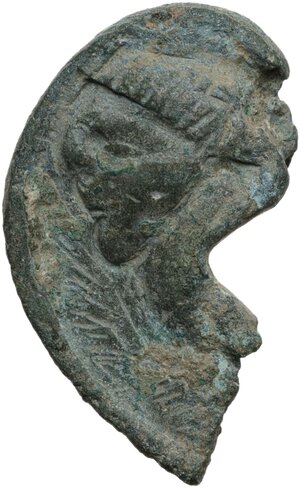
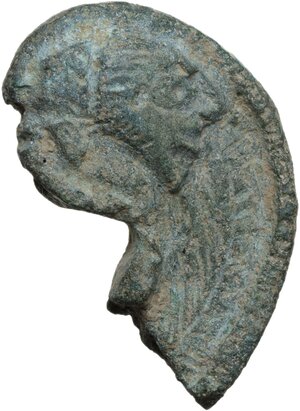
963 - ROMAN BRONZE HANDLE Roman period, c. 3rd - 4th century AD. Bronze fragment (handle?) with female and male profile. Dimensions: 36 x 22 mm. 25.04 g.
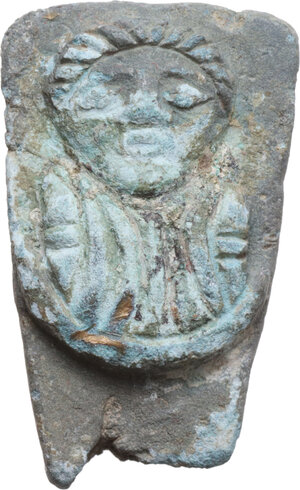
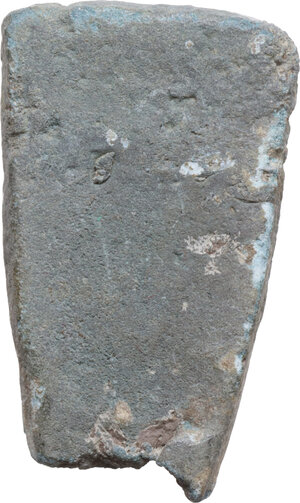
964 - ANCIENT BRONZE ITEM Late Roman or Early medieval, c. 4th - 8th century AD. Fragment of a larger bronze object, with frontal bust in relief, covered with drapery. Dimensions: 31 x 19 mm. 17.01 g. 31.5 mm.
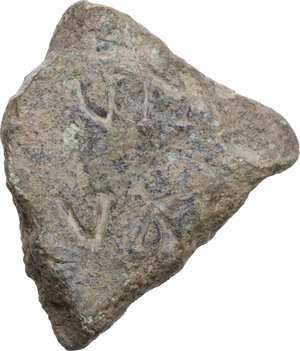
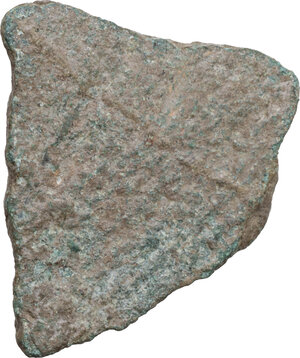
965 - INSCRIBED FRAGMENT Ancient world, c. 3rd century BC - 10th century AD. Fragment of a bronze document bearing an inscription engraved in two lines on one side, while the other is flat. VI (?) VA Dimensions: 35 x 30.5 mm. Interesting study item.
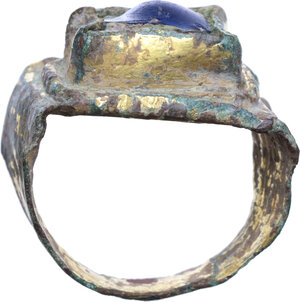
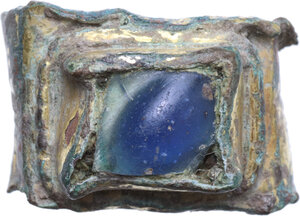
966 - GILDED BRONZE RING Early Middle Age, c. 5th - 10th century AD. Gilded bronze ring with blue glass paste bezel. Size: 16.5 mm.
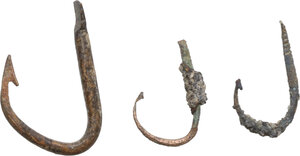
967 - THREE FISHING HOOKS Ancient world. c. 1st century - 15th century AD. Lot of three bronze fishing hooks. Dimensions: from 15 to 12 mm. Minor missings.
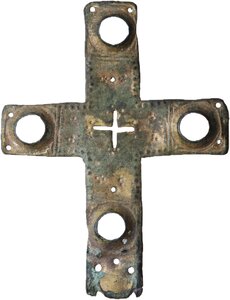
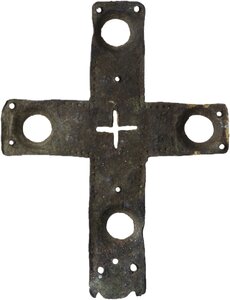
968 - Bronze cross. MEDIEVAL BRONZE CROSS Early medieval period, c. 8th - 11th century AD. Gilded cross, probably from the cover of christian holy book. Four empty bezels, now holes, at the end of each arm. Openwork cross in the middle, at the intersection of arms. 11 small holes, maybe loops for the joints attaching the cross to the support. Dimensions: 84 x 64 mm.
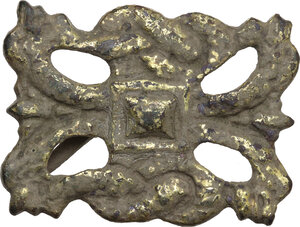
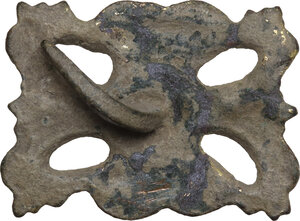
969 - FURNITURE DECORATION Renaissance, c. 15th - 16th century. Decoration for furniture in gilded bronze with a rectangular shape, made up of two intertwined ropes to form two knots and in the center a pyramidal element with a low relief. Dimensions: 44 x 32 mm. 18.65 g. The knots recall the symbolism of the Savoys, even if they were not their exclusive prerogative.
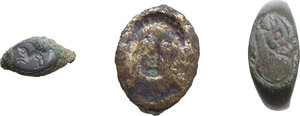
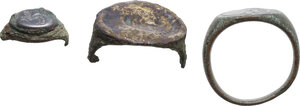
970 - THREE ANCIENT RINGS From Greek Hellenistic to the Roman period, c. 4th century BC to 4th century AD. Lot of three (3) ancient rings, comprising: a bronze ring with large oval bezel engraved with the portrait of a facing figure; a bronze ring with the bezel decorated with engraved hare; an engraved silver bezel, depicting a lion right with forepart raised. Missing parts, only the one with the hare is complete.
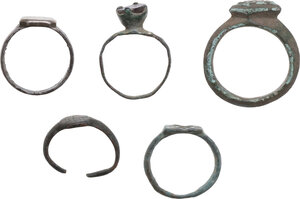
971 - FIVE ANCIENT RINGS Medieval period, c. 5th to 12th century AD. Lot of five (5) medieval bronze rings with engraved geometric decorations. Damages.
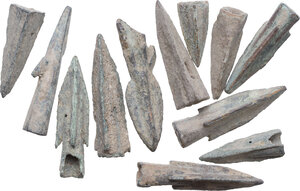
972 - ANCIENT ARROWHEADS Miscellanea. Lot of twelve (12) ancient bronze arrowheads. Various shapes.
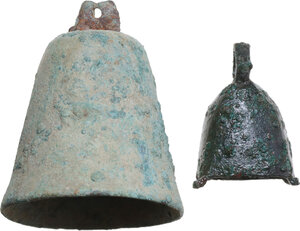
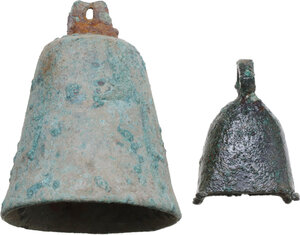
973 - TWO BRONZE BELLS Roman period and Medieval to Renaissance, c. 1st - 4th and 11th - 17th century AD. Lot of two (2) bronze bells; one (the smallest) from the Roman period and the other from a later period. Heights: 50 and 75 mm. Weights: 27.53 and 164.11 g. Missing clappers.
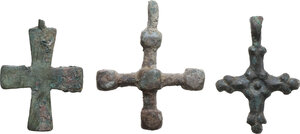
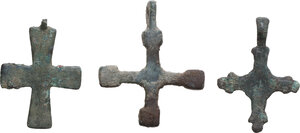
974 - THREE BYZANTINE CROSSES Byzantine period, c. 6th - 12th century AD. Lot of three (3) byzantine crosses, of various shapes. Dimensions: from 31 to 36 mm. One missing loop, otherwise intact and complete.
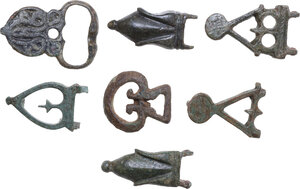
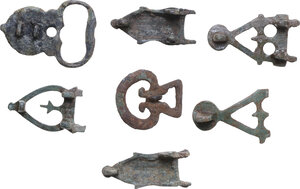
975 - SEVEN BRONZE BUCKLES Byzantine to Medieval period, c. 6th - 14th century AD. Lot of seven (7) bronze buckles, of various shapes and with various decorations. Dimensions: 31 to 44 mm. Missings.
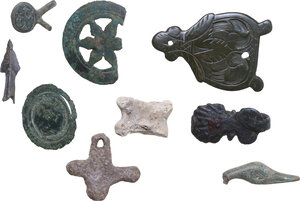
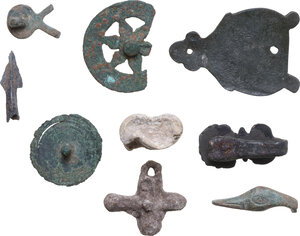
976 - NINE ANCIENT ITEMS Ancient World, c. 6th century BC - 7th century AD. Lot of nine (9) ancient items, of various materials. Dimensions: from 36 to 20 mm. Interesting study lot. Damages.
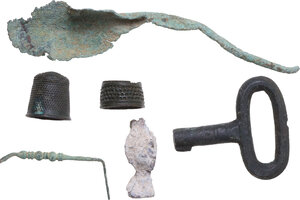
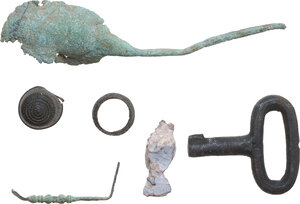
977 - SIX ANCIENT ITEMS Ancient World and Modern times. Lot of six (6) items; two bronze thimbles, a lead weight in the shape of a janiform head, a bronze key, a medical spoon. Dimensions: 122 to 12 mm.
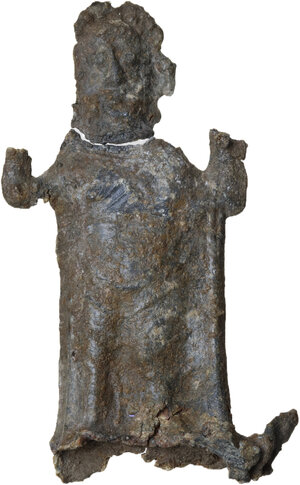
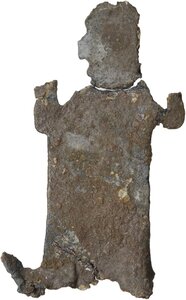
978 - VOTIVE LEAD PLATE Probably Roman republican period, c. 3rd-1st century BC. Lead plaque depicting a bearded figure in a long robe, probably leaning on a stick. Dimensions: 59x32 mm. Fascinating item. Damages and missings. The function of this plaque is unclear; it was probably a votive offering or part of the decoration of a larger object.
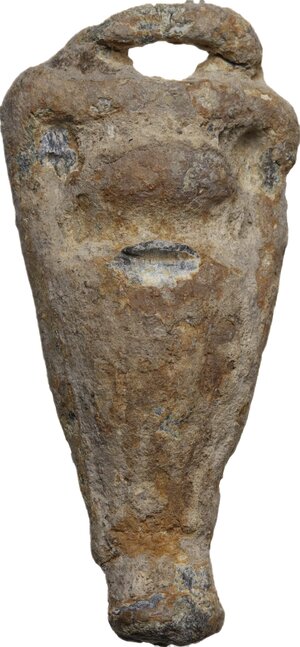
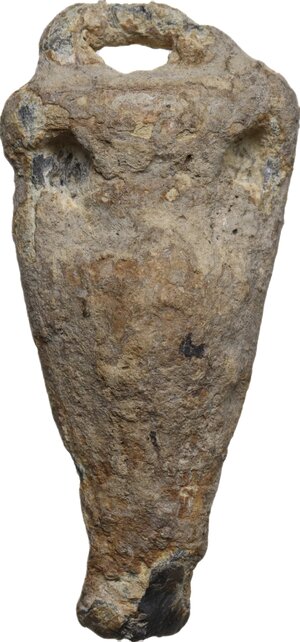
979 - 'GROMA' AMPHORA WEIGHT Roman period, 1st-3rd century AD. Weight in the shape of amphora with suspension loop. Dimensions: 46 x 19 mm. Weight: 42.21 g. In the building of a Castra, after having flattened the ground and before starting the ditch and wall construction, an agrimensor (land surveyor) drew the locations of the streets and of the wall, beginning from the center of the field, using the groma. It follows the description of this topographical tool and its use. (https://legioneromana.altervista.org/content/how-use-roman-groma?language=en).
Caricamento altri risultati...