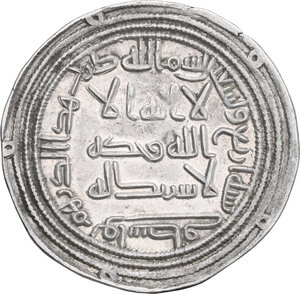
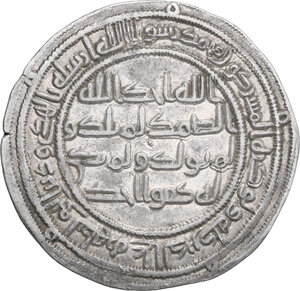
705 - The Umayyad Caliphate. Al-Walid I (86-96 AH / 705-715 AD). AR Dirham., Wasit mint, 94 AH. D/ Kalima in three lines; mint and date formula around. R/ Qur'an CXII in four lines; Qur'an IX, 33 around. Album 128; Klat 689. AR. 2.9 g. 27 mm. Nicely toned. EF.
Info & contatti
Le mie offerte
Lotti osservati
Conferimento
Condizioni di vendita
Prezzi di spedizione
Metodi di pagamento
Tabella rilanci
Esito stampabile
Sessione Live 31/1/2026 15:00:00 CET
Greek Coins (1-123)
Ancient and Medieval Asia (124-129)
The Roman Republic (130-366)
The Roman Empire (367-500)
Sessione Live 1/2/2026 15:00:00 CET
The Roman Empire (501-676)
The Byzantine Empire (677-694)
Leads from the Ancient World (695-704)
Islam (705-708)
World Coins (709-947)
Large Lots (948-1008)
Antiquities (1009-1039)

Risultati: 4
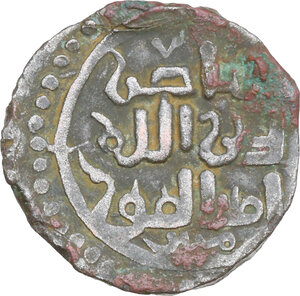
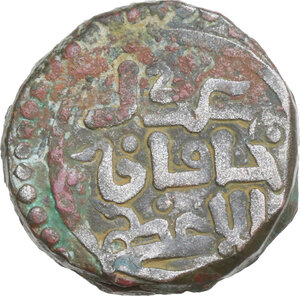
706 - Genghis Khan (602-624 AH / 1206-1227 AD). AE Jital, citing Chingiz as 'al-Khaqan al-Adil al-Azam ('Khan of Khans, the Just, the Supreme' in Arabic) and the Abbasid caliph al-Nasir li-Din Allah (1180-1225), Mongol military base around or in Ghazna. AE. 4.14 g. 20 mm. Good VF. This coin type was issued during the Mongol pursuit of Jalal ad-Din Mingburnu, the final ruler of the Khwarezmian dynasty, as he fled toward the Indus River. In the spring of 1221, Jalal suffered a major defeat at the Battle of the Indus, but to Genghis Khan's frustration, he managed to escape into India. He continued to trouble the Mongols until his assassination by an unknown Kurd in the mountains near Mayyafariqin in 1231.
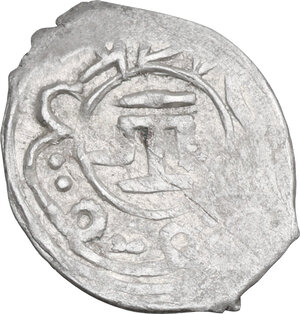
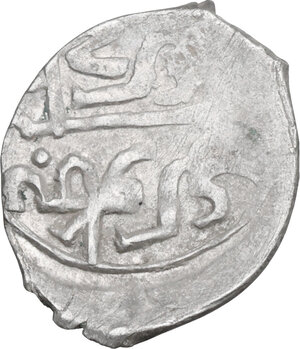
707 - Qrim. Hajji-Giray Khan (845 – 870 AH / 1441-1466 AD). AR Asper. AR. 0.56 g. 15 mm. VF. Hajji-Giray Khan (r. 1441–1466 AD) was the founder and first khan of the Crimean Khanate. A descendant of Genghis Khan, he emerged during the fragmentation of the Golden Horde and successfully established an independent state in Crimea. His reign was marked by efforts to consolidate power, secure legitimacy through Chinggisid lineage, and balance relations with neighboring powers such as the Grand Duchy of Lithuania, the Ottoman Empire, and Muscovy. Hajji-Giray laid the political and dynastic foundations that allowed the Crimean Khanate to become a major regional power in the Black Sea area during the late medieval period.
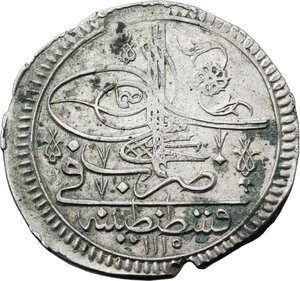
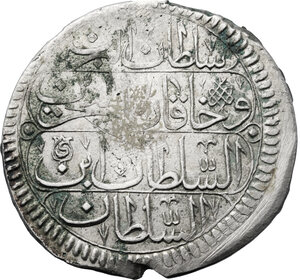
708 - Ottoman Empire. Ahmed III (1115-1143 AH/1703-1730 AD). AR Kurush, Constantinople mint, dated 1115 AH (1703-1704 AD). KM 159. AR. 24.66 g. 40 mm. A gash or test cut is present on the edge. Some green oxidation spot. VF.
Caricamento altri risultati...