
Dea Moneta
login
Banner Naumann 163
Watch:
Starting price: € 40
Current bid: € 75
B.P.: 18.90%
Closing on: 2026-03-01 16:00:00 Roma time
Watch:
Starting price: € 80
B.P.: 18.90%
Closing on: 2026-03-01 16:00:00 Roma time
Watch:
Starting price: € 40
Current bid: € 55
B.P.: 18.90%
Closing on: 2026-03-01 16:00:00 Roma time
Watch:
Starting price: € 80
Current bid: € 80
B.P.: 18.90%
Closing on: 2026-03-01 16:00:00 Roma time
Watch:
Starting price: € 80
B.P.: 18.90%
Closing on: 2026-03-01 16:00:00 Roma time
Watch:
Starting price: € 80
Current bid: € 120
B.P.: 18.90%
Closing on: 2026-03-01 16:00:00 Roma time
Watch:
Starting price: € 40
Current bid: € 40
B.P.: 18.90%
Closing on: 2026-03-01 16:00:00 Roma time
Watch:
Starting price: € 40
Current bid: € 55
B.P.: 18.90%
Closing on: 2026-03-01 16:00:00 Roma time
Watch:
Starting price: € 40
Current bid: € 50
B.P.: 18.90%
Closing on: 2026-03-01 16:00:00 Roma time
Watch:
Starting price: € 192
B.P.: 18.90%
Closing on: 2026-03-01 16:00:00 Roma time
Watch:
Starting price: € 40
B.P.: 18.90%
Closing on: 2026-03-01 16:00:00 Roma time
Watch:
Starting price: € 160
B.P.: 18.90%
Closing on: 2026-03-01 16:00:00 Roma time
Watch:
Starting price: € 80
Current bid: € 80
B.P.: 18.90%
Closing on: 2026-03-01 16:00:00 Roma time
Watch:
Starting price: € 80
B.P.: 18.90%
Closing on: 2026-03-01 16:00:00 Roma time
Watch:
Starting price: € 40
Current bid: € 40
B.P.: 18.90%
Closing on: 2026-03-01 16:00:00 Roma time
Watch:
Starting price: € 40
Current bid: € 55
B.P.: 18.90%
Closing on: 2026-03-01 16:00:00 Roma time
Watch:
Starting price: € 80
Current bid: € 80
B.P.: 18.90%
Closing on: 2026-03-01 16:00:00 Roma time
Watch:
Starting price: € 40
Current bid: € 55
B.P.: 18.90%
Closing on: 2026-03-01 16:00:00 Roma time
Watch:
Starting price: € 40
Current bid: € 55
B.P.: 18.90%
Closing on: 2026-03-01 16:00:00 Roma time
Watch:
Starting price: € 80
B.P.: 18.90%
Closing on: 2026-03-01 16:00:00 Roma time
Watch:
Starting price: € 80
Current bid: € 95
B.P.: 18.90%
Closing on: 2026-03-01 16:00:00 Roma time
Watch:
Starting price: € 40
Current bid: € 55
B.P.: 18.90%
Closing on: 2026-03-01 16:00:00 Roma time
Watch:
Starting price: € 80
B.P.: 18.90%
Closing on: 2026-03-01 16:00:00 Roma time
Watch:
Starting price: € 200
Current bid: € 200
B.P.: 18.90%
Closing on: 2026-03-01 16:00:00 Roma time
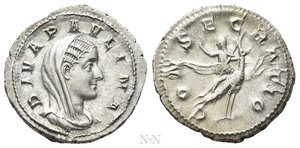
Lot # 625 - DIVA PAULINA (Died before 235). Denarius. Rome. Struck under Maximinus Thrax. Obv: DIVA PAVLINA. Veiled and draped bust right.Rev: CONSECRATIO. Diva Paulina, raising hand and holding sceptre, reclining left on peacock flying right.RIC 2 (Maximinus).Coins bearing Paolina's portrait were minted when her husband, the emperor Maximinus, crushed the Alamanni with a series of victories, restoring peace to the Rhine frontier and earning the title of ‘Germanicus Maximus’. At that time, Maximinus also decided to grant his son Maximus the title of ‘princeps iuventutis’, designating him as his successor. Maximinus continued to achieve military successes against the Sarmatians and Dacians on the Danube front, but he never went to Rome to receive his formal investiture during his three-year reign and was always distant from the Senate's positions. The 'patres' did not support him; first they hoped for the insurrection of Gordian I and II (which was harshly repressed in Africa), then they appointed Balbinus and Pupienus as princes, joined by Gordian III, and declared Maximinus 'hostis publicus' (public enemy). As was traditional, the soldiers killed the emperor, and the bodies of Maximinus and Maximus were desecrated and left unburied. This might not have happened if Maximinus had paid more attention to the suggestions of his wife, Paolina. She was pro-Senate and had urged him to adopt a more moderate approach and not to put pressure on the patres, whom the emperor was harassing in order to finance the war in Germany. To date, there are no known portraits of Paolina other than those on coins, in which she is always depicted wearing a veil, thus without a hairstyle that could be used for identification in other contexts. Her husband's image was struck by damnatio memoriae, and hers suffered the same fate. Condition: Extremely fine.Weight: 3.11 g. Diameter: 21 mm.
Watch:
Starting price: € 400
Current bid: € 525
B.P.: 18.90%
Closing on: 2026-03-01 16:00:00 Roma time
Watch:
Starting price: € 400
Current bid: € 500
B.P.: 18.90%
Closing on: 2026-03-01 16:00:00 Roma time
Watch:
Starting price: € 40
Current bid: € 50
B.P.: 18.90%
Closing on: 2026-03-01 16:00:00 Roma time
Watch:
Starting price: € 160
Current bid: € 425
B.P.: 18.90%
Closing on: 2026-03-01 16:00:00 Roma time
Watch:
Starting price: € 40
Current bid: € 40
B.P.: 18.90%
Closing on: 2026-03-01 16:00:00 Roma time
Watch:
Starting price: € 240
Current bid: € 575
B.P.: 18.90%
Closing on: 2026-03-01 16:00:00 Roma time
Watch:
Starting price: € 600
Current bid: € 600
B.P.: 18.90%
Closing on: 2026-03-01 16:00:00 Roma time
Watch:
Starting price: € 240
Current bid: € 240
B.P.: 18.90%
Closing on: 2026-03-01 16:00:00 Roma time
Watch:
Starting price: € 200
Current bid: € 450
B.P.: 18.90%
Closing on: 2026-03-01 16:00:00 Roma time
Watch:
Starting price: € 80
B.P.: 18.90%
Closing on: 2026-03-01 16:00:00 Roma time
Watch:
Starting price: € 80
Current bid: € 170
B.P.: 18.90%
Closing on: 2026-03-01 16:00:00 Roma time
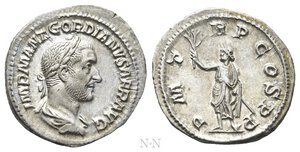
Gordian I Africanus
Lot # 636 - GORDIAN I AFRICANUS (238). Denarius. Rome. Obv: IMP M ANT GORDIANVS AFR AVG. Laureate, draped and cuirassed bust right.Rev: P M TR P COS P P. Emperor, togate, standing left, holding branch and sceptre.RIC 1.RareMarcus Antonius Gordianus Sempronianus Africanus, better known as Gordian I, was Roman emperor for a few weeks in 238, together with his son Gordian II. Gordian I came from a wealthy family of the equestrian order related to several senators. The name Gordian suggests an Anatolian origin, from the city of Gordius. He had a sister, Antonia Gordiana, who was the mother of Gordian III. It seems that Gordian accepted the empire in old age only on the condition that his son would be associated with it, in order to succeed him. His political career began as Quaestor under Elagabalus and as Praetor and Consul under Severus Alexander. He also wrote an epic poem entitled The Antoninians to celebrate the emperor Caracalla. Gordian commanded the Legio Scythica in Syria. He held the office of governor in Britain in AD 216 and was consul suffectus under Elagabalus. The fact that his name was erased from some inscriptions in Britain suggests that he was disgraced and later rehabilitated. After a rebellion in Africa in 238, mainly because of the exorbitant taxes imposed by Maximinus, Gordian accepted the imperium offered by the army and also the title of Africanus. He entered Carthage acclaimed by the crowd and politicians, while in Rome the prefect of the Praetorians was assassinated. The Senate, happy to deprive Maximinus, accepted the new emperor, and most of the Provinces sided with him. However, Capelius, governor of Numidia and supporter of Maximinus Thrax, invaded the province of Africa with the Legio III Augusta, composed of veterans. Gordian II, was defeated and killed in the battle of Carthage. Following the death of his son, Gordian I committed suicide by hanging himself with a belt, after just twenty days of reign. Condition: Near uncirculated.Weight: 3.33 g. Diameter: 20 mm.
Watch:
Starting price: € 1'600
Current bid: € 5'750
B.P.: 18.90%
Closing on: 2026-03-01 16:00:00 Roma time
Superb Gordian II
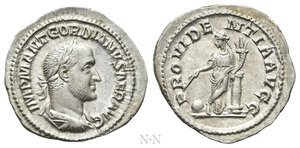
Lot # 637 - GORDIAN II (238). Denarius. Rome. Obv: IMP M ANT GORDIANVS AFR AVG. Laureate, draped and cuirassed bust right.Rev: PROVIDENTIA AVGG. Providentia standing left, holding cornucopia and wand over globus to left, and leaning upon column to right.RIC 1.Very rareSon of Gordian I, he was emperor with his father for a few weeks. The mother is unknown, possibly a niece of Herod Atticus. They came from a wealthy family of the equestrian order related to several senators. The name Gordian suggests an Anatolian origin, from the city of Gordius. It seems that Gordian accepted the empire in old age only on the condition that his son would be associated with it, in order to succeed him. In AD 237 Gordian II was in Africa as legate under his father's command. After a rebellion in Africa in 238, mainly because of the exorbitant taxes imposed by Maximinus, Gordian I accepted the imperium offered by the army and also the title of Africanus. He entered Carthage acclaimed by the crowd and politicians, while in Rome the prefect of the Praetorians was assassinated. The Senate, happy to deprive Maximinus, accepted the new emperor, and most of the Provinces sided with him. However, Capelius, governor of Numidia and supporter of Maximinus Thrax, invaded the province of Africa with the Legio III Augusta, composed of veterans. Gordian II, who had no trained or well-prepared soldiers, was defeated and killed in the battle of Carthage. Following the death of his son, Gordian I committed suicide by hanging himself with a belt, after just twenty days of reign. Condition: Near extremely fine.Weight: 2.58 g. Diameter: 21 mm.
Watch:
Starting price: € 2'000
Current bid: € 7'000
B.P.: 18.90%
Closing on: 2026-03-01 16:00:00 Roma time
Watch:
Starting price: € 40
Current bid: € 50
B.P.: 18.90%
Closing on: 2026-03-01 16:00:00 Roma time
Watch:
Starting price: € 40
Current bid: € 40
B.P.: 18.90%
Closing on: 2026-03-01 16:00:00 Roma time
Watch:
Starting price: € 40
Current bid: € 45
B.P.: 18.90%
Closing on: 2026-03-01 16:00:00 Roma time
Watch:
Starting price: € 40
Current bid: € 40
B.P.: 18.90%
Closing on: 2026-03-01 16:00:00 Roma time
Watch:
Starting price: € 40
Current bid: € 40
B.P.: 18.90%
Closing on: 2026-03-01 16:00:00 Roma time
Watch:
Starting price: € 40
Current bid: € 45
B.P.: 18.90%
Closing on: 2026-03-01 16:00:00 Roma time
Near Mint State
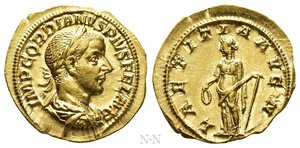
Lot # 644 - GORDIAN III (238-244). GOLD Aureus. Rome. Obv: IMP GORDIANVS PIVS FEL AVG. Laureate, draped and cuirassed bust right.Rev: LAETITA AVG N. Laetitia standing left, holding anchor and wreath.RIC 101; Calicó 3202a.Born to a daughter of Gordian I, sister of Gordian II, because of the young age at which he came to occupy the throne (13), Gordian did not rule directly, but the Senate did so for him. Gordian had become prince because the Senate needed to placate an uprising of the traditionalist urban plebs, bound to the dynastic ideal, and in order to take advantage of his family's wealth. Moreover, the praetorians had acclaimed him emperor just to show the Senate that they were the ones who decided who to put on the throne. Among the first moves was the dismissal of the legion in Africa because it had supported Capellianus and led to the deaths of Gordian I and II, who were deified. During his relatively long tenure there were several problems to deal with. In 240 Sabinianus, elected caesar in Carthage, prepared to make war on him, but was stopped by the governor of Mauretania. In the north the barbarians were making constant raids and sacking villages and towns. Gordian was too young to face these problems, but fortunately for him he could count on the diplomatic and military skill of Timesitheus, who had become prefect of the praetorium and granted him his daughter, Tranquillina, in marriage in 241. Rome succeeded in repelling the Persians of Shapur I in 243 thanks to Timesitheus, but on his death he was replaced as prefect of the praetorium by Marcus Julius Philip known as 'the Arab'. The latter, however, was not satisfied with this title but aimed at the throne, and he convinced the army that they needed an adult prince and not a boy. Gordian showed maturity and offered to cede the throne to Philip and become his caesar, but he was killed in 244. The Senate was informed that he had died of wounds sustained in a battle against the Persians. His body was sent to Rome where he was deified. Condition: Near mint state.Weight: 4.71 g. Diameter: 22 mm.
Watch:
Starting price: € 4'400
Current bid: € 4'500
B.P.: 18.90%
Closing on: 2026-03-01 16:00:00 Roma time
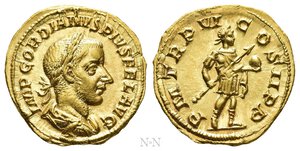
Lot # 645 - GORDIAN III (238-244). GOLD Aureus. Rome. Obv: IMP GORDIANVS PIVS FEL AVG. Laureate, draped and cuirassed bust right.Rev: P M TR P VI COS II P P. Gordian standing right, holding globe and transverse spear.RIC 107; Calicó 3228.Born to a daughter of Gordian I, sister of Gordian II, because of the young age at which he came to occupy the throne (13), Gordian did not rule directly, but the Senate did so for him. Gordian had become prince because the Senate needed to placate an uprising of the traditionalist urban plebs, bound to the dynastic ideal, and in order to take advantage of his family's wealth. Moreover, the praetorians had acclaimed him emperor just to show the Senate that they were the ones who decided who to put on the throne. Among the first moves was the dismissal of the legion in Africa because it had supported Capellianus and led to the deaths of Gordian I and II, who were deified. During his relatively long tenure there were several problems to deal with. In 240 Sabinianus, elected caesar in Carthage, prepared to make war on him, but was stopped by the governor of Mauretania. In the north the barbarians were making constant raids and sacking villages and towns. Gordian was too young to face these problems, but fortunately for him he could count on the diplomatic and military skill of Timesitheus, who had become prefect of the praetorium and granted him his daughter, Tranquillina, in marriage in 241. Rome succeeded in repelling the Persians of Shapur I in 243 thanks to Timesitheus, but on his death he was replaced as prefect of the praetorium by Marcus Julius Philip known as 'the Arab'. The latter, however, was not satisfied with this title but aimed at the throne, and he convinced the army that they needed an adult prince and not a boy. Gordian showed maturity and offered to cede the throne to Philip and become his caesar, but he was killed in 244. The Senate was informed that he had died of wounds sustained in a battle against the Persians. His body was sent to Rome where he was deified. Condition: Extremely fine; luster in field.Weight: 5.16 g. Diameter: 20 mm.
Watch:
Starting price: € 4'400
Current bid: € 4'400
B.P.: 18.90%
Closing on: 2026-03-01 16:00:00 Roma time
Watch:
Starting price: € 80
B.P.: 18.90%
Closing on: 2026-03-01 16:00:00 Roma time
Watch:
Starting price: € 40
Current bid: € 45
B.P.: 18.90%
Closing on: 2026-03-01 16:00:00 Roma time
Watch:
Starting price: € 40
Current bid: € 55
B.P.: 18.90%
Closing on: 2026-03-01 16:00:00 Roma time
Watch:
Starting price: € 40
Current bid: € 40
B.P.: 18.90%
Closing on: 2026-03-01 16:00:00 Roma time
Watch:
Starting price: € 40
Current bid: € 50
B.P.: 18.90%
Closing on: 2026-03-01 16:00:00 Roma time
Watch:
Starting price: € 40
B.P.: 18.90%
Closing on: 2026-03-01 16:00:00 Roma time
Watch:
Starting price: € 40
B.P.: 18.90%
Closing on: 2026-03-01 16:00:00 Roma time
Watch:
Starting price: € 40
Current bid: € 40
B.P.: 18.90%
Closing on: 2026-03-01 16:00:00 Roma time
Watch:
Starting price: € 40
Current bid: € 65
B.P.: 18.90%
Closing on: 2026-03-01 16:00:00 Roma time
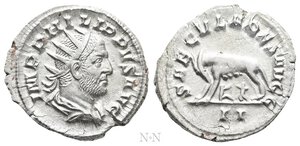
Lot # 655 - PHILIP I 'THE ARAB' (244-249). Antoninianus. Rome. Saecular Games/1000th Anniversary of Rome issue. Obv: IMP PHILIPPVS AVG. Radiate, draped and cuirassed bust right.Rev: SAECVLARES AVGG / II. Lupa Romana (she-wolf) standing left, head lowered right, suckling the twins Romulus and Remus.RIC 15.The reverse of this Antoninianus evokes one of the most widely attested legends about the foundation of Rome, faithfully reproduced from the famous sculpture preserved in the Capitoline Museums. The myth of the she-wolf suckling the twins is the result of several elaborations by various authors over the centuries, and it was only in the Augustan age that it took on the definitive form that has been handed down to us, mainly by Titus Livius. The historian tells of Aeneas who landed in Lazio and his descendants, up to Numitor, king of Alba, who was deposed by his brother Amulius. The latter had Numitor's sons killed and forced his only daughter, Rhea Silvia, to become a vestal, so that she would remain a virgin and not bear a son who might one day take revenge and reclaim the throne he had usurped. The vestal virgin was raped and gave birth to twins. In an attempt to save herself, she claimed that the father of her illegitimate offspring was Mars. However, Rhea Silvia was condemned and imprisoned, while the twins were placed in a basket and abandoned on the waters of the Tiber. According to Livius, divine will caused the river to overflow and forced the servants to leave the basket in a pool near the ficus Ruminalis (in the Velabrum). Here, a thirsty she-wolf, attracted by their cries, offered to suckle them and was noticed by the king's herdsman Faustulus, who took them to be raised by his wife. Condition: Uncirculated.Weight: 3.62 g. Diameter: 23 mm.
Watch:
Starting price: € 80
Current bid: € 85
B.P.: 18.90%
Closing on: 2026-03-01 16:00:00 Roma time
Watch:
Starting price: € 80
Current bid: € 80
B.P.: 18.90%
Closing on: 2026-03-01 16:00:00 Roma time
Watch:
Starting price: € 80
Current bid: € 90
B.P.: 18.90%
Closing on: 2026-03-01 16:00:00 Roma time
Watch:
Starting price: € 40
Current bid: € 55
B.P.: 18.90%
Closing on: 2026-03-01 16:00:00 Roma time
Watch:
Starting price: € 40
Current bid: € 45
B.P.: 18.90%
Closing on: 2026-03-01 16:00:00 Roma time
Watch:
Starting price: € 40
Current bid: € 40
B.P.: 18.90%
Closing on: 2026-03-01 16:00:00 Roma time