Live Bidding Sunday 5th April 2026 05:00:00 PM CET
Celtic Coins (1-7)
Greek Coins (8-221)
Roman Provincial Coins (222-353)
Roman Republican Coins (354-425)
Roman Imperial Coins (426-853)
Migration Period (854-855)
Byzantine Coins (856-890)
Medieval Coins (891-927)
World Coins (928-955)
Medals & Tokens (956-958)
Group Lots (959-1105)

Risultati: 1105
Lot # 61
-
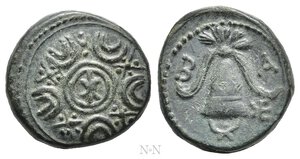
KINGS OF MACEDON. Alexander III 'the Great' (336-323 BC). Ae. Uncertain mint in Macedon. Obv: Macedonian shield, with thunderbolt on boss; pellets and crescents around.Rev: B - A. Macedonian helmet, decorated with laurel wreath; monogram to lower right.Price 405. Condition: Good very fine.Weight: 5.40 g. Diameter: 17 mm.
Lot # 62
-
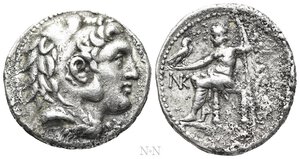
KINGS OF MACEDON. Alexander III 'the Great' (336-323 BC). Tetradrachm. Pella. Obv: Head of Herakles right, wearing lion skin.Rev: AΛΕΞΑΝΔΡΟΥ. Zeus seated left on throne, holding eagle and sceptre. Control: NK monogram in left field.Price 546a.Extremely rare Condition: Near very fine.Weight: 16.82 g. Diameter: 30 mm.
Lot # 63
-
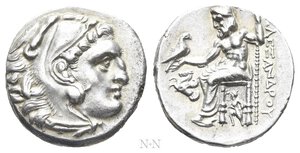
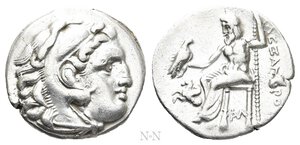
KINGS OF MACEDON. Alexander III 'the Great' (336-323 BC). Drachm. Lampsakos. Obv: Head of Herakles right, wearing lion skin.Rev: AΛΕΞΑΝΔΡΟΥ. Zeus seated left on throne, holding eagle and sceptre. Controls: In left field, forepart of Pegasos left; below throne, Artemis standing left with torch.Price 1387. Condition: Near extremely fine.Weight: 4.21 g. Diameter: 18 mm.
Lot # 64
-
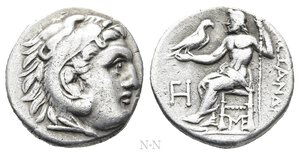
KINGS OF MACEDON. Alexander III 'the Great' (336-323 BC). Drachm. Lampsakos. Obv: Head of Herakles right, wearing lion skin.Rev: AΛΕΞΑΝΔΡΟΥ. Zeus seated left with eagle and sceptre. Controls: forepart of Pegasos in left field and AΛ below throne.Price 1389. Condition: Very fine.Weight: 4.29 g. Diameter: 19 mm.
Lot # 65
-
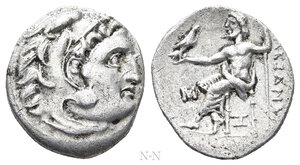
KINGS OF MACEDON. Alexander III 'the Great' (336-323 BC). Drachm. Lampsakos. Obv: Head of Herakles right, wearing lion skin.Rev: AΛEΞANΔPOY. Zeus seated left with eagle and sceptre. Controls: monogram in left field and below throne.Price 1413. Condition: Near very fine.Weight: 4.14 g. Diameter: 18 mm.
Lot # 66
-
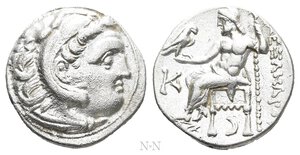
KINGS OF MACEDON. Alexander III 'the Great' (336-323 BC). Drachm. Abydos. Obv: Head of Herakles right, wearing lion skin.Rev: AΛEΞANΔPOY. Zeus seated left on throne, holding eagle and sceptre. Controls: M monogram in left field; Z below throne.Price 1528. Condition: Near very fine.Weight: 4.05 g. Diameter: 18 mm.
Lot # 67
-
KINGS OF MACEDON. Alexander III 'the Great' (336-323 BC). Drachm. Kolophon. Obv: Head of Herakles right, wearing lion skin.Rev: AΛΕΞΑΝΔΡΟΥ. Zeus seated left on throne, holding eagle and sceptre. Controls: Monogram in left field; below throne, crescent left below strut.Price 1825. Condition: Good very fine.Weight: 4.06 g. Diameter: 18 mm.
Lot # 68
-
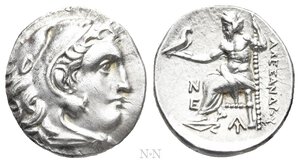
KINGS OF MACEDON. Alexander III 'the Great' (336-323 BC). Drachm. Magnesia ad Maeandrum. Obv: Head of Herakles right, wearing lion skin.Rev: AΛΕΞΑΝΔΡΟΥ. Zeus seated left on throne, holding eagle and sceptre. Controls: N above E in left field, monogram below throne.Price 1995. Condition: Near extremely fine.Weight: 4.26 g. Diameter: 19 mm.
Lot # 69
-
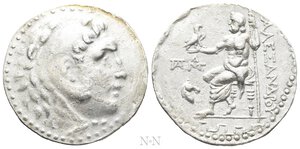
KINGS OF MACEDON. Alexander III 'the Great' (336-323 BC). Tetradrachm. Magnesia ad Maeandrum. Obv: Head of Herakles right, wearing lion skin.Rev: AΛΕΞΑΝΔΡOY. Zeus seated left on throne, holding eagle and sceptre. Controls: To left, two monograms above head of horse right; maeander pattern in exergue.Price 2045 var. (no horse head). Condition: Near very fine.Weight: 16.4 g. Diameter: 33 mm.
Lot # 70
-
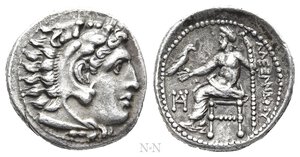
KINGS OF MACEDON. Alexander III 'the Great' (336-323 BC). Drachm. Miletos. Obv: Head of Herakles right, wearing lion skin.Rev: ΑΛΕΞΑΝΔΡΟΥ. Zeus seated left on throne, holding eagle and sceptre. Control: Monogram in left field.Price 2090. Condition: Near extremely fine.Weight: 4.30 g. Diameter: 18 mm.
Lot # 71
-
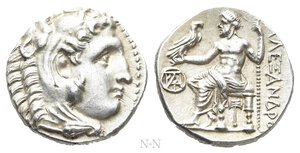
KINGS OF MACEDON. Alexander III 'the Great' (336-323 BC). Drachm. Miletos. Obv: Head of Herakles right, wearing lion skin.Rev: AΛEΞANΔPOY. Zeus seated left on throne, holding eagle and sceptre. Controls: monogram within circle in left field and double axe below throne.Price 2148. Condition: Near extremely fine.Weight: 4.3 g. Diameter: 16 mm.
Lot # 72
-
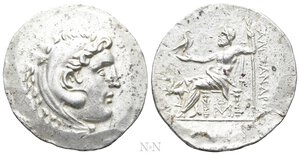
KINGS OF MACEDON. Alexander III 'the Great' (336-323 BC). Tetradrachm. Alabanda. Obv: Head of Herakles right, wearing lion skin.Rev: AΛΕΞΑΝΔΡΟΥ. Zeus seated left on throne, holding eagle and sceptre. Controls: Pegasos in left field, monogram with kerykeion below throne.Price 2455.Ex Nomos Obolos 16 (2020), lot 683 Condition: Good very fine.Weight: 16.67 g. Diameter: 34 mm.
Expressive Herakles
Lot # 73
-
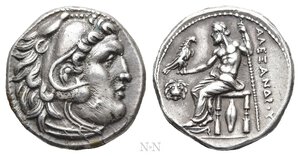
KINGS OF MACEDON. Alexander III 'the Great' (336-323 BC). Drachm. Uncertain mint in western Asia Minor. Obv: Head of Herakles right, wearing lion skin.Rev: AΛEΞANΔPOY. Zeus seated left with eagle and sceptre. Controls: facing lion head to left, barley ear below throne.Price 2701 corr. (position of barley grain). Condition: Good very fine.Weight: 4.32 g. Diameter: 17 mm.
Lot # 74
-
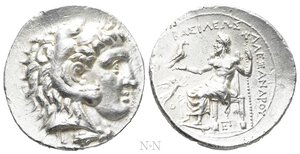
KINGS OF MACEDON. Alexander III 'the Great' (336-323 BC). Tetradrachm. Tarsos. Obv: Head of Herakles right, wearing lion skin.Rev: BAΣIΛEΩΣ AΛΕΞΑΝΔΡΟΥ. Zeus seated left on throne, holding eagle and sceptre. Controls: in left field, crowning Nike flying right above Θ and kerykeion; monogram below throne.Price 3052. Condition: Good very fine; bend.Weight: 17.15 g. Diameter: 29 mm.
Ex A. Malloy 1999
Lot # 75
-
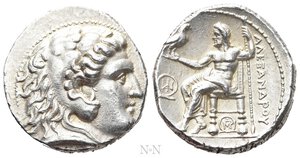
KINGS OF MACEDON. Alexander III 'the Great' (336-323 BC). Tetradrachm. Tyre. Struck under Demetrios I Poliorketes. Obv: Head of Herakles right, wearing lion skin.Rev: AΛΕΞΑΝΔΡOY. Zeus seated left on throne, holding eagle and sceptre. Controls: Monogram in left field and below throne.Price 3538.From the Philip T. Ashton (1934-2017) collection. Purchased from Alex Malloy, November 1999; ex Gemini XIV (2018), lot 118 Condition: Near extremely fine.Weight: 17.19 g. Diameter: 27 mm.
Ex G. Dorau 1973
Lot # 76
-
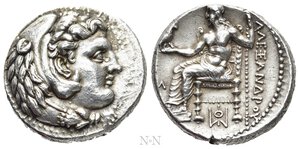
KINGS OF MACEDON. Alexander III 'the Great' (336-323 BC). Tetradrachm. Babylon. Obv: Head of Herakles right, wearing lion skin.Rev: AΛΕΞΑΝΔΡΟΥ. Zeus seated left on throne, holding eagle and sceptre. Controls: In left field M; monogram below throne.Price 3602.Ex G. Dorau Berlin 7 (1973), lot 1; ex Gorny & Mosch 265 (2019), lot 226 Condition: Good very fine.Weight: 17.17 g. Diameter: 25 mm.
Lot # 77
-
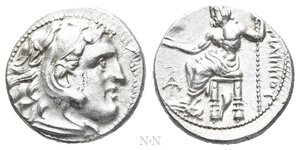
KINGS OF MACEDON. Philip III Arrhidaios (323-317 BC). Drachm. Magnesia ad Maeandrum. Obv: Head of Herakles right, wearing lion skin.Rev: ΦIΛIΠΠOY. Zeus seated left on throne, holding eagle and sceptre. Controls: Monogram in left field, cornucopia below throne.Price P61. Condition: Extremely fine.Weight: 4.31 g. Diameter: 17 mm.
Lot # 78
-
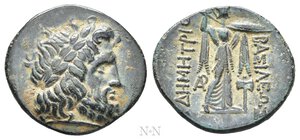
KINGS OF MACEDON. Demetrios I Poliorketes (306-283 BC). Ae. Uncertain mint in Caria. Obv: Laureate head of Zeus right.Rev: ΒΑΣΙΛΕΩΣ / ΔΗΜΗΤΡΙΟΥ. Athena Promachos standing right, preparing to cast lance; monogram to inner left, labrys to inner right.Newell 166; SNG Alpha Bank -; Weber 2176; HGC 3.1, 1021. Condition: Good very fine.Weight: 4.31 g. Diameter: 20 mm.
Lot # 79
-
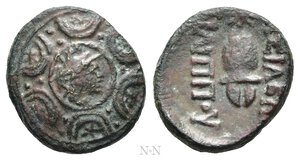
KINGS OF MACEDON. Philip V (221-179 BC). Ae. Uncertain mint in Macedon. Obv: Macedonian shield with head of Perseus right on boss.Rev: BAΣIΛEΩΣ ΦΙΛΙΠΠΟΥ. Macedonian helmet.SNG Alpha Bank 1070; HGC 3.1 1087. Condition: Very fine.Weight: 3.29 g. Diameter: 16 mm.
Lot # 80
-
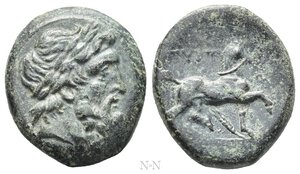
THESSALY. Gyrton. Ae Trichalkon (3rd century BC). Obv: Laureate head of Zeus right.Rev: ΓΥΡTΩΝΙΩΝ. Horse prancing right; grain ear below.BCD Thessaly II -; HGC 4, 364. Condition: Good very fine.Weight: 9.34 g. Diameter: 22 mm.
Lot # 81
-
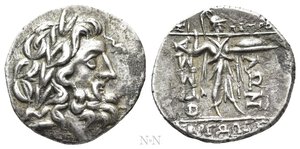
THESSALY. Thessalian League. Stater (Late 2nd-mid 1st centuries BC). Sosipatros and Gorgopas, magistrates. Obv: Laureate head of Zeus right.Rev: ΘΕΣΣΑ / ΛΩΝ / ΣΩΣΙ - ΠΑPOΣ / ΓΟΡΓΩΠAΣ. Athena Itonia advancing right, holding shield and preparing to hurl spear; N-I to inner left and right.BCD Thessaly II 861.2; HGC 4, 209. Condition: Very fine.Weight: 6.16 g. Diameter: 21 mm.
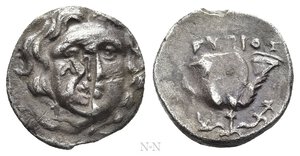
Chimaira as Countermark
Lot # 82
-
BOEOTIA. Larymna. Drachm (Circa 190-170 BC). Pseudo-Rhodian type. Eubios, magistrate. Obv: Head of Helios facing slightly right; c/m: chimaira standing right within rectangular incuse.Rev: EYBIOΣ. Rose with bud to right; to left, dolphin downward.Ashton 57-9, 64-78; HGC 4, 1322. Condition: Near very fine.Weight: 2.22 g. Diameter: 15 mm.
Lot # 83
-
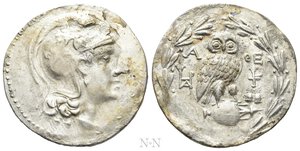
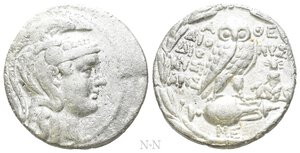
ATTICA. Athens. Tetradrachm (165-150/49 BC). New Style Coinage. Obv: Head of Athena Parthenos right, wearing triple crested Attic helmet decorated with Pegasos and floral pattern.Rev: A - ΘE. Owl standing right on amphora, head facing. Controls: Monogram to left, monogram and caps of the Dioskouroi to right; all within wreath.Thompson 57; HGC 4, 1602.Among the Greek poleis, Athens is undoubtedly the city that denotes the greatest monetary development. The earliest coinage followed the reforms attributed to Solon on the introduction of Attic weights to replace the Eginetic ones. These early coins, called "Wappenmünzen," were replaced by the "owls" at the end of the 6th century: tetradrachms marked with the head of Athena and the owl, next to which is now the ethnic of the Athenians. These types will last, with variations in style, until the end of silver production (c. mid-1st century). The most noticeable change occurs with the so-called "new style," established from the beginning of the 2nd century BC. In these issues the owl is surrounded by an olive wreath, which is why the tetradrachms are referred to in the inscriptions as "stephanephoroi" (= wreath bearers). Coins of new style also bear inscriptions with the names of magistrates. Condition: Very fine.Weight: 16.56 g. Diameter: 32 mm.
Lot # 84
-
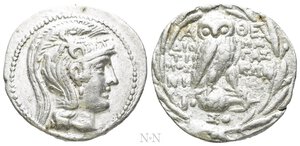
ATTICA. Athens. Tetradrachm (151/0 BC). New Style Coinage. Dionys-, Dionys-, Aris-, magistrates. Obv: Head of Athena Parthenos right, wearing triple crested Attic helmet decorated with Pegasos and floral pattern.Rev: A - ΘE / ΔIO - NYΣI / ΔIO / NYΣI / APIΣ. Owl standing right on amphora, head facing. Controls: To right, Helios in quadriga facing; B(?) on amphora; ME in exergue; all within wreath.Cf. Thompson 558a; HGC 4, 1602.Among the Greek poleis, Athens is undoubtedly the city that denotes the greatest monetary development. The earliest coinage followed the reforms attributed to Solon on the introduction of Attic weights to replace the Eginetic ones. These early coins, called "Wappenmünzen," were replaced by the "owls" at the end of the 6th century: tetradrachms marked with the head of Athena and the owl, next to which is now the ethnic of the Athenians. These types will last, with variations in style, until the end of silver production (c. mid-1st century). The most noticeable change occurs with the so-called "new style," established from the beginning of the 2nd century BC. In these issues the owl is surrounded by an olive wreath, which is why the tetradrachms are referred to in the inscriptions as "stephanephoroi" (= wreath bearers). Coins of new style also bear inscriptions with the names of magistrates. Condition: Very fine.Weight: 16.63 g. Diameter: 28 mm.
Lot # 85
-
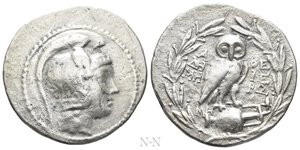
ATTICA. Athens. Tetradrachm (146/5 BC). New Style Coinage. Diotimos, Magas and Nikon, magistrate. Obv: Head of Athena Parthenos right, wearing triple crested Attic helmet decorated with Pegasos and floral pattern.Rev: A - ΘE / ΔIO / TI / MOΣ - MA / ΓAΣ / NI - KΩN. Owl, with head facing, standing right on amphora. Controls: Z on amphora, ΣO below; all within wreath.Thompson 658l var. (letters below amphora); HGC 4, 1602.Among the Greek poleis, Athens is undoubtedly the city that denotes the greatest monetary development. The earliest coinage followed the reforms attributed to Solon on the introduction of Attic weights to replace the Eginetic ones. These early coins, called "Wappenmünzen," were replaced by the "owls" at the end of the 6th century: tetradrachms marked with the head of Athena and the owl, next to which is now the ethnic of the Athenians. These types will last, with variations in style, until the end of silver production (c. mid-1st century). The most noticeable change occurs with the so-called "new style," established from the beginning of the 2nd century BC. In these issues the owl is surrounded by an olive wreath, which is why the tetradrachms are referred to in the inscriptions as "stephanephoroi" (= wreath bearers). Coins of new style also bear inscriptions with the names of magistrates. Condition: Very fine.Weight: 16.62 g. Diameter: 30 mm.
Lot # 86
-
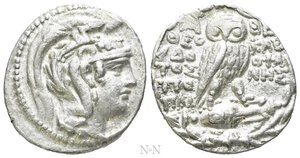
ATTICA. Athens. Tetradrachm (142/1 BC). New Style Coinage. Deme- and Hiero-, magistrates. Obv: Head of Athena Parthenos right, wearing triple crested Attic helmet decorated with Pegasos and floral pattern.Rev: A - ΘE / ΔH / MH - IE / PΩ. Owl standing right on amphora, head facing. Controls: MH below, uncertain letter on amphora; all within wreath.Cf. Thompson 212; HGC 4, 1602.Among the Greek poleis, Athens is undoubtedly the city that denotes the greatest monetary development. The earliest coinage followed the reforms attributed to Solon on the introduction of Attic weights to replace the Eginetic ones. These early coins, called "Wappenmünzen," were replaced by the "owls" at the end of the 6th century: tetradrachms marked with the head of Athena and the owl, next to which is now the ethnic of the Athenians. These types will last, with variations in style, until the end of silver production (c. mid-1st century). The most noticeable change occurs with the so-called "new style," established from the beginning of the 2nd century BC. In these issues the owl is surrounded by an olive wreath, which is why the tetradrachms are referred to in the inscriptions as "stephanephoroi" (= wreath bearers). Coins of new style also bear inscriptions with the names of magistrates. Condition: Very fine.Weight: 17.05 g. Diameter: 35 mm.
Lot # 87
-
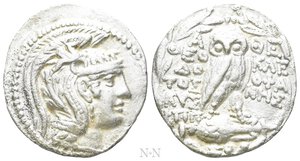
ATTICA. Athens. Tetradrachm (138/7 BC). New Style coinage. Theodotos, Kleophanes and Popli-, magistrates. Obv: Head of Athena Parthenos right, wearing triple crested Attic helmet decorated with Pegasos and floral pattern.Rev: A - ΘE / ΘEO / ΔO / TOΣ - KΛE / OΦA / NHΣ / ΠO / ΠΛI. Owl standing right on amphora, head facing. Controls: Ө on amphora, ΣO below; all within wreath.Thompson 771d-e; HGC 4, 1602.Among the Greek poleis, Athens is undoubtedly the city that denotes the greatest monetary development. The earliest coinage followed the reforms attributed to Solon on the introduction of Attic weights to replace the Eginetic ones. These early coins, called "Wappenmünzen," were replaced by the "owls" at the end of the 6th century: tetradrachms marked with the head of Athena and the owl, next to which is now the ethnic of the Athenians. These types will last, with variations in style, until the end of silver production (c. mid-1st century). The most noticeable change occurs with the so-called "new style," established from the beginning of the 2nd century BC. In these issues the owl is surrounded by an olive wreath, which is why the tetradrachms are referred to in the inscriptions as "stephanephoroi" (= wreath bearers). Coins of new style also bear inscriptions with the names of magistrates. Condition: Good very fine.Weight: 16.34 g. Diameter: 30 mm.
Lot # 88
-
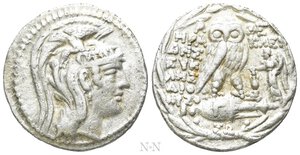
ATTICA. Athens. Tetradrachm (138/7 BC). New Style Coinage. Theodotos, Kleophanes and Lisipp-, magistrates. Obv: Head of Athena Parthenos right, wearing triple crested Attic helmet decorated with Pegasos and floral pattern.Rev: A - ΘE / ΘEO / ΔO / TOΣ - KΛE / OΦA / NHΣ / ΛYΣ / IΠΠ. Owl standing right on amphora, head facing. Controls: Z on amphora, ΣO below; all within wreath.Thompson 771c; HGC 4, 1602.Among the Greek poleis, Athens is undoubtedly the city that denotes the greatest monetary development. The earliest coinage followed the reforms attributed to Solon on the introduction of Attic weights to replace the Eginetic ones. These early coins, called "Wappenmünzen," were replaced by the "owls" at the end of the 6th century: tetradrachms marked with the head of Athena and the owl, next to which is now the ethnic of the Athenians. These types will last, with variations in style, until the end of silver production (c. mid-1st century). The most noticeable change occurs with the so-called "new style," established from the beginning of the 2nd century BC. In these issues the owl is surrounded by an olive wreath, which is why the tetradrachms are referred to in the inscriptions as "stephanephoroi" (= wreath bearers). Coins of new style also bear inscriptions with the names of magistrates. Condition: Good very fine.Weight: 16.50 g. Diameter: 32 mm.
Lot # 89
-
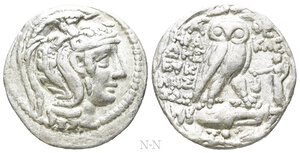
ATTICA. Athens. Tetradrachm (Circa 137/6 BC). New Style Coinage. Herakleides, Eukles and Dionysog-, magistrates. Obv: Head of Athena Parthenos right, wearing triple crested Attic helmet decorated with Pegasos and floral pattern.Rev: A - ΘE / HPA - KΛEI / ΔHΣ / EYK / ΛHΣ / ΔIO / NYΣO / Γ. Owl standing right on amphora, head facing. Controls: Γ on amphora, ΣΩ below; to right, winged Tyche standing left, holding amphora; all within wreath.Thompson 779c-e var. (letter on amphora); HGC 4, 1602.Among the Greek poleis, Athens is undoubtedly the city that denotes the greatest monetary development. The earliest coinage followed the reforms attributed to Solon on the introduction of Attic weights to replace the Eginetic ones. These early coins, called "Wappenmünzen," were replaced by the "owls" at the end of the 6th century: tetradrachms marked with the head of Athena and the owl, next to which is now the ethnic of the Athenians. These types will last, with variations in style, until the end of silver production (c. mid-1st century). The most noticeable change occurs with the so-called "new style," established from the beginning of the 2nd century BC. In these issues the owl is surrounded by an olive wreath, which is why the tetradrachms are referred to in the inscriptions as "stephanephoroi" (= wreath bearers). Coins of new style also bear inscriptions with the names of magistrates. Condition: Good very fine.Weight: 16.44 g. Diameter: 31 mm.
Lot # 90
-
ATTICA. Athens. Tetradrachm (Circa 137/6 BC). New Style Coinage. Herakleides, Eukles and Sosikrates, magistrates. Obv: Head of Athena Parthenos right, wearing triple crested Attic helmet decorated with Pegasos and floral pattern.Rev: A - ΘE / HPA - KΛEI / ΔHΣ / EYK / ΛHΣ / ΣΩΣ / IKP. Owl, with head facing, standing right on amphora. Controls: Z on amphora, ΣO(?) below; to right, winged Tyche standing left, holding uncertain object over amphora; all within wreath.Cf. Thompson 790a; HGC 4, 1602.Among the Greek poleis, Athens is undoubtedly the city that denotes the greatest monetary development. The earliest coinage followed the reforms attributed to Solon on the introduction of Attic weights to replace the Eginetic ones. These early coins, called "Wappenmünzen," were replaced by the "owls" at the end of the 6th century: tetradrachms marked with the head of Athena and the owl, next to which is now the ethnic of the Athenians. These types will last, with variations in style, until the end of silver production (c. mid-1st century). The most noticeable change occurs with the so-called "new style," established from the beginning of the 2nd century BC. In these issues the owl is surrounded by an olive wreath, which is why the tetradrachms are referred to in the inscriptions as "stephanephoroi" (= wreath bearers). Coins of new style also bear inscriptions with the names of magistrates. Condition: Good very fine.Weight: 16.53 g. Diameter: 30 mm.
Lot # 91
-
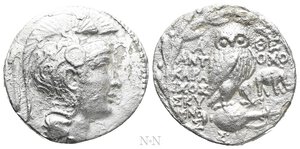
ATTICA. Athens. Tetradrachm (131/0 BC). New Style Coinage. Antiochos, Karaichos and Skymnos, magistrates. Obv: Head of Athena Parthenos right, wearing triple crested Attic helmet decorated with Pegasos and floral pattern.Rev: A - ΘE / ANTI - OXO / KAPA / IXOΣ / ΣKY / MNO / Σ. Owl, with head facing, standing right on amphora. Controls: E on amphora, Σ[...] below; to right, elephant standing right; all within wreath.Thompson 397; HGC 4, 1602.Among the Greek poleis, Athens is undoubtedly the city that denotes the greatest monetary development. The earliest coinage followed the reforms attributed to Solon on the introduction of Attic weights to replace the Eginetic ones. These early coins, called "Wappenmünzen," were replaced by the "owls" at the end of the 6th century: tetradrachms marked with the head of Athena and the owl, next to which is now the ethnic of the Athenians. These types will last, with variations in style, until the end of silver production (c. mid-1st century). The most noticeable change occurs with the so-called "new style," established from the beginning of the 2nd century BC. In these issues the owl is surrounded by an olive wreath, which is why the tetradrachms are referred to in the inscriptions as "stephanephoroi" (= wreath bearers). Coins of new style also bear inscriptions with the names of magistrates. Condition: Very fine.Weight: 16.35 g. Diameter: 30 mm.
Lot # 92
-
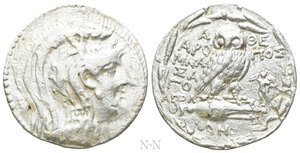
ATTICA. Athens. Tetradrachm (128/7 BC). New Style Coinage. Aropos, Mnasago- and Apol-, magistrates. Obv: Head of Athena Parthenos right, wearing triple crested Attic helmet decorated with Pegasos and floral pattern.Rev: A - ΘE / APO - ΠOΣ / MNA / ΣA / ΓO / AΠOΛ. Owl standing right on amphora, head facing. Controls: To right, winged Agon standing facing, crowning himself and holding palm branch; Γ on amphora, ΔH below; all within wreath.Thompson 996d; HGC 4, 1602.Among the Greek poleis, Athens is undoubtedly the city that denotes the greatest monetary development. The earliest coinage followed the reforms attributed to Solon on the introduction of Attic weights to replace the Eginetic ones. These early coins, called "Wappenmünzen," were replaced by the "owls" at the end of the 6th century: tetradrachms marked with the head of Athena and the owl, next to which is now the ethnic of the Athenians. These types will last, with variations in style, until the end of silver production (c. mid-1st century). The most noticeable change occurs with the so-called "new style," established from the beginning of the 2nd century BC. In these issues the owl is surrounded by an olive wreath, which is why the tetradrachms are referred to in the inscriptions as "stephanephoroi" (= wreath bearers). Coins of new style also bear inscriptions with the names of magistrates. Condition: .Weight: 16.68 g. Diameter: 31 mm.
Lot # 93
-
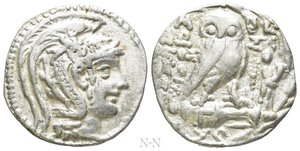
ATTICA. Athens. Tetradrachm (99/8 BC). New Style Coinage. Dositheos, Charias and Nik-(?), magistrates. Obv: Head of Athena Parthenos right, wearing triple crested Attic helmet decorated with Pegasos and floral pattern.Rev: A - ΘE / ΔΩ - ΣΙ / ΘΕΟΣ / ΧΑΡ / IΑΣ / [...]K. Owl standing right on amphora, head facing. Controls: Γ on amphora, ΣO below; to right, Tyche standing left, holding sceptre and cornucopia; all within wreath.Cf. Thompson 860; HGC 4, 1602.Among the Greek poleis, Athens is undoubtedly the city that denotes the greatest monetary development. The earliest coinage followed the reforms attributed to Solon on the introduction of Attic weights to replace the Eginetic ones. These early coins, called "Wappenmünzen," were replaced by the "owls" at the end of the 6th century: tetradrachms marked with the head of Athena and the owl, next to which is now the ethnic of the Athenians. These types will last, with variations in style, until the end of silver production (c. mid-1st century). The most noticeable change occurs with the so-called "new style," established from the beginning of the 2nd century BC. In these issues the owl is surrounded by an olive wreath, which is why the tetradrachms are referred to in the inscriptions as "stephanephoroi" (= wreath bearers). Coins of new style also bear inscriptions with the names of magistrates. Condition: Very fine.Weight: 16.37 g. Diameter: 29 mm.
Lot # 94
-
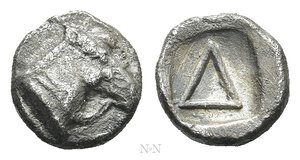
CORINTHIA. Corinth. Diobol (Circa 500-450 BC). Obv: Head of bridled horse right.Rev: Large Δ (denomination mark) within incuse square.BCD Corinth 35-6; HGC 4, 1880. Condition: Very fine.Weight: 0.65 g. Diameter: 9 mm.
Lot # 95
-
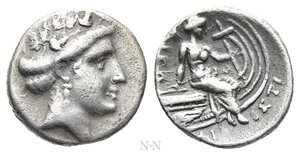
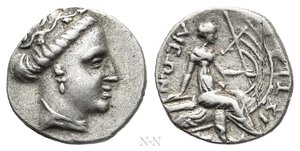
EUBOIA. Histiaia. Tetrobol (3rd-2nd centuries BC). Obv: Wreathed head of the Nymph Histiaia right.Rev: IΣTIAIEΩN. Nymph seated right on stern of galley; wing on prow, [...]I below.Cf. BCD Euboia 379; HGC 4, 1524. Condition: Very fine.Weight: 2.4 g. Diameter: 15 mm.
Lot # 96
-
EUBOIA. Histiaia. Tetrobol (3rd-2nd centuries BC). Obv: Wreathed head of the nymph Histiaia right.Rev: IΣTIAIEΩN. Nymph seated right on stern of galley; wing on prow.BCD Euboia 387ff.; HGC 4, 1524. Condition: Good very fine.Weight: 2.3 g. Diameter: 14 mm.
Lot # 97
-
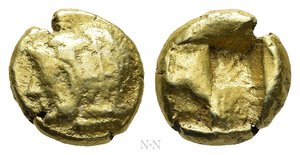
BITHYNIA. Herakleia Pontika. EL Hekte (Circa 530-520 BC). Obv: Head of Herakles left, wearing lion skin.Rev: Quadripartite incuse square.W. Fischer-Bossert, Elektronhekten, group 1; SNG Kayhan 737-8 (Erythrai); SNG von Aulock 1942 (Erythrai). Condition: Very fine.Weight: 2.53 g. Diameter: 10 mm.
Lot # 98
-
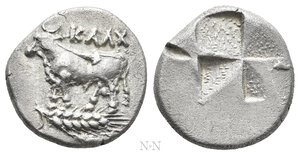
BITHYNIA. Kalchedon. Siglos (Circa 340-320 BC). Obv: KAΛX. Bull standing left on grain ear.Rev: Mill-sail incuse.SNG BM Black Sea 112-7; HGC 7, 517. Condition: Very fine.Weight: 5.25 g. Diameter: 18 mm.
Lot # 99
-
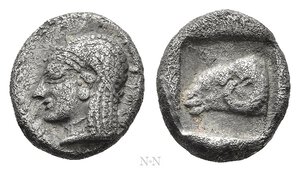
TROAS. Kebren. Diobol (5th century BC). Obv: Archaic head (Apollo?) left.Rev: Head of ram left within incuse square.SNG Arikantürk 372-5; SNG Ashmolean 1086. Condition: Very fine.Weight: 1.24 g. Diameter: 9 mm.
Lot # 100
-
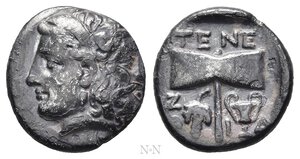
TROAS. Tenedos. Drachm (Late 5th-early 4th centuries BC). Obv: Janiform head of a diademed female left and laureate male right.Rev: TENEΔΙΟΝ. Labrys; grape bunch to left, kantharos to right.SNG Copenhagen 515; BMC 16; HGC 6, 386 var. (kantharos unlisted). Condition: Near very fine.Weight: 3.36 g. Diameter: 16 mm.
Rare Mythological Type
Lot # 101
-
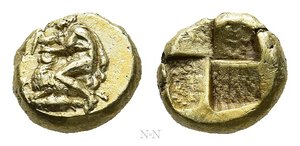
MYSIA. Kyzikos. EL 1/24 Stater (Circa 450-400 BC). Obv: Male figure (Odysseos?) kneeling left, wearing chlamys and pilos, sacrificing ram; below, tunny left.Rev: Quadripartite incuse square.Cf. Nomisma VII 156 (stater & hekte); SNG BN -; cf. New York Sale XXVII [Prospero], lot 451 (for a stater which realized a hammer of $40,000 [!]).Very rare Condition: Good very fine.Weight: 0.68 g. Diameter: 7 mm.
Classic Kyzikos Tetradrachm
Lot # 102
-
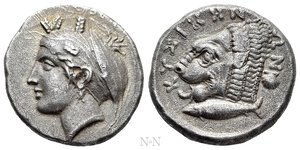
MYSIA. Kyzikos. Tetradrachm (Circa 410-390 BC). Obv: Head of Kore Soteira left, wearing sphendone covered with a veil; grain-ears in hair.Rev: KYZIKHNΩN. Head of lion left, mouth open with tongue protruding; tunny fish below, shell to right.Pixodarus Type 1; SNG BN 403 var. (symbol); BMC 134. Condition: Good very fine.Weight: 14.73 g. Diameter: 26 mm.
Lot # 103
-
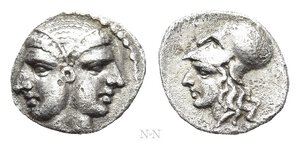
MYSIA. Lampsakos. Hemiobol (Circa 500-450 BC). Obv: Janiform head.Rev: Helmeted head of Athena left.SNG BN 1127-31 var. (oboles); BMC 22. Condition: Very fine.Weight: 0.47 g. Diameter: 9 mm.
Lot # 104
-
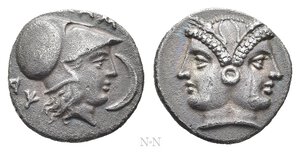
MYSIA. Lampsakos. Diobol (4th-3rd century BC). Obv: Female janiform head.Rev: ΛAMΨA. Helmeted head of Athena right; crescent to right.SNG BN 1190-1 var. (symbol); BMC 36-7 var. (same); Gaebler, Die Silberprägung von Lampsakos, Nomisma XII, pl. II, 16. Condition: Extremely fine.Weight: 1.24 g. Diameter: 12 mm.
Lot # 105
-
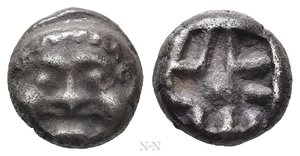
MYSIA. Parion. Drachm (5th century BC). Obv: Facing gorgoneion with protruding tongue.Rev: Linear pattern within incuse square.SNG BN 1347; SNG Copenhagen 256; SNG von Aulock 1318. Condition: Very fine.Weight: 3.6 g. Diameter: 12 mm.
Lot # 106
-
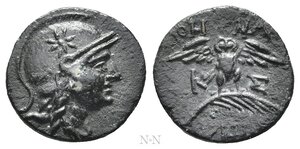
MYSIA. Pergamon. Ae (Circa 200-133 BC). Obv: Head of Athena right, wearing helmet decorated with .Rev: AΘHNAΣ / NIKHΦOPOY. Owl standing facing on palm frond right, with wings spread. Controls: K to left, Σ to right.SNG BN 1920-2. Condition: Good very fine.Weight: 2.34 g. Diameter: 16 mm.
Lot # 107
-
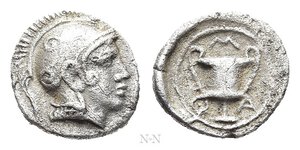
LESBOS. Methymna. Obol (Circa 450/40-406/379 BC). Obv: Helmeted head of Athena right.Rev: Μ - Α - Θ. Kantharos within linear circular border; all within incuse circle.Franke 12; SNG Copenhagen 351; HGC 6, 904. Condition: Very fine.Weight: 0.49 g. Diameter: 8 mm.
Ex Hauck Aufhäuser 1992
Lot # 108
-
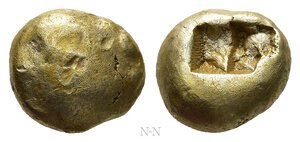
IONIA. Uncertain. EL Hekte - 1/6 Stater (Circa 650-600 BC). Obv: Plain globular surface.Rev: Incuse square punch.Weidauer 4; SNG Kayhan I 673; Traité I 11.Ex Aufhäuser 9 (1992), lot 109; ex Fritz Rudolf Künker 312 (2018), lot 2317 Condition: Very fine.Weight: 2.33 g. Diameter: 10 mm.
Lot # 109
-
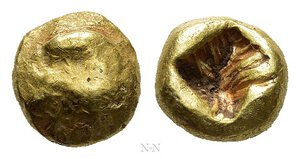
IONIA. Uncertain. EL Hemihekte or 1/12 Stater (Circa 650-600 BC). Obv: Plain globular surface.Rev: Incuse square punch.SNG Kayhan 676. Condition: Very fine.Weight: 1.18 g. Diameter: 8 mm.
Ex Sternberg 1991
Lot # 110
-
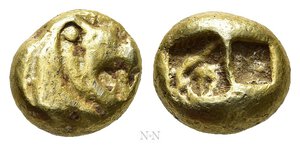
IONIA. Uncertain. EL Hekte (Circa 600-550). Obv: Head of lion right.Rev: Two incuse squares.Linzalone 1069.RareEx Sternberg 25 (1991), lot 148; ex Fritz Rudolf Künker 312 (2018), lot 2347 Condition: Very fine.Weight: 2.37 g. Diameter: 10 mm.
Lot # 111
-
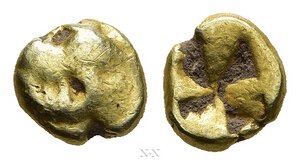
IONIA. Uncertain. EL 1/24 Stater (Circa 550-500 BC). Obv: Forepart of ram right.Rev: Quadripartite incuse square.Klein -; Rosen -; SNG Kayhan -; Weidauer -; Leu 27, lot 637. Condition: Very fine.Weight: .66 g. Diameter: 6 mm.
Lot # 112
-
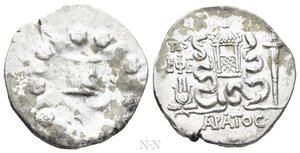
IONIA. Ephesos. C. Fannius. Praetor (49-48 BC). Cistophor. Aratos, magistrate. Obv: Cista mystica with serpent; all within wreath of ivy and flowers.Rev: C FAN PONT PR / APATOC. Two serpents entwined around domed distyle temple surmounted by cult statue, holding patera and long sceptre; Πϛ over EΦE and headdress of Isis to left, flaming torch to right.Stumpf 58.Rare Condition: Very fine.Weight: 12.41 g. Diameter: 26 mm.
Lot # 113
-
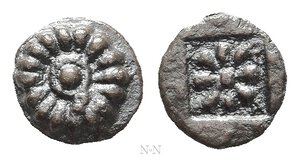
IONIA. Erythrai. Hemiobol (Circa 480-450 BC). Obv: Rosette.Rev: Rosette of eight petals within incuse square.Klein 387. Condition: Extremely fine.Weight: 0.30 g. Diameter: 7 mm.
Lot # 114
-
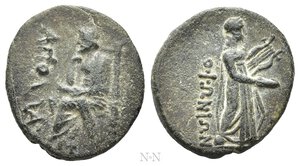
IONIA. Kolophon. Ae (Circa 190-30 BC). Apollas, magistrate. Obv: AΠOΛΛAΣ. Homer seated left on throne, holding scroll and resting chin upon hand.Rev: KOΛOΦΩNIΩN. Apollo standing right, holding kithara and phiale.Milne, Colophon 178; SNG Aulock 2017. Condition: Good very fine.Weight: 4.44 g. Diameter: 20 mm.
Lot # 115
-
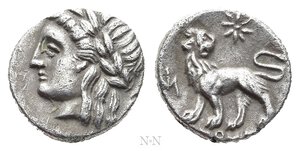
IONIA. Miletos. Hemidrachm (Circa 340-325 BC). Proxenos(?), magistrate. Obv: Laureate head of Apollo left.Rev: ΠPOΞENOΣ(?). Lion standing left, head right; star above, monogram to left.Cf. Deppert-Lippitz 246-53. Condition: Very fine.Weight: 1.56 g. Diameter: 12 mm.
Lot # 116
-
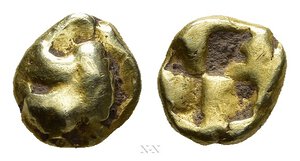
IONIA. Phokaia. EL 1/24 Stater (Circa 625/0-522 BC). Obv: Head of griffin right.Rev: Quadripartite incuse square.Bodenstedt 1; SNG von Aulock 1794.Rare Condition: Very fine.Weight: .63 g. Diameter: 6 mm.
Lot # 117
-
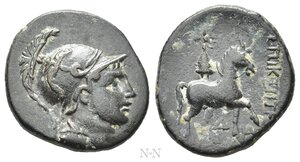
PHRYGIA. Epikteteis. Ae (2nd-1st centuries BC). Obv: Helmeted and draped bust (Ares?) right.Rev: EΠIKTHTE. Horse prancing right; above, pileos surmounted by star; monograms below.BMC 1-7; HGC 7, 679-80. Condition: Very fine.Weight: 5.94 g. Diameter: 21 mm.
Lot # 118
-
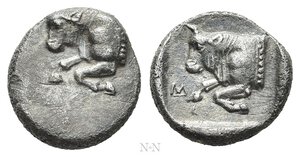
CARIA. Uncertain. Diobol (Circa 500-450 BC). Obv: Forepart of bull left.Rev: Forepart of bull left; M monogram to left; all within incuse square.SNG Ashmolean 335; HN Online 1388.Rare Condition: Very fine.Weight: 2.08 g. Diameter: 13 mm.
Lot # 119
-
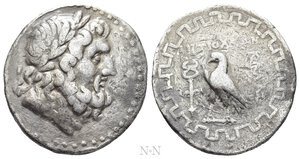
CARIA. Antioch ad Maeander. Tetradrachm (Circa 90/89-65/60). Kalas, magistrate. Obv: Laureate head of Zeus right.Rev: ANTIOXEΩN KAΛAΣ. Eagle standing left before winged kerykeion; all within maeander pattern.Thonemann Group B, 12; HN online 1531. Condition: Good fine.Weight: 16.01 g. Diameter: 29 mm.
Lot # 120
-
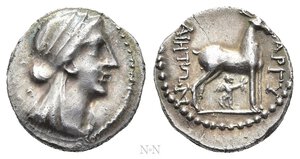
CARIA. Bargylia. Hemidrachm (2nd-1st century BC). Obv: Veiled head of Artemis Kindyas right.Rev: ΒΑΡΓΥ / ΛΙΗΤΩΝ. Stag standing right; below, Nike standing right, holding wreath.SNG Copenhagen -; SNG Kayhan -; HN online 1620.Rare Condition: Extremely fine.Weight: 2.28 g. Diameter: 15 mm.
Caricamento altri risultati...