Banner Artemide eLive Auktion 45
Risultati: 53
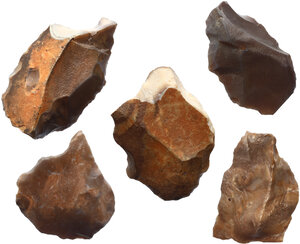
LITHIC INDUSTRY. Neolithic period, c. 9th - 4th millennium BC. Lot of five (5) flint scrapers. Various shapes. Dimensions c. 30 - 40 x 20 - 25 mm - LITHIC INDUSTRY. Neolithic period, c. 9th - 4th millennium BC. Lot of five (5) flint scrapers. Various shapes. Dimensions c. 30 - 40 x 20 - 25 mm.
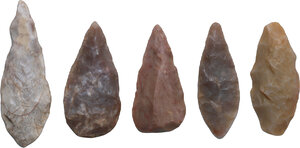
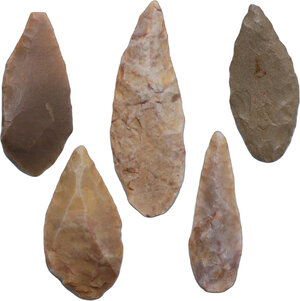
LITHIC INDUSTRY. Neolithic period, c. 9th - 4th millennium BC. Lot of five (5) projectile points and implements comprising flint arrowheads, blades or scrapers. Various shapes - LITHIC INDUSTRY. Neolithic period, c. 9th - 4th millennium BC. Lot of five (5) projectile points and implements comprising flint arrowheads, blades or scrapers. Various shapes.
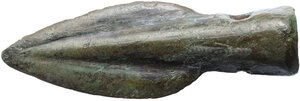
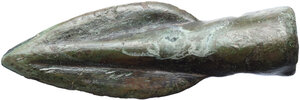
LATE BRONZE AGE SPEAR HEAD. c. 1200-800 BC. Socketed bronze spear head with leaf-shaped blade. The shaft tapers through the length of the spear head to the point. Shaft with two locking holes. Dimensions: 82 x 27 x 20 mm - LATE BRONZE AGE SPEAR HEAD. c. 1200-800 BC. Socketed bronze spear head with leaf-shaped blade. The shaft tapers through the length of the spear head to the point. Shaft with two locking holes. Dimensions: 82 x 27 x 20 mm. 56.81 g.
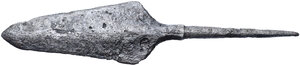
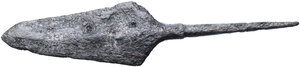
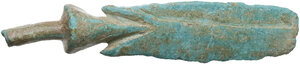
ROMAN IRON ARROWHEAD Roman period, c. 2nd - 5th century AD. Forged iron arrowhead or javelin point with a flat leaf-shaped blade and a long tang mount with a small collar. Dimensions: 94 x 21 mm - ROMAN IRON ARROWHEAD Roman period, c. 2nd - 5th century AD. Forged iron arrowhead or javelin point with a flat leaf-shaped blade and a long tang mount with a small collar. Dimensions: 94 x 21 mm. 11.07 g. Minor chips.
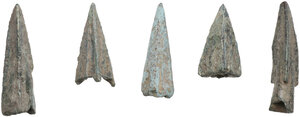
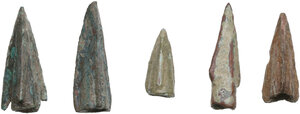
ARROW HEADS Lot of five (5) metal arrow heads - ARROW HEADS Lot of five (5) metal arrow heads.
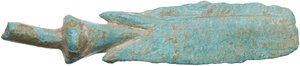
ARROW HEAD Arrow head with fixture. Probably for a crossbow rather than a hand-held bow. Point missing. Attractive light turquoise patina. 57X12 mm - ARROW HEAD Arrow head with fixture. Probably for a crossbow rather than a hand-held bow. Point missing. Attractive light turquoise patina. 57X12 mm. 9.54 g.
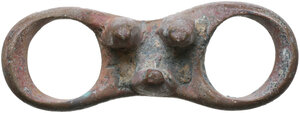
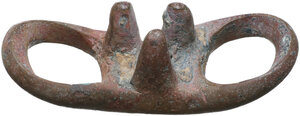
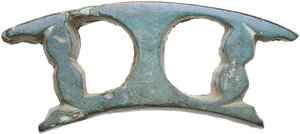
ROMAN BRONZE BOW RING. Roman Republican period, c. 5th century BC - 1st century BC. Tricuspid geminous ring in bronze, formed by two cylindrical annular elements, connected by a median body surmounted by three cusps: a wider one, with a triangular base, and two thinner ones placed side by side, with a pyramidal shape. The rings have faint thickenings on the front. Dimensions: 71.5 x 26 mm - ROMAN BRONZE BOW RING. Roman Republican period, c. 5th century BC - 1st century BC. Tricuspid geminous ring in bronze, formed by two cylindrical annular elements, connected by a median body surmounted by three cusps: a wider one, with a triangular base, and two thinner ones placed side by side, with a pyramidal shape. The rings have faint thickenings on the front. Dimensions: 71.5 x 26 mm. 81.91 g. In the past these objects have been interpreted in various ways: as female ornaments, tools for horse taming or bridle clips, as thrusters and bow turnbuckles. Among them, the most reliable hypothesis, based on experiences of experimental practice, is that they are bow turnbuckles, having as their main function the protection of the fingers during the release of the arrow. The tricuspid gemini rings are very widespread especially in the Emilian area, in particular in the Parma, Reggio Emilia and Modena areas, but they are also known in northern Italy in the Lombard and Piedmont areas. Their chronological classification is difficult in the absence of stratigraphic associations, given that they appear both in contexts of the second Iron Age and in the late Republican age, above all due to a tendency towards formal conservatism inherent in the instrument.
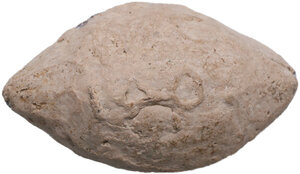
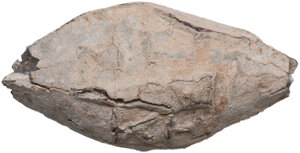
HELLENISTIC WORLD. LEAD SLINGSHOT BULLET. c. 3rd century BC-2nd century AD. Lead slingshot bullet with some letters on both sides. 32X17.5 mm - HELLENISTIC WORLD. LEAD SLINGSHOT BULLET. c. 3rd century BC-2nd century AD. Lead slingshot bullet with some letters on both sides. 32X17.5 mm. 47.9 g.
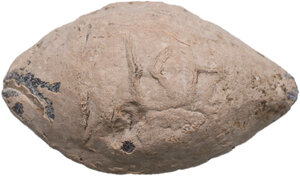
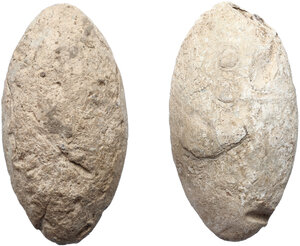
HELLENISTIC WORLD. LEAD SLINGSHOT BULLET. c. 3rd century BC-2nd century AD. Lead slingshot bullet with some letters on both sides. 32X16 mm - HELLENISTIC WORLD. LEAD SLINGSHOT BULLET. c. 3rd century BC-2nd century AD. Lead slingshot bullet with some letters on both sides. 32X16 mm. 29.61 g.
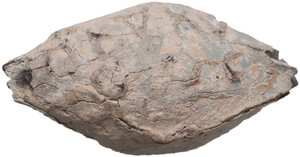
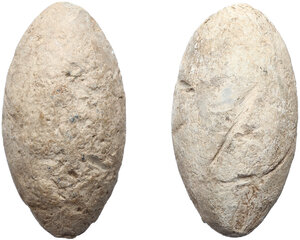
HELLENISTIC WORLD. LEAD SLINGSHOT BULLETS. c. 3rd century BC. Lot of two (2) lead slingshot bullets. Dimensions: c. 45 x 25 mm - HELLENISTIC WORLD. LEAD SLINGSHOT BULLETS. c. 3rd century BC. Lot of two (2) lead slingshot bullets. Dimensions: c. 45 x 25 mm.
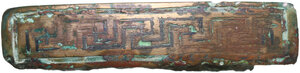
GREEK BRONZE FOOT OF A SITULA. Greek and Hellenistic World. One part of the feet on the base of a bronze situla (ancient wine bucket). Rectangular decorative face with a geometric maeander pattern, showing a reddish, copper-coloured surface contrasting with the surrounding green patina; openwork structure on the sides. Possibly incorporating an inset of a different metal. Dimensions: 68 × 30 mm; 89.62 g. Green and brown patina. Fragmentary. Examples of this type have been found on the Late Hellenistic shipwreck off the coast of Mahdia, Tunisia and in houses at Pompeii. Similar situla feet can be found at the Metropolitan Museum of Art (object number 22.139.78) and at the Musée archéologique de Mariana in Lucciana (France) - GREEK BRONZE FOOT OF A SITULA. Greek and Hellenistic World. One part of the feet on the base of a bronze situla (ancient wine bucket). Rectangular decorative face with a geometric maeander pattern, showing a reddish, copper-coloured surface contrasting with the surrounding green patina; openwork structure on the sides. Possibly incorporating an inset of a different metal. Dimensions: 68 × 30 mm; 89.62 g. Green and brown patina. Fragmentary. Examples of this type have been found on the Late Hellenistic shipwreck off the coast of Mahdia, Tunisia and in houses at Pompeii. Similar situla feet can be found at the Metropolitan Museum of Art (object number 22.139.78) and at the Musée archéologique de Mariana in Lucciana (France). 89.62 g.
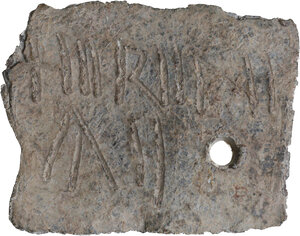
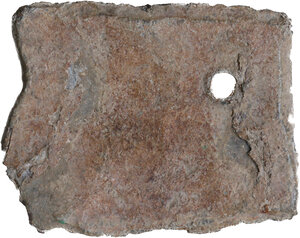
ANCIENT WORLD. Roman period (?). Small inscribed lead tablet, possibly a defixio or plumbum inscriptum. Approximately rectangular lead sheet with irregular edges, bearing an incised inscription in two lines, tentatively read as HIIRIINI / A II. Circular perforation in the lower right field. Possibly a small curse tablet (defixio) or an inscribed lead label (plumbum inscriptum). 23 × 18 mm. Grey patina with surface encrustations - ANCIENT WORLD. Roman period (?). Small inscribed lead tablet, possibly a defixio or plumbum inscriptum. Approximately rectangular lead sheet with irregular edges, bearing an incised inscription in two lines, tentatively read as HIIRIINI / A II. Circular perforation in the lower right field. Possibly a small curse tablet (defixio) or an inscribed lead label (plumbum inscriptum). 23 × 18 mm. Grey patina with surface encrustations. 4.52 g.
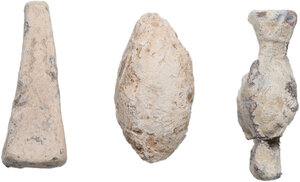
LEAD GROMA WEIGHTS. Lot of three (3) groma weights in different shapes - LEAD GROMA WEIGHTS. Lot of three (3) groma weights in different shapes.
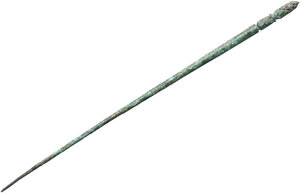
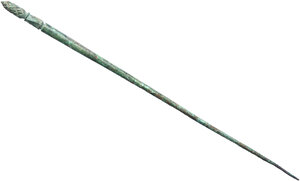
ROMAN BRONZE HAIRPIN. Roman period, c. 1st - 3rd century AD. Elaborately decorated bronze hairpin with pinecone-shaped head; the shaft with faceted segments below the cone. Dimensions: 115 x 4 mm - ROMAN BRONZE HAIRPIN. Roman period, c. 1st - 3rd century AD. Elaborately decorated bronze hairpin with pinecone-shaped head; the shaft with faceted segments below the cone. Dimensions: 115 x 4 mm. 3.61 g.
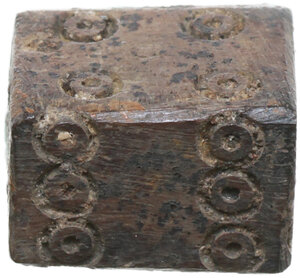
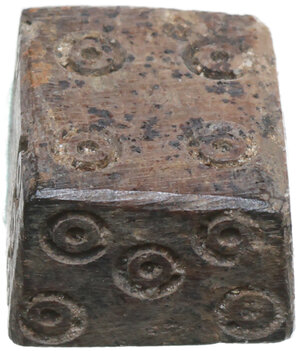
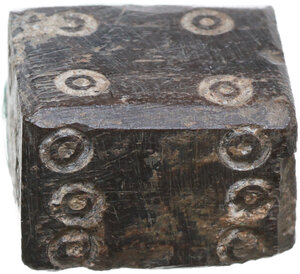
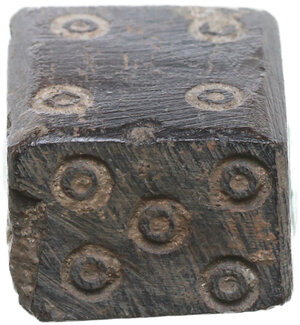
ROMAN BRONZE DICE Roman period, c. 1st - 4th century AD. Six-sided bronze Roman dice with punched numeral signs. 10X9 - ROMAN BRONZE DICE Roman period, c. 1st - 4th century AD. Six-sided bronze Roman dice with punched numeral signs. 10X9. 1.17 g. BRONZE DICE. Bronze dice.
ROMAN BRONZE DICE Roman period, c. 1st - 4th century AD. Six-sided bronze Roman dice with punched numeral signs. 14X12 mm - ROMAN BRONZE DICE Roman period, c. 1st - 4th century AD. Six-sided bronze Roman dice with punched numeral signs. 14X12 mm. 3.06 g.
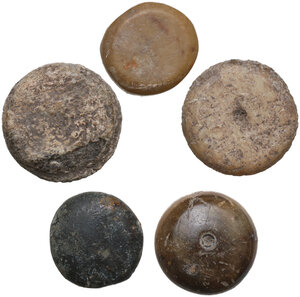
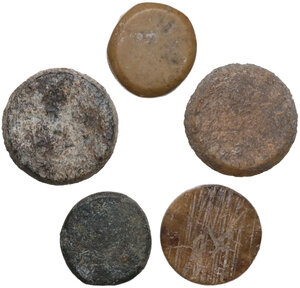
GAMING TOKENS Lot of five (5) tokens of different sizes and materials (lead, some metal, horn). Diameters: c. 13 to 17 mm - GAMING TOKENS Lot of five (5) tokens of different sizes and materials (lead, some metal, horn). Diameters: c. 13 to 17 mm.
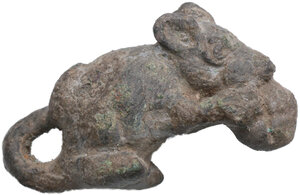
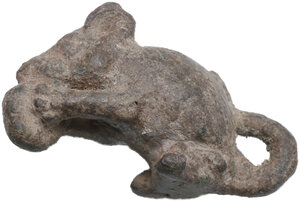
ROMAN BRONZE MOUSE STATUETTE Roman period, c. 1st - 4th century AD. Freestanding bronze figurine of a mouse sitting on its haunches, holding a small bread bun to its mouth with its forepaws, tail curled upwards to the back. Modelled with naturalistic detailing to its textured coat, feet, ears and face. Somewhat rough surface - ROMAN BRONZE MOUSE STATUETTE Roman period, c. 1st - 4th century AD. Freestanding bronze figurine of a mouse sitting on its haunches, holding a small bread bun to its mouth with its forepaws, tail curled upwards to the back. Modelled with naturalistic detailing to its textured coat, feet, ears and face. Somewhat rough surface. 9.84 g. 27 mm.
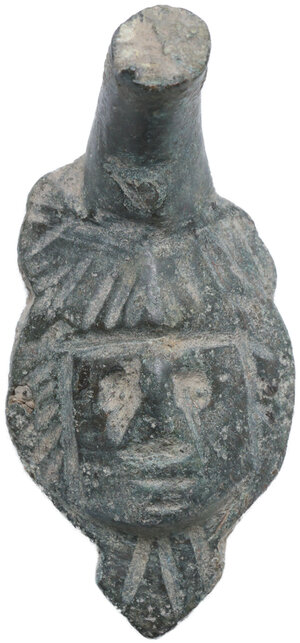
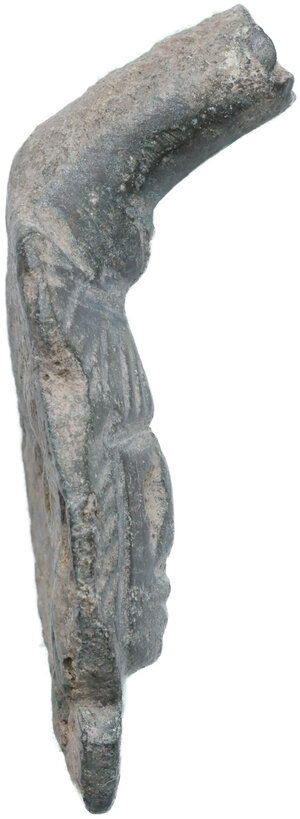
ROMAN WORLD. Bronze handle fragment or appliqué. Decorated with a stylised facing human mask, with crudely incised facial features and radiating grooves above; pointed terminal below and a broken, curved shank above. Dark green patina with earthy encrustations. Fragmentary - ROMAN WORLD. Bronze handle fragment or appliqué. Decorated with a stylised facing human mask, with crudely incised facial features and radiating grooves above; pointed terminal below and a broken, curved shank above. Dark green patina with earthy encrustations. Fragmentary. AE. 22.68 g. 45.5 mm.
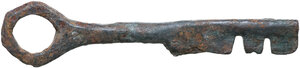
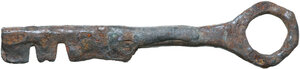
IRON KEY Roman to Byzantine period, c. 5th - 10th century AD. Dimensions: 99 x 22 mm - IRON KEY Roman to Byzantine period, c. 5th - 10th century AD. Dimensions: 99 x 22 mm. 23.23 g.
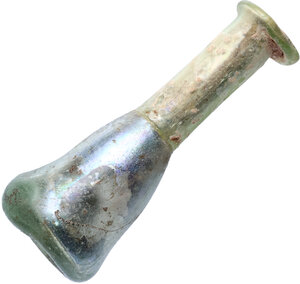
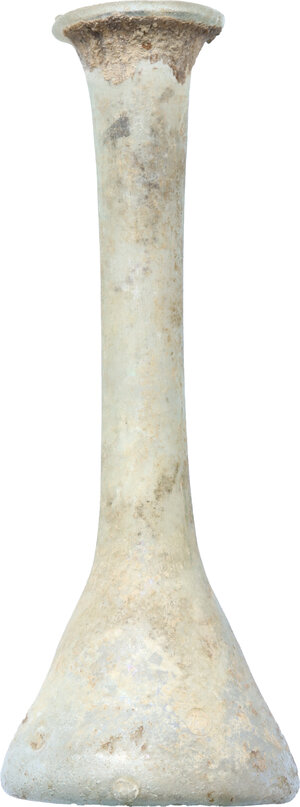
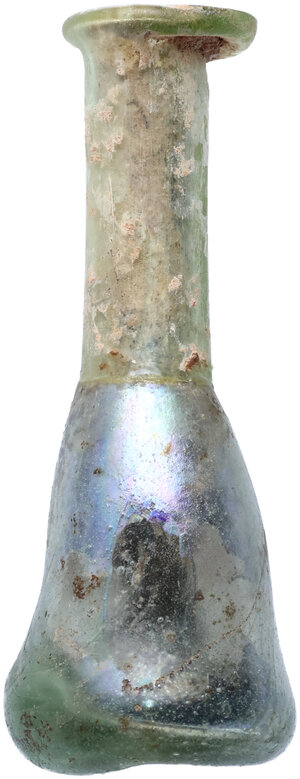
ROMAN GLASS UNGUENTARIUM. Roman period, Eastern Mediterranean, 1st - 3rd century AD. Small pale bluish-green translucent glass unguentarium with a flared folded lip, a long cylindrical neck with a slight constriction at the base, a conical body and a slightly inward-curved bottom. Lovely areas of iridescence. Diameter rim: 21 mm, diameter base: 31 mm, height: 78 mm - ROMAN GLASS UNGUENTARIUM. Roman period, Eastern Mediterranean, 1st - 3rd century AD. Small pale bluish-green translucent glass unguentarium with a flared folded lip, a long cylindrical neck with a slight constriction at the base, a conical body and a slightly inward-curved bottom. Lovely areas of iridescence. Diameter rim: 21 mm, diameter base: 31 mm, height: 78 mm. Restored. Encrustations and accretions. Sinter is present inside, along with partly loose deposits. Ex Gorny&Mosch, auction 268 (2019), 634. FRAGILE! SHIPPING ONLY WITHIN THE EU.
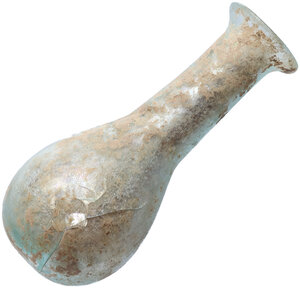
ROMAN GLASS UNGUENTARIUM. Roman period, Eastern Mediterranean, 1st - 3rd century AD. Small pale bluish-green translucent glass unguentarium with a flat lip, a long cylindrical neck, a pyriform body and a roundish bottom. Light iridescence. Diameter rim: 18 mm, diameter base: 26 mm, height: 62 mm - ROMAN GLASS UNGUENTARIUM. Roman period, Eastern Mediterranean, 1st - 3rd century AD. Small pale bluish-green translucent glass unguentarium with a flat lip, a long cylindrical neck, a pyriform body and a roundish bottom. Light iridescence. Diameter rim: 18 mm, diameter base: 26 mm, height: 62 mm. Some fissures. Encrustations and accretions. Sinter is present inside, along with deposits. Ex Gorny&Mosch, auction 268 (2019), 634. FRAGILE! SHIPPING ONLY WITHIN THE EU.
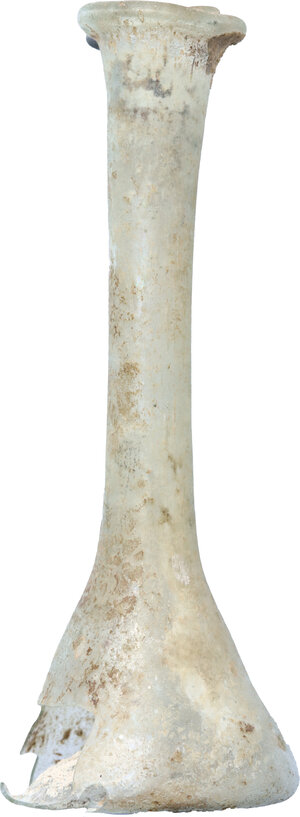
ROMAN GLASS UNGUENTARIUM Roman period, 1st - 4th century AD. Pale translucent glass unguentarium with a flat lip, a long cylindrical neck, a conical body and slightly inward-curved bottom. With light iridescent hues. Diameter rim: 29 mm, diameter base: 40 mm, height: 105 mm - ROMAN GLASS UNGUENTARIUM Roman period, 1st - 4th century AD. Pale translucent glass unguentarium with a flat lip, a long cylindrical neck, a conical body and slightly inward-curved bottom. With light iridescent hues. Diameter rim: 29 mm, diameter base: 40 mm, height: 105 mm. A break exists in the body with a missing piece. Sinter is present inside, along with deposits. Ex Gorny&Mosch, auction 268, 2019, lot 634. FRAGILE! SHIPPING ONLY WITHIN THE EU.
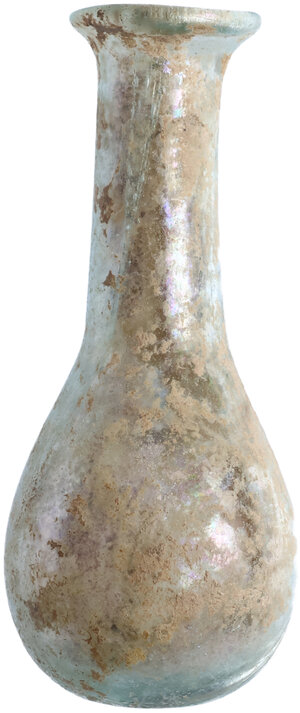
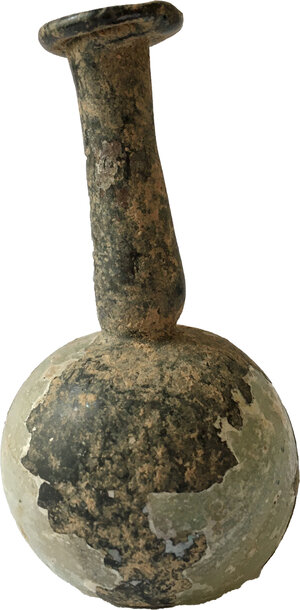
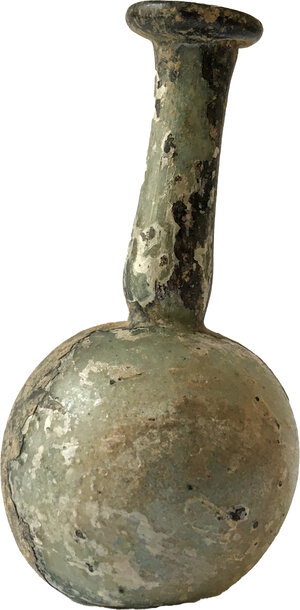
ROMAN GLASS Roman period, c. 1st - 3rd century AD. Small fragrance bottle with spheric body and tight, long neck. Diameter body: 40 mm, height: 78 mm - ROMAN GLASS Roman period, c. 1st - 3rd century AD. Small fragrance bottle with spheric body and tight, long neck. Diameter body: 40 mm, height: 78 mm. Intact and complete. Deposits. Ex Gorny&Mosch, auction 268 (12.12.2019). FRAGILE! SHIPPING ONLY WITHIN THE EU.
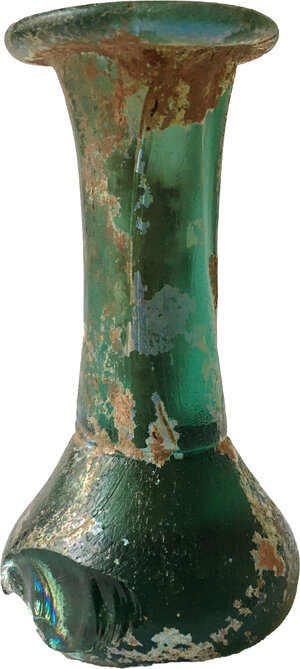
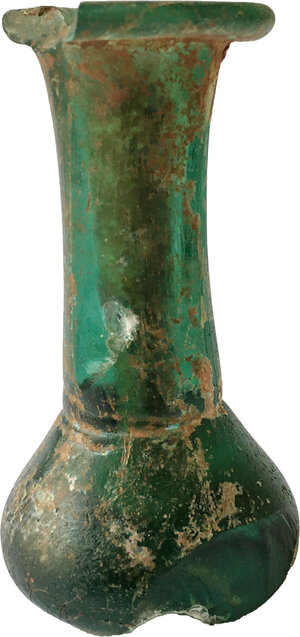
ROMAN GLASS Roman period, c. 1st - 3rd century AD. Conic shaped bottle with long neck and small body, dark green with some iridescence. Thick walls. Diameter body: 45 mm, height: 83 mm - ROMAN GLASS Roman period, c. 1st - 3rd century AD. Conic shaped bottle with long neck and small body, dark green with some iridescence. Thick walls. Diameter body: 45 mm, height: 83 mm. Ancient (on the lip) and modern (on the neck and bottom) chipping. Deposits. Ex Gorny&Mosch, auction 268 (12.12.2019). FRAGILE! SHIPPING ONLY WITHIN THE EU.
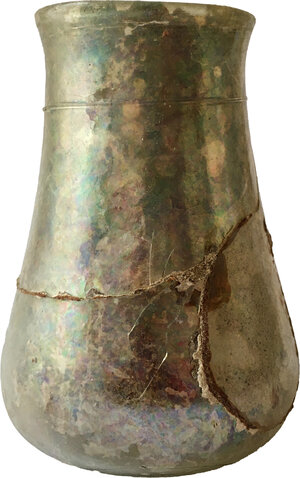
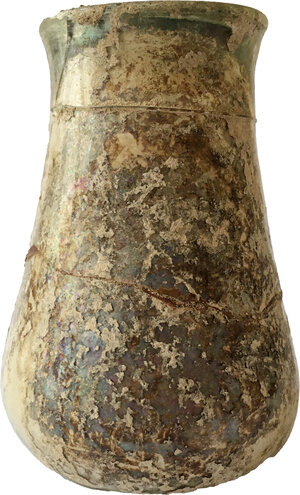
ROMAN GLASS Roman period, c. 1st - 3rd century AD. Slightly conic shaped vase. Transparent with light iridescence. Delicate piece with very thin walls. Diameter mouth: 44 mm, diameter bottom: 64 mm, height: 100 mm - ROMAN GLASS Roman period, c. 1st - 3rd century AD. Slightly conic shaped vase. Transparent with light iridescence. Delicate piece with very thin walls. Diameter mouth: 44 mm, diameter bottom: 64 mm, height: 100 mm. Traces of repair. Deposits. Ex Gorny&Mosch, auction 268 (12.12.2019). FRAGILE! SHIPPING ONLY WITHIN THE EU.
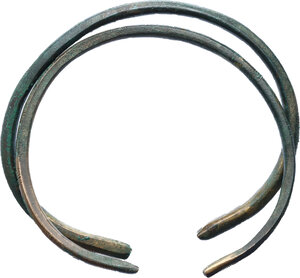
PAIR OF BRONZE BRACELETS Bronze Age, c. 1200-800 BC. Lot of two (2) penannular round-section bracelets or armlets made of bronze rod with tapered ends and incised decoration. Dimensions: 73 x 62 x 6 mm and 68 x 61 x 5 mm - PAIR OF BRONZE BRACELETS Bronze Age, c. 1200-800 BC. Lot of two (2) penannular round-section bracelets or armlets made of bronze rod with tapered ends and incised decoration. Dimensions: 73 x 62 x 6 mm and 68 x 61 x 5 mm.
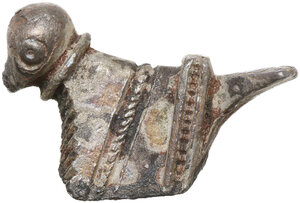
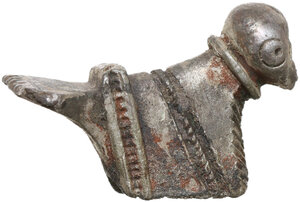
CELTIC SILVER DUCK Celtic, Danubian Region, 2nd century BC - 1st century AD. Silver decorative element in the shape of a stylised duck with adorned head, beak, and fantail. With incised and punched decoration, the edge of the tail notched. Dimensions: 20.5 x 13 mm - CELTIC SILVER DUCK Celtic, Danubian Region, 2nd century BC - 1st century AD. Silver decorative element in the shape of a stylised duck with adorned head, beak, and fantail. With incised and punched decoration, the edge of the tail notched. Dimensions: 20.5 x 13 mm. 4.36 g.
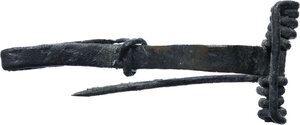
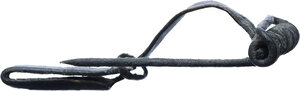
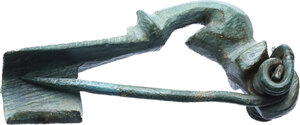
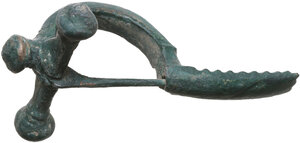
CELTIC LA TÈNE BRONZE FIBULA Iron Age, c. 2nd - 1st century BC. Bronze La Tène II type bow brooch, with a deep bow, P-shaped body, lateral catch and returned foot wound about the bow, coiled spring and still intact and moveable needle. Dimensions: 57 x 23 x 17 mm - CELTIC LA TÈNE BRONZE FIBULA Iron Age, c. 2nd - 1st century BC. Bronze La Tène II type bow brooch, with a deep bow, P-shaped body, lateral catch and returned foot wound about the bow, coiled spring and still intact and moveable needle. Dimensions: 57 x 23 x 17 mm. 6.5 g. Needle slightly bent.
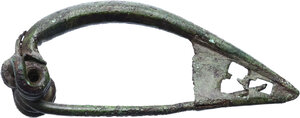
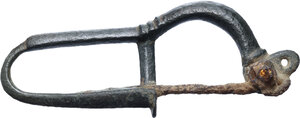
CELTIC LA TÈNE BRONZE FIBULA Iron Age to early Roman period, c. 1st century BC. Bronze La Tène III type bow brooch, with a deep bow, openwork lateral catch, coiled spring and needle. Dimensions: 54 x 17 x 22 mm - CELTIC LA TÈNE BRONZE FIBULA Iron Age to early Roman period, c. 1st century BC. Bronze La Tène III type bow brooch, with a deep bow, openwork lateral catch, coiled spring and needle. Dimensions: 54 x 17 x 22 mm. 9.95 g.
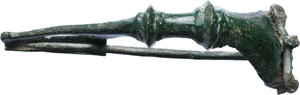
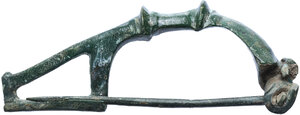
NORIC-PANNONIAN BRONZE DOUBLE-HEADED FIBULA Roman period. c. 1st - 2nd century AD. Bronze bow brooch of the 'Doppelknopffibel' type with D-section bow and two bulbs developing to a broad, frame-like open footplate with a lateral catch plate, coiled spring and partly moveable needle. Dimensions: 62 x 18 x 22 mm - NORIC-PANNONIAN BRONZE DOUBLE-HEADED FIBULA Roman period. c. 1st - 2nd century AD. Bronze bow brooch of the 'Doppelknopffibel' type with D-section bow and two bulbs developing to a broad, frame-like open footplate with a lateral catch plate, coiled spring and partly moveable needle. Dimensions: 62 x 18 x 22 mm. 14.36 g. Nice glossy green patina.
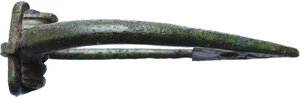
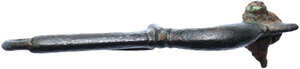
ROMAN BRONZE BOW FIBULA Roman period, c. 1st - 2nd century AD. A P-shaped brooch cast from bonze, with a single bow wich curves smoothly towards the returned foot, the bow is decorated with vertical ribbing. Coiled spring and needle made from iron. The needle rests in a deep groove on the returned foot, where it is now fixed in place. A protruding loop on the head arks the point whre the bow connects to the head-piece. Dimensions: 75 x 17 x 30 mm - ROMAN BRONZE BOW FIBULA Roman period, c. 1st - 2nd century AD. A P-shaped brooch cast from bonze, with a single bow wich curves smoothly towards the returned foot, the bow is decorated with vertical ribbing. Coiled spring and needle made from iron. The needle rests in a deep groove on the returned foot, where it is now fixed in place. A protruding loop on the head arks the point whre the bow connects to the head-piece. Dimensions: 75 x 17 x 30 mm. 19.38 g. Rusty iron parts.
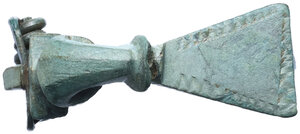
ROMAN BRONZE BOW-AND-FANTAIL FIBULA Roman period, 1st - 2nd century AD. A Roman bronze bow-and-fantail brooch featuring a slightly arched bow leading to a flat fantail leg. The fantail is enriched with a punch-marked dotted triangle within. Below the head is a coiled spring from which the pin extends out and rests in the catch plate. The pin is still freely movable. Dimensions: 30 x 12 x 13 mm - ROMAN BRONZE BOW-AND-FANTAIL FIBULA Roman period, 1st - 2nd century AD. A Roman bronze bow-and-fantail brooch featuring a slightly arched bow leading to a flat fantail leg. The fantail is enriched with a punch-marked dotted triangle within. Below the head is a coiled spring from which the pin extends out and rests in the catch plate. The pin is still freely movable. Dimensions: 30 x 12 x 13 mm. 4.7 g. Lovely light green patina.
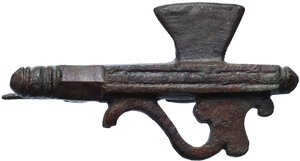
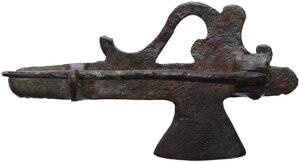
ROMAN BRONZE AXE PLATE FIBULA Roman period, 2nd - 3rd century AD. A bronze plate brooch formed as an axe with scrolled tendrils to socket and butt, decorated handle; hinged pin and catch. Dimensions: 50 x 27 x 17 mm - ROMAN BRONZE AXE PLATE FIBULA Roman period, 2nd - 3rd century AD. A bronze plate brooch formed as an axe with scrolled tendrils to socket and butt, decorated handle; hinged pin and catch. Dimensions: 50 x 27 x 17 mm. 14.13 g. Restored.
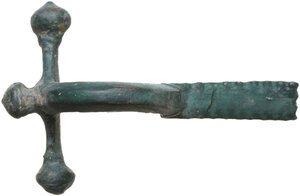
ROMAN BRONZE CROSSBOW FIBULA Roman period, c. 3rd century AD. Roman bronze 'crossbow' fibula with incised decoration with a punch-marked dotted triangle within the foot. Dimensions: 68 x 25 mm - ROMAN BRONZE CROSSBOW FIBULA Roman period, c. 3rd century AD. Roman bronze 'crossbow' fibula with incised decoration with a punch-marked dotted triangle within the foot. Dimensions: 68 x 25 mm. 28.28 g.
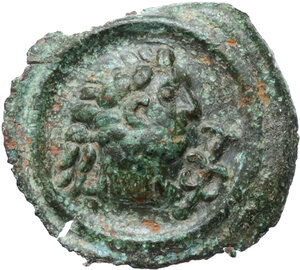
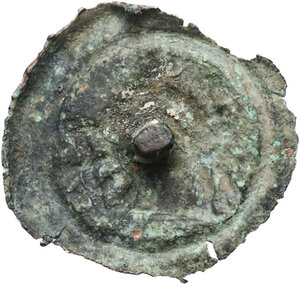
ROMAN BUTTON Roman period, c. 2nd century AD. Bronze button or stud with a stylized repoussé laureate bust; before, stylized caduceus or sceptre; all within concentric rings. Mounting lug on reverse. Bracteate like and very fragile - ROMAN BUTTON Roman period, c. 2nd century AD. Bronze button or stud with a stylized repoussé laureate bust; before, stylized caduceus or sceptre; all within concentric rings. Mounting lug on reverse. Bracteate like and very fragile. 0.77 g. 18 mm.
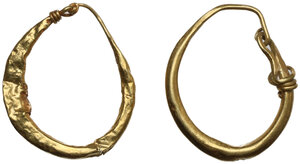
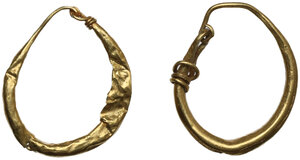
ROMAN GOLD EARRINGS Two simple circular earrings. One is slightly damaged and broken. Diameter: both 18 mm. Total weight: 1.17 g - ROMAN GOLD EARRINGS Two simple circular earrings. One is slightly damaged and broken. Diameter: both 18 mm. Total weight: 1.17 g.
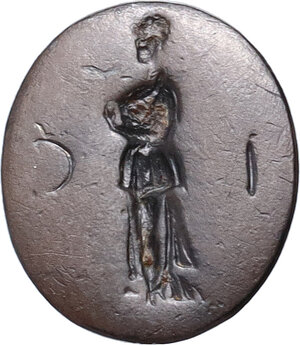
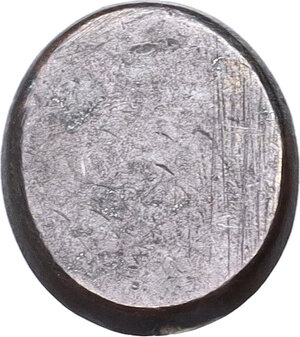
ROMAN BRONZE SEAL WITH ISIS. Roman period, 1st - 4th century AD. Engraved bronze seal depicting draped Isis standing left; in the fields, I - C. The seal was probably mounted or set into a ring. Dimensions: 12 x 10 mm. Weight: 1.67 g - ROMAN BRONZE SEAL WITH ISIS. Roman period, 1st - 4th century AD. Engraved bronze seal depicting draped Isis standing left; in the fields, I - C. The seal was probably mounted or set into a ring. Dimensions: 12 x 10 mm. Weight: 1.67 g. R.
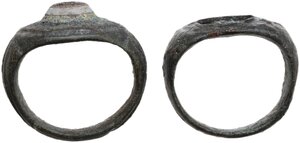
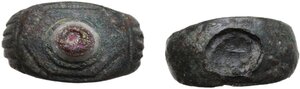
TWO ROMAN BRONZE RINGS Roman period, c. 2nd-3rd century AD. Lot of two (2) bronze rings, one with a lovely iridescent glass paste. Inner size: both 17 mm - TWO ROMAN BRONZE RINGS Roman period, c. 2nd-3rd century AD. Lot of two (2) bronze rings, one with a lovely iridescent glass paste. Inner size: both 17 mm.
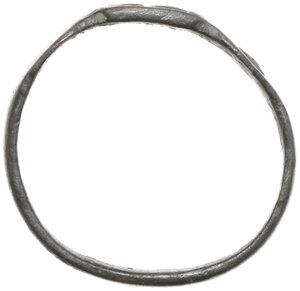
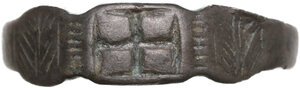
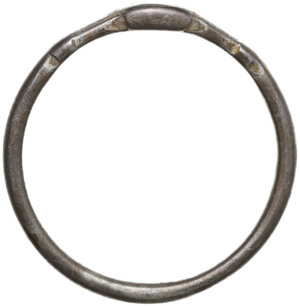
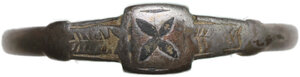
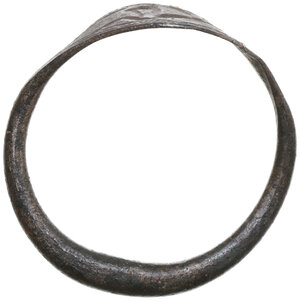
SILVER RING Late Antiquity to Medieval. Silver ring with geometric pattern - SILVER RING Late Antiquity to Medieval. Silver ring with geometric pattern. 1.75 g. 20.5 mm.
SILVER RING Late Antiquity to Early Modern. Silver ring with simple geometric floral pattern - SILVER RING Late Antiquity to Early Modern. Silver ring with simple geometric floral pattern. 1.55 g. 20.5 mm.
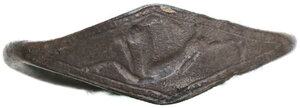
SILVER RING Migration period to early Medieval. Silver ring with lozenge shaped bezel. On the bezel a four-legged animal in a running stance to left - SILVER RING Migration period to early Medieval. Silver ring with lozenge shaped bezel. On the bezel a four-legged animal in a running stance to left. 1.92 g. 22 mm.
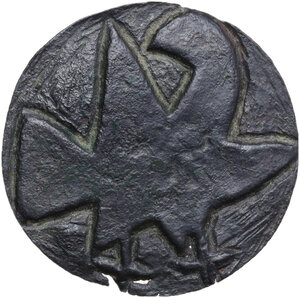
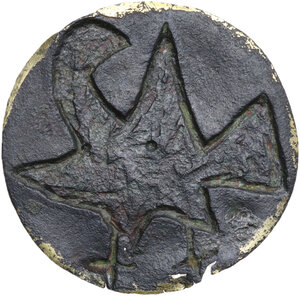
BRONZE EMBOSSED PLAQUE Migration period (?) Partially gilded bronze plaque with ornithomorphic stylization. Diameter: 35 mm - BRONZE EMBOSSED PLAQUE Migration period (?) Partially gilded bronze plaque with ornithomorphic stylization. Diameter: 35 mm. AE. Intriguing item.
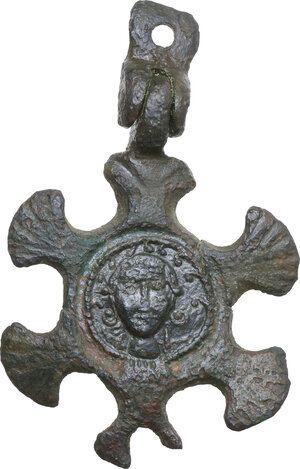
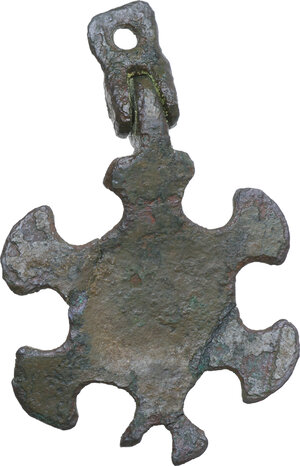
ANCIENT BRONZE PENDANT. Byzantine to Medieval period. Probably a horse harness pendant formed of a central circular panel enclosing a frontal bust; around the circumference are six leaf or petal type projections. Suspension loop and hinge. Diameter: 47 mm. Weight: 8.06 g - ANCIENT BRONZE PENDANT. Byzantine to Medieval period. Probably a horse harness pendant formed of a central circular panel enclosing a frontal bust; around the circumference are six leaf or petal type projections. Suspension loop and hinge. Diameter: 47 mm. Weight: 8.06 g.
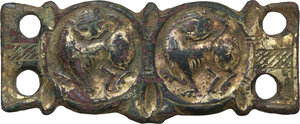
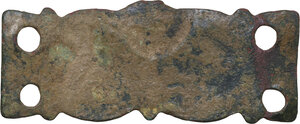
BRONZE APPLIQUE Early Medieval Period, c. 800-1000 (?). Bronze applique with two identical lions in flat relief within shallow circular incuse medallions. The lions are standing left, the heads are turned back. The lions are most likely punched in using a die similar to the ones used by coin striking. Crude geometric patterns between the medallions (leaf shaped motives) and at the edges (parallel diagonal lines). In the four corners there are holes for fastening, the piece was probably mounted on a flat surface, or a leather belt or strap. 52x21 mm - BRONZE APPLIQUE Early Medieval Period, c. 800-1000 (?). Bronze applique with two identical lions in flat relief within shallow circular incuse medallions. The lions are standing left, the heads are turned back. The lions are most likely punched in using a die similar to the ones used by coin striking. Crude geometric patterns between the medallions (leaf shaped motives) and at the edges (parallel diagonal lines). In the four corners there are holes for fastening, the piece was probably mounted on a flat surface, or a leather belt or strap. 52x21 mm. 10.5 g.
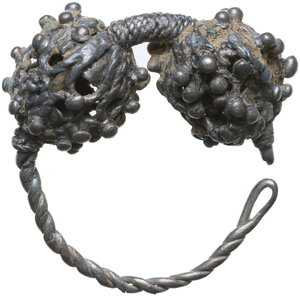
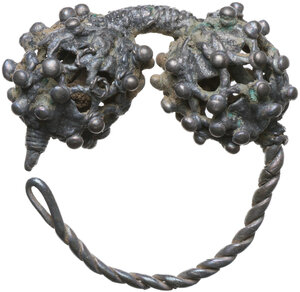
SLAVIC SILVER TEMPLE RING Medieval, c. 10th - 14th century AD. spirally twisted silver wire hoop with two open-work spheres, decorated with filigree and granulation techniques, the part between the spheres is coverd with filigree braided wire. Dimensions: 33x35 - SLAVIC SILVER TEMPLE RING Medieval, c. 10th - 14th century AD. spirally twisted silver wire hoop with two open-work spheres, decorated with filigree and granulation techniques, the part between the spheres is coverd with filigree braided wire. Dimensions: 33x35. 11.86 g. Instead of earrings, women of the various Slavic tribes wore rings of this type, attached to fabric bands around their heads in the temple area.
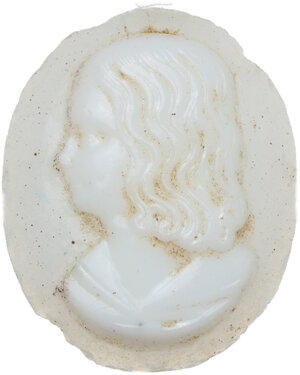
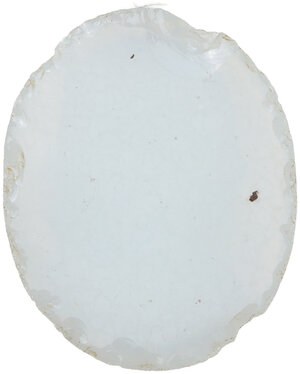
RENAISSANCE TASTE GEM. Modern times (?) Glass paste gem of Renaissance taste, depicting the bust of a young man facing left with long hair. Chipped edge. Dimensions: 21.5 x 17.5 mm - RENAISSANCE TASTE GEM. Modern times (?) Glass paste gem of Renaissance taste, depicting the bust of a young man facing left with long hair. Chipped edge. Dimensions: 21.5 x 17.5 mm.
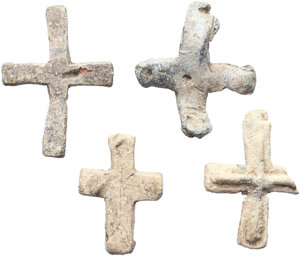
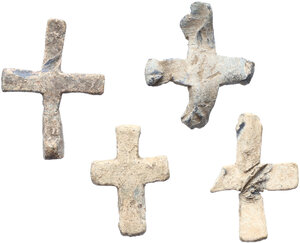
BYZANTINE LEAD CROSS PENDANTS Byzantine, c. 5th - 7th century AD. Lot of four (4) cross pendants, plain or with incised decoration. Partly with broken loop or filled hole for suspension. Dimensions: c. 25-30 x 20-25 mm - BYZANTINE LEAD CROSS PENDANTS Byzantine, c. 5th - 7th century AD. Lot of four (4) cross pendants, plain or with incised decoration. Partly with broken loop or filled hole for suspension. Dimensions: c. 25-30 x 20-25 mm.
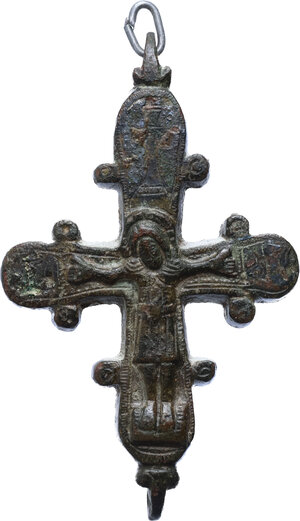
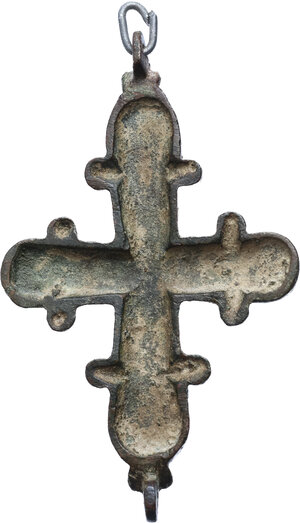
ENKOLPION RELIQUARY CROSS FRAGMENT Byzantine, c. 11th - 13th century AD. Byzantine bronze reliquary cross valve. Relief decoration depicting the crucified Christ; above, a very schematic engraved cross. Suspension loops intact. With a modern ring. Dimensions: 58 x 35 mm - ENKOLPION RELIQUARY CROSS FRAGMENT Byzantine, c. 11th - 13th century AD. Byzantine bronze reliquary cross valve. Relief decoration depicting the crucified Christ; above, a very schematic engraved cross. Suspension loops intact. With a modern ring. Dimensions: 58 x 35 mm. 14.29 g. Minor deposits.
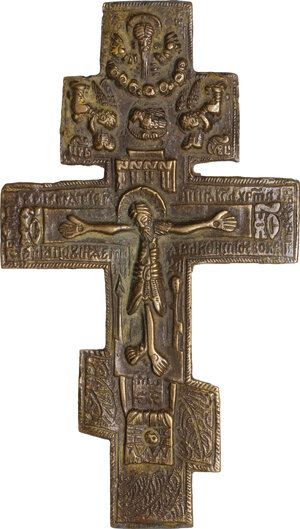
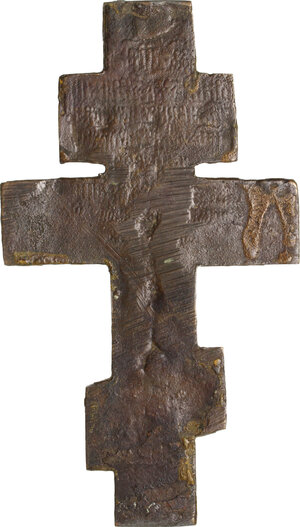
AE Cross, Russia, c. 19th century. 112x63 mm - AE Cross, Russia, c. 19th century. 112x63 mm. This form of cross is typical for the Russian Orthodox church.
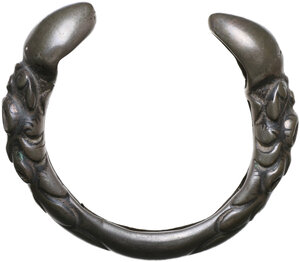
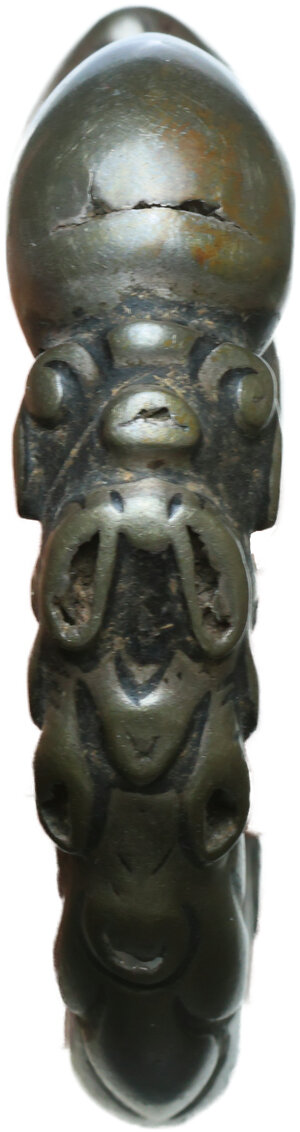
BUDDHIST BILLON BRACELET Tibet or Nepal, 19th century AD. Buddhist 'Dragon bracelet' or so-called Bunge Bala. The hollow bracelet is decorated with repousse and scrollwork as scales of a double makara (sea monster) or dragon and ends in oppossing large, polished mango-shaped bulbs. The seam on one of the bulbs is not completely sealed - BUDDHIST BILLON BRACELET Tibet or Nepal, 19th century AD. Buddhist 'Dragon bracelet' or so-called Bunge Bala. The hollow bracelet is decorated with repousse and scrollwork as scales of a double makara (sea monster) or dragon and ends in oppossing large, polished mango-shaped bulbs. The seam on one of the bulbs is not completely sealed. 38.09 g. 77 mm.