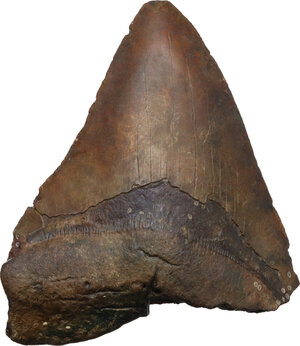
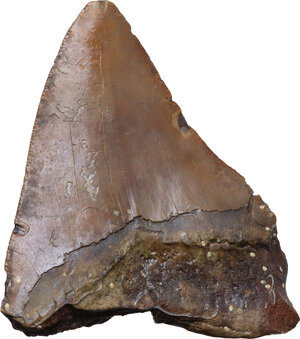
986 - MEGALODON TOOTH Miocene to Pleistocene, from 13.6 to 4.2 million years ago. Tooth of Carcharocles megalodon. Dimensions: 102 x 89 mm. Part of the mandibular impression is missing, otherwise in excellent preservation. The Megalodon was the largest shark that ever existed, as well as having the most powerful mandibular force that has been attributed, around 100,000 N.
Info & contatti
Le mie offerte
Lotti osservati
Conferimento
Condizioni di vendita
Prezzi di spedizione
Metodi di pagamento
Tabella rilanci
Esito stampabile
Sessione Live 1/6/2024 15:00:00 CET
Greek Coins (1-199)
Ancient and Medieval Asia (200-217)
The Roman Republic (218-429)
The Roman Empire (430-500)
Sessione Live 2/6/2024 15:00:00 CET
The Roman Empire (501-745)
Barbaric and Migration Period Coinage (746-756)
The Byzantine Empire (757-775)
Large Lots (776-804)
Islam (805-811)
Lead from the ancient world (812-814)
World Coins (815-985)
Antiquities (986-1046)

Risultati: 61
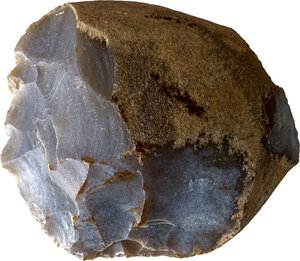
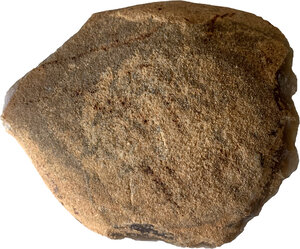
987 - FLINT CHOPPER Inferior and Middle Paleolithic, c. 2 million - 30000 years ago. Large chopper chipped on the wider side. Dimensions: 85 x 75 mm. Among the oldest objects produced by man, choppers were held in the hand with the unchipped side and were probably used to break the bones of slaughtered animals and cut their hides.
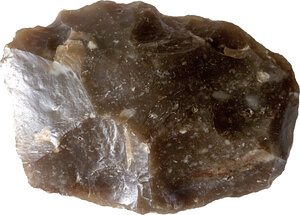
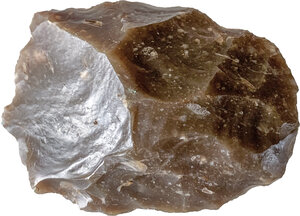
988 - FLINT SCRAPER Middle Paleolithic to Musterian, c. 300000-30000 BC. Well preserved flint scraper. Dimensions: 62.5 x 44 mm. Intact and complete.
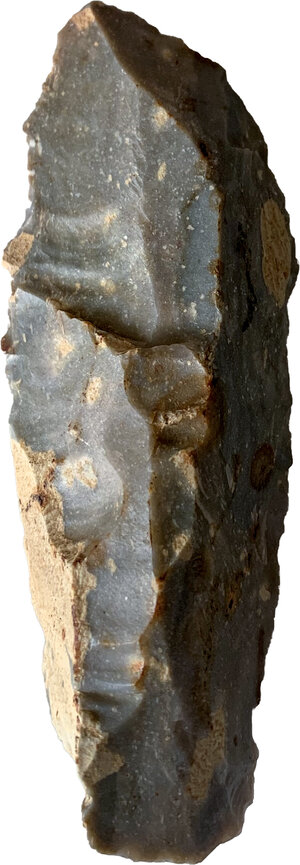
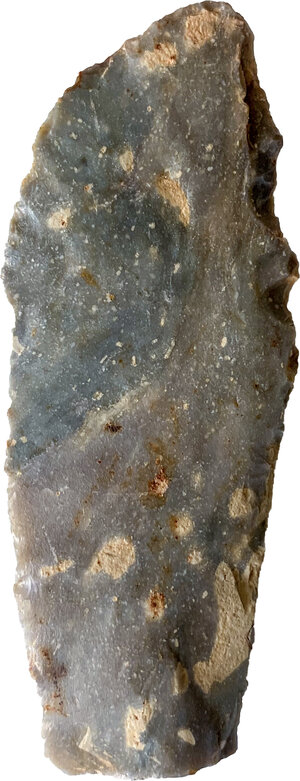
989 - STONE HAND AXE Probably Neolithic period, c. 40000 - 10000 years ago. Hand flint axe, with the two long sides marked and a rounded tip. Dimensions: 115 x 38 mm.
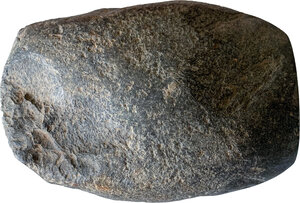
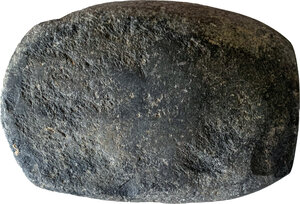
990 - STONE GRINDER Probably Neolithic period, c. 40000 - 10000 years ago. Quadrangular stone grinder, with one side worn from use. Dimensions: 112 x 75 x 40 mm.
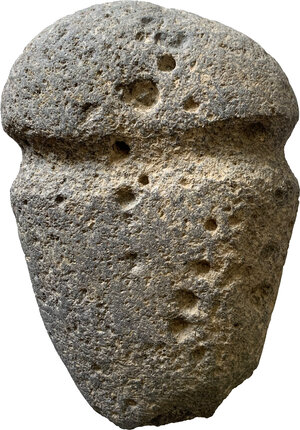
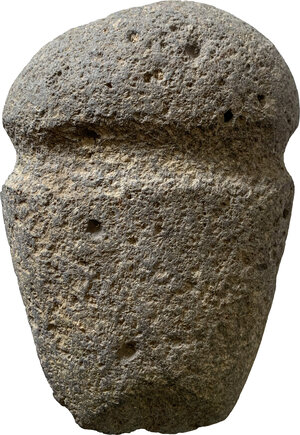
991 - NATIVE AMERICAN STONE AXE American Archaic period, c. 9000-2700 years ago. Large stone axe with groove around the midsection. Dimensions: 175 x 119 x 57 mm. Intact and complete. Large lithic tool, typical of Native American cultures of North America, used for cutting trees and trunks.
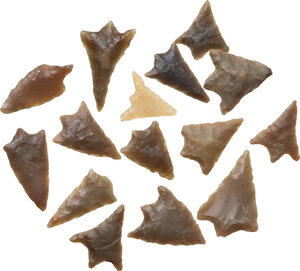
992 - PREHISTORIC ARROWHEADS Neolithic period, c. 10000-2000 BC Lot of fifteen (15) prehistoric arrowheads of various shapes. Dimensions: from 28 to 18 mm.
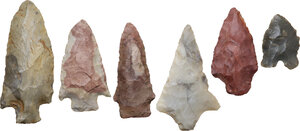
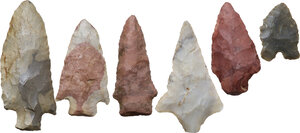
993 - NATIVE AMERICAN ARROWHEADS American prehistory, c. 13500-1000 BC. Lot of six (6) flint Native American arrowheads. Various shapes. Dimensions: from 77 to 35 mm.
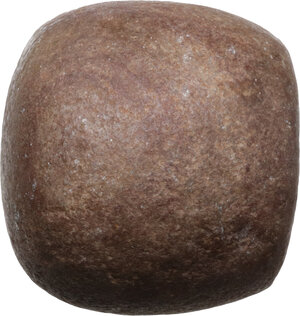
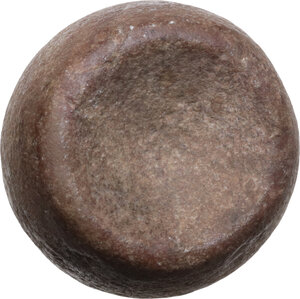
994 - COSMETIC STONE MORTAR Neolithic Age, c. 8000 - 2500 BC. Small stone mortar with rounded bottom, slightly curved profile and small basin. Dimensions: 41.5 x 48 mm. Rare and fascinating item.
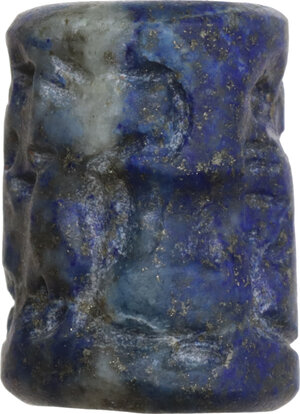

995 - LAPIS LAZULI SEAL Ancient Near East, c. 2nd millennium BC (?). Lapis lazuli seal engraved with an animal frieze; felines. Through hole composed of two holes that meet in the center. Dimensions: 18 x 13 mm. Intact and complete. Possibly a revival. Sold as is, no return.
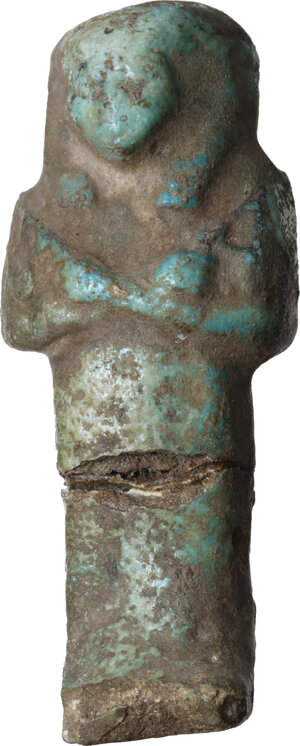
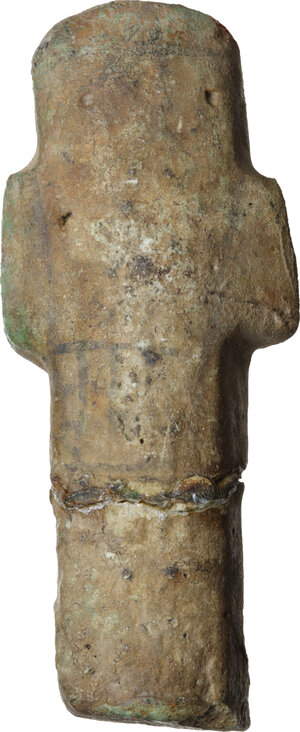
996 - FAIENCE USHABTI Egyptian culture, New Kingdom, c. 1550 - 1070 BC Egyptian ushabti in blue faience, with two hoes in its crossed arms. On the back there is a bag painted. Dimensions: 99 x 40 mm. Fascinating item. Broken and repaired, minor missings. Initially present in a single specimen in Egyptian tombs, the ushabti had to come alive and serve the deceased in the afterlife. They subsequently became an abundant presence in Egyptian tombs. The presence of the bag in the back allows us to date the ushabti to the New Kingdom.
Marvelous Large Spearhead


997 - BRONZE AGE SPEARHEAD Late Bronze Age, c. 12th - 8th century BC. Bronze spearhead with conical cannon handle. Unusual engraved herringbone decoration and punched circles. In the terminal part of the blade there are two holes, in addition to those normally present for fixing to the rod. Dimensions: 285 x 37 mm. Fascinating item, minor damages.
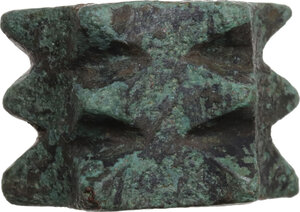
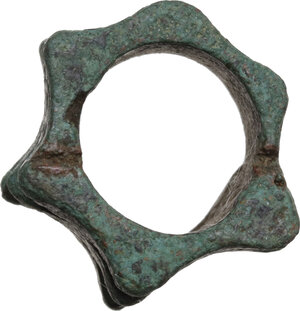
998 - BRONZE 'PASSAREDINI' OR MACE HEAD Italic culture, c. 6th to 4th century BC. Masculine ring forged from leaded bronze. The circular accessory features a relatively smooth interior surface as well as columns of three spikes surrounding the exterior. Diameter: 23 mm. Height: 17 mm. Height: 16 mm. AE. Intact and complete. Generally referred to as 'passaredini' and thus related to the equestrian sphere, this type of bronze object apparently has no certain function. Another hypothesis of use sees these objects as belonging to the military or domestic sphere.
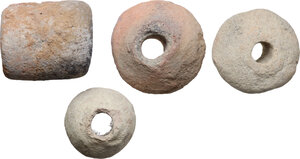
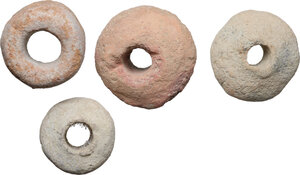
999 - FOUR POTTERY WEIGHTS Greek World, c. 6th - 2nd century BC. Lot of four (4) pottery frame weights; three biconical and one tubular in shape. Dimensions: from 46 to 36 mm. Intact and complete.
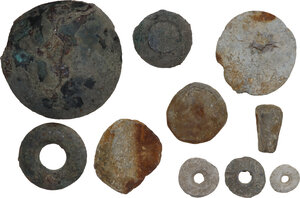
1000 - TEN ANCIENT WEIGHTS Central Europe, 1st millennium BC - 1st millennium AD. Lot of ten (10) ancient weights, of different shapes and weights, three in bronze and seven made of lead. Weights: from 446 to 7 g. Interesting study lot.
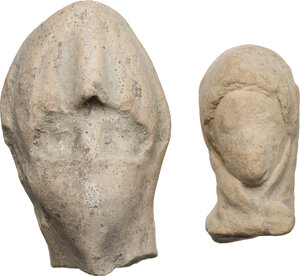
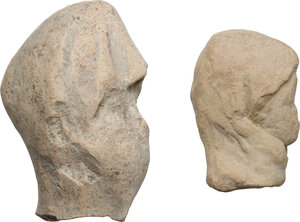
1001 - CYPRIOTIC VEILED WOMAN HEADS Greek Cyprus, c. 4th century BC. Lot of two terracotta heads, forming part of goddess statuettes, originally seated on a throne. Sizes: 49x30x34 mm and 36x18x25 mm. Rare and fascinating items. Numerous terracotta heads of veiled women have been found in Cyprus, many from the same mold, a sign that they were produced locally and then probably exported to the mainland. They probably represented a goddess sitting on a throne. Cfr: Metropolitan Museum, The Cesnola Collection, Purchased by subscription, 1874–76. Accession Number: 74.51.1494.
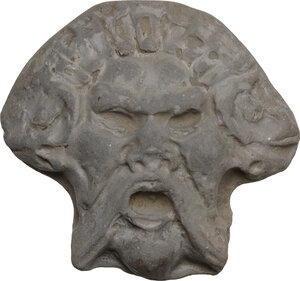
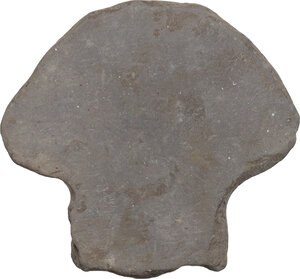
1002 - MAGNA GRECIAN TERRACOTTA APPLIQUE Magna Graecia, c. 4th-2nd century BC. Terracotta applique made from matrix, depicting a berded head, probably a theatrical mask, with a wide open mouth and complex hair Dimensions: 31 x 29 mm. Intact and complete.
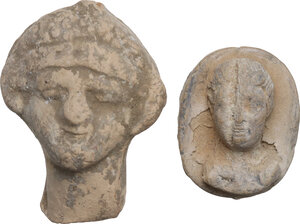
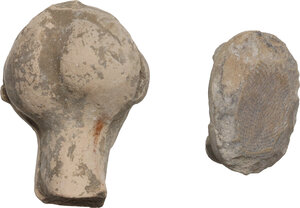
1003 - MAGNA GRECIAN TERRACOTTA HEADS Magna Graecia, c. 4th-2nd century BC. Lot of two (2) female terracotta heads, one worked in the round, the other resting on a clipeus. The first has roughly sketched features and retains possible traces of color on the back, the second is much more refined in style. Dimensions: 26.50 x 19.50 and 18.50 x 15.00 mm. Damages and wears.
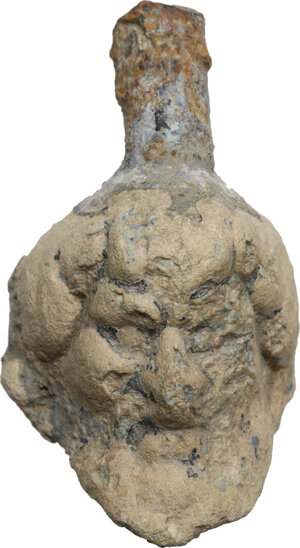
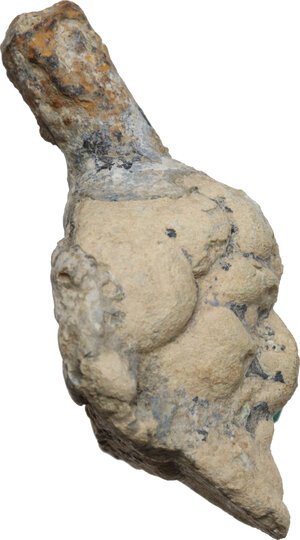
1004 - LEAD BEARDED HEAD Greek World, c. 4th - 2nd century BC. Bearded lead male head, part of a larger object, of which it retains the tang through which it was attached. Dimensions: 46.5 x 25 mm.
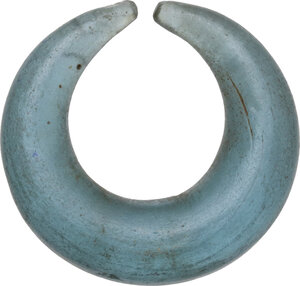
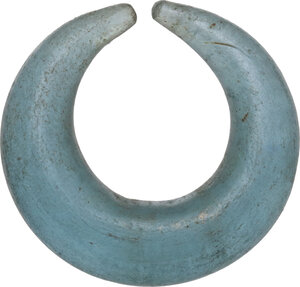
1005 - ANCIENT GLASS EARRING South East Asia, Vietnam or Cambodia, c. 3rd - 1st century BC. Light blue glass earring, with thicker body and thin ends. Dimensions: 23 x 21.5 mm. Rare, intact and complete.
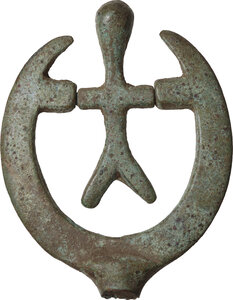
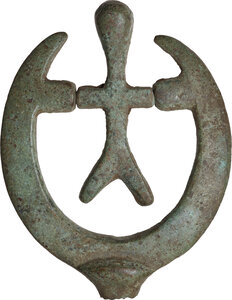
1006 - BRONZE TOY (?) Greek world or Roman period, c. 3rd century BC - 3rd century AD. Curious crescent-shaped object with a stylized human figure in the centre, joined by the arms to the support, so that it can rotate on itself. Dimensions: 78 x 59 mm. Interesting study item, part of a bigger object.


1007 - DOUBLE FORK IMPLEMENT Greek world or Roman period, c. 3rd century BC - 3rd century AD. Bronze object composed of a long stem with two fork tines at each end. Dimensions: 200 x 11 mm. Curious and interesting item.
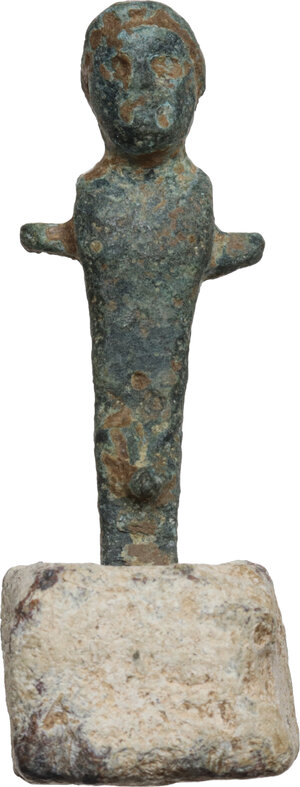
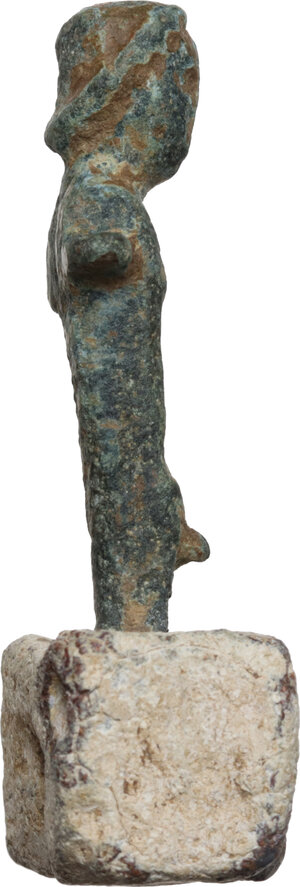
1008 - ROMAN BRONZE HERM Roman period, c. 2nd century BC - 1st century AD. Small Roman bronze herm probably depicting Zeus. The details of the head and genital organs are rendered, while the chest, arms and legs are barely sketched. The herm is placed in a cubic lead base. Dimensions: 50.5 x 18.0 mm. Intact and complete. Nice green patina with minor earthy deposits. The presence of the lead base makes the object much more interesting. The lead was poured into a hole carved into the stone, usually a small altar. These statuettes were specially made with a long terminal peduncle, which was intended to keep them erect once incorporated into lead.
Augustan Bezel with Capricorn
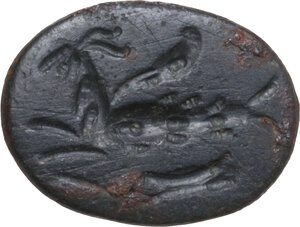
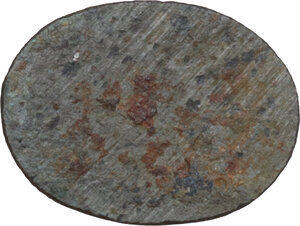
1009 - AUGUSTAN CAPRICORN BEZEL Roman Augustan period, after 31 BC - 14 AD. Bronze ring bezel with engraving of a Capricorn on the left, surmounted by a cornucopia and with a rostrum below. Dimensions: 16.5 x 12.5 mm. Rare and choice. Superficial marks. The representation of the zodiac sign of Capricorn becomes common during the second half of the first century BC, when Octavian becomes Augustus and the Roman Republic officially ends. Once the period of the 'Divus Filius' is over, in which Octavian had to affirm his direct descent from Caesar in order to claim the power that would later be imperial, a phase begins in which he will put aside his adoptive father figure, in order to be able to free himself as a 'new' entity. Capricorn was the zodiac sign of Augustus (sign of conception and not of birth, as in use among the Romans), it will be widely used. This bezel represents a celebratory ship's rostrum and is therefore certainly subsequent to the naval battle of Actium in 31 BC, in which Octavian's ships, commanded by Agrippa, defeated those of Marcus Antonius and Cleopatra, marking the end of the dispute.
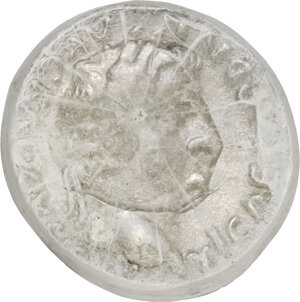
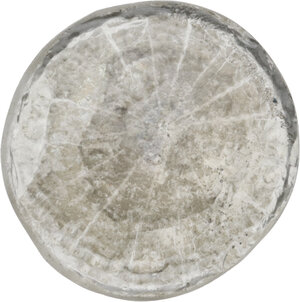
1010 - GLASS TOKEN Roman period (?), c. 1st century AD. Curious token obtained by pouring glass onto a refractory material on which the obverse of a denarius of Tiberius had been imprinted. Diameter: 18.5 mm. Weight: 2.28. Sold as is, no return.
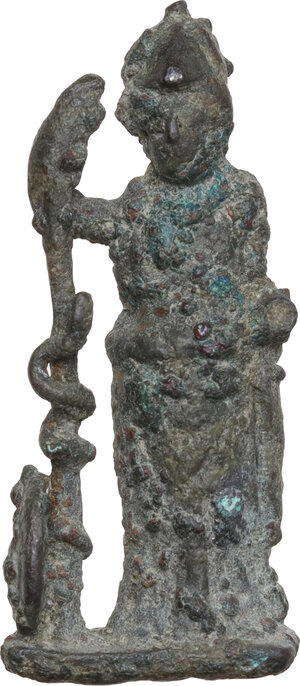
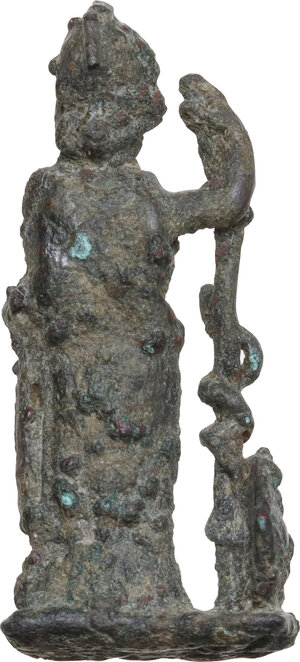
1011 - MINERVA BRONZE STATUETTE Roman period, c. 1st - 2nd century AD. Bronze statuette of Minerva standing facing, leaning on spear (?) with a coiled snake and a shield at its end. Height: 35 mm. Intact and complete. Reddish deposits.
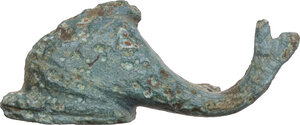
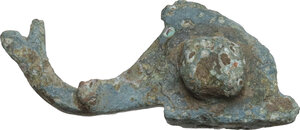
1012 - DOLPHIN SHAPED FIBULA Roman period, c. 2nd century AD. Bronze dolphin-shaped fibula. Dimensions: 29.5 x 10 mm. 2.88 g. Missing pin.
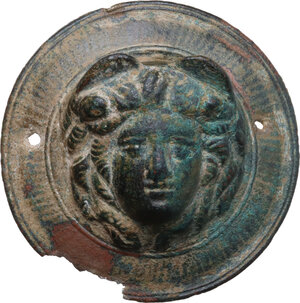
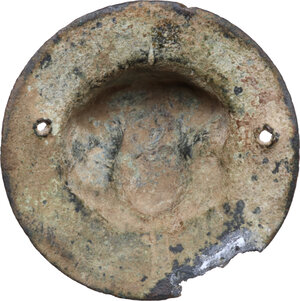
1013 - MEDUSA BRONZE PHALERA Roman period, c. 1st - 3rd century AD. Roman bronze phalera depicting, in relief, the head of a medusa with long locks of hair/snakes, surmounted by two wings. The representation is framed by a border made up of engraved lines. Two lateral holes for mounting. Diameter: 72 mm. Rare and fascinating item. Peripheral damage.
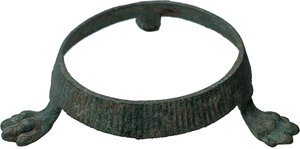
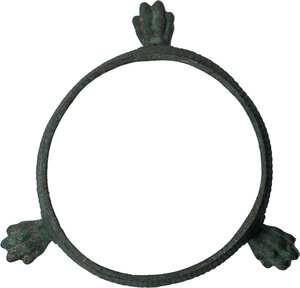
1014 - ROMAN BRONZE TRIPOD Roman period, c. 2nd-3rd century AD. Roman bronze tripod resting on three lion paws and composed of a high circular bronze band decorated with vertical strips. The plates surmounting the legs have a rectangular shape and are engraved with tabs. Lenght: 150 mm.; Height: 38 mm. Intact and interesting item.
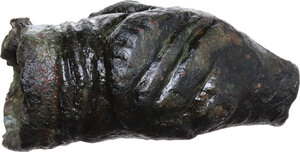
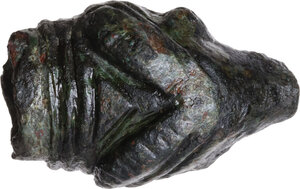
1015 - ROMAN BRONZE RAM HEAD Roman period, c. 1st - 4th century AD. Cast bronze ram head from the Roman era, with engraved details of the horns. Dimensions: 45.5 x 29.0 mm. Weight: 91.26. Intact and complete, of good workmanship. Minor wears. Interesting and fascinating item, probably part of a forniture or a chariot.
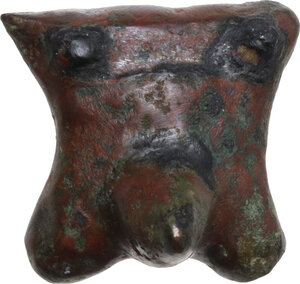
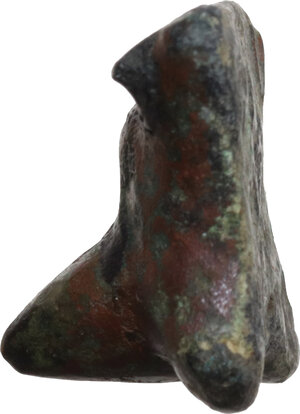
1016 - ROMAN PHALLIC APPLIQUE Roman period, c. 1st - 4th century AD. Bronze square shaped phallic applique. Dimensions: 20 x 19 mm. Intact and complete, with enchanting red and green patina.
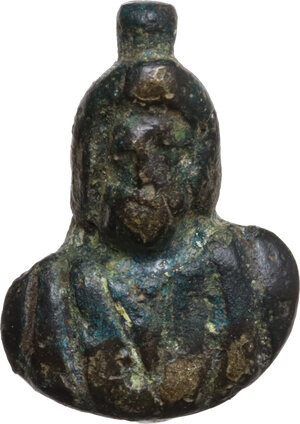
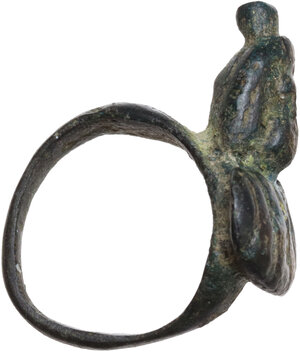
1017 - BRONZE RING WITH ZEUS SERAPIS Roman period, c. 1st - 4th century AD. Roman bronze finger ring in the shape of a bust of Zeus Serapis. Dimensions: 28 x 23 mm. Inner-size: 16 mm. Rare and fascinating item. Intact and complete. For many, the cult of Serapis, with songs, lights, bells, processions, represented a final transformation of the savior Osiris into a monotheistic figure, virtually identical to the Christian God. As Christ was a sacrificial lamb, so Serapis was a sacrificial bull and also a God in human form. « The worshipers of Serapis are Christians and those who are devoted to the god Serapis call themselves Vicars of Christ » Historia Augusta, Hadrian.
Anulus Pronubus
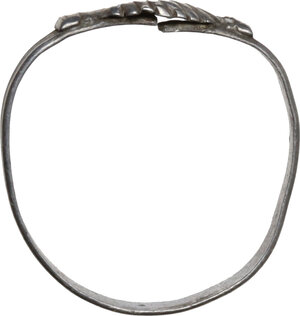
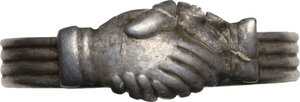
1018 - ROMAN SILVER ENGAGEMENT RING Roman period, c. 1st - 4th century AD. Silver engagement ring, composed of a quadripartite circular band, joined by a plate depicting two clasped hands. Inner size: 18 mm. Delicate and choice item. Intact and complete, minor flaws.
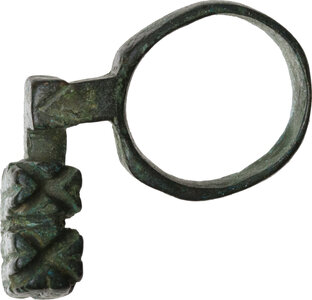
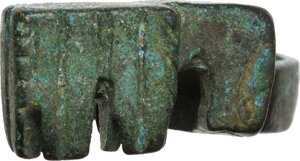
1019 - ROMAN BRONZE KEY-RING Roman Period, c. 1st - 4th century AD. Bronze key-ring. Dimensions: 31 x 28 mm. Inner size: 17 mm. AE. Intact and complete, in great conditions.
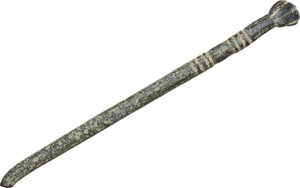
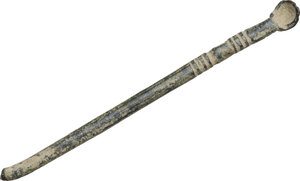
1020 - ROMAN SURGICAL SPATULA Roman period, c. 1st - 4th century AD. Bronze surgical spatula with long handle and small concave head. Decorated with engraved lines. Lenght: 69 mm. Lovely deep green patina with sandy deposits.
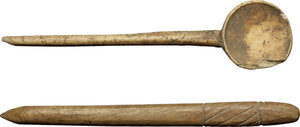
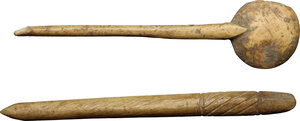
1021 - ROMAN BONE UTENSILS Roman period, 1st - 4th century AD. Lot of 2 bone utensils: spoon and spindle. Dimensions: 32 and 17 mm. Minor missings.


1022 - SMALL BRONZE ROD Roman period, c. 1st - 4th century AD. (?) Bronze rod with a round section stem, with a bird on the top (perhaps a dove) and a flat point towards the top, probably suitable for the handle of the instrument. Lenght: 112 mm. Lack at the bottom.

1023 - BRONZE NEEDLE Roman period, c. 1st - 4th century AD. Bronze needle with large head. Lenght: 124 mm. Intact and complete, slightly bent.
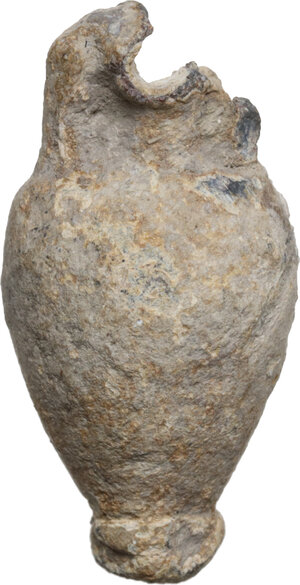
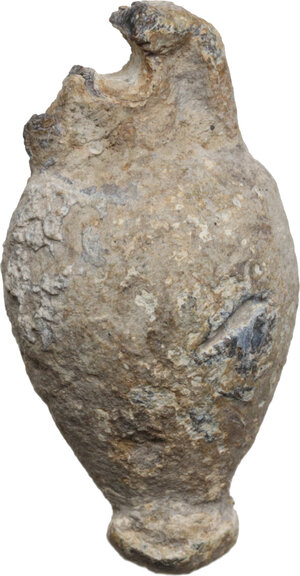
1024 - 'GROMA' AMPHORA WEIGHT Roman period, 1st - 4th century AD. Weight in the shape of amphora with suspension loop. Dimensions: 35 x 18 mm. Weight: 34.57 g. Minor damage at the hole. In the building of a Castra, after having flattened the ground and before starting the ditch and wall construction, an agrimensor (land surveyor) drew the locations of the streets and of the wall, beginning from the center of the field, using the groma. It follows the description of this topographical tool and its use. (https://legioneromana.altervista.org/content/how-use-roman-groma?language=en).
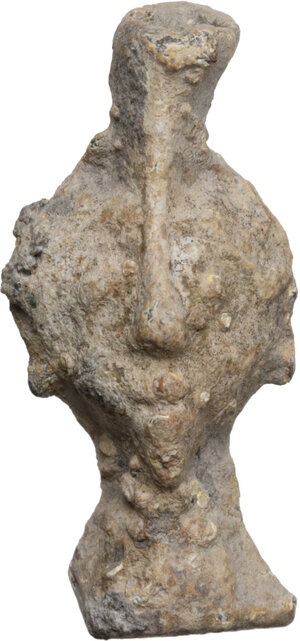
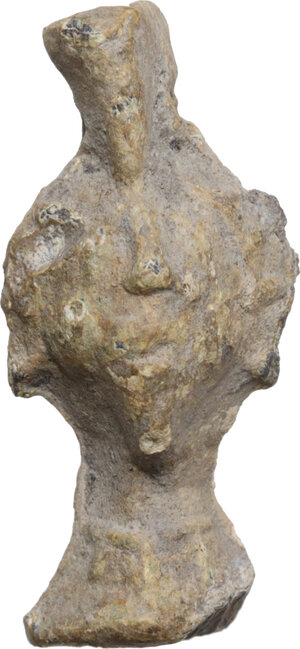
1025 - 'GROMA' HEAD WEIGHT Roman period, 1st - 4th century AD. Weight in the shape of a janiform head with suspension loop. Dimensions: 33 x 14 mm. Weight: 22.45 g. Intact and complete.
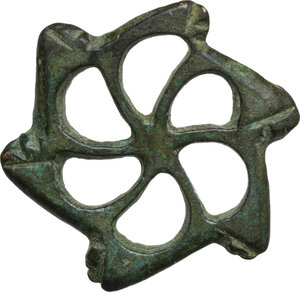
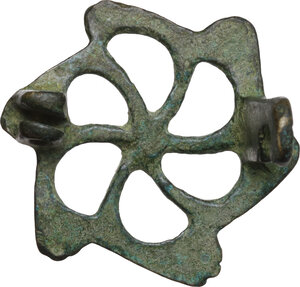
1026 - BRONZE OPENWORK FIBULA Roman period, c. 2nd - 4th century AD. Roman bronze fibula configured in a openwork hexahedron. Diameter: 29 mm. Rare and fascinating. Missing pin.
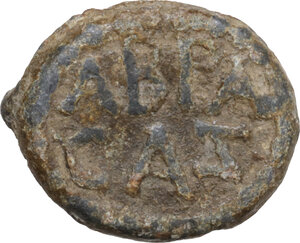
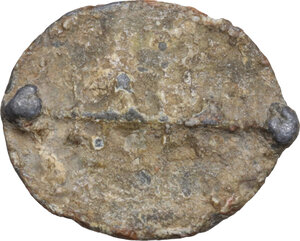
1027 - GNOSTIC ROMAN PLAQUE Roman period, c. 3rd - 4th century AD. Lead plaque with the name of the demon Abraxas inscribed: ABPA / CAS. Dimensions: 21 x 17 mm. 5.26 g.
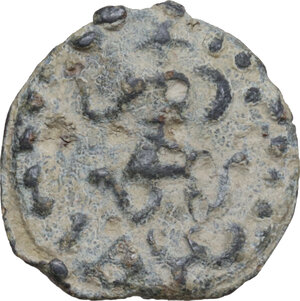
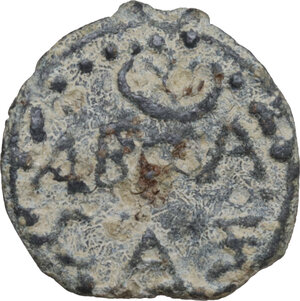
1028 - GNOSTIC ROMAN PLAQUE Roman period, c. 3rd - 4th century AD. Lead plaque with on one side: IAⲰ. Abrasax facing, with the head of a rooster and snakes for legs, holding a whip in his right hand and a shield in his left. On the other: ABPA-CAX. Star-in-crescent. Diameter: 18.5 mm. PB. VF. So-called Gnostic amulets not only survive in the form of hardstone gems: they were also produced in the form of lead pendants, rings, beads and tesserae to meet the needs of less wealthy clients. The worship of the ancient demon Abrasax (or Abraxas) rose to great prominence in Roman times through the teachings of the Christian Gnostic Basilides of Alexandria (circa 85-145 AD), who called Abrasax the 'great archon' and the first of the 365 Gnostic Aeons. The etymology of his name is still unclear: it may go back to the Egyptian words 'abrak' and 'sax', translating as 'the honorable and hallowed word', but it is noteworthy that the letters of his name, in Greek isopsephy, add up to 365, the amount of days in a solar year: Α = 1, Β = 2, Ρ = 100, Α = 1, Σ = 200, Α = 1, Ξ = 60, thus: 1+2+100+1+200+1+60 = 365. Basilides' followers believed, among other things, that Abrasax sent Christ as a ghost to the world, which lead to sharp refutations by Early Church Fathers such as Hippolytus of Rome, Clement of Alexandria and Eusebius of Caesarea. The popularity of Basilidianism was mostly restrained to Egypt, where a vivid Gnostic sect is attested in the 2nd-4th centuries, but its legacy still lives on today, as one compelling theory proclaims, in the famous magic word 'abracadabra!'.
In Hoc Signo Vinces
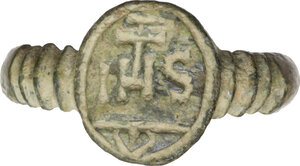
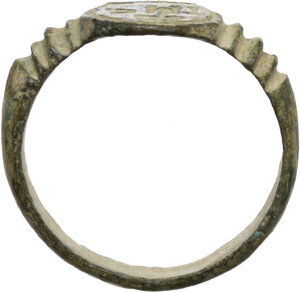
1029 - EARLY CHRISTIAN RING Roman period, c. 4th - 5th century AD Bronze ring with oval engraved beazel with the abbreviated christian inscription 'In Hoc Signo Vinces' (IHS), under a cross and above a linear frame with a heart. Cleat decoration on the sides of the bezel. Dimensions: 21 x 11.5 mm. Inner size: 18 mm. Fascinating item, intact and complete. According to the account of Eusebius of Caesarea, Constantine turned towards monotheism when he was still preparing to come to Rome to fight against Maxentius. Turning in prayer to the divinity, shortly after midday he and his army witnessed a prodigious celestial event, the appearance of a crossing of lights above the sun and the writing ἐν τούτῳ νίκα (in Latin, literally 'In Hoc, Vinces').On the following night Christ appeared to him, ordering him to adopt as his banner the sign he had seen in the heaven.
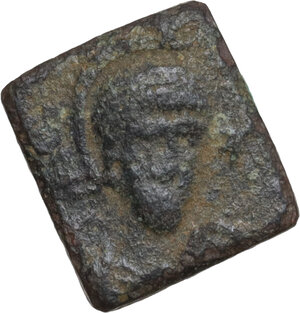
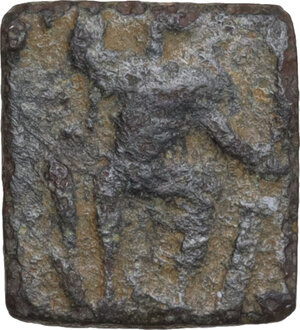
1030 - LATE ANTIQUE BRONZE TESSERA Roman period, 5th century AD. Game tessera obtained by cutting a bronze coin minted by Arcadius Dimensions: 11x10 mm. Weight: 1.11 g. Intriguing and rare rework.
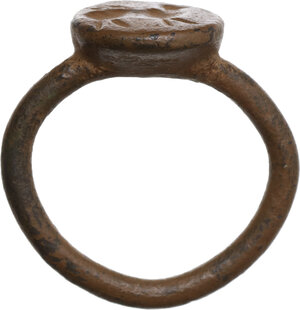
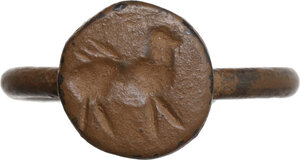
1031 - BRONZE SASANIAN RING Ancient Near East, c. 2nd - 7th century AD. Weareable bronze sasanian ring with animal engraved on the bezel. Inner size: 20 mm. Intact and complete.
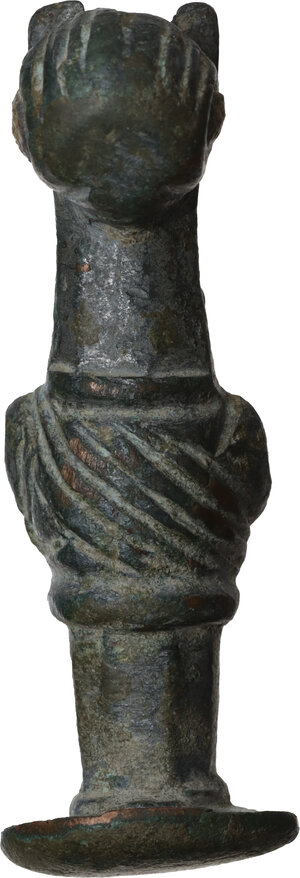
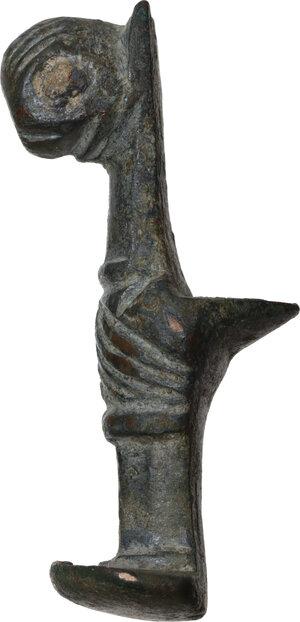
1032 - BRONZE FURNITURE FOOT Ancient Near East, c. 1st - 8th century AD. (?) Bronze furniture foot shaped like a highly stylized zoomorphic figure. Dimensions: 68 x 21 mm. Interesting and curious object, difficult to catalogue.
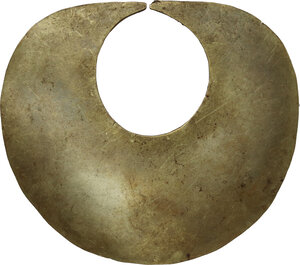
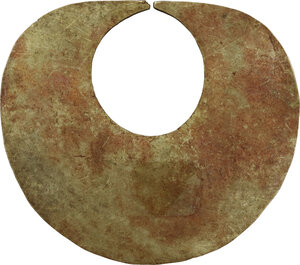
1033 - PRE COLUMBIAN GOLD NOSE RING Perù, Moche Culture (?), c. 2nd - 8th century AD. Pre-Columbian nose ring, made of thin gold foil in the shape of a crescent moon. Dimensions: 43 x 38 mm. Weight: 2.16 g. Rare, intact and complete.
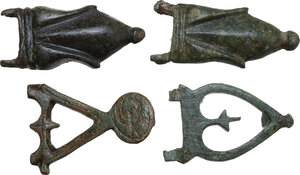
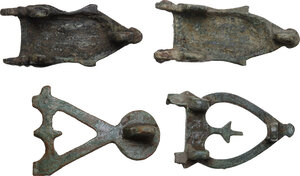
1034 - FOUR BYZANTINE BUCKLES PARTS Byzantine, c. 7th - 8th century AD. Lot of four bronze parts of buckles. All byzantine. Lenght: 41 to 36 mm.
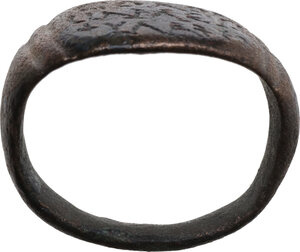
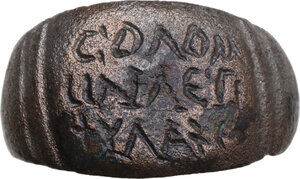
1035 - BYZANTINE INSCRIBED RING Byzantine, c. 7th - 8th century AD. Byzantine bronze ring with Greek inscription on three lines, framed by two pairs of vertical engraved lines. Inner size: 20 x 17 mm. Interesting study item. Intact and complete. Patina removed on the bezel.
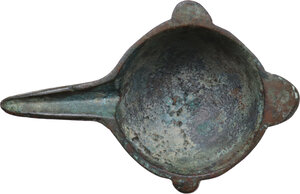
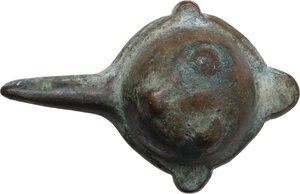
1036 - BRONZE ARAB-BYZANTINE ITEM Byzantine, c. 5th - 10th century AD. Arab-Byzantine oil lamp filler or cosmetic mortar with hemispherical body, deep rounded bowl with three feet, from which extends a long channelled spout, a flat short handle and smaller lateral lugs. Dimensions: 82 x 52 mm. Intact and complete, minor deposits. Objects like this, with a small rounded bowl, flanged handles and a long channelled spout, have been speculated to be many different things, from oil lamps to baby feeders. It seems most likely, however, that the hemispherical body was used for as a mortar for crushing cosmetic materials, which would then have been poured down the spout into small flasks, or as a oil lamp filler, the terracotta lamp would be filled with oil through the pouring hole.
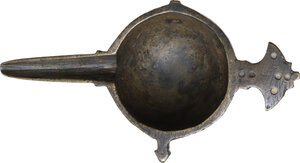
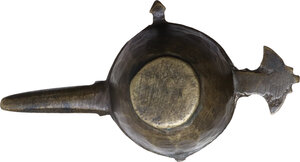
1037 - BRONZE ARAB-BYZANTINE ITEM Byzantine, c. 5th - 10th century AD. Arab-Byzantine oil lamp filler or cosmetic mortar with hemispherical body, deep rounded bowl with flat bottom, from which extends a long channelled spout, a flat decorated handle and smaller lateral lugs. Dimensions: 91 x 49.5 mm. One lateral lug missing.
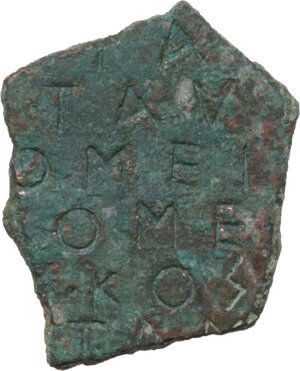
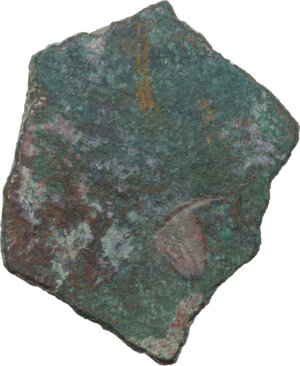
1038 - INSCRIBED FRAGMENT Byzantine (?), c. 6th - 10th century AD. Fragment of a bronze document bearing an inscription engraved in six lines on one side, while the other is flat. [-] A . TAV OMEI OME M . KOS T [-] M Dimensions: 44 x 34 mm. Interesting study item. Broken in antiquity. Very interesting object, not easy to identify. The inscription apparently does not contain complete words, although the alphabet used is probably late Greek, perhaps Byzantine.
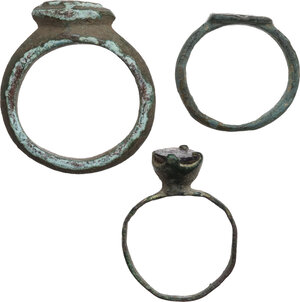
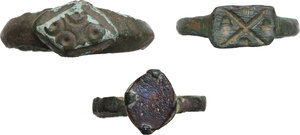
1039 - THREE ANCIENT RINGS Medieval period, c. 5th to 12th century AD. Lot of three medieval bronze rings with engraved geometric decorations. Inner sizes: 17, 17.5, 20 mm. One with nice glass paste gem and traces of gilding.
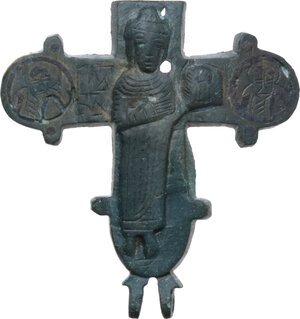
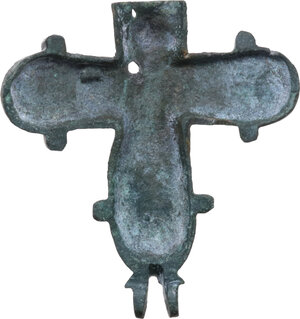
1040 - ENKOLPION RELIQUARY CROSS Byzantine, c. 10th - 12th century AD. Byzantine bronze reliquary cross valve. Very schematic engraved and relief decoration, with a togated figure in relief (Virgin Mary?) holding a dove in her left hand. To the left of the figure there is an inscription on two lines, also very stylized, perhaps PAT/ER. In the two tondos there are busts of saints. Dimensions: 51 x 48 mm. Missings.
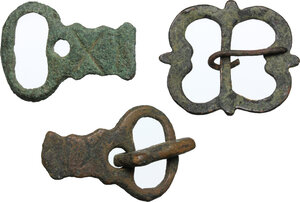
1041 - THREE ANCIENT BROOCHES Early Medieval period, c. 8th - 14th century AD. Lot of 3 (three) bronze belt terminals. Various dimensions. Missings.
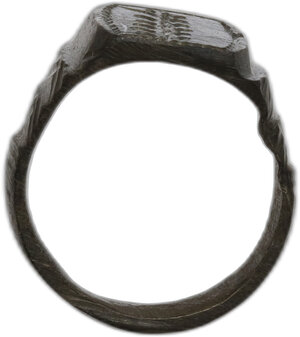
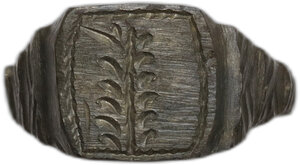
1042 - BRONZE ENGRAVED RING Medieval period, c. 11th - 15th century AD. Bronze ring decorated with engraving, on the bezel a stylized plant is represented, perhaps a palm tree, within a quadrangular frame. Inner size: 19 mm. 4.97 g. 23.50 mm.
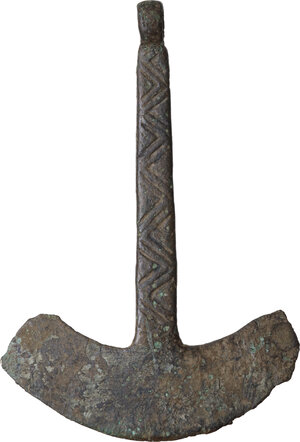
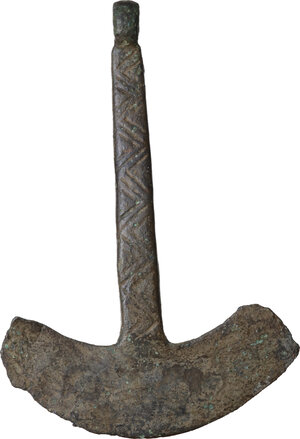
1043 - PRE COLUMBIAN CEREMONIAL KNIFE Perù, Chimù Culture, c. 1100 - 1470 AD. Pre columbian bronze 'tumi' (ceremonial knife) with a crescent-shaped blade, long rod-shaped handle decorated with a zig-zag motif, ending with a suspension ring. Dimensions: 112 x 76 mm. Rare, intact and complete. Interesting dagger used by priests for the ritual sacrifice of livestock. There are also silver or gold versions, depending on the rank of the officiant.
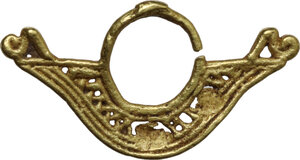
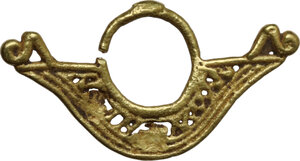
1044 - TAIRONA GOLD NOSE RING Colombia, Tairona culture, c. 10th - 17th century AD. Tairona culture nose ring in gold. Dimensions: 25.5 x 13.5 mm. Weight: 1.17 g. Sold as is, no return.
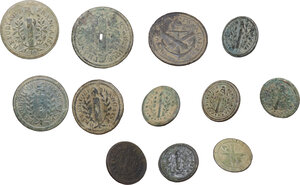
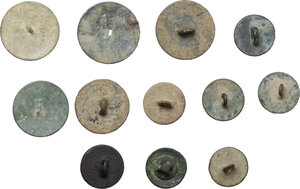
1045 - TWELVE ANTIQUE BUTTONS France Republic and Italy, late 19th cent. Lot of twelve (12) bronze buttons; eleven of the Republique Francaise and one of the Artiglieria Ligure. Various dimensions. Most complete. Few missings.
Caricamento altri risultati...