Banner Artemide LXII
Risultati: 15
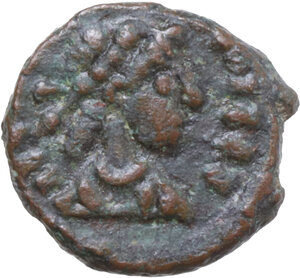
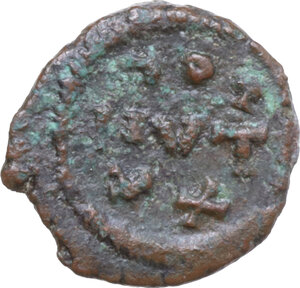
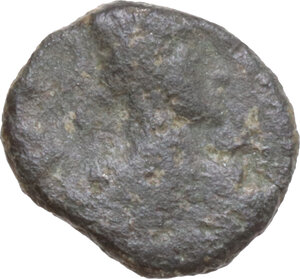
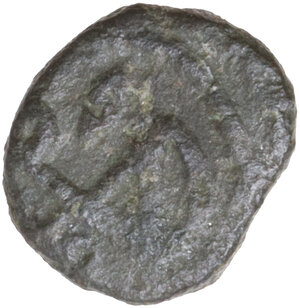
Uncertain Germanic tribe. Pseudo-Imperial coinage. . AE 12 mm., barbaric imitation, 4th-5th century AD - Uncertain Germanic tribe. Pseudo-Imperial coinage. AE 12 mm., barbaric imitation, 4th-5th century AD. Obv. Blundered pseudo-legend. Diademed, draped and cuirassed bust right. Rev. VOT/IIVT/ XX, inside wreath. Unlisted in the standard references. AE. 0.97 g. 12 mm. R. Rare and interesting. Brown patina with minor green deposits. EF/About EF.
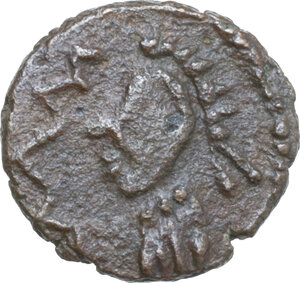
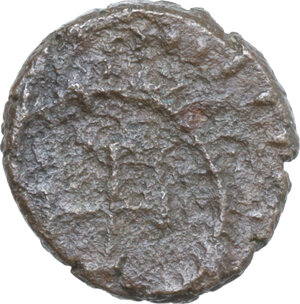
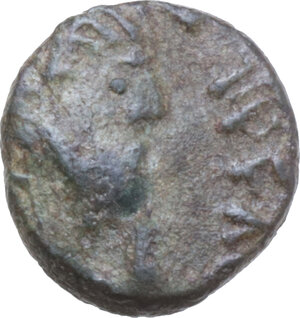
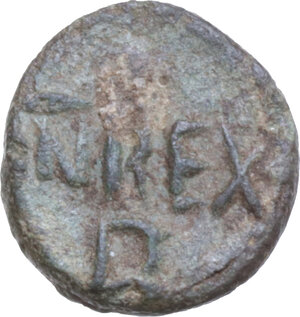
Uncertain Germanic tribe. Pseudo-Imperial coinage. . AE 12 mm., barbaric imitation, 5th-6th century AD - Uncertain Germanic tribe. Pseudo-Imperial coinage. AE 12 mm., barbaric imitation, 5th-6th century AD. Obv. Diademed and draped bust left. Rev. Cross within wreath. Unlisted in the standard references. AE. 1.23 g. 12 mm. RR. Very rare and intersting, brown patina. Rough surfaces. VF/About VF.
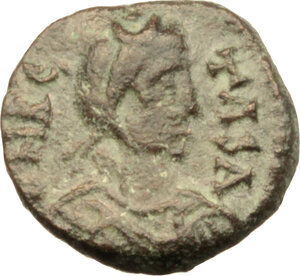
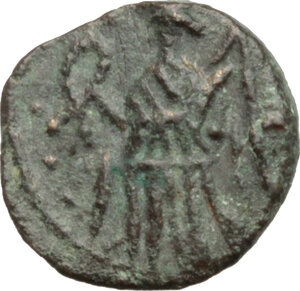
Vandals in North Africa. Thrasamund (496-523).. AE Nummus, Carthage mint - Vandals in North Africa. Thrasamund (496-523). AE Nummus, Carthage mint. Obv. DN RG-TASA. Pearl-diademed, draped and cuirassed bust right. Rev. Victory advancing left, holding wreath. MEC 1, 19-20. BMC Vandals 32-6. CNR XIX, 1994. Cfr. Lulliri-Urban 231. AE. 0.94 g. 10 mm. RR. An outstanding example, with complete and fully readable legends. Green-brown patina. Rare as such. Good VF. The Vandals invaded North Africa after they were driven out of Spain by the armies of the western empire in 429; they worked their way across North Africa from west to east over the following decade until they took and occupied Carthage in 439, when it became their capital. They were governed by a succession of kings : Geiseric (428-77); Huneric, Geiseric's eldest son (477-84); Gunthamund, Geiseric's grandson (484-96); Thrasamund, Geiseric's grandson (496-523); Hilderic, Geiseric's grandson (523-30); and Gelamir, Geiseric's great-grandson (530-33). In 533 their kingdom was invaded by the army of the western empire under Justinian's general Belisarius, and occupation of and rule over North Africa passed to the Byzantines. The Vandals at various times took and occupied Sicily, Sardinia and Corsica, and they sacked Rome in 455. But their century-long dominance of North Africa was equally underpinned by more peaceful contacts : this shows itself not only in the treaties which maintained a sometimes fragile peace (with the west in 435, 442 and 472, and with the east in 476), but also in dynastic intermarriage : Huneric married Eudocia, daughter of Valentinian III around 456, and Thrasamund married Amalafrida, the sister of Theoderic. (N.M.Kay, Epigrams from the Anthologia Latina.).
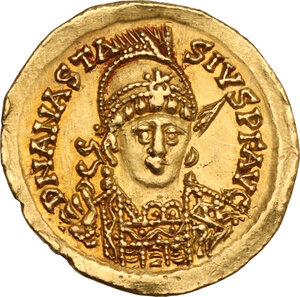
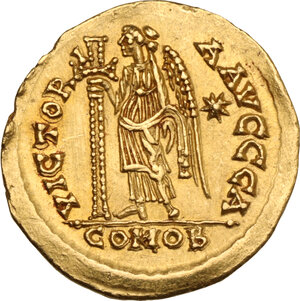
Ostrogothic Italy, Theoderic (493-526).. AV Solidus, in the name of Anastasius I. Rome mint, c. 491-518 AD - Ostrogothic Italy, Theoderic (493-526). AV Solidus, in the name of Anastasius I. Rome mint, c. 491-518 AD. Obv. DN ANASTASIVS PF AVG. Helmeted, diademed and cuirassed bust facing slightly right, holding spear and shield decorated with horseman motif. Rev. VICTORIA AVCCC A, Victory standing left, holding jeweled cross; star to right; small pellet at each end of exergual line; in exergue, COMOB. COI 8; MEC 1, 112; MIB 9. AV. 4.44 g. 20.5 mm. Lightly toned, fine style. About FDC.
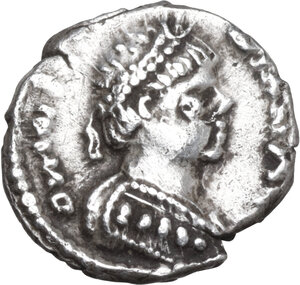
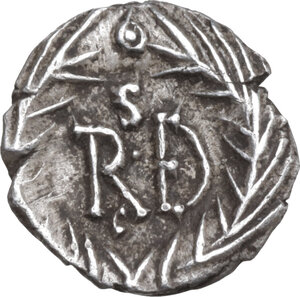
Ostrogothic Italy, Odovacar (476-493) (?). AE Nummus (or 2 1/2 Nummi). Pseudo-Imperial Coinage - Ostrogothic Italy, Odovacar (476-493) (?). AE Nummus (or 2 1/2 Nummi). Pseudo-Imperial Coinage. Obv. Pearl-diademed and draped bust right. Rev. Monogram of Odovacar or Theoderic within wreath. RIC X -; MEC 1, -; Cf. Morello 21/2, 24. AE. 0.61 g. 9 mm. RRR. Extremely rare. Attributable to the monogram of Odovacar or Theodoric, this specimen features a variant in monogram which is unlisted in the standard references. F/VF.
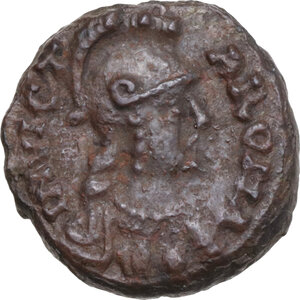
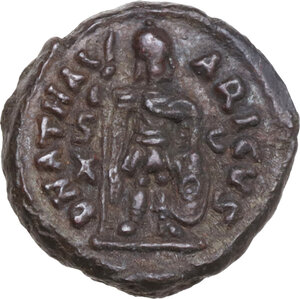
Ostrogothic Italy, Athalaric (526-534).. AE Decanummium. Rome mint - Ostrogothic Italy, Athalaric (526-534). AE Decanummium. Rome mint. Obv. INVICTA ROMA. Helmeted and cuirassed bust of Roma right. Rev. D N ATHALARICVS. Athalaric standing facing, holding shield and spear; S-C/X in fields. COI 85a; MIB 77; MEC 1, 132. AE. 4.05 g. 16.5 mm. Superb example, in excellent conditions for issue. Lovely dark brown patina. Possibly the finest known example. EF.
Ostrogothic Italy, Athalaric (526-534).. AE Decanummium - Ostrogothic Italy, Athalaric (526-534). AE Decanummium. Obv. INV[ICTA R]OMA. Helmeted and cuirassed bust of Roma right. Rev. Ravenna monogram within wreath; cross above. COI 86 (obv.) /78a (rev.); MIB 78 (obv.) /72a (rev.) (Rome); Ranieri 266 (reverse). AE. 1.16 g. 14 mm. RRR. Extremely rare, few specimens known. Enchanting deep green patina. Listed only in Ladich 'Monete dei Re Ostrogoti in Italia'. Good VF.
Ostrogothic Italy, Athalaric (526-534).. AE Nummus in the name of Justinian I, Rome mint - Ostrogothic Italy, Athalaric (526-534). AE Nummus in the name of Justinian I, Rome mint. Obv. [---] NIAN [---]. Pearl-diademed, draped and cuirassed bust right. Rev. Monogram of Athalaric, within wreath. MIB 80; COI 88 (2 1/2 Nummi); Morello 27. AE. 0.69 g. 10.5 mm. R. Rare and nice. Lovely earthen green patina. Good VF.
Ostrogothic Italy, Amalasuntha (534-535).. AR Quarter Siliqua. Pseudo-Imperial Coinage. In the name of Justinian I. Ravenna mint - Ostrogothic Italy, Amalasuntha (534-535). AR Quarter Siliqua. Pseudo-Imperial Coinage. In the name of Justinian I. Ravenna mint. Obv. DN I[VSTIN]I AN A[---]. Pearl-diademed and mantled bust right. Rev. Monogram of Theoderic (no cross above) within wreath. Ranieri 304 (Witigis); MEC 1, 138; MIB 59 (Witigis); COI 64 (Witigis); Kraus 3 (Hildebrand). AR. 0.74 g. 11.5 mm. RR. A superb example of this very rare and debated issue. Sharply struck on sound metal; attractive light tone over brilliant surfaces. EF. This restitution series featuring the monogram of Theodoric has been examined by scholars. Grierson suggests that it was minted during the early part of Theodahad's reign, when Amalasuntha was officially recognized as the new sovereign. These quarter siliquae display Justinian's name on the obverse and the monogram of Amalasuntha's father on the reverse. Grierson argues that this was necessary for the Ostrogoths to acknowledge her rule. However, Hahn and Metlich have differing views, attributing this series to Witigis instead.
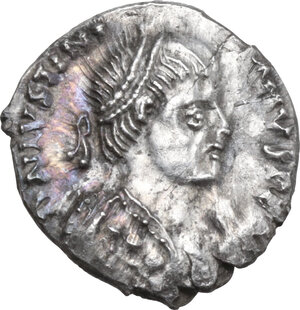
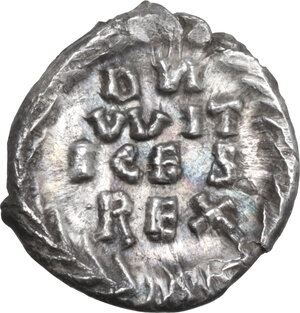
Ostrogothic Italy, Witigis (536-539).. AR Half Siliqua. Pseudo-Imperial Coinage. In the name of Justinian I. Ravenna mint - Ostrogothic Italy, Witigis (536-539). AR Half Siliqua. Pseudo-Imperial Coinage. In the name of Justinian I. Ravenna mint. Obv. DN IVSTINIANVS [---]. Diademed, draped and cuirassed bust right. Rev. DN/ VVIT/ ICES/ REX within laurel wreath. COI 63; Ranieri 297 ff; MEC 1, 151; MIB 57. AR. 1.39 g. 14 mm. RRR. Extremely rare. Amazing refined bold portrait. Choice example, sharply struck on sound metal; attractive iridescent tone over brilliant surfaces. EF.
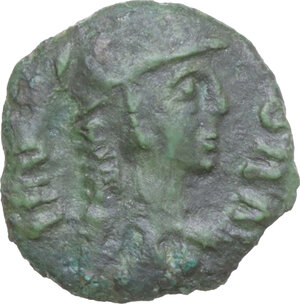
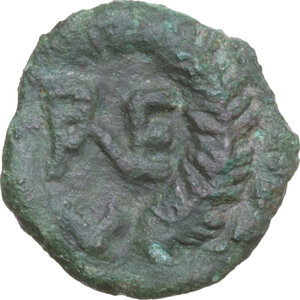
Ostrogothic Italy, Baduila (541-552).. AE Nummus (or 2 1/2 Nummi). Pseudo-Imperial Coinage. In the name of Anastasius, 541-552. Ticinum mint - Ostrogothic Italy, Baduila (541-552). AE Nummus (or 2 1/2 Nummi). Pseudo-Imperial Coinage. In the name of Anastasius, 541-552. Ticinum mint. Obv. [---] IPFA. Pearl-diademed, draped, and cuirassed bust right. Rev. [D]N REX/B; above, star, all within wreath. COI 95a; MIB 88; MEC 1, 164/5; Cf. BMC Vandals 28-29; Arslan 195/8. AE. 0.46 g. 8 mm. RR. Very rare and in great condition for the issue. About EF/EF.
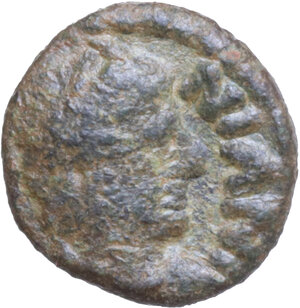
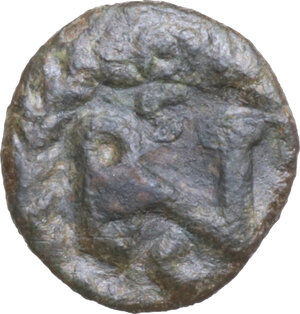
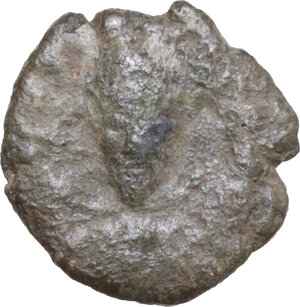
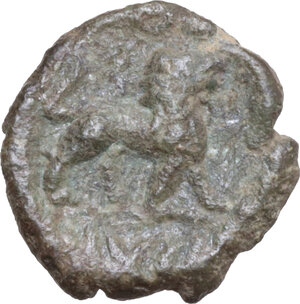
Ostrogothic Italy, Baduila (541-552).. AE Nummus (or 2 1/2 Nummi). Pseudo-Imperial Coinage. In the name of Anastasius, 549/550-552. Rome mint - Ostrogothic Italy, Baduila (541-552). AE Nummus (or 2 1/2 Nummi). Pseudo-Imperial Coinage. In the name of Anastasius, 549/550-552. Rome mint. Obv. Helmeted and cuirassed bust facing. Rev. Lion right within wreath. COI 99; MIB 91; MEC 1, -; Cf. BMC Vandals 50-2; Arslan 206. AE. 0.68 g. 11 mm. RR. Very rare and good example, with lovely green patina. Good F/VF.
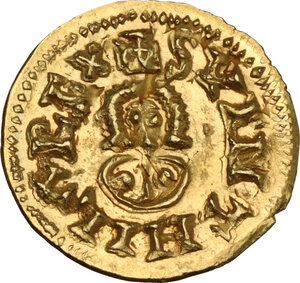
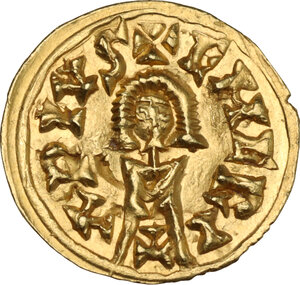
Visigoths. Regal series. Swinthila (621-631).. AV Tremissis, Emerita (Mérida) mint - Visigoths. Regal series. Swinthila (621-631). AV Tremissis, Emerita (Mérida) mint. Obv. +SVINTHILA REX. Draped bust facing. Rev. +EMERITA PIVS. Draped bust facing. MEC 1, -; CNV 327. AV. 1.48 g. 18.5 mm. EF.
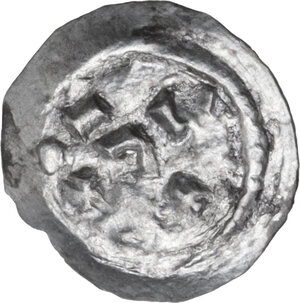
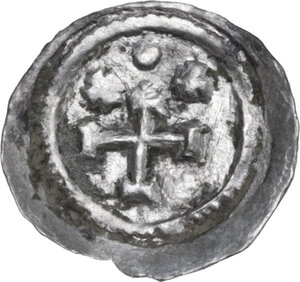
The Lombards, Lombardic Italy. Anonymous.. Imitative AR 1/8 Siliqua (=1 carat), 7th-8th century AD - The Lombards, Lombardic Italy. Anonymous. Imitative AR 1/8 Siliqua (=1 carat), 7th-8th century AD. Obv. Abstract rendering of a crude bust, two crosses pattée below, within raised dotted border. Rev. Cross potent above globe between two crosses pattée, within raised dotted border. AR. 0.18 g. 11.5 mm. RRR. Extremely rare and unpublished in the standard references: For iconographic prototypes: cf. MIBE II, Tiberius II, Ravenna 22 and Maurice, Ravenna 64; Ranieri 447-9 and 483; Bernareggi, ‘problem di Numismatica: le cosidette “silique di Pertarito”’, AIIN 12-14, 1965 pp, 119-130, pls 22-23, 1-16; MEC I, 328-331. For denomination cf. M. O’Hara and I. Vecchi, ‘A find of Byzantine silver from the mint of Rome for the period AD 641-752, RSN 64, 1985, pp. 105-140, 1-20. Good VF. The denomination of 1/8 of a siliqua, or I carat weight, was the smallest silver denomination employed in Byzantine Rome and Ravenna, cf. MIB III: Justinian I 79, Heraclius 152-157, Constans II MIB III, Contantine IV MIB 73-76, Justinian II first reign MIB III 43, Leontius I MIB 30-31 and seems to have ended with Tiberius III MIB 71-72, after which it was replacement by its copper equivalent of 30 Nummis and Rome, cf. Justinian II first reign MIB 75-77.
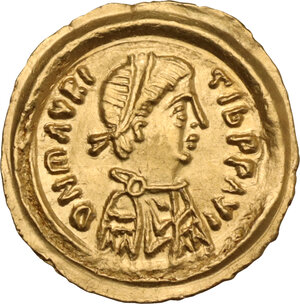
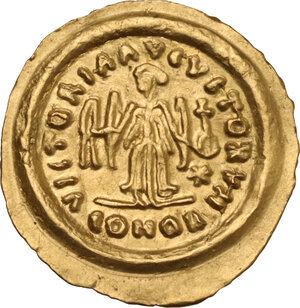
The Lombards, Lombardy. Time of Authari-Agilulf (c. 568-690 AD).. AV Tremissis. Pseudo-Imperial coinage. In the name of Maurice Tiberius (582-602), c. 582-690 AD - The Lombards, Lombardy. Time of Authari-Agilulf (c. 568-690 AD). AV Tremissis. Pseudo-Imperial coinage. In the name of Maurice Tiberius (582-602), c. 582-690 AD. Obv. D N mΛVRI TIЬ PP AVI. Diademed, draped and cuirassed bust right. Rev. VICTORIA AVCVSTORVM. Victory standing facing, head left, holding wreath and globus cruciger; to right, star; in exergue, CONOR. MEC 1, 301; cf. BMC Vandals 22-3; cf. Arslan type 1, 4. AV. 1.48 g. 16.5 mm. RR. Very rare and intriguing issue, perfectly struck on a broad flan. Good EF/EF.