Info & contatti
Le mie offerte
Lotti osservati
Condizioni di vendita
Prezzi di spedizione
Metodi di pagamento
Esito stampabile
Sessione Live 3/5/2026 17:00:00 CET
Celtic Coins (1-17)
Greek Coins (18-238)
Roman Provincial Coins (239-322)
Roman Republican Coins (323-367)
Roman Imperial Coins (368-962)
Migration Period (963-964)
Byzantine Coins (965-1010)
Medieval Coins (1011-1078)
World Coins (1079-1367)
Medals & Tokens (1335-1398)
Group Lots (1399-1611)

AUGUSTUS (27 BC-14 AD). GOLD Aureus. Uncertain mint in Spain, possibly Colonia Patricia
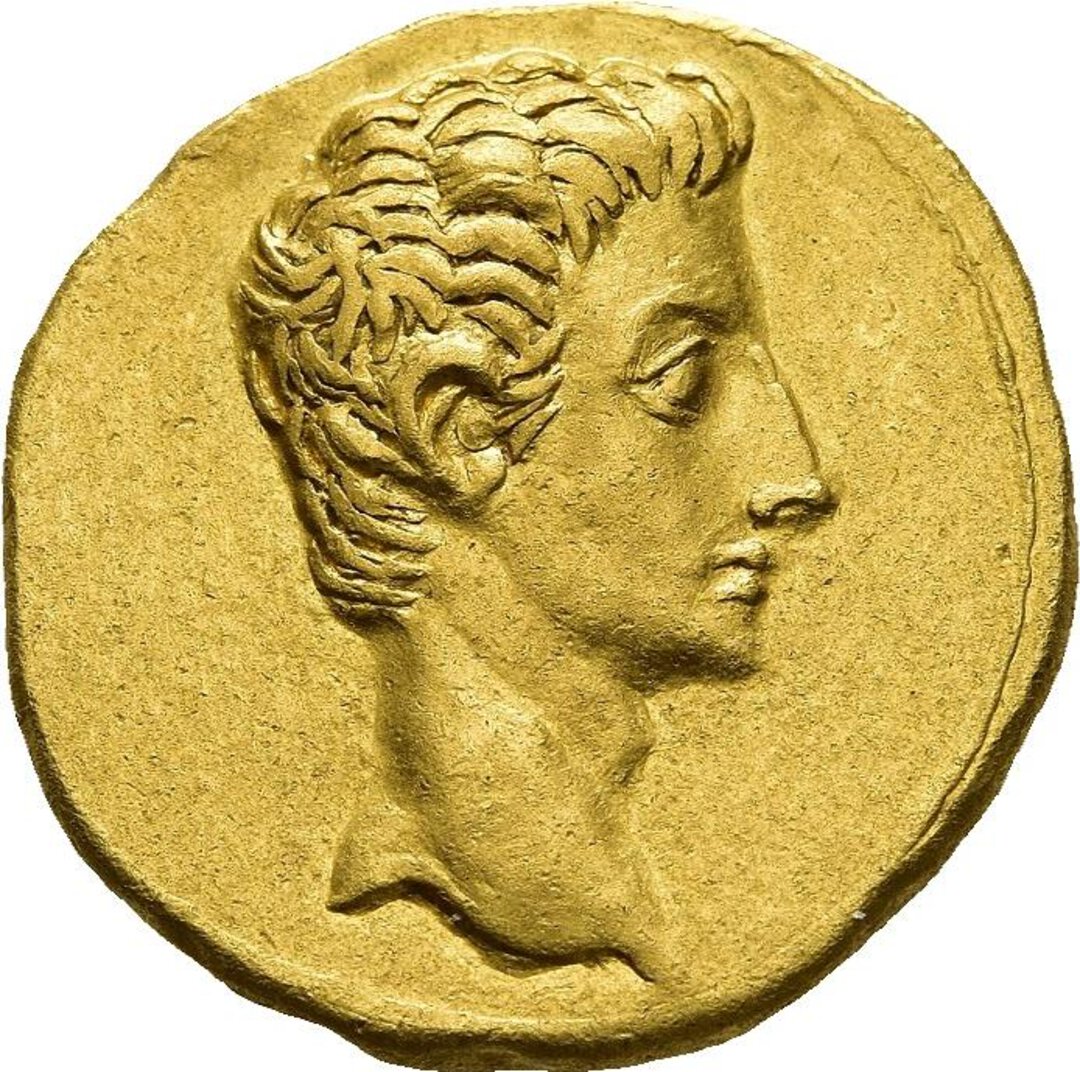
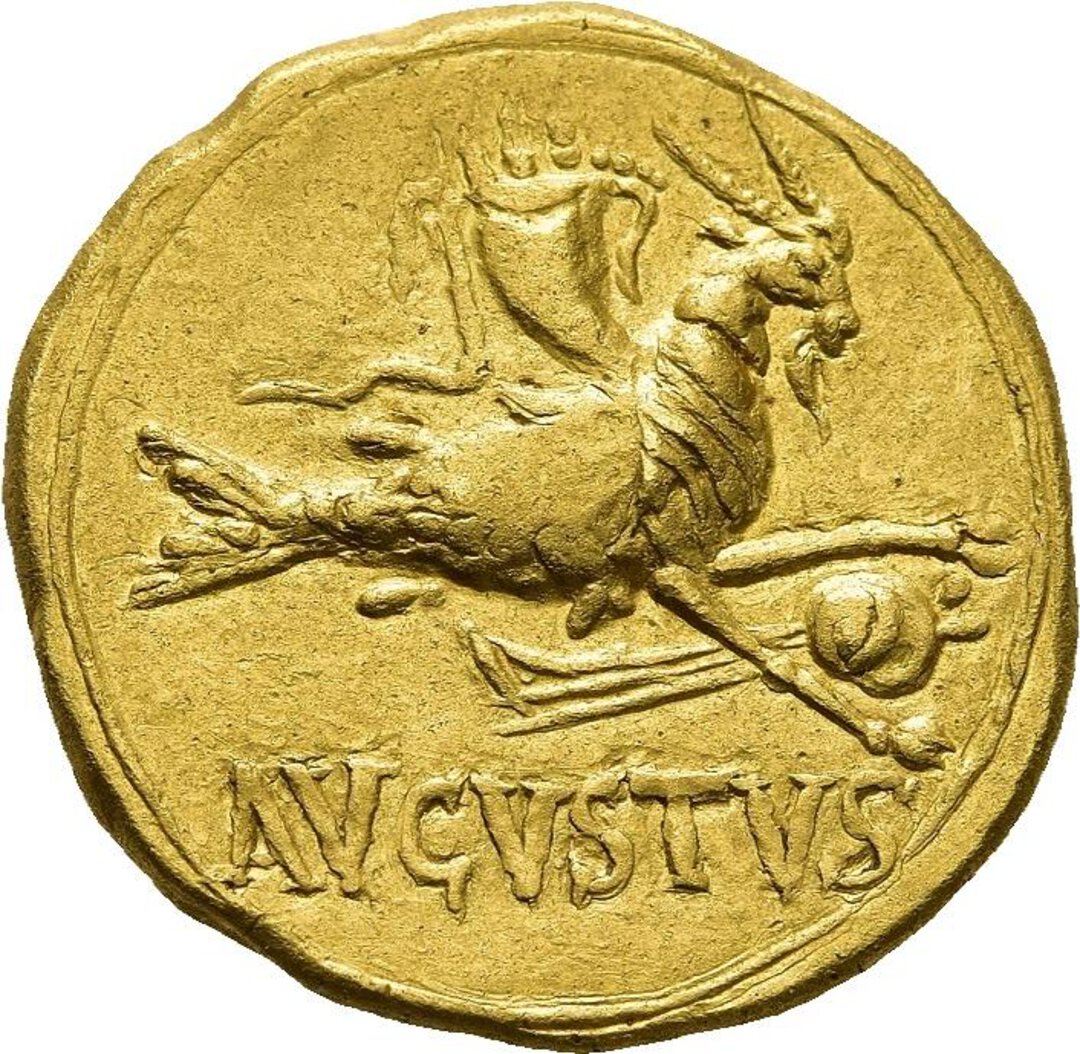
AUGUSTUS (27 BC-14 AD). GOLD Aureus. Uncertain mint in Spain, possibly Colonia Patricia.
Obv: Bare head right.
Rev: AVGVSTVS.
Capricorn right, with globus attached to rudder between hooves; cornucopia above.
RIC² 125; Calicó 164.
Certified by NGC 8538541-001. Described as "Repaired" which we don´t accept as a correct assessment. Part of the dies have been recut / repaired. For a coin with a smilar coin modification see Gorny & Mosch 289/728. This coin is part of a series celebrating the return of the standards lost by Crassus' legions in the terrible defeat at Carrhae in 53 BC. For the Romans, the legionary standards were not simply banners, but very important symbols. For this reason, Augustus sought to recover them, to erase the shame of defeat and deliver revenge to the people. In 23 BC, he met the embassy of Phraates IV in Rome for the first time. The Parthian ruler demanded the return of his son, who was being held hostage by Augustus, and of Tiridates II, his predecessor who had been dethroned and had taken refuge with the Romans. No agreement was reached, so Augustus planned a military campaign in the East to recover the standards and place a pro-Roman king on the throne of Armenia, another bone of contention between the two enemies. When the Roman army landed in the Balkans in 20 BC under the command of Tiberius, Phraates IV decided not to enter into conflict and agreed to return the insignia. These were sent back to Rome and the emperor celebrated the event by striking a series of coins usually bearing the inscription ‘SIGNIS RECEPTIS’ (=the insignia recovered) or an abbreviation on the reverse. In the case of this aureus, only the name of the emperor appears, who, with the same issue, also celebrates Capricorn. According to Suetonius, Augustus made it his personal emblem, using it as a symbol of his imperial destiny, even though he was born on September 23 and his zodiac sign was actually another. Capricorn can be considered the emblematic representation of the terrestrial sphere, as it embodies the nature of earth and water and can therefore be seen as a positive omen of power over the lands of the Empire, both those already acquired and those yet to be conquered. In fact, the globe (earth) and the rudder (water) appear between its legs in the iconography. The symbol appears in numerous works and is universally remembered as the unmistakable symbol of Augustus; it appears on the famous Gemma Augustea and was also linked to legions he re-founded or created, like the Legio Secunda Augusta.
Condition: Near extremely fine.
Weight: 7.88 g.
Diameter: 18 mm.
Estimate: 10000,00 €
Obv: Bare head right.
Rev: AVGVSTVS.
Capricorn right, with globus attached to rudder between hooves; cornucopia above.
RIC² 125; Calicó 164.
Certified by NGC 8538541-001. Described as "Repaired" which we don´t accept as a correct assessment. Part of the dies have been recut / repaired. For a coin with a smilar coin modification see Gorny & Mosch 289/728. This coin is part of a series celebrating the return of the standards lost by Crassus' legions in the terrible defeat at Carrhae in 53 BC. For the Romans, the legionary standards were not simply banners, but very important symbols. For this reason, Augustus sought to recover them, to erase the shame of defeat and deliver revenge to the people. In 23 BC, he met the embassy of Phraates IV in Rome for the first time. The Parthian ruler demanded the return of his son, who was being held hostage by Augustus, and of Tiridates II, his predecessor who had been dethroned and had taken refuge with the Romans. No agreement was reached, so Augustus planned a military campaign in the East to recover the standards and place a pro-Roman king on the throne of Armenia, another bone of contention between the two enemies. When the Roman army landed in the Balkans in 20 BC under the command of Tiberius, Phraates IV decided not to enter into conflict and agreed to return the insignia. These were sent back to Rome and the emperor celebrated the event by striking a series of coins usually bearing the inscription ‘SIGNIS RECEPTIS’ (=the insignia recovered) or an abbreviation on the reverse. In the case of this aureus, only the name of the emperor appears, who, with the same issue, also celebrates Capricorn. According to Suetonius, Augustus made it his personal emblem, using it as a symbol of his imperial destiny, even though he was born on September 23 and his zodiac sign was actually another. Capricorn can be considered the emblematic representation of the terrestrial sphere, as it embodies the nature of earth and water and can therefore be seen as a positive omen of power over the lands of the Empire, both those already acquired and those yet to be conquered. In fact, the globe (earth) and the rudder (water) appear between its legs in the iconography. The symbol appears in numerous works and is universally remembered as the unmistakable symbol of Augustus; it appears on the famous Gemma Augustea and was also linked to legions he re-founded or created, like the Legio Secunda Augusta.
Condition: Near extremely fine.
Weight: 7.88 g.
Diameter: 18 mm.
Estimate: 10000,00 €