Info & contatti
Le mie offerte
Lotti osservati
Condizioni di vendita
Prezzi di spedizione
Metodi di pagamento
Esito stampabile
Sessione Live 10/6/2026 01:30:00 CET
ANCIENT COINS (10001-10423)
AUSTRALIAN COINS (10424-10943)
Sessione Live 11/6/2026 01:30:00 CET
AUSTRALIAN COINS (10944-11544)
AUSTRALIAN BANKNOTES (11545-11855)
WORLD GOLD (11856-12002)
Sessione Live 12/6/2026 01:30:00 CET
WORLD COINS & MEDALS (12003-12455)
WORLD BANKNOTES (12456-13033)
Sessione Live 13/6/2026 01:30:00 CET
COLLECTIONS & ACCUMULATIONS (13034-13902)
LITERATURE & CATALOGUES (13903-14094)
WORLD LITERATURE & CATALOGUES (14095-14162)

Umayyad Caliphate. Uncertain post-reform period, A.H. 77-132 / A.D. 697-750. Bronze Fals (3.21g). Menorah type. Iliya (Jerusalem) mint. La ilaha illa Allah wahdahu (There is no god but Allah alone) / In three lines: MNHammad / rasul / Allah (MNHammad, the Messenger of Allah). SICA Vol. 2, 1308-1310; Album 163.1 (R). Rare. aVF for this very difficult type. One interpretation states that the upside-down candlestick resembles the dome of a mosque. This may be the case, but the question remains: why would the Umayyads not simply depict the full image of a mosque, such as the Dome of the Rock in Jerusalem? Also, if read in that way, the text would be upside down and not easily readable, which seems unusual. The alternative interpretation, identifying the object as a Jewish menorah, appears more convincing, especially as other very rare types also depict a seven-branched candlestick. It is not surprising that early Muslims in Jerusalem might have accepted a Jewish symbol on a coin, as Jews also believe in the Oneness of God and are considered People of the Book, like Christians. The symbol could also be understood in an Islamic context, for example as an allusion to the five pillars of Islam or the seven heavens mentioned in the Quran. It is also important to note that, after nearly 500 years of exile and oppression under the Roman and Byzantine empires, Jews were allowed back into Jerusalem when the second caliph, Umar I, took the city in A.D. 637/38. It is therefore possible that, in a community where Jews had returned, the early Umayyads could have issued coins bearing a Jewish symbol. Another interpretation sees this as an unusual figural bronze struck in Jerusalem by the new Islamic rulers, with a clearly Jewish motif. The type was early identified as a menorah, although Barag noted that only one rare variety shows a true menorah with seven arms and a flat base. The object on this piece may instead resemble the Omer offering cup depicted on the silver coins of the First Jewish War, with a rounded bowl, ribbed rather than plain, a knobbed stem, and a footed base. It is possible that two different objects are represented, both connected with Jewish Temple ritual. The Jewish inhabitants of the new Arab province of Bilad al-Sham, Palestine, appear to have coexisted reasonably well with their new Islamic rulers, sharing a common opposition to the Christian Byzantine Empire. The early Umayyad caliphs were evidently willing to permit the expression of Jewish religious symbolism. For comparison see; Nomos 36, lot 957, hammered US$450, and CNG Electronic Auction 432, lot 403, hammered US$525. From the Crescent Collection; acquired from Morton & Eden Ltd., London.
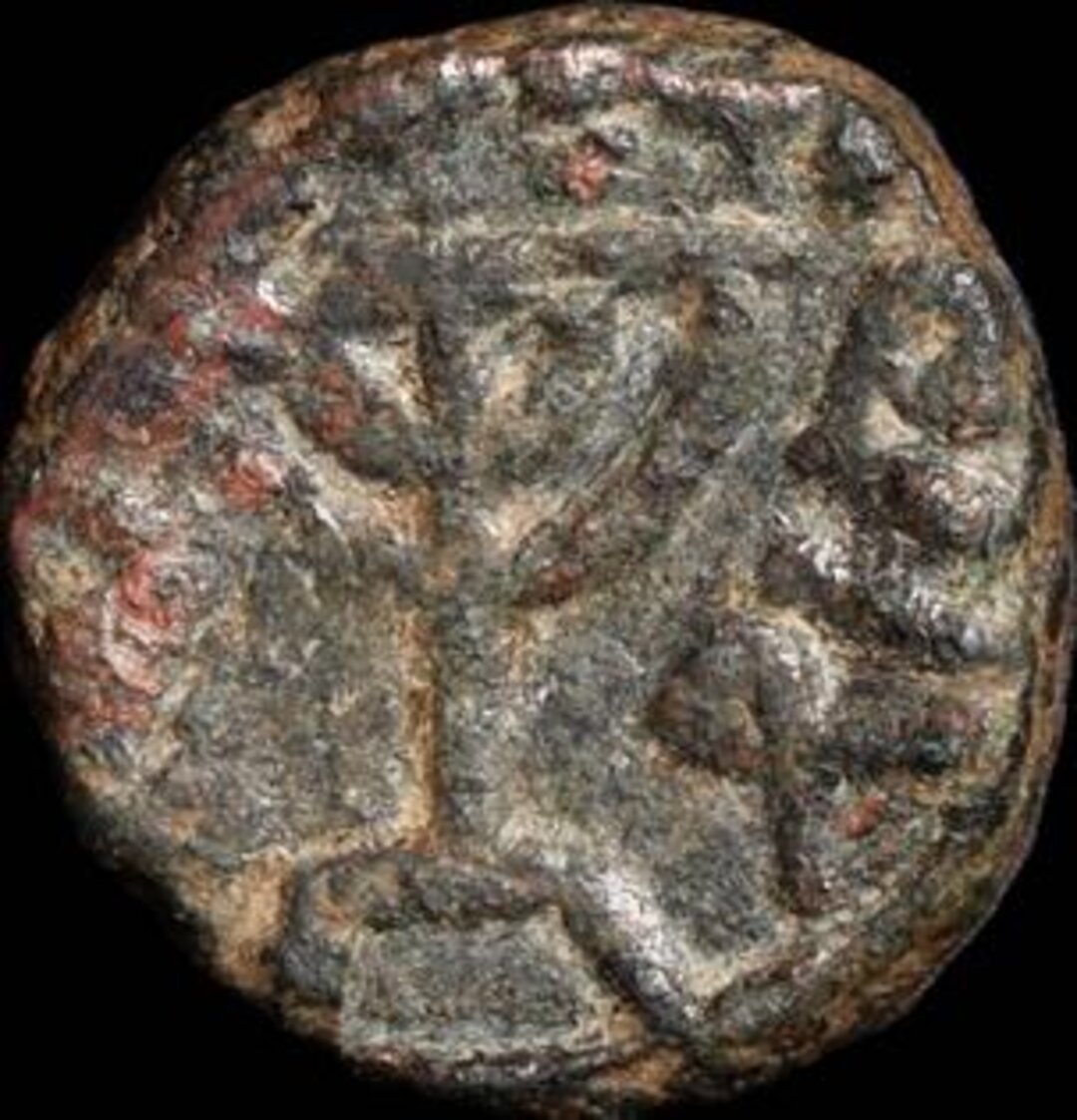
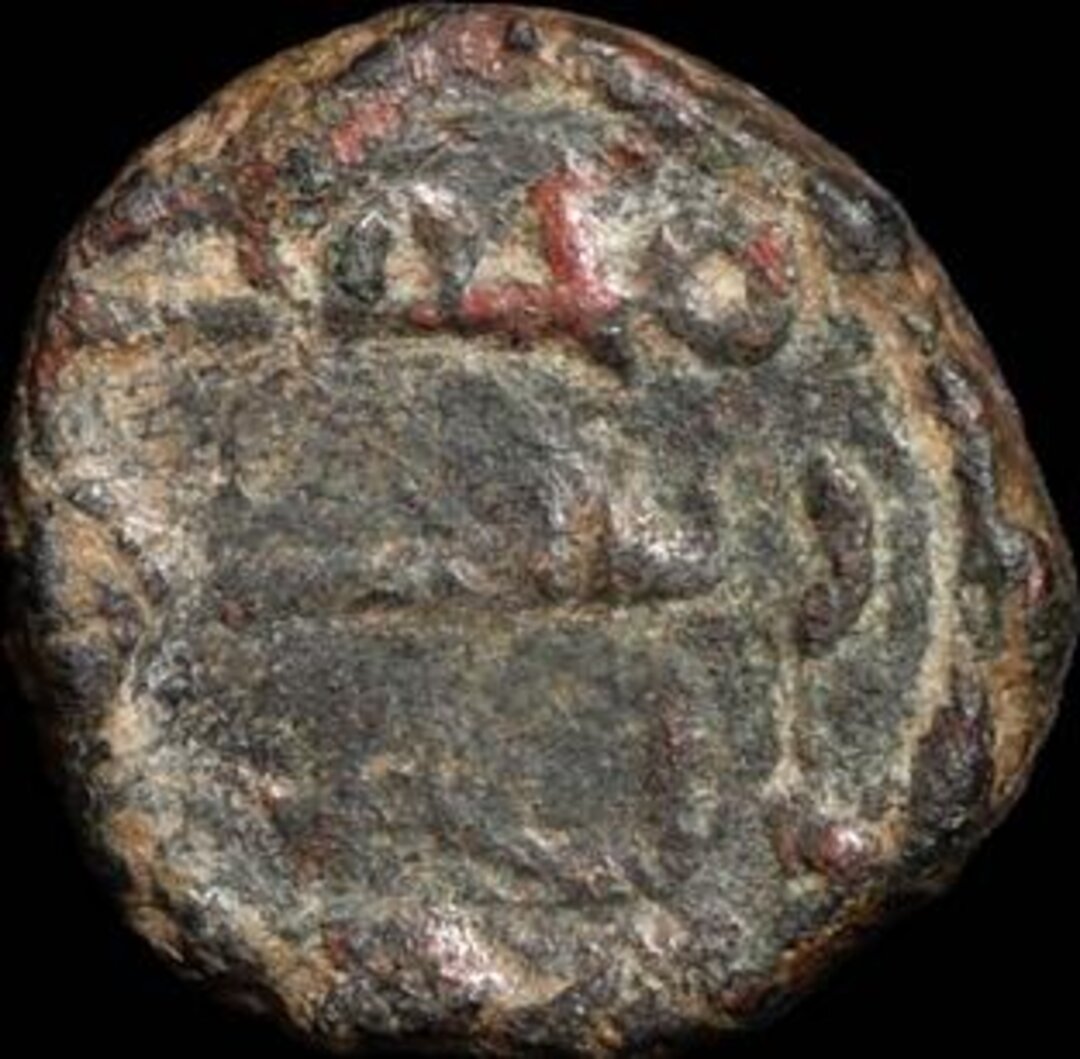
EARLY MEDIEVAL & ISLAMIC. Umayyad Caliphate. Uncertain post-reform period, A.H. 77-132 / A.D. 697-750. Bronze Fals (3.21g). Menorah type. Iliya (Jerusalem) mint. La ilaha illa Allah wahdahu (There is no god but Allah alone) / In three lines: MNHammad / rasul / Allah (MNHammad, the Messenger of Allah). SICA Vol. 2, 1308-1310; Album 163.1 (R). Rare. aVF for this very difficult type. One interpretation states that the upside-down candlestick resembles the dome of a mosque. This may be the case, but the question remains: why would the Umayyads not simply depict the full image of a mosque, such as the Dome of the Rock in Jerusalem? Also, if read in that way, the text would be upside down and not easily readable, which seems unusual. The alternative interpretation, identifying the object as a Jewish menorah, appears more convincing, especially as other very rare types also depict a seven-branched candlestick. It is not surprising that early Muslims in Jerusalem might have accepted a Jewish symbol on a coin, as Jews also believe in the Oneness of God and are considered People of the Book, like Christians. The symbol could also be understood in an Islamic context, for example as an allusion to the five pillars of Islam or the seven heavens mentioned in the Quran. It is also important to note that, after nearly 500 years of exile and oppression under the Roman and Byzantine empires, Jews were allowed back into Jerusalem when the second caliph, Umar I, took the city in A.D. 637/38. It is therefore possible that, in a community where Jews had returned, the early Umayyads could have issued coins bearing a Jewish symbol. Another interpretation sees this as an unusual figural bronze struck in Jerusalem by the new Islamic rulers, with a clearly Jewish motif. The type was early identified as a menorah, although Barag noted that only one rare variety shows a true menorah with seven arms and a flat base. The object on this piece may instead resemble the Omer offering cup depicted on the silver coins of the First Jewish War, with a rounded bowl, ribbed rather than plain, a knobbed stem, and a footed base. It is possible that two different objects are represented, both connected with Jewish Temple ritual. The Jewish inhabitants of the new Arab province of Bilad al-Sham, Palestine, appear to have coexisted reasonably well with their new Islamic rulers, sharing a common opposition to the Christian Byzantine Empire. The early Umayyad caliphs were evidently willing to permit the expression of Jewish religious symbolism. For comparison see; Nomos 36, lot 957, hammered US$450, and CNG Electronic Auction 432, lot 403, hammered US$525. From the Crescent Collection; acquired from Morton & Eden Ltd., London.
Estimate: AUD 250
Estimate: AUD 250