Info & contatti
Le mie offerte
Lotti osservati
Condizioni di vendita
Prezzi di spedizione
Metodi di pagamento
Esito stampabile
Sessione Live 4/10/2026 17:00:00 CET
Celtic Coins (1-13)
Greek Coins (14-181)
Roman Provincial Coins (182-296)
Roman Republican Coins (297-425)
Roman Imperial Coins (426-1087)
Migration Period (1088-1097)
Byzantine Coins (1098-1119)
Medieval Coins (1120-1163)
World Coins (1164-1368)
Medals & Tokens (1369-1377)
Group Lots (1378-1594)

LEO I (457-474). GOLD Solidus. Constantinople
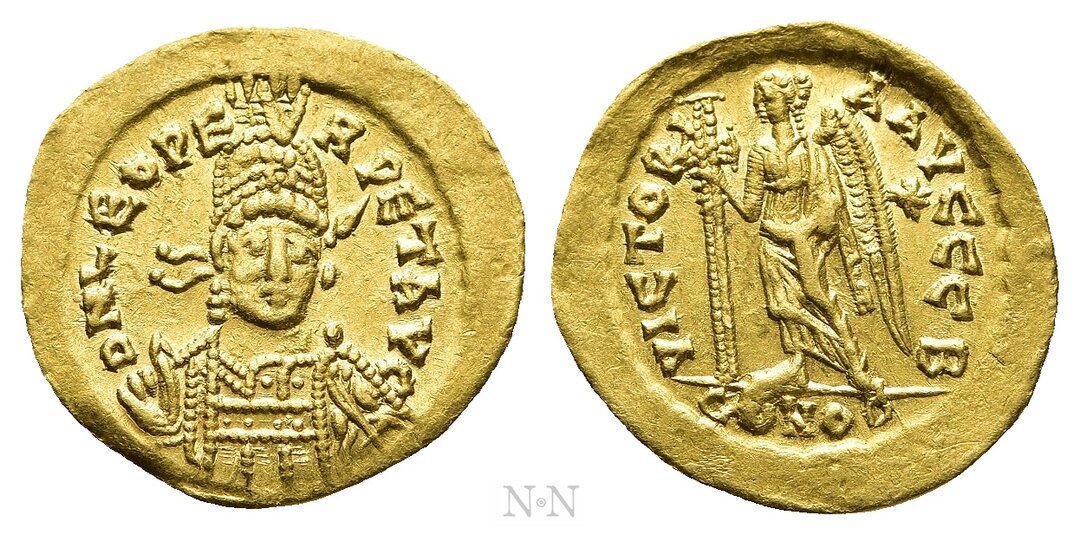

LEO I (457-474). GOLD Solidus. Constantinople.
Obv: D N LEO PERPET AVG.
Helmeted and cuirassed bust facing slightly right, holding spear and shield decorated with horseman motif.
Rev: VICTORIA AVGGG B / CONOB.
Victory standing left, holding jeweled cross; star to right.
RIC 605 & 630; Depeyrot 93/1.
Leo I, born in Thrace in 401, ascended the Eastern throne in 457 largely through the influence of the magister militum Aspar, who expected to dominate imperial policy and eventually secure the succession for one of his sons. Leo, however, soon distanced himself from Aspar’s control. He obstructed the promotion of Patricius, refused a dynastic marriage, and strengthened his position by recruiting Isaurian troops into his personal guard. Their leader, Tarasis, renamed Zeno, cemented this new alliance by marrying Leo’s daughter Ariadne in 466. Under Leo, the Eastern Empire resumed active involvement in Western affairs. Following the deaths of Majorian and Libius Severus, Leo appointed Anthemius as Western emperor and collaborated with him in a major expedition against the Vandal king Geiseric. The campaign collapsed in 468 due to Basiliscus’s mismanagement, resulting in the destruction of the imperial fleet and a severe financial crisis in Constantinople. The failure intensified anti‑Germanic sentiment at court. In 471, Leo, supported by the Isaurians, eliminated Aspar and his son Ardabur. Patricius survived but, compromised by his Arian faith and his marriage to Leo’s daughter Leontia, was compelled by Zeno to renounce both his wife and any claim to the throne. Leo died in January 474. His grandson Leo II briefly succeeded him, but his early death left Zeno as sole emperor. Leo’s reign marked a significant institutional development: for the first time, an emperor was crowned by the Patriarch of Constantinople. This act underscored the Eastern Church’s assertion of parity with Rome and inaugurated the medieval practice of treating imperial accession as a religious investiture.
Condition: Good very fine.
Weight: 4.40 g.
Diameter: 21 mm.
Estimate: € 750
Obv: D N LEO PERPET AVG.
Helmeted and cuirassed bust facing slightly right, holding spear and shield decorated with horseman motif.
Rev: VICTORIA AVGGG B / CONOB.
Victory standing left, holding jeweled cross; star to right.
RIC 605 & 630; Depeyrot 93/1.
Leo I, born in Thrace in 401, ascended the Eastern throne in 457 largely through the influence of the magister militum Aspar, who expected to dominate imperial policy and eventually secure the succession for one of his sons. Leo, however, soon distanced himself from Aspar’s control. He obstructed the promotion of Patricius, refused a dynastic marriage, and strengthened his position by recruiting Isaurian troops into his personal guard. Their leader, Tarasis, renamed Zeno, cemented this new alliance by marrying Leo’s daughter Ariadne in 466. Under Leo, the Eastern Empire resumed active involvement in Western affairs. Following the deaths of Majorian and Libius Severus, Leo appointed Anthemius as Western emperor and collaborated with him in a major expedition against the Vandal king Geiseric. The campaign collapsed in 468 due to Basiliscus’s mismanagement, resulting in the destruction of the imperial fleet and a severe financial crisis in Constantinople. The failure intensified anti‑Germanic sentiment at court. In 471, Leo, supported by the Isaurians, eliminated Aspar and his son Ardabur. Patricius survived but, compromised by his Arian faith and his marriage to Leo’s daughter Leontia, was compelled by Zeno to renounce both his wife and any claim to the throne. Leo died in January 474. His grandson Leo II briefly succeeded him, but his early death left Zeno as sole emperor. Leo’s reign marked a significant institutional development: for the first time, an emperor was crowned by the Patriarch of Constantinople. This act underscored the Eastern Church’s assertion of parity with Rome and inaugurated the medieval practice of treating imperial accession as a religious investiture.
Condition: Good very fine.
Weight: 4.40 g.
Diameter: 21 mm.
Estimate: € 750