Info & contatti
Le mie offerte
Lotti osservati
Condizioni di vendita
Prezzi di spedizione
Metodi di pagamento
Sessione Live 1/11/2026 17:00:00 CET
Celtic Coins (1-26)
Greek Coins (27-1279)
Roman Provincial Coins (256-401)
Roman Republican Coins (402-460)
Roman Imperial Coins (461-974)
Migration Period (975-986)
Byzantine Coins (987-1037)
Medieval Coins (1038-1102)
World Coins (1103-1252)
Medals & Tokens (1253-1262)
Group Lots (1263-1479)

THEODORA (1055-1056). GOLD Tetarteron Nomisma. Constantinople
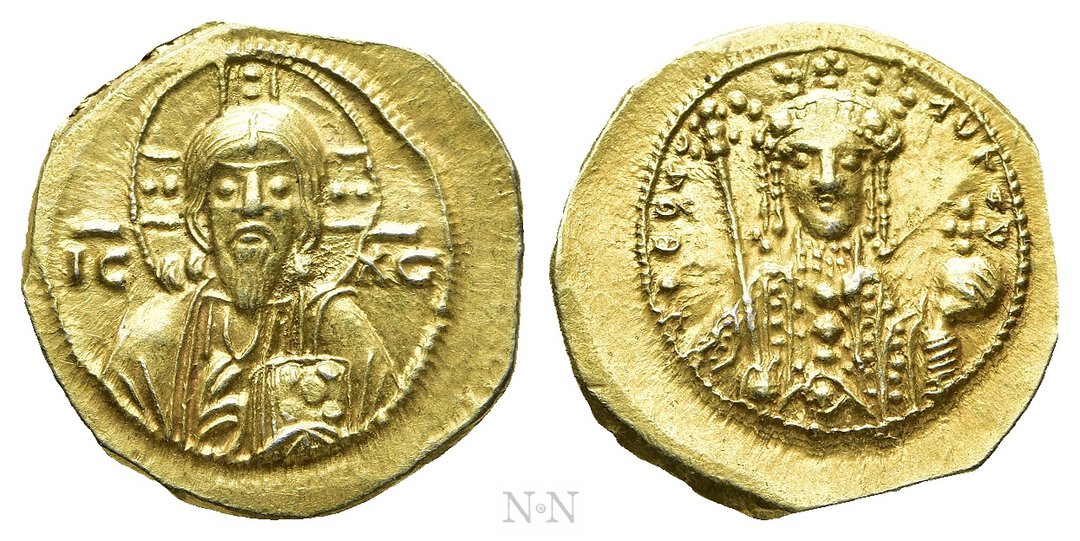

THEODORA (1055-1056). GOLD Tetarteron Nomisma. Constantinople.
Obv: IC - XC.
Bust of Christ Pantokrator facing.
Rev: + ӨЄOΔω AVΓOV.
Crowned bust of Theodora facing, wearing loros and holding globus cruciger and jeweled sceptre.
DOC 2; Sear 1838.
Theodora Porphyrogenita was born in 984, the youngest daughter of Emperor Constantine VIII and Helena. For many years she lived in the background of the imperial court, overshadowed by her elder sister Zoe, who was considered the more politically relevant of the two. Her life changed only when the deaths of Basil II and then her father placed her once again at the centre of imperial affairs. In her youth she had been promised to Otto III, but the marriage never took place: the emperor, struck by Zoe’s beauty, chose her instead. Teodora remained in the palace, watching the intrigues of the Macedonian dynasty unfold around her. Upon Constantine VIII’s death, he attempted to marry her to Romanos III Argyros, but Teodora refused, citing both consanguinity and the fact that Romanos already had a wife. The throne passed to Zoe and Romanos, whose marriage soon deteriorated into hostility, extravagance and plots. Teodora, still respected by part of the court, was accused of conspiracy and forced into a convent, where she remained for thirteen years. During Zoe’s turbulent reign with her husbands (Romanus III, Michael IV, and later Michael V Kalaphates) Teodora was repeatedly watched, confined and even compelled to take holy orders. But when Michael V attempted to exile Zoe, the people revolted. Both sisters were recalled, and Teodora was taken from the convent and crowned basilissa alongside Zoe. The joint rule of the Porphyrogenita sisters was brief but vigorous. Teodora, more disciplined and capable than Zoe, led reforms against corruption, improved administration and ordered the arrest and blinding of Michael V and his brother, ending their usurpation. When Zoe married Constantine IX Monomachos, Teodora was sidelined but retained considerable influence. The people regarded her as a stabilising figure, and in moments of crisis it was she who reassured the crowd and protected the Empire’s continuity. After the deaths of Zoe (1050) and Constantine IX (1055), Teodora, now elderly, returned to power. With determination she was proclaimed sole reigning Empress, the last sovereign of the Macedonian dynasty. She governed firmly, purging corrupt officials, controlling the aristocracy and intervening in ecclesiastical appointments, though her severity drew criticism. In 1056 she fell gravely ill. With no husband or heirs, she adopted Michael Bringas as her successor, but died shortly afterwards, on 31 August 1056, at the age of 76. Her death marked the end of the Macedonian dynasty, one of the most illustrious in Byzantine history.
Condition: Good very fine.
Weight: 4.01 g.
Diameter: 20 mm.
Estimate: € 2500
Obv: IC - XC.
Bust of Christ Pantokrator facing.
Rev: + ӨЄOΔω AVΓOV.
Crowned bust of Theodora facing, wearing loros and holding globus cruciger and jeweled sceptre.
DOC 2; Sear 1838.
Theodora Porphyrogenita was born in 984, the youngest daughter of Emperor Constantine VIII and Helena. For many years she lived in the background of the imperial court, overshadowed by her elder sister Zoe, who was considered the more politically relevant of the two. Her life changed only when the deaths of Basil II and then her father placed her once again at the centre of imperial affairs. In her youth she had been promised to Otto III, but the marriage never took place: the emperor, struck by Zoe’s beauty, chose her instead. Teodora remained in the palace, watching the intrigues of the Macedonian dynasty unfold around her. Upon Constantine VIII’s death, he attempted to marry her to Romanos III Argyros, but Teodora refused, citing both consanguinity and the fact that Romanos already had a wife. The throne passed to Zoe and Romanos, whose marriage soon deteriorated into hostility, extravagance and plots. Teodora, still respected by part of the court, was accused of conspiracy and forced into a convent, where she remained for thirteen years. During Zoe’s turbulent reign with her husbands (Romanus III, Michael IV, and later Michael V Kalaphates) Teodora was repeatedly watched, confined and even compelled to take holy orders. But when Michael V attempted to exile Zoe, the people revolted. Both sisters were recalled, and Teodora was taken from the convent and crowned basilissa alongside Zoe. The joint rule of the Porphyrogenita sisters was brief but vigorous. Teodora, more disciplined and capable than Zoe, led reforms against corruption, improved administration and ordered the arrest and blinding of Michael V and his brother, ending their usurpation. When Zoe married Constantine IX Monomachos, Teodora was sidelined but retained considerable influence. The people regarded her as a stabilising figure, and in moments of crisis it was she who reassured the crowd and protected the Empire’s continuity. After the deaths of Zoe (1050) and Constantine IX (1055), Teodora, now elderly, returned to power. With determination she was proclaimed sole reigning Empress, the last sovereign of the Macedonian dynasty. She governed firmly, purging corrupt officials, controlling the aristocracy and intervening in ecclesiastical appointments, though her severity drew criticism. In 1056 she fell gravely ill. With no husband or heirs, she adopted Michael Bringas as her successor, but died shortly afterwards, on 31 August 1056, at the age of 76. Her death marked the end of the Macedonian dynasty, one of the most illustrious in Byzantine history.
Condition: Good very fine.
Weight: 4.01 g.
Diameter: 20 mm.
Estimate: € 2500
Osserva:
Base d'asta: € 2'000
Diritti d'asta: 18.90%
Chiusura alle: 2026-11-01 16:00:00 ora di Roma