Info & contatti
Le mie offerte
Lotti osservati
Condizioni di vendita
Prezzi di spedizione
Metodi di pagamento
Sessione Live 1/11/2026 17:00:00 CET
Celtic Coins (1-26)
Greek Coins (27-1279)
Roman Provincial Coins (256-401)
Roman Republican Coins (402-460)
Roman Imperial Coins (461-974)
Migration Period (975-986)
Byzantine Coins (987-1037)
Medieval Coins (1038-1102)
World Coins (1103-1252)
Medals & Tokens (1253-1262)
Group Lots (1263-1479)

CONSTANTIUS II (337-361). GOLD Solidus. Cyzicus
Unpublished Solidus
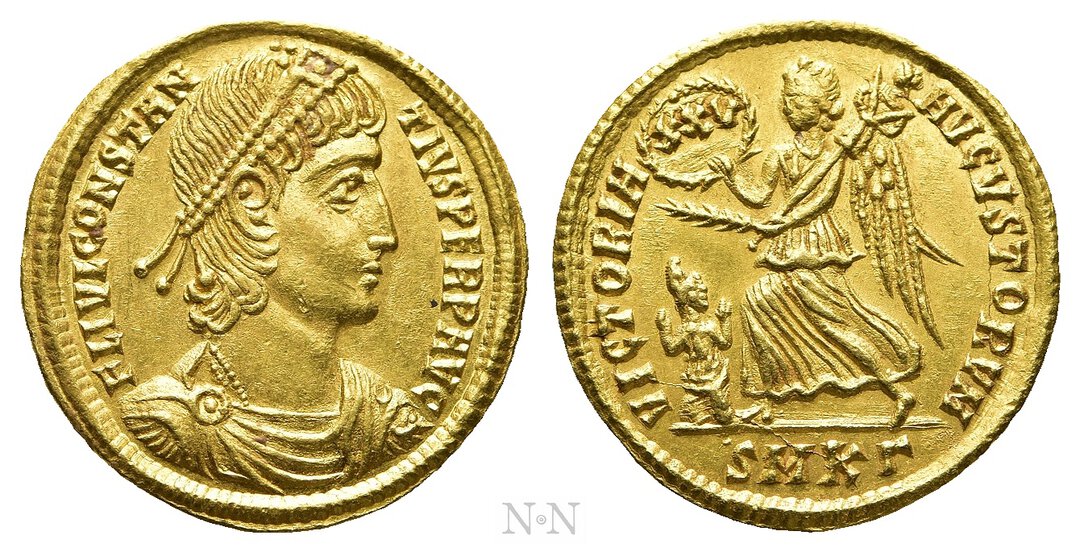

CONSTANTIUS II (337-361). GOLD Solidus. Cyzicus.
Obv: FL IVL CONSTANTIVS PERP AVG.
Pearl-diademed, draped and cuirassed bust right.
Rev: VICTORIA AVGVSTORVM / SMKΓ.
Victory advancing left, holding wreath inscribed XXV, palm-branch and trophy; to left, Persian captive kneeling facing, head right, raising both hands.
RIC -, cf. 55 (Constantinople mint, for type); Triton VIII, lot 1259.
Constantius II was born in 317 at Sirmium, the son of Constantine the Great and Fausta. From childhood he was destined for imperial rule: at the age of seven he was made Caesar, and in 337, upon his father’s death, he was proclaimed Augustus together with his brothers Constantine II and Constans. Reserved, austere, deeply religious to the point of fanaticism, and lacking in military brilliance, Constantius soon revealed a suspicious and authoritarian temperament. After Constantine’s death, the imperial family gathered in Constantinople for the funeral rites. Fearing plots, Constantius ordered the elimination of almost all male relatives of the dynasty, including cousins and half‑brothers, a massacre that marked his reign. Only two young relatives survived: Gallus and Julian, who would later play decisive roles. The division of the Empire among the three brothers did not last. Constantine II died in 340 while attempting to seize Constans’ territories; Constans himself was murdered in 350 by the usurper Magnentius. Constantius intervened in the West, beginning a long civil war that culminated in the bloody battle of Mursa (351), with tens of thousands of casualties. After further defeats, Magnentius committed suicide in 353, leaving Constantius as sole ruler of the Roman Empire. His reign was dominated by conflict: wars against the Sasanian Persians in the East, campaigns against the Alemanni along the Rhine, and a climate of internal suspicion and purges. A committed Arian, Constantius intervened forcefully in religious disputes, convening councils and imposing Arian doctrine throughout the Empire. He repressed violent clashes between Christian factions and persecuted pagans, while paradoxically retaining the title of Pontifex Maximus. Seeking an heir, he appointed his cousin Gallus as Caesar, but later had him executed for cruelty and suspected treason. His other cousin, Julian, was sent to Gaul, where he proved an exceptional commander, defeating Franks and Alemanni and earning the loyalty of the troops. When Constantius attempted to transfer part of the Gallic army to the East, the soldiers rebelled and proclaimed Julian Augustus. As Constantius prepared for war against his cousin, he fell gravely ill. He died in Cilicia in November 361, aged only 44. His death prevented a civil war, and Julian became emperor.
Condition: Extremely fine.
Weight: 4.63 g.
Diameter: 21 mm.
Estimate: € 5000
Obv: FL IVL CONSTANTIVS PERP AVG.
Pearl-diademed, draped and cuirassed bust right.
Rev: VICTORIA AVGVSTORVM / SMKΓ.
Victory advancing left, holding wreath inscribed XXV, palm-branch and trophy; to left, Persian captive kneeling facing, head right, raising both hands.
RIC -, cf. 55 (Constantinople mint, for type); Triton VIII, lot 1259.
Constantius II was born in 317 at Sirmium, the son of Constantine the Great and Fausta. From childhood he was destined for imperial rule: at the age of seven he was made Caesar, and in 337, upon his father’s death, he was proclaimed Augustus together with his brothers Constantine II and Constans. Reserved, austere, deeply religious to the point of fanaticism, and lacking in military brilliance, Constantius soon revealed a suspicious and authoritarian temperament. After Constantine’s death, the imperial family gathered in Constantinople for the funeral rites. Fearing plots, Constantius ordered the elimination of almost all male relatives of the dynasty, including cousins and half‑brothers, a massacre that marked his reign. Only two young relatives survived: Gallus and Julian, who would later play decisive roles. The division of the Empire among the three brothers did not last. Constantine II died in 340 while attempting to seize Constans’ territories; Constans himself was murdered in 350 by the usurper Magnentius. Constantius intervened in the West, beginning a long civil war that culminated in the bloody battle of Mursa (351), with tens of thousands of casualties. After further defeats, Magnentius committed suicide in 353, leaving Constantius as sole ruler of the Roman Empire. His reign was dominated by conflict: wars against the Sasanian Persians in the East, campaigns against the Alemanni along the Rhine, and a climate of internal suspicion and purges. A committed Arian, Constantius intervened forcefully in religious disputes, convening councils and imposing Arian doctrine throughout the Empire. He repressed violent clashes between Christian factions and persecuted pagans, while paradoxically retaining the title of Pontifex Maximus. Seeking an heir, he appointed his cousin Gallus as Caesar, but later had him executed for cruelty and suspected treason. His other cousin, Julian, was sent to Gaul, where he proved an exceptional commander, defeating Franks and Alemanni and earning the loyalty of the troops. When Constantius attempted to transfer part of the Gallic army to the East, the soldiers rebelled and proclaimed Julian Augustus. As Constantius prepared for war against his cousin, he fell gravely ill. He died in Cilicia in November 361, aged only 44. His death prevented a civil war, and Julian became emperor.
Condition: Extremely fine.
Weight: 4.63 g.
Diameter: 21 mm.
Estimate: € 5000
Osserva:
Base d'asta: € 4'000
Diritti d'asta: 18.90%
Chiusura alle: 2026-11-01 16:00:00 ora di Roma