Info & contatti
Le mie offerte
Lotti osservati
Condizioni di vendita
Prezzi di spedizione
Metodi di pagamento
Sessione Live 16/11/2026 15:00:00 CET
The Poor Scholar Collection (1-298)
Celtic (299-301)
Greek (302-401)
Roman Republic (402-447)
Roman Provincial (448-482)
Roman Empire (483-585)
Barbaric (586-586)
Byzantine (587-608)
Islamic (609-623)
Armenia (624-624)
Austria (625-625)
Belgium (626-626)
Brazil (627-627)
Croatia (628-629)
Egypt (630-636)
France (637-651)
Germany (652-654)
Greece (655-655)
Italy (656-711)
Peru (712-713)
Poland (714-715)
Romania (716-716)
Spain (717-718)
Switzerland (719-719)
Thailand (720-722)
Medals (723-724)
Weights (725-748)

Sicily. Henna. Time of the First Servile War: circa 138-134 BC. Hemilitron (Bronze, 17.3 mm, 5.52 g). Royal Coinage in the name of Antiochos-Eunos. Diademed and bearded head of Eunus right, diadem ties falling straight behind. Rev. BAΣIΛE[ΩΣ] / ANTIO[XOY], Unidentified object: a lit torch on a pedestal or a quiver (according to Cammarata); it may, however, represent a stylized version of the Isis headdress set on an inverted crescent, a motif found on a series of bronzes of comparable weight struck in Syria under Antiochos VII Sidetes. Calciati, CNS, 10. Campana 12b var. (same obverse die, but different reverse die). HGC 2, 402. Untouched green patina. Good Very Fine. Extremely Rare, and among the finest specimens known. One can easily imagine Eunus as an extraordinarily charismatic figure: long-bearded, hardened by a lifetime of adventures, and gifted with the presence to persuade an entire community of slaves—tens of thousands, according to the ancient sources—to follow him. They regarded him as a prophet, while he himself claimed the power to foresee the future and foretold that he would one day become king. Perhaps he even hinted at noble origins, adding yet another layer to the aura of destiny that surrounded him. According to Diodorus Siculus (34.5–46), the great slave revolt erupted at Henna in 139 BC, ultimately giving rise to a remarkable slave kingdom and forcing Rome to send a consular army to Sicily. Eunus, a Syrian-born slave owned by a wealthy landowner of Henna, stood at its centre. He brought with him not only Syrian religious and ideological traditions, but also a distinctly Seleucid character: upon becoming king, he adopted the royal name Antiochos, perhaps in reference to his contemporary, Antiochos VII Sidetes, who in the same year defeated the usurper Diodotos Tryphon and restored Seleucid control over Syria. The parallel is striking—and perhaps deliberate. Yet Eunus’ extraordinary adventure ended in disaster. After prolonged sieges and extreme famine, the rebels were reduced even to cannibalism. Henna, the heart of Eunus’ kingdom, eventually fell to the Romans through treachery. Eunus fled with his remaining followers, but his reign was over: he was eventually captured while hiding in a cave and taken prisoner to Morgantina. Few episodes in ancient Sicily offer such a dramatic combination of slavery, prophecy, rebellion, kingship and Seleucid ambition—all compressed into the story of one extraordinary man. This is the coin of all the “misfits”—anarchist-leaning, half-mystical souls—and a true witness to their story. From the Poor Scholar Collection.
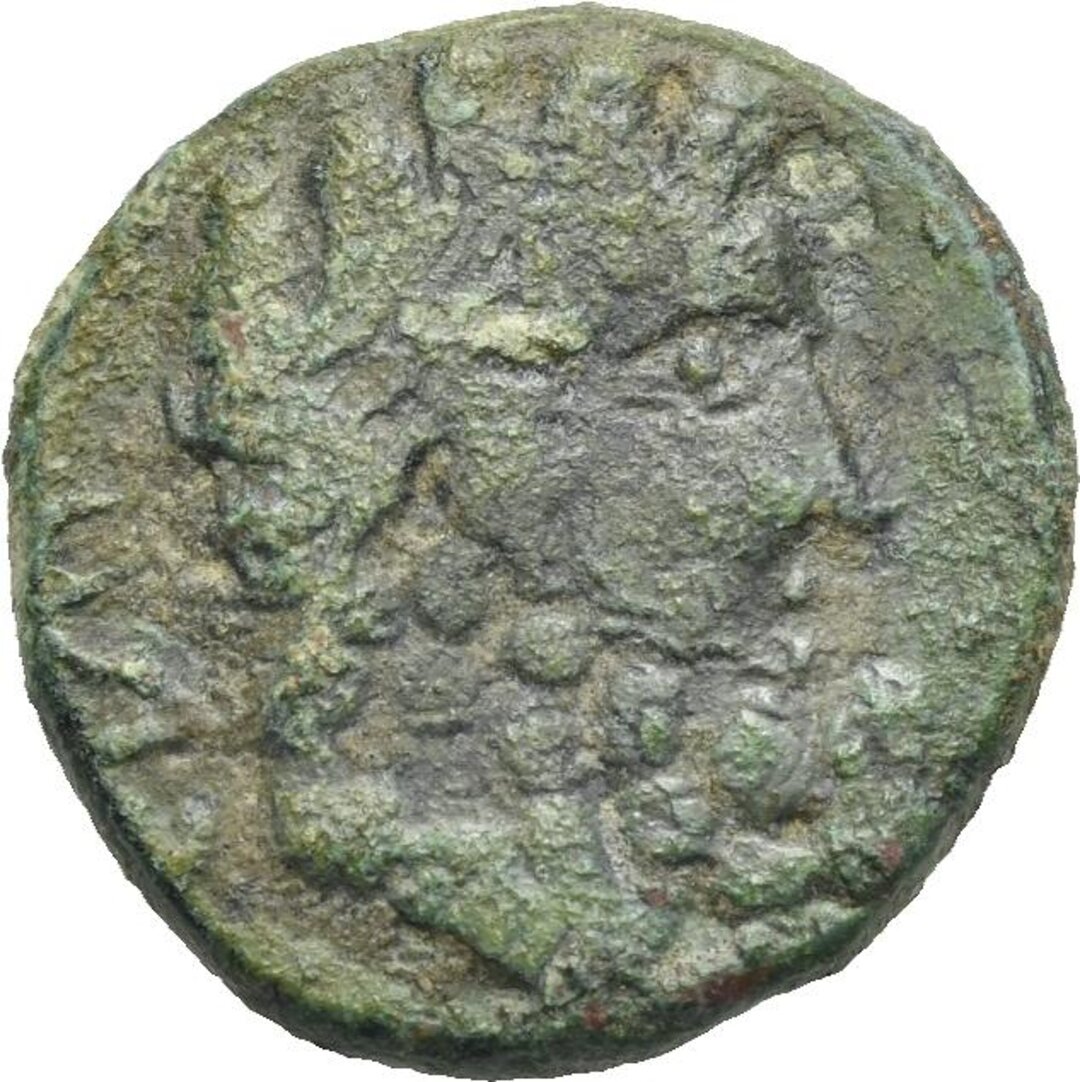
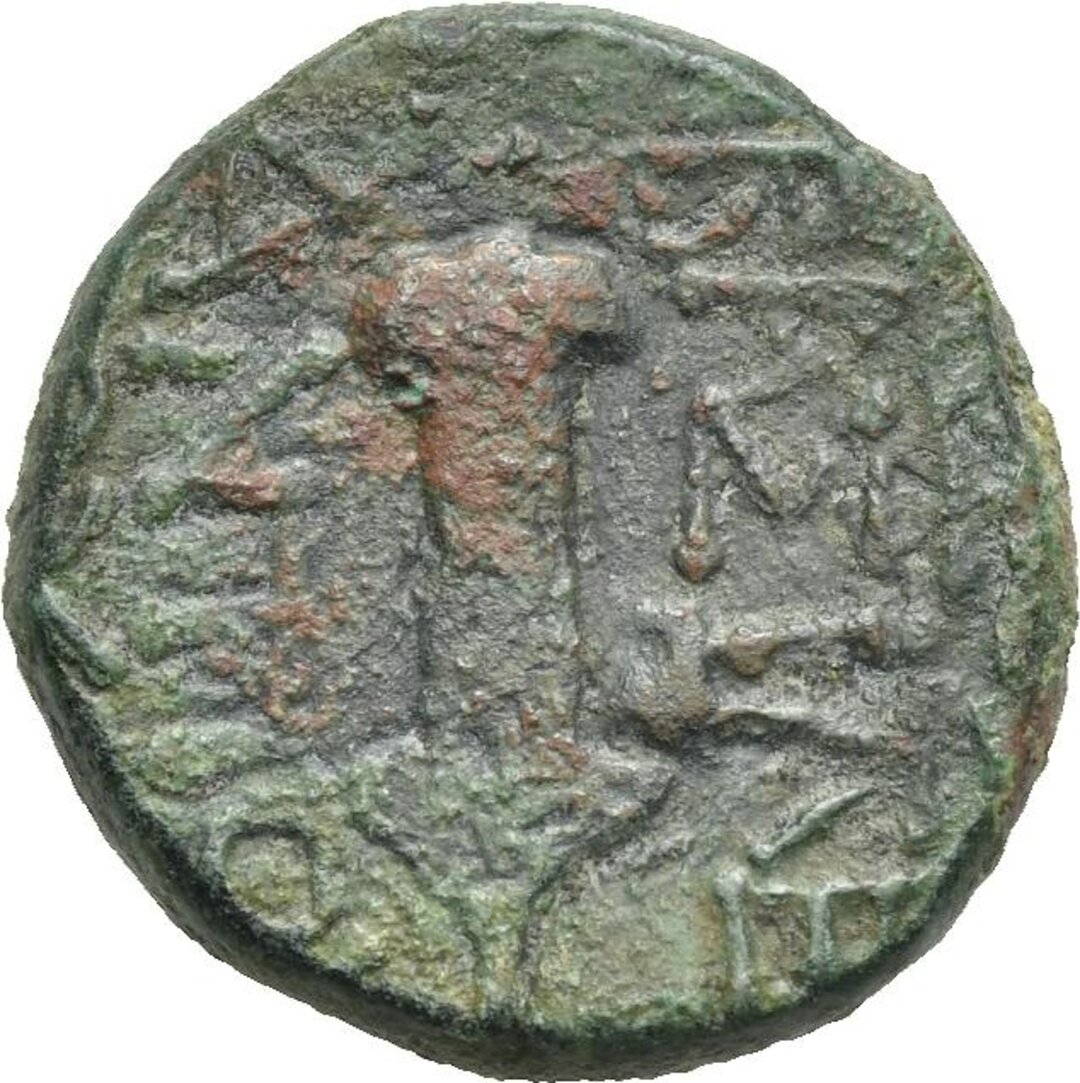
Sicily. Henna. Time of the First Servile War: circa 138-134 BC. Hemilitron (Bronze, 17.3 mm, 5.52 g). Royal Coinage in the name of Antiochos-Eunos. Diademed and bearded head of Eunus right, diadem ties falling straight behind. Rev. BAΣIΛE[ΩΣ] / ANTIO[XOY], Unidentified object: a lit torch on a pedestal or a quiver (according to Cammarata); it may, however, represent a stylized version of the Isis headdress set on an inverted crescent, a motif found on a series of bronzes of comparable weight struck in Syria under Antiochos VII Sidetes. Calciati, CNS, 10. Campana 12b var. (same obverse die, but different reverse die). HGC 2, 402. Untouched green patina. Good Very Fine. Extremely Rare, and among the finest specimens known.
One can easily imagine Eunus as an extraordinarily charismatic figure: long-bearded, hardened by a lifetime of adventures, and gifted with the presence to persuade an entire community of slaves—tens of thousands, according to the ancient sources—to follow him. They regarded him as a prophet, while he himself claimed the power to foresee the future and foretold that he would one day become king. Perhaps he even hinted at noble origins, adding yet another layer to the aura of destiny that surrounded him.
According to Diodorus Siculus (34.5–46), the great slave revolt erupted at Henna in 139 BC, ultimately giving rise to a remarkable slave kingdom and forcing Rome to send a consular army to Sicily. Eunus, a Syrian-born slave owned by a wealthy landowner of Henna, stood at its centre. He brought with him not only Syrian religious and ideological traditions, but also a distinctly Seleucid character: upon becoming king, he adopted the royal name Antiochos, perhaps in reference to his contemporary, Antiochos VII Sidetes, who in the same year defeated the usurper Diodotos Tryphon and restored Seleucid control over Syria. The parallel is striking—and perhaps deliberate.
Yet Eunus’ extraordinary adventure ended in disaster. After prolonged sieges and extreme famine, the rebels were reduced even to cannibalism. Henna, the heart of Eunus’ kingdom, eventually fell to the Romans through treachery. Eunus fled with his remaining followers, but his reign was over: he was eventually captured while hiding in a cave and taken prisoner to Morgantina. Few episodes in ancient Sicily offer such a dramatic combination of slavery, prophecy, rebellion, kingship and Seleucid ambition—all compressed into the story of one extraordinary man.
This is the coin of all the “misfits”—anarchist-leaning, half-mystical souls—and a true witness to their story.
From the Poor Scholar Collection.
Osserva:
Base d'asta: CHF 300
Diritti d'asta: 19.00%
Chiusura alle: 2026-11-16 12:00:00 ora di Roma