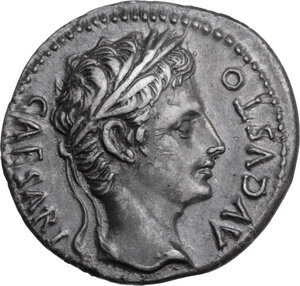
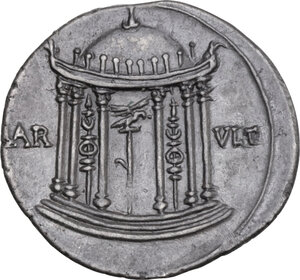
501 - Augustus (27 BC - 14 AD). AR Denarius. Spanish mint, (Colonia Patricia?), c. 18 BC. Obv. CAESARI AVGVSTO. Laureate head right. Rev. MAR - VLT. Temple of Mars Ultor containing aquila flanked by two signa. RIC I (2nd ed.) 105a; C. 190. AR. 3.83 g. 20.5 mm. R. Faint marks on obverse. An impressive example with enchanting tone. Well centred and very attractive. EF/Good EF.
Info & contatti
Catalogo PDF
Le mie offerte
Lotti osservati
Conferimento
Condizioni di vendita
Prezzi di spedizione
Metodi di pagamento
Tabella rilanci
Esito stampabile
Sessione Live 3/5/2025 15:00:00 CET
Greek Coins (1-245)
The Roman Republic (246-500)
The Roman Empire (501-600)
Sessione Live 4/5/2025 15:00:00 CET
The Roman Empire (601-692)
Barbaric and Migration Period Coinage (693-706)
The Byzantine Empire (707-748)
World Coins (749-898)
Monete e Medaglie di Zecche Italiane (899-1110)
Casa Savoia - Regno di Sardegna - Regno di Italia (1111-1157)
Repubblica Italiana (1159-1160)
Medaglie Papali (1161-1170)
Medaglie e decorazioni (1171-1199)

Risultati: 61
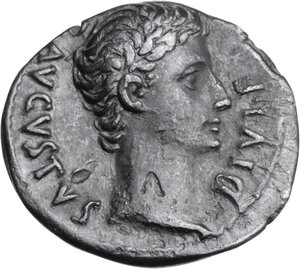
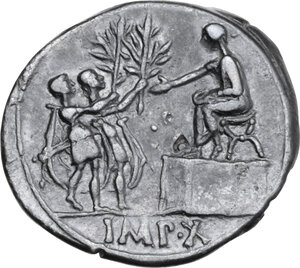
502 - Augustus (27 BC - 14 AD). AR Denarius. Lugdunum (Lyon) mint. Struck 15 BC. Obv. AVGVSTVS DIVI F. Bare head right. Rev. Augustus seated left on curule chair set on daïs, extending hand toward two soldiers, each carrying parazonium and presenting laurel branches; in exergue, IMP X. RIC I (2nd ed.) 165a. AR. 3.73 g. 20 mm. R. Choice example with impressive dark tone, perfectly centred. Banker's marks. Good VF.
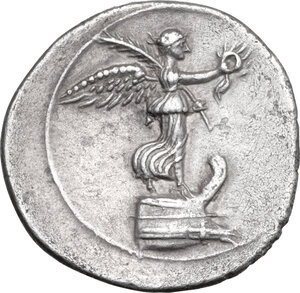
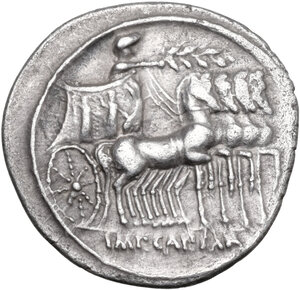
503 - Augustus (27 BC - 14 AD) . AR Denarius, Italian (Rome?) mint. Obv. Victory, draped, standing right on prow, holding palm frond over left shoulder in left hand and wreath in extended right hand. Rev. Octavian driving triumphal quadriga right, the car ornamented with figures on its front and side panels, holding reins in left hand and branch in right; IMP CAESAR in exergue. RIC I (2nd ed.) 264; C. 115. AR. 3.53 g. 21 mm. R. Choice example of this fascinating issue, well centred. Good VF/About EF. This coin commemorates Octavian’s fresh victory at Actium. The obverse, showing Victory standing on a prow, is reminiscent of the type featured on the coins of Demetrius Poliorcetes, and reflects the manner of Octavian’s victory. The reverse displays Octavian as the victor, involved in the triumphal procession in Rome, which wended its way from the Forum to the Temple of Jupiter Optimus Maximus. This victory, however, was portrayed as being over the foreign queen Cleopatra, rather than Antony and those Romans who supported him. (Triton XI, 2008, 649 note).
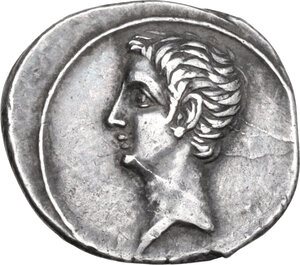
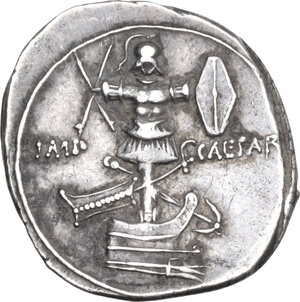
504 - Augustus (27 BC - 14 AD). AR Denarius, Italian (Rome?) mint, 29-27 BC. Obv. Bare head left. Rev. Naval and military trophy facing, composed of helmet, cuirass, shield, and crossed spears, set on prow of galley right; crossed rudder and anchor at base. RIC I (2nd ed.) 265b. AR. 3.84 g. 21 mm. R. Well centred and choice, with attractive cabinet tone and minor blackish deposits. About EF.
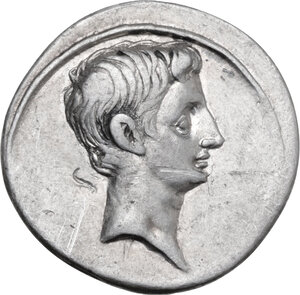
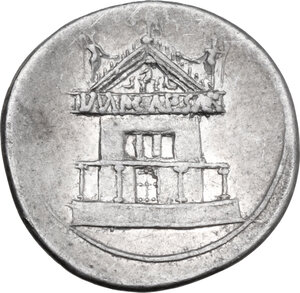
505 - Augustus (27 BC - 14 AD). AR Denarius, Italian (Rome?) mint., 29-27 BC. Obv. Bare head right. Rev. Facade of the Roman Curia with a tetrastyle porch; IMP CAESAR on the architrave; figure seated between animals, vis-à-vis, in pediment; Victory standing facing on globe, holding wreath and vexillum, on apex of roof; statues, each holding a parazonium and sceptre, standing at each end of architrave. RIC I (2nd ed.) 266; C. 122. AR. 3.81 g. 20 mm. R. A superb example, sharply struck on a broad flan. Well centered. Lovely iridescent cabinet tone. Banker's mark on obverse and a light scuff. Good VF/About EF. For a long time, this structure was mistakenly believed to be the temple dedicated to the deified Julius Caesar. However, modern research has now definitively identified it as the Curia Julia, the Senate house initiated by Julius Caesar shortly before his assassination in 44 BC. The construction was later completed and officially dedicated by his adopted son Octavian (the future Emperor Augustus) on August 28, 29 BC. This building served as a political center of the Roman Republic, reflecting Caesar's ambitious plans for reform and Octavian's eventual consolidation of power.
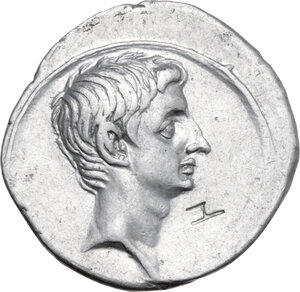
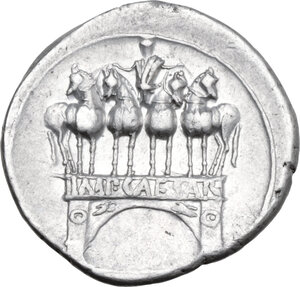
506 - Augustus (27 BC - 14 AD). AR Denarius, 29-27 BC. Obv. Bare head right. Rev. IMP•CAESAR upon architrave of triumphal arch, the Actian arch in the Forum Romanum. RIC I (2nd ed.) 267; C. 125. AR. 3.78 g. 20 mm. R. Rare and choice, with bold portrait. Lightly toned. Banker's mark on obverse. EF.
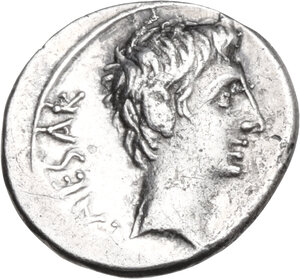
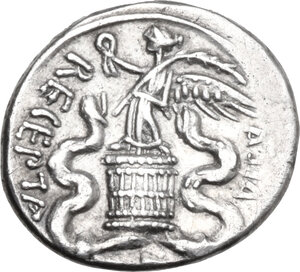
507 - Augustus (27 BC - 14 AD). AR Quinarius, uncertain mint, 29-26 BC. Obv. CAESAR IMP VII. Bare head right. Rev. ASIA RECEPTA. Victory, draped, standing left, holding wreath in right hand and palm in left, on cista mystica between two snakes. RIC I (2nd ed.) 276. AR. 1.73 g. 15 mm. Choice example, lightly toned. Slightly porous surface on obverse and light weak strike areas. Nice example lightly toned. Good VF.
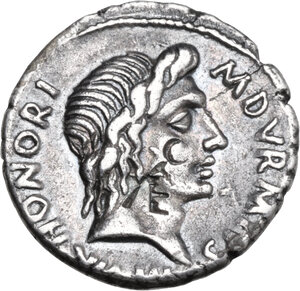
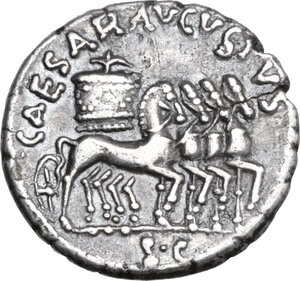
508 - Augustus (27 BC - 14 AD). AR Denarius, M. Durmius moneyer, 18 BC. Obv. M. DVRMIVS III VIR HONORI. Head of Honos right. Rev. CAESAR AVGVSTVS. Slow quadriga right pulling modius shaped car, on top of which three corn ears; in exergue, SC. RIC I (2nd ed.) 313; C. 429. AR. 3.67 g. 18.5 mm. RR. Very rare and choice, sound metal. Perfectly centred, with pleasant tone. Bankers's marks on obverse, hairline flancrack. Good VF.
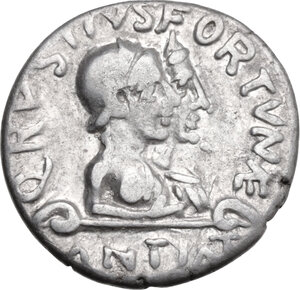
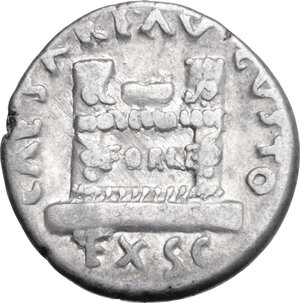
509 - Augustus (27 BC-14 AD). AR Denarius. Q. Rustius moneyer, c. 19-16 BC. Obv. Q. RVSTIVS FORTVNAE ANTIAT. Conjoined busts of Fortuna Victrix and Fortuna Feliz right, on base between two rams heads. Rev. CAESARI AVGVSTO EX SC. Ornamented rectangular altar inscribed FOR RE. RIC I (2nd ed.) 322. AR. 3.79 g. 18.5 mm. RR. Very rare and good example. Well centred and lightly toned. VF. It was to the goddess Fortuna that Augustus attributed his successes, and also his recovery from his frequent illnesses. She was worshipped under two aspects, as Fortuna Victrix and Fortuna Felix, hence receiving the name of Fortuna Antiates. (RSC I,p.158, 513 note). The altar celebrating Augustus' return from the East, 19th October 19, was decreed by the Senate and dedicate on 15th December of the same year. (I.Vecchi,Nummorum Auctiones 9, 1997, 90 note).
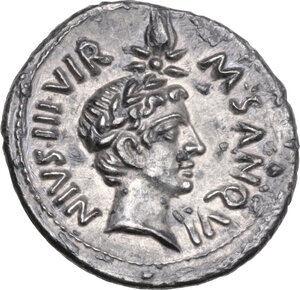
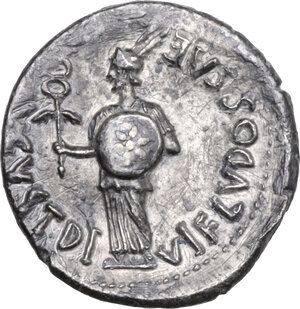
510 - Augustus (27 BC - 14 AD). AR Denarius, 17 BC. Coinage of M. Sanquinius. Obv. M SANQVINIVS•III•VIR. Youthful and laureate head of Divus Julius Caesar to right; above, comet star. Rev. AVGVST•DIVI F LVDOS•SAE. Herald of the secular games, in long robe and feathered helmet, standing left, holding winged caduceus in his right hand and round shield decorated with six-pointed star in his left. RIC I (2nd ed.) 340; C. 6. AR. 3.72 g. 20.5 mm. RR. Very rare and fascinating issue. Lightly toned, with underlying luster. Cleaning marks. About EF. A fascinating and historically intriguing issue. The comet immortalized by the magistrate M. Sanquinius on the reverse of this denarius, struck during the Secular Games of 17 BC, is the so called “Comet of Caesar” (Sidus Iulium or Caesaris astrum : numerical designation C/-43k1) widely considered the most famous of antiquity; this comet shone in the skies of Rome following the assassination of Julius Caesar and was interpreted by Romans as a sign of the deification of the dictator. Suetonius (Divus Julius, 88) writes : (Julius Caesar) 'periit sexto et quinquagensimo aetatis anno atque in deorum numerum relatus est, non ore modo decernentium sed et persuasione volgi. Siquidem ludis, quos primos consecratos ei heres Augustus edebat, stella crinita per septem continuos dies fulsit exoriens circa undecimam horam, creditumque est animam esse Caesaris in caelum recepti; et hac de causa simulacro eius in vertice additur stella'. (He died in the fifty-sixth year of his age, and was ranked amongst the Gods, not only by a formal decree, but in the belief of the populace. For during the first games which Augustus, his heir, consecrated to his memory, a comet blazed for seven days, rising always about eleventh hour (five pm o'clock); and it was credited to be the soul of Caesar, now received into heaven: for which reason he is, likewise, represented on his statue with a star on his brow) Many centuries later, Shakespeare may also have made oblique reference to it in the play Julius Caesar. However Shakespeare was mistaken about the time of its appareance or he took artistic license with history, as he had the comet appearing prior to Caesar's murder. In fact, in the second scene of Act II, Caesar's wife, Calpurnia, warns her husband of a portentous event which she interprets as an ill omen for him.
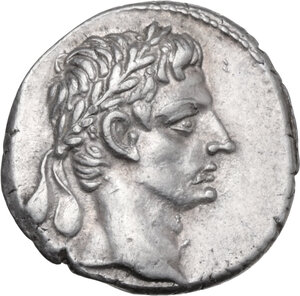
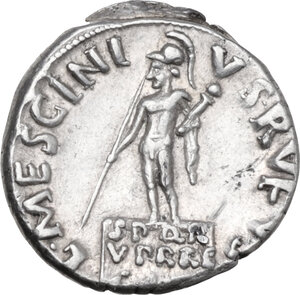
511 - Augustus (27 BC - 14 AD). AR Denarius, L. Mescinius Rufus, moneyer, 16 BC. Obv. Laureate head right. Rev. L. MESCINIVS RVFVS. Mars, helmeted and cloaked, holding spear and parazonium, standing l. on pedestal inscribed S P Q R / V PR RE / CAES. RIC I (2nd ed.) 351; C. 463. AR. 4.04 g. 18.5 mm. RR. Very rare and well centred. Enchanting tone, with golden hues. Impressive bold portrait. EF.
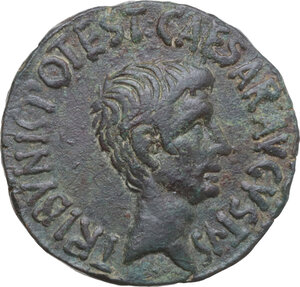
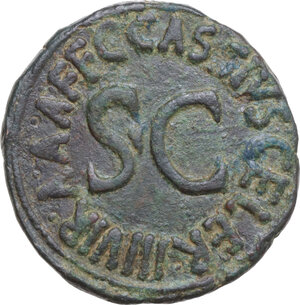
512 - Augustus (27 BC - 14 AD) . AE As, Rome mint. C. Cassius Celer, moneyer. Struck 16 BC. Obv. CAESAR AVGVSTVS TRIBVNIC POTEST. Bare head right. Rev. C CASSIVS C F CELER IIIVIR A A A F F, around S C. RIC I (2nd ed.) 376. AE. 11.44 g. 28.5 mm. Well centred and choice. Enchanting brown and green patina. About EF.
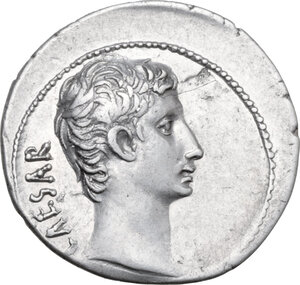
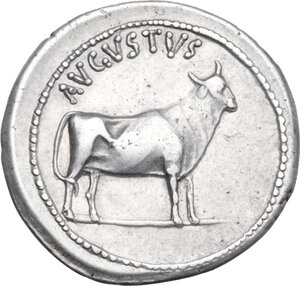
513 - Augustus (27 BC - 14 AD). AR Denarius, 21-20 BC. Obv. CAESAR. Bare head right. Rev. AVGVSTVS. Young bull standing right, head erect. RIC I (2nd ed.) 475. AR. 3.77 g. 20 mm. RR. Very rare. Superb example, struck on broad flan. Lightly toned, with bright fields. Minor metal flaw on obverse. About EF/EF. The animal depicted has been identified by some authors as a heifer, while others describe it as a cow. The horns and the thick, pleated neck are more characteristic of a bull. The two main deities honored at Samos were Hera and Poseidon ταυρεος. Augustus stayed in Samos between the winter of 21 and the winter of 20 BC. For information regarding these coins, see C.H. Sutherland, 'The Attribution of Augustan Denarii to the Types of the Temple, the Crown, and the Young Bull,' in RN (1974), pp. 58-62.
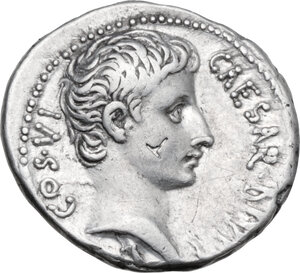
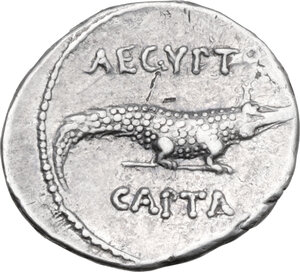
514 - Augustus (27 BC - 14 AD). AR Denarius, 28 BC. Uncertain mint (Pergamum ?). Obv. CAESAR DIVI F COS VI. Bare head right, small capricorn below. Rev. Crocodile right; AEGVPTO above, CAPTA below. RIC I (2nd ed.) 545. AR. 3.84 g. 20.5 mm. RRR. Very rare and in excellent condition for issue. Brilliant, lightly toned and with a hint of iridescence. Rare as such. Small banker's marks on both sides. Good VF. This fascinating issue records the subjugation of Egypt after the battle of Actium and the death of Marcus Antonius and Cleopatra.
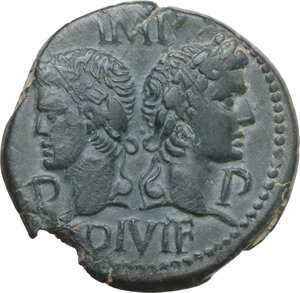
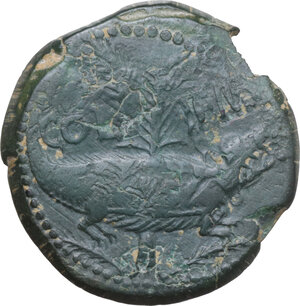
515 - Augustus (27 BC - 14 AD) with Agrippa. AE As, Nemausus mint, c. 10-14 AD. Obv. Heads of Agrippa, wearing combined rostral crown and laurel wreath, to left and Augustus, laureate, to right, back to back; IMP above, DIVI F below, P P across field. Rev. Crocodile right, chained to palm tree; above, wreath with long ties; COL NEM across field. RIC I (2nd ed.) 159; RPC I 525. AE. 11.93 g. 27 mm. A handsome example. Lovely dark olive green patina. Light graffiti as usual, and a die swift on reverse. Chipped edge. Good VF/About EF. This coin type was first issued to commemorate Augustus’ establishment of the colony Colonia Augusta Nemausus in southern Gaul in 27 BC. However, this particular example comes from a later reissue, struck two years after Agrippa’s death. The presence of P P (Pater Patriae) on the obverse indicates it was minted after Augustus received this title in 2 BC, confirming it as a subsequent emission of the well-known 'crocodile dupondius.'.
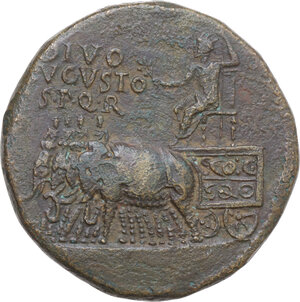
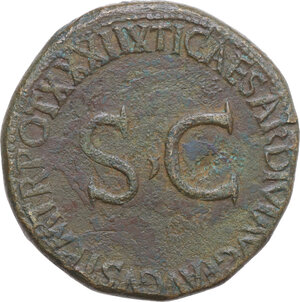
516 - Divus Augustus (died 14 AD). AE Sestertius. Struck under Tiberius, 36 AD. Obv. DIVO/AVGVSTO/SPQR. Funeral car bearing enthroned statue of Divus Augustus, drawn left by four elephants. Rev. TI CAESAR DIVI AVG F AVGVST PM TR POT XXXIIX around large SC. RIC I (2nd ed.) (Tib.) 68. AE. 28.08 g. 34 mm. R. Rare and good example, with delicate green patina. Slightly rough surfaces and minor traces of tooling.. Good VF.
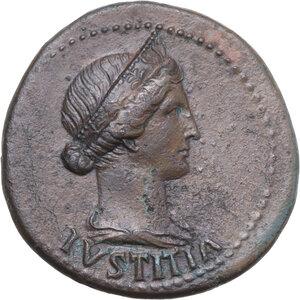
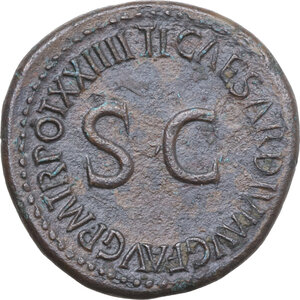
517 - Livia, wife of Augustus (died 29 AD). AE As. Struck under Tiberius, 22-23. Obv. Diademed and draped bust of Livia (as Justitia) right; IVSTITIA below. Rev. TI CAESAR DIVI AVG F AVG PM TR POT XXIIII around large SC. RIC I (2nd ed.) (Tib.) 46. AE. 13.1 g. 30.5 mm. R. Rare and superb example, with enchanting brown patina. Delicate and detailed portrait of Livia. About EF.
Spintria
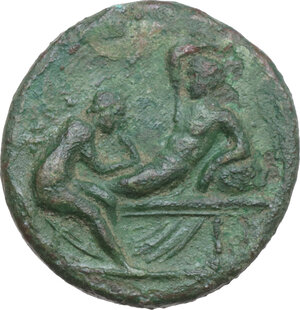
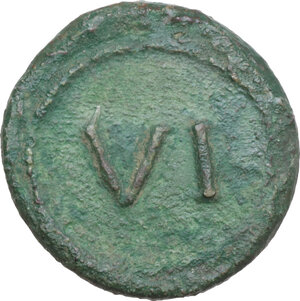
518 - Time of Tiberius. AE Spintria, c. 22-37. Obv. Scene of fellatio by a heterosexual couple. Rev. Numeral VI within pelleted circle. Simonetta-Riva 15/A; Buttrey 6; Campana, serie 14. 5.21 g. 21 mm. RR. Artificially adjusted patina with subtle pigment enhancement. A rare and intriguing issue, displaying precise centering and well-executed strike. Good VF. Spintriae were small, token-like objects used in the Roman Empire, typically made of bronze or brass, featuring erotic imagery on one side and a numeral (usually I to XVI) on the other. Their exact function remains debated; while some scholars suggest they served as brothel tokens or vouchers, others propose they were gaming pieces or objects of private amusement. Their standardized design and widespread discovery, particularly in Pompeii, indicate a structured purpose within Roman society, offering insight into the empire's attitudes toward sexuality and commerce.
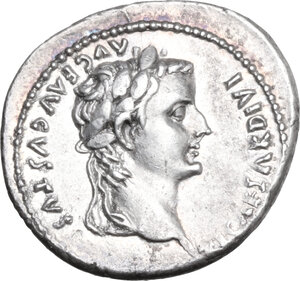
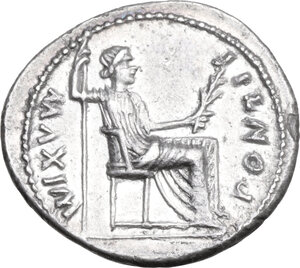
519 - Tiberius (14-37). AR Denarius 'Tribute Penny' type. Lugdunum mint, 36-37. Obv. TI CAESAR DIVI AVG F AVGVSTVS. Laureate head right. Rev. PONTIF MΛXIM. Livia as Pax, seated right, holding reversed spear and olive branch. RIC I (2nd ed.) 26. AR. 3.64 g. 20 mm. Choice example, struck on broad flan. Nicely toned. EF. The tribute penny was the coin that was shown to Jesus when he made his famous speech 'Render unto Caesar the things that are Caesar's, and unto God the things that are God's.' The phrase comes from the King James Version of the gospel account: Jesus is asked, 'Is it lawful to give tribute to Caesar, or not?' (Mark 12:14) and he replies, 'bring me a penny, that I may see it' (Mark 12:15).
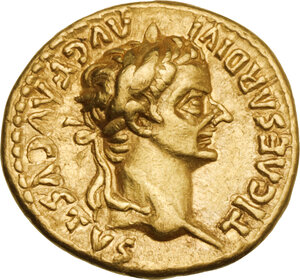
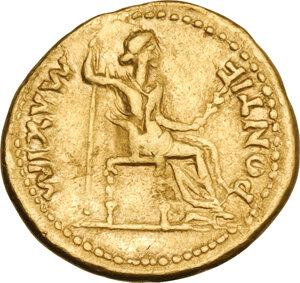
520 - Tiberius (14-37). AV Aureus 'Tribute Penny' type. Lugdunum mint, 36-37 AD. Obv. TI CAESAR DIVI AVG F AVGVSTVS. Laureate head right. Rev. PONTIF MΛXIM. Livia (as Pax) seated right on chair, feet on footstool, holding sceptre and olive branch. RIC I (2nd ed.) 29; SNG BN 22-7; Calicò 305 b. AV. 7.66 g. 19.5 mm. R. Rare and choice, with delicate tone. Good VF/VF.
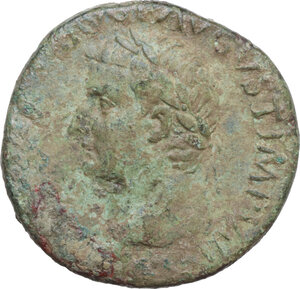
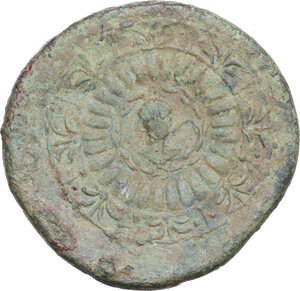
521 - Tiberius (14-37). AE Dupondius, Rome mint, 16-22. Obv. [TI CAESAR DIVI] AVG F AVGVST IMP VIII. Laureate bust left. Rev. [CLEMENTIAE], SC. Small bust of Tiberius within laurel wreath; all in the centre of a large shield with palmettes and raised petals. RIC I (2nd ed.) 38. AE. 12.8 g. 29 mm. R. Rare and fascinating issue. Green patina with earthy and reddish deposits. VF. Ex CNG 280, 2012, 122. From the Nera Collection.
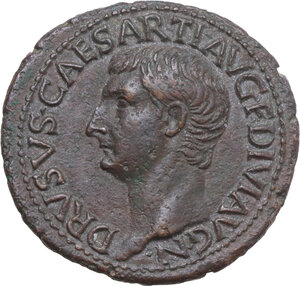
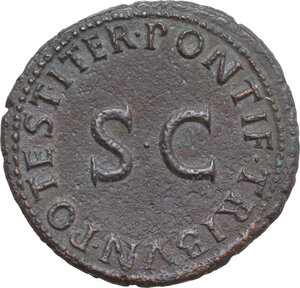
522 - Drusus, son of Tiberius (died 23 AD). AE As, Rome mint, 22-23. Obv. DRVSVS CAESAR TI AVG F DIVI AVG N. Bare head left. Rev. PONTIF TRIBVN POTEST ITER. Legend surrounding large S C. RIC I (2nd ed.) (Tib.) 45. AE. 11.38 g. 30 mm. R. Rare and superb, with enchanting portrait. Lovely brown patina. Slightly rough surfaces. About EF.
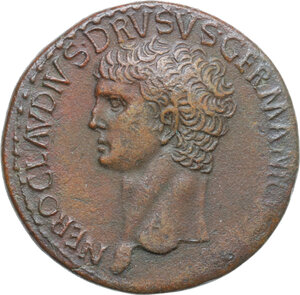
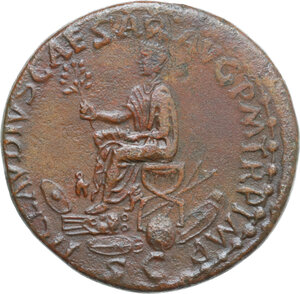
523 - Nero Claudius Drusus, brother of Tiberius, father of Germanicus and Claudius (died 9 AD). AE Sestertius, struck under Claudius, 41-50. Obv. NERO CLAVDIVS DRVSVS GERMANIC[VS IMP]. Bare head of Nero Claudius Drusus left. Rev. TI CLAVDIVS CAESAR AVG PM TR P IMP, SC. Claudius, bare-headed and togate, seated left on curule chair, holding branch; miscellaneous weapons and armour lying around. RIC I (2nd ed.) (Claud.) 93. AE. 26.08 g. 35 mm. Choice example with bold portrait. Lovely light brown patina. About EF. Ex Artemide LVII, 2022, 468.
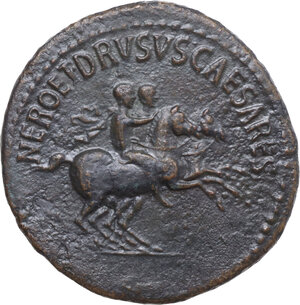
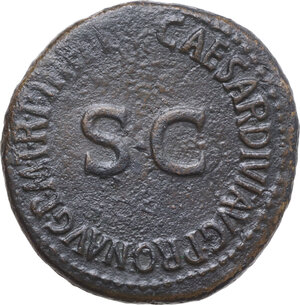
524 - Nero and Drusus Caesares, sons of Germanicus and Agrippina Senior (died 31 and 33 AD respectively). AE Dupondius, struck under Caligula. Obv. NERO ET DRVSVS CAEARES. Nero and Drusus on horseback riding right. Rev. C CAESAR DIVI AVG PRON AVG PM TR P III PP around large SC. RIC I (2nd ed.) 42. AE. 14.36 g. 30.5 mm. RR. Very rare and choice, with pleasant light dark patina. Slightly rough surfaces. Good VF/VF.
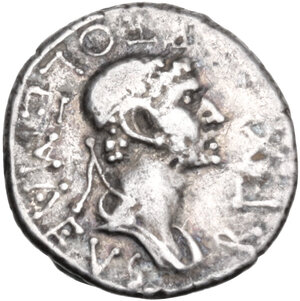
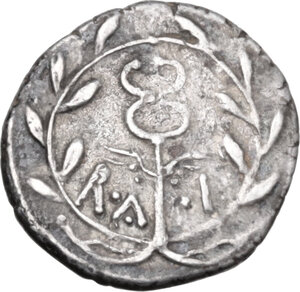
525 - Mauretania. Kingdom of Mauretania. Ptolemy (19 - 40 AD). AR Denarius, Caesarea mint. Dated RY 1 (circa AD 20/1 or 21/2). Obv. REX PTOLEMAEVS. Diademed head right, drapery around neck. Rev. Winged kerykeion; R• A•I (date) across lower field; all within wreath. SNG Cop. 634; Mazard 487; MAA 250. AR. 2.12 g. 15 mm. RRR. Extremely rare issue, of great historical interest, few specimens known. Pleasant tone with golden hues, well centred. About VF/VF. Ptolemy was related on his mother's side to both the Egyptian royal dynasty of the Ptolemies - of whom he was also the last to bear the name - thanks to his grandmother Cleopatra, and to that of the Julio-Claudians thanks instead to his grandfather Mark Antony, who in turn was also grandfather of Emperor Claudius, brother-in-law of Augustus, great-grandfather of Caligula and great-great-grandfather of Nero.
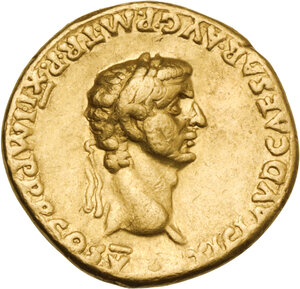
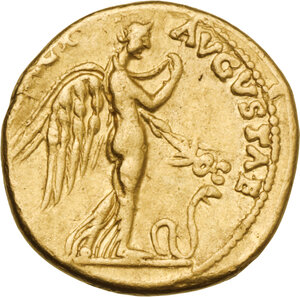
526 - Claudius (41-54). AV Aureus. Rome mint, 51-52. Obv. TI CLAVD CAESAR AVG PM TR P XI IMP P P COS V. Laureate head right. Rev. [PA]CI AVGVSTAE. Pax-Nemesis, winged and draped, advancing right, with right hand holding out fold of drapery below chin, with left hand holding winged caduceus, pointing down at erect snake, gliding right. RIC I (2nd ed.) 61; Calicó 373; Lyon 77; BN -; BMCRE 68. AV. 7.74 g. 19 mm. R. Rare. Lightly toned, with bright fields. Minor marks. Good VF.
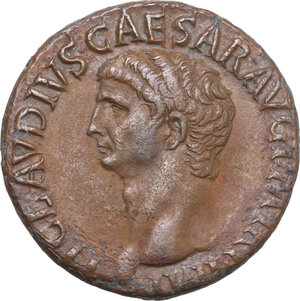
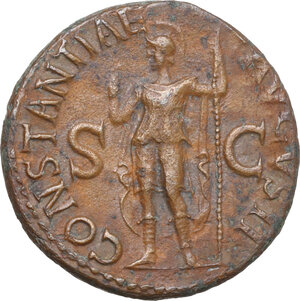
527 - Claudius (41-54). AE As, Rome mint. Obv. TI CLAVDIVS CAESAR AVG PM TR P IMP. Bare head left. Rev. CONSTANTIAE AVGVSTI SC. Constantia standing left, holding spear and raising hand. RIC I (2nd ed.) 95; C. 14. AE. 10.99 g. 28 mm. Good example with warm brown patina. Slightly rough surfaces. Nice delicate portrait. Good VF.
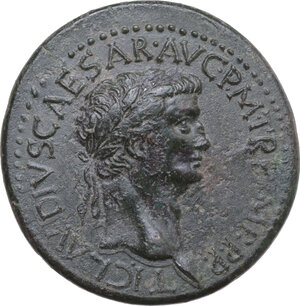
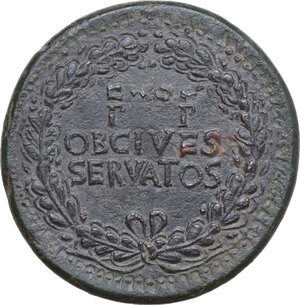
528 - Claudius (41-54). AE Sestertius, Rome mint, 50-54. Obv. TI CLAVDIVS CAESAR AVG P M TR P IMP P P. Laureate head right. Rev. EX SC/P - P/ OB CIVES/ SERVATOS within oak-wreath. RIC I (2nd ed.) 112. AE. 26.06 g. 37 mm. Superb example with enchanting portrait. Lovely deep green patina. About EF/EF.
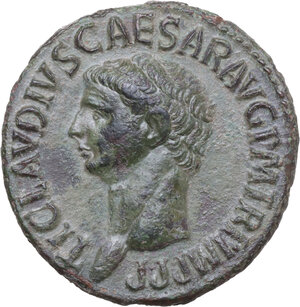
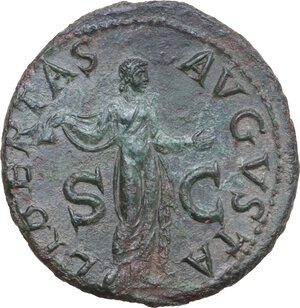
529 - Claudius (41-54). AE As, Rome mint, 50-54. Obv. TI CLAVDIVS CAESAR AVG P M TR P IMP P P. Bare head left. Rev. LIBERTAS AVGVSTA S C. Libertas standing, to front, holding pileus in right and extending right hand. RIC I (2nd ed.) 113. AE. 11.61 g. 30 mm. Superb example with mesmerizing green patina and darker hues. EF. Ex CNG 109, 2018, 634. From the Douglas O. Rosenberg Collection. Ex Freeman & Sear 13, 2006, 409.
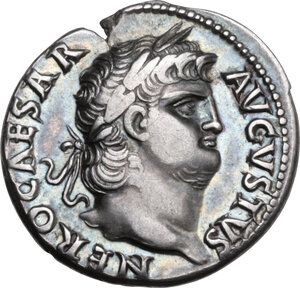
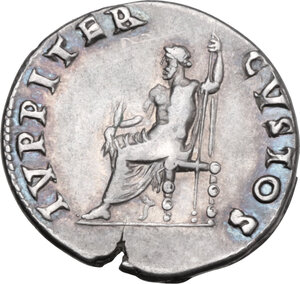
530 - Nero (54-68). AR Denarius, Rome mint, 64-65. Obv. NERO CAESAR AVGVSTVS. Laureate head right, with beard. Rev. IVPPITER CVSTOS. Jupiter, bare to waist, cloak round lower limbs, seated, left on throne, holding thunderbolt in right hand and long sceptre in left. RIC I (2nd ed.) 53. AR. 3.55 g. 18.5 mm. Scarce. Good example with enchanting iridescent tone. Slight wear on the high points. Highly attractive and of pleasing appearance. Rare as such. About EF.
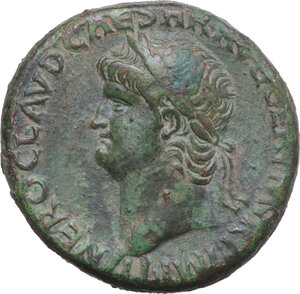
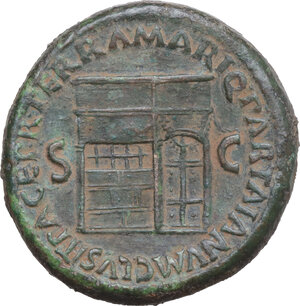
531 - Nero (54-68). AE Sestertius. Obv. NERO CLAVD CAESAR AVG GER P M TR P IMP P P. Laureate bust left. Rev. PACE P R TERRA MARIQ PARTA IANVM CLVSIT SC. Wiew of one front of the temple of Janus, with double doors to right. RIC I (2nd ed.) 265. AE. 25.73 g. 33 mm. Choice example featuring a well-executed portrait. The surfaces exhibit an appealing green patina with contrasting darker hues and light earthen deposits. Struck on a compact flan, the piece retains strong detail and sharp definition. About EF.
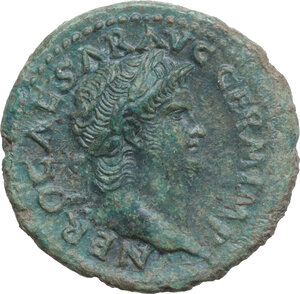
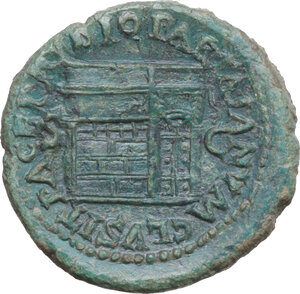
532 - Nero (54-68). AE As, Rome mint, 65 AD. Obv. NERO CAESAR AVG GERM IMP. Laureate head right. Rev. PACE P R VBIQ PARTA IANVM CLVSIT S C. Temple of Janus, with latticed window to left and double doors to right with garland hung across. RIC I (2nd ed.) 306. AE. 10.68 g. 28.5 mm. Superb example with bold portrait and enchanting green patina. EF.
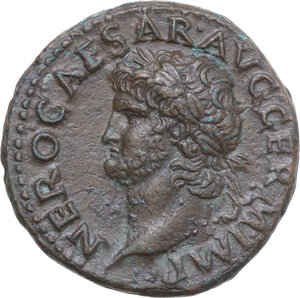
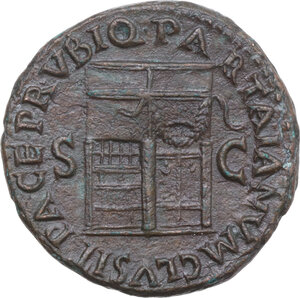
533 - Nero (54-68). AE As, Rome mint, 62-68. Obv. NERO CAESAR AVG GERM IMP. Laureate head left. Rev. PACE P R VBIQ PARTA IANVM CLVSIT S C. Temple of Janus, with latticed window to left and double doors to right with garland hung across ('ubique door'). RIC I (2nd ed.) 307. AE. 11.21 g. 26 mm. Superb example with an extraordinary portrait. Lovely chocolate patina. EF.
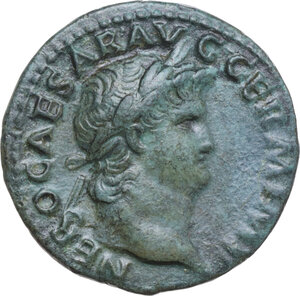
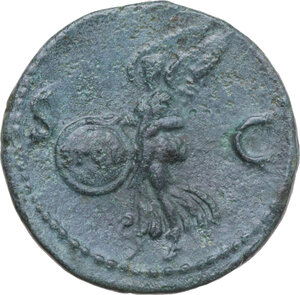
534 - Nero (54-68). AE As, Rome mint. Obv. NERO CAESAR AVG GERM IMP. Laureate head right. Rev. SC. Victory flying left, holding shield inscribed SPQR. RIC I (2nd ed.) 312. AE. 10.27 g. 27 mm. Nice green patina. About EF.
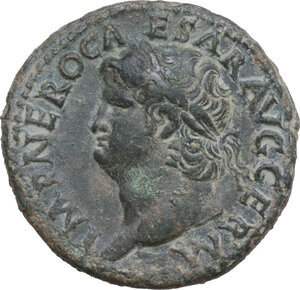
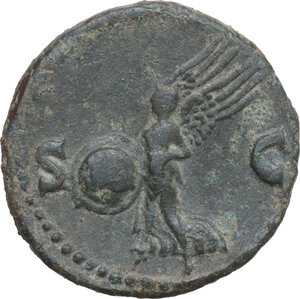
535 - Nero (54-68). AE As, Rome mint. Obv. IMP NERO CAESAR AVG GERM. Laureate head left. Rev. SC. Victory flying left, holding shield inscribed SPQR. RIC I (2nd ed.) 351. AE. 10.93 g. 28 mm. Good example with solid deep green patina. About EF/Good VF.
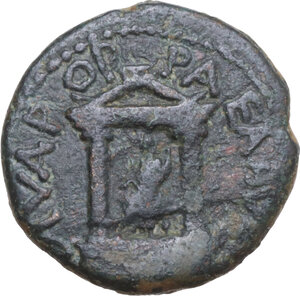
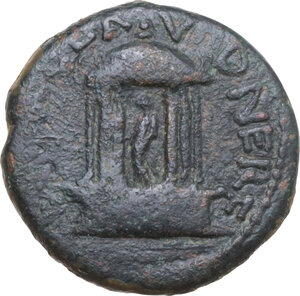
536 - Diva Poppaea and Diva Claudia (died 65 and 63 AD). AE 20 mm. Caesarea, Trachonitis, Syria. Struck under Nero, c. 65 AD. Obv. DIVA POPPAEA AVG. Distyle temple with seated figure of Poppea. Rev. DIVA CLAVD NER F. Hexastyle temple with figure of Nero. RPC I 4846; Hendin 1270. AE. 5.91 g. 20 mm. RRR. Extremely rare dynastic issue. Good conditions for the issue. Dark patina. VF. The only coin issued on name of Claudia, Nero's daughter, who died in infancy in 63 AD. Poppaea, her mother, was kicked to death by Nero two years later.
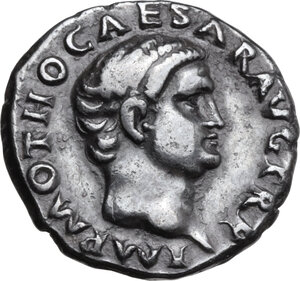
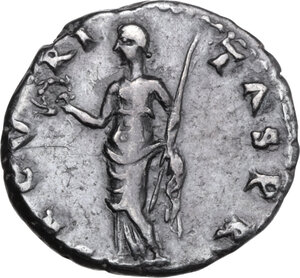
537 - Otho (69 AD). AR Denarius, Rome mint. Obv. IMP M OTHO CAESAR AVG TR P. Bare head right. Rev. SECVRITAS PR. Securitas standing left, holding wreath and sceptre. RIC I (2nd ed.) 8; C. 17. AR. 3.3 g. 18.5 mm. RR. Very rare and choice, with enchanting tone. Good VF.
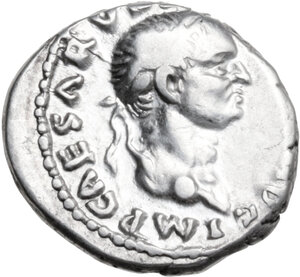
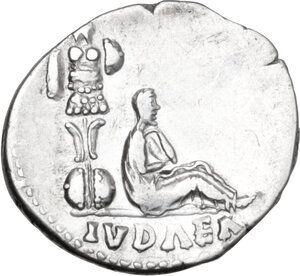
538 - Vespasian (69-79). AR Denarius, Rome mint, 69-70. Obv. IMP CAESAR VES[PASIANVS A]VG. Laureate head right. Rev. Judaea seated to right against trophy; IVDAEA in exergue. RIC II-p. 1 (2nd ed.) 2; Hendin 1479. AR. 3.41 g. 18 mm. R. Rare and brilliant. Lightly toned, with underlying luster. VF/Good VF.
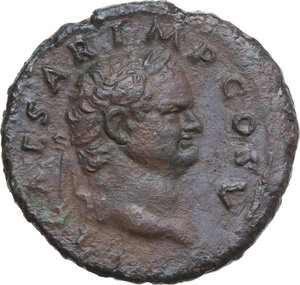
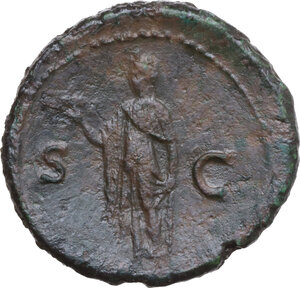
540 - Titus as Caesar (69-79). AE As, Rome mint, struck under Vespasian, 76 AD. Obv. T CAESAR IMP COS V. Laureate head right. Rev. S - C. Spes walking left, holding flower and raising skirt. RIC II-p. 1 (2nd ed.) (Vesp.) 914. AE. 12.36 g. 29.5 mm. R. Lovely brown patina with darker hues. Slightly rough surfaces. Good VF/VF.
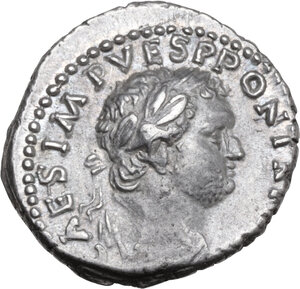
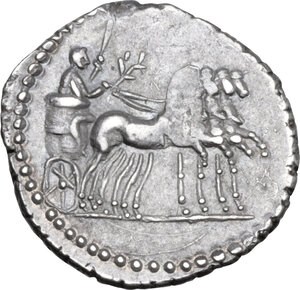
541 - Titus as Caesar (69-79). AR Denarius, Rome mint, 77-78. Obv. [T] CAES IMP VESP PON TR [POT]. Laureate head right. Rev. Titus in quadriga, holding reins and olive branch. RIC II-p. 1 (2nd ed.) (Vesp.) 1563. AR. 3.58 g. 18.5 mm. Choice example with delicate tone. Areas of weak strike. Good VF.
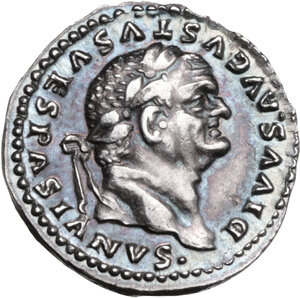
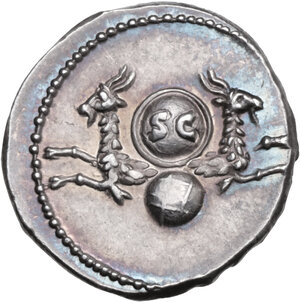
542 - Divus Vespasianus (died 79 AD). AR Denarius, struck under Titus. Obv. DIVVS AVGVSTVS VESPASIANVS. Laureate head right. Rev. SC on shield supported by two capricorns; below, globe. RIC II-p. 1 (2nd ed.) (Titus) 357; C. 497; RSC 497. AR. 3.05 g. 18.5 mm. Superb example with enchanting iridescent tone. Rare as such. Good EF.
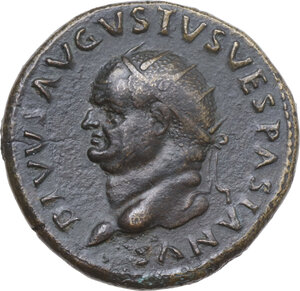
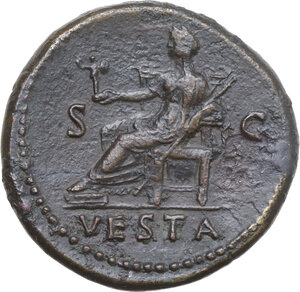
543 - Divus Vespasianus (died 79 AD). AE Dupondius, Rome mint, 80-81. Obv. DIVVS AVGVSTVS VESPASIANVS. Radiate head left. Rev. VESTA, SC. Vesta seated left, palladium in right hand, transverse scepter in left. RIC II-p. 1 (2nd ed.) (Titus) 378. AE. 13.73 g. 28 mm. RR. Very rare and choice, with delicate dark tone. Minor smoothing on reverse. Good VF/VF.
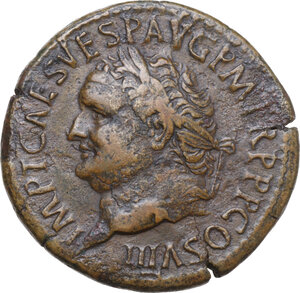
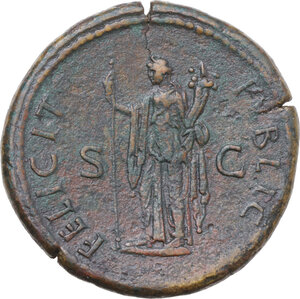
544 - Titus (79-81). AE Sestertius, Rome mint, 80-81. Obv. IMP T CAES VESP AVG PM TR P P P COS VIII. Laureate head left. Rev. FELICIT PVBLIC SC. Felicitas standing left, holding sceptre and cornucopiae. RIC II-p. 1 (2nd ed.) 144. AE. 25.96 g. 35 mm. R. Rare and choice, with lovely brown patina. Areas of rough surface. Good VF.
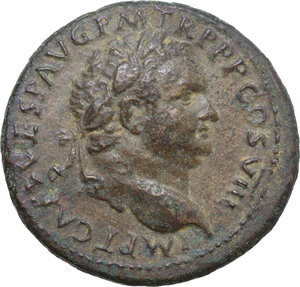
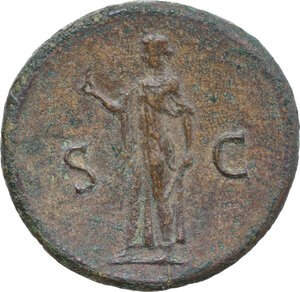
545 - Titus (79-81). AE Sestertius, Rome mint, 80-81. Obv. IMP T CAES VESP AVG PM TR P PP COS VIII. Laureate head right. Rev. SC. Spes advancing left, holding flower and raising robe. RIC II-p. 1 (2nd ed.) 168. AE. 22.3 g. 35 mm. Choice example with mesmerizing brown and green patina. About EF.
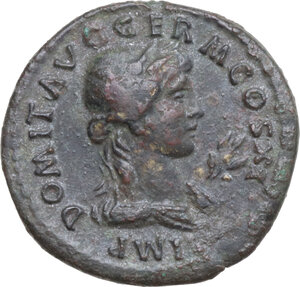
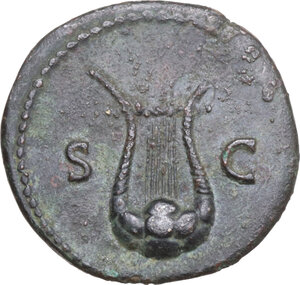
546 - Domitian (81-96). AE Semis. Rome mint, 86 AD. Obv. IMP DOMIT AVG GERM COS XI. Helmeted and draped bust of Apollo right;before, palm branch. Rev. S C. Lyre. RIC II 310; C. 541. AE. 3.87 g. 21.5 mm. RR. Very rare and superb example, with dark patina. About EF.
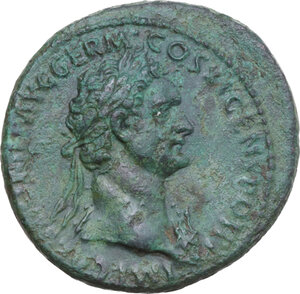
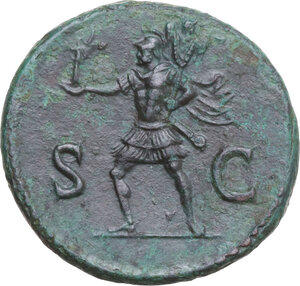
547 - Domitian (81-96). AE As, Rome mint, 85 AD. Obv. IMP CAE[S DOM]IT AVG GERM COS XI CENS POT P P. Radiate bust right, wearing aegis. Rev. SC. Mars advancing left, holding Victory and trophy. RIC II-p. 1 (2nd ed.) 387. AE. 12.58 g. 29 mm. Good example with fascinating dark and green patina. Minor corrosion spots on obverse, light smoothing. Good VF/About EF.
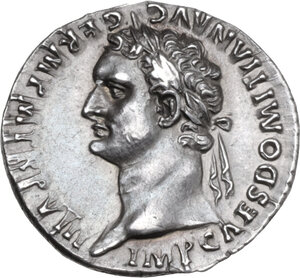
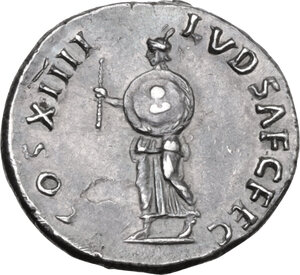
548 - Domitian (81-96). AR Denarius, Rome mint, 88 AD. Obv. MP CAES DOMITIAN AVG GERM P M TR P VIII. Laureate head left. Rev. COS XIIII LVD SAEC FEC. Herald advancing left, wearing feathered cap and holding wand and shield. RIC II-p. 1 (2nd ed.) 598; C. -. AR. 3.32 g. 19 mm. RR. Very rare type with head left. Minor metal flaw on reverse. Deep cabinet tone. Choice example with a superb bold portrait. Good EF/EF.
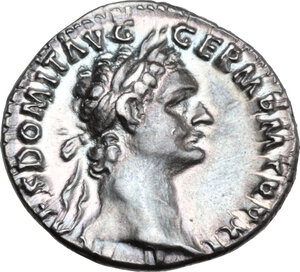
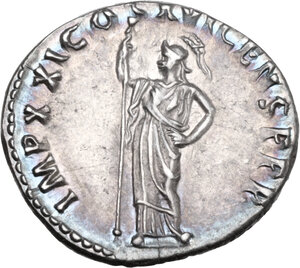
549 - Domitian (81-96). AR Denarius, Rome mint, 92 AD. Obv. IMP CAES DOMIT AVG GERM PM TR P XI. Laureate head right. Rev. IMP XXI COS XVI CENS P PP. Minerva standing left, holding spear in right hand. RIC II-p. 1 (2nd ed.) 733. AR. 3.19 g. 19 mm. Well centred and choice. Nicely toned, with iridescent hues. About FDC/Good EF.
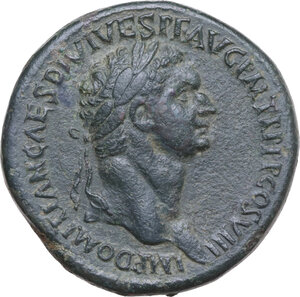
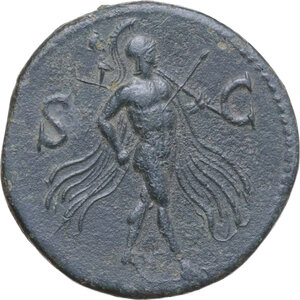
550 - Domitian (81-96). AE Sestertius, mint in Thrace, 82 AD. Obv. IMP DOMITIAN CAES DIVI VESP F AVG PM TR P PP COS VIII. Laureate head right. Rev. S-C. Mars advancing right, holding spear and trophy. RIC II-p. 1 (2nd ed.) 838. AE. 25.02 g. 35.5 mm. RR. Very rare and impressive example, with deep green patina. Minor restoration on reverse. Good VF. Ex CNG 109, 2018, 657.
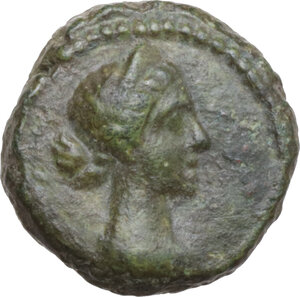
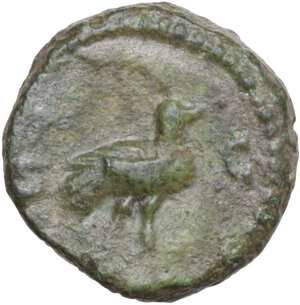
551 - Anonymous Quadrantes. Period of Domitian to Antoninus Pius. AE Quadrans. Obv. Diademed and draped bust of Venus right. Rev. SC. Dove standing right. RIC II 24. AE. 3.22 g. 14 mm. Lovely light green patina. Choice specimen. EF.
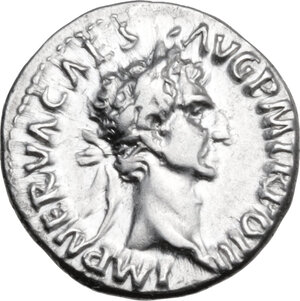
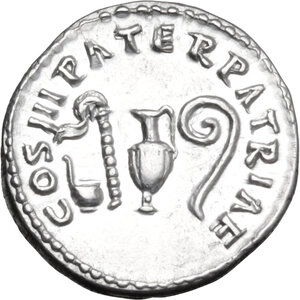
552 - Nerva (96-98). AR Denarius, Rome mint. Obv. IMP NERVA CAES AVG P M TR POT II. Laureate head right. Rev. COS III PATER PATRIAE. Emblems of the pontificate: simpulum, aspergillum, capis, and lituus. RIC II 34; C. 51. AR. 3.47 g. 18.5 mm. Brilliant and choice, with bright fields. Perfectly centred. About EF/EF.
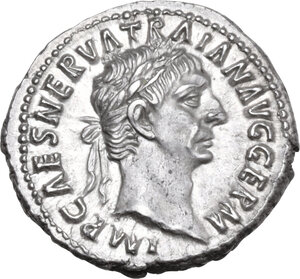
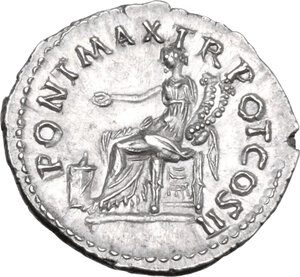
553 - Trajan (98-117). AR Denarius, Rome mint, 98-99. Obv. IMP CAES NERVA TRAIAN AVG GERM. Laureate head right. Rev. PONT MAX TR POT COS II. Concordia seated left, holding patera and double cornucopiae; before her, altar. RIC II 12; C. 302. AR. 3.64 g. 19.5 mm. Superb and brilliant. Lightly toned, with underlying luster. Virtually as struck. About FDC.
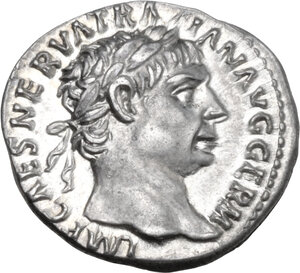
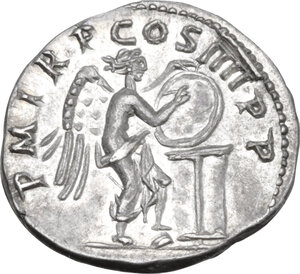
554 - Trajan (98-117). AR Denarius, Rome mint, 101-102. Obv. IMP CAES NERVA TRAIAN AVG GERM. Laureate head right. Rev. PM TR P COS IIII PP. Victory, naked to waist, standing right, foot on helmet, inscribing shield on altar. RIC II 65; C. 246. AR. 3.42 g. 18.5 mm. Superb example, with bright fields. Virtually as struck, even if not from fresh dies. About FDC. Ex Roma Numismatics XVII, 2019, 735. Ex Jean Elsen 82, 2004, 339.
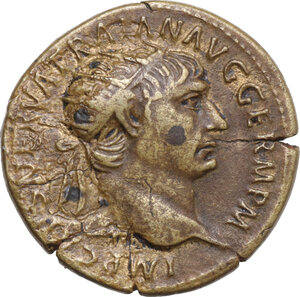
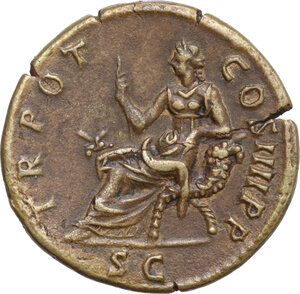
555 - Trajan (98-117). AE Dupondius, Rome mint, 101-102. Obv. IMP CAES NERVA TRAIAN AVG GERM PM. Radiate head right. Rev. TR POT COS IIII PP SC. Abundantia seated left on chair formed of two cornucopiae, holding sceptre. RIC III 428; C. 639. AE. 12.25 g. 28 mm. Attractive example with pleasant river patina. Roughness on obverse and peripheral die breaks. Good VF/About EF.
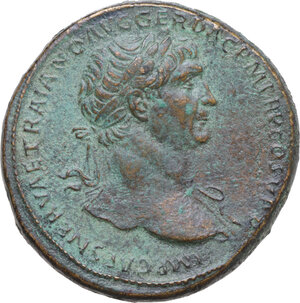
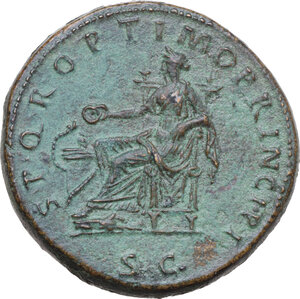
556 - Trajan (98-117). AE Sestertius, Rome mint, 109-110. Obv. IMP CAES NERVAE TRAIANO AVG GER DAC P M TR P COS V P P. Laureate bust right, with drapery on far shoulder. Rev. S P Q R OPTIMO PRINCIPI SC. Salus seated left on throne, feeding snake rising from altar with patera. RIC II 515; C. 485; Woytek 335b. AE. 28.5 g. 33 mm. Choice example with delicate brown patina and green hues. About EF.
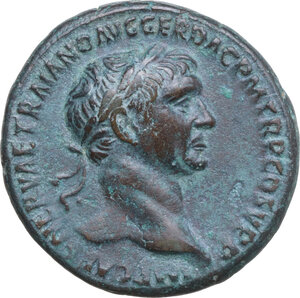
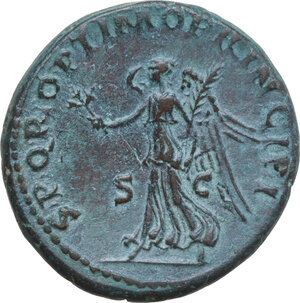
557 - Trajan (98-117). AE As, Rome mint, 103-111. Obv. IMP CAES NERVAE TRAIANO AVG GER DAC P M TR P COS V PP. Laureate bust right. Rev. SPQR OPTIMO PRINCIPI, S-C. Victory advancing left, holding wreath and palm. RIC II 521; C. 436. AE. 12.86 g. 27 mm. Lovely brown patina with green hues. Choice example. Good VF.
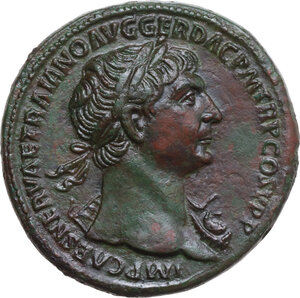
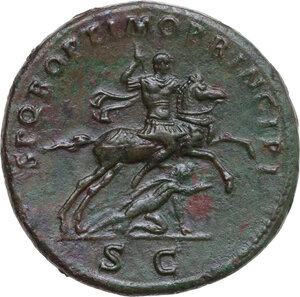
558 - Trajan (98-117). AE Sestertius, Rome mint, 103-111. Obv. IMP CAES NERVAE TRAIANO AVG GER DAC PM TR P COS V PP. Laureate bust right with slight drapery on far shoulder. Rev. SPQR OPTIMO PRINCIPI SC. Trajan riding right thursts spear at Dacian in front of horse. RIC II 534; C. 503. AE. 26.14 g. 34 mm. R. Rare and superb example, with mesmerizing green and red patina. Gently smoothed. EF.
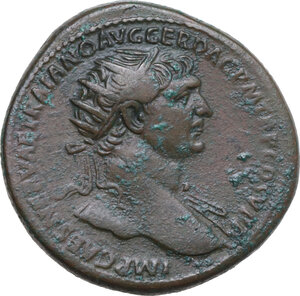
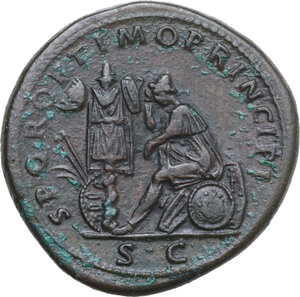
559 - Trajan (98-117). AE Dupondius, Rome mint, 103-107. Obv. IMP CAES NERVAE TRAIANO AVG GER DAC P M TR P COS V P P. Radiate bust right, with slight drapery. Rev. S P Q R OPTIMO PRINCIPI / S C. Dacia seated left in attitude of mourning on shield and arms; trophy to left, with arms at base. RIC II 563; C. 533. AE. 15.23 g. 29 mm. Lovely brown patina with minor green deposits. Good VF.
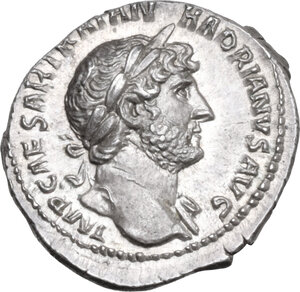
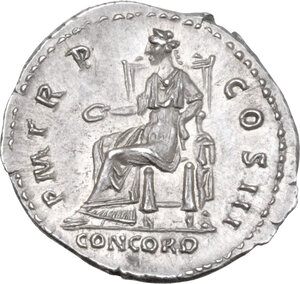
560 - Hadrian (117-138). AR Denarius, Rome mint, 119-122. Obv. IMP CAESAR TRAIAN HADRIANVS AVG. Laureate bust right, with drapery on left shoulder. Rev. PM TR P COS III / CONCORD in exergue. Concordia seated left, holding patera. RIC II-p. 3 (2nd ed.) 191; C. 255. AG. 3.57 g. 20 mm. Brilliant and superb, with enchanting tone. Sharply struck from fresh dies. Good EF/About FDC.
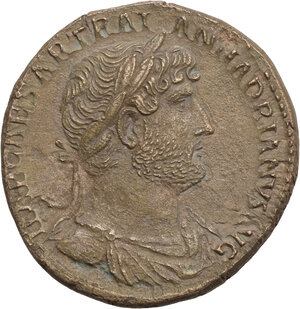
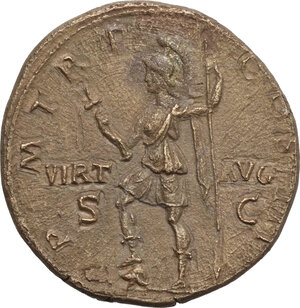
561 - Hadrian (117-138). AE Sestertius, Rome mint, 121-123. Obv. IMP CAESAR TRAIAN HADRIANVS AVG. Laureate and draped bust right, viewed from front. Rev. P M TR P COS III // VIRT AVG / S C (in field). Virtus standing left, resting foot on helmet, holding parazonium and spear. RIC II-p. 3 (2nd ed.) 653. AE. 24.71 g. 33.5 mm. Rough surface. Choice example with uncommon river patina. About EF.
Caricamento altri risultati...