Banner Astarte Asta Web 12
Risultati: 26
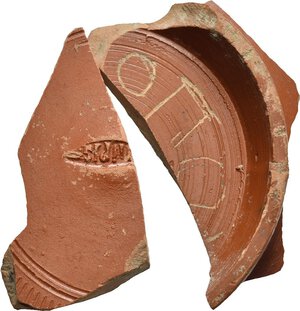
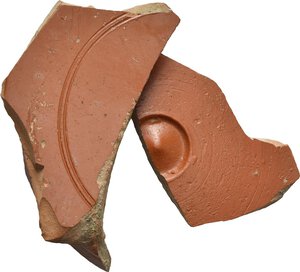
Pair of bases from Roman Arretine cups, one bearing a planta pedis stamp iscribed [...]NPIS, the other with a Greek graffito. Circa 1st century AD (Terra Sigillata, max 6.2 cm height). - Pair of bases from Roman Arretine cups, one bearing a planta pedis stamp iscribed [...]NPIS, the other with a Greek graffito. Circa 1st century AD (Terra Sigillata, max 6.2 cm height).
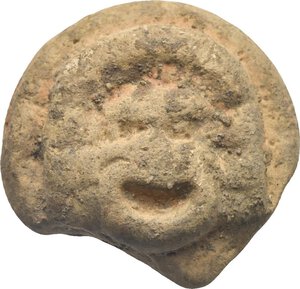
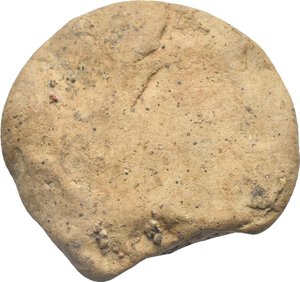
Roman token for theater entry. Circa 1st–2nd centuries AD (Terracotta, 28 × 29 mm). Featuring a facing tragic mask on the obverse, with a smooth and polished reverse. Concretioned earthy patina. Very Rare. - Roman token for theater entry. Circa 1st–2nd centuries AD (Terracotta, 28 × 29 mm). Featuring a facing tragic mask on the obverse, with a smooth and polished reverse. Concretioned earthy patina. Very Rare.
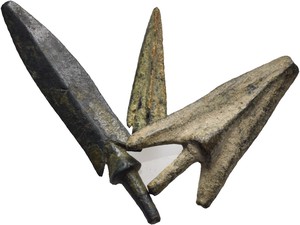
Large lot of 3 (three) ancient arrowheads. Circa 9th-3rd centuries BC (Bronze, max. 6.5 cm length, 32.26 g total). Comprising a Luristan, a Greek, and a Hellenistic piece. Untouched green patinas. - Large lot of 3 (three) ancient arrowheads. Circa 9th-3rd centuries BC (Bronze, max. 6.5 cm length, 32.26 g total). Comprising a Luristan, a Greek, and a Hellenistic piece. Untouched green patinas.
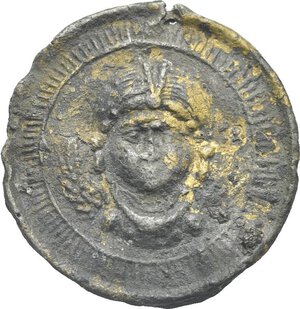
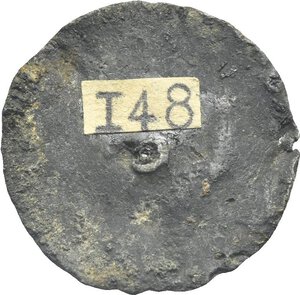
Roman button with the facing bust of winged Eros. Circa 1st century BC (Bronze, 22 mm, 2.12 g). River patina with deposits. Old collection tag on the reverse. Good Very Fine. Very Rare. - Roman button with the facing bust of winged Eros. Circa 1st century BC (Bronze, 22 mm, 2.12 g). River patina with deposits. Old collection tag on the reverse. Good Very Fine. Very Rare.
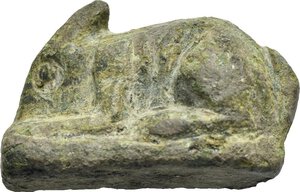
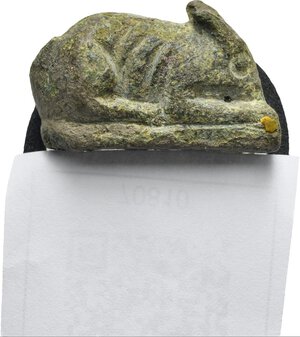
Roman mouse statuette. Circa 1st-3rd centuries AD (Bronze, length 2.7 cm, 21.71 g). Small bronze mice were frequently featured in Roman art. Since they are often shown nibbling at a morsel food, as presented here, scholars have suggested that mice served as protective figures to guard food stores (see H.B. Werness, Encyclopedia of Animal Symbolism in Art, p. 285). Untouched green patina. - Roman mouse statuette. Circa 1st-3rd centuries AD (Bronze, length 2.7 cm, 21.71 g). Small bronze mice were frequently featured in Roman art. Since they are often shown nibbling at a morsel food, as presented here, scholars have suggested that mice served as protective figures to guard food stores (see H.B. Werness, Encyclopedia of Animal Symbolism in Art, p. 285). Untouched green patina.
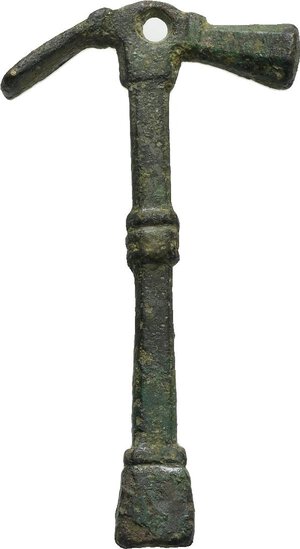
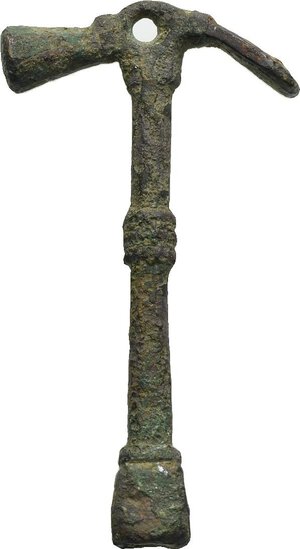
Roman miniature ‘dolabella’. Circa 1st-3rd centuries AD (Bronze, height 6.7 cm). Possibly used as a toy or votive offering. Cf. Crawford 73 and 81 (for typological comparison with the reverse of Roman Republican coinage). Untouched green patina. Suspension hole. Very Rare. A dolabella is a small Roman pick or digging tool, used in both agricultural and military contexts. - Roman miniature ‘dolabella’. Circa 1st-3rd centuries AD (Bronze, height 6.7 cm). Possibly used as a toy or votive offering. Cf. Crawford 73 and 81 (for typological comparison with the reverse of Roman Republican coinage). Untouched green patina. Suspension hole. Very Rare. A dolabella is a small Roman pick or digging tool, used in both agricultural and military contexts.
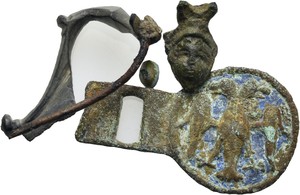
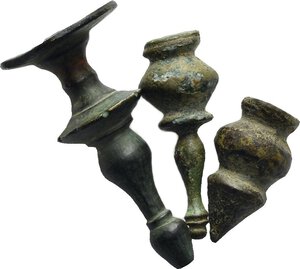
Large lot of 3 (three) ancient artefacts (Bronze and Billon, max. 5.8 cm length). A Roman bronze handle lug in the shape of a child's face with a cap, possibly Attis; circa 2nd - 3rd centuries AD. A Roman silver fibula (brooch) of the Kräftig Profilierte type; with body in silver alloy, pin in iron, and hinge (broken) in bronze; condition as shown in the photos: minor losses; circa 1st - 3rd centuries AD. A Medieval two-headed eagle bronze plaque with blue enamels; small plaque originally part of a clothing accessory or horse harness, decorated with motifs evoking the symbolism of the Holy Roman Empire; riverine patina; circa 13th century. - Large lot of 3 (three) ancient artefacts (Bronze and Billon, max. 5.8 cm length). A Roman bronze handle lug in the shape of a child's face with a cap, possibly Attis; circa 2nd - 3rd centuries AD. A Roman silver fibula (brooch) of the Kräftig Profilierte type; with body in silver alloy, pin in iron, and hinge (broken) in bronze; condition as shown in the photos: minor losses; circa 1st - 3rd centuries AD. A Medieval two-headed eagle bronze plaque with blue enamels; small plaque originally part of a clothing accessory or horse harness, decorated with motifs evoking the symbolism of the Holy Roman Empire; riverine patina; circa 13th century.
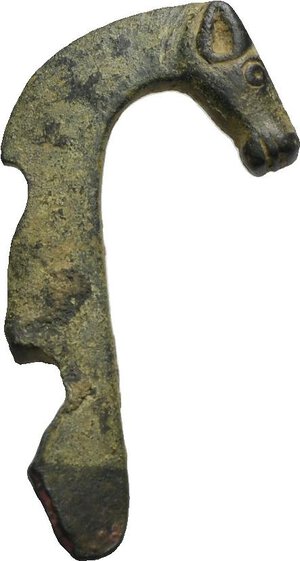
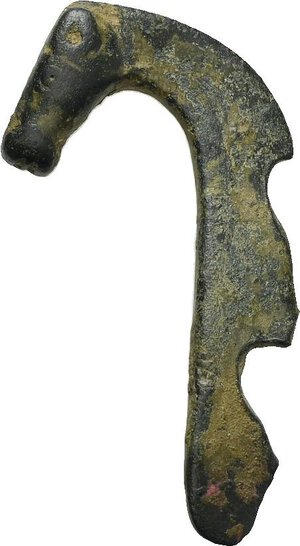
Late Roman bronze element in the shape of a horse's head. Circa 3rd century AD (Bronze, height 5.2 cm). A very rare object of uncertain function, with two notches on the back, possibly intended to slow its movement within a support. One side of the head is noticeably more worn than the other. For a comparable example, see Frank Sternberg XXIV, 19–20 November 1990, lot 476 (interpreted as the handle of the lid of a cup awarded as a prize in a horse race, or as a votive object). - Late Roman bronze element in the shape of a horse's head. Circa 3rd century AD (Bronze, height 5.2 cm). A very rare object of uncertain function, with two notches on the back, possibly intended to slow its movement within a support. One side of the head is noticeably more worn than the other. For a comparable example, see Frank Sternberg XXIV, 19–20 November 1990, lot 476 (interpreted as the handle of the lid of a cup awarded as a prize in a horse race, or as a votive object).
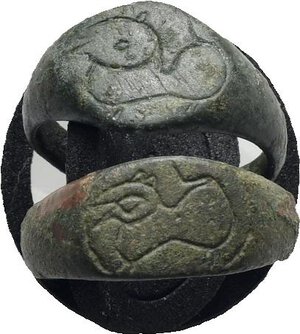
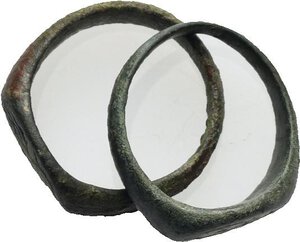
Large lot of 2 (two) South Italian Byzantine bronze rings featuring mythical creatures: the so-called griffin-lion, i.e., a lion with a beak. Circa 7th-9th centuries AD (Bronze, Inner diam. 1.9-2.0 cm). Possibly reflecting the identity of a specific social group; pirate-related communities cannot be ruled out, as similar finds have been recorded in both Sicily and Sardinia. Untouched green patinas. Rendered in a pleasant pictogram-like style. - Large lot of 2 (two) South Italian Byzantine bronze rings featuring mythical creatures: the so-called griffin-lion, i.e., a lion with a beak. Circa 7th-9th centuries AD (Bronze, Inner diam. 1.9-2.0 cm). Possibly reflecting the identity of a specific social group; pirate-related communities cannot be ruled out, as similar finds have been recorded in both Sicily and Sardinia. Untouched green patinas. Rendered in a pleasant pictogram-like style.
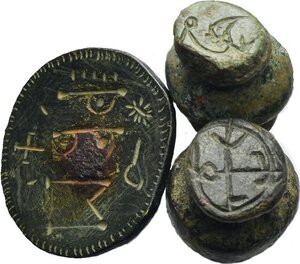
Large lot of 3 (three) South Italian Byzantine bronze seals: two with monograms of dignitaries, one with a bird. Circa 7th-9th centuries AD (Bronze, max 5.6 cm height). - Large lot of 3 (three) South Italian Byzantine bronze seals: two with monograms of dignitaries, one with a bird. Circa 7th-9th centuries AD (Bronze, max 5.6 cm height).
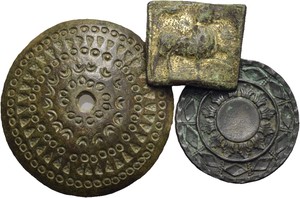
Large lot of 3 (three) late Renaissance studs or buttons (Bronze, max. 40.8 mm diameter, 26.16 g total). The gilded one depicts a hunting dog running to the right. The two circular ones each bear an old collection tag on the reverse. Decorative and charming. - Large lot of 3 (three) late Renaissance studs or buttons (Bronze, max. 40.8 mm diameter, 26.16 g total). The gilded one depicts a hunting dog running to the right. The two circular ones each bear an old collection tag on the reverse. Decorative and charming.
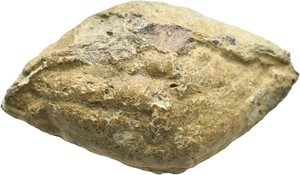
Roman lead sling shot bullet. Circa 3rd - 1st centuries BC. (3.4 x 2.0 cm, 54.94 g). - Roman lead sling shot bullet. Circa 3rd - 1st centuries BC. (3.4 x 2.0 cm, 54.94 g).
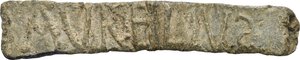
Roman handle of a lamp holder. Circa 1st–2nd centuries AD (Lead, 6.4 × 1.1 cm, 18.79 g). In relief bearing the producer’s name: AVRELIVS (with the reversed S). Cf. G. Baratta, “Porta-lucerne in piombo: considerazioni sulla classe di materiale alla luce degli esemplari iscritti,” in G. Baratta (ed.), “Instrumenta inscripta VIII. Plumbum litteratum. Studia epigraphica Giovanni Mennella oblata (Armariolum 3)”, Rome 2021, pp. 261–276. Originally ring-shaped, later unfolded, resulting in partial breakage of the central section. Roman lead lamp holders were used to support and carry oil lamps, facilitate everyday use, and, in some cases, serve as votive or promotional objects thanks to inscriptions and decorative symbols. - Roman handle of a lamp holder. Circa 1st–2nd centuries AD (Lead, 6.4 × 1.1 cm, 18.79 g). In relief bearing the producer’s name: AVRELIVS (with the reversed S). Cf. G. Baratta, “Porta-lucerne in piombo: considerazioni sulla classe di materiale alla luce degli esemplari iscritti,” in G. Baratta (ed.), “Instrumenta inscripta VIII. Plumbum litteratum. Studia epigraphica Giovanni Mennella oblata (Armariolum 3)”, Rome 2021, pp. 261–276. Originally ring-shaped, later unfolded, resulting in partial breakage of the central section. Roman lead lamp holders were used to support and carry oil lamps, facilitate everyday use, and, in some cases, serve as votive or promotional objects thanks to inscriptions and decorative symbols.
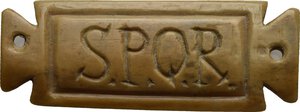
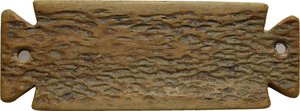
Roman Tabula Ansata marked "S P Q R". Circa 1st–3rd centuries AD (Bone, 6.3 x 2.3 cm). Two small nail holes at the sides indicate it was meant to be affixed. - Roman Tabula Ansata marked "S P Q R". Circa 1st–3rd centuries AD (Bone, 6.3 x 2.3 cm). Two small nail holes at the sides indicate it was meant to be affixed.
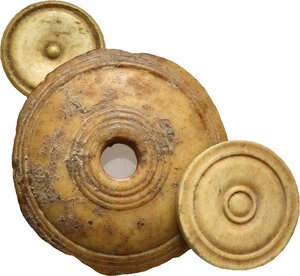
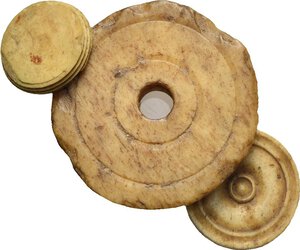
Large lot of 3 (three) Roman tools (Bone, max. 40.6 mm diameter, 15.57 g total). Comprising a screw cap, a game piece, and a spindle whorl. Fascinating old collection patina. - Large lot of 3 (three) Roman tools (Bone, max. 40.6 mm diameter, 15.57 g total). Comprising a screw cap, a game piece, and a spindle whorl. Fascinating old collection patina.
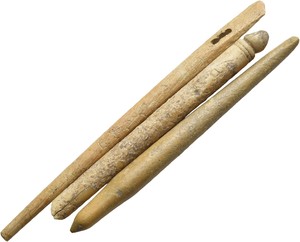
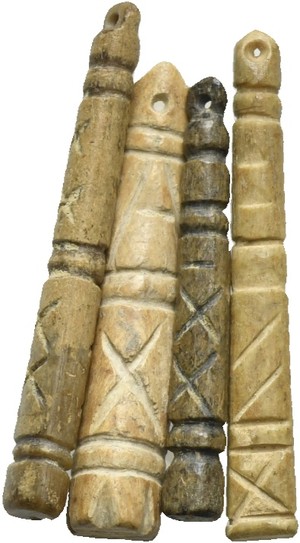
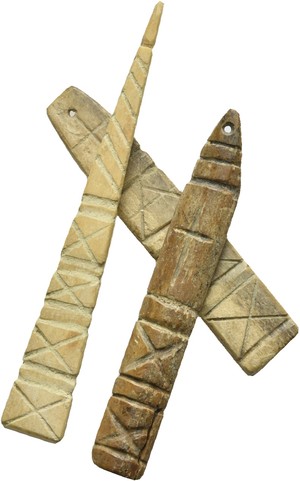
Group of three fragmentary Roman bone tools: a crinal needle, a hairpin, and a point of uncertain use. Circa 1st - 3rd centuries AD. (max length 10.2 cm). - Group of three fragmentary Roman bone tools: a crinal needle, a hairpin, and a point of uncertain use. Circa 1st - 3rd centuries AD. (max length 10.2 cm).
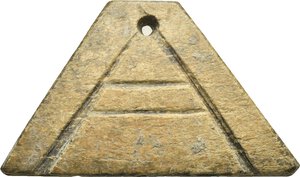
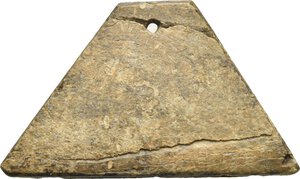
Roman Tessera Annonaria marked "A": a measurement token attached to a grain sack. Circa 1st - 3rd centuries AD (Bone, 4.2 x 1.7 cm). Published in L. Pedroni and G. Devoto, "Tessere da una collezione privata", in Archeologia Classica, XLVII, 1995, p. 189, fig. 14 (this tessera). From a British Private Collection. These tokens typically bear the letter "A" for Annona, followed by a number (e.g., X, XX, XXX) indicating the weight in modii — approximately 40, 80, or 120 kg. - Roman Tessera Annonaria marked "A": a measurement token attached to a grain sack. Circa 1st - 3rd centuries AD (Bone, 4.2 x 1.7 cm). Published in L. Pedroni and G. Devoto, "Tessere da una collezione privata", in Archeologia Classica, XLVII, 1995, p. 189, fig. 14 (this tessera). From a British Private Collection. These tokens typically bear the letter "A" for Annona, followed by a number (e.g., X, XX, XXX) indicating the weight in modii — approximately 40, 80, or 120 kg.
Roman Tessera Annonaria marked "A": a measurement token attached to a grain sack. Circa 1st - 3rd centuries AD (Bone, 4.1 x 2.4 cm). Published in L. Pedroni and G. Devoto, "Tessere da una collezione privata", in Archeologia Classica, XLVII, 1995, p. 189, fig. 14 (this tessera). From a British Private Collection. These tokens typically bear the letter "A" for Annona, followed by a number (e.g., X, XX, XXX) indicating the weight in modii — approximately 40, 80, or 120 kg. - Roman Tessera Annonaria marked "A": a measurement token attached to a grain sack. Circa 1st - 3rd centuries AD (Bone, 4.1 x 2.4 cm). Published in L. Pedroni and G. Devoto, "Tessere da una collezione privata", in Archeologia Classica, XLVII, 1995, p. 189, fig. 14 (this tessera). From a British Private Collection. These tokens typically bear the letter "A" for Annona, followed by a number (e.g., X, XX, XXX) indicating the weight in modii — approximately 40, 80, or 120 kg.
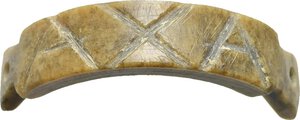
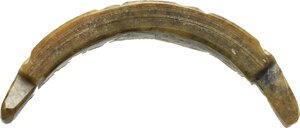
Roman Tessera Annonaria marked "A X A": a measurement token attached to a grain sack. Circa 1st - 3rd centuries AD (Bone, 3.4 x 0.8 cm). Published in L. Pedroni and G. Devoto, "Tessere da una collezione privata", in Archeologia Classica, XLVII, 1995, p. 190, fig. 15a (this tessera). From a British Private Collection. These tokens typically bear the letter "A" for Annona, followed by a number (e.g., X, XX, XXX) indicating the weight in modii — approximately 40, 80, or 120 kg. - Roman Tessera Annonaria marked "A X A": a measurement token attached to a grain sack. Circa 1st - 3rd centuries AD (Bone, 3.4 x 0.8 cm). Published in L. Pedroni and G. Devoto, "Tessere da una collezione privata", in Archeologia Classica, XLVII, 1995, p. 190, fig. 15a (this tessera). From a British Private Collection. These tokens typically bear the letter "A" for Annona, followed by a number (e.g., X, XX, XXX) indicating the weight in modii — approximately 40, 80, or 120 kg.
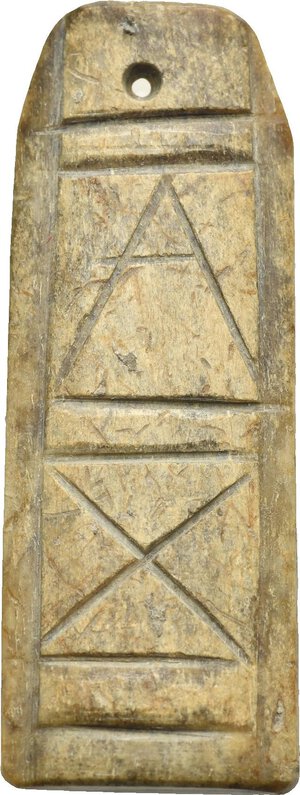
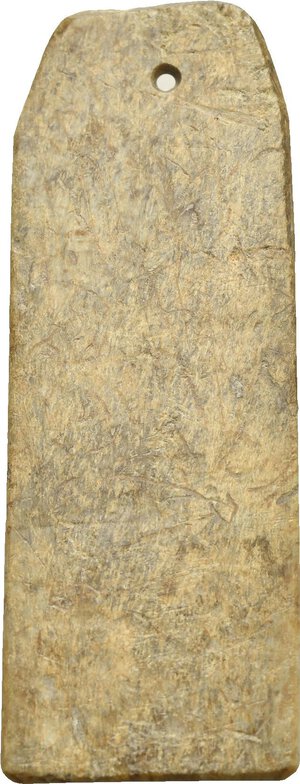
Roman Tessera Annonaria marked "A X": a measurement token attached to a grain sack. Circa 1st - 3rd centuries AD (Bone, 4.8 x 1.7 cm). Published in L. Pedroni and G. Devoto, "Tessere da una collezione privata", in Archeologia Classica, XLVII, 1995, p. 190, fig. 16 (this tessera). From a British Private Collection. These tokens typically bear the letter "A" for Annona, followed by a number (e.g., X, XX, XXX) indicating the weight in modii — approximately 40, 80, or 120 kg. - Roman Tessera Annonaria marked "A X": a measurement token attached to a grain sack. Circa 1st - 3rd centuries AD (Bone, 4.8 x 1.7 cm). Published in L. Pedroni and G. Devoto, "Tessere da una collezione privata", in Archeologia Classica, XLVII, 1995, p. 190, fig. 16 (this tessera). From a British Private Collection. These tokens typically bear the letter "A" for Annona, followed by a number (e.g., X, XX, XXX) indicating the weight in modii — approximately 40, 80, or 120 kg.
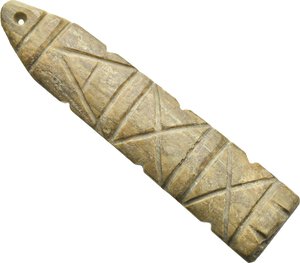
Roman Tessera Annonaria marked "A X X": a measurement token attached to a grain sack. Circa 1st - 3rd centuries AD (Bone, 6.0 x 1.4 cm). Published in L. Pedroni and G. Devoto, "Tessere da una collezione privata", in Archeologia Classica, XLVII, 1995, p. 191, fig. 17e (this tessera). From a British Private Collection. These tokens typically bear the letter "A" for Annona, followed by a number (e.g., X, XX, XXX) indicating the weight in modii — approximately 40, 80, or 120 kg. - Roman Tessera Annonaria marked "A X X": a measurement token attached to a grain sack. Circa 1st - 3rd centuries AD (Bone, 6.0 x 1.4 cm). Published in L. Pedroni and G. Devoto, "Tessere da una collezione privata", in Archeologia Classica, XLVII, 1995, p. 191, fig. 17e (this tessera). From a British Private Collection. These tokens typically bear the letter "A" for Annona, followed by a number (e.g., X, XX, XXX) indicating the weight in modii — approximately 40, 80, or 120 kg.
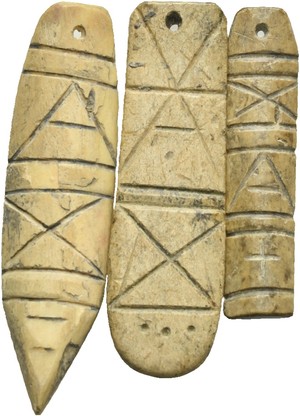
Large lot of 3 (three) Roman Tesserae Annonariae marked "X X X X", "+ A X X", "A X", and "+ X X": measurement tokens once attached to grain sacks. Circa 1st - 3rd centuries AD (Bone, up to 7.3 cm in height). Published in L. Pedroni and G. Devoto, "Tessere da una collezione privata", in Archeologia Classica, XLVII, 1995, pp. 191 and 193, figg. 19 and 21 (these tesserae). From a British Private Collection. These tokens typically bear the letter "A" for Annona, followed by a number (e.g., X, XX, XXX) indicating the weight in modii — approximately 40, 80, or 120 kg. - Large lot of 3 (three) Roman Tesserae Annonariae marked "X X X X", "+ A X X", "A X", and "+ X X": measurement tokens once attached to grain sacks. Circa 1st - 3rd centuries AD (Bone, up to 7.3 cm in height). Published in L. Pedroni and G. Devoto, "Tessere da una collezione privata", in Archeologia Classica, XLVII, 1995, pp. 191 and 193, figg. 19 and 21 (these tesserae). From a British Private Collection. These tokens typically bear the letter "A" for Annona, followed by a number (e.g., X, XX, XXX) indicating the weight in modii — approximately 40, 80, or 120 kg.
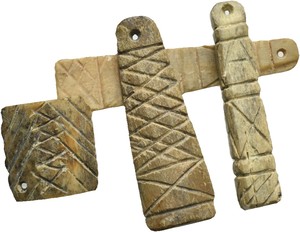
Large lot of 3 (three) Roman Tesserae Annonariae marked "X A +", and "A X" (2 pcs.): measurement tokens once attached to grain sacks. Circa 1st - 3rd centuries AD (Bone, up to 5.7 cm in height). Published in L. Pedroni and G. Devoto, "Tessere da una collezione privata", in Archeologia Classica, XLVII, 1995, pp. 190 and 193, figg. 16 and 21 (these tesserae). From a British Private Collection. These tokens typically bear the letter "A" for Annona, followed by a number (e.g., X, XX, XXX) indicating the weight in modii — approximately 40, 80, or 120 kg. - Large lot of 3 (three) Roman Tesserae Annonariae marked "X A +", and "A X" (2 pcs.): measurement tokens once attached to grain sacks. Circa 1st - 3rd centuries AD (Bone, up to 5.7 cm in height). Published in L. Pedroni and G. Devoto, "Tessere da una collezione privata", in Archeologia Classica, XLVII, 1995, pp. 190 and 193, figg. 16 and 21 (these tesserae). From a British Private Collection. These tokens typically bear the letter "A" for Annona, followed by a number (e.g., X, XX, XXX) indicating the weight in modii — approximately 40, 80, or 120 kg.
Large lot of 4 (four) Roman Tesserae Annonariae marked "A X", "X X X X", "X X I", and "X": measurement tokens once attached to grain sacks. Circa 1st - 3rd centuries AD (Bone, up to 4.3 cm in height). Published in L. Pedroni and G. Devoto, "Tessere da una collezione privata", in Archeologia Classica, XLVII, 1995, pp. 190-192, figg. 16, 19 and 20 (these tesserae). From a British Private Collection. These tokens typically bear the letter "A" for Annona, followed by a number (e.g., X, XX, XXX) indicating the weight in modii — approximately 40, 80, or 120 kg. - Large lot of 4 (four) Roman Tesserae Annonariae marked "A X", "X X X X", "X X I", and "X": measurement tokens once attached to grain sacks. Circa 1st - 3rd centuries AD (Bone, up to 4.3 cm in height). Published in L. Pedroni and G. Devoto, "Tessere da una collezione privata", in Archeologia Classica, XLVII, 1995, pp. 190-192, figg. 16, 19 and 20 (these tesserae). From a British Private Collection. These tokens typically bear the letter "A" for Annona, followed by a number (e.g., X, XX, XXX) indicating the weight in modii — approximately 40, 80, or 120 kg.
Large lot of 4 (four) Roman Tesserae Annonariae marked "X X X X / X", "X A", "A X", and "X": measurement tokens once attached to grain sacks. Circa 1st - 3rd centuries AD (Bone, up to 4.8 cm in height). Published in L. Pedroni and G. Devoto, "Tessere da una collezione privata", in Archeologia Classica, XLVII, 1995, pp. 190-192, figg. 15c, 16, 19 and 20 (these tesserae). From a British Private Collection. These tokens typically bear the letter "A" for Annona, followed by a number (e.g., X, XX, XXX) indicating the weight in modii — approximately 40, 80, or 120 kg. - Large lot of 4 (four) Roman Tesserae Annonariae marked "X X X X / X", "X A", "A X", and "X": measurement tokens once attached to grain sacks. Circa 1st - 3rd centuries AD (Bone, up to 4.8 cm in height). Published in L. Pedroni and G. Devoto, "Tessere da una collezione privata", in Archeologia Classica, XLVII, 1995, pp. 190-192, figg. 15c, 16, 19 and 20 (these tesserae). From a British Private Collection. These tokens typically bear the letter "A" for Annona, followed by a number (e.g., X, XX, XXX) indicating the weight in modii — approximately 40, 80, or 120 kg.
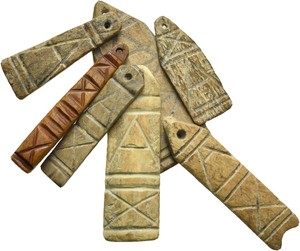
Large lot of 7 (seven) Roman Tesserae Annonariae marked "A" (1 pcs.), "A X" (3 pcs.), "X A" (1 pcs.), and "A X X" (2 pcs.): measurement tokens once attached to grain sacks. Circa 1st - 3rd centuries AD (Bone, up to 4.0 cm in height). Published in L. Pedroni and G. Devoto, "Tessere da una collezione privata", in Archeologia Classica, XLVII, 1995, pp. 189-191, figg. 14, 16 and 18a (5 of these tesserae). From a British Private Collection. These tokens typically bear the letter "A" for Annona, followed by a number (e.g., X, XX, XXX) indicating the weight in modii — approximately 40, 80, or 120 kg. - Large lot of 7 (seven) Roman Tesserae Annonariae marked "A" (1 pcs.), "A X" (3 pcs.), "X A" (1 pcs.), and "A X X" (2 pcs.): measurement tokens once attached to grain sacks. Circa 1st - 3rd centuries AD (Bone, up to 4.0 cm in height). Published in L. Pedroni and G. Devoto, "Tessere da una collezione privata", in Archeologia Classica, XLVII, 1995, pp. 189-191, figg. 14, 16 and 18a (5 of these tesserae). From a British Private Collection. These tokens typically bear the letter "A" for Annona, followed by a number (e.g., X, XX, XXX) indicating the weight in modii — approximately 40, 80, or 120 kg.