Banner Astarte Asta Web 13
Risultati: 2
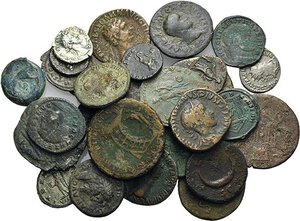
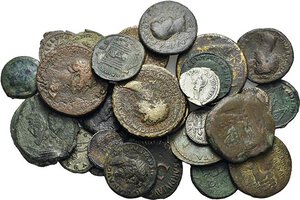
Large lot of 30 Roman Republican & Imperial silver and bronze coins. Includes several rarities, notably the Trajan sestertius with the temple complex of Jupiter Victor on the reverse, and three rare asses of Galba, Titus, and Trajan Decius. Also includes two Republican Janus-Prow asses (one family issue and one with symbol), two possible pieces by Giovanni da Cavino, an antoninianus of Gallienus with panther, one of Victorinus, and a follis of Theodora. Lot sold as seen - no returns. - Large lot of 30 Roman Republican & Imperial silver and bronze coins. Includes several rarities, notably the Trajan sestertius with the temple complex of Jupiter Victor on the reverse, and three rare asses of Galba, Titus, and Trajan Decius. Also includes two Republican Janus-Prow asses (one family issue and one with symbol), two possible pieces by Giovanni da Cavino, an antoninianus of Gallienus with panther, one of Victorinus, and a follis of Theodora. Lot sold as seen - no returns.
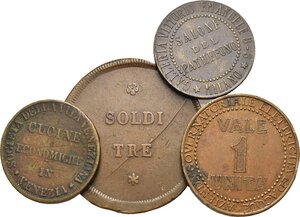
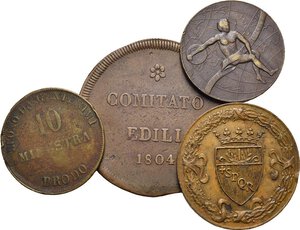
Lotto multiplo di 4 (quattro) gettoni italiani. 1804-anni 1940 (Rame, peso totale 25,48 g). 1 - Genova, durante la Repubblica Ligure, gettone da 3 Soldi emesso dal Comitato Edili, 1804. 2 - Roma, gettone da 1 Unità di Energia dell'Azienda Governatoriale Elettricità ed Acque, circa 1937-1944. 3 - Milano, gettone del Salon Pathéphone (grammofoni), circa inizi Novecento. 4 - Venezia, gettone da 10 Centesimi della Società della Vita Veneziana, utilizzato per ottenere una minestra o un brodo presso una delle cucine economiche della città, circa fine Ottocento. - Lotto multiplo di 4 (quattro) gettoni italiani. 1804-anni 1940 (Rame, peso totale 25,48 g). 1 - Genova, durante la Repubblica Ligure, gettone da 3 Soldi emesso dal Comitato Edili, 1804. 2 - Roma, gettone da 1 Unità di Energia dell'Azienda Governatoriale Elettricità ed Acque, circa 1937-1944. 3 - Milano, gettone del Salon Pathéphone (grammofoni), circa inizi Novecento. 4 - Venezia, gettone da 10 Centesimi della Società della Vita Veneziana, utilizzato per ottenere una minestra o un brodo presso una delle cucine economiche della città, circa fine Ottocento.