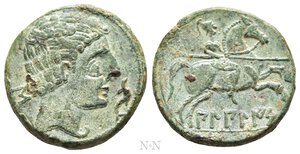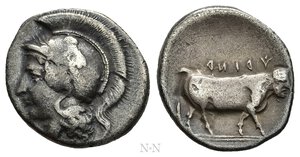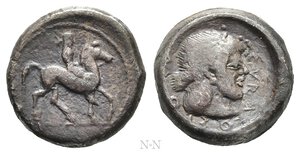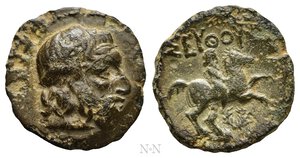
SPAIN. Bilbilis. Ae As (Circa 2nd-1st century BC) - SPAIN. Bilbilis. Ae As (Circa 2nd-1st century BC). Obv: Bare male head right; Iberian letter behind; before, dolphin upward.Rev: Warrior, holding spear, on horseback right.CNH 1; ACIP 1567.Ex Aureo & Calicó 366 (2021), lot 3201 Condition: Good very fine.Weight: 14.00 g. Diameter: 27 mm.Estimate: € 50
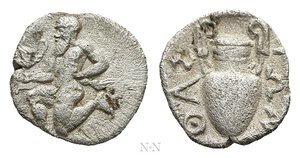
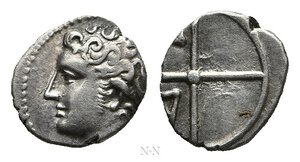
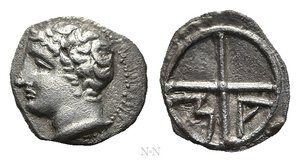
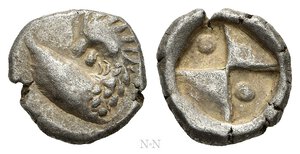
GAUL. Massalia. Obol (Circa 300-100/50 BC) - GAUL. Massalia. Obol (Circa 300-100/50 BC). Obv: Bare head of Apollo left.Rev: M - A. Wheel of four spokes.Maurel (2019) 380. Condition: Very fine.Weight: 0.62 g. Diameter: 10 mm.Estimate: € 50
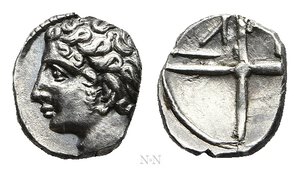
GAUL. Massalia. Obol (Circa 200-121 BC) - GAUL. Massalia. Obol (Circa 200-121 BC). Obv: Bare head of Apollo left.Rev: M - A. Wheel of four spokes.Depeyrot, Marseille, 31. Condition: Good very fine.Weight: 0.67 g. Diameter: 9 mm.Estimate: € 50
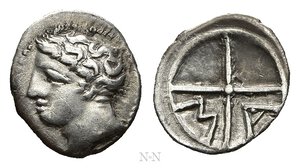
GAUL. Massalia. Obol (Circa 200-121 BC) - GAUL. Massalia. Obol (Circa 200-121 BC). Obv: Bare head of Apollo left.Rev: M - A. Wheel of four spokes.Depeyrot, Marseille, 31. Condition: Good very fine.Weight: 0.71 g. Diameter: 12 mm.Estimate: € 50
GAUL. Massalia. Obol (Circa 200-121 BC) - GAUL. Massalia. Obol (Circa 200-121 BC). Obv: Bare head of Apollo left.Rev: M - A. Wheel of four spokes.Depeyrot, Marseille, 31. Condition: Good very fine.Weight: 0.57 g. Diameter: 11 mm.Estimate: € 50
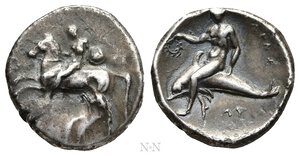
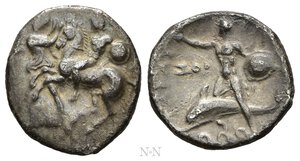
CALABRIA. Tarentum. Nomos (Circa 280 BC) - CALABRIA. Tarentum. Nomos (Circa 280 BC). Obv: Helmeted horseman prancing left, with shield and spear; to left, Nike standing facing, restraining horse; ΛΥΚΙΣΚΟΣ below.Rev: TAPAΣ. Nude Phalanthos, extending right hand and holding shield and two spears, riding dolphin left; ZOP to left, waves below.Vlasto 679-82; HN Italy 963; HGC 1, 814. Condition: Near very fine.Weight: 7.39 g. Diameter: 22 mm.Estimate: € 150
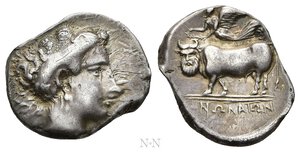
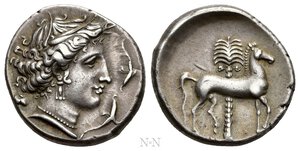
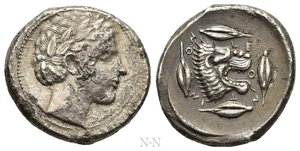
SICILY. Entella. Punic Issues. Tetradrachm (Circa 345/38-320/15 BC) - SICILY. Entella. Punic Issues. Tetradrachm (Circa 345/38-320/15 BC). Obv: Head of Kore right, wearing wreath of grain ears, triple-pendant earring, and pearl necklace; poppy behind neck, two dolphins to right.Rev: Horse walking right; palm tree in background.Jenkins, Punic, Series 2b, 105 (O36/R96); CNP 203a; HGC 2, 275.The foundation of Entella is traced back to Acestes, son of the river god Krimisos and a Trojan woman or, according to other sources to Prince Elymus, son of Anchises and brother of Aeneas. The city stood on a summit overlooking the Belice valley. Records are scarce until the arrival of the Campanian mercenaries, recruited in 410 BC by the Carthaginians and discharged after the 405 BC treaty, then passed into the pay of Dionysius I of Syracuse. After liberating Dionysius on the island of Ortigia from the Punic siege, the were discharged with rich gifts and settled in various cities on the island. In 404 a group of these mercenaries seized Entella, exterminating the entire male population, and began to mint their own coinage. From then on they implemented a generally pro-Carthaginian policy and, in 398 B.C., were able to stop Syracusan siege attempts with the help of the Punic. The strategic location of the fortress of Entella was coveted for its control of the valley below, and this led to several siege attempts: in 345 it was attacked by the Carthaginians led by General Annon, then in 342 the city was taken by the Syracusans commanded by Timoleon, but in 338 it fell back under Punic influence. During the First Punic War the city was destroyed by the Carthaginians. The “Decrees of Entella,” which were requests for help engraved on bronze slabs, from the inhabitants to neighboring cities, date from this period. In 263 Entella was conquered by the Romans and enjoyed a new period of prosperity until the second century BC when it was abandoned. Condition: Good very fine.Weight: 16.62 g. Diameter: 27 mm.Estimate: € 5000
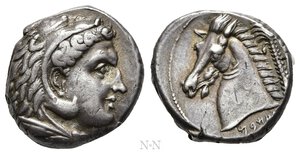
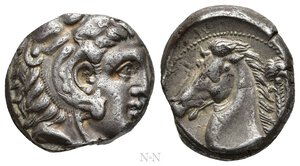
SICILY. Entella. Punic issues. Tetradrachm (Circa 300-289 BC) - SICILY. Entella. Punic issues. Tetradrachm (Circa 300-289 BC). Obv: Head of Herakles right, wearing lion skin.Rev: Head of horse left; palm tree to right; Punic legend below.CNP 272; HGC 2, 295.The foundation of Entella is traced back to Acestes, son of the river god Krimisos and a Trojan woman or, according to other sources to Prince Elymus, son of Anchises and brother of Aeneas. The city stood on a summit overlooking the Belice valley. Records are scarce until the arrival of the Campanian mercenaries, recruited in 410 BC by the Carthaginians and discharged after the 405 BC treaty, then passed into the pay of Dionysius I of Syracuse. After liberating Dionysius on the island of Ortigia from the Punic siege, the were discharged with rich gifts and settled in various cities on the island. In 404 a group of these mercenaries seized Entella, exterminating the entire male population, and began to mint their own coinage. From then on they implemented a generally pro-Carthaginian policy and, in 398 B.C., were able to stop Syracusan siege attempts with the help of the Punic. The strategic location of the fortress of Entella was coveted for its control of the valley below, and this led to several siege attempts: in 345 it was attacked by the Carthaginians led by General Annon, then in 342 the city was taken by the Syracusans commanded by Timoleon, but in 338 it fell back under Punic influence. During the First Punic War the city was destroyed by the Carthaginians. The “Decrees of Entella,” which were requests for help engraved on bronze slabs, from the inhabitants to neighboring cities, date from this period. In 263 Entella was conquered by the Romans and enjoyed a new period of prosperity until the second century BC when it was abandoned. Condition: Very fine.Weight: 16.50 g. Diameter: 23 mm.Estimate: € 1000
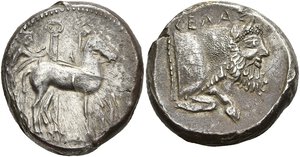
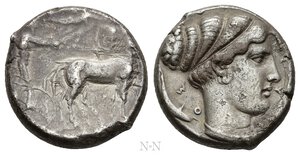
SICILY. Syracuse. Second Democracy (466-405 BC). Tetradrachm - SICILY. Syracuse. Second Democracy (466-405 BC). Tetradrachm. Obv: Charioteer, holding kentron in right hand and reins in both, driving slow quadriga right; above, Nike flying left, crowning charioteer with open wreath.Rev: ΣΥΡΑΚΟΣΙΟΝ. Head of Arethusa right; four dolphins around.Boehringer 667 (V337/R456); HGC 2, 1320. Condition: Very fine.Weight: 17.90 g. Diameter: 25 mm.Estimate: € 1250
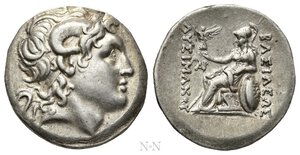
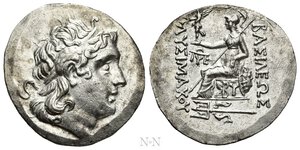
KINGS OF THRACE (Macedonian). Lysimachos (305-281 BC). Tetradrachm. Uncertain mint - KINGS OF THRACE (Macedonian). Lysimachos (305-281 BC). Tetradrachm. Uncertain mint. Obv: Diademed head of the deified Alexander right, wearing horn of Ammon.Rev: ΒΑΣΙΛΕΩΣ / ΛΥΣΙΜΑΧΟΥ. Athena seated left on throne, left arm resting on shield, holding Nike and spear over shoulder. Control: AP monogram to inner left.Thompson -; Müller 518.Rare Condition: Good very fine.Weight: 17.18 g. Diameter: 28 mm.Estimate: € 625
KINGS OF THRACE (Macedonian). Lysimachos (305-281 BC). Tetradrachm. Byzantion - KINGS OF THRACE (Macedonian). Lysimachos (305-281 BC). Tetradrachm. Byzantion. Obv: Diademed head of the deified Alexander right, wearing horn of Ammon.Rev: ΒΑΣΙΛΕΩΣ / ΛΥΣΙΜΑΧΟΥ. Athena seated left on throne, holding Nike and spear over shoulder. Controls: monogram to inner left, BY on throne; in exergue, ornate trident left.Marinescu issue 125; Müller 166. Condition: Good very fine.Weight: 16.19 g. Diameter: 35 mm.Estimate: € 250
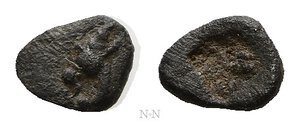
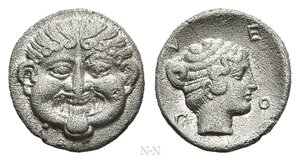
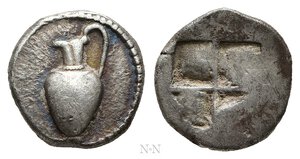
THRACO-MACEDONIAN REGION. Uncertain (Aigai?). Hemiobol (5th-4th centuries BC) - THRACO-MACEDONIAN REGION. Uncertain (Aigai?). Hemiobol (5th-4th centuries BC). Obv: Head of ibex or goat left.Rev: Incuse square.Unpublished in the standard references; cf. Numismatik Naumann 19, lot 81. Condition: Good very fine.Weight: 0.12 g. Diameter: 5 mm.Estimate: € 50
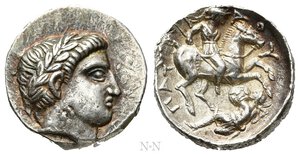
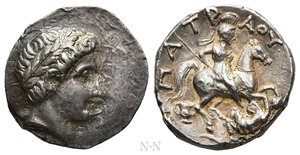
KINGS OF PAEONIA. Patraos (Circa 335-315 BC). Tetradrachm. Astibos or Damastion mint - KINGS OF PAEONIA. Patraos (Circa 335-315 BC). Tetradrachm. Astibos or Damastion mint. Obv: Laureate head of Apollo right.Rev: ΠΑΤΡΑΟΥ. Warrior on horse rearing right, thrusting spear at enemy below who defends with shield; monogram to left.Paeonian Hoard 360; HGC 3.1, 148. Condition: Good very fine.Weight: 12.57 g. Diameter: 25 mm.Estimate: € 750
KINGS OF PAEONIA. Patraos (Circa 335-315 BC). Tetradrachm. Astibos or Damastion mint - KINGS OF PAEONIA. Patraos (Circa 335-315 BC). Tetradrachm. Astibos or Damastion mint. Obv: Laureate head of Apollo right.Rev: ΠΑΤΡΑΟΥ. Warrior on horse rearing right, thrusting spear at enemy; kantharos to lower left.Paeonian Hoard 195-7; HGC 3.1, 148. Condition: Very fine.Weight: 12.56 g. Diameter: 26 mm.Estimate: € 350
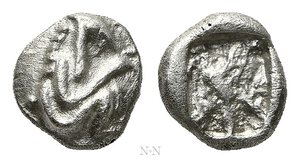
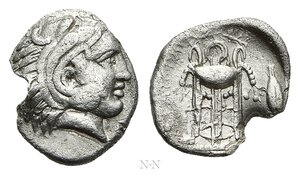
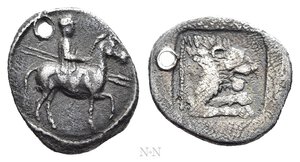
KINGS OF MACEDON. Perdikkas II (451-413 BC). Tetrobol. Aigai(?) - KINGS OF MACEDON. Perdikkas II (451-413 BC). Tetrobol. Aigai(?). Obv: Horseman advancing right, wearing petasos and holding two spears.Rev: Forepart of lion right within incuse square.Raymond Group IV, Series 2; HGC 3.1, 792. Condition: Near very fine.Weight: 2.23 g. Diameter: 16 mm.Estimate: € 100
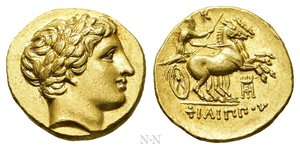
KINGS OF MACEDON. Philip II (359-336 BC). GOLD Stater. Amphipolis - KINGS OF MACEDON. Philip II (359-336 BC). GOLD Stater. Amphipolis. Obv: Laureate head of Apollo right.Rev: ΦΙΛΙΠΠΟΥ. Charioteer driving biga right. Controls: K above, tripod below.Le Rider pl. 81, 231 (D81/R182); SNG ANS 270 (same obv. die).In the Classical period throughout Greece silver coinage predominated, while gold was minted by a few cities. In Asia Minor electrum coins were still struck in three mints (Kyzikos, Mytilene and Phokaia) until the Athenian hegemony that followed the victory over the Persians. In 405 BC the issue of Lampsakos gold staters based on the Persian weight system began. Athens produced the first and only precious metal issues toward the end of the Peloponnesian War, in 407-6 BC, at a time of severe crisis when silver mining in Laurion began to fail and it was forced to melt down the Parthenon's gold statues. Aside from these cases, the first important and massive gold coinage in the Greek context was that of Philip II of Macedon. He minted abundant series of coins in several mints. Having conquered the city of Krenides, where the Thasians had already exploited gold mines, Philip renamed the city Philippi and started the production of philippéioi, gold staters weighing two Attic drachms. Apollo's youthful head appears on the obverse, a galloping chariot on the reverse, types glorifying the Macedonian ruler who had triumphed at the Olympian Games in 356 BC. The series also includes fractions. Condition: Good extremely fine.Weight: 8.61 g. Diameter: 19 mm.Estimate: € 5000
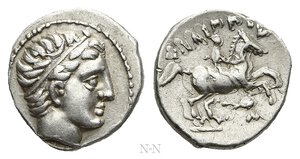
KINGS OF MACEDON. Philip II (359-336 BC). 1/5 Tetradrachm. Amphipolis - KINGS OF MACEDON. Philip II (359-336 BC). 1/5 Tetradrachm. Amphipolis. Obv: Head of Apollo right, wearing tainia.Rev: ΦΙΛΙΠΠΟΥ. Youth on horse rearing right. Controls: below, diademed kausia above M.Le Rider pl. 45, 3; SNG ANS 598.Rare Condition: Good very fine.Weight: 2.66 g. Diameter: 15 mm.Estimate: € 100
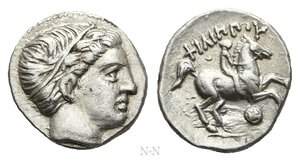
KINGS OF MACEDON. Philip II (359-336 BC). 1/5 Tetradrachm. Amphipolis - KINGS OF MACEDON. Philip II (359-336 BC). 1/5 Tetradrachm. Amphipolis. Obv: Head of Apollo right, wearing tainia.Rev: ΦΙΛΙΠΠΟΥ. Youth on horse rearing right. Control: Macedonian shield below.Le Rider pl. 46, 30; SNG ANS 726-30. Condition: Near extremely fine.Weight: 2.68 g. Diameter: 15 mm.Estimate: € 100
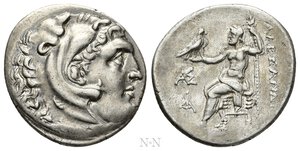
KINGS OF MACEDON. Alexander III 'the Great' (336-323 BC). Tetradrachm. Aspendos. Undated issue - KINGS OF MACEDON. Alexander III 'the Great' (336-323 BC). Tetradrachm. Aspendos. Undated issue. Obv: Head of Herakles right, wearing lion skin.Rev: AΛEΞANΔPOY. Zeus seated left on throne, holding eagle and sceptre. Controls: (ΑΣ) above monogram in left field.Price -; CNG E-559, lot 113, otherwise unpublished.Extremely rare Condition: Good very fine.Weight: 17.00 g. Diameter: 31 mm.Estimate: € 500
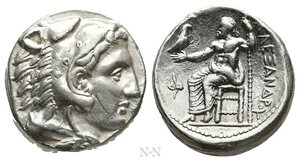
KINGS OF MACEDON. Alexander III 'the Great' (336-323 BC). Tetradrachm. Amphipolis. Lifetime issue - KINGS OF MACEDON. Alexander III 'the Great' (336-323 BC). Tetradrachm. Amphipolis. Lifetime issue. Obv: Head of Herakles right, wearing lion skin.Rev: ΑΛΕΞΑΝΔΡΟΥ. Zeus seated left on throne, holding eagle and sceptre. Control: ivy-leaf in left field.Price 23. Condition: Very fine.Weight: 17.12 g. Diameter: 25 mm.Estimate: € 250
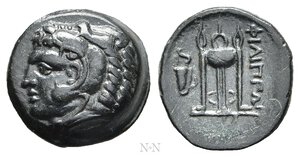
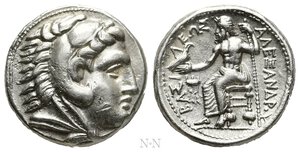
KINGS OF MACEDON. Alexander III 'the Great' (336-323 BC). Tetradrachm. Amphipolis - KINGS OF MACEDON. Alexander III 'the Great' (336-323 BC). Tetradrachm. Amphipolis. Obv: Head of Herakles right, wearing lion skin.Rev: BAΣIΛEΩΣ AΛEΞANΔPOY. Zeus seated left on throne, holding eagle and sceptre. Control: tripod in left field.Price 115. Condition: Very fine.Weight: 17.17 g. Diameter: 25 mm.Estimate: € 300
Caricamento altri risultati...
Caricamento...
Notifiche web-push
Per abilitare le notifiche push su questo browser, premere il pulsante abilita.