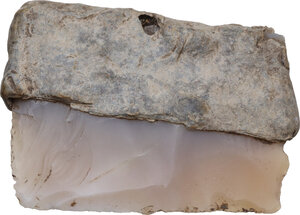
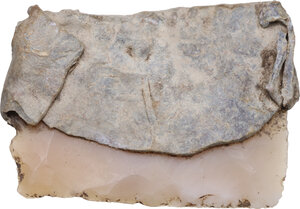
1138 - FLINT FOR MUZZLE LOADING RIFLE Modern times, c. 19th century. Made of stone and lead. Dimensions: 37 mm. Weight: 12.15 g. 0 g. Ø 0 mm.
Info & contatti
Le mie offerte
Lotti osservati
Conferimento
Condizioni di vendita
Prezzi di spedizione
Metodi di pagamento
Tabella rilanci
Esito stampabile
Sessione Live 5/10/2024 15:00:00 CET
Greek Coins (1-299)
Ancient and Medieval Asia (300-305)
The Roman Republic (306-442)
The Roman Empire (443-600)
Sessione Live 6/10/2024 15:00:00 CET
The Roman Empire (601-718)
Barbaric and Migration Period Coinage (719-726)
The Byzantine Empire (727-747)
Islam (748-750)
Tessere e Gettoni (751-773)
World Coins (774-911)
Russian Wire Coins (912-1062)
Large Lots (1063-1128)
Replica Coins (1129-1137)
Antiquities (1138-1187)

Risultati: 50
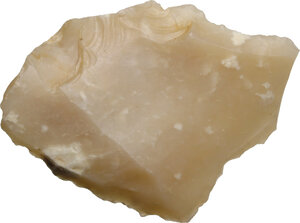
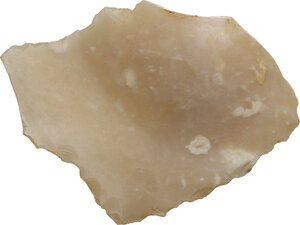
1139 - NEOLITHIC STONE CHISEL Stone age, Europe (?). Dimensions: 49x36 mm.
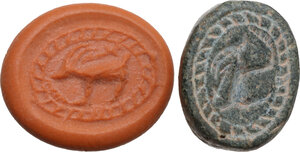
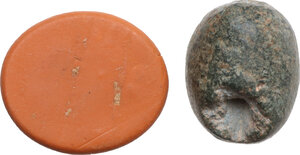
1140 - NEAR EASTERN IBEX SEAL Ancient Near East, c. 2nd millennium BC. Stone seal of scaraboid shape, with a complex carving on the flat side; within a rhomboid grid frame an ibex is depicted with a kind of arrow on top, like a hunting scene. Dimensions: 16.5 x 13 x 9.5 mm. Choice, of good style. Chipped.
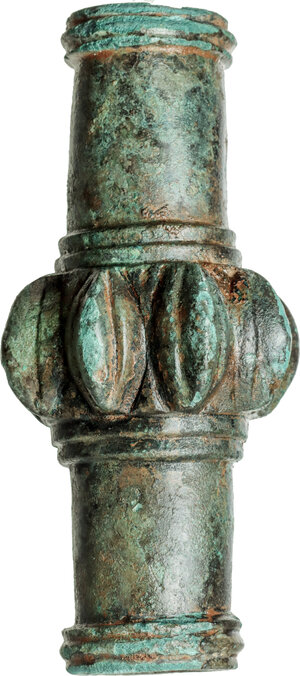
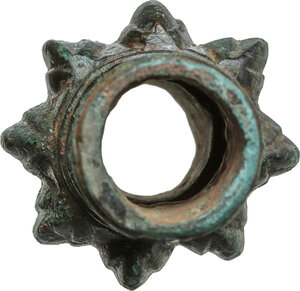
1141 - LURISTAN BRONZE SCEPTRE Iran, Luristan Culture, c. 8th century BC. Important bronze scepter or mace head, with tubular cross-section. In the middle part are eight knobs. Dimensions: 112 x 52 mm. 252.3 g. Rare item, of great fashion. Minor damages. Superb patina.
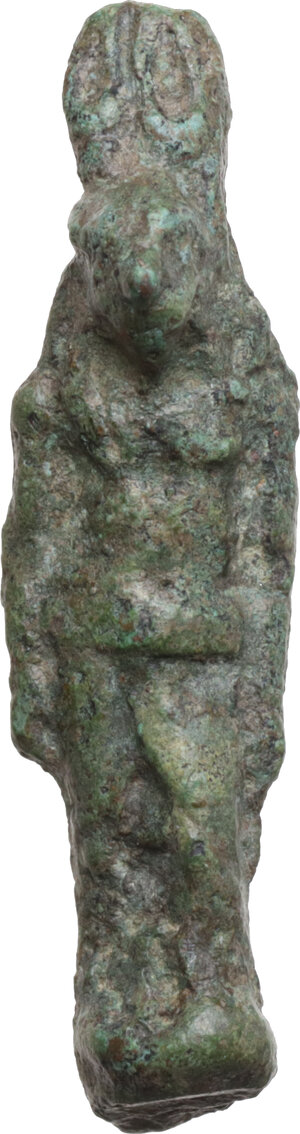
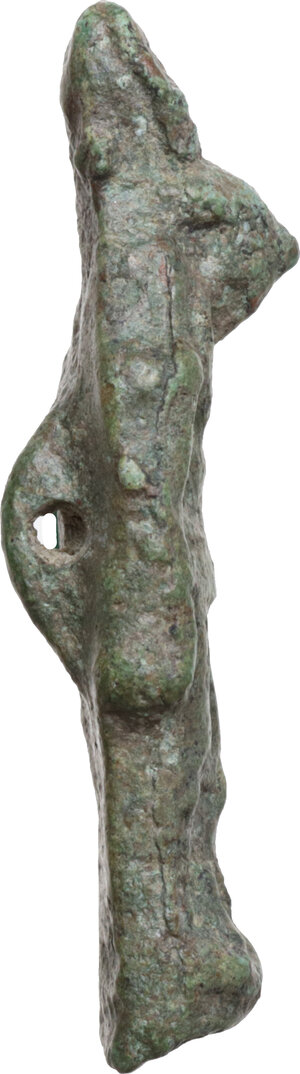
1142 - EGYPTIAN (?) BRONZE AMULET Late Period, c. 672 - 332 BC. Egyptian bronze amulet in the form of the god horus standing frontally with his arms along his body. In the back, small suspension hole. Height: 36 mm. Intact and complete. Despite its certain design inspired by the Egyptian handcraft, this Interesting and intriguing item is in bronze, not the usual alloy used by the Egyptians.
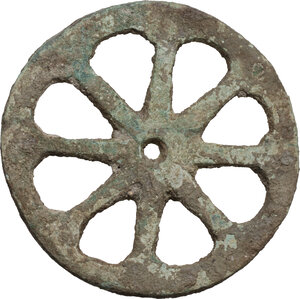
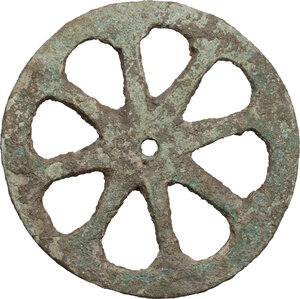
1143 - ANCIENT BRONZE WHEEL Greek world or Roman period, c. 1st millennium BC - 1st millennium AD. Medium-sized bronze wheel, composed of eight spokes, probably part of a toy. Diameter: 71 mm. Weight: 80 g. Rare and interesting item.
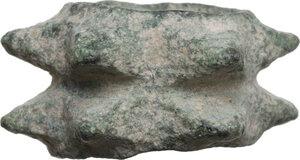
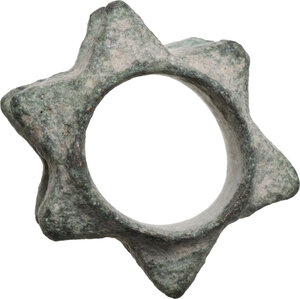
1144 - BRONZE 'PASSAREDINI' OR MACE HEAD Italic culture, c. 6th to 4th century BC. Masculine ring forged from leaded bronze. The circular accessory features a relatively smooth interior surface as well as columns of two spikes surrounding the exterior. Diameter: 25.5 mm. Height: 13 mm. Height: 16 mm. AE. 12.1 g. Intact and complete. Generally referred to as 'passaredini' and thus related to the equestrian sphere, this type of bronze object apparently has no certain function. Another hypothesis of use sees these objects as belonging to the military or domestic sphere.
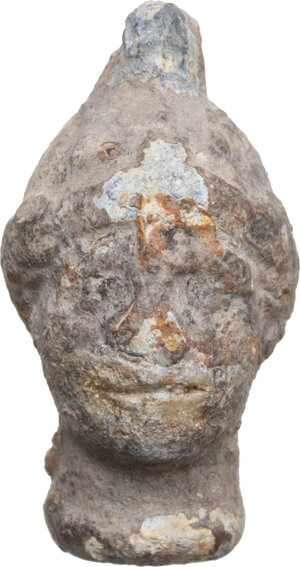
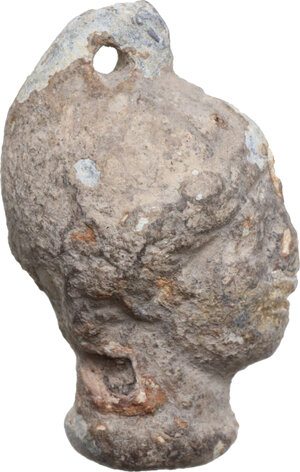
1145 - LEAD HEAD WITH HUMAN SHAPE AND PHRYGIAN HELMET Greek world, c. 3rd - 2nd century BC. Head in lead Dimensions: 29.5 mm Weight: 32.59 g. 32.59 g. 29.5 mm.
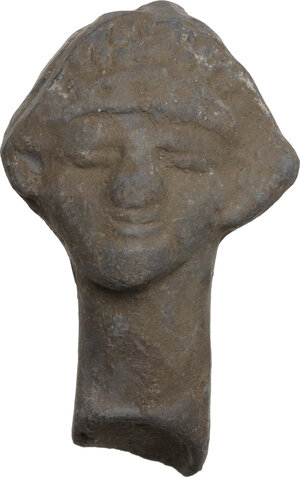
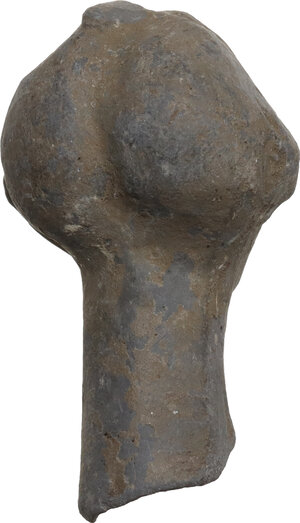
1146 - MAGNA GRECIAN TERRACOTTA APPLIQUE Magna Graecia, c. 4th-2nd century BC. Terracotta applique made from matrix, depicting a female head with a long neck and complex hair. Dimensions: 33.5 x 21 mm.
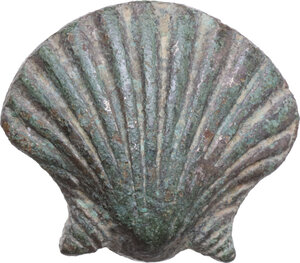
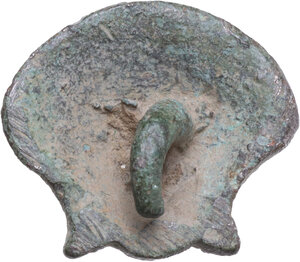
1147 - COCKLE SHELL BRONZE APPLIQUE Greek World, c. 4th - 2nd century BC. Bronze applique in the shape of a cockle shell with very well rendered details and a hook on back. Dimensions: 21 x 18.5 mm. Weight: 5.82 g. Intact and complete.
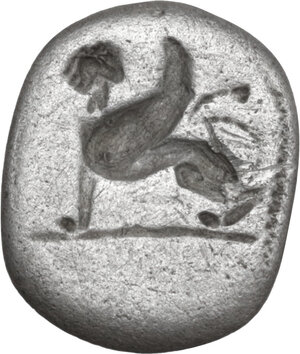
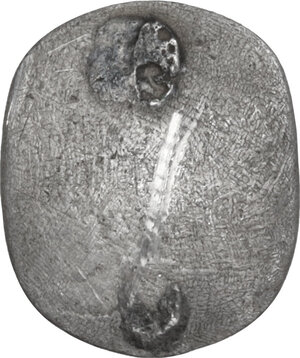
1148 - SILVER RING-BEZEL WITH SPHINX Greek World, c. 6th - 2nd century BC. Silver ring bezel with an engraved depiction of a sphinx above a horizontal plane. Dimensions: 15 x 12 mm. Weight: 1.93 g. 1.92 g. 14.5 mm. The representation of the Sphinx, a winged monster with a lion's body and a human head, is one of the longest-lived of the ancient world. Already present in the Middle East, it found its place in Greek mythology with the myth of Oedipus. According to the story, a Sphinx was stationed at the entrance to the city of Thebes, asking all passers-by the same riddle; if they did not know how to answer they were strangled. Oedipus managed to solve the riddle, causing the monster's suicide.
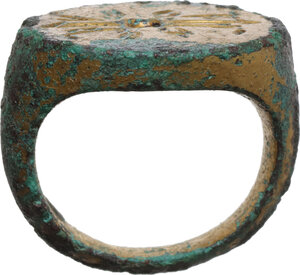
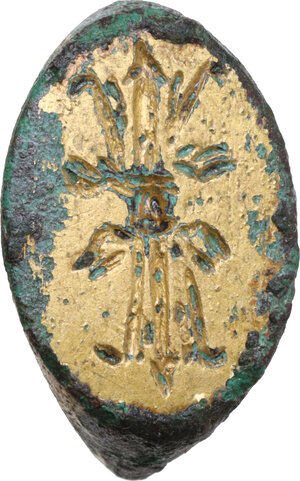
1149 - HELLENISTIC RING Greek World, c. 4th - 3rd century BC. Gilded bronze ring with large oval bezel engraved with a winged thunderbolt. Bezel dimensions: 22 x 15 mm. Inner size: 18.5 x 15 mm. Rare and fascinating item. Gilt partially preserved. The particular representation on the bezel of this ring is strongly reminiscent of the reverse of the Syracusan coins minted under Agathokles.
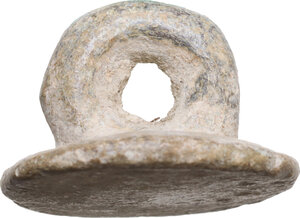
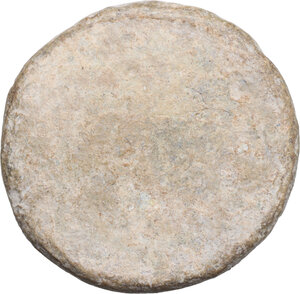
1150 - LEAD MOLD WITH A HANDLE Greek World or Roman. Lead mold with no engravements. Width : 34,5 mm Weight: 71 g. PB. 71 g. 34.5 mm.
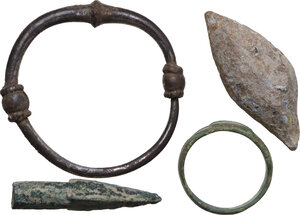
1151 - LOT OF FOUR ITEMS Celtic to Roman period, c. 3rd century BC - 4th century AD. Lot composed by a probably celtic silver premoney ring with knobs, a lead slingshot, a bronze arrowhead and a bronze ring.
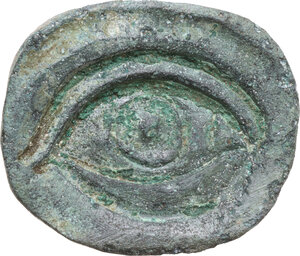
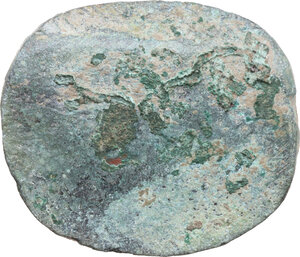
1152 - VOTIVE BRONZE EYE Roman Republic, c. 4th - 2nd century BC. Oval plaque in the shape of a left eye, opened, with well rendered details. Dimensions: 37.5 x 31 mm. Weight: 18.98. Rare and fascinating. This example is made from bronze, the use of which may indicate a wealthy owner as most votives were made from terracotta. Votive offerings were given to the gods either in the hope of a cure or as thanks for one, and were made in the shape of the afflicted body part, in this case a left eye. The original owner may have been experiencing blindness or infection.
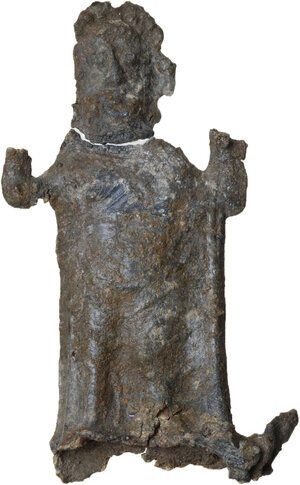
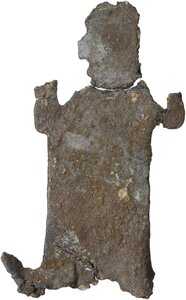
1153 - VOTIVE LEAD PLATE Probably Roman republican period, c. 3rd-1st century BC. Lead plaque depicting a bearded figure in a long robe, probably leaning on a stick. Dimensions: 59x32 mm. Fascinating item. Damages and missings. The function of this plaque is unclear; it was probably a votive offering or part of the decoration of a larger object.
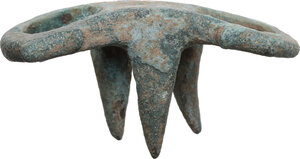
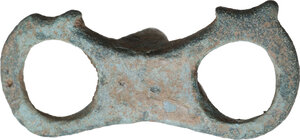
1154 - ROMAN BRONZE BOW RING Roman Republican period, c. 5th century BC - 1st century BC. Tricuspid geminous ring in bronze, formed by two cylindrical annular elements, connected by a median body surmounted by three cusps: a wider one, with a triangular base, and two thinner ones placed side by side, with a pyramidal shape. The rings have faint thickenings on the front. Dimensions: 65 x 30 x 34 mm. 69.7 g. In the past these objects have been interpreted in various ways: as female ornaments, tools for horse taming or bridle clips, as thrusters and bow turnbuckles. Among them, the most reliable hypothesis, based on experiences of experimental practice, is that they are bow turnbuckles, having as their main function the protection of the fingers during the release of the arrow. The tricuspid gemini rings are very widespread especially in the Emilian area, in particular in the Parma, Reggio Emilia and Modena areas, but they are also known in northern Italy in the Lombard and Piedmont areas. Their chronological classification is difficult in the absence of stratigraphic associations, given that they appear both in contexts of the second Iron Age and in the late Republican age, above all due to a tendency towards formal conservatism inherent in the instrument.
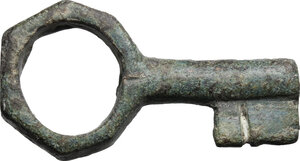
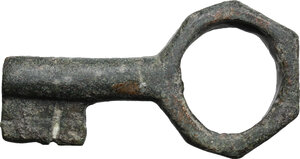
1155 - Bronze key-ring. Roman period, 1st-2nd century AD. Size 16.25 mm, length 49x25 mm., 23.11 g.
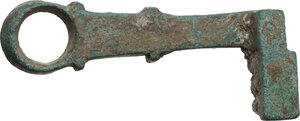
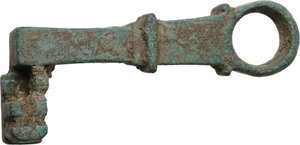
1156 - HUGE ROMAN KEY Roman period, c. 1st - 4th century AD. Large Roman bronze key, with a thick quadrangular section body, with reinforcements in the middle part and at the attachment of the ring. Lenght: 85 mm. 126 g. Intact and complete, of unusual dimensions.
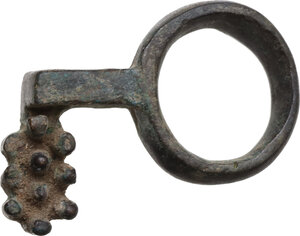
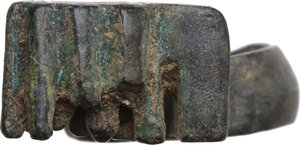
1157 - ROMAN BRONZE KEY-RING Roman Period, c. 1st - 4th century AD. Bronze key-ring. Dimensions: 34 X 21 mm. Inner size: 15 mm. AE. Nice green patina.
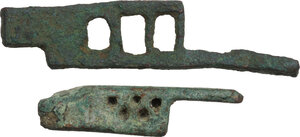
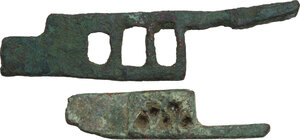
1158 - TWO ROMAN PADLOCKS Roman period, c. 1st to 3rd century AD. Lot of two roman bronze lock patches. Lenghts: 70 and 47 mm. Intact and complete.
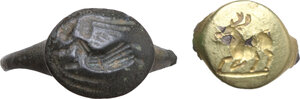
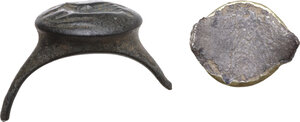
1159 - TWO ANCIENT BEZELS Greek world to Roman period, c. 3rd century BC to 1st century AD. Lot of two ancient bezels; one made of a placque of gold mounted on a silver base with the depiction of a stag; one in bronze with the representation of a flying Nike. Dimensions: 14 x 11 and 22 x 11 mm.
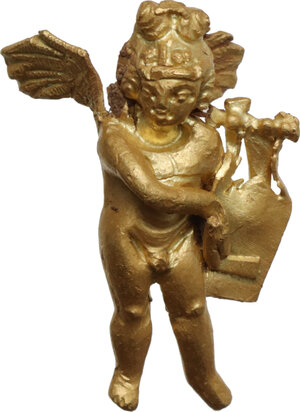
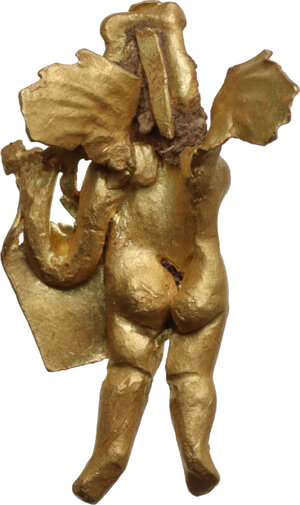
1160 - GOLD ROMAN EROS Small figure of Eros or Cupid playing a kithara or lyre in solid gold. Embellishment or part of jewellery. Dimensions: 23x18x8 mm Weight: 2.57 g.
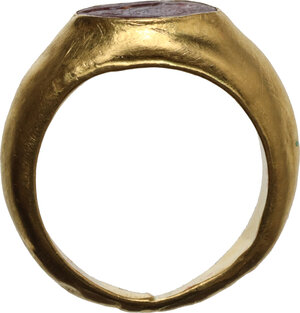
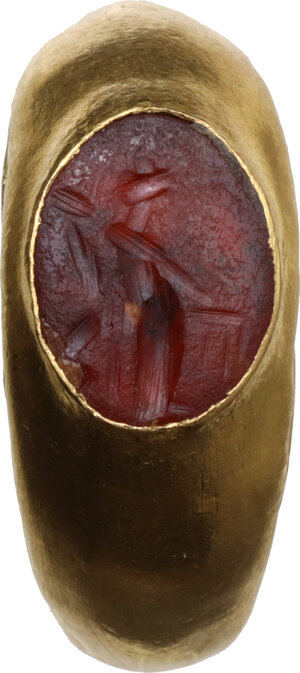
1161 - ROMAN GOLD RING Roman period, c. 1st - 2nd century AD. Important Roman gold ring, consisting of two convex plates with an engraved and set carnelian gem, representing a stylized deity with cornucopia sacrificing on altar. Inner size: 18 mm. 5.41 g. 23 mm. Intact and complete, profesionally restored.
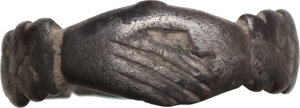
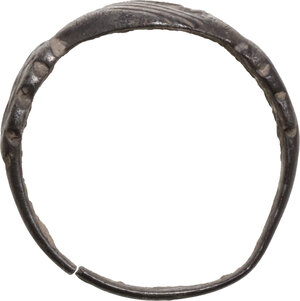
1162 - ROMAN SILVER ENGAGEMENT RING 'ANULUS PRONUBUS' Roman period, c. 1st - 4th century AD. Silver engagement ring, composed of a plain circular band, joined by a plate depicting two clasped hands. Inner size: 16 mm. Delicate and nice item, lightly toned. Complete, small break on the rim.
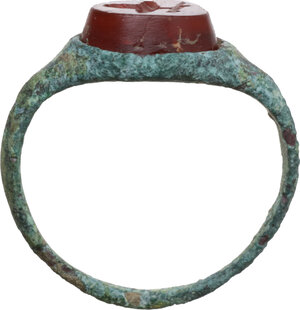
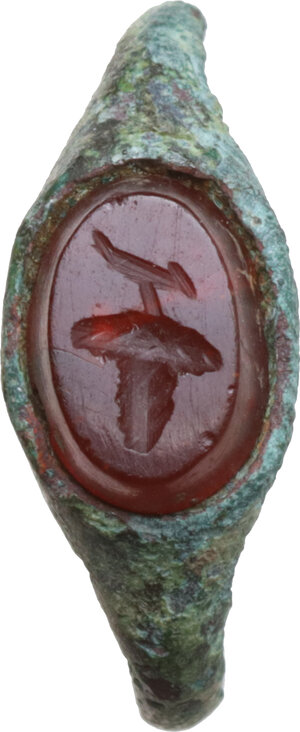
1163 - ROMAN 'GRAPE' RING Roman period, c. 1st - 4th century AD. Roman bronze ring with a carnelian gem depicting a grape. Inner size: 16.5 mm. Intact and complete. Good style engraving.
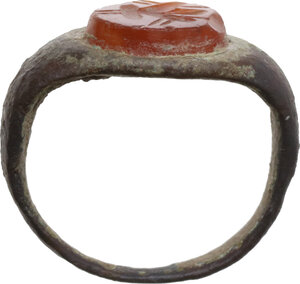
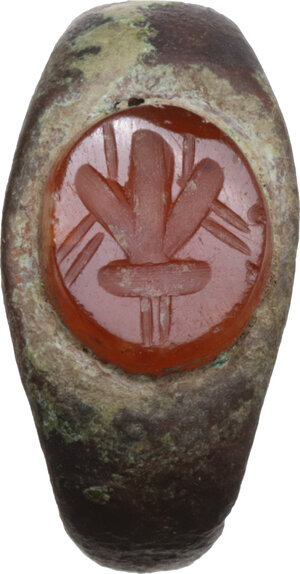
1164 - ROMAN RING WITH GEM Roman period, c. 1st - 4th century AD. Roman bronze ring with a carnelian gem depicting a stylized flower. Inner size: 16 mm. Complete, gem slightly chipped on the edge.
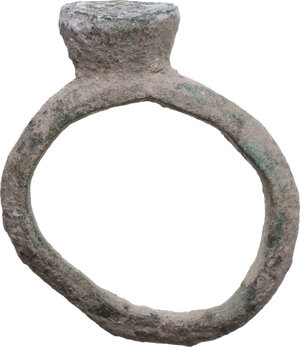
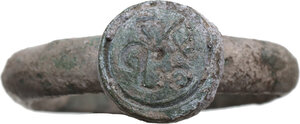
1165 - LATE ROMAN RING Roman World, c. 4th - 3rd century Bronze ring with small round engraved bezel Bezel dimensions: 10 mm Size: 14,82 g. AE. 14.82 g. 37.5 mm.
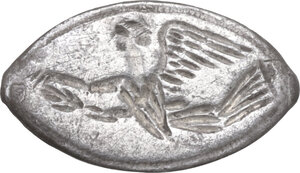
1166 - RING BEZEL WITH VICTORY Roman period, after II-IV century AD. Silver ring bezel with engraving of Victory flying left, holding wreath. Dimensions: 16 mm Weight: 1,14 g. AR. 1.14 g. 16 mm.
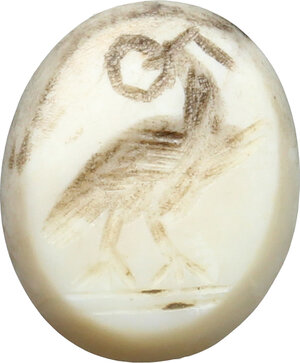
1167 - ROMAN JASPER INTAGLIO Jasper intaglio, engraved with eagle holding wreath in the beak. Roman period, 1st century BC-1st century AD. 13 x 11 mm.
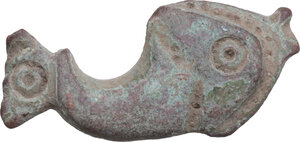
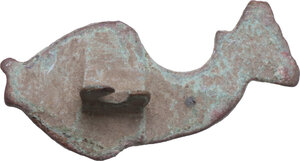
1168 - FISH SHAPED FIBULA Roman period, c. 2nd century AD. Bronze fish-shaped fibula, with well rendered details and fancy style. Dimensions: 28 x 13 mm. Missing pin.
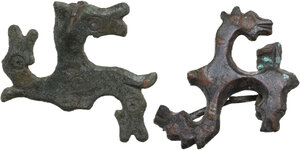
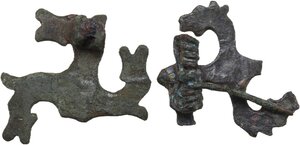
1169 - TWO ROMAN BRONZE SWASTIKA FIBULAE Roman period, Balkan area, c. 3rd-4th century AD. Lot of two roman bronze swastika fibulae with the depiction of a stylised horse's head on each arm of the hooked cross. Dimensions: both 36 mm. Both fibulae are missing the swastika arm opposite the spring from which the pin starts (one is missing the pin as well). A deliberate defunctionalisation cannot be excluded. The ends of the garment clips, shaped like horse heads, may be due to the influence of the inhabitants of Thrace or Dacia.
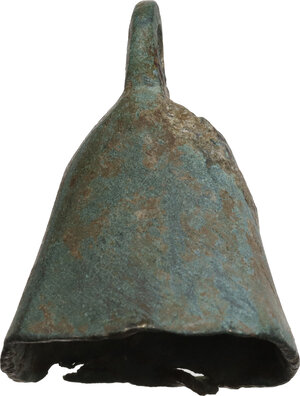
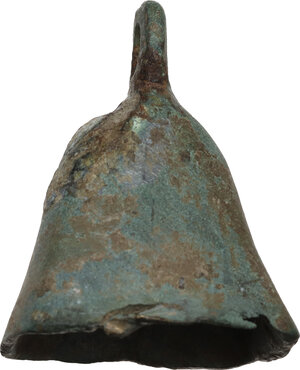
1170 - ROMAN BRONZE BELL Roman period, c. 1st - 3rd century AD. Rectangular cross-section bell, with suspension ring. Height: 40 mm. Base: 31 x 27 mm. Weight: 25.50 g. The iron clapper is missing, remaining traces inside.
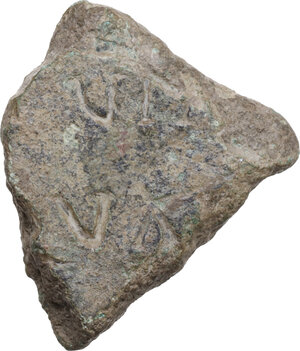
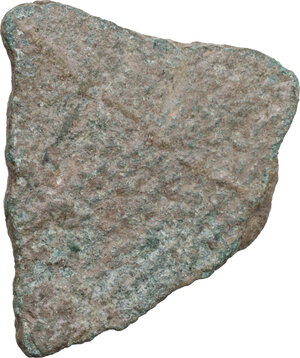
1171 - INSCRIBED FRAGMENT Ancient world, c. 3rd century BC - 10th century AD. Fragment of a bronze document bearing an inscription engraved in two lines on one side, while the other is flat. VI (?) VA Dimensions: 35 x 30.5 mm. Interesting study item.
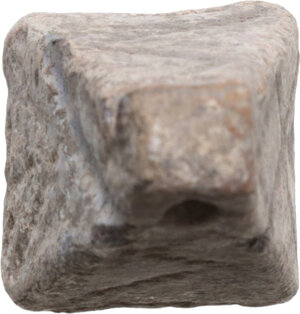
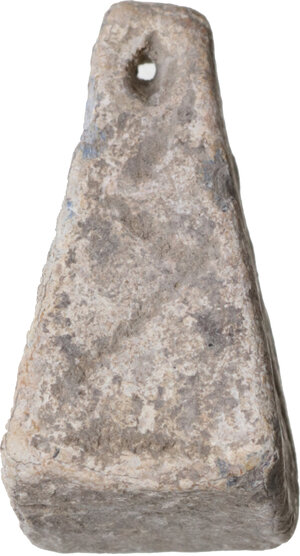
1172 - LEAD GROMA WEIGHT. Roman period, 1st - 4th century AD. Lead groma weight with suspension loop. Squared basis, line decorations. Dimensions: 25 mm Weight: 20.72 g. 20.72 g. 25 mm.
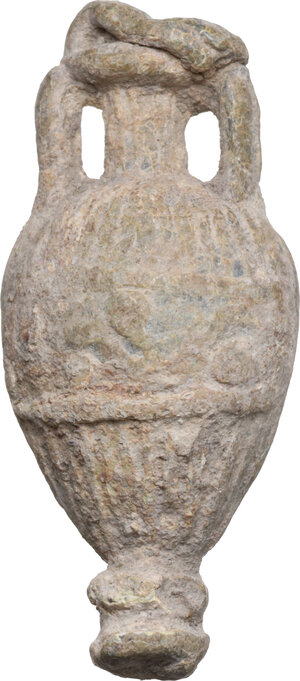
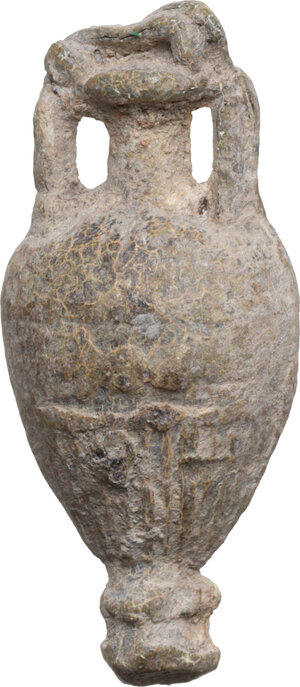
1173 - 'GROMA' AMPHORA WEIGHT Roman period, 1st - 4th century AD. Decorated weight in the shape of amphora with suspension loop. Dimensions: 39 mm Weight: 30.18 g. PB. 30.18 g. 39 mm.
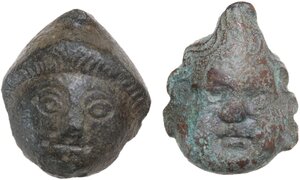
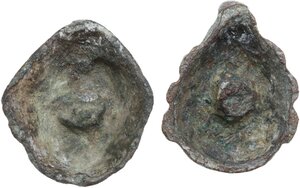
1174 - TWO ROMAN BRONZE MASKS Roman period, c. 1st-3rd century AD. Lot of two roman bronze faces, probably part of the decorative motif of a casket. Anatomical details rendered by engraving. Dimensions: both 21 x 18 mm. Interesting and curious items.
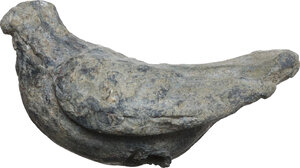
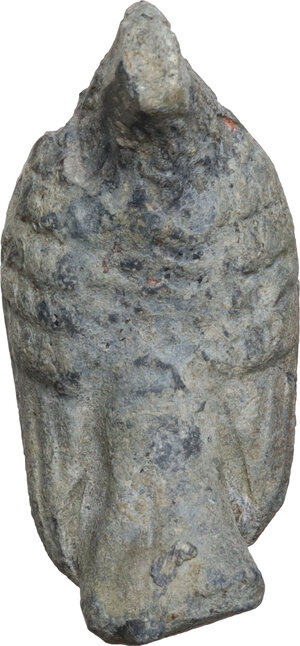
1175 - ROMAN LEAD BIRD FIGURINE Roman period, c. 1st-3rd century AD. Roman lead figurine configured as a bird (eagle?). There are two circular holes at the bottom, perhaps to allow mounting on a stand. Dimensions: 42x27 mm. Weight: 59.60 g.
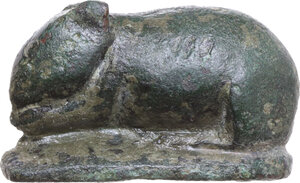
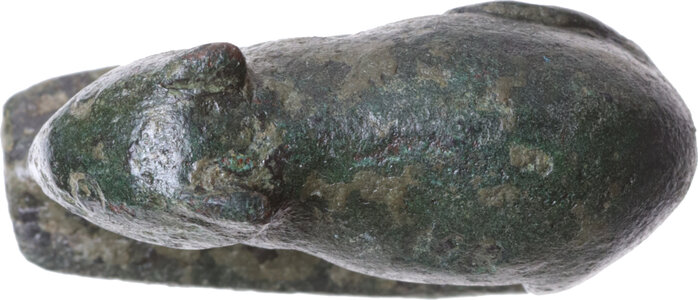
1176 - MOUSE BRONZE STATUETTE Roman period, c. 1st - 4th century AD. Roman bronze statuette depicting a mouse crouched in the act of eating. The details are rendered with care, including the tail and eyes. Dimensions: 30.5 x 12.5 x 17.5 mm. Weight: 29.46 g. Of good workmanship.
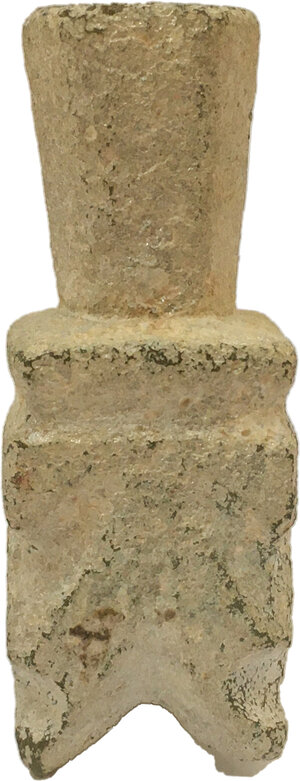
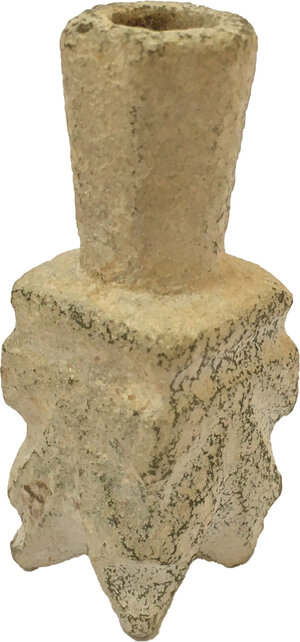
1177 - SASANID BALSAM FLASK 3rd-4th century AD. Colourless glass, square body with thin hexagonal neck and four legs. Height: 54 mm Width of the body: 20x20 mm. Light sintering. ex Gorny&Mosch, Auction 268 (2019).
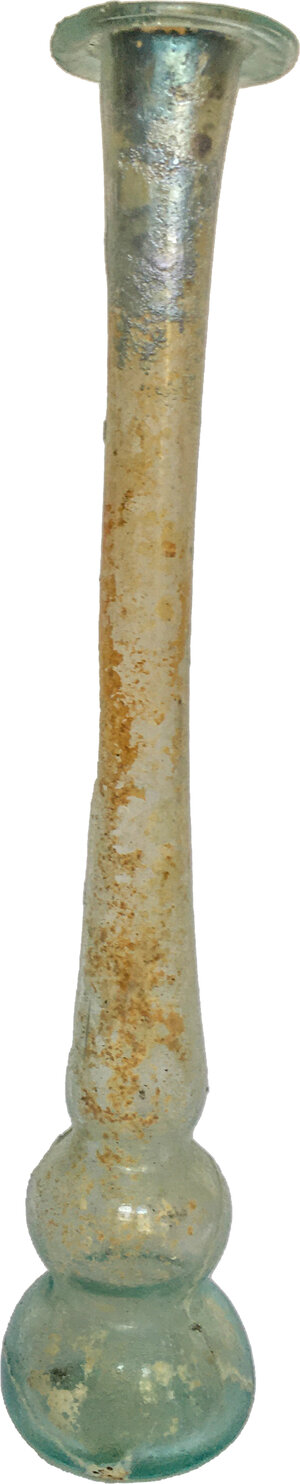
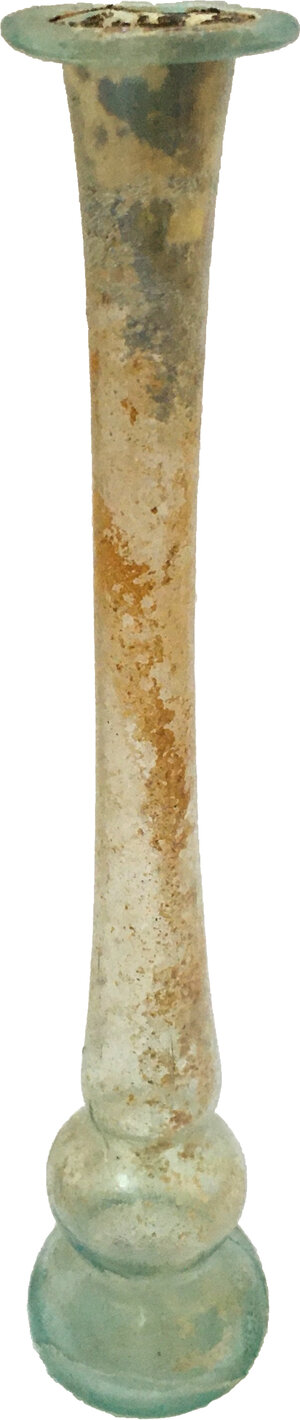
1178 - UNGUENTARIUM 1st-4th century AD. Slightly bluish glass with light iridescence. Height: 129 mm. Sinter in the inside. ex Gorny&Mosch, auction 268 (2019).
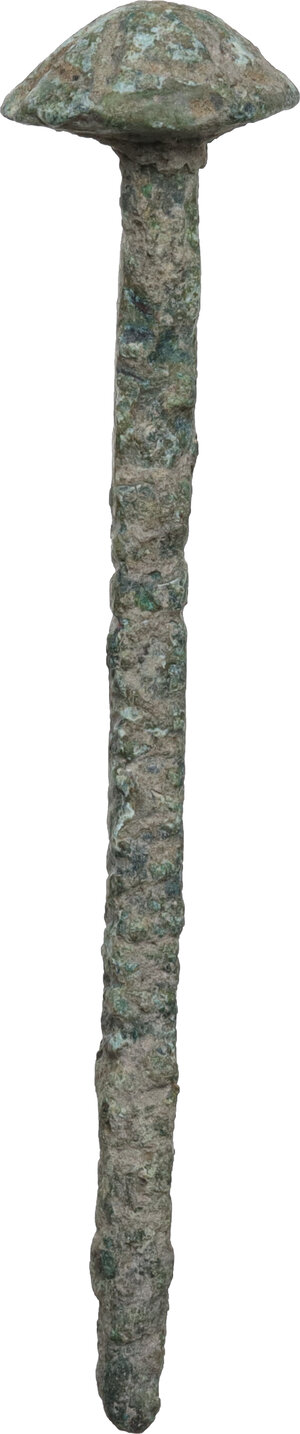
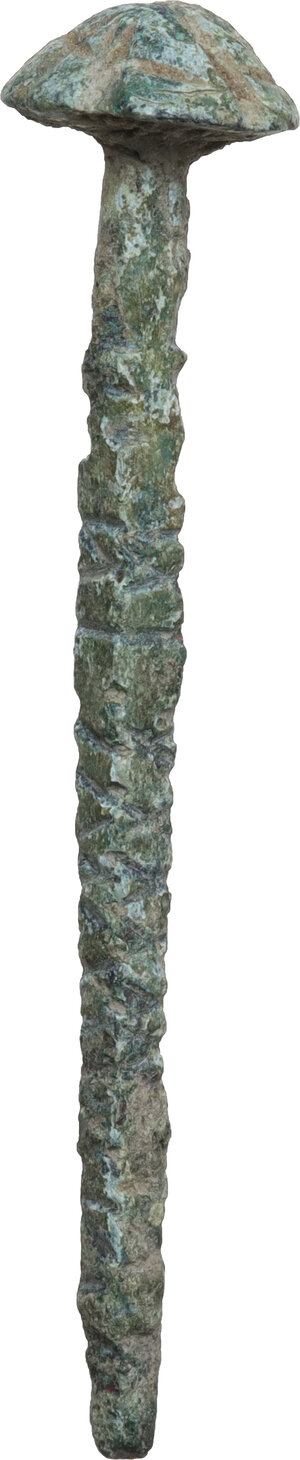
1179 - ROMAN 'MAGIC' NAIL Roman period, c. 2nd-3rd century AD. Bronze nail decorated with engraved geometrical pattern. Lenght: 73 mm. Intact and complete.
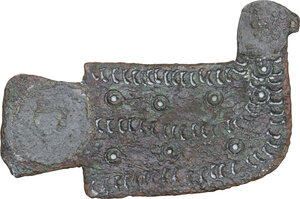
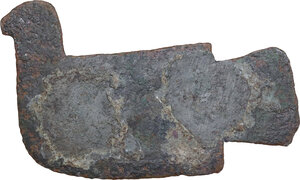
1180 - BARBARIC BIRD PLAQUE Roman period, c. 4th-5th century AD. Bronze sheet in the shape of a stylized bird, with details of the feathers engraved with half moons and circles. Dimensions: 39 x 25 mm. 2.99 g. Initially it must have been a fibula which was then reworked, probably in antiquity.
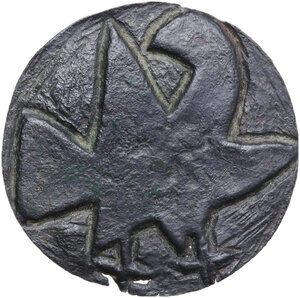
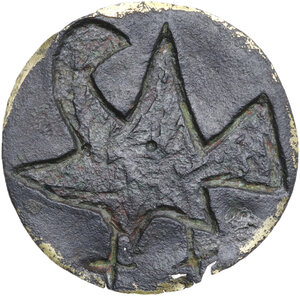
1181 - BRONZE EMBOSSED PLAQUE Migration period (?) Partially gilded bronze plaque with ornithomorphic stylization. Diameter: 35 mm. AE. Intriguing item.
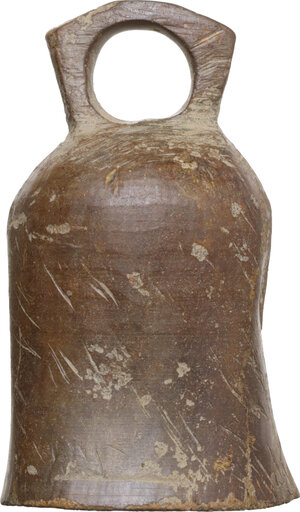
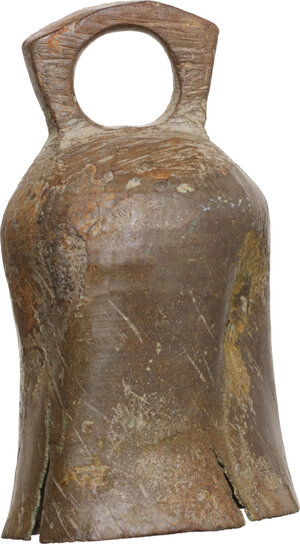
1182 - BYZANTINE (?) BRONZE BELL Byzantine, c. 9th - 11th century AD. Big bronze byzantine bell, with suspension ring. Dimensions: 68 x 38 mm. Weight: 45.38 g. Unusually big bell. Missing clapper, damages.
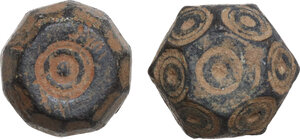
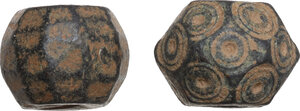
1183 - EARLY ISLAMIC 'DICE' WEIGHTS Early islamic period, c. 8th-12th century AD. Lot of two (2) islamic weights in the shape of dices with numerous faces. Diameter: 15 mm. Weights: 14.60 and 14.55 g. Interesting items, with dark patina and sandy deposits.
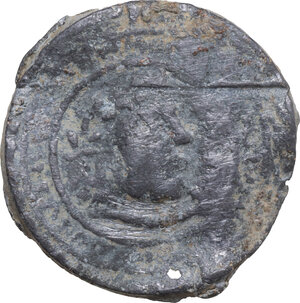
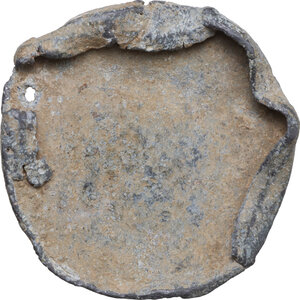
1184 - LEAD THERIAC CAPSULE SEAL. Alla Testa d'Oro Pharmacy, Venice, 17th century. D/ Laureate and draped bust right. PB. 15.74 g. 34 mm. Theriac, described by Klein as a 'wonder drug', was an all purpose medicinal product originating as far back as the Hellenistic period. The centre for sale of this product was Venice, from where it was exported all over the world. Its composition, made up of opium, spices and snake flesh, amongst other ingredients, was a closely guarded secret, making it all the more desirable. The capsule seals were made exclusively of lead or lead alloy and stamped with the symbol of the pharmacy as a guarantee of the authentic nature of the product. This did not prevent counterfeit products purporting to be from the well established pharmacies in Venice, many of which have been found in the Balkans.
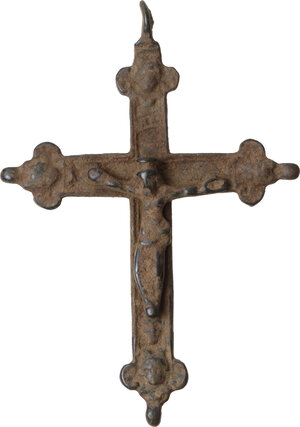
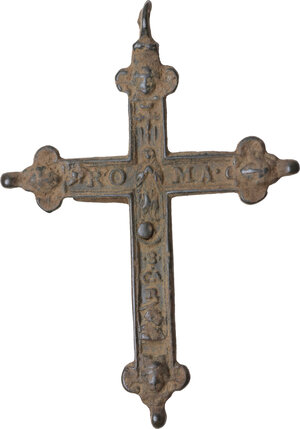
1185 - BRONZE CRUCIFIX Italy, c. 1700 AD. Bronze crucifix composed of two parts; the cross and the Christ. On the upper front part the letters INRI, behind RO-MA and S/CA/R. On both sides, at the end of each arm, a saint's head. Dimensions: 52.5 x 37 mm. 4.93 g. Intact and complete. Earthy deposits.
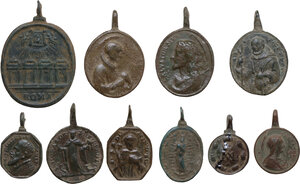
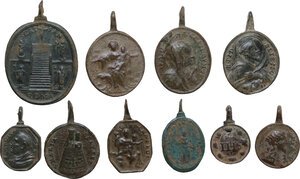
1186 - TEN VOTIVE MEDALS Post-Renaissance, c. 17th -18th century AD. Lot of ten (10) bronze votive medals. Various dimensions and shapes.
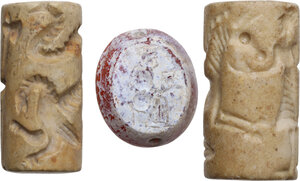
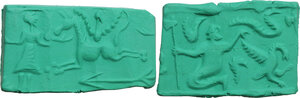
1187 - TWO CYLINDER SEALS AND A CABOCHON. Modern revivals. Lot of two stone cylinder seals both depicting hunting scenes and a carnelian cabochon depicting a seated woman with a chalice. Heights: 36, 35 and 24 mm. Width: 19, 16.5 and 21 mm. Of nice style.
Caricamento altri risultati...