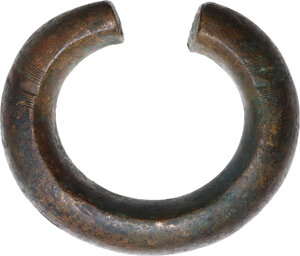
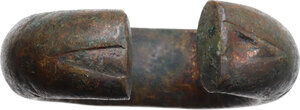
1186 - Africa. AE Proto-money bracelet, XIX-XX century. Dimensions: 87.5 x 73.5 mm. Cf. Fisher 1987, pp. 278-279. AE. 488 g. Heavy specimen.
Info & contatti
Le mie offerte
Lotti osservati
Conferimento
Condizioni di vendita
Prezzi di spedizione
Metodi di pagamento
Tabella rilanci
Esito stampabile
Sessione Live 11/1/2025 15:00:00 CET
Greek Coins (1-181)
Ancient and Medieval Asia (182-187)
The Roman Republic (188-400)
The Roman Empire (401-613)
Sessione Live 12/1/2025 15:00:00 CET
Barbaric and Migration Period Coinage (614-629)
The Byzantine Empire (630-660)
Leads from the Ancient World (662-767)
Large Lots (768-777)
Islam (778-779)
Monete e Medaglie di Zecche Italiane (780-978)
Casa Savoia - Regno di Sardegna - Regno di Italia (979-1000)
Medaglie Papali (1001-1112)
Medaglie e Placchette (1113-1174)
Medaglie e decorazioni (1175-1185)
World Coins (1186-1263)
Modern & Contemporary (1264-1287)
Lotti (1288-1294)

Risultati: 61
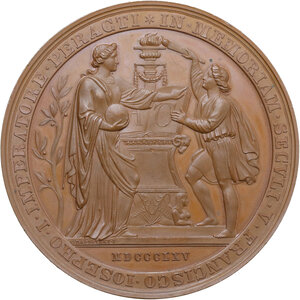
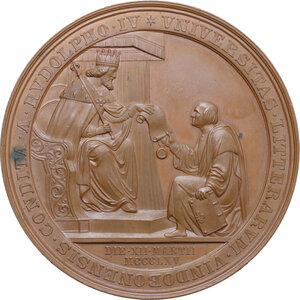
1187 - Austria. Franz Joseph (1848-1916). Medal 1865 commemorating the 500th anniversary of the founding of the University in Vienna. Hauser 1633; Wurzbach 9836. AE. 167.7 g. 79 mm. Opus: C.Radnitzky. EF.
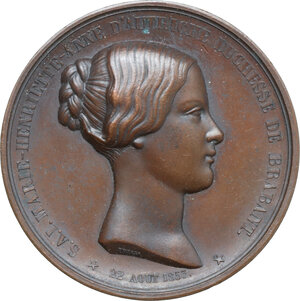
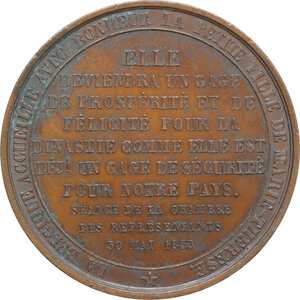
1188 - Belgium. Leopold I (1831-1865). Commemorative medal 1853 for the Marriage of Marie-Henriette de Habsbourg-Lorraine. Obv. S. A. I. MARIE-HENRIETTE-ANNE D’AUTRICHE DUCHESSE DE BRABANT // 22 AOÛT 1853. Head of Marie Henriette right; on the neck, DUBOIS. Rev. LA BELGIQUE ACCUEILLE AVEC JOIE LA PETITE FILLE DE MARIE-THÉRÈSE. // ELLE / DEVIENDRA UN GAGE / DE PROSPÉRITÉ ET DE / FÉLICITÉ POUR LA / DYNASTIE COMME ELLE EST / DÉJÀ UN GAGE DE SÉCURITÉ / POUR NOTRE PAYS. / SÉANCE DE LA CHAMBRE / DES REPRÉSENTANTS / 30 MAI 1835. AE. 59.8 g. 50.5 mm. Opus: Joseph Eugène Dubois. With its box. About FDC.
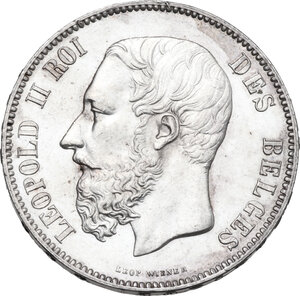
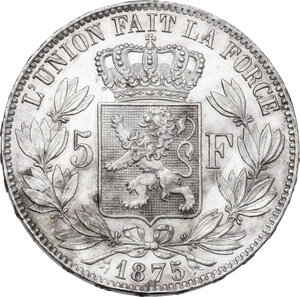
1189 - Belgium. Leopold II (1835-1909). 5 Francs 1875, Brussels mint. KM 24. AR. 25.08 g. 37.5 mm. Minor marks, otherwise. FDC.
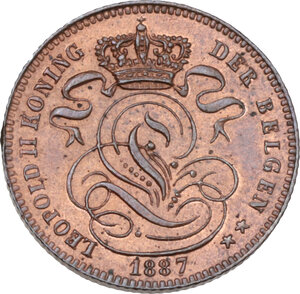
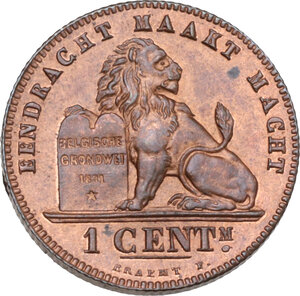
1190 - Belgium. Leopold II (1835-1909). Cent 1887, Brussels mint. KM 34.1. CU. 2 g. 16.5 mm. Red copper. FDC.
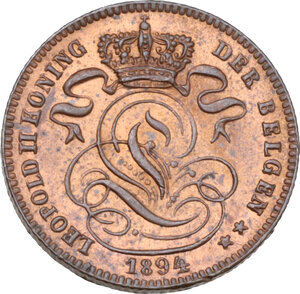
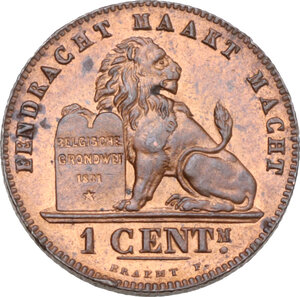
1191 - Belgium. Leopold II (1835-1909). Cent 1894, Brussels mint. KM 34. CU. 2 g. 16.5 mm. Red copper. FDC.
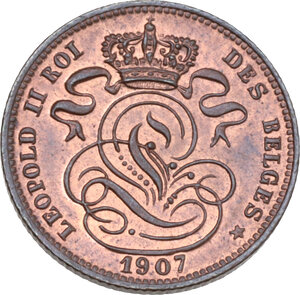
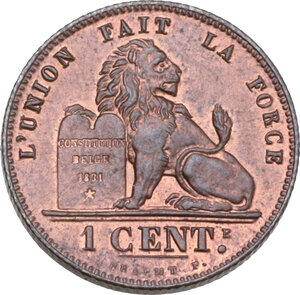
1192 - Belgium. Leopold II (1835-1909). Cent 1907, Brussels mint. KM 33. CU. 2 g. 16.5 mm. Red copper. FDC.
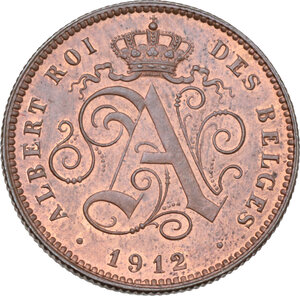
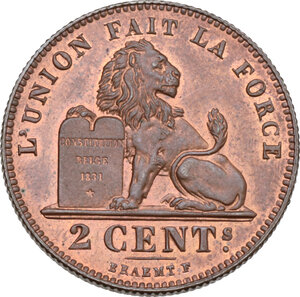
1193 - Belgium. Albert I (1909-1934). 2 Centimes 1912. KM 64. CU. 4.07 g. 22 mm. Red copper. Rare as such. FDC.
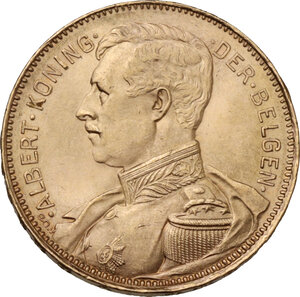
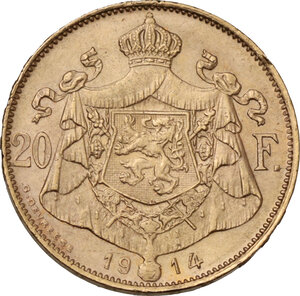
1194 - Belgium. Albert I (1909-1934). 20 Francs 1914. KM 78; Fried. 421. AV. 6.45 g. 21 mm. Minor nick on edge. About FDC.
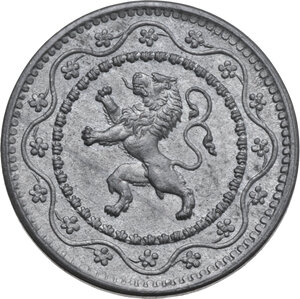
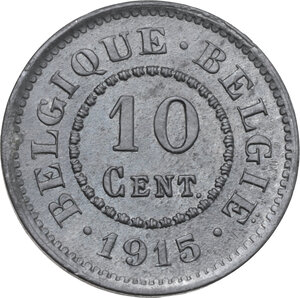
1195 - Belgium. Emergency Coinage. German occupation during the World War I. 10 Cent 1915. KM 82. ZN. 3.98 g. 22 mm. In high grade of conservation. Rare as such. FDC.
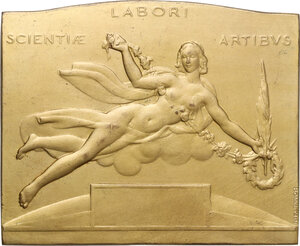
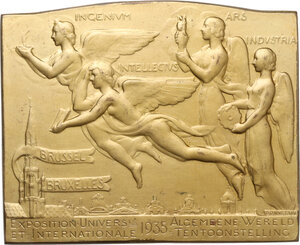
1196 - Belgium. Leopold III (1934-1951). Exposition Universelle Commemorative gilded Plaquette, 1935. Obv. INGENIVM / INTELLECTVS / ARS / INDVSTRIA // BRUSSEL / BRUXELLES // EXPOSITION. UNIVERS.le / ET. INTERNATIONALE // 1935 // ALGEMEENE. WERELD / TENTOONSTELLING. From left, Ingenium holds a flaming cup, Intellectus holds a book, Ars holds a statuette, Industria holds a cog. Rev. SCIENTIAE - LABORI - ARTIBVS. Allegorical female figure flying from left to right on a cloud, holds a garland of flowers, a laurel wreath and a palm leaf above a rectangular and convex shape. Gilded AE. 184.6 g. 79.5 mm. Opus: Armand Bonnetain. About EF.
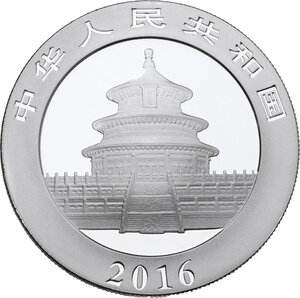
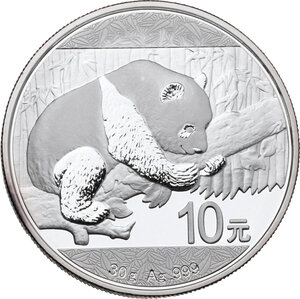
1197 - China. People's Republic. 10 Yuan 2016. KM 2269. AR. 30 g. 40 mm. PROOF.
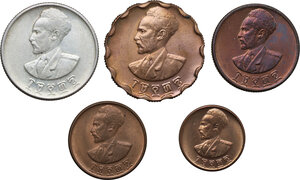
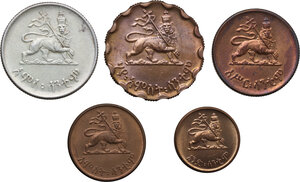
1198 - Ethiopia. Haile Selassie (1930-1974). Lot of five (5) denominations. All in very high grade of preservation.
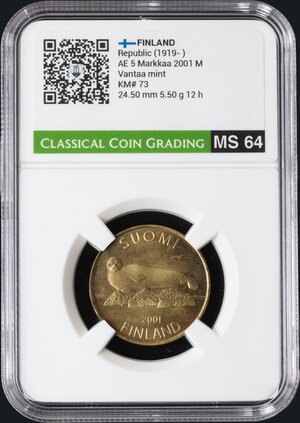
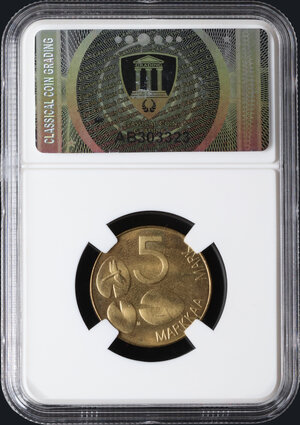
1199 - Finland. Republic (1919-). 5 Markkaa 2001 M, Vantaa mint. KM 73. Cupro-Nikel. 5.5 g. 24.5 mm. Encapsulated by Classical Coin Grading MS 64.
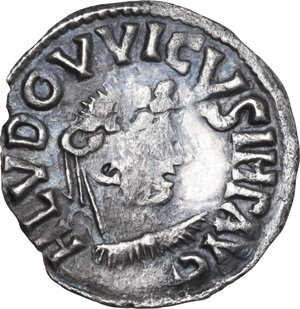
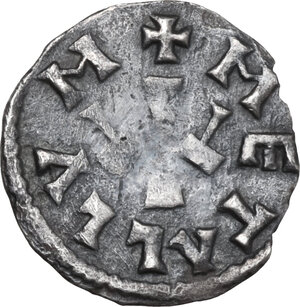
1200 - France. Louis 'le Pieux' (the Pious). As Emperor Louis I (814-840). Denier, class 1, Metallum (Melle) mint. Struck 814-819. MEC 1, 758; Depeyrot 607. AR. 1.33 g. 18 mm. Very rare. Chipped edge. Cabinet tone. Good VF.
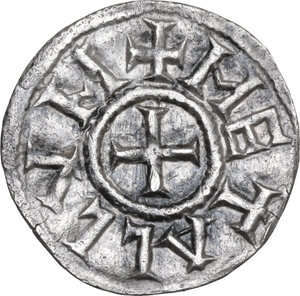
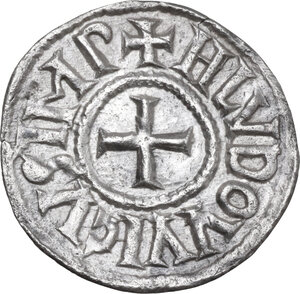
1201 - France. Louis 'le Pieux' (the Pious). As Emperor Louis I (814-840). Denier, class 2, Metallum (Melle) mint. Struck c. 819. MEC 1, 762; Depeyrot 61. AR. 1.54 g. 19.5 mm. EF.
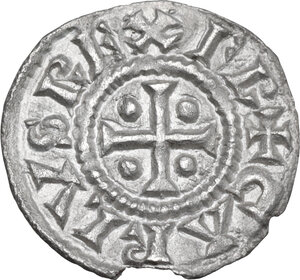
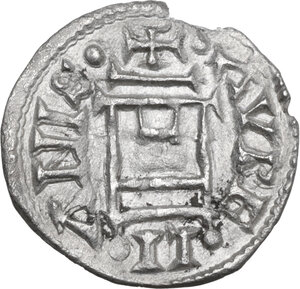
1202 - France. Charles le Chauve (the Bald) (840-877) as Charles II, King of West Francia. Denier, Aurelianis (Orleans) mint. Class 1, Struck 840-864. MEC 1, 835; Depeyrot 725. AR. 1.34 g. 19 mm. R. Rare. About EF/EF.
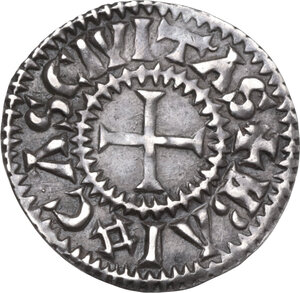
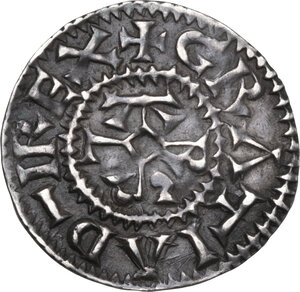
1203 - France. Charles le Chauve (the Bald) (840-877) as Charles II, King of West Francia. Denier, Bayeux mint. Struck 864-877 and later. MEC 1, 854; Depeyrot 127. AR. 1.65 g. 20.5 mm. R. About EF.
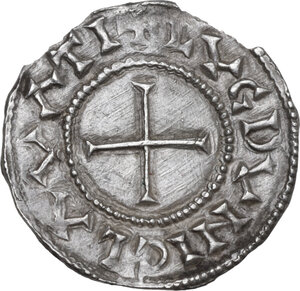
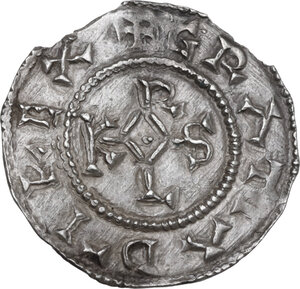
1204 - France. Charles le Chauve (the Bald) (840-877) as Charles II, King of West Francia. Denier, Lugduni Clavati (Laon) mint. Struck 864-877 and later. MEC 1, 869; Depeyrot 482. AR. 1.69 g. 21 mm. R. Cabinet tone. Chipped edge, otherwise. good EF.
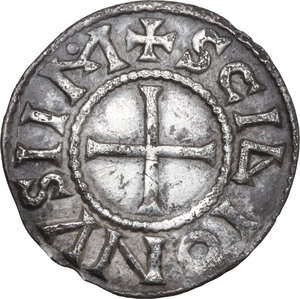
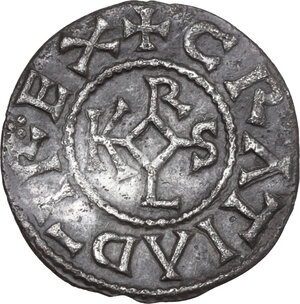
1205 - France. Charles le Chauve (the Bald) (840-877) as Charles II, King of West Francia. Denier Class 2. St Denis mint. Struck 864-877 and later. MEC 1, 897; Depeyrot 896. AR. 1.59 g. 20 mm. Toned. About EF.
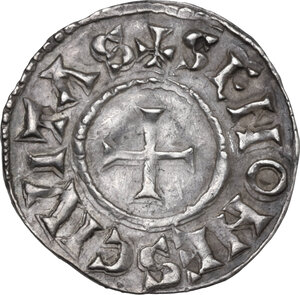
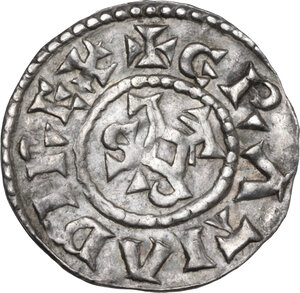
1206 - France. Charles le Chauve (the Bald) (840-877) as Charles II, King of West Francia. Denier, Senones (Sens) mint. Struck 864-877 and later. MEC 1, 900; Depeyrot 929. AR. 1.71 g. 21 mm. R. Light golden tone. EF.
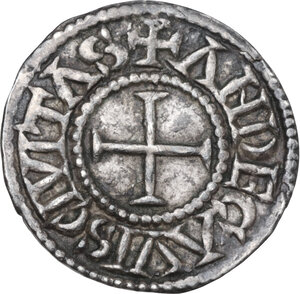
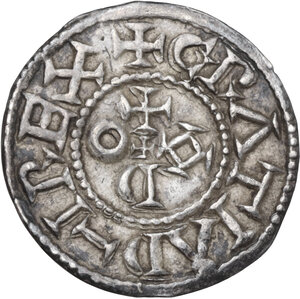
1207 - France. Odo (Eudes). King of West Franks (888-897). Denier, Andecavi (Angers) mint. MEC 1, 970; Depeyrot 44. AR. 1.64 g. 20 mm. EF.
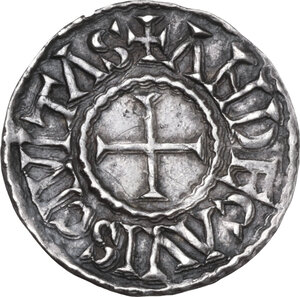
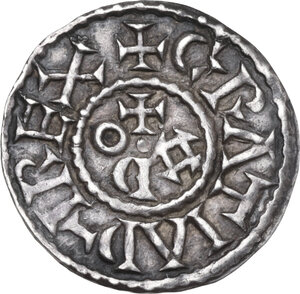
1208 - France. Odo (Eudes). King of West Franks (888-897). Denier, Andecavi (Angers) mint. MEC 1, 970; Depeyrot 44. AR. 1.56 g. 20 mm. Perfectly centred and well impressed. Cabinet tone. Good EF.
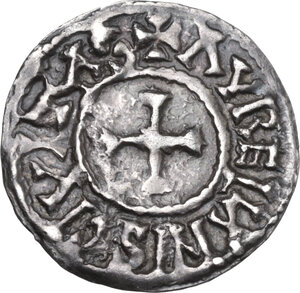
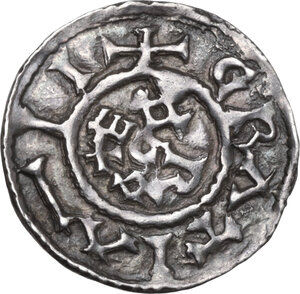
1209 - France. Odo (Eudes). King of West Franks (888-897). Denier, Orleans mint. MEC 1, 978; Depeyrot 730. AR. 1.78 g. 20 mm. About EF.
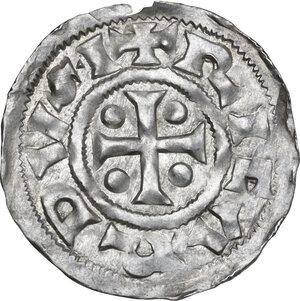
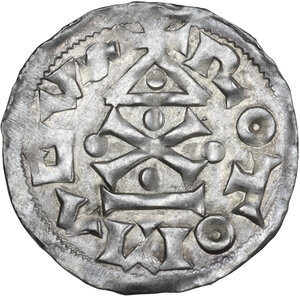
1210 - France. Richard I Sans Peur (the Fearless) (943-996). Denier, Rouen mint, Normandy, church-type. Duplessy 17; LeGros 203. AR. 1.31 g. 20 mm. Brilliant and superb. Clearly readable legends. EF.
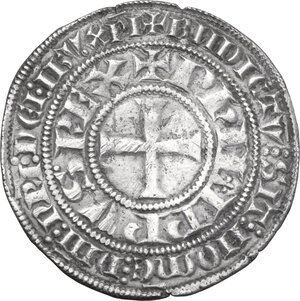
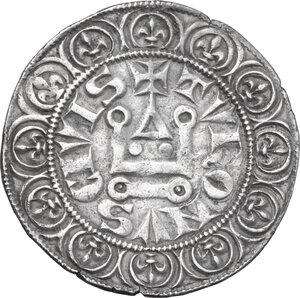
1211 - France. Philip IV (1268-1314), 'the Fair'. Gros tournois a l'O longue. Struck 1290-1295. Cf. Duplessy 214. AR. 4.02 g. 26 mm. VF.
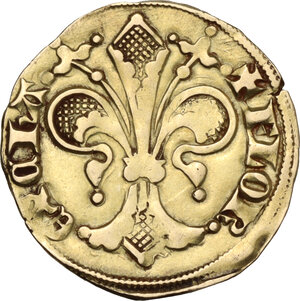
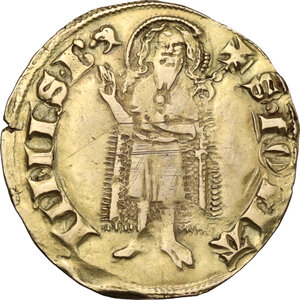
1212 - France. Charles the Bad (1349-1387). Florin d'or, Navarre, Evreux (?). Florentine type. P.A., -; Chalon, Suppl., p. XXIII; Gamb., 650 (Florent of Hainaut); Fr., 37a (Italy); Grierson, RN (1962), p. 187–192. AV. 3.36 g. 22 mm. RR. Very rare and intriguing. VF. This gold florin of the Florentine type has been the subject of numerous attributions. The legend FLOR-EX CHA was clearly designed to imitate the prototype FLOR-ENTIA. Renier Chalon proposed reading it as FLORenus EX Comite Hanonia, attributing it to William II, Count of Hainaut (1337–1345). However, Camille Picqué rejected this theory, arguing that 'the style of the coin is neither Flemish, Brabançon, nor Hainuyer.' Chalon also suggested attributing the coin to the diocese of Cambrai, interpreting the legend as FLORenus EX CHAmeraco, but the coin’s appearance is very different from Cambrai’s florins. Furthermore, Charles Robert excluded it from his monograph on Cambrai numismatics. Morel-Fatio later proposed a new reading, noting that several specimens came from northern Italy, interpreting the legend as FLORenus EX CHAreto (or CHArretis), referring to the Marquessate of Carretto in Piedmont. In this case, it would be one of the many imitations produced at the Cortemilia mint. This attribution was accepted by Dannenberg, Gavazzi, Engel, and Serrure but rejected by the authors of the Corpus Nummorum Italicorum (CNI). A fourth theory came from Frédéric Alvin, who reattributed the coin to the House of Hainaut, not to the county but to Florent of Hainaut, Prince of Achaea (1289–1297). His opinion was followed by Gamberini di Scarfea in his catalog of imitations. Finally, Philipp Grierson, in his essay An unrecognized florin of Charles the Bad (RN, 1962, pp. 187–192), attributed the coin to Charles the Bad, Count of Évreux and King of Navarre. He read the legend simply as FLOrens R-EX CHArolus ('florin of King Charles'). Charles the Bad is well known for issuing numerous low-quality imitations, exploiting his royal title to mimic the monetary types of the King of France.
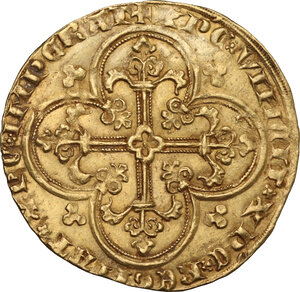
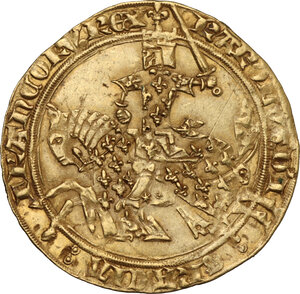
1213 - France. Charles V (1364-1380). Franc a cheval. Duplessy 358; Fried. 285. AV. 3.89 g. 28 mm. Faint scratch or graffito on reverse. About EF.
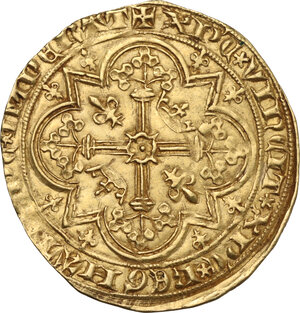
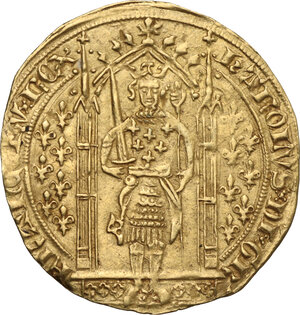
1214 - France. Charles V (1364-1380). Franc a pied. Authorized 20 April 1365. Cf. Duplessy 360. AV. 3.8 g. 29.5 mm. Good VF/About EF.
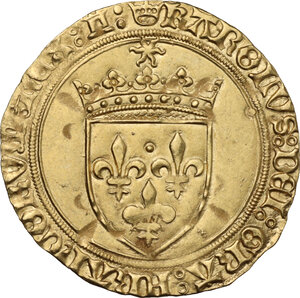
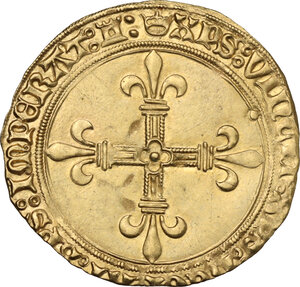
1215 - France. Charles VIII (1483-1498). Ecu d'or au soleil, Tours mint. Duplessy 575; Fried. 318. AV. 3.42 g. 26 mm. Irregular flan, otherwise. good EF.
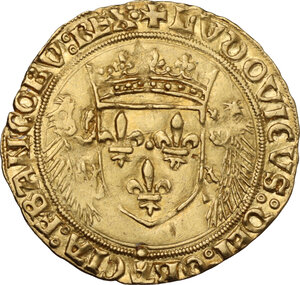
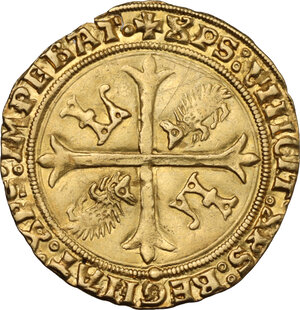
1216 - France. Louis XIII (1498-1514). Ecu d'or au porc-epic, Rouen mint. Duplessy 655. AV. 3.48 g. 26 mm. Faint scratches or graffito on reverse. About EF.
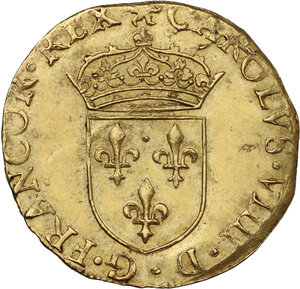
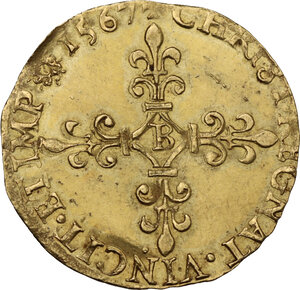
1217 - France. Charles IX (1560-1574). Ecu d'or au soleil 1567 B, Rouen mint. Duplessy 1057; Fried. 378. AV. 3.4 g. 23.5 mm. R. About EF.
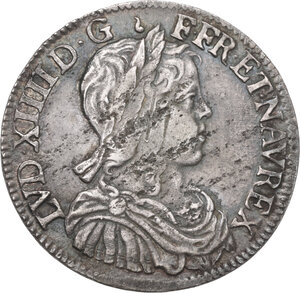
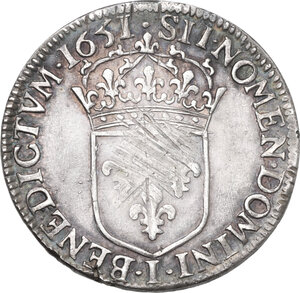
1218 - France. Louis XIV (1643-1715). 1/2 Ecu a la meche longue 1651 I, Limoges mint. Gad. 169. AR. 13.66 g. 33 mm. Variety F. FR. Cabinet tone. Adjustment marks on reverse and minor striking roughness. VF.
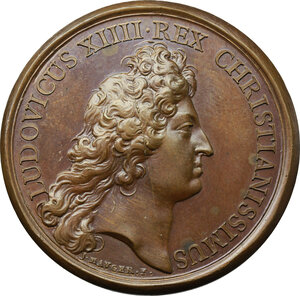
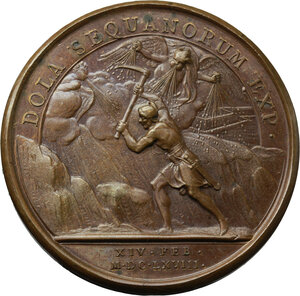
1219 - France. Louis XIV (1643-1715). Medal 1668 for the capture of the city of Dole. Obv. LUDOVICUS XIIII REX CHRISTIANISSIMUS. Bust left; below, J. MAVGER F. Rev. DOLA SEQUANORUM EXP. A French soldier digs a trench despite the wind and snow; in exergue: XIV FEB/ MDCLXVIII. Divo 105. AE. 26 g. 41 mm. Opus: J. Mauger. EF.
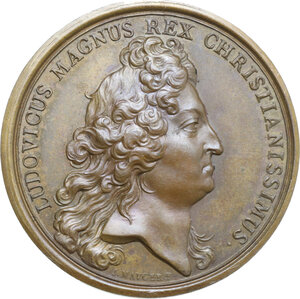
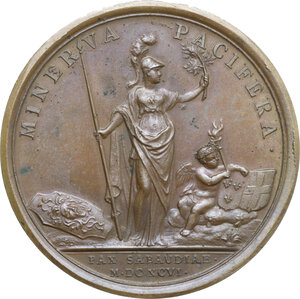
1220 - France. Louis XIV (1643-1715). Medal 1696 commemorating the end of the conflict between France and Savoy. Obv. LUDOVICUS MAGNUS REX CHRISTIANISSIMUS. Bust to right. Rev. MINERVA PACIFERA. Minerva, standing to the right, holds a spear and an olive branch; to her left, a crowned putto holds a torch and the coats of arms of France and Savoy; in exergue, PAX SABAUDIAE/ MDCXCVI. Divo 265. AE. 30.45 g. 41 mm. Opus: J.Mauger. SPL+. Led by Louis XIV in 1696, this reconciliation was sealed by a new dynastic union: that of the Duke of Burgundy and Marie-Adélaïde of Savoy, the parents of the future Louis XV.
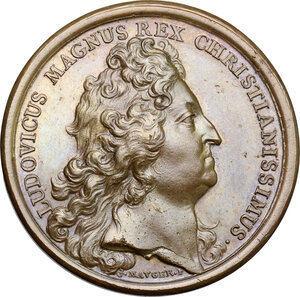
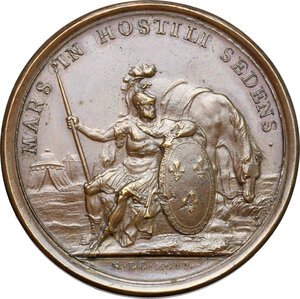
1221 - France. Louis XIV (1643-1715). Medal 1696. Obv. LUDOVICUS MAGNUS REX CHRISTIANISSIMUS. Bust to right. Rev. MARS IN HOSTILI SEDENS. Mars, seated to the right in military attire, holds a spear and shield; behind him, a horse; in exergue, MDCXCVI. Divo 264. AE. 31.34 g. 41.5 mm. Opus: J.Mauger. SPL.
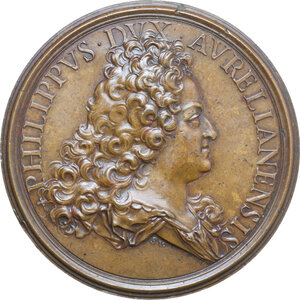
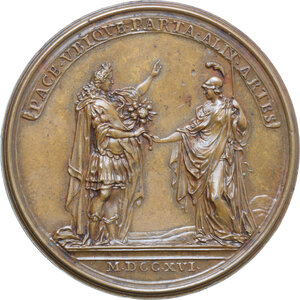
1222 - France. Philip I of Bourbon-Orleans (1640-1701). Medal 1716. Obv. PHILIPPVS DVX AVRELIANENSIS. Bust to right. Rev. PACE VBIQVE PARTA ALIT ARTES. The standing emperor offers a cornucopia to Athena; in the exergue: MDCCXVI. Forrer 58. AE. 43.31 g. 44 mm. Opus: J. C. Roettiers. SPL.
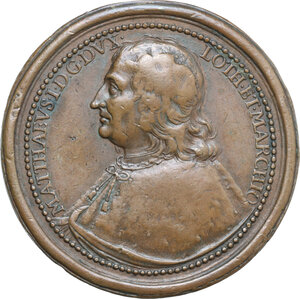
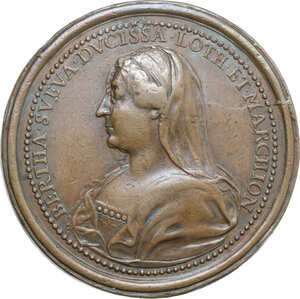
1223 - France. Matthew I of Lorraine, le Debonnaire (1119-1176) and Bertha of Swabia. Medal c. 1720, Nancy. Obv. MATTHAEVS I D G DVX LOTH ET MARCHIO. Bust of Matthew I Duke of Lorraine left. Rev. BERTHA SVEVA DVCISSA LOTH ET MARCHION Draped bust of Bertha of Hohenstaufen left. Forrer V, 26. AE. 53.1 g. 47.5 mm. Opus: Ferdinand de Saint Urbain. Matthew I of Lorraine, known as the Débonnaire, was Duke of Lorraine from 1139 to 1176. He married around 1138 Judith de Hohenstaufen (1123-1195), also called Bertha. This medal belongs to a series minted by Ferdinand de Saint-Urbain in Nancy, representing the Dukes and Duchesses of Lorraine.
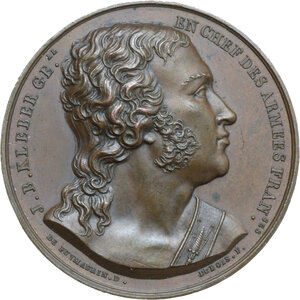
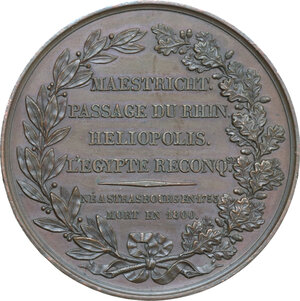
1224 - France. Jean Baptiste Kleber, General (1753-1800). Medal 1800 for the death. Bram. 54. AE. 40.03 g. 41 mm. Opus: Caqué. SPL. Jean-Baptiste Kléber was a distinguished French general during the Revolutionary Wars, known for his strategic brilliance and leadership. Celebrated for his role in the Egyptian campaign under Napoleon Bonaparte, he skillfully led troops and managed complex military challenges. His assassination in Cairo in 1800 cut short a promising career. Kléber's legacy is marked by his tactical acumen and contributions to France's military history.
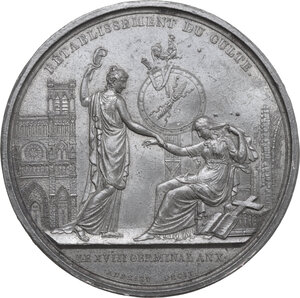
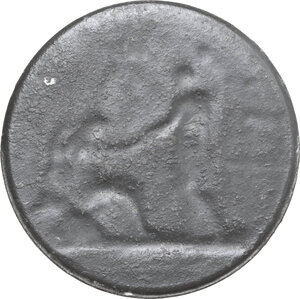
1225 - France. Napoleon (1799-1814). 'Restoration of Worship' plaquette from the 1802 Napoleon medal. Pewter. 17.08 g. 51 mm. Opus: Andrieu. Good VF.
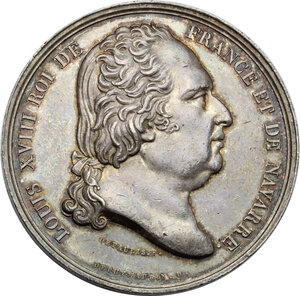
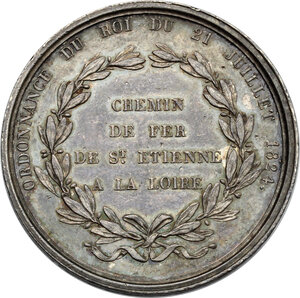
1226 - France. Louis XVIII (1814-1824). Compagnie du chemin de fer de Saint-Étienne à la Loire. Token of presence on the company’s board of directors. AR. 19 g. 35 mm. Opus: Depaulis. R. EF.
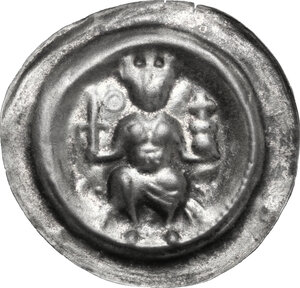
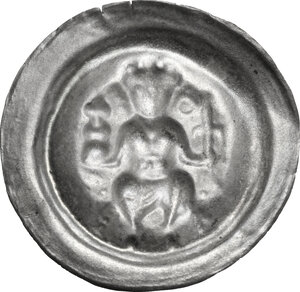
1227 - Germany. Hermann I (1190-1217). Bracteata, Thüringia, Kassel mint. Theime 1122. AR. 0.93 g. 35 mm. Toned. About VF.
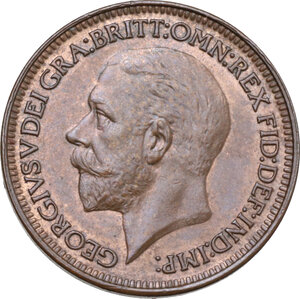
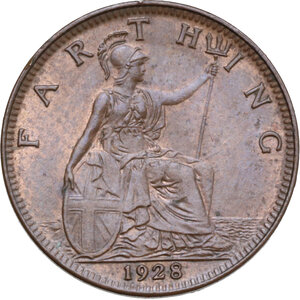
1228 - Great Britain. George V (1910-1936). Farthing 1928. KM 825. CU. 2.94 g. 20 mm. Traces of red copper. About FDC.
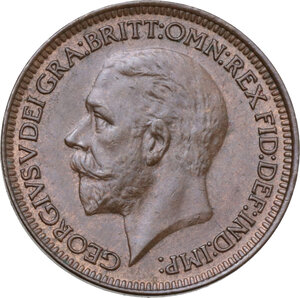
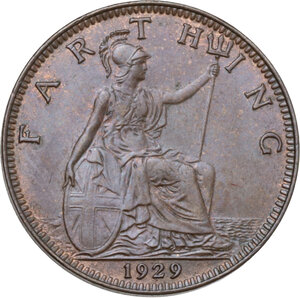
1229 - Great Britain. George V (1910-1936). Farthing 1929. KM 825. CU. 2.8 g. 20 mm. FDC.
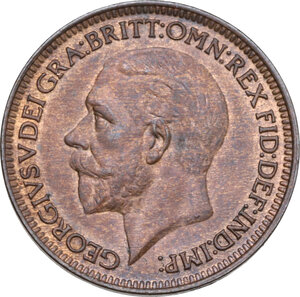
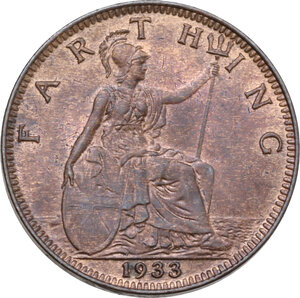
1230 - Great Britain. George V (1910-1936). Farthing 1933. KM 825. CU. 2.81 g. 20 mm. Red copper. FDC.
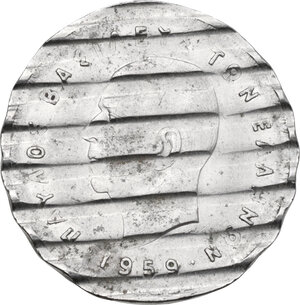
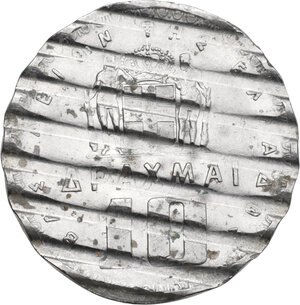
1231 - Greece. Paul I (1947-1964). 10 Drachmai 1959 CANCELLED. KM 84. NI. 9.95 g. 31 mm. Good VF.
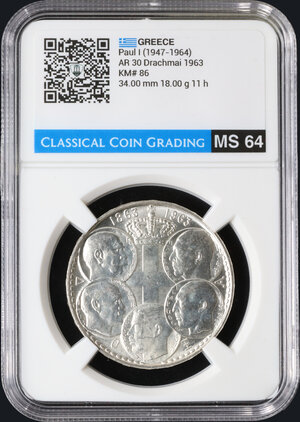
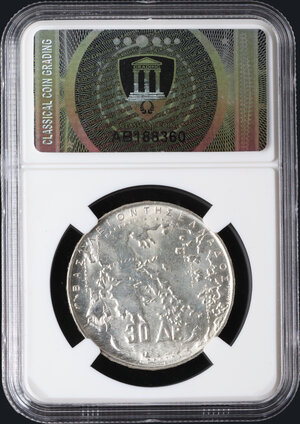
1232 - Greece. Paul I (1947-1964). 30 Drachmai 1963. KM 86. AR. 18 g. 34 mm. Encapsulated by Classical Coin Grading MS 64.
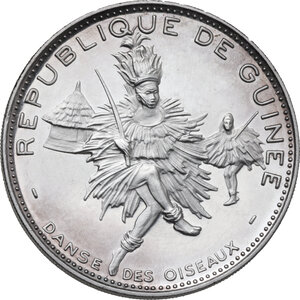
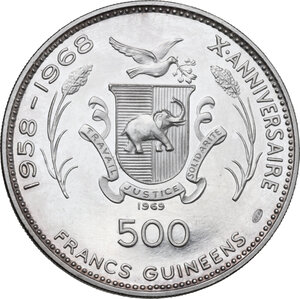
1233 - Guinea. Republic (1958-1979). 500 Francs 1969. KM 16. AR. 29.08 g. 42 mm. Sold with its original case. FDC.
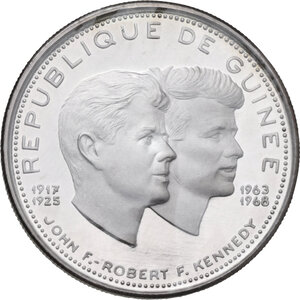
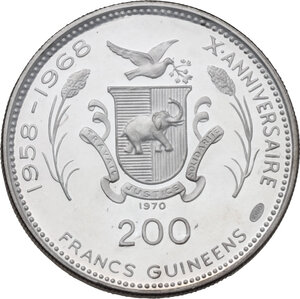
1234 - Guinea. Republic (1958-1979). 200 Francs 1970. KM 10. AR. 11.65 g. 30 mm. Sold with its original case. FDC.
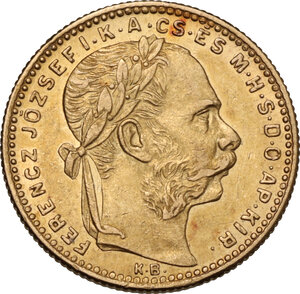
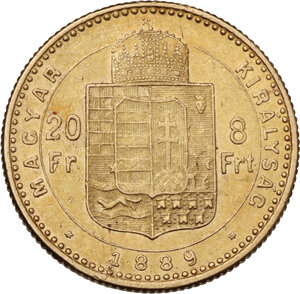
1235 - Hungary. Franz Joseph I (1848-1916). 8 Florint or 20 Francs 1884 KB, Kremnitz mint. KM 467; Fried. 243. AV. 6.42 g. 21 mm. About EF/EF.
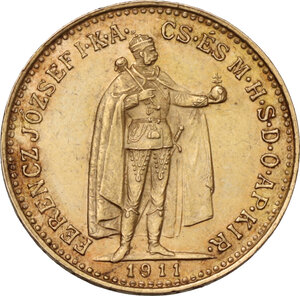
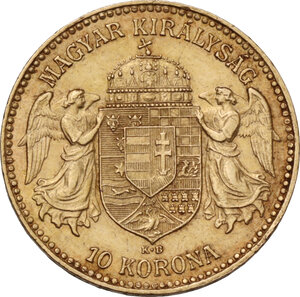
1236 - Hungary. Franz Joseph I (1848-1916). 10 Korona 1911 KB, Kremnitz mint. KM 485; Huszár 2200; Fried. 252. AV. 3.4 g. 19 mm. About EF.
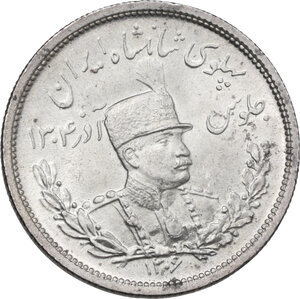
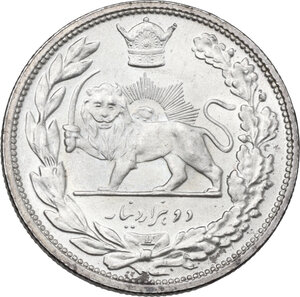
1237 - Iran. Reza Shah (1344-1360/1925-1941). 2000 Dinars 1927 SH 1306 L, Leningrad mint. KM 1104. AR. 9.24 g. 27.5 mm. About FDC.
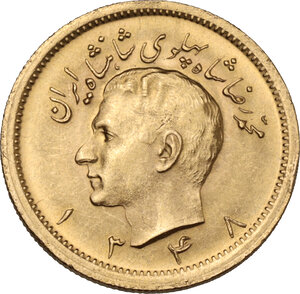
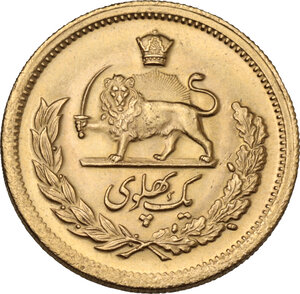
1238 - Iran. Mohammed Reza Pahlavi (1941-1979). Pahlavi 1969 SH 1348. KM 1162; Fried. 101. AV. 8.15 g. 22 mm. Irrelevant nick on edge. FDC.
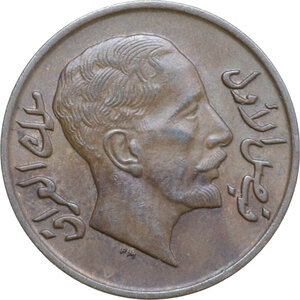
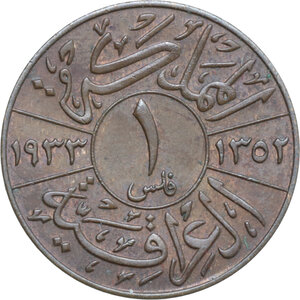
1239 - Iraq. Faisal I (1921-1933). Fil 1933 AH 1352, London mint. KM 95. AE. 2.48 g. 19 mm. About EF/EF.
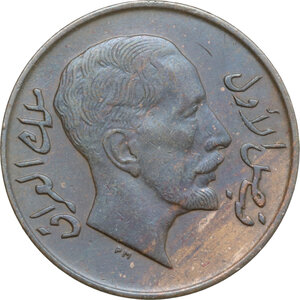
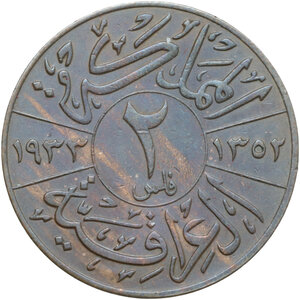
1240 - Iraq. Faisal I (1921-1933). 2 fils 1933 AH 1352, London mint. KM 96. AE. 4.92 g. 24 mm. About EF.
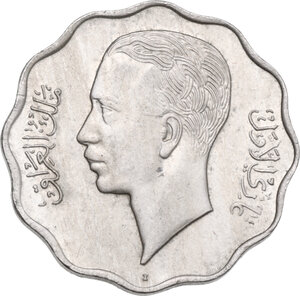
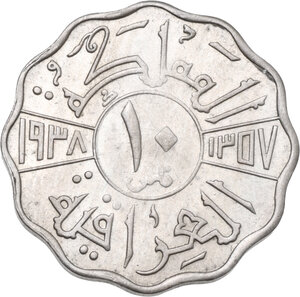
1241 - Iraq. Ghazi I (1933-1939). 10 Fils 1937 AH 1358. KM 103. NI. 6.78 g. 24.5 mm. About EF/EF.
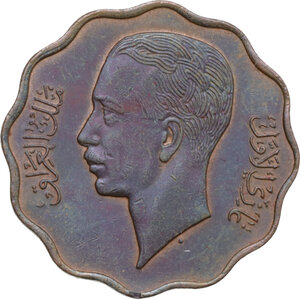
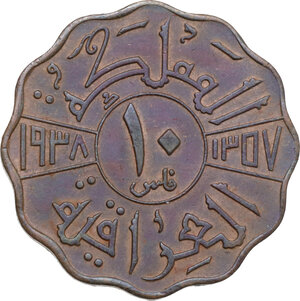
1242 - Iraq. Ghazi I (1933-1939). 10 Fils 1937 AH 1358. KM 103b. AE. 6.69 g. 25 mm. Good VF.
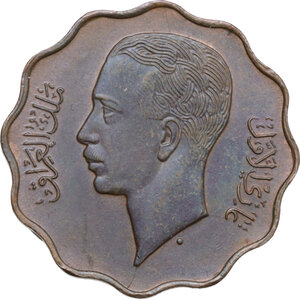
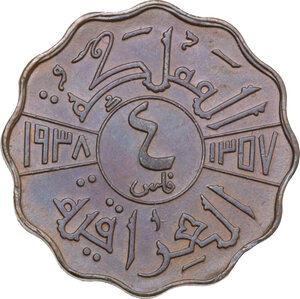
1243 - Iraq. Ghazi I (1933-1939). 4 Fils 1937 AH 1358. KM 105b. AE. 4.06 g. 21 mm. Good EF/About FDC.
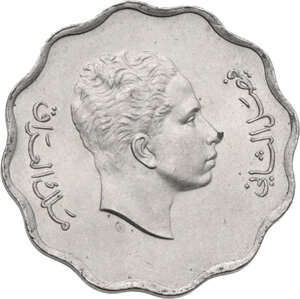
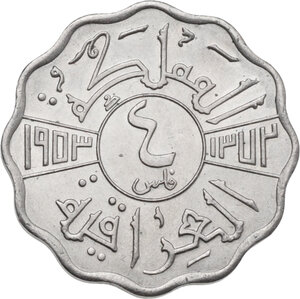
1244 - Iraq. Faisal II (1953-1958). 4 Fils 1953 AH 1372. KM 111. NI. 4.01 g. 21 mm. FDC.
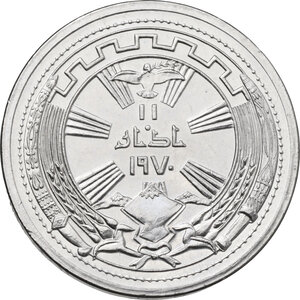
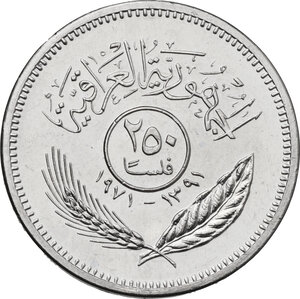
1245 - Iraq. 250 Fils 1970 AH 1390. KM 130. NI. 14.88 g. 33 mm. 1000 pcs minted. Commemorationg the 1st Anniversary of the Peace with Kurds. PROOF.
Caricamento altri risultati...