Info & contatti
Catalogo PDF
Le mie offerte
Lotti osservati
Condizioni di vendita
Prezzi di spedizione
Metodi di pagamento
Esito stampabile
Sessione Live 10/6/2025 14:30:00 CET
Greek (1-152)
Roman Republic (153-188)
The Staffieri Collection of Roman Alexandria (189-357)
Roman Empire (358-411)
Byzantine (412-421)
Greece - World Coins (422-422)
Haiti - World Coins (423-423)
Italy - World Coins (424-430)
Morocco - World Coins (431-431)
Russia - World Coins (432-439)
Medals (440-440)

Egypt, Alexandria. Severus Alexander 222-235. Tetradrachm (Billon, 25.76 mm, 14.22 g). Rome mint (for Alexandria). Dated RY 5 = AD 225/6. Α ΚΑΙ Μ ΑYΡ СЄYHAP ΑΛЄΞΑΝΔPOC ЄYCЄB Laureate and draped bust right. Rev. Serapis wearing kalathos, sitting left on throne, holding sceptre; left at his feet, Cerberus. Dattari-Savio 4361. Geissen 2435-2436. RPC online 10332. Emmett 3135. Nice dark brown patina. About Extremely Fine. Ex Kölner Münzkabinett, Auction 115, 29.10.2021, lot 217. Here is a first remarkable tetradrachm belonging to a peculiar Alexandrian series of the so-called "Roman style", closely related to the current issues of the Latin area of the empire: this suggesting the presence in the Alexandria mint of good engravers coming directly from Rome. In the series are coins minted exclusively in years 4 (224-225 AD), 5 (225-226 AD) and 7 (227-228 AD) of Severus Alexander's reign and are distinguished from ordinary issues by the particular classical idealistic refinement of the images and by the slightly larger size.
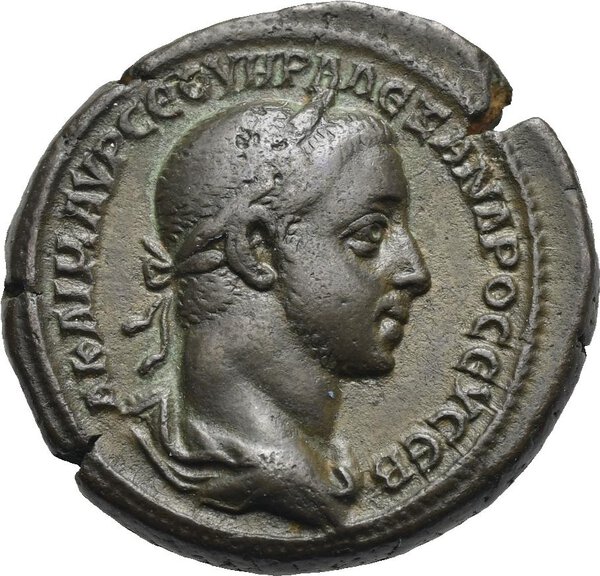
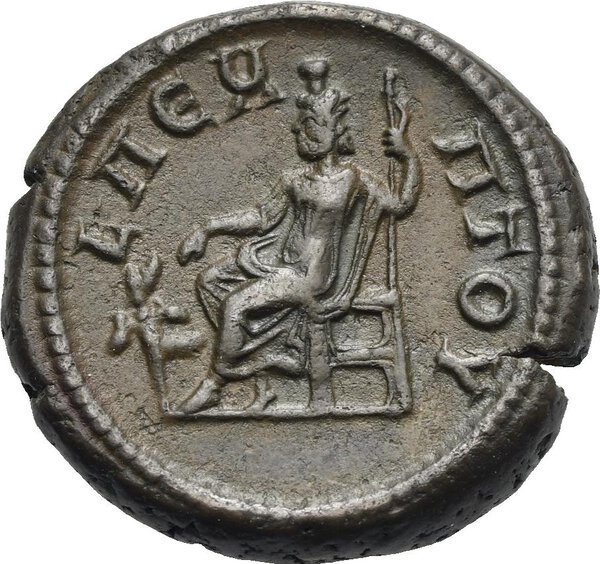
Egypt, Alexandria. Severus Alexander 222-235. Tetradrachm (Billon, 25.76 mm, 14.22 g). Rome mint (for Alexandria). Dated RY 5 = AD 225/6. Α ΚΑΙ Μ ΑYΡ СЄYHAP ΑΛЄΞΑΝΔPOC ЄYCЄB Laureate and draped bust right. Rev. Serapis wearing kalathos, sitting left on throne, holding sceptre; left at his feet, Cerberus. Dattari-Savio 4361. Geissen 2435-2436. RPC online 10332. Emmett 3135. Nice dark brown patina. About Extremely Fine.
Ex Kölner Münzkabinett, Auction 115, 29.10.2021, lot 217.
Here is a first remarkable tetradrachm belonging to a peculiar Alexandrian series of the so-called "Roman style", closely related to the current issues of the Latin area of the empire: this suggesting the presence in the Alexandria mint of good engravers coming directly from Rome. In the series are coins minted exclusively in years 4 (224-225 AD), 5 (225-226 AD) and 7 (227-228 AD) of Severus Alexander's reign and are distinguished from ordinary issues by the particular classical idealistic refinement of the images and by the slightly larger size.