
Sicily. Segesta. Circa 412-400 BC. Didrachm (Silver, 24.41 mm, 8.32 g). Hound standing right on exergue line; above, barley grain; border of dots. Rev. [ΣΕ]ΓΕΣΤΑΖΙΒ (retrograde and partially visible), Head of nymph Aigeste right, hair at the back of the head is rolled into a large roll and held in place with a thin band; all within a shallow circular incuse. Hurter 179c (V54/R99, this coin illustrated to pl. 18, 1). Buceti 10 (same dies). SNG ANS -. SNG Lloyd 1179 (same obverse die). HGC 2, 1147 (same dies). Beautiful old cabinet tone. Good Very Fine. Extremely Rare, only the fourth example known from this die pair. Ex Astarte XI, 12 December 2002, lot 245; Asta Internazionale del Titano/Aes Rude 3, 23 June 1979, lot 30. This coin has the same (or very similar) dies to those found by Jenkins in SNR 50 (1971), Motya pl. 3, Obverse 10 and Panormos pl. 6, Reverse 3 and 4. This piece is part of the group of didrachms minted by the three cities of Segesta, Motya, and Panormos with the same types: a hunting dog on the obverse and a nymph's head on the reverse. The coins of the three cities bear the hand of the same engravers and although used the same types of coins, they all followed their own specific regime. In Segesta, we find the city name ΣEΓΕΣTΑΖΙΒ on the reverse, while on the obverse, above the dog, a small nymph's head or a barley grain.
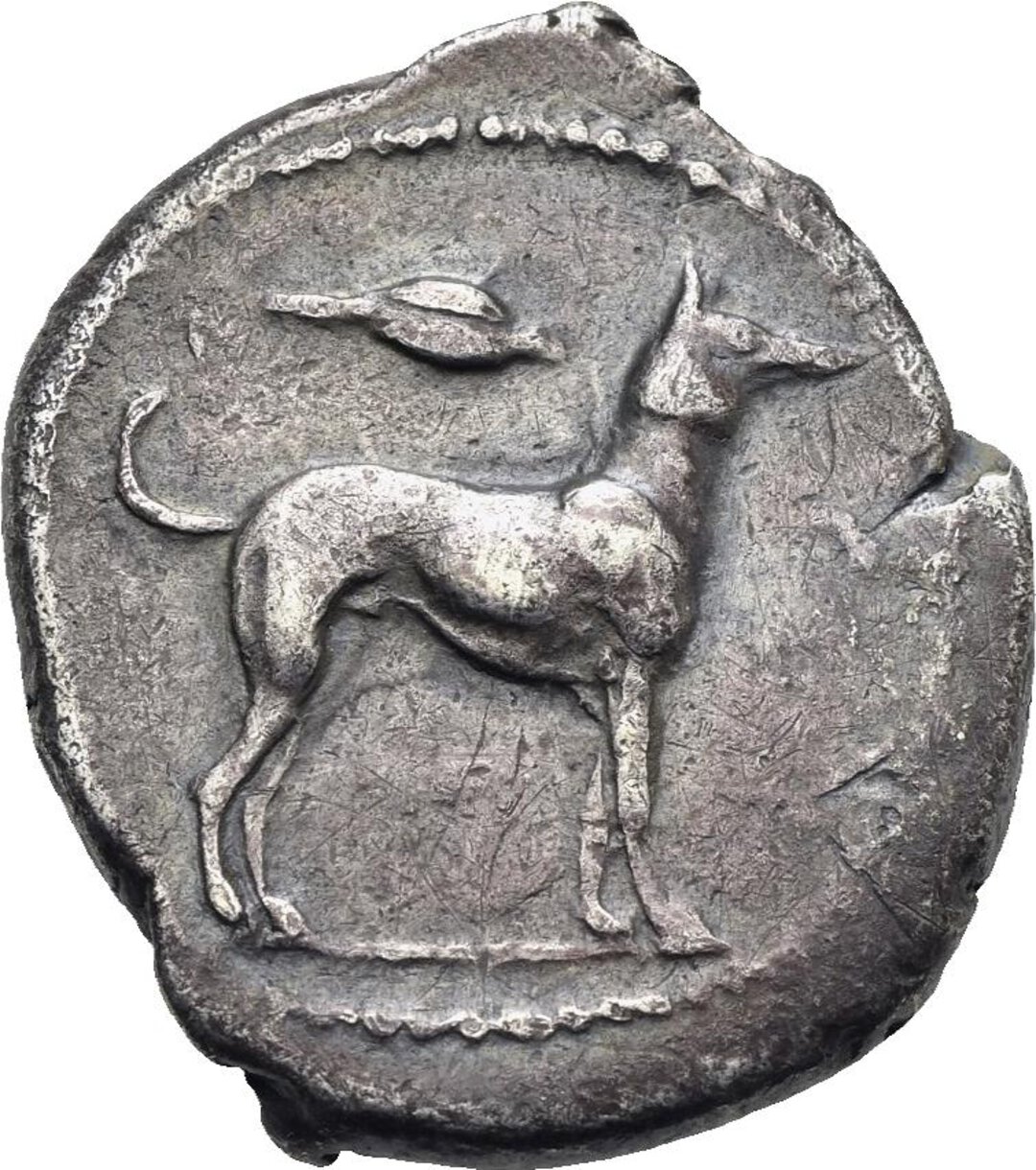
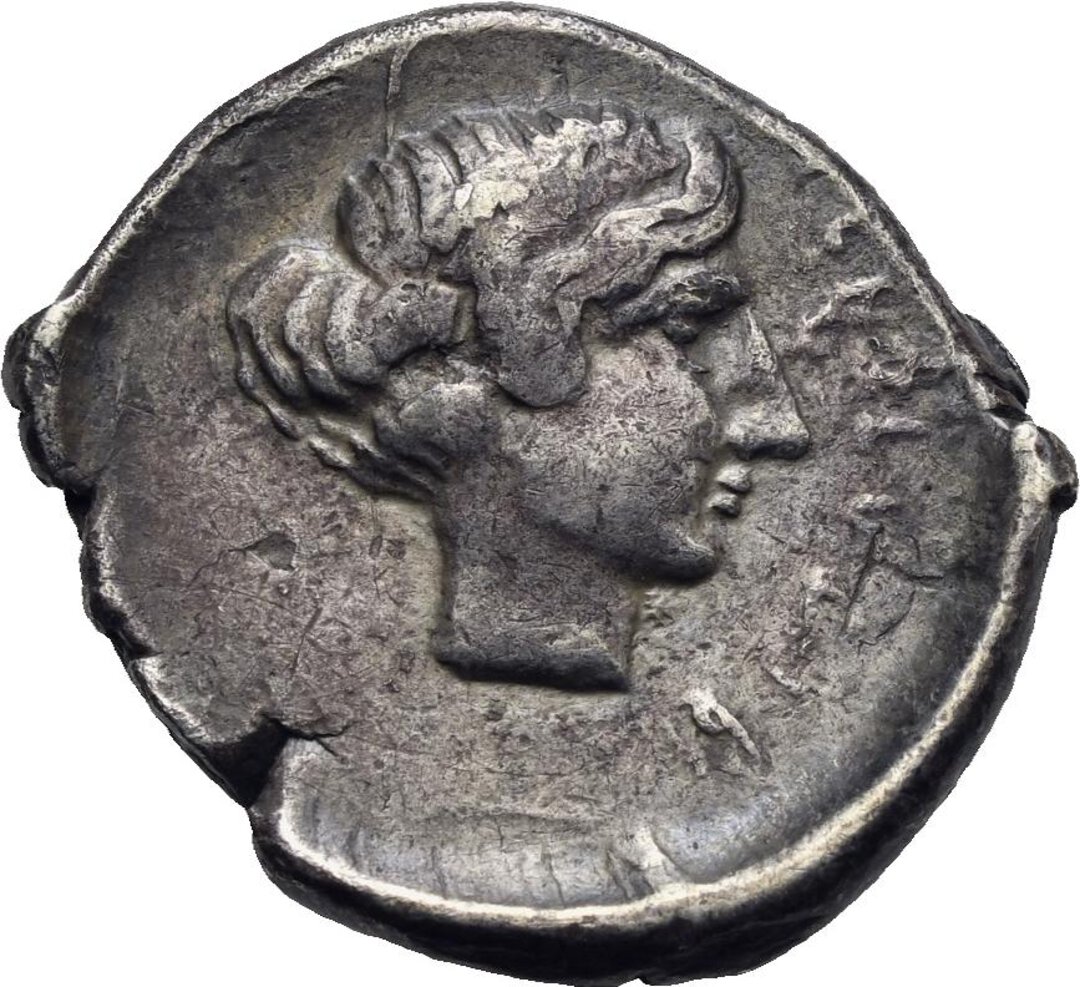
Sicily. Segesta. Circa 412-400 BC. Didrachm (Silver, 24.41 mm, 8.32 g). Hound standing right on exergue line; above, barley grain; border of dots. Rev. [ΣΕ]ΓΕΣΤΑΖΙΒ (retrograde and partially visible), Head of nymph Aigeste right, hair at the back of the head is rolled into a large roll and held in place with a thin band; all within a shallow circular incuse. Hurter 179c (V54/R99, this coin illustrated to pl. 18, 1). Buceti 10 (same dies). SNG ANS -. SNG Lloyd 1179 (same obverse die). HGC 2, 1147 (same obverse die). Beautiful old cabinet tone. Good Very Fine. Extremely Rare, only the fourth example known from this die pair.
Ex Astarte XI, 12 December 2002, lot 245; Asta Internazionale del Titano/Aes Rude 3, 23 June 1979, lot 30.
This coin has the same (or very similar) dies to those found by Jenkins in SNR 50 (1971), Motya pl. 3, Obverse 10 and Panormos pl. 6, Reverse 3 and 4. This piece is part of the group of didrachms minted by the three cities of Segesta, Motya, and Panormos with the same types: a hunting dog on the obverse and a nymph's head on the reverse. The coins of the three cities bear the hand of the same engravers and although used the same types of coins, they all followed their own specific regime. In Segesta, we find the city name ΣEΓΕΣTΑΖΙΒ on the reverse, while on the obverse, above the dog, a small nymph's head or a barley grain.