
Lucania. Metapontion. Stater. Circa 540-510 BC (Silver, 27.59 mm, 7.83 g). META, Seven-grained ear of barley, upon which rests a grasshopper. Rev. Same type in incuse, with on left the outline of a dolphin. HN Italy 1472. Noe, Class V, 104. SNG ANS 1207. Kraay & Hirmer 229 (same dies). Gorini 10. HGC 1, 1027. Lightly toned. Centered and well struck in high relief on a good metal. One might say Almost Fdc. Very Rare and among the finest specimens known.From a Swiss collection, formed before 2005.The ear was Metapontum’s emblem, reflecting the central role of agriculture in the city’s economy, with barley as its principal crop and hallmark. The dolphin, a recurring motif in Greek coastal iconography, symbolized the city’s maritime identity and prosperity. Nestled between the Ionian Sea and two rivers, Metapontum relied on the sea for trade and sustenance; the dolphin thus conveyed protection, good fortune, and safe navigation. In Greek mythology, it was also sacred to Apollo, further underscoring its association with guidance and salvation.
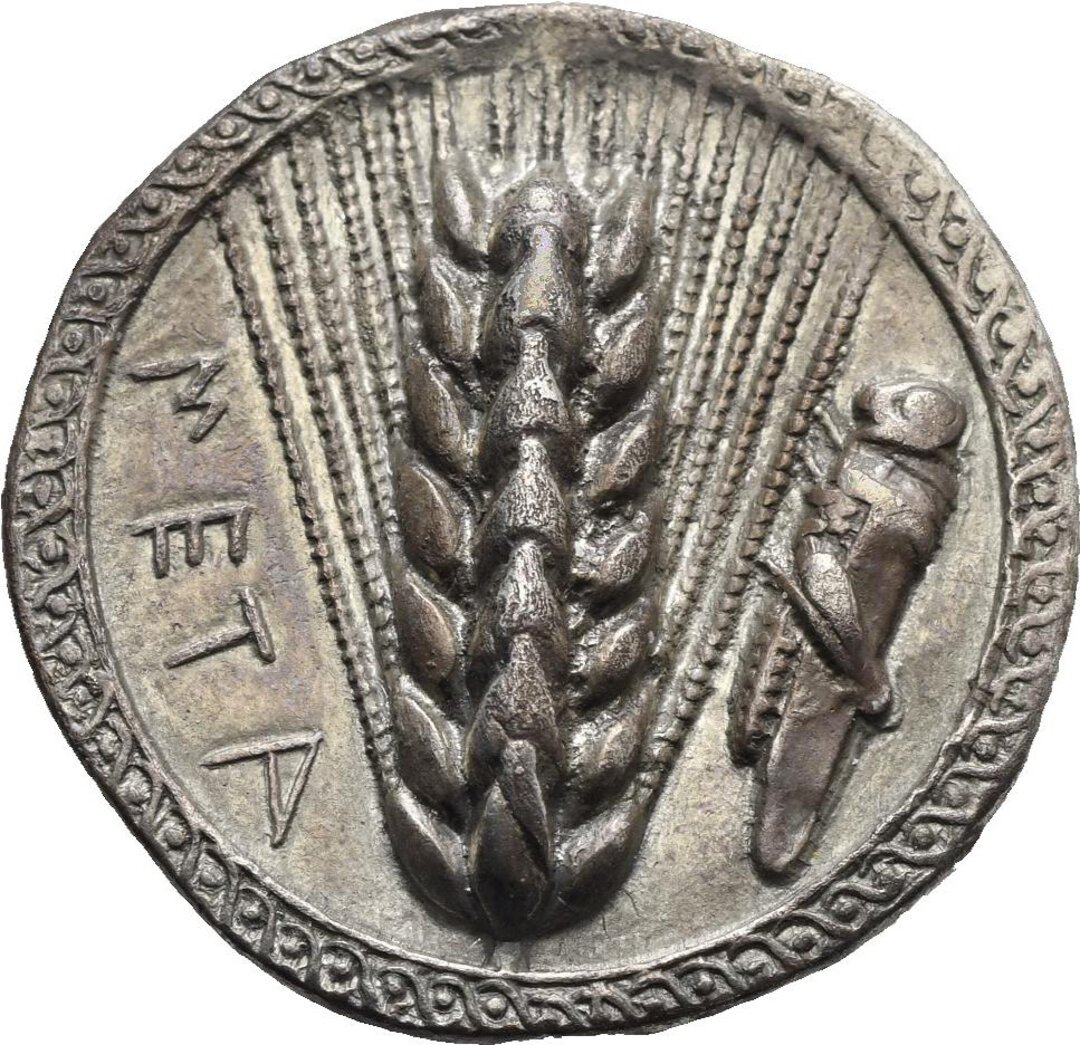
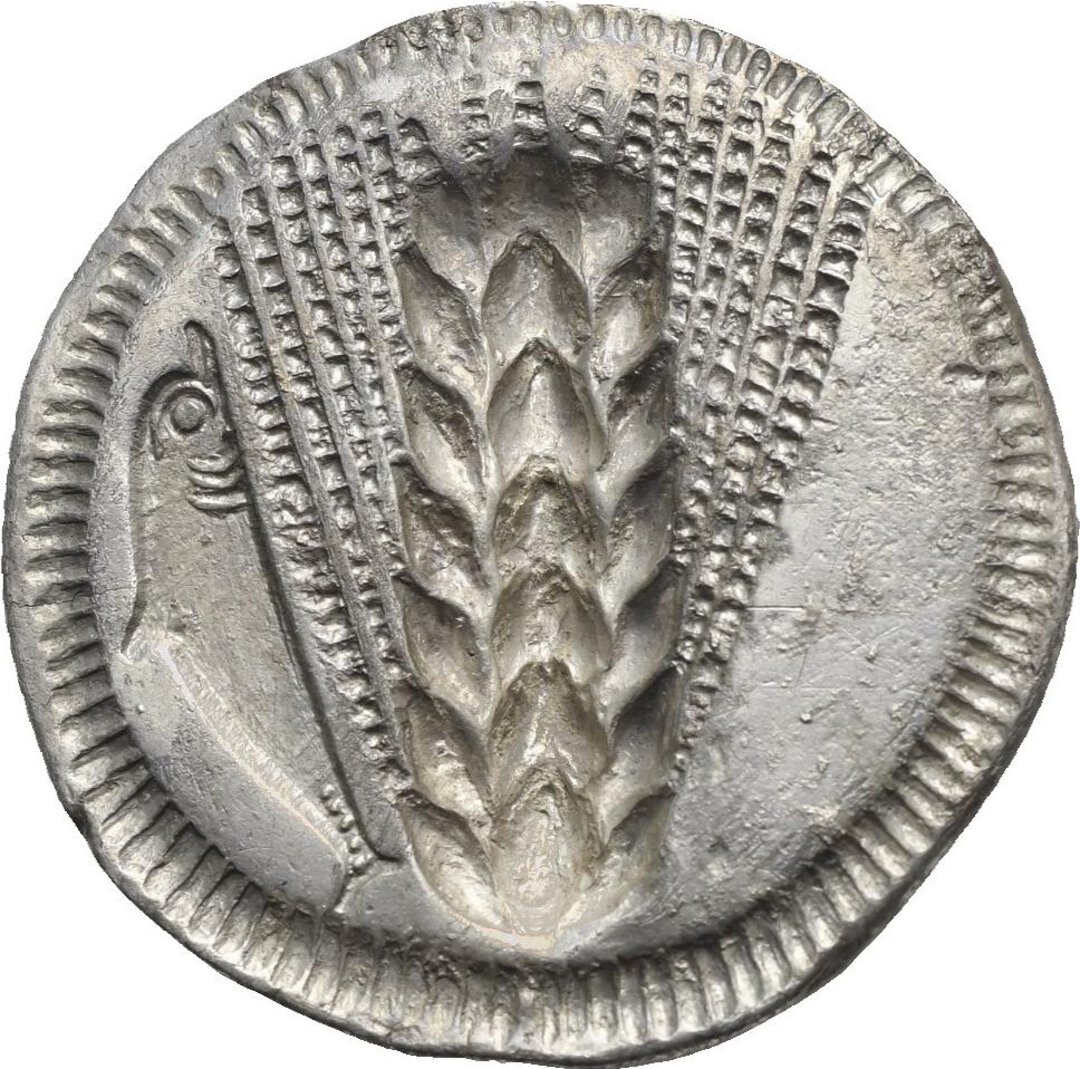
Lucania. Metapontion. Stater. Circa 540-510 BC (Silver, 27.59 mm, 7.83 g). META, Seven-grained ear of barley, upon which rests a grasshopper. Rev. Same type in incuse, with on left the outline of a dolphin. HN Italy 1472. Noe, Class V, 104. SNG ANS 1207. Kraay & Hirmer 229 (same dies). Gorini 10. HGC 1, 1027. Lightly toned. Centered and well struck in high relief on a good metal. One might say Almost Fdc. Very Rare and among the finest specimens known.
From a Swiss collection, formed before 2005.
The ear was Metapontum’s emblem, reflecting the central role of agriculture in the city’s economy, with barley as its principal crop and hallmark. The dolphin, a recurring motif in Greek coastal iconography, symbolized the city’s maritime identity and prosperity. Nestled between the Ionian Sea and two rivers, Metapontum relied on the sea for trade and sustenance; the dolphin thus conveyed protection, good fortune, and safe navigation. In Greek mythology, it was also sacred to Apollo, further underscoring its association with guidance and salvation.