
Lucania. Siris and Pyxus. Stater. Circa 540-510 BC (Silver, 28.08 mm, 7.64 g). Bull standing left, looking backwards; in exergue and on left field, ΣIΡIN - OΣ (retrograde in archaic characters); cable border with dotted interstices. Rev. The same type right, in incuse; in exergue and on right field, ΠV+ - OES (retrograde in archaic characters); herringbone border. HN Italy - (but cf. 1725 for the reverse). Traité -. Perret -. SNG ANS 816 (this reverse die) = Mangieri, RIN 1981, D25 on pl. IV. Lightly toned. Minor scratches on obverse and scattered cleaning marks. Well struck. Extremely Fine. Exceedingly Rare, with an unpublished obverse die.From a Swiss collection, formed before 2005.The retrospicient bull was chosen as a symbol by Sybaris in ancient Greece because it represented fertility and strength, qualities attributed both to the animal and to the river Krathis, which was personified in the shape of the bull. The image of the bull with its head turned backward, recurrent on Sybarite coins, was therefore a reference to the vitality of the waters that made the city rich and prosperous, as well as a symbol of power and protection for the community. Looking backward symbolizes the connection to origins, to the land and the past, while also reflecting a conscious respect for traditions that serve as a source of energy for the future. Later, other colonies of Sybaris, such as Poseidonia (modern Paestum), Laos, Skidros, Siris, and Pyxous, adopted the bull on their coins, symbolizing both a connection to the territory and spiritual value
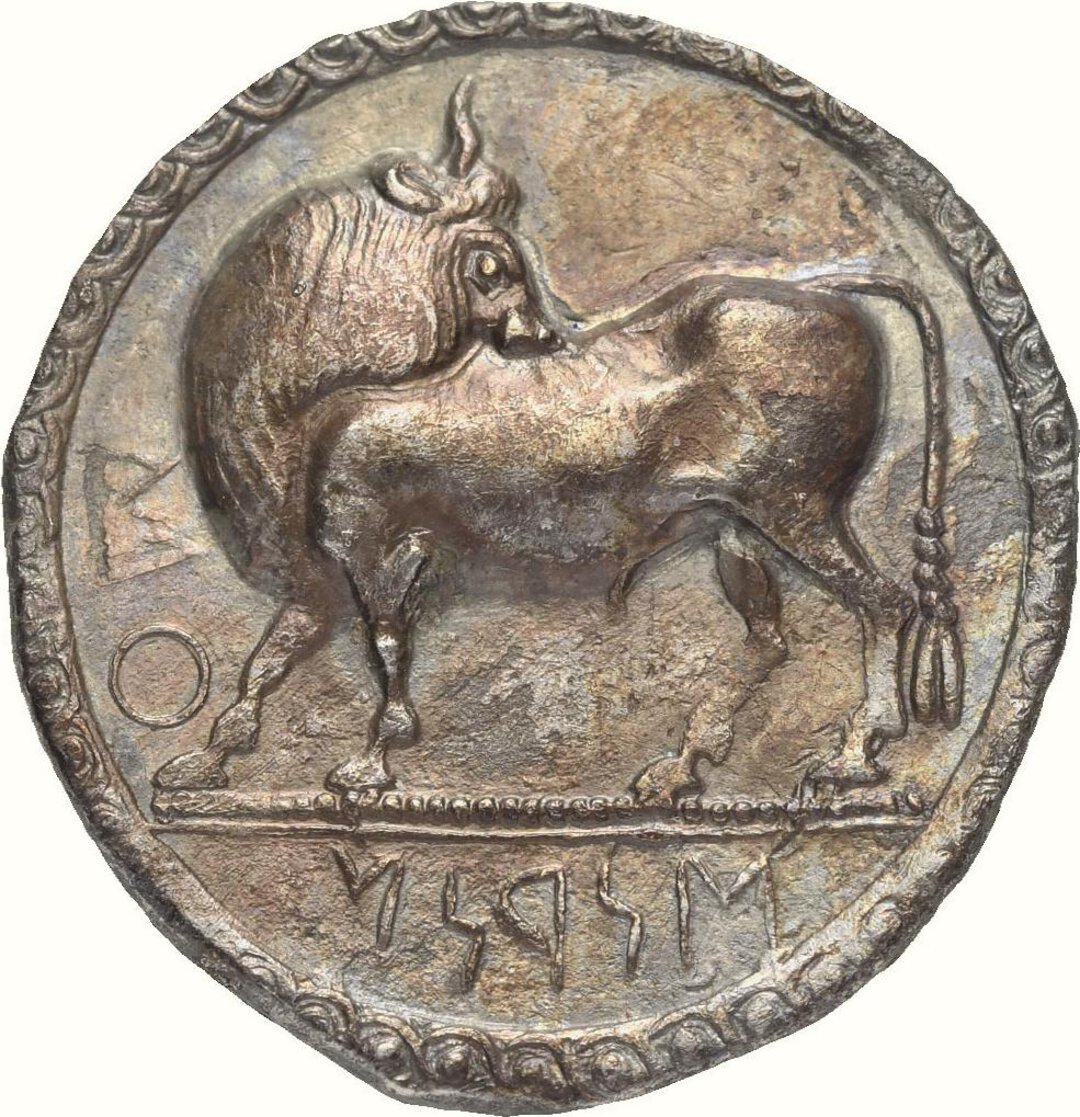
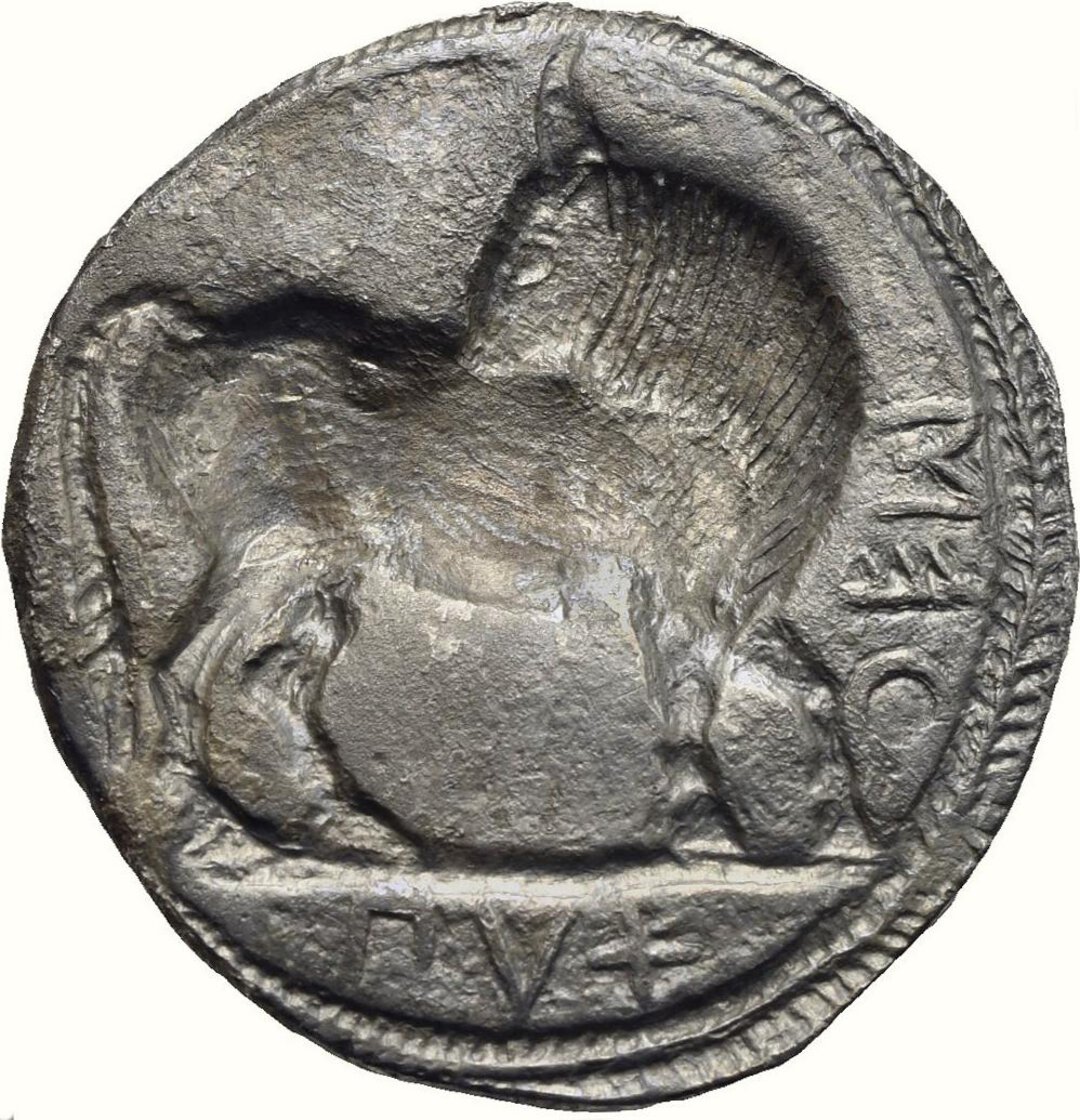
Lucania. Siris and Pyxus. Stater. Circa 540-510 BC (Silver, 28.08 mm, 7.64 g). Bull standing left, looking backwards; in exergue and on left field, ΣIΡIN - OΣ (retrograde in archaic characters); cable border with dotted interstices. Rev. The same type right, in incuse; in exergue and on right field, ΠV+ - OES (retrograde in archaic characters); herringbone border. HN Italy - (but cf. 1725 for the reverse). Traité -. Perret -. SNG ANS 816 (this reverse die) = Mangieri, RIN 1981, D25 on pl. IV. Lightly toned. Minor scratches on obverse and scattered cleaning marks. Well struck. Extremely Fine. Exceedingly Rare, with an unpublished obverse die.
From a Swiss collection, formed before 2005.
The retrospicient bull was chosen as a symbol by Sybaris in ancient Greece because it represented fertility and strength, qualities attributed both to the animal and to the river Krathis, which was personified in the shape of the bull. The image of the bull with its head turned backward, recurrent on Sybarite coins, was therefore a reference to the vitality of the waters that made the city rich and prosperous, as well as a symbol of power and protection for the community. Looking backward symbolizes the connection to origins, to the land and the past, while also reflecting a conscious respect for traditions that serve as a source of energy for the future. Later, other colonies of Sybaris, such as Poseidonia (modern Paestum), Laos, Skidros, Siris, and Pyxous, adopted the bull on their coins, symbolizing both a connection to the territory and spiritual value