
Zeugitania. Carthage. First Punic War, 264-241 BC. Hexadrachm or Trishekel (Silver, 34.44 mm, 24.72 g), probably struck circa 255-251 BC. Head of Tanit left, wearing wreath of grain ears, triple-pendant earring and pendant necklace; behind her neck, uncertain Phoenician letter jōd. Rev. Horse standing right; above, solar disc supported by two uraeus serpents; in exergue, Phoenician letter jōd. CNP 42. MAA 38 (drawn). Jenkins & Lewis, Group Xa, pl. 27, 4 = Naples 4850 (different dies). H.R. Baldus, "Unerkannte Reflexe der römischen Nordafrika-Expedition von 256/255 v. Chr. in der karthagischen Münzprägung", in "Chiron" 12, 1982, pl. 1, 7 (the Naples specimen, as above). Slightly toned, with minor signs of flaking and few signs of cleaning. Minted in high relief and well centred for issue. For the type of coin, almost extremely fine; undoubtedly very attractive and one of the finest known examples, if not the finest. Extremely rare, with fewer than ten examples known to date. From a Swiss Collection, formed before 2005.This silver issue from Carthage ranks among the rarest and most impressive of all Carthaginian coinages. Struck during the First Punic War (264-241 BC), at a time when Carthaginian minting was largely confined to electrum and bronze owing to the scarcity of silver, it was most probably produced to pay mercenary contingents, particularly Greek soldiers accustomed to silver remuneration. As demonstrated by H. R. Baldus (1982), this issue should be assigned to the period immediately following the African campaign of Marcus Atilius Regulus (256-255 BC), a crucial phase in which Carthage, recovering from initial reverses, reorganized its military and financial resources and ultimately secured victory at the Battle of Tunes, also known as the Battle of the Bagradas.This extremely rare coin appears to have been struck from a previously unrecorded pair of dies. The hairstyle of Tanit, with tufts forming a shape reminiscent of a swan at the top of the head, is typical of certain dies from the Group IX-Xb series described by Jenkins & Lewis. Of particular interest is a feature never before documented, perhaps overlooked due to the narrow flans of these issues and the often poor state of surface preservation: the presence of Punic control letters on both sides of the coin: behind Tanit’s neck on the obverse and in the exergue on the reverse. Upon closer examination, similar letters can be observed on the obverse of the Naples specimen no. 4850, on the obverse of the Nomos 32, lot 368 specimen, in the reverse exergue of the Leu Numismatik 19, lot 31 example, and - following a new and careful reassessment by the present writer - on both obverse and reverse of the Astarte 23, lot 202 coin, where the obverse with the Punic letter rēš shares its reverse bearing the same letter in the exergue.
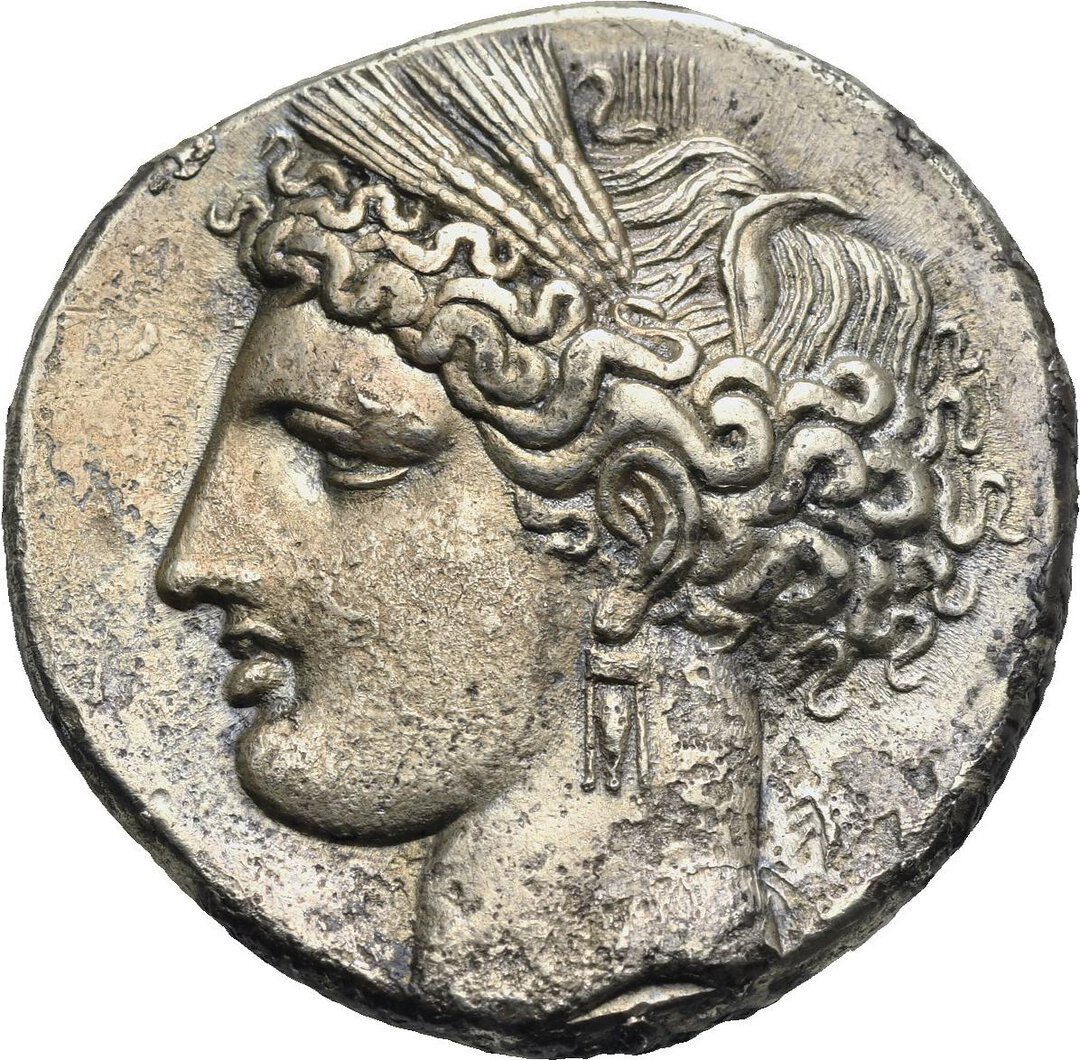
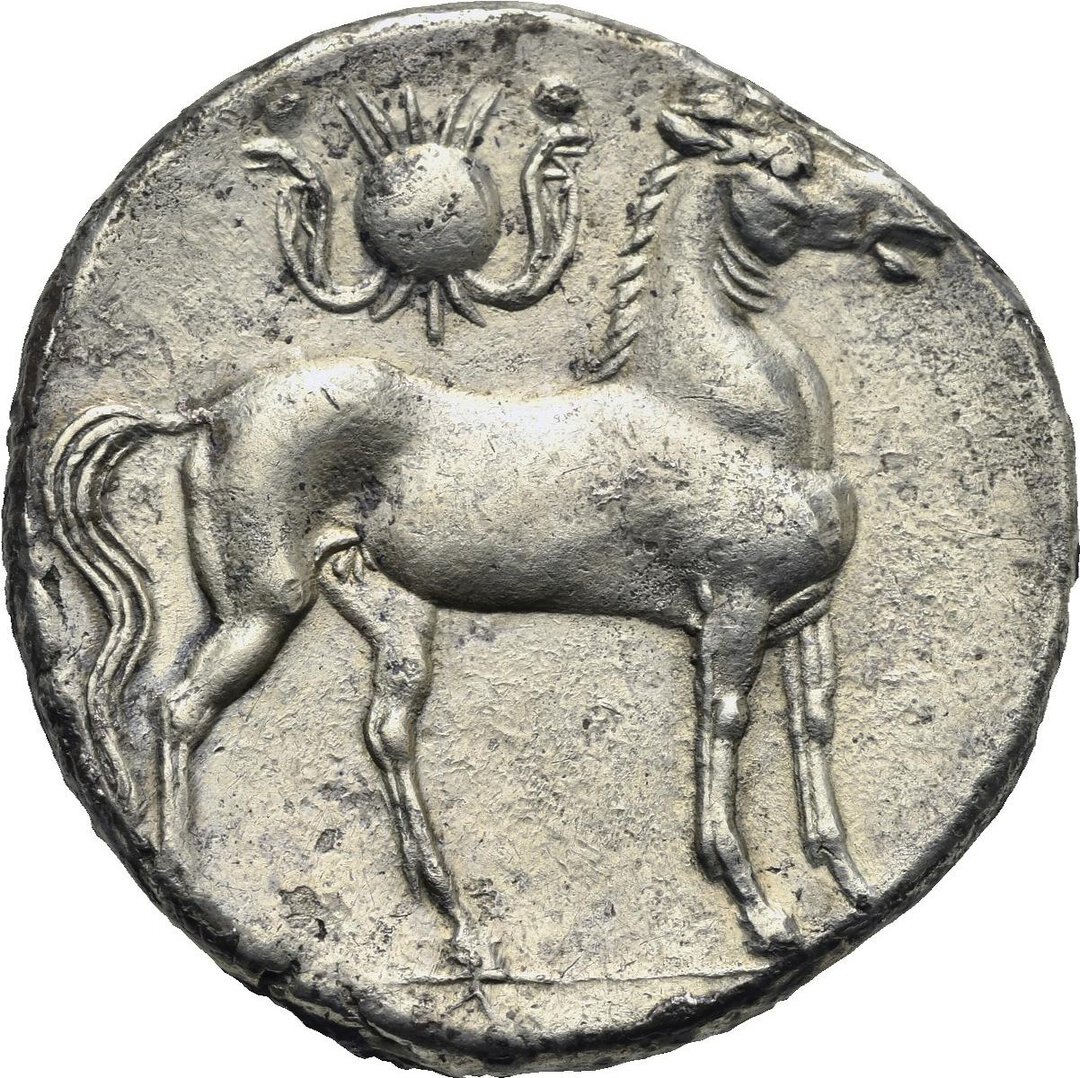
Zeugitania. Carthage. First Punic War, 264-241 BC. Hexadrachm or Trishekel (Silver, 34.44 mm, 24.72 g), probably struck circa 255-251 BC. Head of Tanit left, wearing wreath of grain ears, triple-pendant earring and pendant necklace; behind her neck, uncertain Phoenician letter jōd. Rev. Horse standing right; above, solar disc supported by two uraeus serpents; in exergue, Phoenician letter jōd. CNP 42. MAA 38 (drawn). Jenkins & Lewis, Group Xa, pl. 27, 4 = Naples 4850 (different dies). H.R. Baldus, "Unerkannte Reflexe der römischen Nordafrika-Expedition von 256/255 v. Chr. in der karthagischen Münzprägung", in "Chiron" 12, 1982, pl. 1, 7 (the Naples specimen, as above). Slightly toned, with minor signs of flaking and few signs of cleaning. Minted in high relief and well centred for issue. For the type of coin, almost extremely fine; undoubtedly very attractive and one of the finest known examples, if not the finest. Extremely rare, with fewer than ten examples known to date.
From a Swiss Collection, formed before 2005.
This silver issue from Carthage ranks among the rarest and most impressive of all Carthaginian coinages. Struck during the First Punic War (264-241 BC), at a time when Carthaginian minting was largely confined to electrum and bronze owing to the scarcity of silver, it was most probably produced to pay mercenary contingents, particularly Greek soldiers accustomed to silver remuneration. As demonstrated by H. R. Baldus (1982), this issue should be assigned to the period immediately following the African campaign of Marcus Atilius Regulus (256-255 BC), a crucial phase in which Carthage, recovering from initial reverses, reorganized its military and financial resources and ultimately secured victory at the Battle of Tunes, also known as the Battle of the Bagradas.
This extremely rare coin appears to have been struck from a previously unrecorded pair of dies. The hairstyle of Tanit, with tufts forming a shape reminiscent of a swan at the top of the head, is typical of certain dies from the Group IX-Xb series described by Jenkins & Lewis. Of particular interest is a feature never before documented, perhaps overlooked due to the narrow flans of these issues and the often poor state of surface preservation: the presence of Punic control letters on both sides of the coin: behind Tanit’s neck on the obverse and in the exergue on the reverse. Upon closer examination, similar letters can be observed on the obverse of the Naples specimen no. 4850, on the obverse of the Nomos 32, lot 368 specimen, in the reverse exergue of the Leu Numismatik 19, lot 31 example, and - following a new and careful reassessment by the present writer - on both obverse and reverse of the Astarte 23, lot 202 coin, where the obverse with the Punic letter rēš shares its reverse bearing the same letter in the exergue.