
Ethiopia (Empire). Menelik II, 1889-1913. Original steel reverse die of the Pattern Gold Birr. (Steel, 51 x 35 mm, upper diam. 39 mm, 458 g). Addis Ababa mint. 1897 - Ethiopian Era 1889 ሞዓ ፡ አንበሳ ፡ ዘእምነገደ ፡ ይሁዳ። (conquering Lion of the Tribe of Judah, in reversed Ge'ez), Crowned Lion of Judah standing right, head facing, holding cross-banner over shoulder; in exergue, አንድ፡ብር (one Birr, in reversed Ge'ez). Cf. KM Pn5 (for type). Gill M21 (for type). Friedberg -. CNG, Triton XIX, 15 January 2016, lot 232 (for the struck coin - 32,500 USD realized). Heritage, NYINC Signature Sale 3105, 9 January 2023, lot 32169 (for the struck coin - 26,000 USD realized). Dark patina, with very few areas of rust. A section of the die - the edge from 12 to 4 o’clock - shows slight corrosion. The struck coin is Extremely Rare: this worn die is Possibly Unique.From a British private Collection formed before 1960s.Under Menelik II the Ethiopian currency reform of 1893 introduced the Birr, with the first coins struck at the Paris Mint between 1894 and the early 1900s. In an effort to achieve monetary independence from Europe, a national mint was installed in Addis Ababa between 1903 and 1905, equipped with machinery imported mainly from France. The extremely rare gold pattern issues belong to this experimental phase: they were official trial pieces struck to test the new dies and local metal alloys. Only by closely examining such a die, bordering on artisanal production, can we understand the numerous weight discrepancies and minting defects found in the Pattern issues of Ethiopia. The Addis Ababa Mint, however, never reached full efficiency - production was irregular, the equipment difficult to operate, and supplies of precious metal scarce - so only a handful of specimens were ever produced, and no regular gold coinage followed.
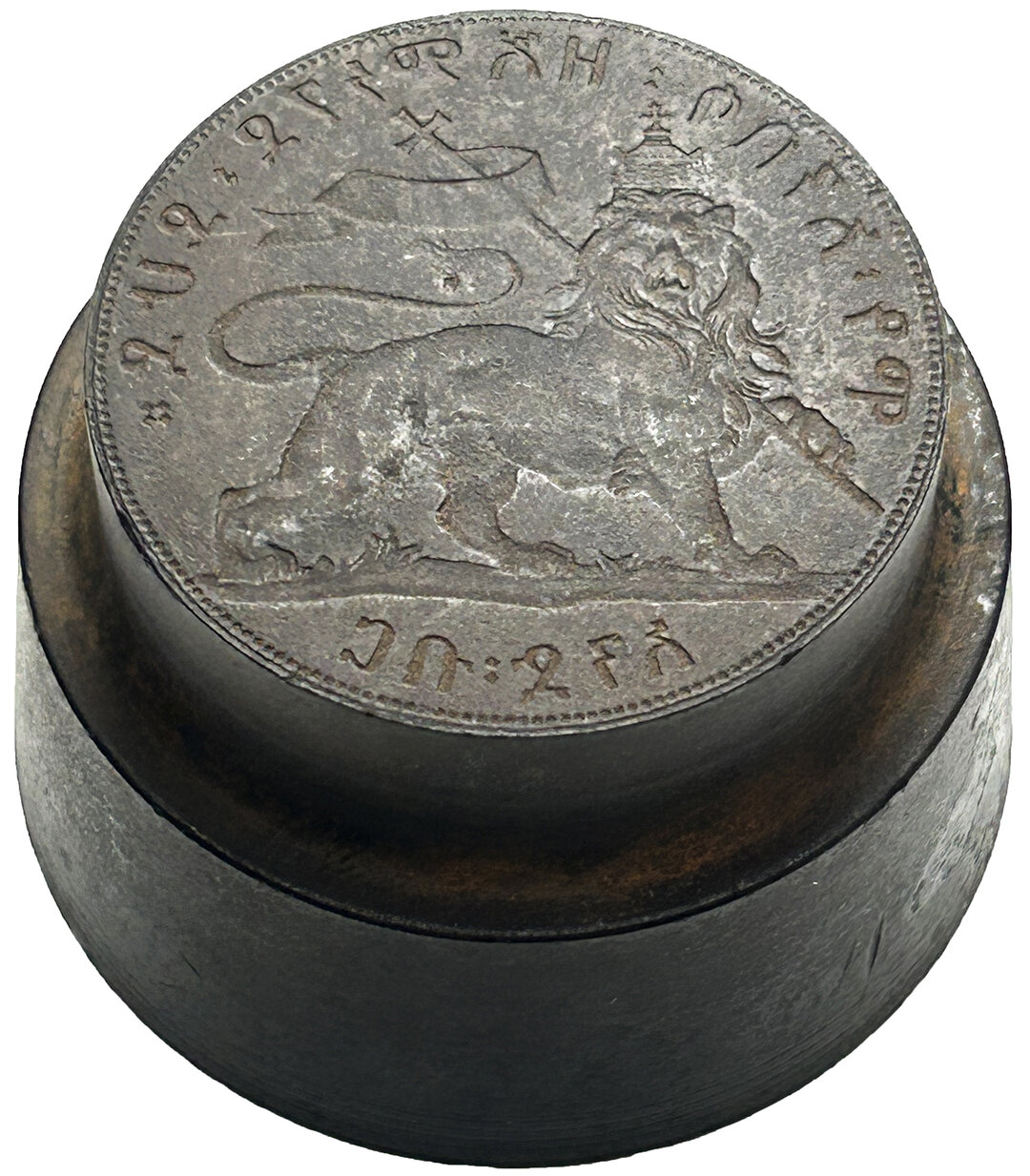

Ethiopia (Empire). Menelik II, 1889-1913. Original steel reverse die of the Pattern Gold Birr. (Steel, 51 x 35 mm, upper diam. 39 mm, 458 g). Addis Ababa mint. 1897 - Ethiopian Era 1889 ሞዓ ፡ አንበሳ ፡ ዘእምነገደ ፡ ይሁዳ። (conquering Lion of the Tribe of Judah, in reversed Ge'ez), Crowned Lion of Judah standing right, head facing, holding cross-banner over shoulder; in exergue, አንድ፡ብር (one Birr, in reversed Ge'ez). Cf. KM Pn5 (for type). Gill M21 (for type). Friedberg -. CNG, Triton XIX, 15 January 2016, lot 232 (for the struck coin - 32,500 USD realized). Heritage, NYINC Signature Sale 3105, 9 January 2023, lot 32169 (for the struck coin - 26,000 USD realized). Dark patina, with very few areas of rust. A section of the die - the edge from 12 to 4 o’clock - shows slight corrosion. The struck coin is Extremely Rare: this worn die is Possibly Unique.
From a British private Collection formed before 1960s.
Under Menelik II the Ethiopian currency reform of 1893 introduced the Birr, with the first coins struck at the Paris Mint between 1894 and the early 1900s. In an effort to achieve monetary independence from Europe, a national mint was installed in Addis Ababa between 1903 and 1905, equipped with machinery imported mainly from France. The extremely rare gold pattern issues belong to this experimental phase: they were official trial pieces struck to test the new dies and local metal alloys. Only by closely examining such a die, bordering on artisanal production, can we understand the numerous weight discrepancies and minting defects found in the Pattern issues of Ethiopia. The Addis Ababa Mint, however, never reached full efficiency - production was irregular, the equipment difficult to operate, and supplies of precious metal scarce - so only a handful of specimens were ever produced, and no regular gold coinage followed.