
Sicily. Eryx. Circa 412-400 BC. Didrachm (Silver, 22.03 mm, 8.10 g). [IRV]KAZIB (within oblong frame), Hound scenting left; three stalks of barley in the background. Rev. Female head of nymph right, wearing earring and necklace, hair in ampyx and sphendone. Campana, CNAI II, 239, 23 (same dies). SNG Lloyd 1183 (Segesta, same dies). Rizzo pl. LXIV, 9 (same dies). Hurter pl. 17, 195 (same obverse die, but on the right and with the legend ΣEΓΕΣTΑΖΙΒ). Viola, CNP 482 var. (hound right). Jenkins, SNR 50 (1971), pl. 24, 23 (same reverse die). HGC 2, 308 (same reverse die). Toned with beautiful iridescent patina. Near Extremely Fine. Extremely Rare, very few specimens known. Ex Gorny & Mosch 215, 14 October 2013, lot 682. From the 5th century BC until the First Punic War the Elymian city of Eryx along with its ally Segesta remained under Carthaginian rule, except for a brief interlude in 398 BC when Eryx was conquered by Dionysios I. When the disputes between Segesta and Selinos intensified around 420 BC, the two Elymian cities minted considerable quantities of didrachms with the same types to pay the mercenaries who regularly formed the armies of the ancient Sicilian cities. On several occasions, the coins of both cities bear the hand of the same engravers. Segesta's production of these didrachms was far greater than that of Eryx. An example of the collaboration between engravers can be seen in Hurter's table 17, no. 195, where the dog is plastically identical in appearance to our coin, except that it faces right and has a different legend.
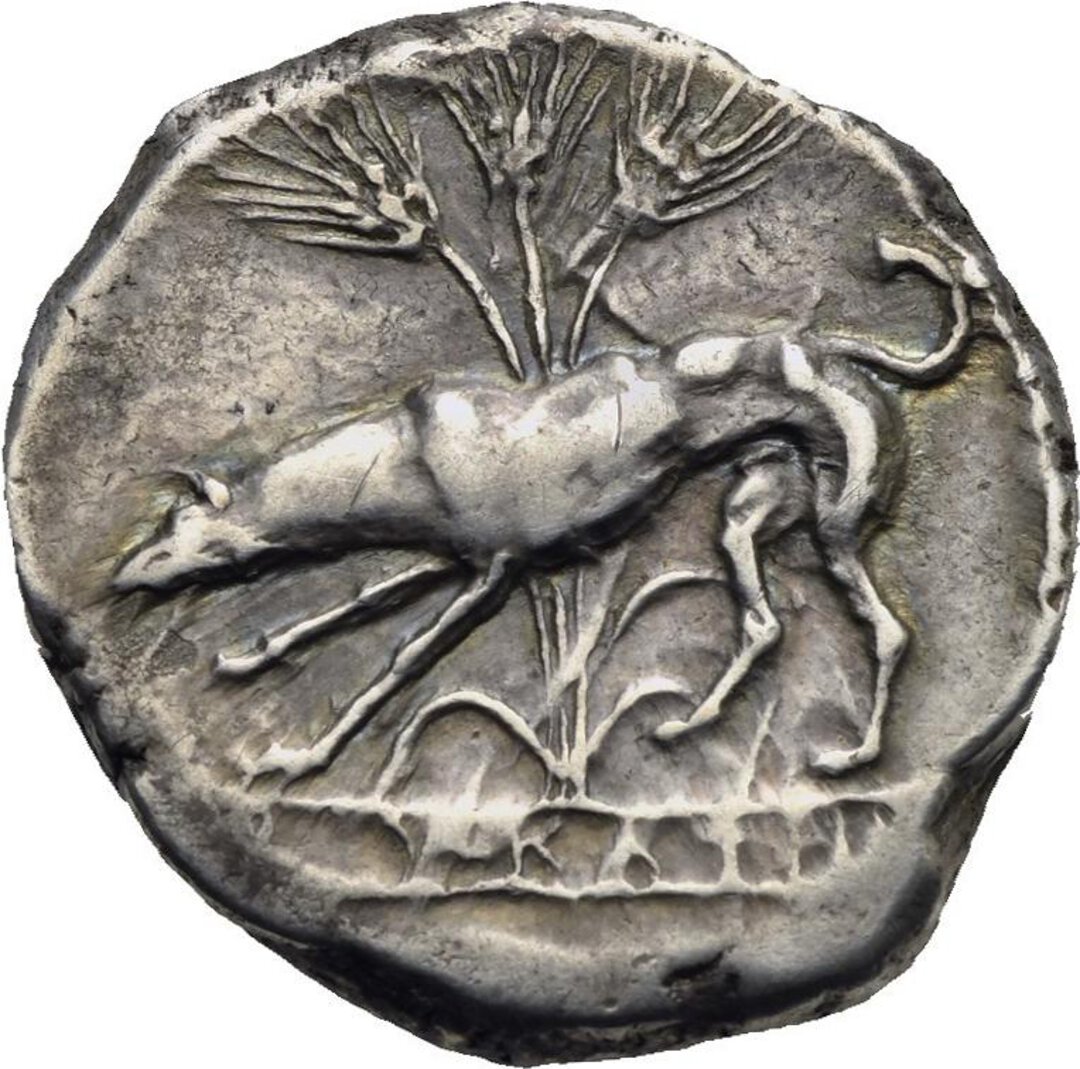
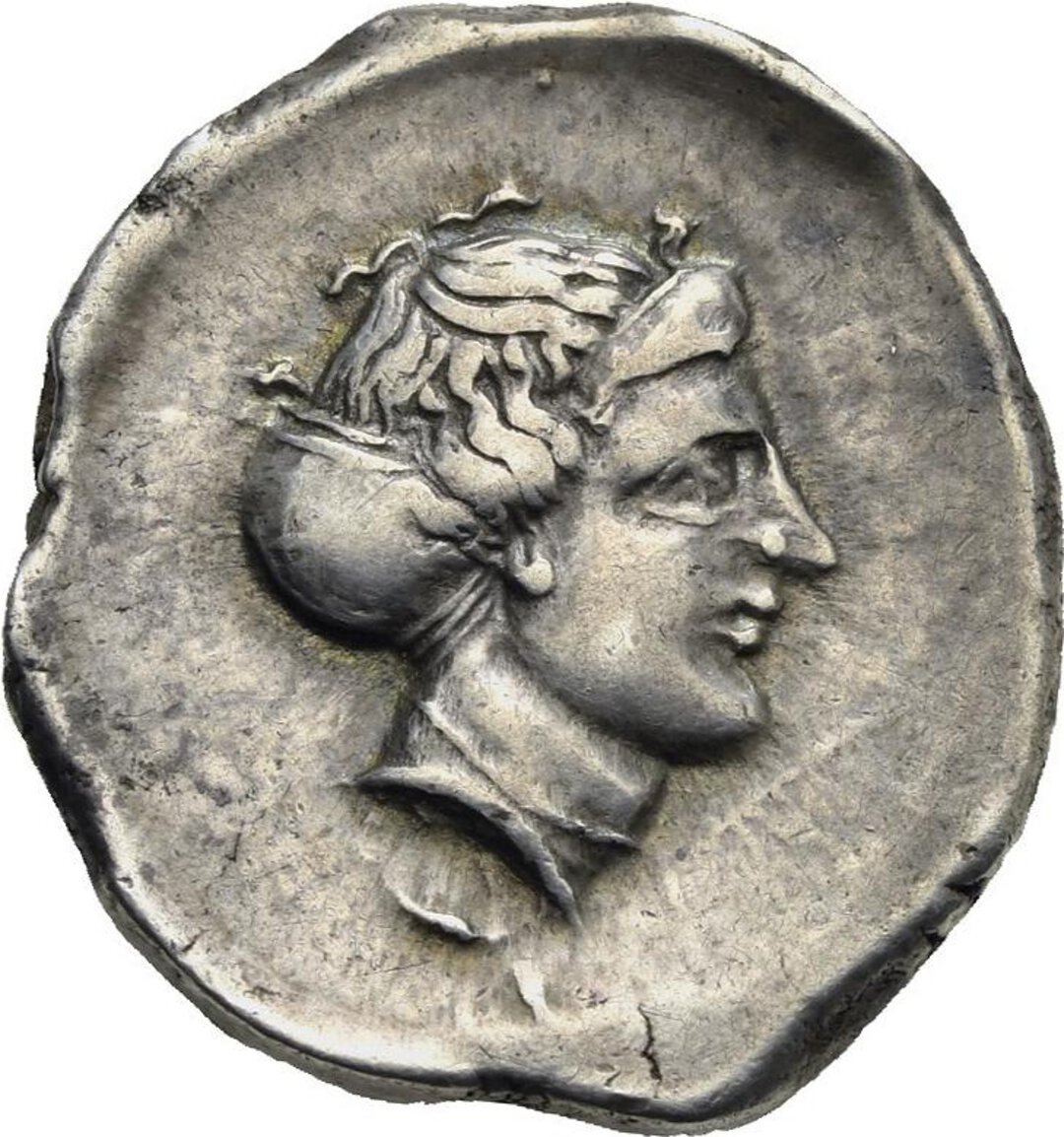
Sicily. Eryx. Circa 412-400 BC. Didrachm (Silver, 22.03 mm, 8.10 g). [IRV]KAZIB (within oblong frame), Hound scenting left; three stalks of barley in the background. Rev. Female head of nymph right, wearing earring and necklace, hair in ampyx and sphendone. Campana, CNAI II, 239, 23 (same dies). SNG Lloyd 1183 (Segesta, same dies). Rizzo pl. LXIV, 9 (same dies). Hurter pl. 17, 195 (same obverse die, but on the right and with the legend ΣEΓΕΣTΑΖΙΒ). Viola, CNP 482 var. (hound right). Jenkins, SNR 50 (1971), pl. 24, 23 (same reverse die). HGC 2, 308 (same reverse die). Toned with beautiful iridescent patina. Near Extremely Fine. Extremely Rare, very few specimens known.
Ex Gorny & Mosch 215, 14 October 2013, lot 682.
From the 5th century BC until the First Punic War the Elymian city of Eryx along with its ally Segesta remained under Carthaginian rule, except for a brief interlude in 398 BC when Eryx was conquered by Dionysios I. When the disputes between Segesta and Selinos intensified around 420 BC, the two Elymian cities minted considerable quantities of didrachms with the same types to pay the mercenaries who regularly formed the armies of the ancient Sicilian cities. On several occasions, the coins of both cities bear the hand of the same engravers. Segesta's production of these didrachms was far greater than that of Eryx. An example of the collaboration between engravers can be seen in Hurter's table 17, no. 195, where the dog is plastically identical in appearance to our coin, except that it faces right and has a different legend.