Info & contatti
Le mie offerte
Lotti osservati
Condizioni di vendita
Prezzi di spedizione
Metodi di pagamento
Esito stampabile
Sessione Live 2/8/2026 17:00:00 CET
Celtic Coins (1-15)
Greek Coins (16-215)
Roman Provincial Coins (216-305)
Roman Republican Coins (306-402)
Roman Imperial Coins (403-740)
Migration Period (741-745)
Byzantine Coins (746-768)
Medieval Coins (769-822)
World Coins (823-885)
Medals & Tokens (886-897)
Group Lots (898-1022)

HADRIAN (117-138). Ae Medallion. Rome
Medaillon !!
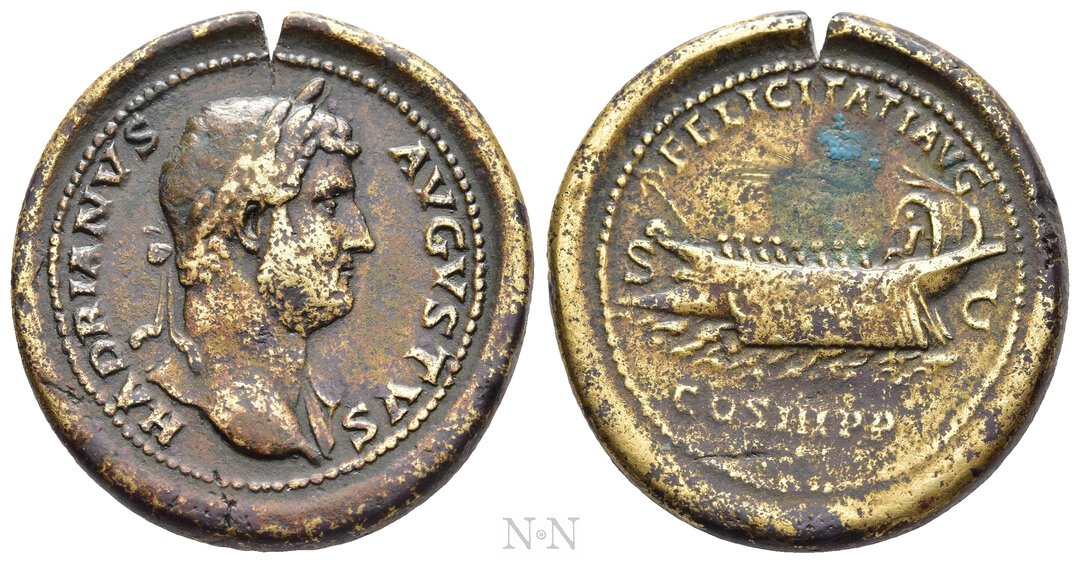

HADRIAN (117-138). Ae Medallion. Rome.
Obv: HADRIANVS AVGVSTVS.
Laureate bust right, with slight drapery.
Rev: FELICITATI AVG / S - C / COS III P P.
Galley left with steersmen and rowers.
Cf. RIC² 1285 (Sestertius); RIC² 2856 = Gnecchi p.18, 77 var. (bust and rev. types).
Roman medallions, often of large size and struck in bronze, silver or gold, were not simply coins intended for everyday circulation. Their function was primarily commemorative and political. They were produced on special occasions: accessions to the throne, imperial anniversaries, military victories, the inauguration of public buildings, or dynastic events such as births and marriages. For this reason, they display a higher level of iconography and artistic quality than ordinary coinage: high-quality imperial portraits, complex scenes, allegories and depictions of official ceremonies. In Roman society, these objects were donatives, official gifts distributed by the emperor or high-ranking officials to members of the elite, army officers, foreign ambassadors or influential figures. They served as instruments of prestige and propaganda: receiving a medallion signified recognition by the central authority, whilst possessing and displaying it strengthened the bond with imperial authority. They did not circulate as currency, but as symbols of status, remembrance and political loyalty.
Condition: Near very fine.
Weight: 49.00 g.
Diameter: 38 mm.
Estimate: € 250
Obv: HADRIANVS AVGVSTVS.
Laureate bust right, with slight drapery.
Rev: FELICITATI AVG / S - C / COS III P P.
Galley left with steersmen and rowers.
Cf. RIC² 1285 (Sestertius); RIC² 2856 = Gnecchi p.18, 77 var. (bust and rev. types).
Roman medallions, often of large size and struck in bronze, silver or gold, were not simply coins intended for everyday circulation. Their function was primarily commemorative and political. They were produced on special occasions: accessions to the throne, imperial anniversaries, military victories, the inauguration of public buildings, or dynastic events such as births and marriages. For this reason, they display a higher level of iconography and artistic quality than ordinary coinage: high-quality imperial portraits, complex scenes, allegories and depictions of official ceremonies. In Roman society, these objects were donatives, official gifts distributed by the emperor or high-ranking officials to members of the elite, army officers, foreign ambassadors or influential figures. They served as instruments of prestige and propaganda: receiving a medallion signified recognition by the central authority, whilst possessing and displaying it strengthened the bond with imperial authority. They did not circulate as currency, but as symbols of status, remembrance and political loyalty.
Condition: Near very fine.
Weight: 49.00 g.
Diameter: 38 mm.
Estimate: € 250