Info & contatti
Le mie offerte
Lotti osservati
Condizioni di vendita
Prezzi di spedizione
Metodi di pagamento
Esito stampabile
Sessione Live 2/8/2026 17:00:00 CET
Celtic Coins (1-15)
Greek Coins (16-215)
Roman Provincial Coins (216-305)
Roman Republican Coins (306-402)
Roman Imperial Coins (403-740)
Migration Period (741-745)
Byzantine Coins (746-768)
Medieval Coins (769-822)
World Coins (823-885)
Medals & Tokens (886-897)
Group Lots (898-1022)

BASILISCUS & MARCUS (475-476). Ae. Cyzicus
Basiliscus & Marcus
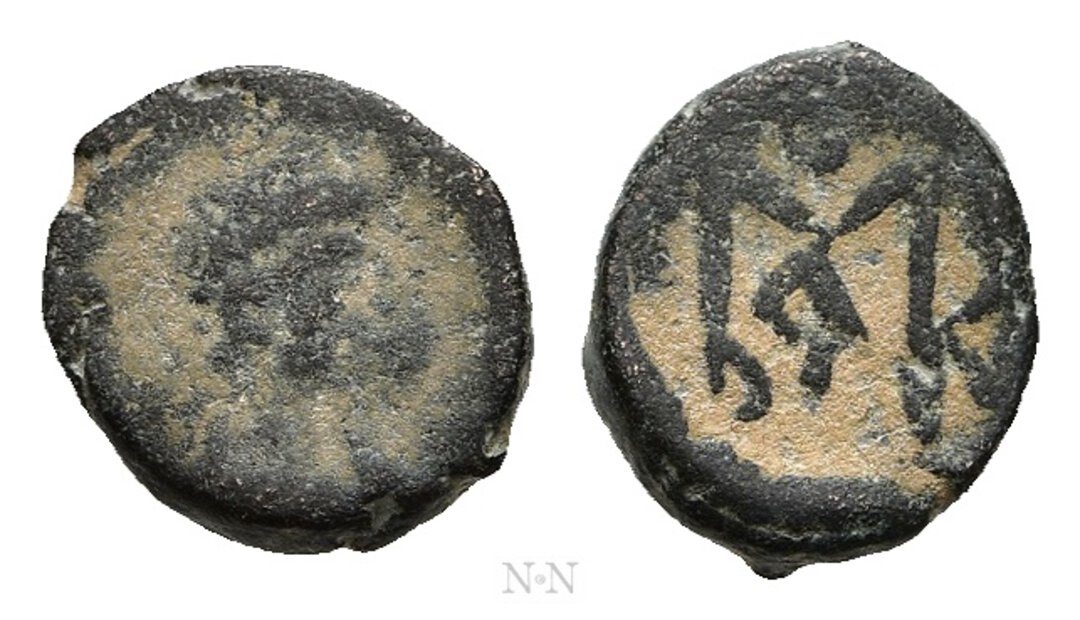

BASILISCUS & MARCUS (475-476). Ae. Cyzicus.
Obv: Pearl-diademed, draped and cuirassed bust right.
Rev: Monogram within wreath.
RIC 1034.
Very rare
Marcus’ association with the throne is attested by the coins, which confirm the few historical sources that have come down to us. The monogram on this bronze piece combines the letters BAS and MAR. Among the few known specimens, only the mintmarks of Cyzicus can be read, but it is not impossible that some examples with illegible mintmarks may have been issued in Constantinople and Nicomedia. Flavius Basiliscus was one of the most controversial and ill‑fated figures of the late Eastern Roman Empire. Born in Cappadocia and connected to the dynasty of Leo I through his sister Verina, he rose quickly within the military hierarchy thanks to his family ties. His early career was successful: he achieved victories against the Bulgars, Goths and Huns, and even attained the consulship. However, his reputation was permanently stained by the disastrous 468 expedition against the Vandals, one of the most expensive military operations in Roman history, which ended in a catastrophic defeat and made him deeply unpopular at court and among the people. Despite this, Basiliscus remained influential. In 475, taking advantage of widespread resentment toward the Isaurian emperor Zeno, he joined a conspiracy that forced Zeno to flee and was proclaimed emperor himself. His reign, however, was short‑lived and marked by unpopular political and religious decisions: he openly supported the Monophysites, alienating Patriarch Acacius and much of the population; he raised taxes to compensate for Zeno’s escape with the imperial treasury; and he favored his own relatives and supporters, provoking resentment even among those who had helped him seize power. Internal tensions soon erupted. Verina, his sister and initial supporter, turned against him after the execution of her lover Patricius. Generals Illus, Trocundus and Armatius also betrayed him, choosing instead to restore Zeno. When the Isaurian army marched on Constantinople, the Senate opened the gates without resistance. Basiliscus tried to take refuge in a church, but was handed over to Zeno. Although he had been promised that his blood would not be shed, he and his family were imprisoned in a cistern in Cappadocia, where they died of hunger and thirst. His reign had lasted barely twenty months.
Condition: Near very fine.
Weight: 1.10 g.
Diameter: 10 mm.
Estimate: € 250
Obv: Pearl-diademed, draped and cuirassed bust right.
Rev: Monogram within wreath.
RIC 1034.
Very rare
Marcus’ association with the throne is attested by the coins, which confirm the few historical sources that have come down to us. The monogram on this bronze piece combines the letters BAS and MAR. Among the few known specimens, only the mintmarks of Cyzicus can be read, but it is not impossible that some examples with illegible mintmarks may have been issued in Constantinople and Nicomedia. Flavius Basiliscus was one of the most controversial and ill‑fated figures of the late Eastern Roman Empire. Born in Cappadocia and connected to the dynasty of Leo I through his sister Verina, he rose quickly within the military hierarchy thanks to his family ties. His early career was successful: he achieved victories against the Bulgars, Goths and Huns, and even attained the consulship. However, his reputation was permanently stained by the disastrous 468 expedition against the Vandals, one of the most expensive military operations in Roman history, which ended in a catastrophic defeat and made him deeply unpopular at court and among the people. Despite this, Basiliscus remained influential. In 475, taking advantage of widespread resentment toward the Isaurian emperor Zeno, he joined a conspiracy that forced Zeno to flee and was proclaimed emperor himself. His reign, however, was short‑lived and marked by unpopular political and religious decisions: he openly supported the Monophysites, alienating Patriarch Acacius and much of the population; he raised taxes to compensate for Zeno’s escape with the imperial treasury; and he favored his own relatives and supporters, provoking resentment even among those who had helped him seize power. Internal tensions soon erupted. Verina, his sister and initial supporter, turned against him after the execution of her lover Patricius. Generals Illus, Trocundus and Armatius also betrayed him, choosing instead to restore Zeno. When the Isaurian army marched on Constantinople, the Senate opened the gates without resistance. Basiliscus tried to take refuge in a church, but was handed over to Zeno. Although he had been promised that his blood would not be shed, he and his family were imprisoned in a cistern in Cappadocia, where they died of hunger and thirst. His reign had lasted barely twenty months.
Condition: Near very fine.
Weight: 1.10 g.
Diameter: 10 mm.
Estimate: € 250