Info & contatti
Le mie offerte
Lotti osservati
Conferimento
Condizioni di vendita
Prezzi di spedizione
Metodi di pagamento
Tabella rilanci
Sessione Live 24/10/2026 15:00:00 CET
Greek Coins (1-143)
The Roman Republic (144-314)
The Roman Empire (315-448)
Sessione Live 25/10/2026 15:00:00 CET
Barbaric and Migration Period Coinage (449-458)
The Byzantine Empire (459-568)
Oriente Latino (569-579)
World Coins (580-641)
Monete e Medaglie di Zecche Italiane (642-821)
Casa Savoia - Regno di Sardegna - Regno di Italia (822-857)
Repubblica Italiana (858-858)
Medaglie Papali (859-866)

Zeugitania, Carthage. AV 1½ Shekels or Tridrachm, c. 270-264 BC
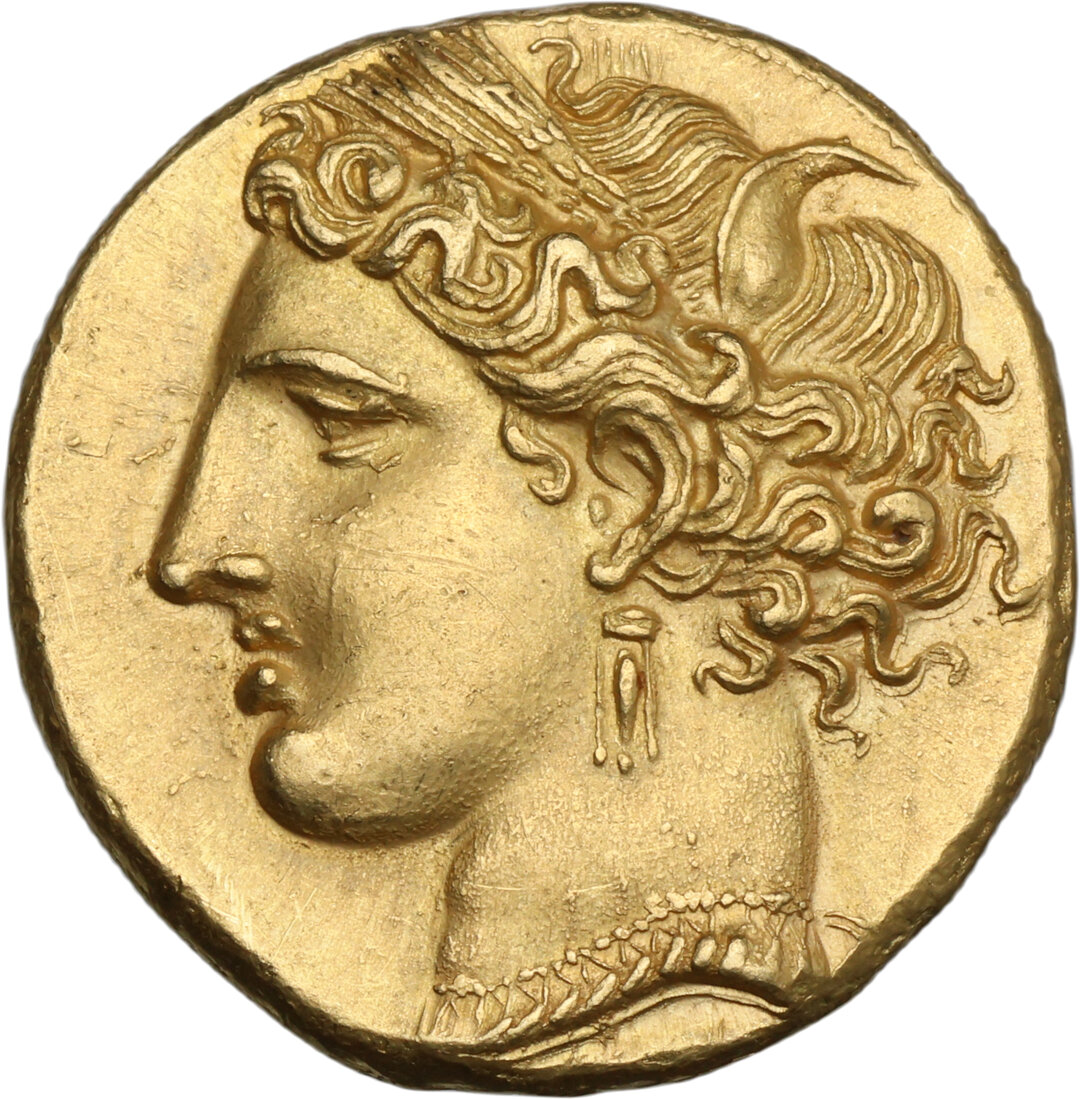
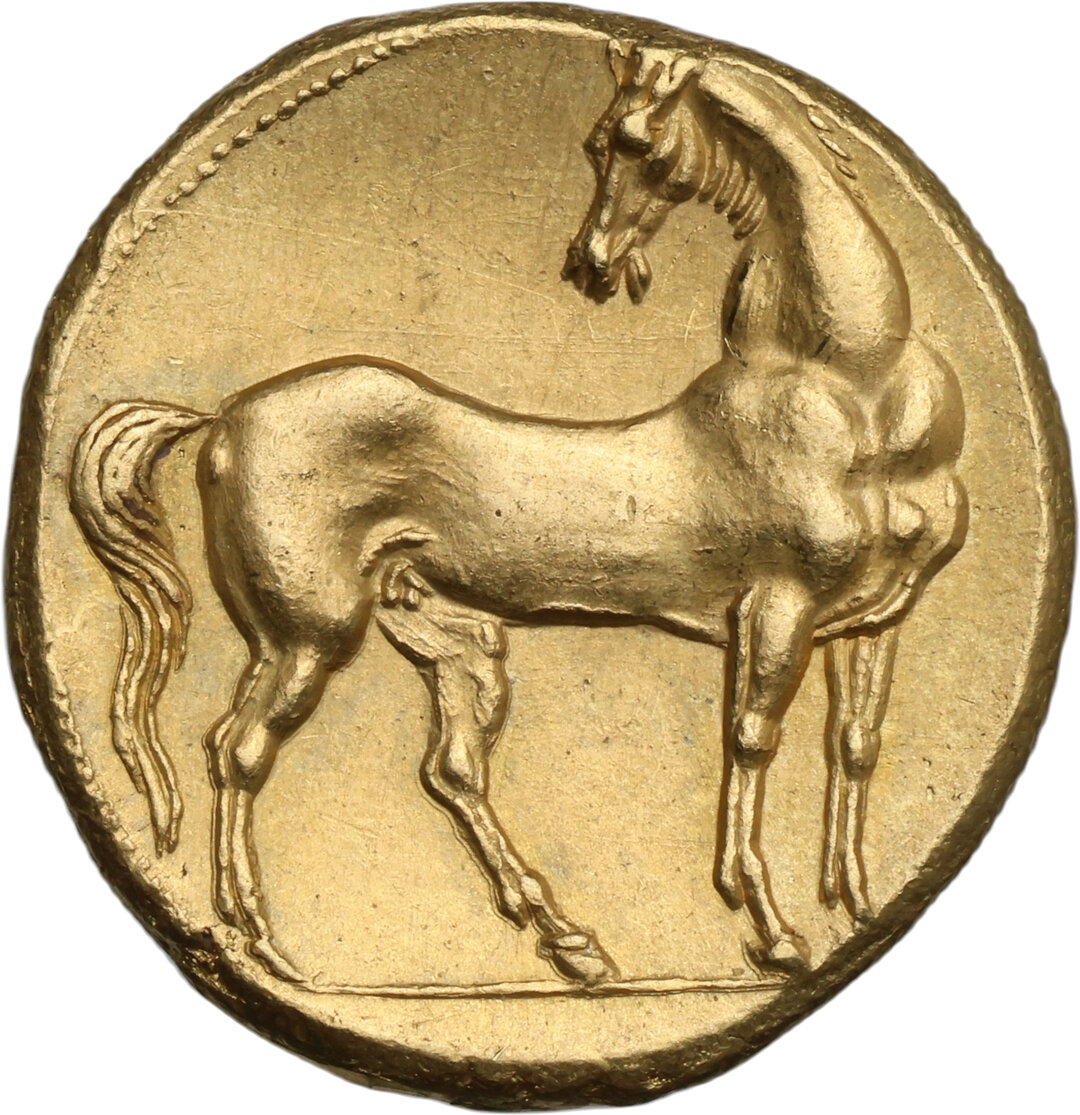
Zeugitania, Carthage. AV 1½ Shekels or Tridrachm, c. 270-264 BC. D/ Head of Tanit left, wearing wreath of grain ears, triple-pendant earring and necklace. R/ Horse standing right, head left. Jenkins & Lewis Group IX, 381 (same dies); SNG Cop. 181; CNP 76. 12.5 g. 22.5 mm. RR. Rare and exceptional; great muscular horse. An elegant pair of dies, very sharply struck and clearly defined. The only Carthaginian gold issue based on Attic standard. Good EF. In the first decades of the 3rd century BC, Carthage stood at the centre of a powerful commercial network linking North Africa, Sicily, Sardinia and the western Mediterranean.
Its wealth rested on maritime trade, agriculture and access to the mineral resources of the western Mediterranean, while its fleet secured the routes on which this prosperity depended.
At this time Carthage was also developing a more regular metropolitan coinage, reflecting an economy in which large-value payments had become increasingly important.
This 1½-shekel gold piece belongs to that monetary world, struck shortly before the outbreak of the First Punic War.
Its Attic-based weight standard is a reminder of the strong economic and monetary connections binding Carthage to the Greek Mediterranean.
Gold of this denomination was suited to substantial transactions, payments and the movement of wealth across a commercial sphere in which silver and bullion remained equally important.
Sicily, lying at the centre of the western Mediterranean routes, was both a vital market and a strategic frontier between Carthage and the Greek cities.
The coin therefore belongs to a moment of growing economic integration, but also of increasing competition for control of the same resources and trade routes.
Behind the elegant image of Tanit and the powerful horse lies a prosperous maritime state preparing, almost unknowingly, for a conflict that would reshape the Mediterranean.
Its wealth rested on maritime trade, agriculture and access to the mineral resources of the western Mediterranean, while its fleet secured the routes on which this prosperity depended.
At this time Carthage was also developing a more regular metropolitan coinage, reflecting an economy in which large-value payments had become increasingly important.
This 1½-shekel gold piece belongs to that monetary world, struck shortly before the outbreak of the First Punic War.
Its Attic-based weight standard is a reminder of the strong economic and monetary connections binding Carthage to the Greek Mediterranean.
Gold of this denomination was suited to substantial transactions, payments and the movement of wealth across a commercial sphere in which silver and bullion remained equally important.
Sicily, lying at the centre of the western Mediterranean routes, was both a vital market and a strategic frontier between Carthage and the Greek cities.
The coin therefore belongs to a moment of growing economic integration, but also of increasing competition for control of the same resources and trade routes.
Behind the elegant image of Tanit and the powerful horse lies a prosperous maritime state preparing, almost unknowingly, for a conflict that would reshape the Mediterranean.
Osserva:
Base d'asta: € 30'000
Offerte asta: :
-
Prossima offerta minimo : €
30'000
Diritti d'asta: 22.00%
Chiusura alle: 2026-10-24 14:00:00 ora di Roma
Luogo di emissione
Impossibile caricare lo sfondo storico della mappa.