Info & contatti
Le mie offerte
Lotti osservati
Conferimento
Condizioni di vendita
Prezzi di spedizione
Metodi di pagamento
Tabella rilanci
Sessione Live 24/10/2026 15:00:00 CET
Greek Coins (1-143)
The Roman Republic (144-314)
The Roman Empire (315-448)
Sessione Live 25/10/2026 15:00:00 CET
Barbaric and Migration Period Coinage (449-458)
The Byzantine Empire (459-568)
Oriente Latino (569-579)
World Coins (580-641)
Monete e Medaglie di Zecche Italiane (642-821)
Casa Savoia - Regno di Sardegna - Regno di Italia (822-857)
Repubblica Italiana (858-858)
Medaglie Papali (859-866)

Southern Lucania, Metapontum. Stater, c. 400-340 BC
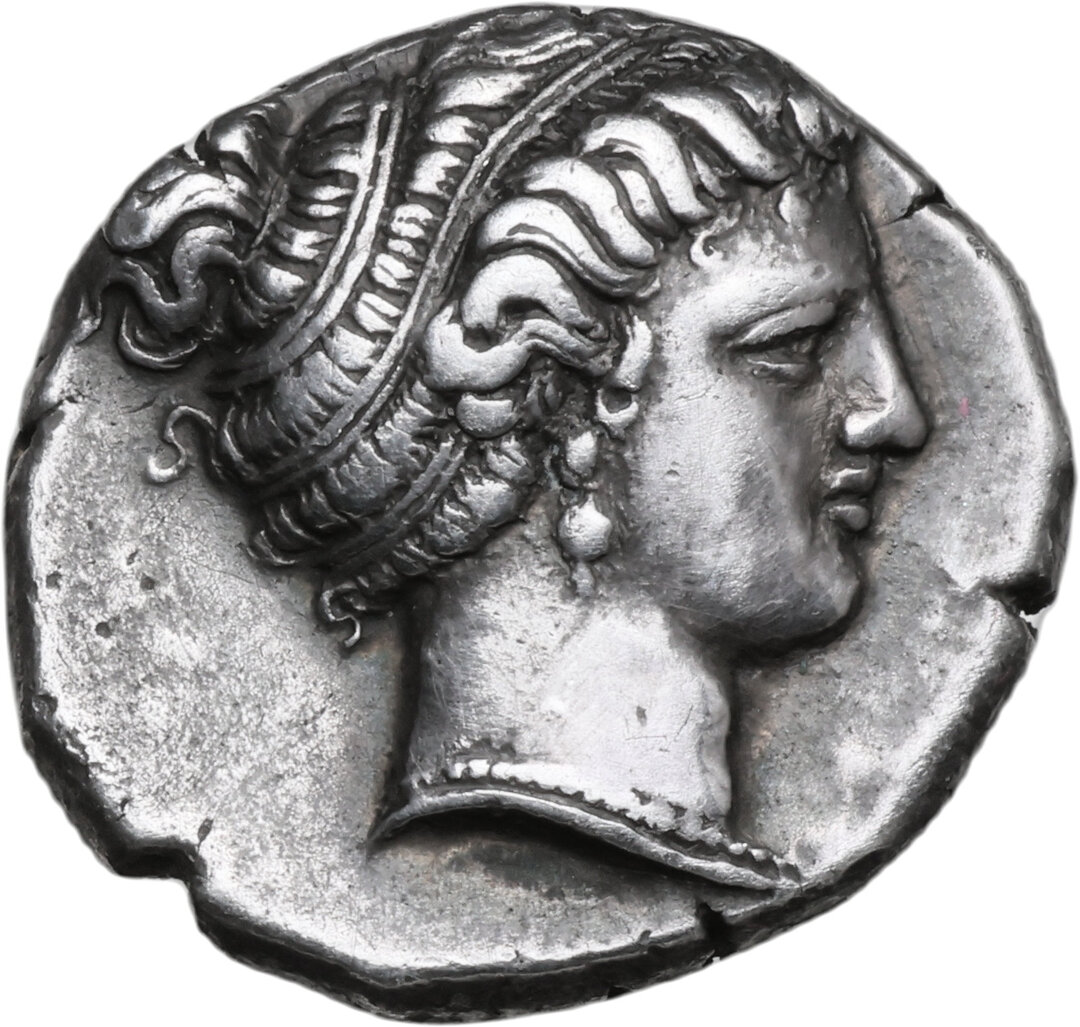
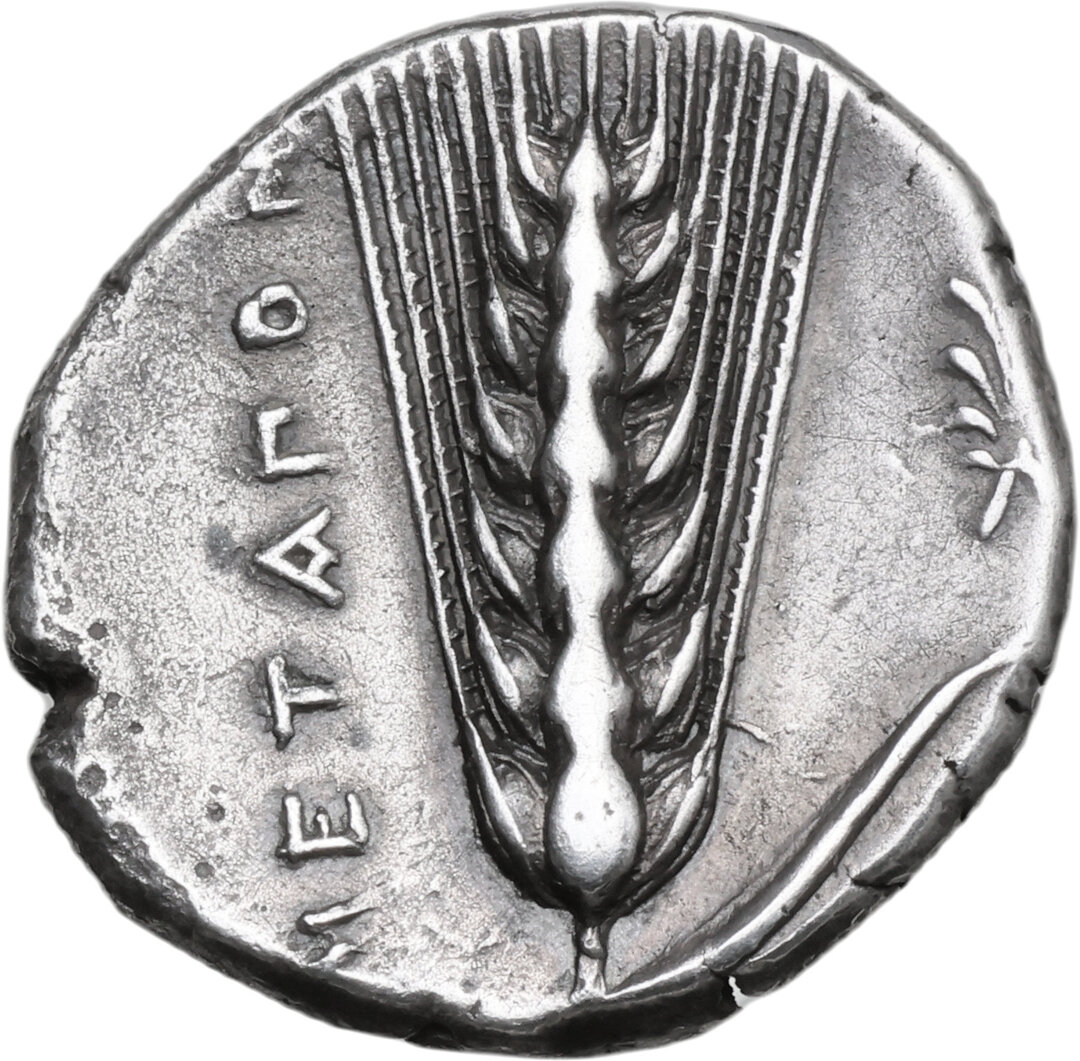
Southern Lucania, Metapontum. Stater, c. 400-340 BC. D/ Female head right, hair in topknot. R/ Barley-ear; to left, METAPON; to right, palmette. Noe 485b; Jameson 287 (this obverse die); SNG Lloyd 365 (this obverse die); SNG ANS 367; HN Italy 1540. 7.76 g. 20.5 mm. RRR. An extremely rare variety, only two specimens cited by Noe. Good VF.
Established by Achaean settlers around 630 BC, Metapontum benefited greatly from the exceptionally fertile territory surrounding the city. Its agricultural production, especially grain, became an important source of wealth, with cereals also being exported beyond the region. The close association between the city and its agricultural abundance is reflected in the tradition that the Metapontines dedicated a “golden harvest” at Delphi, apparently consisting of sheaves of grain made in gold.
Given the central importance of agriculture, the cult of Demeter naturally occupied a prominent place in Metapontum. As the goddess associated with fertility and the harvest, her presence was particularly appropriate for a community whose prosperity depended heavily upon successful cultivation. Her image consequently appears with considerable frequency on the city’s coinage.
Metapontum also played an important role in the history of Pythagoreanism. During the sixth century BC, the philosopher Pythagoras and his followers found refuge there after leaving Kroton. According to tradition, following Pythagoras’ death, the house in which he had lived at Metapontum was converted into a sanctuary dedicated to Demeter.
Ex Numismatica Ars Classica NAC 116, 2019, lot 20.
Ex New York sale XXVII, Prospero, 2012, 61. Previously privately purchased from Spink & Son in 1989 and possibly ex Spink & Son Numismatic Circular vol. XXV, 1917, 53399.
This nomos, struck during the first half of the fourth century BC, is consistent with the characteristic coinage of Metapontum at the time. The obverse commonly featured the head of a deity, with the particular divinity changing over successive issues, while the reverse was dominated by the city’s distinctive grain ear. The ear had served as Metapontum’s emblem since the sixth century BC, symbolizing the agricultural wealth upon which the city’s prosperity was founded.Ex New York sale XXVII, Prospero, 2012, 61. Previously privately purchased from Spink & Son in 1989 and possibly ex Spink & Son Numismatic Circular vol. XXV, 1917, 53399.
Established by Achaean settlers around 630 BC, Metapontum benefited greatly from the exceptionally fertile territory surrounding the city. Its agricultural production, especially grain, became an important source of wealth, with cereals also being exported beyond the region. The close association between the city and its agricultural abundance is reflected in the tradition that the Metapontines dedicated a “golden harvest” at Delphi, apparently consisting of sheaves of grain made in gold.
Given the central importance of agriculture, the cult of Demeter naturally occupied a prominent place in Metapontum. As the goddess associated with fertility and the harvest, her presence was particularly appropriate for a community whose prosperity depended heavily upon successful cultivation. Her image consequently appears with considerable frequency on the city’s coinage.
Metapontum also played an important role in the history of Pythagoreanism. During the sixth century BC, the philosopher Pythagoras and his followers found refuge there after leaving Kroton. According to tradition, following Pythagoras’ death, the house in which he had lived at Metapontum was converted into a sanctuary dedicated to Demeter.
Osserva:
Base d'asta: € 1'000
Offerte asta: :
-
Prossima offerta minimo : €
1'000
Diritti d'asta: 22.00%
Chiusura alle: 2026-10-24 14:00:00 ora di Roma
Luogo di emissione
Impossibile caricare lo sfondo storico della mappa.