Info & contatti
Le mie offerte
Lotti osservati
Condizioni di vendita
Prezzi di spedizione
Metodi di pagamento
Esito stampabile
Sessione Live 1/2/2026 17:00:00 CET
Celtic Coins (1-21)
Greek Coins (22-190)
Roman Provincial Coins (191-309)
Roman Republican Coins (310-342)
Roman Imperial Coins (343-634)
Migration Period (635-638)
Byzantine Coins (639-682)
Medieval Coins (683-728)
World Coins (729-753)
Medals & Tokens (754-755)
Group Lots (756-840)

Risultati: 61
Lotto n. 22
-
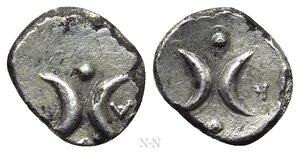
CALABRIA. Tarentum. Hemiobol (Circa 280-228 BC). Obv: Two crescents back-to-back; Pellet above and below; A to left.Rev: Two crescents back-to-back; Pellet above and below; K to left.Cf. Vlasto 1758ff.; cf. HNItaly 1077. Condition: Good very fine.Weight: 0.23 g. Diameter: 8 mm.
Lotto n. 23
-
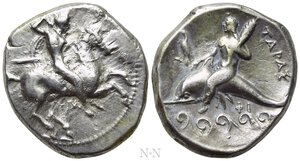
CALABRIA. Tarentum. Nomos (Circa 332-302 BC). Obv: Warrior, holding shield and two spears, and preparing to cast third spear, on horse rearing right; ΣIM below.Rev: TAPAΣ. Phalanthos, holding distaff, riding dolphin left; to left, eagle standing left; below, ΦI above waves.Vlasto 573-7; HN Italy 933; HGC 1, 800. Condition: Good very fine.Weight: 7.87 g. Diameter: 20 mm.
Classic Archaic Type
Lotto n. 24
-
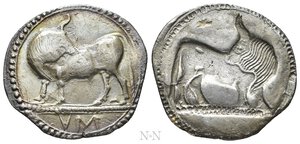
LUCANIA. Sybaris. Nomos - Stater (Circa 550-510 BC). Obv: Bull standing left, head right; V M in exergue.Rev: Incuse bull standing right, head left.HN Italy 1729; SNG ANS 828-44; HGC 1, 1231.The Greek colonial presence on the coasts of southern Italy and in Sicily generated very important cities and significant coin productions, initially characterized by the “incuse coin phenomenon,” which featured reverse types equal to obverse types, but in negative instead of relief. This was not simply an embossed worked foil, but an actual minting process, which involved the use of a reverse die with types rendered in relief. Various hypotheses have been advanced over time regarding this choice; there was probably a desire on the part of the Magna Graecia cities to differentiate these coins from those produced by the other Greek mints. Moreover, it could have been an expedient that made overstruck difficult, thus avoiding one of the possible causes of coin migration to places far from the issuing centers. This coin type was clearly intended for a local Magna Graecia market, as the hoards data show. Hence the existence of a circulation area controlled by the Magnogrean cities is assumed. The coinage of Sybaris is based on the “Achaean-Corinthian” weight system, with a stater of 7.80-8g, divided into three drachms, also used by Tarentum and other colonies of Achaean origin, such as Metapontion, Kroton and Kaulonia. The destruction of the city by Croton in 510 is a very important chronological term. Sybaris must have begun minting incuse coinage around 530 and may have been the first to introduce this type of coinage. The emblem chosen by the city is the bull with head reverted, found in an abundance of issues with different fractions (Drachms, Triobols and Obols). Condition: Good very fine.Weight: 7.69 g. Diameter: 30 mm.
Lotto n. 25
-
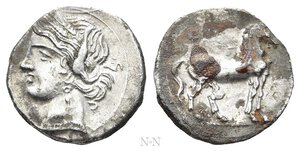
BRUTTIUM. Carthaginian occupation. Quarter Shekel (Circa 216-211 BC). Obv: Wreathed head of Tanit left.Rev: Horse standing right.CNP 27; HN Italy 2015; HGC 1, 1386. Condition: Very fine.Weight: 1.84 g. Diameter: 15 mm.
Lotto n. 26
-
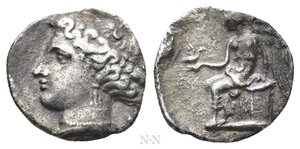
BRUTTIUM. Terina. Drachm (Circa 300 BC). Obv: TEPINAIΩN. Head of the nymph Terina left, wearing triple-pendant earring.Rev: Nike seated left on plinth, holding out right hand upon which a small bird alights.HN Italy 2642. Condition: Very fine.Weight: 1.84 g. Diameter: 15 mm.
Lotto n. 27
-
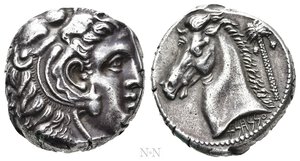
SICILY. Entella. Punic issues. Tetradrachm (Circa 300-289 BC). Obv: Head of Herakles right, wearing lion skin.Rev: Head of horse left; palm tree to right; Punic legend below.Jenkins 310 (O98/R257); HGC 2, 293.The foundation of Entella is traced back to Acestes, son of the river god Krimisos and a Trojan woman or, according to other sources to Prince Elymus, son of Anchises and brother of Aeneas. The city stood on a summit overlooking the Belice valley. Records are scarce until the arrival of the Campanian mercenaries, recruited in 410 BC by the Carthaginians and discharged after the 405 BC treaty, then passed into the pay of Dionysius I of Syracuse. After liberating Dionysius on the island of Ortigia from the Punic siege, the were discharged with rich gifts and settled in various cities on the island. In 404 a group of these mercenaries seized Entella, exterminating the entire male population, and began to mint their own coinage. From then on they implemented a generally pro-Carthaginian policy and, in 398 B.C., were able to stop Syracusan siege attempts with the help of the Punic. The strategic location of the fortress of Entella was coveted for its control of the valley below, and this led to several siege attempts: in 345 it was attacked by the Carthaginians led by General Annon, then in 342 the city was taken by the Syracusans commanded by Timoleon, but in 338 it fell back under Punic influence. During the First Punic War the city was destroyed by the Carthaginians. The “Decrees of Entella,” which were requests for help engraved on bronze slabs, from the inhabitants to neighboring cities, date from this period. In 263 Entella was conquered by the Romans and enjoyed a new period of prosperity until the second century BC when it was abandoned. Condition: Very fine.Weight: 16.76 g. Diameter: 23 mm.
Lotto n. 28
-
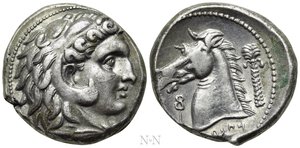
SICILY. Entella. Punic issues. Tetradrachm (Circa 300-289 BC). Obv: Head of Herakles right, wearing lion skin.Rev: Head of horse left; palm tree to right, kerykeion to left; Punic legend below.Jenkins 357 (O113/R291); CNP 272c; HGC 2, 295.The foundation of Entella is traced back to Acestes, son of the river god Krimisos and a Trojan woman or, according to other sources to Prince Elymus, son of Anchises and brother of Aeneas. The city stood on a summit overlooking the Belice valley. Records are scarce until the arrival of the Campanian mercenaries, recruited in 410 BC by the Carthaginians and discharged after the 405 BC treaty, then passed into the pay of Dionysius I of Syracuse. After liberating Dionysius on the island of Ortigia from the Punic siege, the were discharged with rich gifts and settled in various cities on the island. In 404 a group of these mercenaries seized Entella, exterminating the entire male population, and began to mint their own coinage. From then on they implemented a generally pro-Carthaginian policy and, in 398 B.C., were able to stop Syracusan siege attempts with the help of the Punic. The strategic location of the fortress of Entella was coveted for its control of the valley below, and this led to several siege attempts: in 345 it was attacked by the Carthaginians led by General Annon, then in 342 the city was taken by the Syracusans commanded by Timoleon, but in 338 it fell back under Punic influence. During the First Punic War the city was destroyed by the Carthaginians. The “Decrees of Entella,” which were requests for help engraved on bronze slabs, from the inhabitants to neighboring cities, date from this period. In 263 Entella was conquered by the Romans and enjoyed a new period of prosperity until the second century BC when it was abandoned. Condition: Very fine.Weight: 16.84 g. Diameter: 24 mm.
Lotto n. 29
-
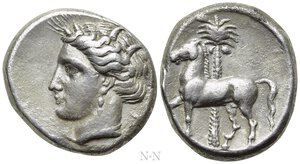
SICILY. Entella. Punic Issues. Tetradrachm (Circa 345/38-320/15 BC). Obv: Wreathed head of Kore left, wearing earring and necklace; Punic letter behind.Rev: Horse walking left; palm tree in background.Jenkins 61 (O16/R55); CNP 208c; HGC 2, 268.The foundation of Entella is traced back to Acestes, son of the river god Krimisos and a Trojan woman or, according to other sources to Prince Elymus, son of Anchises and brother of Aeneas. The city stood on a summit overlooking the Belice valley. Records are scarce until the arrival of the Campanian mercenaries, recruited in 410 BC by the Carthaginians and discharged after the 405 BC treaty, then passed into the pay of Dionysius I of Syracuse. After liberating Dionysius on the island of Ortigia from the Punic siege, the were discharged with rich gifts and settled in various cities on the island. In 404 a group of these mercenaries seized Entella, exterminating the entire male population, and began to mint their own coinage. From then on they implemented a generally pro-Carthaginian policy and, in 398 B.C., were able to stop Syracusan siege attempts with the help of the Punic. The strategic location of the fortress of Entella was coveted for its control of the valley below, and this led to several siege attempts: in 345 it was attacked by the Carthaginians led by General Annon, then in 342 the city was taken by the Syracusans commanded by Timoleon, but in 338 it fell back under Punic influence. During the First Punic War the city was destroyed by the Carthaginians. The “Decrees of Entella,” which were requests for help engraved on bronze slabs, from the inhabitants to neighboring cities, date from this period. In 263 Entella was conquered by the Romans and enjoyed a new period of prosperity until the second century BC when it was abandoned. Condition: Very fine.Weight: 17.01 g. Diameter: 24 mm.
Lotto n. 30
-
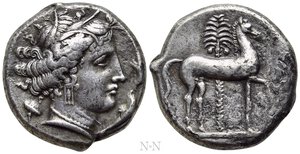
SICILY. Entella. Punic Issues. Tetradrachm (Circa 345/38-320/15 BC). Obv: Head of Kore right, wearing wreath of grain ears, triple-pendant earring, and pearl necklace; poppy behind neck, two dolphins to right.Rev: Horse walking right; palm tree in background.Jenkins, Punic, Series 2b, 101 (O35/R92); CNP 203a; HGC 2, 275.The foundation of Entella is traced back to Acestes, son of the river god Krimisos and a Trojan woman or, according to other sources to Prince Elymus, son of Anchises and brother of Aeneas. The city stood on a summit overlooking the Belice valley. Records are scarce until the arrival of the Campanian mercenaries, recruited in 410 BC by the Carthaginians and discharged after the 405 BC treaty, then passed into the pay of Dionysius I of Syracuse. After liberating Dionysius on the island of Ortigia from the Punic siege, the were discharged with rich gifts and settled in various cities on the island. In 404 a group of these mercenaries seized Entella, exterminating the entire male population, and began to mint their own coinage. From then on they implemented a generally pro-Carthaginian policy and, in 398 B.C., were able to stop Syracusan siege attempts with the help of the Punic. The strategic location of the fortress of Entella was coveted for its control of the valley below, and this led to several siege attempts: in 345 it was attacked by the Carthaginians led by General Annon, then in 342 the city was taken by the Syracusans commanded by Timoleon, but in 338 it fell back under Punic influence. During the First Punic War the city was destroyed by the Carthaginians. The “Decrees of Entella,” which were requests for help engraved on bronze slabs, from the inhabitants to neighboring cities, date from this period. In 263 Entella was conquered by the Romans and enjoyed a new period of prosperity until the second century BC when it was abandoned. Condition: Very fine.Weight: 16.25 g. Diameter: 24 mm.
Euainetos Style Dies !
Lotto n. 31
-
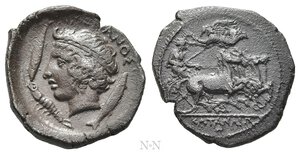
SICILY. Katane. Drachm (Circa 412-410 BC). Unsigned dies in the style of Euainetos. Obv: KATANAIΩN. Charioteer driving fast quadriga right; above, Nike flying left, crowning charioteer.Rev: AMENANOΣ. Head of Amenanos left, wearing tainia; two fish and crayfish around.Mirone 77-9; SNG ANS 1263; HGC 2, 582.Rare Condition: Near extremely fine.Weight: 4.32 g. Diameter: 20 mm.
Ex Kimpel 1970´s
Lotto n. 32
-
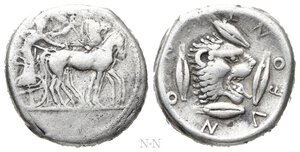
SICILY. Leontinoi. Tetradrachm (circa 476-466 BC). Obv: Charioteer driving slow quadriga right; above, Nike flying right, crowning horses.Rev: ΛEONTINON. Head of roaring lion right; four barley grains around.Boehringer, Münzgeschichte 8; HGC 2, 660.Ex Dr. W. Kimpel, Düsseldorf 1970´s with Ticket Condition: Near very fine.Weight: 17.17 g. Diameter: 24 mm.
Ex Gorny 2016
Lotto n. 33
-
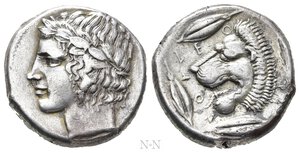
SICILY. Leontinoi. Tetradrachm (Circa 430-425 BC). Obv: Laureate head of Apollo left.Rev: LEONTINON. Lion head left with open jaws; three barleycorns and laurel leaf around.Boehringer 55 (same dies); SNG ANS 257 (same dies); HGC 2, 671.Ex Gorny & Mosch 241 (2016), lot 1149 Condition: Good very fine.Weight: 16.79 g. Diameter: 24 mm.
Lotto n. 34
-
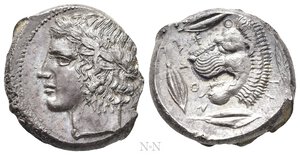
SICILY. Leontinoi. Tetradrachm (Circa 430-425 BC). Obv: Laureate head of Apollo left.Rev: LEONTINON. Lion head left with open jaws; three barleycorns and laurel leaf around.Boehringer 55 (same dies); SNG ANS 257 (same dies); HGC 2, 671. Condition: Near uncirculated.Weight: 17.11 g. Diameter: 26 mm.
Lotto n. 35
-
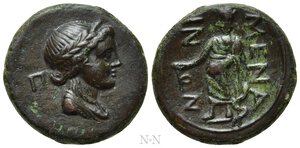
SICILY. Menaion. Pentonkion (Circa 200-150 BC). Obv: Laureate bust of Apollo right; Π (mark of value) to left.Rev: MENAINΩN. Asklepios standing left, holding patera and resting on serpent-entwined staff.Campana 3; CNS 3; SNG ANS 294-5; HGC 2, 758. Condition: Good very fine.Weight: 3.72 g. Diameter: 17 mm.
Lotto n. 36
-
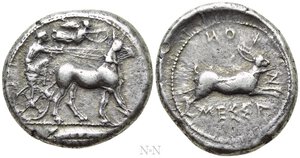
SICILY. Messana. Tetradrachm (Circa 478-476). Obv: Charioteer driving biga of mules right; above, crowning Nike flying right; olive leaf in exergue.Rev: MEΣΣANION. Hare springing right.Caltabiano Series X; SNG ANS -; HGC 2, 783. Condition: Near very fine.Weight: 17.25 g. Diameter: 29 mm.
Ex Oslo Mynthandel 2007
Lotto n. 37
-
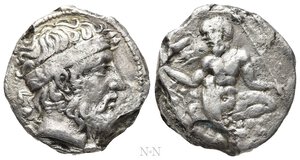
SICILY. Naxos. Fourrée Tetradrachm (Circa 461-430 BC). Obv: Head of Dionysos right, wearing tainia decorated with ivy branch.Rev: NAΞION. Ithyphallic Silenos squatting facing on rocks, head left, holding kantharos and thyrsos; ivy branch to left.Cahn 150 (V92/R121); SNG ANS 531; cf. HGC 2, 984 (for prototype).Ex Oslo Mynthandel 58 (2007), lot 1179; Classical Numismatic Group 96 (2014), lot 11 Condition: Good fine.Weight: 13.09 g. Diameter: 26 mm.
Lotto n. 38
-
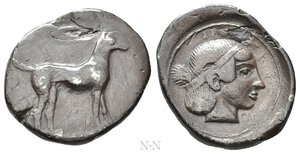
SICILY. Segesta. Didrachm (Circa 455/0-445/0 BC). Obv: Hound standing right; barleycorn above.Rev: Head of the nymph Segesta right within linear circle.Hurter 76 (V25/R43); SNG ANS 637 (same dies); BMC 10 (same dies); HGC 2, 1128. Condition: Very fine.Weight: 7.75 g. Diameter: 25 mm.
Lotto n. 39
-
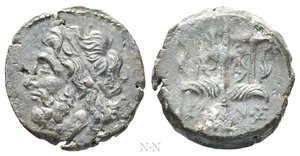
SICILY. Syracuse. Hieron II (275-215 BC). Ae. Obv: Head of Poseidon left, wearing tainia.Rev: ΙΕΡΩ - ΝΟΣ. Ornamented trident head flanked by two dolphins.CNS 197; HGC 2, 1550. Condition: Extremely fine.Weight: 5.57 g. Diameter: 19 mm.
Lotto n. 40
-
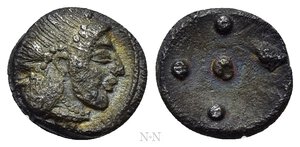
SICILY. Syracuse. Hieron I (475-470 BC). Pentonkion. Obv: Diademed head of Arethousa right.Rev: Five pellets (mark of value).Boehringer Series XIId, 371-2; HGC 2, 1394.Rare Condition: Very fine.Weight: 0.26 g. Diameter: 7 mm.
Classic Sicilian Coin Art
Lotto n. 41
-
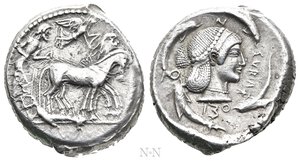
SICILY. Syracuse. Deinomenid Tyranny (485-466 BC). Tetradrachm. Obv: Charioteer driving quadriga right; above, crowning Nike flying right.Rev: ΣVRAKOΣION. Diademed head of Arethusa right; four dolphins around.Boehringer 110 (V50/R76); McClean 2604 (same dies); HGC 2, 1306. Condition: Good very fine.Weight: 17.29 g. Diameter: 24 mm.
Lotto n. 42
-
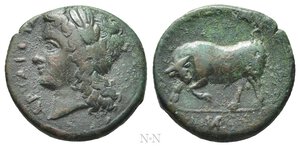
SICILY. Tauromenion. Ae Hemilitron (Circa 317-275 BC). Obv: APXAΓETAΣ. Laureate head of Apollo left.Rev: TAYPOMENITAN. Bull butting left; N in exergue.Campana 12; CNS 7; HGC 2, 1591. Condition: Near very fine.Weight: 5.36 g. Diameter: 21 mm.
Lotto n. 43
-
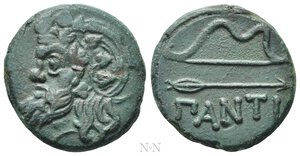
CIMMERIAN BOSPOROS. Pantikapaion. Ae (Circa 340-325 BC). Obv: Wreathed head of satyr left.Rev: ΠANTI. Bow and arrow.MacDonald 59; SNG BM Black Sea 868; HGC 7, 106. Condition: Very fine.Weight: 11.24 g. Diameter: 25 mm.
Lotto n. 44
-
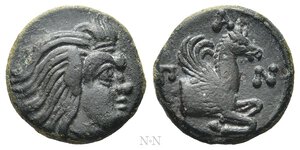
CIMMERIAN BOSPOROS. Pantikapaion. Ae (Circa 340-325 BC). Obv: Head of Pan right.Rev: Π - Α - Ν. Forepart of Pegasos right.MacDonald 71; SNG BM Black Sea 872-3; HGC 7, 134. Condition: Very fine.Weight: 3.73 g. Diameter: 17 mm.
Lotto n. 45
-
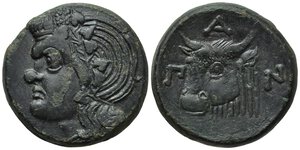
CIMMERIAN BOSPOROS. Pantikapaion. Ae (Circa 325-310 BC). Obv: Head of Satyr left.Rev: Π - Α - Ν. Head of bull left.MacDonald 65; HGC 7, 107. Condition: Very fine.Weight: 14.28 g. Diameter: 26 mm.
Lotto n. 46
-
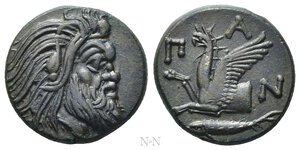
CIMMERIAN BOSPOROS. Pantikapaion. Ae (Circa 310-304/3 BC). Obv: Bearded head of satyr right.Rev: Π - Α - Ν. Forepart of griffin left; below, sturgeon left.Anokhin 1023; MacDonald 69; HGC 7, 113. Condition: Good very fine.Weight: 6.59 g. Diameter: 21 mm.
Lotto n. 47
-
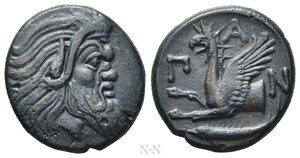
CIMMERIAN BOSPOROS. Pantikapaion. Ae (Circa 310-304/3 BC). Obv: Bearded head of satyr right.Rev: Π - Α - Ν. Forepart of griffin left; below, sturgeon left.Anokhin 1023; MacDonald 69; HGC 7, 113. Condition: Very fine.Weight: 7.58 g. Diameter: 22 mm.
Lotto n. 48
-
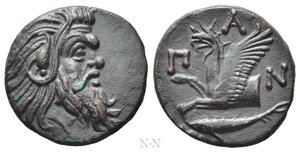
CIMMERIAN BOSPOROS. Pantikapaion. Ae (Circa 310-304/3 BC). Obv: Bearded head of satyr right.Rev: Π - Α - Ν. Forepart of griffin left; below, sturgeon left.Anokhin 1023; MacDonald 69; HGC 7, 113. Condition: Very fine.Weight: 5.78 g. Diameter: 22 mm.
Lotto n. 49
-
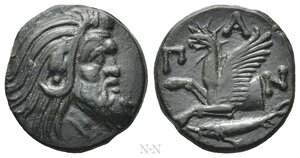
CIMMERIAN BOSPOROS. Pantikapaion. Ae (Circa 310-304/3 BC). Obv: Bearded head of satyr right.Rev: Π - Α - Ν. Forepart of griffin left; below, sturgeon left.Anokhin 1023; MacDonald 69; HGC 7, 113. Condition: Near very fine.Weight: 6.03 g. Diameter: 21 mm.
Lotto n. 50
-
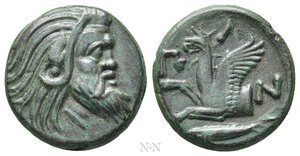
CIMMERIAN BOSPOROS. Pantikapaion. Ae (Circa 310-304/3 BC). Obv: Bearded head of satyr right.Rev: Π - Α - Ν. Forepart of griffin left; below, sturgeon left.Anokhin 1023; MacDonald 69; HGC 7, 113. Condition: Very fine.Weight: 6.31 g. Diameter: 21 mm.
Lotto n. 51
-
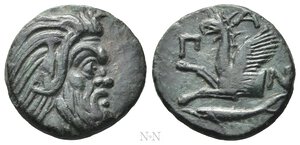
CIMMERIAN BOSPOROS. Pantikapaion. Ae (Circa 310-304/3 BC). Obv: Bearded head of satyr right.Rev: Π - Α - Ν. Forepart of griffin left; below, sturgeon left.Anokhin 1023; MacDonald 69; HGC 7, 113. Condition: Near very fine, cleaning marks.Weight: 5.17 g. Diameter: 21 mm.
Lotto n. 52
-
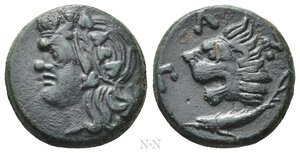
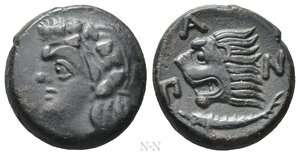
CIMMERIAN BOSPOROS. Pantikapaion. Ae (Circa 310-304/3 BC). Obv: Head of satyr left, wearing ivy wreath.Rev: Π - Α - Ν. Head of lion left; below, fish left.MacDonald 70; SNG BM Black Sea 884; HGC 7, 114. Condition: Very fine; cleaning marks; partially tooled.Weight: 7.63 g. Diameter: 20 mm.
Lotto n. 53
-
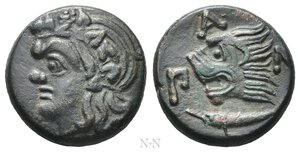
CIMMERIAN BOSPOROS. Pantikapaion. Ae (Circa 310-304/3 BC). Obv: Head of satyr left, wearing ivy wreath.Rev: Π - Α - Ν. Head of lion left; below, fish left.MacDonald 70; SNG BM Black Sea 884; HGC 7, 114. Condition: Very fine.Weight: 7.14 g. Diameter: 20 mm.
Lotto n. 54
-
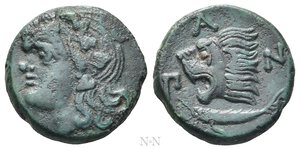
CIMMERIAN BOSPOROS. Pantikapaion. Ae (Circa 310-304/3 BC). Obv: Head of satyr left, wearing ivy wreath.Rev: Π - Α - Ν. Head of lion left; below, fish left.MacDonald 70; SNG BM Black Sea 884; HGC 7, 114. Condition: Very fine.Weight: 6.05 g. Diameter: 19 mm.
Lotto n. 55
-
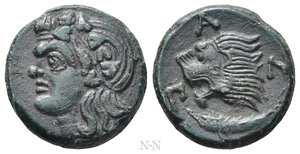
CIMMERIAN BOSPOROS. Pantikapaion. Ae (Circa 310-304/3 BC). Obv: Head of satyr left, wearing ivy wreath.Rev: Π - Α - Ν. Head of lion left; below, fish left.MacDonald 70; SNG BM Black Sea 884; HGC 7, 114. Condition: Very fine.Weight: 5.99 g. Diameter: 20 mm.
Lotto n. 56
-
CIMMERIAN BOSPOROS. Pantikapaion. Ae (Circa 310-304/3 BC). Obv: Head of satyr left, wearing ivy wreath.Rev: Π - Α - Ν. Head of lion left; below, fish left.MacDonald 70; SNG BM Black Sea 884; HGC 7, 114. Condition: Very fine.Weight: 7.37 g. Diameter: 20 mm.
Lotto n. 57
-
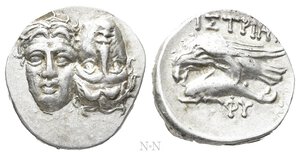
MOESIA. Istros. Drachm (4th century BC). Obv: Facing male heads, the right inverted.Rev: ΙΣΤΡΙΗ. Sea eagle left, grasping dolphin with talons; ΦY below.SNG BM Black Sea 256; HGC 3.2, 1803. Condition: Good very fine.Weight: 5.33 g. Diameter: 19 mm.
Lotto n. 58
-
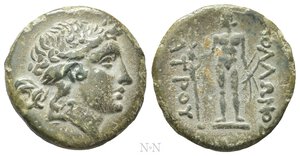
THRACE. Apollonia Pontika. Ae (Circa 2nd century BC). Obv: Laureate head of Apollo right.Rev: AΠOΛΛΩNOΣ / IATPOY. Apollo standing facing, head left, holding branch and bow.Topalov 92-3; HGC 3.2, 1350. Condition: Very fine.Weight: 6.33 g. Diameter: 23 mm.
Lotto n. 59
-
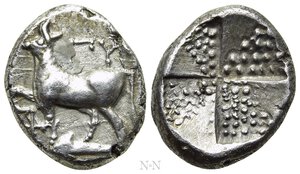
THRACE. Byzantion. Drachm (Circa 387/6-340 BC). Obv: 'ΠΥ. Bull standing on dolphin left; to left, trident below raised foreleg.Rev: Quadripartite incuse square with stippled surface.Schönert-Geiss 712–32; SNG BM Black Sea 8; HGC 3.2, 1387. Condition: Good very fine.Weight: 3.59 g. Diameter: 15 mm.
Lotto n. 60
-
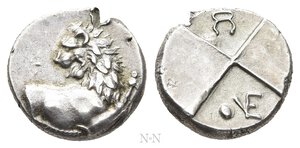
THRACE. Chersonesos. Hemidrachm (Circa 386-338 BC). Obv: Forepart of lion right, head left.Rev: Quadripartite incuse square with alternating raised and sunken quarters; monogram with pellet and kerykeion in sunken quarters.Weber 2421; CN online 53783; HGC 3.2, 1437. Condition: Extremely fine.Weight: 2.34 g. Diameter: 13 mm.
Lotto n. 61
-
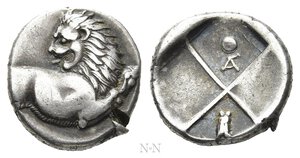
THRACE. Chersonesos. Hemidrachm (Circa 386-338 BC). Obv: Forepart of lion right, head left.Rev: Quadripartite incuse square, with alternating raised and sunken quarters; pellet over monogram and cicada in opposite sunken quarters.McClean 4096 (described as fly); SNG Copenhagen -; HGC 3.2, 1437. Condition: Very fine.Weight: 2.36 g. Diameter: 13 mm.
Lotto n. 62
-
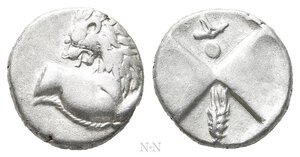
THRACE. Chersonesos. Hemidrachm (Circa 386-338 BC). Obv: Forepart of lion right, head left.Rev: Quadripartite incuse square with alternating raised and sunken quarters; monogram and pellet in one sunken quarter, grain ear in the other.HGC 3.2, 1437. Condition: Near very fine.Weight: 2.38 g. Diameter: 13 mm.
Lotto n. 63
-
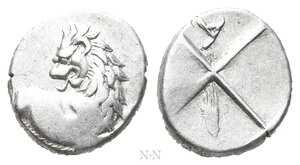
THRACE. Chersonesos. Hemidrachm (Circa 386-338 BC). Obv: Forepart of lion right, head left.Rev: Quadripartite incuse square with alternating raised and sunken quarters; monogram and pellet(?) in one sunken quarter, grain ear in the other.Cf. McClean 4089; HGC 3.2, 1437. Condition: Very fine.Weight: 2.28 g. Diameter: 13 mm.
Lotto n. 64
-
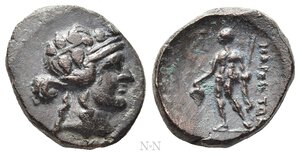
THRACE. Maroneia. Ae (Circa 168/7-48/5 BC). Obv: Head of Dionysos right, wearing ivy wreath.Rev: MAPΩNITΩN. Dionysos standing left, holding grape bunch and narthex stalks.Schönert-Geiss 1556-1631; HGC 3.2, 1541. Condition: Very fine.Weight: 6.24 g. Diameter: 19 mm.
Lotto n. 65
-
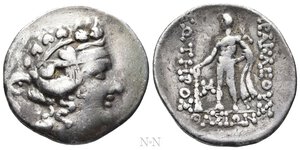
THRACE. Thasos. Tetradrachm (Circa 148-90/80 BC). Obv: Head of Dionysos right, wearing ivy wreath.Rev: HPAKΛEOYΣ / ΣΩTHPOΣ / ΘAΣIΩN. Herakles standing left, holding club and lion skin. Control: Monogram to inner left.SNG Copenhagen 1040-5; HGC 6, 359. Condition: Good fine.Weight: 16.35 g. Diameter: 33 mm.
Lotto n. 66
-
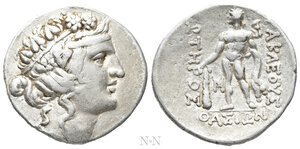
THRACE. Thasos. Tetradrachm (Circa 148-90/80 BC). Obv: Head of Dionysos right, wearing ivy wreath.Rev: HPAKΛEOYΣ / ΣΩTHPOΣ / ΘAΣIΩN. Herakles standing left, holding club and lion skin. Control: Monogram to inner left.SNG Copenhagen 1040-5; HGC 6, 359. Condition: Very fine.Weight: 17.08 g. Diameter: 31 mm.
Lotto n. 67
-
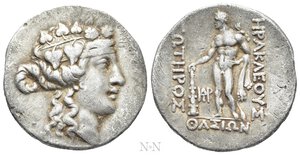
THRACE. Thasos. Tetradrachm (Circa 148-90/80 BC). Obv: Head of Dionysos right, wearing ivy wreath.Rev: HPAKΛEOYΣ / ΣΩTHPOΣ / ΘAΣIΩN. Herakles standing left, holding club and lion skin. Control: Monogram to inner left.SNG Copenhagen 1046-8; HGC 6, 359. Condition: Very fine.Weight: 16.26 g. Diameter: 31 mm.
Lotto n. 68
-
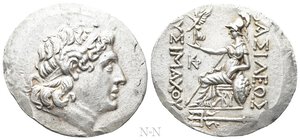
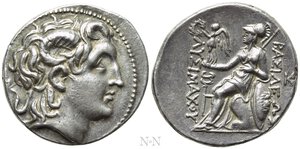
KINGS OF THRACE (Macedonian). Lysimachos (305-281 BC). Tetradrachm. Byzantion. Civic issue. Obv: Diademed head of the deified Alexander right, wearing horn of Ammon.Rev: ΒΑΣΙΛΕΩΣ / ΛΥΣΙΜΑΧΟΥ. Athena seated left on throne, holding Nike and spear over shoulder. Controls: Monogram to inner left, BV on throne; in exergue, filleted trident left.Marinescu Issue 131; Müller 199; HGC 3.2, 1401. Condition: Extremely fine.Weight: 16.96 g. Diameter: 36 mm.
Lotto n. 69
-
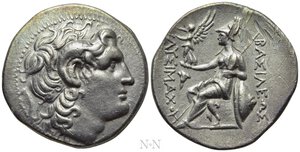
KINGS OF THRACE (Macedonian). Lysimachos (305-281 BC). Tetradrachm. Amphipolis. Obv: Diademed head of the deified Alexander right, wearing horn of Ammon.Rev: ΒΑΣΙΛΕΩΣ / ΛΥΣΙΜΑΧΟΥ. Athena seated left on throne, holding Nike and spear over shoulder. Controls: Kerykeion with handle to inner left, monogram to outer right.Thompson 193; HGC 3.2, 1750l. Condition: Good very fine.Weight: 17.18 g. Diameter: 31 mm.
Lotto n. 70
-
KINGS OF THRACE (Macedonian). Lysimachos (305-281 BC). Tetradrachm. Sestos. Obv: Head of the deified Alexander right, wearing horn of Ammon.Rev: BAΣΙΛΕΩΣ ΛYΣIMAXOY. Athena Nikephoros seated left, left arm resting on shield. Control: rose to inner left.Thompson 29; Müller 331. Condition: Very fine.Weight: 16.67 g. Diameter: 29 mm.
Lotto n. 71
-
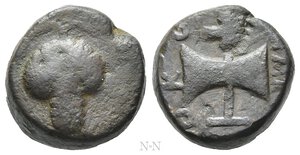
KINGS OF THRACE. Amatokos (First reign, circa 389-380 BC). Ae. Obv: Grape bunch.Rev: AMATOKO. Labrys; above, grape bunch.Peter p. 134; SNG BM Black Sea -; SNG Stancomb -; HGC 3.2, 1704 var. (symbol). Condition: Near very fine.Weight: 15.12 g. Diameter: 19 mm.
Very Rare Issue
Lotto n. 72
-
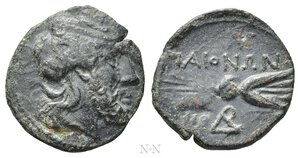
PAEONIA. Doberos(?). Ae (Circa 187-168 BC). Obv: Laureate head of Zeus right.Rev: ΠAIONΩN. Thunderbolt; ΔO monogram below.AMNG III/2, p. 5, 35.Extremely rare Condition: Very fine.Weight: 2.95 g. Diameter: 18 mm.
Lotto n. 73
-
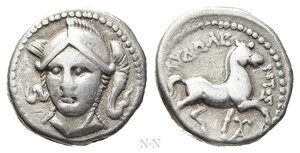
KINGS OF PAEONIA. Audoleon (Circa 315-286). Drachm. Astibos or Damastion. Obv: Head of Athena facing slightly left, wearing triple-crested Attic helmet and necklace.Rev: ΑΥΔΩΛΕΟΝΤΟΣ. Horse walking right; monogram below.AMNG III/2, 7; HGC 3, 154. Condition: Near very fine.Weight: 3.00 g. Diameter: 15 mm.
Lotto n. 74
-
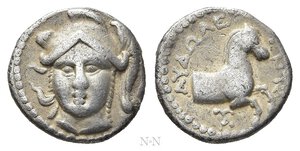
KINGS OF PAEONIA. Audoleon (Circa 315-286). Tetrobol. Astibos or Damastion. Obv: Head of Athena facing slightly left, wearing triple-crested Attic helmet and necklace.Rev: ΑΥΔΩΛΕΟΝΤΟΣ. Forepart of horse galloping right; monogram below.HGC 3.1, 155.Rare Condition: Good fine.Weight: 1.91 g. Diameter: 12 mm.
Lotto n. 75
-
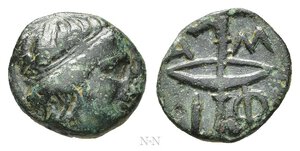
MACEDON. Amphipolis. Ae (Circa 355-353 BC). Obv: Diademed male head (of Apollo?) right.Rev: A - M / Φ - I. Lighted torch.SNG ANS 89-93; HGC 3.1, 438. Condition: Very fine.Weight: 1.17 g. Diameter: 11 mm.
Lotto n. 76
-
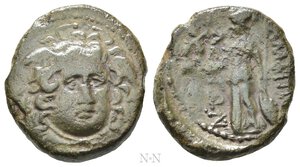
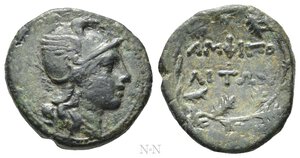
MACEDON. Amphipolis. Ae (187-31 BC). Obv: Winged gorgoneion facing.Rev: AMΦIΠOΛEITΩN. Athena standing left, holding shield, spear and crowning Nike.SNG ANS 148; HGC 3.1, -. Condition: Near very fine.Weight: 6.11 g. Diameter: 23 mm.
Lotto n. 77
-
MACEDON. Amphipolis. Ae (168-166 BC). Obv: Helmeted head of Roma right.Rev: AMΦIΠOΛITΩN. Legend in two lines within oak wreath.SNG ANS 104 var. (monograms on rev.); BMC 21; HGC 3.1, 418. Condition: Very fine.Weight: 6.93 g. Diameter: 22 mm.
No Specimen on Acsearch
Lotto n. 78
-
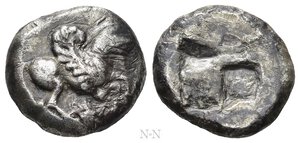
MACEDON. Argilos. Hemistater (Circa 5th century BC). Obv: Pegasos flying right.Rev: Quadripartite incuse square.Cf. Liampi E2; HGC 3.1, -. Condition: Very fine.Weight: 8.22 g. Diameter: 18 mm.
Lotto n. 79
-
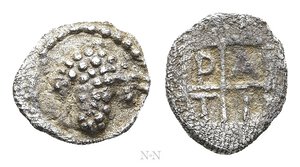
MACEDON. Tragilos. Hemiobol (Circa 450-400 BC). Obv: Grape bunch.Rev: Quadripartite incuse square, with T-P-A-I in quarters.AMNG III/2, 2 var. (legend arrangement); HGC 3.1, 746. Condition: Extremely fine.Weight: 0.20 g. Diameter: 7 mm.
Lotto n. 80
-
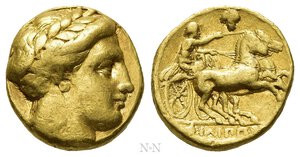
KINGS OF MACEDON. Philip II (359-336 BC). GOLD Stater. Pella. Obv: Laureate head of Apollo right.Rev: ΦΙΛΙΠΠΟΥ. Charioteer driving biga right. Controls: grape-bunch above.Le Rider 12; HGC 3.1, 844.In the Classical period throughout Greece silver coinage predominated, while gold was minted by a few cities. In Asia Minor electrum coins were still struck in three mints (Kyzikos, Mytilene and Phokaia) until the Athenian hegemony that followed the victory over the Persians. In 405 BC the issue of Lampsakos gold staters based on the Persian weight system began. Athens produced the first and only precious metal issues toward the end of the Peloponnesian War, in 407-6 BC, at a time of severe crisis when silver mining in Laurion began to fail and it was forced to melt down the Parthenon's gold statues. Aside from these cases, the first important and massive gold coinage in the Greek context was that of Philip II of Macedon. He minted abundant series of coins in several mints. Having conquered the city of Krenides, where the Thasians had already exploited gold mines, Philip renamed the city Philippi and started the production of philippéioi, gold staters weighing two Attic drachms. Apollo's youthful head appears on the obverse, a galloping chariot on the reverse, types glorifying the Macedonian ruler who had triumphed at the Olympian Games in 356 BC. The series also includes fractions. Condition: Fine.Weight: 8.53 g. Diameter: 17 mm.
Lotto n. 81
-
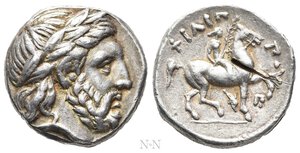
KINGS OF MACEDON. Philip II (359-336 BC). Tetradrachm. Amphipolis. Obv: Laureate head of Zeus right.Rev: ΦΙΛΙΠΠΟΥ. Youth, holding palm frond, riding horse right. Controls: dolphin below, pellet-in-Π below raised foreleg.Le Rider pl. 46, 19; SNG ANS 749-56.Certified by NGC 6636427-001 Condition: Good very fine.Weight: 14.33 g. Diameter: 23 mm.
Caricamento altri risultati...