Banner Artemide LXVI
Risultati: 10
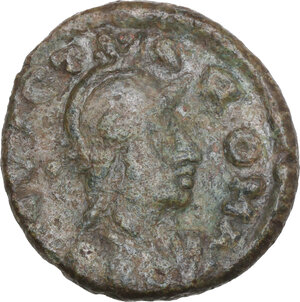
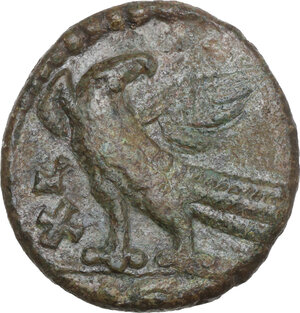
Ostrogothic Italy. Municipal bronze coinage of Rome, light series. AE 40 Nummi. Rome mint. Struck c. 493-518 AD - Ostrogothic Italy. Municipal bronze coinage of Rome, light series. AE 40 Nummi. Rome mint. Struck c. 493-518 AD. D/ INVICTA ROMA. Helmeted and cuirassed bust of Roma right. R/ XL. Eagle standing left, head reverted; in exergue, •Γ•. COI 76b; MIB 74a (Theodoric and Athalaric); MEC 1, 107. AE. 9.08 g. 24 mm. Nice for issue. Good VF.
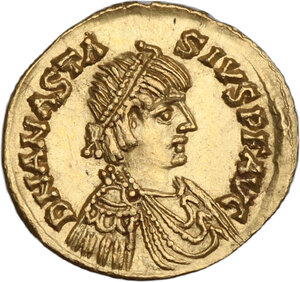
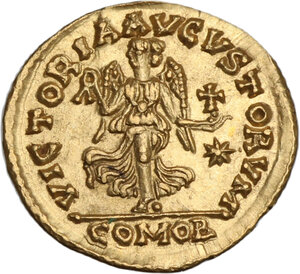
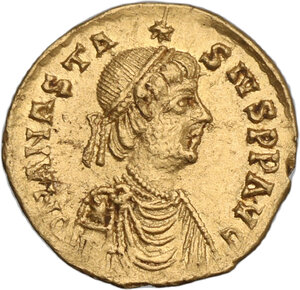
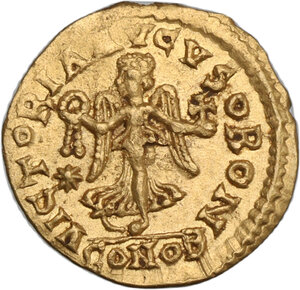
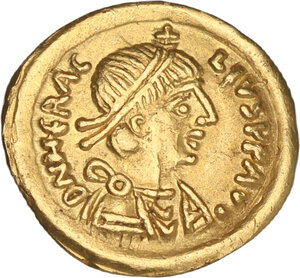
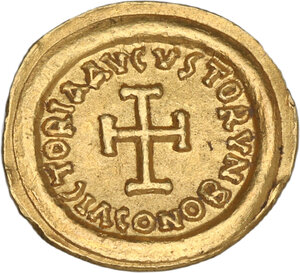
Ostrogothic Italy, Theoderic (493-526 AD). AV Tremissis in the name of Anastasius I, Rome mint, 493-518 AD - Ostrogothic Italy, Theoderic (493-526 AD). AV Tremissis in the name of Anastasius I, Rome mint, 493-518 AD. D/ D N ANASTASIVS P F AVG. Diademed, draped and cuirassed bust right. R/ VICTORIA AVGVSTORVM. Victory advancing right, head left, holding wreath and globus cruciger; to right, star; in exergue, COMOB. MIB 10; COI 13b; MEC 1, 114-115. AV. 1.47 g. 14.5 mm. R. Rare and in excellent condition for issue, brilliant and superb. Rare as such. About FDC/FDC.
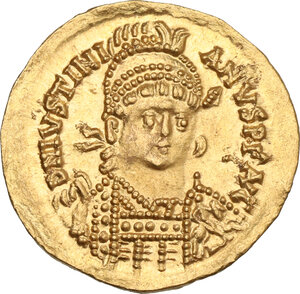
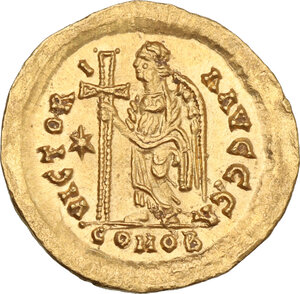
Ostrogothic Italy, Athalaric (526-534 AD). AV Solidus. Pseudo-Imperial Coinage. In the name of Justinian I, Rome mint, c. 527-530 AD - Ostrogothic Italy, Athalaric (526-534 AD). AV Solidus. Pseudo-Imperial Coinage. In the name of Justinian I, Rome mint, c. 527-530 AD. D/ D N IVSTINIANVS P F AVG. Diademed, helmeted and cuirassed bust facing slightly right, holding spear and shield. R/ VICTORIA AVGGG A. Victory standing left, holding long, jeweled cross; star to left; in exergue, COMOB. BMC Vandals, 1-4 and pl. VII, 16-17 (Ravenna); COI 34; MEC 1, 122; MIB 28. AV. 4.43 g. 21 mm. R. An exceptional example; well struck and centered. Good EF/About FDC.
Ostrogothic Italy, Athalaric (526-534 AD). AV Tremissis in the name of Anastasius, Mediolanum mint, c. 491-518 AD - Ostrogothic Italy, Athalaric (526-534 AD). AV Tremissis in the name of Anastasius, Mediolanum mint, c. 491-518 AD. D/ D N ANASTASIVS P P AVG. Pearl-diademed, draped and cuirassed bust right. R/ VICTORIA AVGVSTORVM. Victory advancing right, head left, holding wreath and cross; star in left field; COMOB in exergue. BMC Vandals 6; COI 27; MIB 23; MEC 1, 116. AV. 1.45 g. 14 mm. R. Rare and choice example. EF. Ex NAC 92, 2016, lot 901.
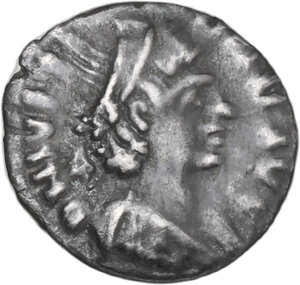
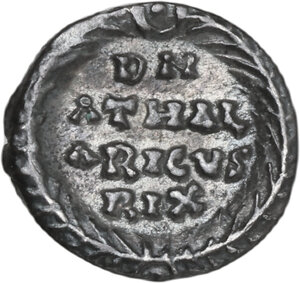
Ostrogothic Italy. Athalaric (526-534 AD). AR 1/4 Siliqua in the name of Justinian I, Ravenna mint - Ostrogothic Italy. Athalaric (526-534 AD). AR 1/4 Siliqua in the name of Justinian I, Ravenna mint. D/ DN IVSTI-N[IAN AV]G. Diademed, draped and cuirassed bust of Justinian right. R/ DN/ATHAL/ARICVS/RIX within laurel wreath. MIB 54; COI 59; Ranieri 282; MEC 1, 127. AR. 0.7 g. 11 mm. RR. Very rare in this condition. Dark tone. Good VF/EF.
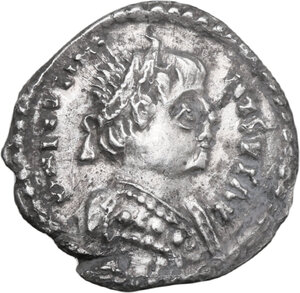
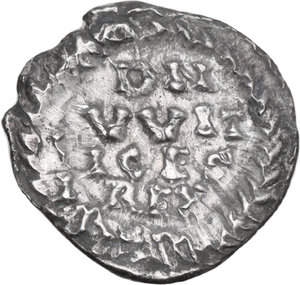
Ostrogothic Italy, Witigis (536-539 AD). AR Half Siliqua. Pseudo-Imperial Coinage. In the name of Justinian I. Ravenna mint - Ostrogothic Italy, Witigis (536-539 AD). AR Half Siliqua. Pseudo-Imperial Coinage. In the name of Justinian I. Ravenna mint. D/ DN IVSTINI-NVS ΡΓ ΛV. Diademed, draped and cuirassed bust right. R/ DN/ VVIT/ ICES/ REX within laurel wreath. COI 63; MIB 57; MEC 1, 151. AR. 1.26 g. 14.5 mm. RR. Very rare. Nicey toned. VF.
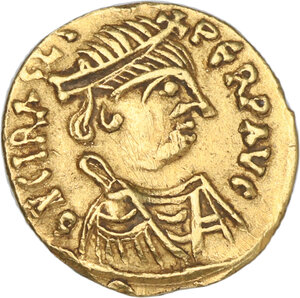
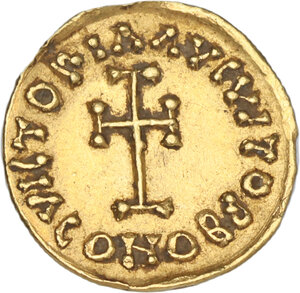
The Lombards in Tuscany. Uncertain King. AV Tremissis. Pseudo-Imperial Imitating a Ravenna mint issue of Heraclius, c. 620-700 - The Lombards in Tuscany. Uncertain King. AV Tremissis. Pseudo-Imperial Imitating a Ravenna mint issue of Heraclius, c. 620-700. D/ DN HЄRACLI PЄRP AVC. Diademed, draped and cuirassed bust right. R/ VIITORIA AVGVSTOR. Cross potent; beneath, CONOB. Cf. BMC Vandals 40 (for type); Cf. MIBE X6 and X11. AV. 1.49 g. 14 mm. RR. Very rare and superb example, with pleasant toning. Good VF/About EF.
The Lombards. Tuscany (?). Pseudo-Imperial Coinage.. The Lombards. Tuscany (?). Pseudo-Imperial Coinage. In the name of Heraclius, 610-641. Tremissis circa 620-700, uncertain italian mint imitating Ravenna - The Lombards. Tuscany (?). Pseudo-Imperial Coinage. The Lombards. Tuscany (?). Pseudo-Imperial Coinage. In the name of Heraclius, 610-641. Tremissis circa 620-700, uncertain italian mint imitating Ravenna. D/ D N HЄRACLIVS PP AVG. Diademed, draped and cuirassed bust right, small cross above front of diadem; heavy annular border. R/ VICTORIA AVGVSTORVM. Cross potent; beneath, CONOB; heavy annular border. BMC Vandals 34; MEC 1, 307; Cf. D.O. 276; Cf. Sear 902; Cf. Ranieri 572. AV. 1.49 g. 15 mm. RR. Very rare and in excellent condition for issue. EF.
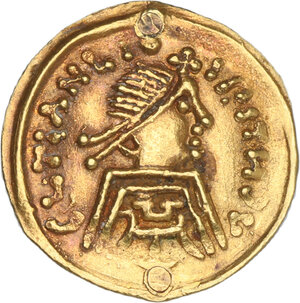
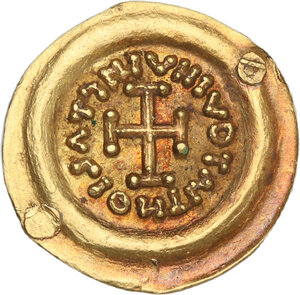
The Lombards in Tuscany. Uncertain King. AV Tremissis in the name of Byzantine Emperor. Uncertain mint in Tuscany, c. 620-700 - The Lombards in Tuscany. Uncertain King. AV Tremissis in the name of Byzantine Emperor. Uncertain mint in Tuscany, c. 620-700. D/ Diademed and draped bust right; pseudo-legend around. R/ Cross potent; pseudo-legend around. Cf. BMC Vandals p. 133, 44; Cf. Bernareggi, Moneta 16; Cf. MEC 1, 312. AV. 1.47 g. 16 mm. RRR. Very rare. Toned; holed and repaired, otherwise. EF.
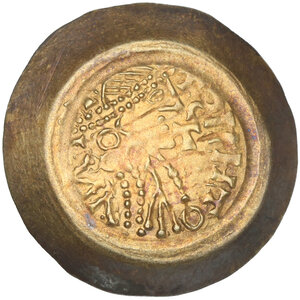
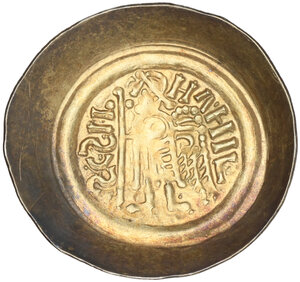
The Lombards at Pavia. Liutprand (712-744 AD). AV Tremissis - The Lombards at Pavia. Liutprand (712-744 AD). AV Tremissis. D/ VM LIVTPRHT. Diademed, draped and cuirassed bust right; T to right. R/ SCSII HΛHIL. St. Michael, winged, standing left, holding staff ending in trefoil and round shield. Bernareggi 116 var. (legends); cf. Bernareggi, Moneta 8; Cf. MEC 1, 322. AV. 1.17 g. 22.5 mm. R. Rare. In very good condition for issue. Good VF/About EF. The Lombards were a Germanic people who were known since the time of Tacitus. By the early sixth century the Lombards had settled in Pannonia, and adopted the Arian religion. In 568 AD/9, the Lombards began to invade Italy and quickly took control of the region from the Alps to the Po valley (later known as Lombardy), and established their capital at Pavia in 571 AD under their king, Alboin. Following the death of his successor in 574 AD, the dukes could not agree on a new king, resulting in an interregnum of ten years. During this interval, two other independent Lombard duchies were founded in Spoleto and Benevento. With the exception of Liutprand (712-744 AD), the kings of Lombardy were weak and ineffectual, and the kingdom was finally crushed by Charlemagne in 774 AD. The Lombards of Benevento thrived under its first dukes, Zotto and Arichis (571-641 AD), and its control expanded to the whole of southern Italy except Apulia and Calabria. Afterward, the hostilities of Lombardy, followed by the Carolingians, Byzantines, Papal States, and finally the Arab invaders, kept Benevento on the defensive, and its power waned. A civil war following the murder of Sicard in 839 AD resulted in the breakup of the greater duchy, and a number of insignificant Lombard dukes intermittently ruled over a greatly reduced Benevento until the mid-eleventh century. Like Benevento, the Lombard duchy of Spoleto was constantly assailed from all sides, and lost its independence after falling to Charlemagne in 776 AD. Unlike Lombardy and Benevento, Spoleto has no known coinage. (CNG inv. n. 998953).