
Info & contatti
Le mie offerte
Lotti osservati
Condizioni di vendita
Prezzi di spedizione
Metodi di pagamento
Esito stampabile
Sessione Live 11/6/2025 14:00:00 CET
Antiquities & Ancient Jewelry (1-221)

*A SUMERIAN BLACK STONE FIGURE OF A BULL WITH INLAID EYES. Circa 3rd Millennium BCE H. 13,4 x L.20,5 cm Provenance Formerly, private collection A.K., Switzerland, collected prior 1971 Then by descent Estate of a European Ancient Dealer,, acquired in Dece<mber 2011 Then by descent by succession The powerful animal is depicted crouched, his legs under the body, his muscles rendered by raised volumes. The head of the animal is distinguished by large, almond-shaped eyes, with an intense gaze rendered in shell (one inlaid missing). The area above the eyes is marked by three deeply carved, curved lines. The broad muzzle features a defined nasal groove, indicated by an incised line and two small cavities. Additional cavities suggest the former attachment of ears and horns, likely made from a different material, pointing to its original composition as a composite object. Such representations were probably intended as substitutes for sacrificial animals, functioning as symbolic and perpetual offerings to the deity. The head is complete but reassembled (glued); minor chipping and small restorations are present. For a comparable example in bronze, see the Louvre Museum, inv. AO 2676.The bull: symbol of strength and fertility Among the Mesopotamians, from the early dynastic eras to the Neo-Babylonian period, the image of the bull is directly related to those of the gods. The animal also plays a central role in the oldest known religions of the Mediterranean and its borders. He was considered the visible agent of the invisible force that moves and fertilizes nature. Taurus was for the Sumerians of the third millennium, a queen constellation, that of GUD.AN.NA, which marked the spring equinox and the start of the new year. Taurus has long been the symbol of spring and the ascension of the Sun. For Swiss buyers, VAT applies to the hammer price and buyer's premium (only for the lots with the * mention)
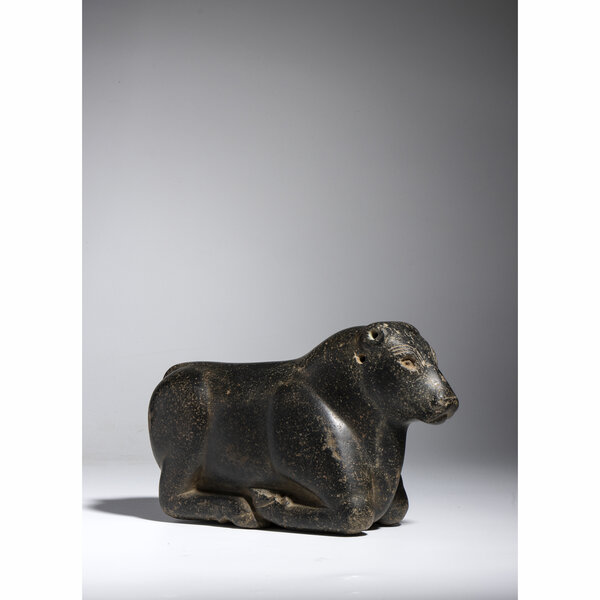
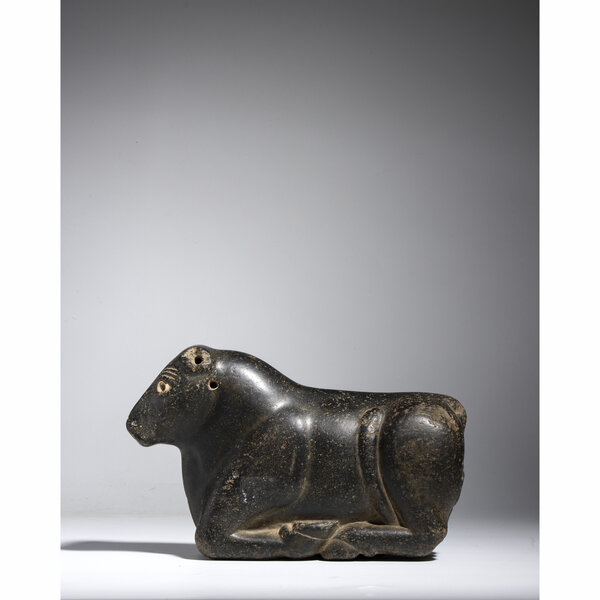
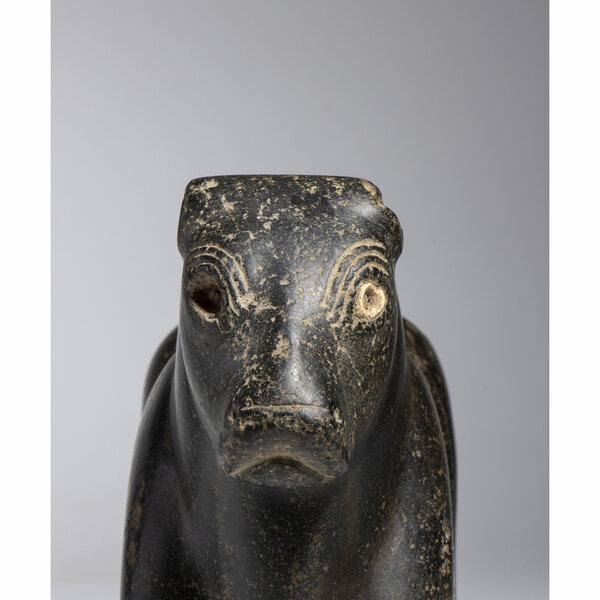
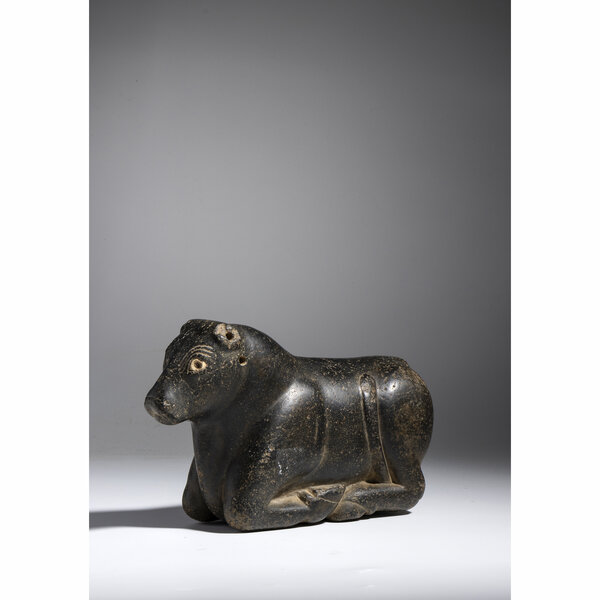
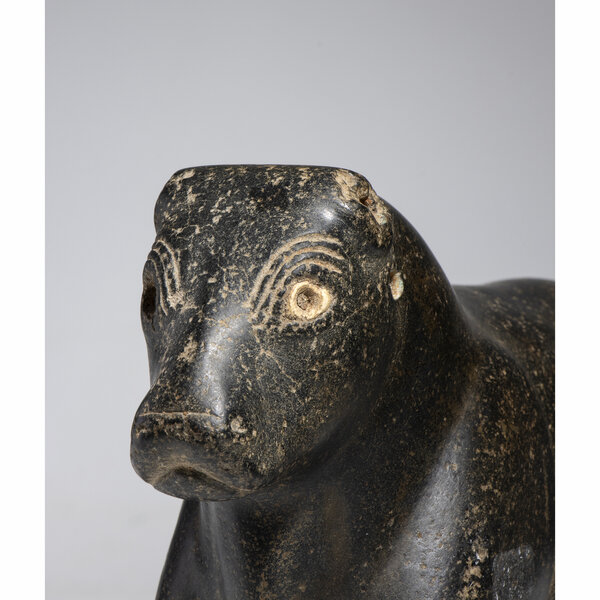
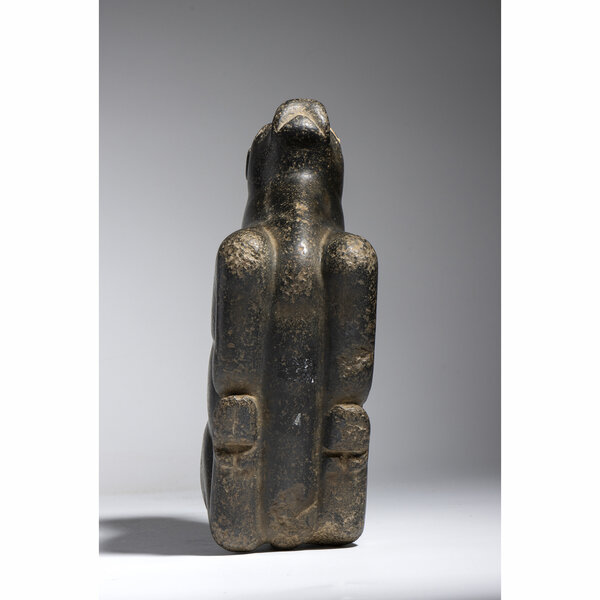
*A SUMERIAN BLACK STONE FIGURE OF A BULL WITH INLAID EYES.
Circa 3rd Millennium BCE
H. 13,4 x L.20,5 cm
Provenance
Formerly, private collection A.K., Switzerland, collected prior 1971
Then by descent
Estate of a European Ancient Dealer,, acquired in Dece