Info & contatti
Le mie offerte
Lotti osservati
Condizioni di vendita
Prezzi di spedizione
Metodi di pagamento
Esito stampabile
Sessione Live 11/6/2025 14:00:00 CET
Antiquities & Ancient Jewelry (1-221)

Risultati: 61
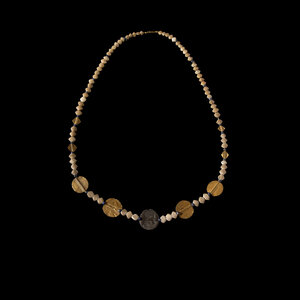
Lotto n. 1
-
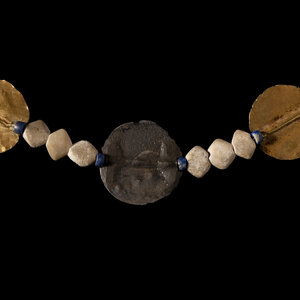
A Sumerian necklace wIth flat gold and silver round beads with white limestone beads.
Ca.3rd Millennium BCE
L. 34 cm circa / disk diam. 22 mm.
Provenance
Formerly, private collection of Mrs. Silvana Benhard, 1.10.1988
Published in NEFER catalogue 4, 1986, n° 70
Formed by flat gold and silver disc beads with biconical white limestone and lapis beads. Beautiful conservation. Restrung (modern gold clasp).
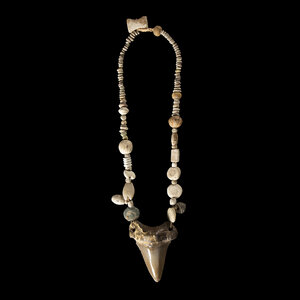
Lotto n. 2
-
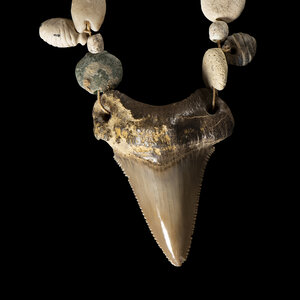
An Egyptian Predynastic restrung necklace with beads and a central shark tooth.
Badarian period, circa 4000 BCE.
Total L. 28 cm / Tooth 6,5 cm
Provenance
Formerly, private collection of Mr. Odermatt, Switzerland, before 1988
Formed by stones, limestone, shell, beads and amulets of varia shapes, and centered by a fossilized shark tooth. For similar fossilized shark tooth see Petrie Museum, LDUCE-UC2540.
Lotto n. 3
-
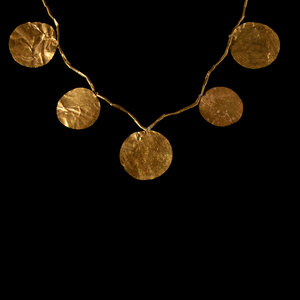
A Sumerian necklace with gold disc and cylindrical beads.
Ca. 2600-2500 BCE
L. 39 cm / Disk diam. 40 mm
Provenance
Formerly, private collection of Mrs. Silvana Benhard, 1.10.1988
Made of gold sheet discs alternated with cylindrical gold beads.
Lotto n. 4
-
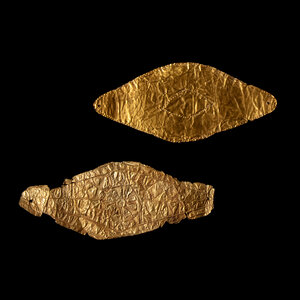
A lot of 2 Mycenean gold strips.
Ca. 1450-1200 BCE
l. 58 mm x L. 128 mm/l. 52 mm x L. 130 mm.
Provenance
Formerly, private collection of Mr. Odermatt, Switzerland, before 1988
One of pointed-oval form, narrow and pierced at the ends and surrounded by a band of dots. The other one, with floral pattern and palmettes stamped at the center, also pierced at either end. These gold elements were worn in a funerary context probably as frontlets (bands for the forehead).
Lotto n. 5
-
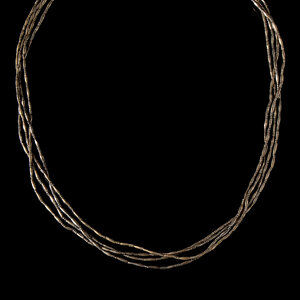
4 RARE WESTERN ASIAN ELECTRUM NECKLACE.
Late 2nd Millennium BCE.
H. 30 cm circa
Provenance
Formerly, collection of Janet Zakos, 24.3.1984
Formed by elongated electrum beads each one, alternated with a ribbed cylindrical electrum element. Beautiful conservation.
Lotto n. 6
-
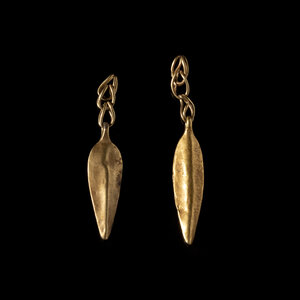
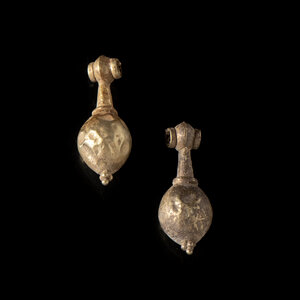
A GROUP OF SUMERIAN, EASTERN GREEK AND ROMAN GOLD ELEMENTS.
Early 2nd Millennium BCE - 2nd Century A.D.
Min. H. 19 mm / Max. H. 28 mm
Provenance
Formerly, private collection of Mrs. Silvana Benhard, 1.10.1988
"leaf shaped pendants", Sammlung Ebnother 27. 11. 2003 (reproduced)
With leaf shaped pendant, dropped shaped elements ending with three sphericals beads, and amphora shaped elements.
Lotto n. 7
-
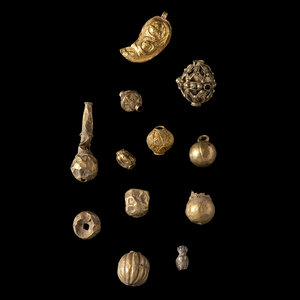
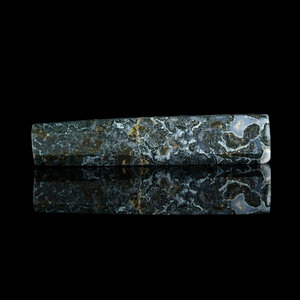
A group of 12 Eastern Greek and Western Asian gold necklaces elements.
2nd-1st Millennium BCE.
Min H. 13 mm / Max. H. 31 mm
Provenance
Ex Zoumboulakis Gallery, Geneva, 30.1.1978
Lotto n. 8
-
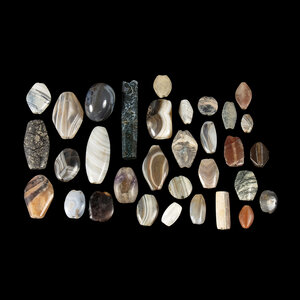
A GROUP OF 32 MESOPOTAMIAN AND CENTRAL ASIAN AGATE, AMETHYST AND STONES BEADS.
3rd-2nd Millennium BCE
L.min 5 mm / Max. 57 mm
Provenance
Formerly with, Saskia Wessel, 05.01.1984
Hand-cut and drilled, each bead is carved into tubular, amygdaloid, or rounded biconical shapes, and polished to a smooth finish.
The various shapes of these beads are reminiscent of the artistic traditions of Mesopotamia and Bactria during the 3rd and 2nd millennia BCE. In Mesopotamia, agate was cherished for its strength and vivid natural banding, commonly fashioned into cylinder seals, amulets, and ornamental jewelry, symbolizing protection and social status. Meanwhile, Bactrian artisans skillfully crafted agate into polished beads of diverse forms, sometimes combined with gold or glass to enhance their visual impact. These exquisite creations not only highlight the region's artistic mastery but also underscore its importance as a hub of cultural exchange, linking the Indus Valley, Mesopotamia, and the Persian Plateau through extensive trade networks.
Lotto n. 9
-
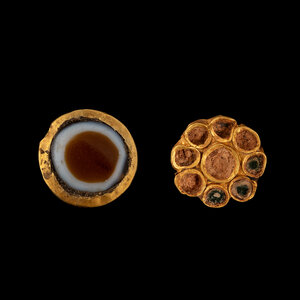
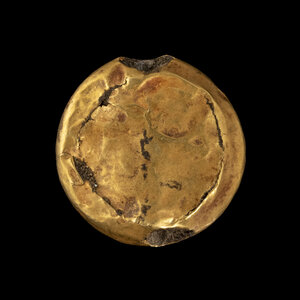
TWO BACTRIAN GOLD AND AGATE ELEMENTS. Bactria, Late 2nd-1st Millennium BCE. Diam. 21 mm; 21 mm. Provenance Formerly with, Selim Dere, 14.12.1989. A spherical pierced pendant made of a gold bezel set with a 'bull-eye' agate bead and a floral gold box setting with glass inlays remains, behind two suspension hoops. Presence of deposits and ancient wear marks.
Lotto n. 10
-
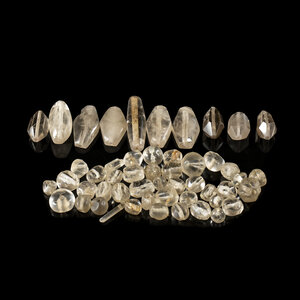
A GROUP OF 51 CENTRAL ASIA ROCK CRYSTAL (QUARTZ) BEADS.
Bactria, ca. 2000-1000 BCE
Min. L. 5 mm / Max. L. 30 mm circa
Provenance
Formerly with, Saskia Wessel, 05.01.1984
Hand-cut and drilled, each bead is carved into tubular, barrel, or rounded biconical shapes, and polished to a smooth finish (some facetted a posteriori). The ancient crystalline stones possess a natural beauty, characterized by varying levels of translucency. Most of them display biconically drilled perforations visible on the inside. Their glass-like appearance captivated ancient civilizations, shrouded in mystery and fascination. Interestingly, Pliny the Elder believed that quartz was actually fossilized ice, eternally frozen into stone—a belief that endured well into the 17th century.
Lotto n. 11
-
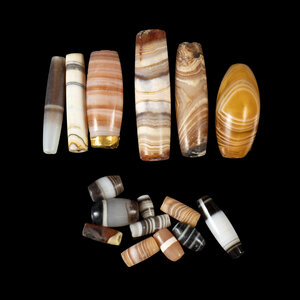
A GROUP OF 16 CENTRAL ASIAN AGATE BEADS.
Bactria, ca. 3rd-2nd Millennium BCE
L.min 5 mm / Max. 30 mm
Provenance
Formerly with, Saskia Wessel, 05.01.1984
Hand-cut and drilled, each bead is carved into tubular, barrel, or rounded biconical shapes, and polished to a smooth finish.
In ancient Bactria, agate was a prized material for jewelry, particularly during the 3rd to 2nd millennia BCE. Archaeological finds, including necklaces with banded agate beads of various shapes, showcase the artisans' mastery in enhancing the stone's natural patterns.
Beyond its aesthetic appeal, agate symbolized protection and reflected Bactria's extensive trade networks and cultural exchanges. These beads are a very fine example, with perfect state of conservation.
Lotto n. 12
-
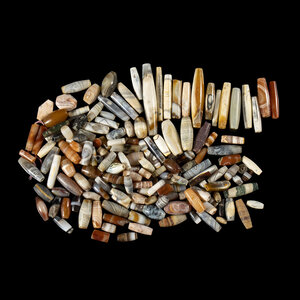
A LARGE GROUP OF MESOPOTAMIAN AND BACTRIAN AGATE BEADS.
3rd-2nd Millenium BCE.
L. min 2 mm / Max. 58 mm
Provenance
Formerly with, Saskia Wessel, 05.01.1984
Hand-cut and drilled, each bead is carved into tubular, amygdaloid, or rounded biconical shapes, and polished to a smooth finish.
The various shapes of these beads are reminiscent of the artistic traditions of Mesopotamia and Bactria during the 3rd and 2nd millennia BCE. In Mesopotamia, agate was cherished for its strength and vivid natural banding, commonly fashioned into cylinder seals, amulets, and ornamental jewelry, symbolizing protection and social status. Meanwhile, Bactrian artisans skillfully crafted agate into polished beads of diverse forms, sometimes combined with gold or glass to enhance their visual impact. These exquisite creations not only highlight the region's artistic mastery but also underscore its importance as a hub of cultural exchange, linking the Indus Valley, Mesopotamia, and the Persian Plateau through extensive trade networks.
Lotto n. 13
-
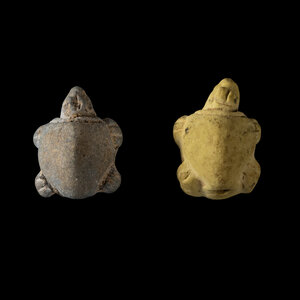
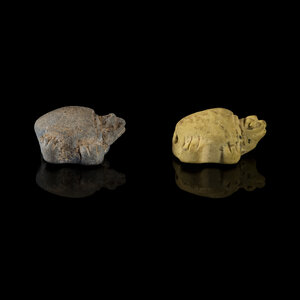
A LOT OF 2 EGYPTIAN FAIENCE TURTLES AMULETS.
Early New-Kingdom, Dynasty 18, ca. 1550 BCE
L. 15 mm
Provenance
Formerly with, Saskia Wessel 29.6.1982
Of stylized shape of b lue and yellow faience and pierced lenghtwise to be worn as pendants. In Ancient Egypt, the turtle "Trionyx" belongs among the first animals representations on small objects (palettes, vessels, amulets and various magical devices)— "for one of the earliest reference to the animal in Egyptian literature, a funerary spell of the Middle Kingdom, clearly intimates that its flesh is an abomination to the god Re." cit.H.G. Fisher.
Designed to protect the deceased from having to eat excrement in the next world. The shadowy and secretive aspect of the turtle put it most directly into opposition with the sun god, yet very benefic to fight against even more dangerous creatures, such as the hippopotamus. In these circumstances, the most probable reason of the relatively frequent representation of the Trionyx was intended to be apotropaic.
For a similar typology see a carnelian turtle amulet Brooklyn Museum 14.644.
Lotto n. 14
-
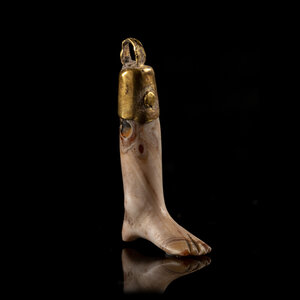
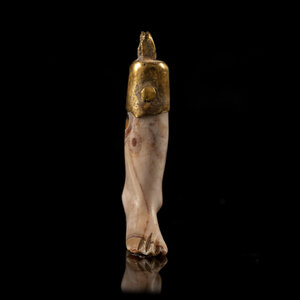
A RARE EGYPTIAN CORNELIAN AGATE AND GOLD LEG WITH FOOT AMULET PENDANT.
Old Kingdom-First Intermediate Period, 1991-1802 BCE
H. 30 mm
Provenance
Formerly with, Saskia Wessel 29.6.1982
Depicting a left leg with foot, the upper part covered by a hammered gold plaque fixed with a rivet, on top, suspension hoop. Amulets depicting the foot and extended leg up to the knee are distinctive to the late Old Kingdom and the First Intermediate Period. They are frequently discovered in matching pairs—one right and one left—often strung alongside other elements, such as buckle beads, to create anklets. According to Carol Andrews (Amulets of Ancient Egypt, 1994), the front-to-back pierced examples, like the one presented here, display individual toes with remarkable naturalism, surpassing the detail of those pierced from side to side. Carnelian agate remains the most prevalent material for these amulets. Their intended purpose was to grant the power of movement or serve as a symbolic replacement for a lost limb.
Lotto n. 15
-
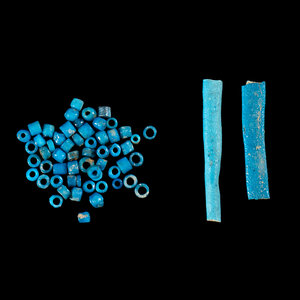
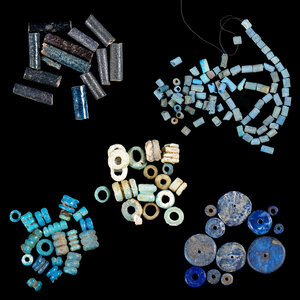
A GROUP OF 59 EGYPTIAN TURQUOISE FAIENCE BEADS.
New-Kingdom, ca. 1550-1069 BCE
Diam. Min 2 mm / Max. L. 42 mm
Provenance
Formerly with, Saskia Wessel, 05.01.1984
Of cylinder and elongated squared shape. During the New Kingdom period (1550–1069 BCE), faience production in Egypt reached a peak of technological refinement and aesthetic complexity. Egyptian faience, a non-clay ceramic material, was composed primarily of crushed quartz (silica), lime, and alkali, with small amounts of copper compounds that gave it its characteristic blue-green coloration. This vitreous material was shaped into beads through a variety of methods, including molding, hand-forming, and threading on fine reeds or strings during the drying process to ensure perforation.
The surface of faience beads was coated with a self-glazing layer known as the efflorescence technique. This method involved the application of a mixture of sodium carbonate and copper oxides, which would migrate to the surface during firing at temperatures ranging from 800°C to 950°C. This process created a glossy, glass-like finish that was both visually striking and durable.
Lotto n. 16
-
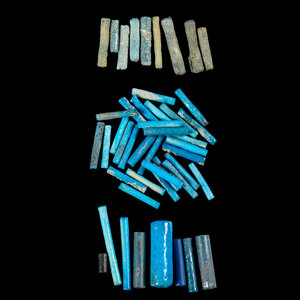
A GROUP OF 127 EGYPTIAN FAIENCE AND GLASS BEADS.
New-Kingdom,ca. 1550-1069 BCE
L. min 4 mm / Max. 20 mm
Provenance
Formerly with, Despina Nesgos, 22.9. 2003
Lotto n. 17
-
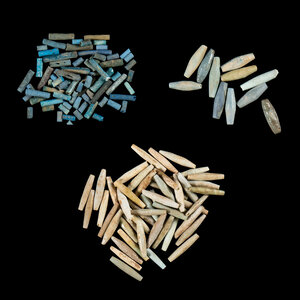
A GROUP OF 46 EGYPTIAN FAIENCE AND GLASS BEADS.
New-Kingdom,ca. 1550-1069 BCE
L. min 8 mm / Max. 18 mm
Provenance
Formerly with, Despina Nesgos, 22.9. 2003
Lotto n. 18
-
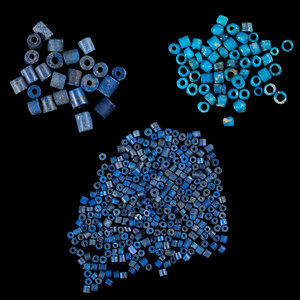
A GROUP OF 150 EGYPTIAN FAIENCE AND GLASS BEADS.
New-Kingdom,ca. 1550-1069 BCE
Diam. Ca. 2 mm
Provenance
Formerly with, Despina Nesgos, 22.9. 2003
Lotto n. 19
-
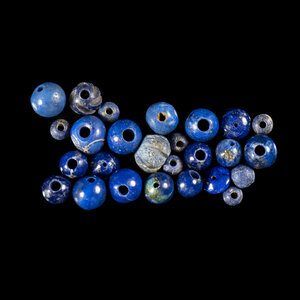
A GROUP OF 416 EGYPTIAN FAIENCE AND LAPIS LAZULI BEADS.
New-Kingdom,ca. 1550-1069 BCE
L. min 3 mm / Max. 5 mm
Provenance
Formerly with, Despina Nesgos, 22.9. 2003
Lotto n. 20
-
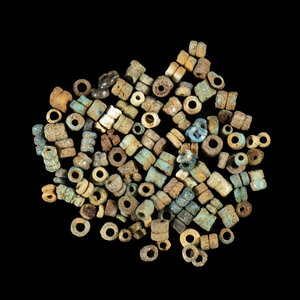
A GROUP OF RARE 26 EGYPTIAN LAPIS LAZULI, BLUE GLASS AND SODALITE BEADS.
New-Kingdom,ca. 1550-1069 BCE
L. min 4 mm / Max. 7 mm
Provenance
Formerly with, Saskia Wessel, 05.01.1984
Of rounded and ribbed shapes and pierced.The different materials of these beads are amazing sources and testimonies of the ancient egyptian knowledge on the nature and properties of the stones.. In Ancient Egypt the lapis lazuli was the most precious gemstone as it was considered a sacred stone connected to the gods. Its special dark-blue colour symbolized the night sky and the starry heavens.The most widely accepted concept is that the ancient Egyptian lapis lazuli originated from the Badakhshan Province (Afghanistan), however other new potential Asian extraction sites (Pakistan, Tajikistan, Lake Baikal area, Myanmar) were also suggested recently. This stone had reached Egypt most probably from Mesopotamia through trade routes, or could also be brought as a tribute from various localities like Assur, Babylon.
Extensive glass production in Egypt started as early as the Eighteenth Dynasty and the best deep blue glass beads were from the workshop of Tutankhamun.
As for the sodalite beads (very similar to the lapis without gilded pyrite inclusion), Although it was scientifically identified in the early 19th century, evidence suggests that ancient civilizations, including the Egyptians, valued it for its aesthetic and symbolic qualities, particularly for its resemblance to lapis lazuli.
However, direct archaeological evidence of sodalite in ancient jewelry is scarce, likely due to its rarity and frequent confusion with more commonly used blue stones like lapis lazuli. According to tradition, Egyptian priests used sodalite to dispel fear and promote mental clarity. In ancient times, sodalite was sourced from Afghanistan.
Lotto n. 21
-
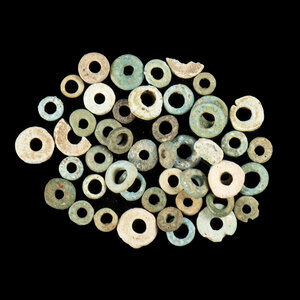
A GROUP OF EGYPTIAN FAIENCE BEADS.
New-Kingdom,ca. 1550-1069 BCE
L. min 3 mm / Max. 8 mm
Provenance
Formerly with, Despina Nesgos, 22.9. 2003
Lotto n. 22
-
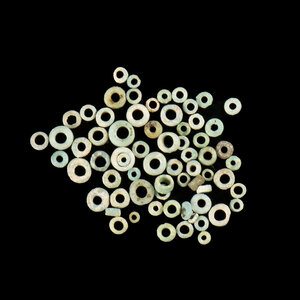
A GROUP OF 35 EGYPTIAN FAIENCE BEADS.
New-Kingdom,ca. 1550-1069 BCE
Diam. Min 4 mm / Max. 7 mm
Provenance
Formerly with, Despina Nesgos, 22.9. 2003
Lotto n. 23
-
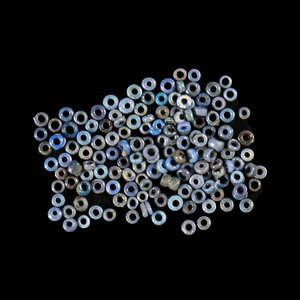
A GROUP OF 67 EGYPTIAN FAIENCE BEADS.
New-Kingdom,ca. 1550-1069 BCE
L. min 3 mm / Max. 8 mm
Provenance
Formerly with, Despina Nesgos, 22.9. 2003
Lotto n. 24
-
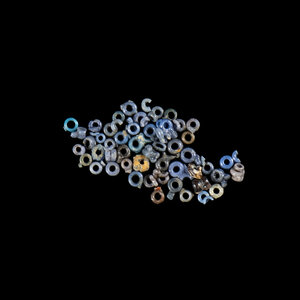
A GROUP OF 150 EGYPTIAN FAIENCE AND GLASS BEADS.
New-Kingdom,ca. 1550-1069 BCE
Diam. Ca. 2 mm
Provenance
Formerly with, Despina Nesgos, 22.9. 2003
Lotto n. 25
-
A GROUP OF 48 EGYPTIAN FAIENCE AND GLASS BEADS.
New-Kingdom,ca. 1550-1069 BCE
Diam. Ca. 1 mm
Provenance
Formerly with, Despina Nesgos, 22.9. 2003
Lotto n. 26
-
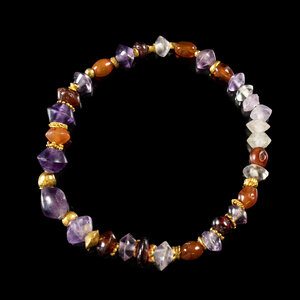
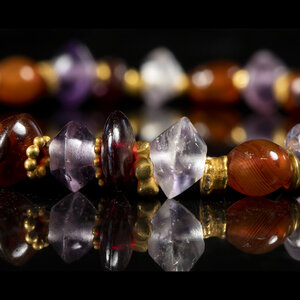
AN EGYPTIAN WITH GOLD, AMETHYTS, GARNET, CARNELIAN AND ROCK CRYSTAL BEADS.
New-Kingdom, Dynasty 18, Reign of Amenophis I, 1525-1504 BCE
L. 19,5 cm
Provenance
Formerly with, Saskia Wessel, 05.01.1984
Publications
- Am Hofe des Pharaoh. Von Amenophis I. bis Tutanchamun.Catalogue of an exhibition held from 4 May till 27 October 2002. Palais del Arte, Bussolengo, 2002, n° 18
- PharaonenGold, 3000 Jahre altägyptische Hochkuktur, 2019, p.116
Bracelet made of amethyst, carnelian, and garnet, separated by disk-shaped, bead-shaped, oval, and barrel-shaped gold beads.
One of the disk-shaped gold beads features a border decorated with granulation.
The stones in this bracelet highlight the variety of reddish semi-precious stones found in Egypt and represent a unique creation that deviates from the usual strict forms and arrangements.
Lotto n. 27
-
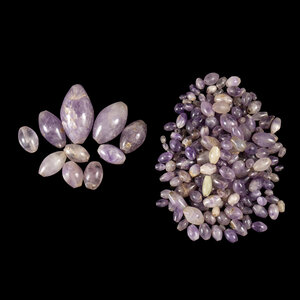
A GROUP OF EGYPTIAN AMETHYST BEADS.
Middle-Kingdom to New-Kingdom, ca. 2060 - 1069 BCE
L. min 5 mm / Max. 38 mm
Provenance
Formerly with, Saskia Wessel, 05.01.1984
Hand-cut and drilled, each bead is carved into rounded biconical shapes, and polished to a smooth finish.
Wadi el-Hudi, located in the Eastern Desert about 35 kilometers southeast of Aswan, was the primary source of amethyst in ancient Egypt. These quarries, the oldest known to date, were heavily exploited during the Middle Kingdom when amethyst was highly prized. Archaeological discoveries of inscriptions and stelae reveal the scale and organization of mining expeditions.
Transported to the Nile Valley, the stones were crafted into precious objects. Associated with the goddess Hathor, known as the "Lady of Amethyst," this gemstone held deep symbolic and spiritual significance in Egyptian culture.
Lotto n. 28
-
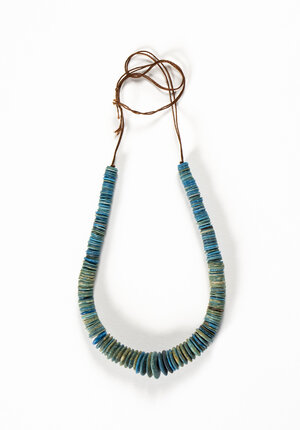
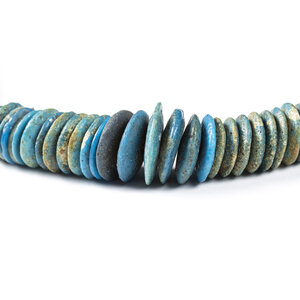
AN EGYPTIAN FAIENCE DISK-BEAD NECKLACE.
New-Kingdom, ca. Dynasty 18, Tuthmosis III reign, ca.1479-1425 BCE.
Total L. 25,5 cm
Provenance
Formerly with Merton Simpson New York, 20.7.1979
Publications
- Jewellery of the Pharaohs, Treasures of Magic, Power and Beauty, 2005, p.102
- PharaonenGold, 3000 Jahre altägyptische Hochkuktur, 2019, p.128
The necklace features narrow, disc-like beads at both ends, gradually transitioning towards the center into wider, lens-shaped beads of larger diameter. A comparable necklace was discovered during the Metropolitan Museum excavation in the tomb of the three Syrian princesses. This particular style of necklace, along with the fact that it was found within the same excavation as the hair rosettes, supports the assumption that it also belonged to one of the three Syrian princesses.
The princesses' tomb, located in the Wadi Gabbana el-Qurud, was discovered in 1916.
Lotto n. 29
-
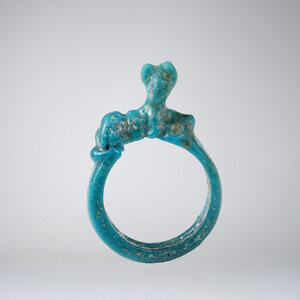
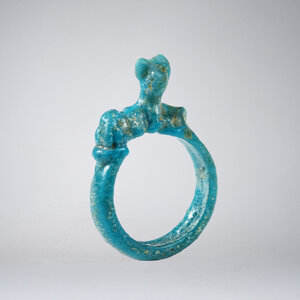
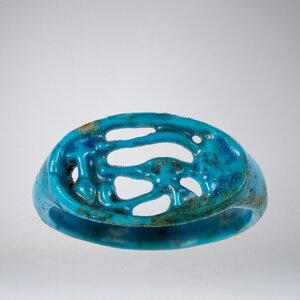
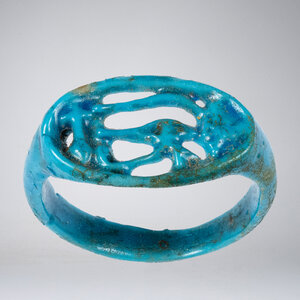
AN EGYPTIAN FAIENCE RING WITH A CAT.
New-Kingdom, Dynasty 18 , ca. 1400-1295 BCE
H. 17,5 mm
Provenance
Formerly with, Waldmeyer Sylvia , Zurich, 12.12.1990
Publications
- Jewellery of the Pharaohs, Treasures of Magic, Power and Beauty, 2005, p.105
- National Museum of Tokyo, Cleopatra and the Queens of Egypt, 11/7-23/09 2015, n°61
With a single hoop, flatten within and surmounted by a very delicate crouched cat figure, possibly a representation of the goddess Bastet. Beautiful conservation.
Lotto n. 30
-
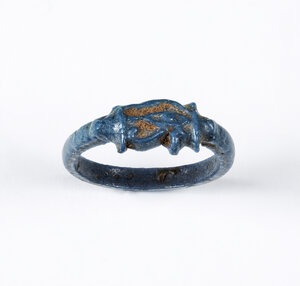
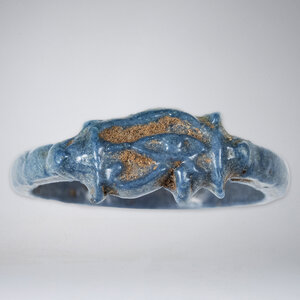
AN EGYPTIAN BLUE GLAZED FAIENCE UDJAT RING.
New-Kingdom, Dynasty 18 , ca. 1400-1295 BCE
H. 19 mm
Provenance
Formerly with, Waldmeyer Sylvia , Zurich, 12.12.1990
Publications
- Jewellery of the Pharaohs, Treasures of Magic, Power and Beauty, 2005, p.104
- National Museum of Tokyo, Cleopatra and the Queens of Egypt, 11/7-23/09 2015, n°58
Formed by a single band flatten within and rounded without, and an oval openworked bezel featuring a very delicate Udjat eye flanked with the hieroglyph "nfr"
Lotto n. 32
-
AN EGYPTIAN BLUE GLAZED FAIENCE UDJAT RING.
New-Kingdom, Dynasty 18 , ca. 1400-1295 BCE
Diam. 20 mm
Provenance
Ex,Altemo Etablissement, Vaduz, 22.5.1991
Publications
- Jewellery of the Pharaohs, Treasures of Magic, Power and Beauty, 2005, p.103
- National Museum of Tokyo, Cleopatra and the Queens of Egypt, 11/7-23/09 2015, n°56
Featuring the Udjat eye—a symbolic fusion of a human eye and a falcon's. Both the band and the decorative element were meticulously crafted in separate clay molds before being seamlessly joined with a slip of faience material and fired. During the firing process, a delicate lavender-blue glaze naturally developed through self-glazing, creating a smooth, lustrous finish.
The ring remains in remarkably preserved condition. Minor deposit.
Lotto n. 33
-
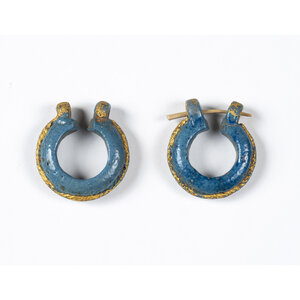
A RARE EGYPTIAN PAIR OF GILDED FAIENCE PENANNULAR EARRINGS.
New-Kingdom, Dynasty 18 , ca. 1400-1295 BCE
Diam. 25 mm
Provenance
Formerly, with Christophe Vincent , Vevey, 15.11.78
Publications
- National Museum of Tokyo, Cleopatra and the Queens of Egypt, 11/7-23/09 2015, n°48
With the shape of an open-ended circle, its ends drawn into two vertical loops. A prefabricated gilted twisted cord of the same turquoise faience decorates the outer circumference. Back then a piece of gold wire was threaded and inserted as a hoop. For a similar typology in glass see British Museum, EA14508
Lotto n. 34
-
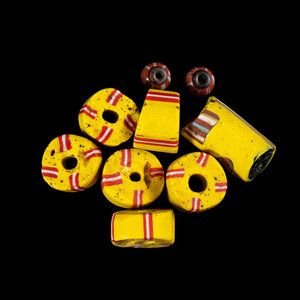
A GROUP OF 9 EGYPTIAN COLOURED GLASS BEADS.
Roman period,ca. 1st century BCE - 1st century A.D.
H. min 5 mm / Max. 20 mm
Provenance
Formerly with, Despina Nesgos, 22.9. 2003
Lotto n. 35
-
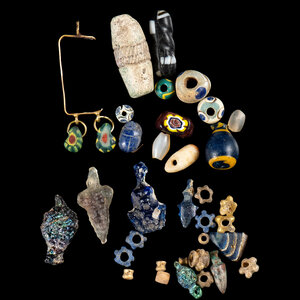
A GROUP OF 31 EGYPTIAN VARIA GLASS, FAIENCE BEADS AND AMULETS.
New-Kingdom to Roman period, ca. 16th century - 1st BCE
Diam. min 2 mm / L. max 27 mm
Provenance
Formerly with, Despina Nesgos, 22.9. 2003
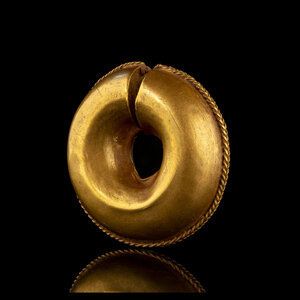
Lotto n. 36
-
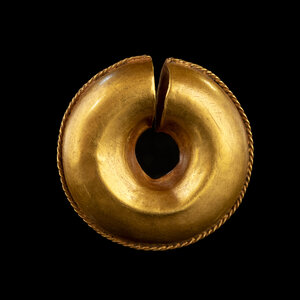
A NEW-KINGDOM GOLD HOOP EARRING.
New-Kingdom,Dynasty 18, ca. 1450 BCE
H. 16 mm; W. 11 mm
Provenance
Formerly with, Selim Dere, 14.12.1989
Publication
- Am Hofe des Pharaoh. Von Amenophis I. bis Tutanchamun.Catalogue of an exhibition held from 4 May till 27 October 2002. Palais del Arte, Bussolengo, 2002, n° 70
- PharaonenGold, 3000 Jahre altägyptische Hochkuktur, 2019, p.164
This gold earring is composed of two identical concave, hammered gold sheets, skillfully joined with a braided gold wire that elegantly conceals the outer solder seam, serving both a decorative and functional purpose.
The fine filigree braid along the outer edge is meticulously crafted from delicately hammered gold wires, adding a touch of sophistication and craftsmanship. At the opening of the hoop, a circular cutout is designed to hold the earlobe securely, sliding into place and clamping gently for a comfortable fit.
These split hoop earrings were expertly hollowed out to minimize weight, ensuring comfort for the wearer, even with their narrow and refined structure.Such designs reflect the advanced metalworking techniques of their time, combining both beauty and practicality in a single piece.
This kind of earring was worn in the Middle-Kingdom, they first became popular during the early Dynasty 18, the date of this earring, and worn by men, women and children alike.
For a similar typology see Ägyptischen Museums in Berlin-Charlottenburg, Inv.-Nr. VÄGM 61-84
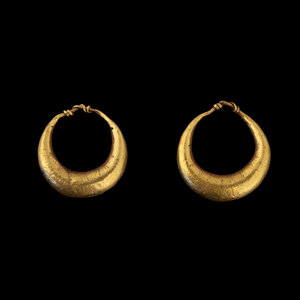
Lotto n. 37
-
AN EGYPTIAN PAIR OF GOLD CRESCENT-SHAPED EARRINGS.
New-Kingdom, Dynasty 18, 1550-1295 BCE
Diam. 11,5 mm
Provenance
Formerly with, Selim Dere, 14.12.1989
Published in PharaonenGold, 3000 Jahre altägyptische Hochkuktur, 2019, p.146
The pair of crescent-shaped earrings is made of curved gold sheet, tapering towards its ends and reaching its widest form in the middle section. The earring hoops are twisted into an eye-and-hook design at their narrow ends, forming the closure mechanism. To create such relatively lightweight earrings, the gold sheet was finely hammered and, in the final material processing stage, further worked between two animal hides to achieve an even thinner gold foil.
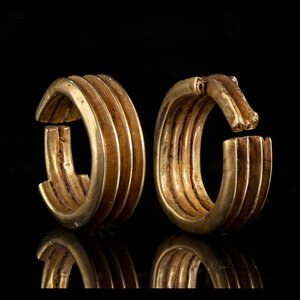
Lotto n. 38
-
AN EGYPTIAN PAIR OF GOLD RIBBED HOOP EARRINGS.
New-Kingdom, Dynasty 18, ca. 1480-1350 BCE
Ext Diam. 22 mm
Provenance
Formerly with, Eberhard Thiem in the 1980's
Publications
- NEFER 10 catalogue, 1992, n°49
- National Museum of Tokyo, Cleopatra and the Queens of Egypt, 11/7-23/09 2015, n°47
- PharaonenGold, 3000 Jahre altägyptische Hochkuktur, 2019, p.140
Each earring is crafted from hollow, sheet-gold tubes with a triangular cross-section, soldered side by side to create a corrugated appearance. In each pair, the central tubes are slightly longer at one end, designed to be inserted through the pierced earlobe.
Earrings of this style, produced in various sizes, were particularly popular during the 18th Dynasty. Datable examples indicate that their popularity peaked from the reign of Hatshepsut (1479–1458 BCE) through to that of Amenhotep II (1426–1400 BCE). Archaeological finds confirm that these earrings were worn not only by royalty but also by private individuals.
For a similar typology see Ägyptischen Museums in Berlin-Charlottenburg, Inv.-Nr. VÄGM 71-84 a,b
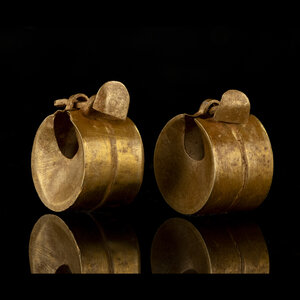
Lotto n. 39
-
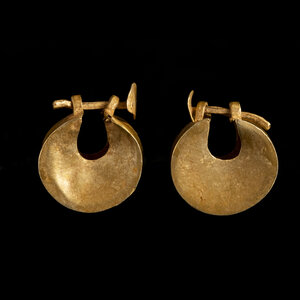
A NEW-KINGDOM PAIR OF GOLD EARINGS. New-Kingdom,Dynasty 18, ca. 1525-1504 BCE H. 16 mm; W. 11 mm. Provenance Formerly with, Selim Dere, 14.12.1989 Publication - Am Hofe des Pharaoh. Von Amenophis I. bis Tutanchamun.Catalogue of an exhibition held from 4 May till 27 October 2002. Palais del Arte, Bussolengo, 2002, n° 71 - PharaonenGold, 3000 Jahre altägyptische Hochkuktur, 2019, p.112 Each earring is crafted from a strip of gold sheet, meticulously shaped into a hoop with a notched groove running along its center. Concave, circular plates are expertly soldered onto either side, adding both structure and ornamentation. At the point of opening, a circular cutout is designed to accommodate the earlobe, which would be inserted and secured with a slender pin threaded through the ear's pierced hole. Small loops at the opening guide the pin, which is elegantly decorated with a smooth plate along its curved side, locking firmly into place for secure wear. This sophisticated mechanism not only reflects the craftsmanship of the era but also the intricate artistry that adorned both the noble and the common in ancient Egypt.
Lotto n. 40
-
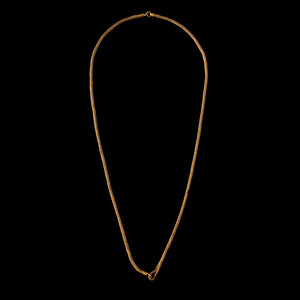
AN EGYPTIAN GOLD CHAIN NECKLACE.
New-Kingdom, Reign Thutmosis III - Amenophis IV, ca. Dynasty 18, 1479-1333 BCE.
H.(close). 31 cm / 39 gr circa
Provenance
Formerly, W. Kramer, 6.6.91
Publications
- Jewellery of the Pharaohs, Treasures of Magic, Power and Beauty, 2005, pp.76-77
- PharaonenGold, 3000 Jahre altägyptische Hochkuktur, 2019, p.154
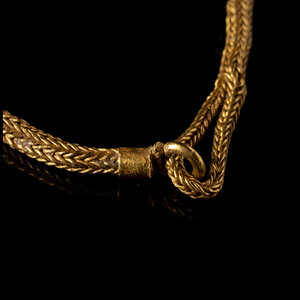
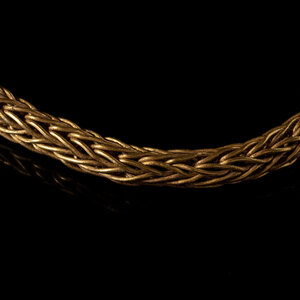
Made of finely braided gold wires. The center of the necklace is divided, with one end secured to the other via a loop and clasp mechanism. In this design, the necklace features three rings: two interlinked rings forming the clasp, and a third ring with a loop positioned at the center of the chain. It is believed that this type of chain was intended to be worn by simply slipping it over the head, as it cannot be opened despite the presence of loops. The delicate craftsmanship and precision involved in shaping the fine gold wire into a flexible braided structure are exceptional.
Lotto n. 41
-
AN EGYPTIAN GOLD CHAIN NECKLACE.
New-Kingdom, ca.Dynasty 18, 1332-1323 BCE
H.(close). 28 cm / 47 gr circa
Provenance
Formerly with Dr. Jack Ogden, 25.4.86
Published in PharaonenGold, 3000 Jahre altägyptische Hochkuktur, 2019, p.194
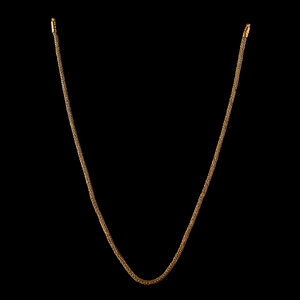
The necklace is composed of finely braided gold wires. At each end, it is adorned with two pearl-shaped loops featuring a delicately grooved surface. The transition from the loops to the braided chain is marked by an elongated barrel-shaped bead on both sides, elegantly segmented by two incised grooves, creating the illusion of three seamlessly soldered barrel beads. The fine gold wire used for this braided chain was meticulously drawn: narrow strips of sturdy gold sheet were pulled through increasingly smaller holes in stone plates until the desired thickness was achieved. From this refined gold wire, individual chain links were soldered together and intricately woven into one another.
An exact parallel of this chain design, with similar terminal elements, was found in the tomb of Tutankhamun. It was part of a pendant featuring a small representation of a seated king wearing a blue crown, crafted in gold. This pendant was stored in a box alongside a lock of hair belonging to his grandmother, Queen Tiye.
The creation of such a delicate, flexible chain with the simple tools available at the time is a testament to the extraordinary craftsmanship of ancient Egyptian goldsmiths, marking this necklace as a true masterpiece of ancient artistry.
Lotto n. 42
-
A PAIR OF ROMAN GOLD EARRINGS.
2nd century A.D.
H. 27 mm
Provenance
Formerly with, Selim Dere, 14.12.1989
Published in NEFER catalogue 7, 1989, p.25, G.
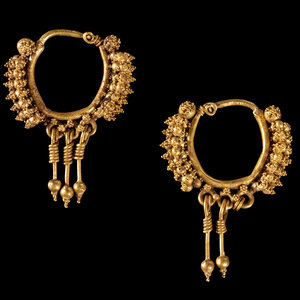
A thick wire hoop forms the framework for three rows of granules. Three wire pendants are suspended from the frame work. Very delicate work. Beautiful conservation.
Lotto n. 43
-
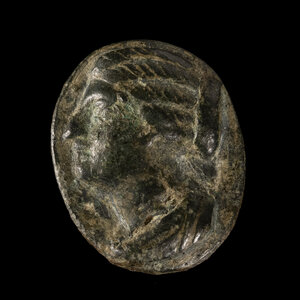
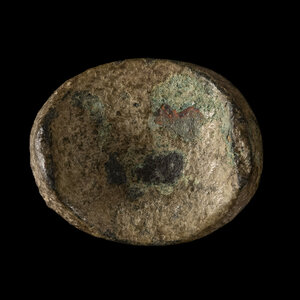
A GRAECO-EGYPTIAN BRONZE BEZEL OF A FINGER RING. POTRAIT OF ARSINOE II (?) Ptolemaic period, 3rd century BCE Dim. 18 x 22 mm Provenance Formerly with Janet Zakos, Zurich 24.3.1984 Bronze finger-ring bezel with a relief portrait. A woman, perhaps Arsinoe II, to left, draped, thehair arranged in the so-called melon coiffure, a hairstyle often associated with the Ptolemaic dynasty and members of their court. For a similar portrait on a bezel finger ring see British Museum, 1917,0501.1267.
Lotto n. 44
-
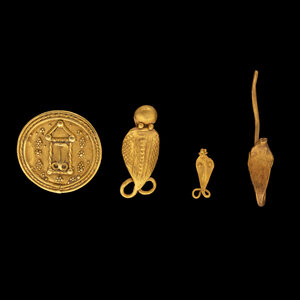
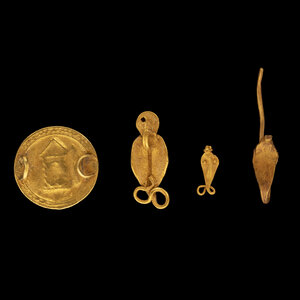
A GROUP OF EGYPTO-ROMAN GOLD ELEMENTS.
1st century BCE - 1st century A.D.
Min. H. 10 mm ; Max. H. 27 mm
Provenance
Formerly with, Jean Sigist, 8.4.2002
A gold disc with a cobra inside a naos (made of twisted and simple gold wires, and dotted elements); and three gold cobras (uraei). Beautiful conservation.
Lotto n. 45
-
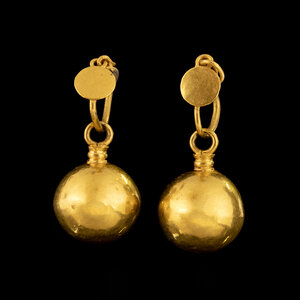
A PAIR OF GOLD EARRINGS WITH ROMAN GOLD HOOPS. 1st-2nd century A.D. H. 28 mm Provenance Formerly with, Selim Dere, 14.12.1989 The upper part (Roman), consisting of a simple ring and a gold disk, is attached to a pendant in the shape of a spherical gold bead (modern).
Lotto n. 46
-
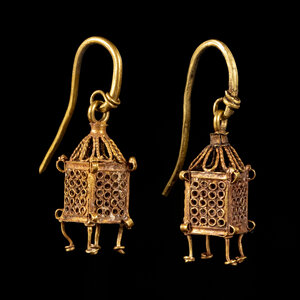
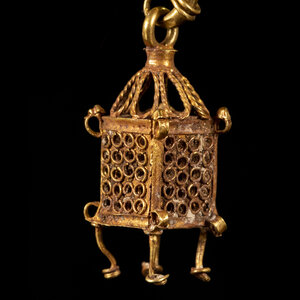
A PAIR OF EARLY ISLAMIC GOLD EARRINGS. CA. 12th century A.D. H. 35 mm. Provenance Formerly with, Selim Dere, 14.12.1989. Lantern-shaped, with openwork decoration, and topped with a double-ring attachment suspended from a (modern gold) hook.
Lotto n. 47
-
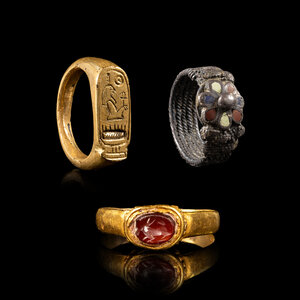
A GROUP OF 3 RINGS IN GILDED BRONZE, SILVER WITH INLAYS AND GOLD WITH CARNELIAN INTAGLIO.
Egyptian style, modern.
Eastern Greek or Phoenician, 5th century BCE
Roman art, 1st-2nd century A.D.
Bezel. 8 x 19 mm / Int. Diam. 19 mm ; Int. Diam. 20 mm / Stone. 5 x 6 mm / Int. Diam. 18 mm
Provenance
For the silver ring: Formerly with, Franco Petrelli, 8.4.1990
Swiss private collection since the 1980's
Silver ring published in
- "GALERIE NEFER, Exhibition Catalogue, Spring 1993, p.41, n°39A
- Collonges, Suisse, 2001, p. 63, fig. 82
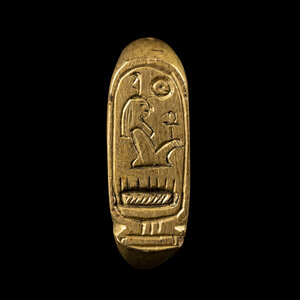
The New-Kingdom Style ring is made of a rounded hoop with broadering shoulders and surmounted by a cartouche with the name of Menmaatre-"Eternal is the 'justice' of Ra"-(mn-Maat-ra)} (Seti I).
The large silver ring is decorated with a multicoloured rosette, consisting of a tiny central silver cabochon and of seven petals inlaid with turquoise, lapis lazuli, red jasper, and outlined in silver cloisonné. The hoop is composed of a flat ribbon with four cables in relief. Presence of deposit. Beautiful state of conservation.
The roman gold ring is set with a carnelian intaglio depicting an hare.
Lotto n. 48
-
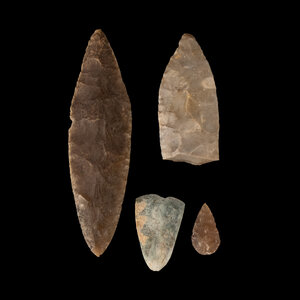
A GROUP OF 4 PREDYNASTIC FLINT BLADES AND FRAGMENTS.
Nagada I, 4000-3500 BCE
H. min 4 cm / Max. 17,5 cm
Provenance
Swiss private collection of Baron O.C.V.L (1937-2022)
Lotto n. 49
-
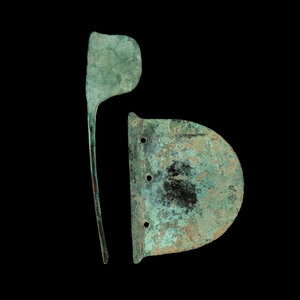
TWO EGYPTIAN COPPER ALLOYED BATTLE AXES.
Middle-Kingdom, Dynasty 12, 1991–1802 BCE
L. 19 cm / Dim. 9 x 12 cm
Provenance
Formerly with, Altem, 22.5.1991
(left one). Published in Pharao siegt immer. Krieg und Frieden im Alten Agÿpten, n°116, 2004
These are smaller versions of "real" weapons. In the present example, the blade and shaft are cast as a single piece of bronze. Furthermore, the shaft has a very small diameter, which, along with its small size, suggests it was not intended for combat use. Model axes were often placed in tombs or deposited in foundation deposits of temples and fortresses.In addition to functional axes, so-called model axes are also found in Egyptian archaeological contexts.
Lotto n. 50
-
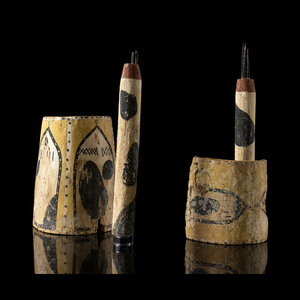
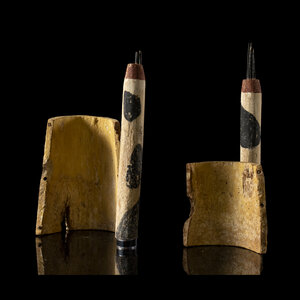
TWO EGYPTIAN WOODEN PAINTED FUNERARY FURNITURE ELEMENTS.
Moyen-Empire, Dynasty 11-12, ca. 2119-1794 BCE
H. 19,5 / 18,5 cm
Provenance
Acquired in 21 12.1977 (invoice)
Published in Pharao siegt immer. Krieg und Frieden im Alten Agÿpten, n°104 a-b; 141 a-b, 2004.
During the Middle Kingdom, it was a common burial practice to place small wooden or clay models in the tombs of the deceased. These models often included groups of miniature figurines representing servants or workers. Through magical rites, these figures were believed to come to life and serve the needs of the deceased in the afterlife. From one of these boat models come the two miniature cases equipped with spears. These small, carefully crafted spear cases were part of the boat's equipment, reflecting the preparations for long journeys. Weapons such as spears and shields (Nz. 141) were essential to defend against pirates and wild animals, particularly crocodiles and hippos, which posed significant threats along the Nile. The inclusion of these weapons emphasizes the Egyptians' deep understanding of the perils of river travel and their belief in the need for protection, even in the afterlife.
The other elements are cabin roofs with painted shields belong to model ships that, according to burial customs during the Middle Kingdom, were placed in the tombs of the deceased. Their purpose was to magically ensure transportation and enable fishing in the afterlife
Lotto n. 51
-
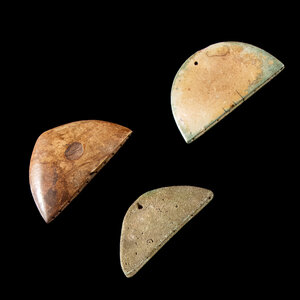
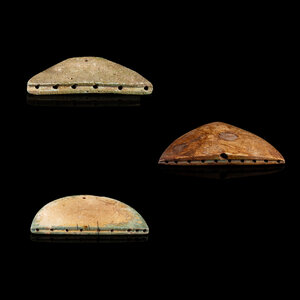
A GROUP OF EGYPTIAN FAIENCE COLLAR CLASPS.
Middle-Kingdom, ca. 1795 BCE
Min dim. 25 x 60 mm / Max. dim. 65 x 35 mm
Provenance
Formerly with, Saskia Wessel 29.6.1982
This clasp where used as final for ousekh necklace. Of semi-circular shape, with one hole at the arch, and multiples holes at the base to attach the multiple rows of the necklace.
For a similar typology see Louvre Museum, Paris, inv. E 17285
Lotto n. 52
-
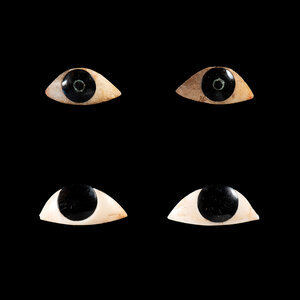
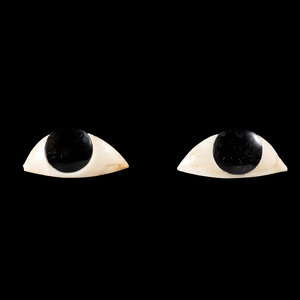
A LOT OF TWO PAIR OF NEW-KINGDOM STONE EYES FOR INLAYS.
New-Kingdom, Dynasty 19/18
Dim. 12 x 26 x 21 mm / Dim. 18 x 19 x 40 mm
Provenance
Formerly with "Augen-Einlage" Bollmann, 11.6.1980
In obsidian and crystaline limestone. These pair of eyes may have been part of a statue or a funerary mask. Beautiful conservation and execution.
Lotto n. 53
-
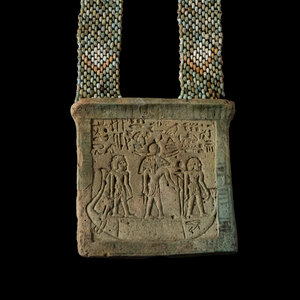
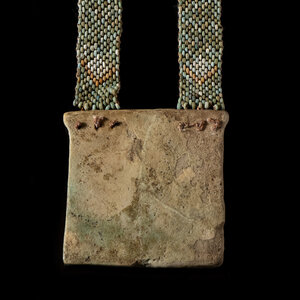
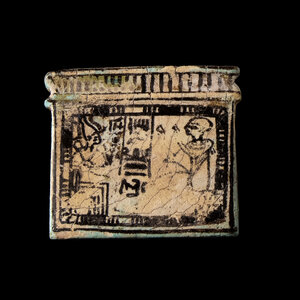
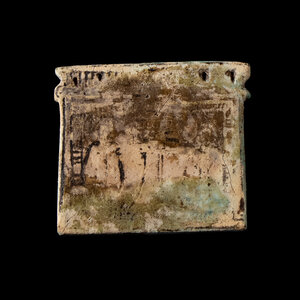
AN EGYPTIAN FAIENCE PECTORAL COLLAR
New-Kingdom, ca. 1075 - 900 BCE
Total H. 50 cm / Plaque dim. 8,5 x 8,8 cm
Provenance
Formerly, private collection of Mr. Odermatt, Switzerland, before 1988
Published in Jewellery of the Pharaohs, Treasures of Magic, Power and Beauty, 2005, pp.130-131
Face A : Khnoum god on the solar boat with two men
On top, inscription:
With a naos shape, perforated on top as attachment for the bead braided collar.
Lotto n. 54
-
AN EGYPTIAN FAIENCE PECTORAL
New-Kingdom, Dynasty 19 , 1295-1069 B.C.
Dim. 8,5 x 8 cm
Provenance
Formerly, private collection of Mr. Odermatt, Switzerland, before 1988
With a naos shape, inside a frame, Osiris seated on a throne is facing an adoring figure, represented seated with shaved head and long dress. Cracks on the surface on both sides.
Lotto n. 55
-
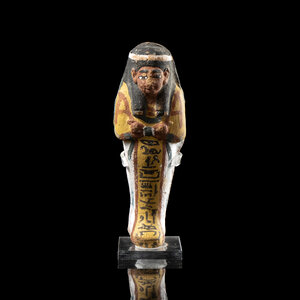
AN EGYPTIAN PAINTED POTTERY SHABTI.
New-Kingdom, Ramessid period, ca. 1295-1069 BCE
H. 11,2 cm
Provenance
Ex Merton Simpson , New York, 20.6.1979
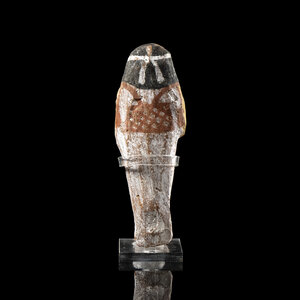
With a red-brownish modelled face with white eyes, a red and black collar and crossed arms in red holding red hoes. He wears a long black tripartite wig with a white band. Pectoral and central column on the body of yellow background and black inscription "The Osiris, the gatekeeper of the Temple of Amun, Pa-abu-nakht, justified". Beautiful conservation.
Lotto n. 56
-
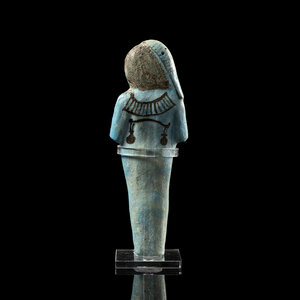
AN EGYPTIAN TURQUOISE FAIENCE SHABTI OF QUEEN ISET-NOFRET.
New-Kingdom, Reign of Ramesses II, ca. 1279-1213 BCE
H. 12 cm
Provenance
Formerly with, Bertrand A. Schneider , Langwiesen Schweiz, 23.11.2001
Exhibition
Antikenmuseum und Basel, Ramses Göttlicher Herrscher Am Nil, 17/12/2016-18/06/2017
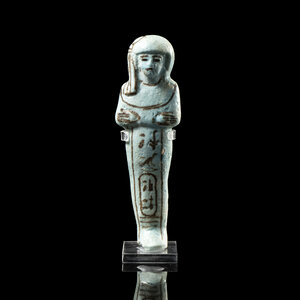
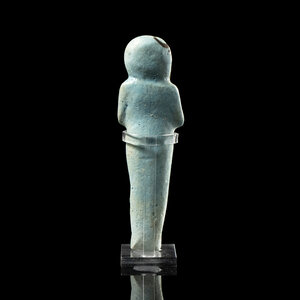
Depicted mummiform, wearing a short wig with the side-lock. The arms folded over the chest, wearing a tripartite wig, inscribed with a single column of hieroglyphic text for "the great royal wife, Iset-Nofret, the justified".
Queen Isetnofret (also spelled Isisnofret or Isitnofret) was a prominent royal consort during Egypt's 19th Dynasty, serving as one of the Great Royal Wives of Pharaoh Ramesses II. She had several children with important positions; Princes Ramesses, Khaemwaset, Merneptah and Princess Bintanath. Beautiful state of conservation.
Lotto n. 57
-
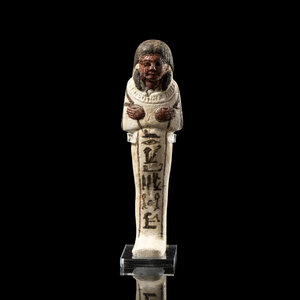
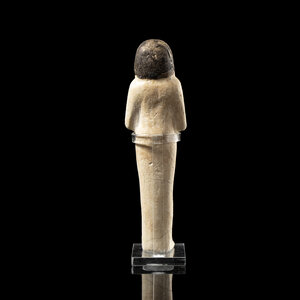
AN EGYPTIAN FAIENCE SHABTI OF QUEEN ISET-NOFRET.
New-Kingdom, Reign of Ramesses II, ca. 1279-1213 BCE
H. 15 cm
Provenance
Formerly with, Bertrand A. Schneider , Langwiesen Schweiz, 23.11.2001
Exhibition
Antikenmuseum und Basel, Ramses Göttlicher Herrscher Am Nil, 17/12/2016-18/06/2017
Publication
Ramses Göttlicher Herrscher Am Nil, 2016, n°59
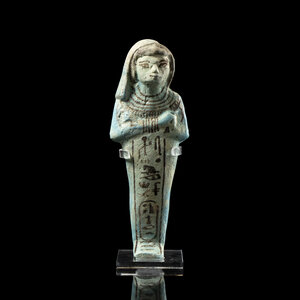
Depicted mummiform, wearing a short black wig with the side-lock. Wearing a broad ousekh collar. The arms folded over the chest, holding the hoes, the body inscribed with a single column of hieroglyphic text for "the great royal wife, Iset-Nofret".
Queen Isetnofret (also spelled Isisnofret or Isitnofret) was a prominent royal consort during Egypt's 19th Dynasty, serving as one of the Great Royal Wives of Pharaoh Ramesses II. She had several children with important positions; Princes Ramesses, Khaemwaset, Merenptah and Princess Bintanath. Beautiful state of conservation.
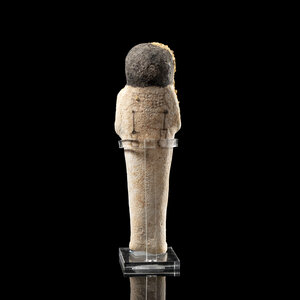
Lotto n. 58
-
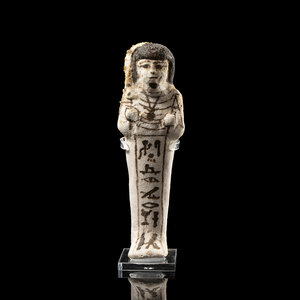
AN EGYPTIAN WHITE FAIENCE GLAZED SHABTI OF SETHINEHEH.
New-Kingdom, Reign of Ramesses II, ca. 1279-1213 BCE
H. 13 cm
Provenance
Formerly with, Meier Jacob. 26.5.1986
Exhibition
Antikenmuseum und Basel, Ramses Göttlicher Herrscher Am Nil, 17/12/2016-18/06/2017
Depicted mummiform, with a red face and a black wig. The necklace raised with relief and incised lines. The arms folded over the chest (red hands), are holding hoes. The body is inscribed with a single colum of hieroglyphic text with the name of Sethi(n)Eheh.
A similar name is mentioned on a stela in the The Roemer-Pelizaeus Museum, inv. 0375. Beautiful state of conservation.
Lotto n. 59
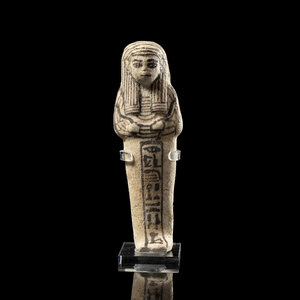
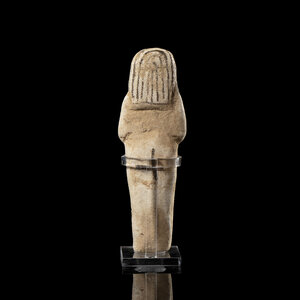
-
AN EGYPTIAN WHITE FAIENCE GLAZED SHABTI FOR THE ROYAL SEM-PRIEST HORI.
New-Kingdom, Dynasty 19, ca. 1293-1185 BCE
H. 14 cm
Provenance
Formerly with, Bertrand A. Schneider , Langwiesen Schweiz, 23.11.2001
Exhibition
Antikenmuseum und Basel, Ramses Göttlicher Herrscher Am Nil, 17/12/2016-18/06/2017
Depicted mummiform, with a short black wig and sidelock of youth hanging down to the side (belonging to the regalia of the Sem priests since Dynasty 18), a wide broad collar and pendant. The arms folded over the chest, are holding hoes. The body inscribed with a single column of hieroglyphic text with the name “Illuminate the Osiris, Sem-Priest, Director of Craftsmen, Hori”. Hori was one of Ramesses II grandchildren.
Lotto n. 60
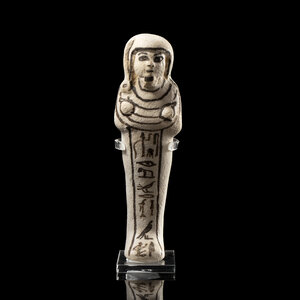
-
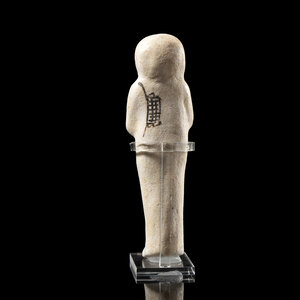
AN EGYPTIAN WHITE FAIENCE GLAZED SHABTI OF THE HIGH PRIEST OF MEMPHIS NAMED HUY.
New-Kingdom, Reign of Ramesses II, ca. 1279-1213 BCE
H. 12,5 cm
Provenance
Formerly with, Bertrand A. Schneider , Langwiesen Schweiz, 23.11.2001
Exhibition
Antikenmuseum und Basel, Ramses Göttlicher Herrscher Am Nil, 17/12/2016-18/06/2017
Huy served as the High Priest of Ptah during the reign of Ramesses II. He is primarily known from two shabtis, currently housed in the Louvre, which were dedicated during an Apis burial at the Serapeum of Saqqara. These burials are dated to the 16th and 30th years of Ramesses II's reign. It is believed that Huy held his position as High Priest of Ptah from around the 2nd to the 20th year of Ramesses II's rule. His successor was Pahemnetjer.
Lotto n. 61
-
AN EGYPTIAN WHITE FAIENCE GLAZED SHABTI FOR THE ROYAL SEM-PRIEST HORI.
New-Kingdom, Dynasty 19, ca. 1293-1185 BCE
H. 14,5 cm
Provenance
Formerly with, Bertrand A. Schneider , Langwiesen Schweiz, 23.11.2001
Exhibition
Antikenmuseum und Basel, Ramses Göttlicher Herrscher Am Nil, 17/12/2016-18/06/2017
Depicted mummiform, with a short black and sidelock of youth hanging down to the side (belonging to the regalia of the Sem priests since Dynasty 18), a wide broad collar and pendant. The arms folded over the chest, are holding hoes. The body inscribed with a single column of hieroglyphic text with the name “Illuminate the Osiris, Sem-Priest, Director of Craftsmen, Hori”. Hori was one of Ramesses II grandchildren.
Caricamento altri risultati...