
Sicily. Lilybaion (as Cape of Melqart). Siculo-Punic Coinage, circa 330-305 BC. Tetradrachm (Silver, 24.58 mm, 16.60 g). Charioteer driving quadriga galloping left, holding kentron and reins; in exergue, RŠMLQRT ("Raš Melqart" in Punic); border of dots. Rev. Female head (Tanit-Arethusa) right, hair bound in ampyx, wearing single-drop earring; around, five dolphins. Jenkins, SNR 50 (1971), pl. 15, 4 (O3/R3, same dies). Viola CNP 296 (same dies). SNG ANS -. SNG Copenhagen -. SNG Lloyd -. Cf. HGC 2, 730. Lightly toned. Coin with oxidation removed on reverse. Very Fine. Extremely Rare (Jenkins quotes only one piece and with uncertain sale catalogue).Ex Cayon 422A, 20 November 2024, lot 5556.After the destruction of Motya by the Syracusan tyrant Dionysios I, the Carthaginians relocated the surviving population to a new, well-defended fortress in the western corner of Sicily. The Greeks called the city Lilybaion, while the Carthaginians called it "Ras Melqart" (Cape of Melqart). The new port town would become a thriving trade hub and the most important military base in Sicily. The strong new walls that were built to defend the city were able to fend off both Pyrrhos of Epiros and the Romans. It was the last bastion of Punic rule in Sicily during Pyrrhos' conquest of the island, beating back his attempts to take the city before his campaign unraveled entirely. The Romans placed the city under a nine-year siege with numerous assaults during the First Punic War, but they were never able to capture the city and only gained control of it after Carthage's surrender at the end of the war. The tetradrachms that are purportedly from Lilybaion were all struck in the later half of the fourth century BC., and exhibit a strong imitative affinity with Syracuse styles from the same period, usually depicting a quadriga with a charioteer on the obverse and a female head with dolphins on the reverse.
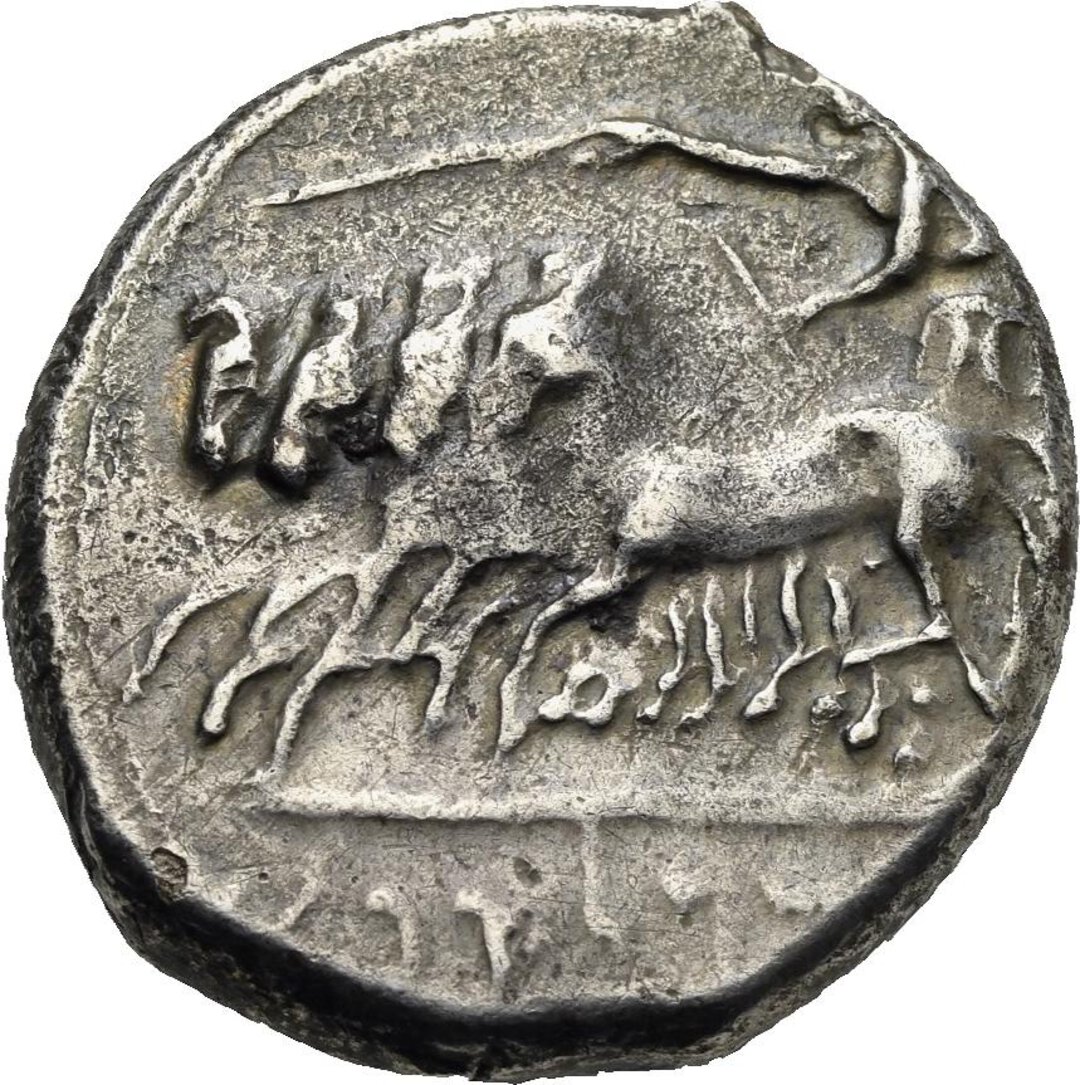
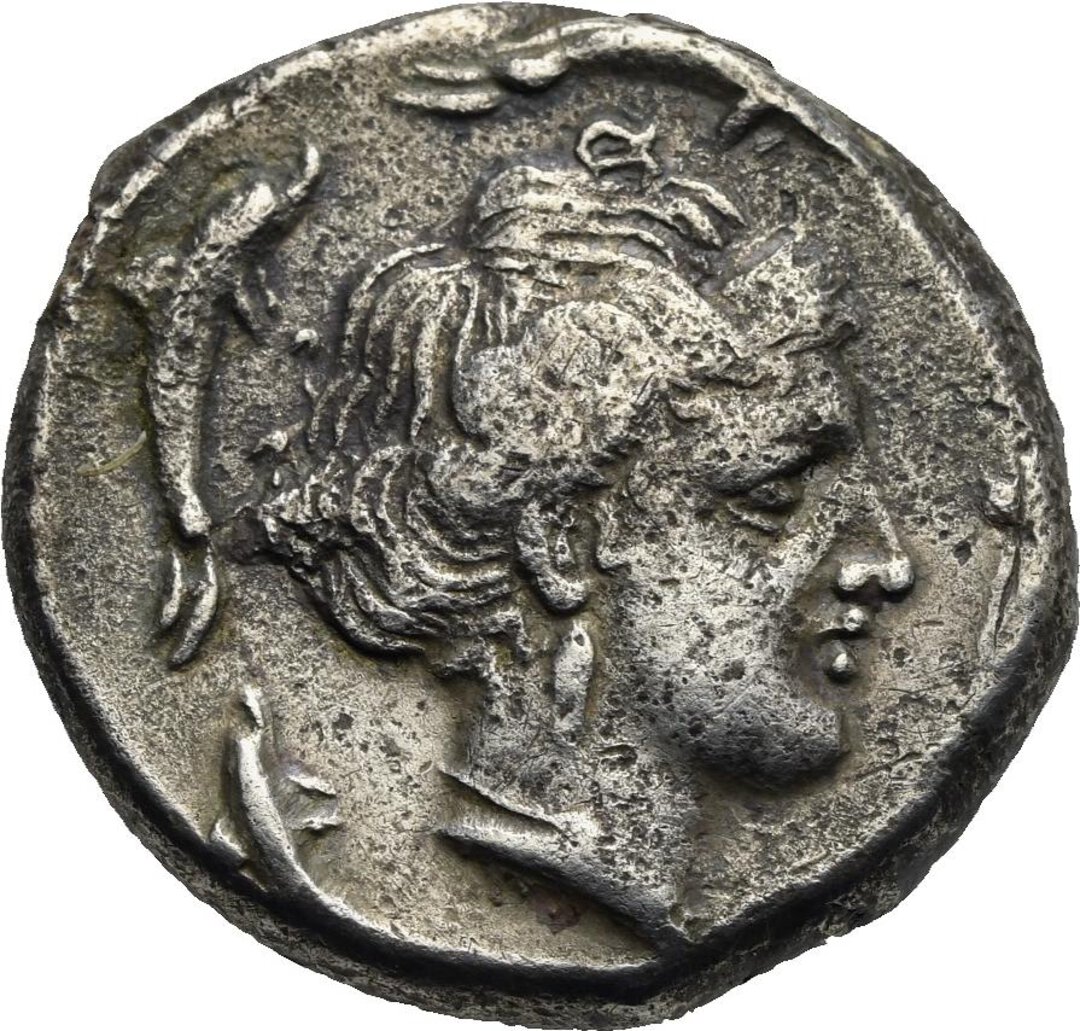
Sicily. Lilybaion (as Cape of Melqart). Siculo-Punic Coinage, circa 330-305 BC. Tetradrachm (Silver, 24.58 mm, 16.60 g). Charioteer driving quadriga galloping left, holding kentron and reins; in exergue, RŠMLQRT ("Raš Melqart" in Punic); border of dots. Rev. Female head (Tanit-Arethusa) right, hair bound in ampyx, wearing single-drop earring; around, five dolphins. Jenkins, SNR 50 (1971), pl. 15, 4 (O3/R3, same dies). Viola CNP 296 (same dies). SNG ANS -. SNG Copenhagen -. SNG Lloyd -. Cf. HGC 2, 730. Lightly toned. Coin with oxidation removed on reverse. Very Fine. Extremely Rare (Jenkins quotes only one piece and with uncertain sale catalogue).
Ex Cayon 422A, 20 November 2024, lot 5556.
After the destruction of Motya by the Syracusan tyrant Dionysios I, the Carthaginians relocated the surviving population to a new, well-defended fortress in the western corner of Sicily. The Greeks called the city Lilybaion, while the Carthaginians called it "Ras Melqart" (Cape of Melqart). The new port town would become a thriving trade hub and the most important military base in Sicily. The strong new walls that were built to defend the city were able to fend off both Pyrrhos of Epiros and the Romans. It was the last bastion of Punic rule in Sicily during Pyrrhos' conquest of the island, beating back his attempts to take the city before his campaign unraveled entirely. The Romans placed the city under a nine-year siege with numerous assaults during the First Punic War, but they were never able to capture the city and only gained control of it after Carthage's surrender at the end of the war. The tetradrachms that are purportedly from Lilybaion were all struck in the later half of the fourth century BC., and exhibit a strong imitative affinity with Syracuse styles from the same period, usually depicting a quadriga with a charioteer on the obverse and a female head with dolphins on the reverse.