
Sicily. Motya. Circa 412-400 BC. Didrachm (Silver, 21.32 mm, 8.44 g). Hound standing right on exergue line; above, barley grain; border of dots. Rev. MOTYAION, Head of nymph right, wavy hair drawn up over head into a korymbos; behind, crayfish swimming upwards; all within a shallow incuse circle. Jenkins, SNR 50 (1971), pl. 3, 20e (O10/R12, this coin). Viola CNP 462 (this coin illustrated). SNG Lloyd 1134 (same dies). De Luynes 1042 (same dies). Jameson 664 = Rizzo pl. LXV, 5 = Campana CNAI II, 373, 6A/c (same dies). Hurter (Segesta) pl. 22, C = Buceti 6/1a = HGC 2, 927 (same dies). Beautiful old cabinet tone. Good Very Fine. Very Rare. Ex Dr. Busso Peus Nachfolger 407, 7 November 2012, lot 233; Dr. Busso Peus Nachfolger 353, 29 October 1997, lot 89; Classical Numismatic Group & Numismatic Ars Classica 40, 4 December 1996, lot 805; Hess-Leu 19, 12 April 1962, lot 76.This coin has the same (or very similar) dies to those found by Silvia Hurter, Segesta pl. 16, Obverse 54 and by Jenkins in SNR 50 (1971), Panormos pl. 6, Reverse 2. The didrachms minted during this period may have been produced to pay the mercenaries that regularly formed the armies of the ancient Sicilian cities. This was a period of constant conflict between Segesta and Selinus, before the cycle of alliances that ultimately destroyed the latter and firmly established Punic power in Western Sicily. Therefore, a sudden surge is observed of numismatic activity in North-West Sicily. Three cities, Segesta, Motya and Panormos minted considerable quantities of the same types of didrachms: a hunting dog on the obverse and a nymph's head on the reverse. The coins of the three cities reveal the hand of the same engravers and although used the same types of coins, they all followed their own specific regime. The presence of hybrid coins combining dies from these cities suggests a central mint, probably in Segesta. While Jenkins and Hurter propose Panormos, Rutter argues convincingly for Segesta, which, considering the historical circumstances, seems the most plausible location.
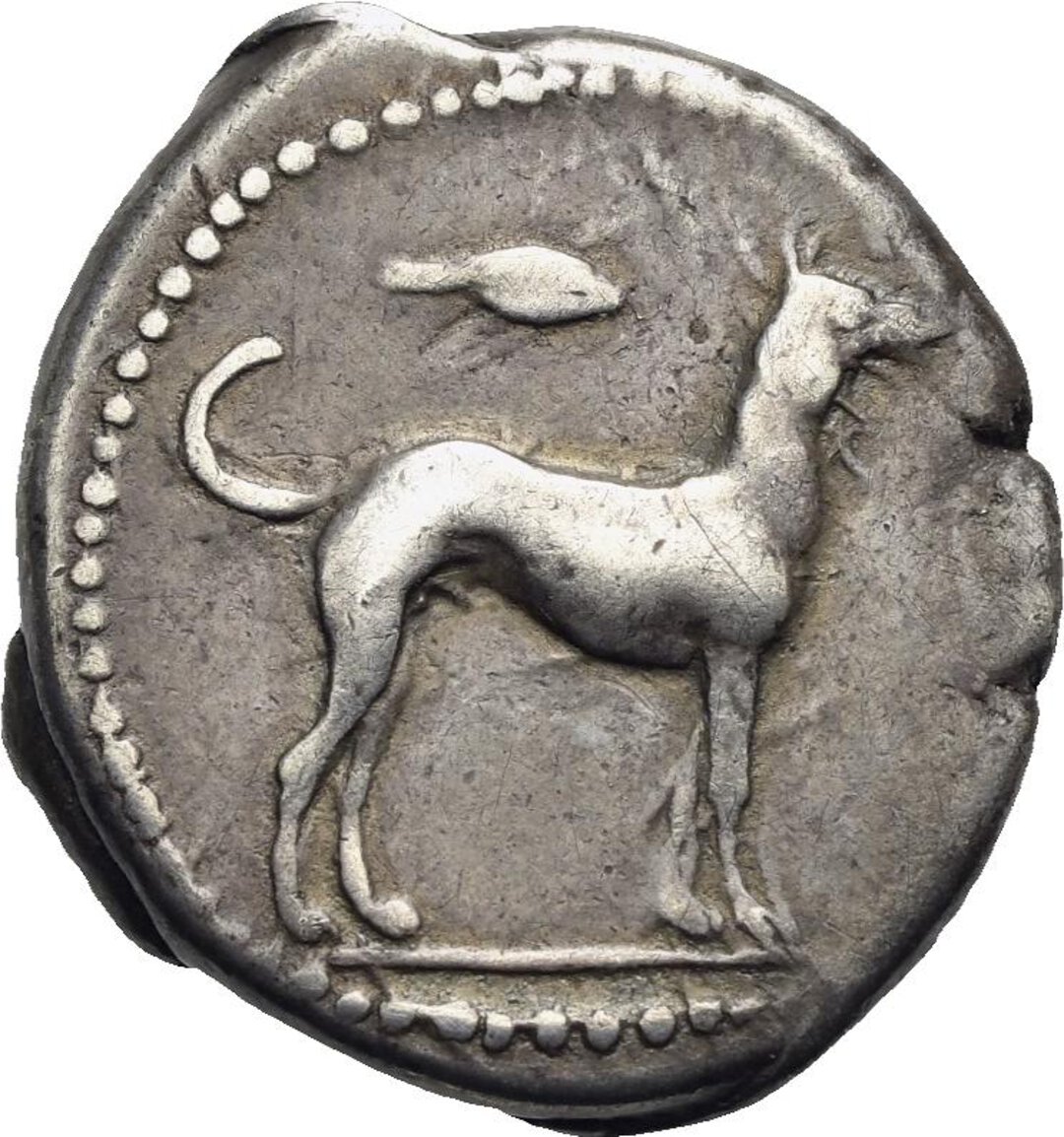
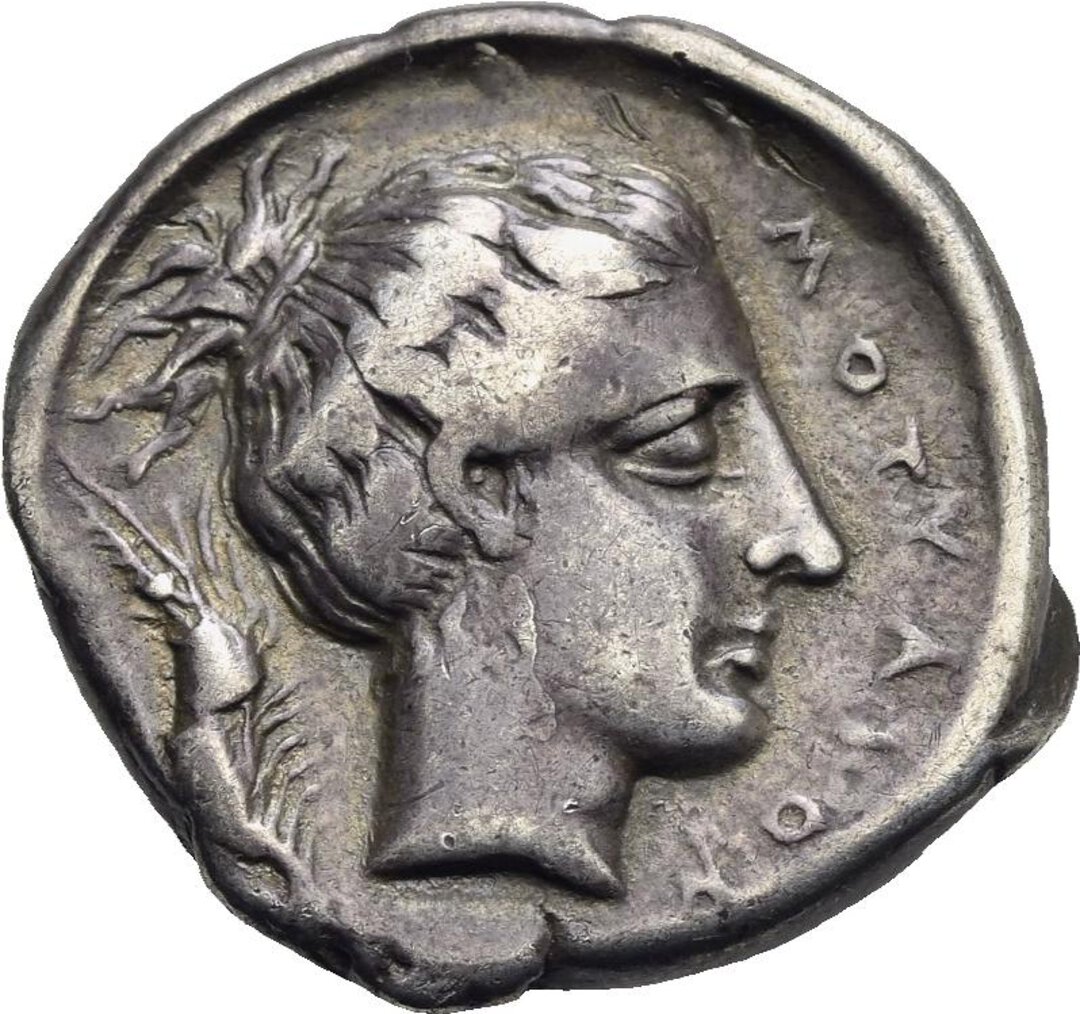
Sicily. Motya. Circa 412-400 BC. Didrachm (Silver, 21.32 mm, 8.44 g). Hound standing right on exergue line; above, barley grain; border of dots. Rev. MOTYAION, Head of nymph right, wavy hair drawn up over head into a korymbos; behind, crayfish swimming upwards; all within a shallow incuse circle. Jenkins, SNR 50 (1971), pl. 3, 20e (O10/R12, this coin). Viola CNP 462 (this coin illustrated). SNG Lloyd 1134 (same dies). De Luynes 1042 (same dies). Jameson 664 = Rizzo pl. LXV, 5 = Campana CNAI II, 373, 6A/c (same dies). Hurter (Segesta) pl. 22, C = Buceti 6/1a = HGC 2, 927 (same dies). Beautiful old cabinet tone. Good Very Fine. Very Rare.
Ex Dr. Busso Peus Nachfolger 407, 7 November 2012, lot 233; Dr. Busso Peus Nachfolger 353, 29 October 1997, lot 89; Classical Numismatic Group & Numismatic Ars Classica 40, 4 December 1996, lot 805; Hess-Leu 19, 12 April 1962, lot 76. This coin has the same (or very similar) dies to those found by Silvia Hurter, Segesta pl. 16, Obverse 54 and by Jenkins in SNR 50 (1971), Panormos pl. 6, Reverse 2.
The didrachms minted during this period may have been produced to pay the mercenaries that regularly formed the armies of the ancient Sicilian cities. This was a period of constant conflict between Segesta and Selinus, before the cycle of alliances that ultimately destroyed the latter and firmly established Punic power in Western Sicily. Therefore, a sudden surge is observed of numismatic activity in North-West Sicily. Three cities, Segesta, Motya and Panormos minted considerable quantities of the same types of didrachms: a hunting dog on the obverse and a nymph's head on the reverse. The coins of the three cities reveal the hand of the same engravers and although used the same types of coins, they all followed their own specific regime. The presence of hybrid coins combining dies from these cities suggests a central mint, probably in Segesta. While Jenkins and Hurter propose Panormos, Rutter argues convincingly for Segesta, which, considering the historical circumstances, seems the most plausible location.