Roman Republican Coins
Results from 4201 to 4250 of 10423
Lot # 78
-
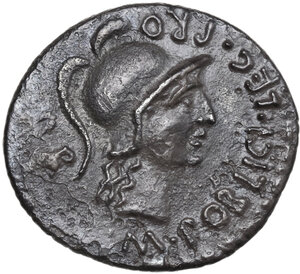
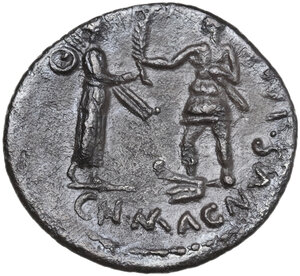
Cn. Pompeius Magnus with M. Poblicius. AR Denarius, Spain, 46-45 BC. Obv. Head of Roma right, wearing Corinthian helmet; before, M·POBLICI·LEG·PRO; behind PR. Rev. Female figure standing right, with shield slung on back, holding two spears and giving palm-branch to soldier standing left on prow of ship (prow much larger); on right, CN·MAGNVS·IMP. RRSC D259a; Cr. 469/1a; B. (Poblicia) 10, (Pompeia) 9. AR. 3.7 g. 19 mm. R. Dark tone. Roughness. Good VF/VF.
Lot # 77
-
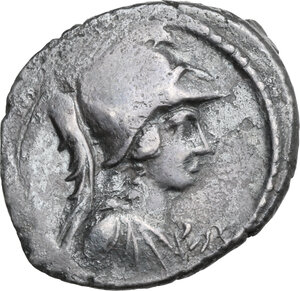
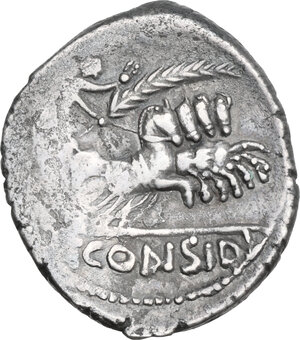
C. Considius Paetus. AR Denarius, 46 BC. Obv. Helmeted bust of Minerva right, wearing aegis. Rev. Victory in quadriga right, holding palm branch, reins and wreath; in exergue, C·CONSIDI. RRSC D256.5; Cr. 465/5; B. (Considia) 5. AR. 3.63 g. 21 mm. RR. Roughness and striking weakness. VF.
Lot # 76
-
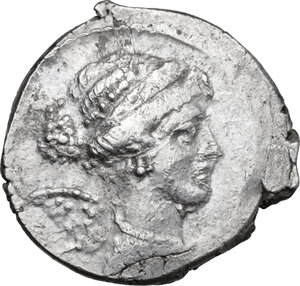
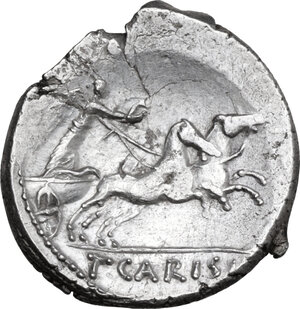
T. Carisius. AR Denarius, 46 BC. Obv. Bust of Victory right. Rev. Victory in biga right, holding reins and wreath; in exergue, T·CARISI. RRSC D255.4; Cr. 464/4; B. (Carisia) 2. AR. 3.73 g. 20 mm. Nice example, lightly toned. Struck on broad flan. Good VF.
Lot # 75
-
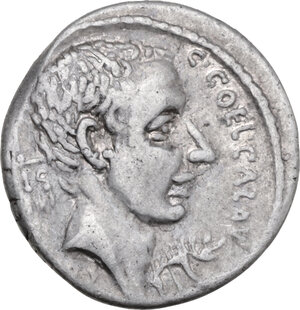
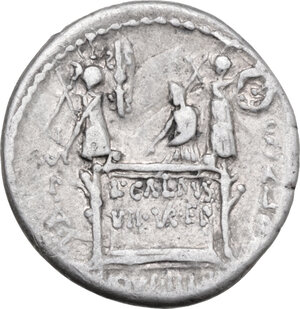
C. Coelius Caldus. AR Denarius, 51 BC. Obv. C. COEL. CALDVS. Bare head of C. Coelius Caldus right; in left field, standard inscribed HIS; in right field, standard in the form of a boar. Rev. Tablet inscribed L. CALDVS/VII VIR. EPVL, behind which figure preparing epulum; on either side of table, a trophy. On outer left field, CALDVS; on outer right field, IMP.A.X. In exergue, CALDVS. III VIR. RRSC D229.2a; Cr. 437/2a; B. 7. AR. 3.86 g. 19 mm. R. Rare and good example, well centred. Lightly toned, with underlying luster. Good VF/VF.
Lot # 74
-
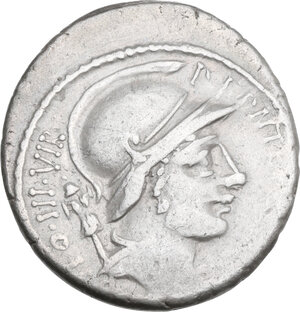
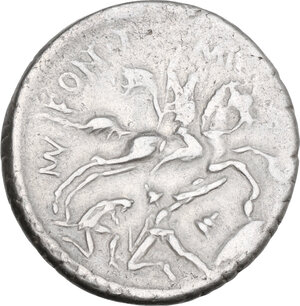
P. Fonteius Capito. AR Denarius, 55 BC. Obv. P·FONTEIVS·P·F·CAPITO·III·VIR. Helmeted and draped bust of Mars right, with trophy over shoulder. Rev. MN·FONT·TR·MIL (MN ligate). Warrior on horseback thrusting his spear at Gaulish enemy who is about to slay unarmed captive; on right, helmet and oval shield. RRSC D221.1; Cr. 429/1; B. (Fonteia) 17. AR. 3.84 g. 18.5 mm. VF.
Lot # 73
-
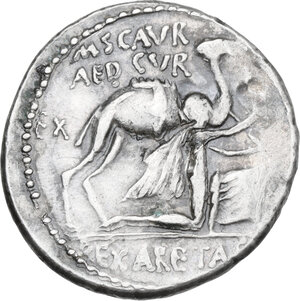
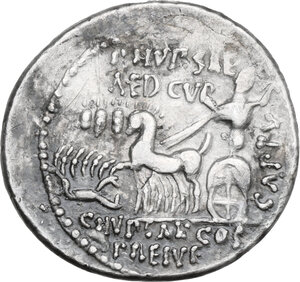
M. Aemilius Scaurus with Pub. Plautius Hypsaeus. AR Denarius, 58 BC. Obv. Camel right; before, King Aretas kneeling right, holding reins in left hand and olive-branch tied with fillet in right hand; above, M·SCAVR/ AED·CVR; on either side, EX-S·C; in exergue, REX·ARETAS. Rev. Jupiter in quadriga left; below horses, scorpion; above, P·HYPSAE / AED·CVR; on right, CAPTV; in exergue, C·HYPSAE·COS / PREIVE. RRSC D214b; Cr. 422/1b; B. (Aemilia) 8. AR/AE. 3.4 g. 19.5 mm. Good VF/VF.
Lot # 72
-
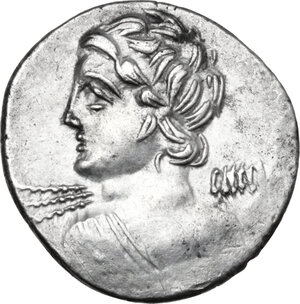
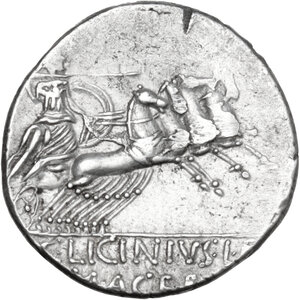
C. Licinius L. f. Macer. AR Denarius, 84 BC. Obv. Diademed and draped bust of Vejovis left turned from spectator, hurling thunderbolt. Rev. Minerva in quadriga right; in exergue, C·LICINIVS·L·F / MACER. RRSC D149.1; Cr. 354/1; B. (Licinia) 16. AR. 3.75 g. 20 mm. Nice example, lightly toned. Test cut (?) and gash on reverse. Good VF.
Lot # 71
-
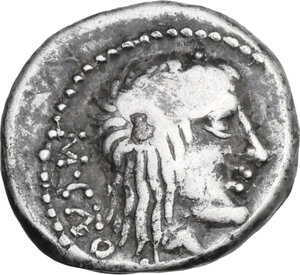
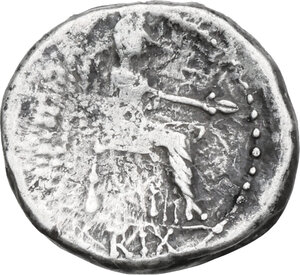
M. Porcius Cato. AR Quinarius, 89 BC. Obv. Head of Liber right, wearing ivy-wreath; behind, M·CATO. [Control-mark below neck ?]. Rev. Victory seated right, holding patera and palm branch. In exergue, VICTRIX. RRSC Dq139b; Cr. 343/2b. AR. 2.19 g. 14 mm. Lightly toned. About VF/Good F.
Lot # 70
-
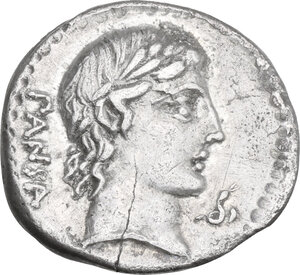
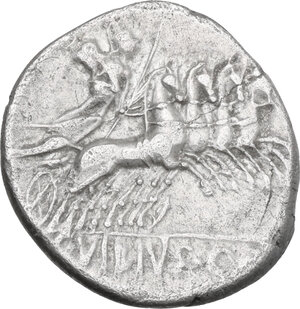
C. Vibius C. f. Pansa. AR Denarius, 90 BC. Obv. Laureate head of Apollo right; behind, PANSA; below chin, snake. Rev. Minerva in quadriga right; in exergue, C·VIBIVS·C·F. RRSC D138.5b; Cr. 342/5b. AR. 3.72 g. 18 mm. Hairline flan crack. About VF.
Lot # 69
-
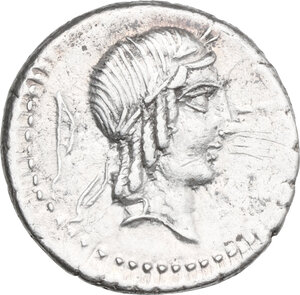
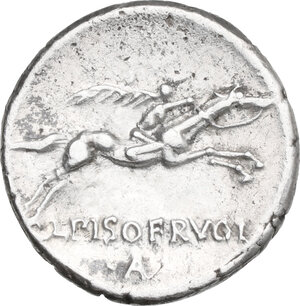
L. Calpurnius Piso Frugi. AR Denarius, 90 BC. Obv. Laureate head of Apollo right; behind, symbol. Rev. Horseman galloping right, holding palm; below, L. PISO FRVGI/dot and A. RRSC D136.1m; Cr. 340/1. AR. 3.78 g. 18 mm. Well centred and nicely toned. About EF.
Lot # 68
-
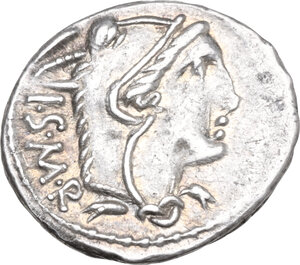
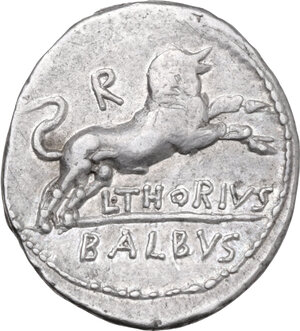
L. Thorius Balbus. AR Denarius, 105 BC. Obv. Head of Juno Sospita right, wearing goat-skin; behind, I·S·M·R. Rev. Bull charging right; above, R; below, L·THORIVS; in exergue, BALBVS. RRSC D114; Cr. 316/1; B. (Thoria) 1. AR. 3.93 g. 20.5 mm. Iridescent toning with warm golden yellow hues. Area of flat striking on reverse. Good VF.
Lot # 67
-
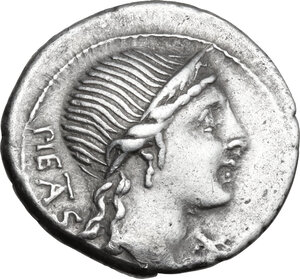
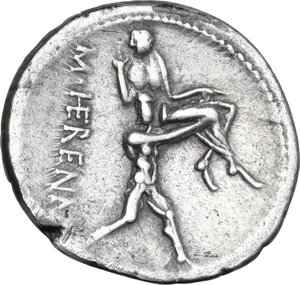
M. Herennius. AR Denarius, 108 or 107 BC. Obv. Diademed head of Pietas right; behind, PIETAS (TA ligate); before, control-mark. Rev. One of the Catanean brothers running right, carrying his father on his shoulder; on left, M·HERENNI (HE ligate). RRSC D107a; Cr. 308/1a; B. (Herennia) 1. AR. 3.77 g. 19 mm. Nice example almost complete. Good VF.
Lot # 66
-
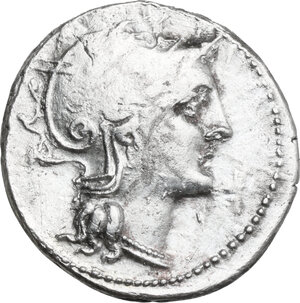
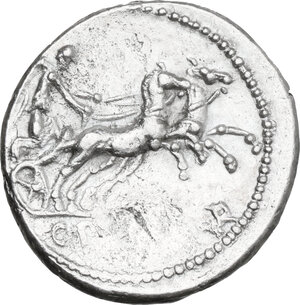
C. Claudius Pulcher. AR Denarius, 110 or 109 BC. Obv. Helmeted head of Roma right. Rev. Victory in biga right; in exergue, C·PVLCHER. RRSC D99; Cr. 300/1; B. 1 (Claudia). AR. 3.83 g. 19.5 mm. Striking weakness. VF/Good VF.
Lot # 65
-
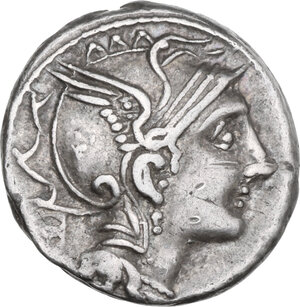
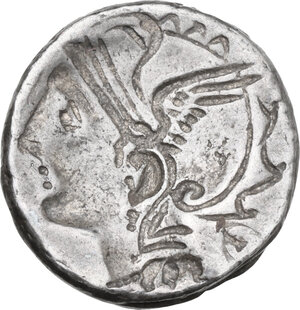
Appius Claudius Pulcher, T. Manlius Mancinus and Q. Urbinius. AR Brockage Denarius, 111 or 110 BC. Obv. Helmeted head of Roma right; behind, quadrangular device. Rev. Incuse of obverse. RRSC D98a; Cr. 299/1a; B. (Claudia) 2 and (Mallia) 1. AR. 3.84 g. 17 mm. R. VF/Good VF.
Lot # 64
-
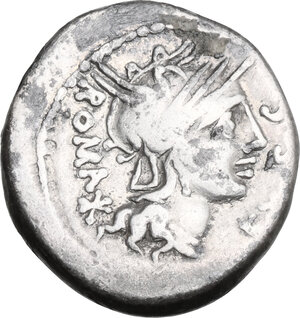
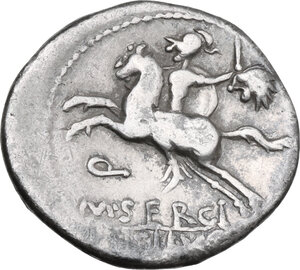
M. Sergius Silus. AR Denarius, 116 or 115 BC. Obv. Helmeted head of Roma right; behind, ROMA and barred X; on right, EX·S·C. Rev. Horseman galloping left, holding sword and severed head; below, Q/ M·SERGI; in exergue, SILVS. RRSC D85; Cr. 286/1; B. (Sergia) 1. AR. 3.8 g. 19 mm. VF.
Lot # 63
-
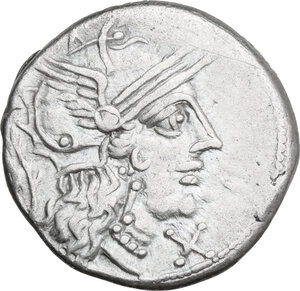
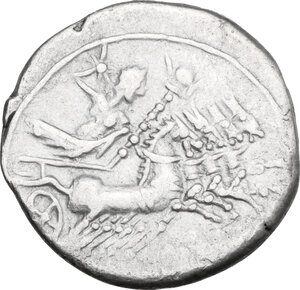
M. Papirius Carbo. AR Denarius, 122 BC. Obv. Helmeted head of Roma right; behind, branch; below chin, X. Rev. Jupiter in quadriga right; below, M·CARBO; in exergue, ROMA. RRSC D75; Cr. 276/1; B. (Papiria) 6. AR. 3.86 g. 18 mm. R. VF.
Lot # 62
-
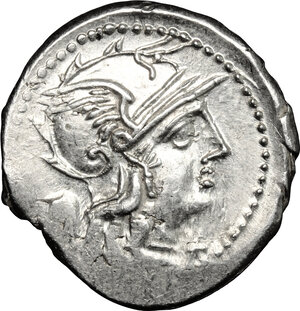
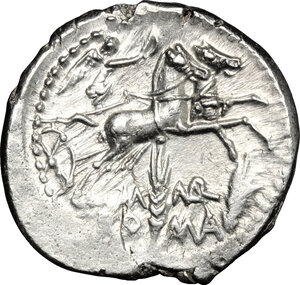
M. Marcius Mn. f. AR Denarius, 134 BC. Obv. Helmeted head of Roma right; behind, modius; below chin, Ӿ,. Rev. Victory in biga right; below, M MAR C / RO MA divided by two corn-ears. RRSC D46a; Cr. 245/1. AR. 4.02 g. 21 mm. Great metal, full weight and broad flan. Minor areas of flatness, otherwise. good EF.
Lot # 61
-
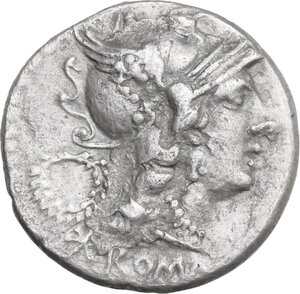
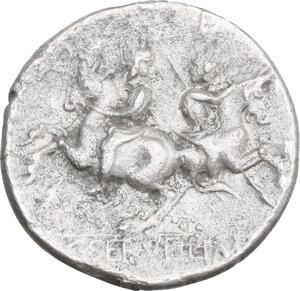
C. Servilius M.f. AR Denarius, 136 BC. Obv. Helmeted head of Roma right; behind, wreath and barred X; below, ROMA. Rev. The Dioscuri galloping in the opposite directions, with spears reversed; in exergue, C·SERVEILI·M·F. RRSC D40; Cr. 239/1; B. (Servilia) 1. AR. 3.72 g. 19 mm. Roughness. VF/About VF.
Lot # 60
-
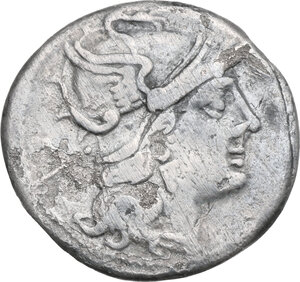
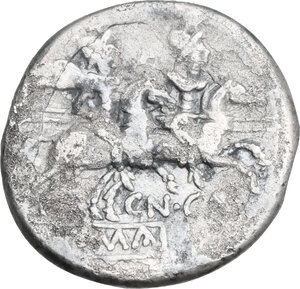
Cn. Calpurnius Piso. AR Denarius, Roma mint, 203 BC. Obv. Helmeted head of Roma right; behind, X. Rev. The Dioscuri galloping right; below, horses, CN CALP ligate and ROMA in partial tablet. RRSC B133; Cr. 153/1. AR. 3.5 g. 18.5 mm. RR. Rough surfaces. Brushed. About VF.
Lot # 59
-
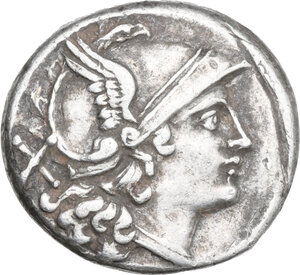
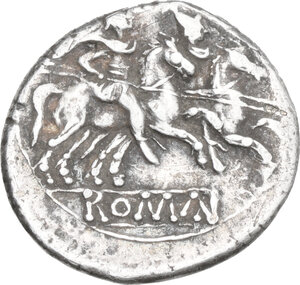
No Dolphin series. AR Denarius, uncertain Campanian mint (Cales?), 211 BC. Obv. Helmeted head of Roma right; behind, X. Rev. The Dioscuri galloping right; in two-side frame, ROMA. RRSC B47A; Cr. 80/1b. AR. 4.29 g. 19 mm. RR. Very rare. Good VF/VF.
Lot # 58
-
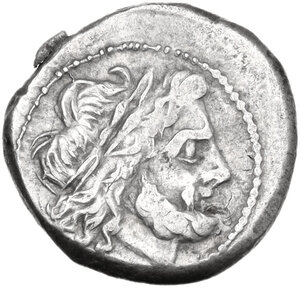
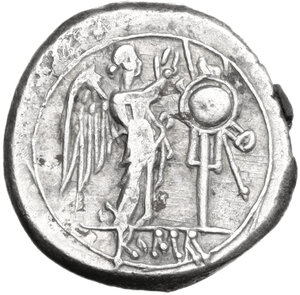
Anonymous. AR Victoriatus, uncertain Campanian mint (Puteoli?), from 214 to 211 BC. Obv. Laureate head of Jupiter right. Rev. Victory standing right, crowning trophy; in exergue, ROMA. RRSC V4B; Cr. 44/1. AR. 3.2 g. 15.5 mm. VF.
Lot # 57
-
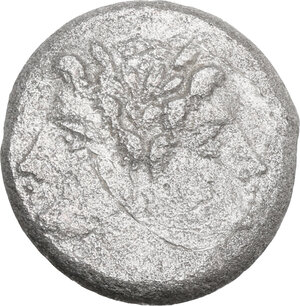
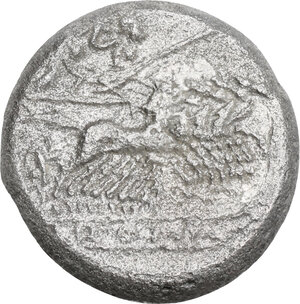
Anonymous. AR Quadrigatus, Capua (?), 214 BC (?). Obv. Laureate Janiform head of Dioscuri. Rev. Jupiter in quadriga right, driven by Victory; on tablet, ROMA. RRSC A8; Cr. -. AR. 5.38 g. 17 mm. Rare. Porous surfaces. Good F.
Lot # 56
-
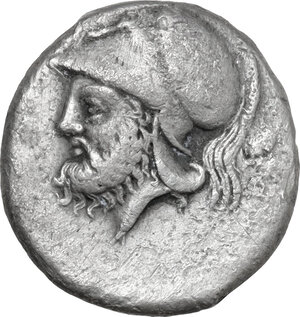
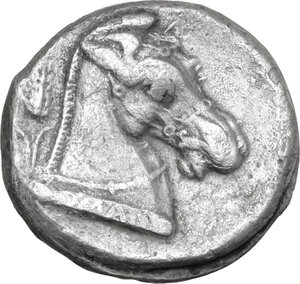
Anonymous. AR Early Denarius (previously calssified as Didrachm), Uncertain (Neapolis?) mint, late 4th century BC. Obv. Helmeted head of Mars left; oak spray to right. Rev. Horse's head right, wearing bridle, on base inscribed [RO]MANO; stalk of grain to left. RRSC E1; Cr. 13/1. AR. 7.2 g. 20 mm. RR. Very rare. Roughness. Centred and lightly toned. VF. Ex Artemide 65E, 2024, lot 271.
Lot # 55
-
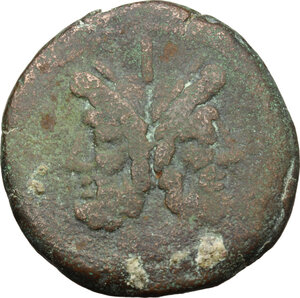
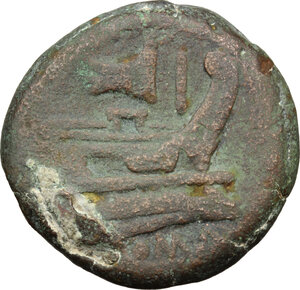
Rostrum tridens series. AE As, c. 206-195 BC. Obv. Laureate head of Janus; above, mark of value I. Rev. Prow right; above, rostrum tridens left and mark of value I; below, ROMA. Cr. 114/2. AE. 31.53 g. 34 mm. Brown patina, green spots. About VF/VF.
Lot # 54
-
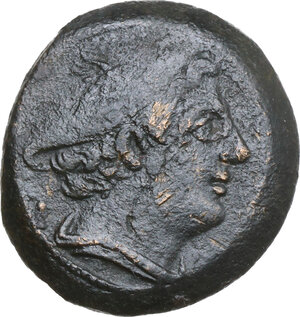
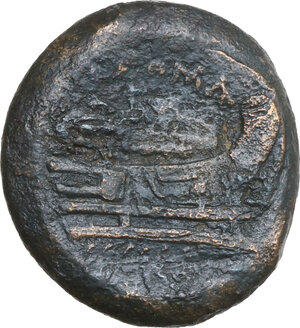
Anonymous semilibral series. AE Semuncia. 217-215 BC. Obv. Head of Mercury right, wearing winged petasos. Rev. Prow right. Cr. 38/7. AE. 6.97 g. 20.5 mm. VF/About VF.
Lot # 53
-
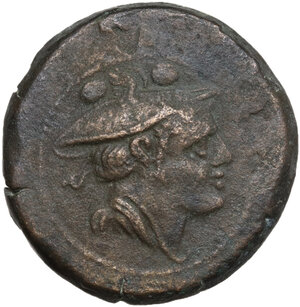
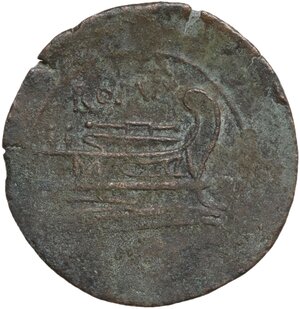
Anonymous sextantal series. AE Sextans, 214 BC. Obv. Head of Mercury right, wearing petasos; above, two pellets. Rev. ROMA. Prow right; below, [two pellets]. Cr. 56/6. AE. 10.59 g. 28 mm. Choice and well centred on a very broad flan. Green brown patina. Traces of overstriking. VF.
Lot # 52
-
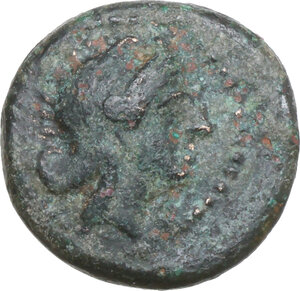
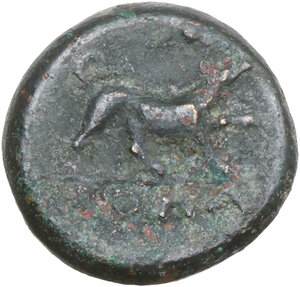
Anonymous. AE Half Litra, c. 234-231 BC. Obv. Head of Roma right, wearing Phrygian helmet. Rev. Dog right. Cr. 26/4; HN Italy 309. AE. 2.08 g. 13 mm. About VF/VF.
Lot # 51
-
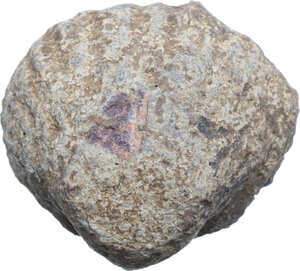
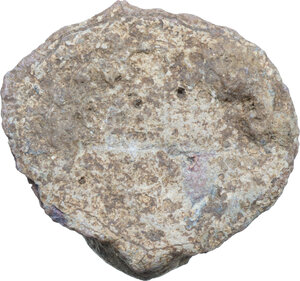
Premonetale. PB solid cast cockle-shell. Central Italy, 6th-4th century BC. PB. 44.41 g. 30 mm.
Lot # 523
-
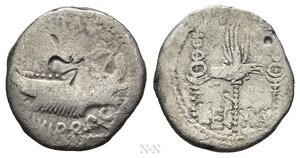
MARK ANTONY. Denarius (32-31 BC). Patrae(?). Legionary issue. Obv: ANT AVG / III VIR R P C. Galley right.Rev: LEG - XIX. Aquila right between two signa.Crawford 544/35; CRI 378; RBW 1847. Condition: Fine.Weight: 3.15 g. Diameter: 17 mm.
Lot # 522
-
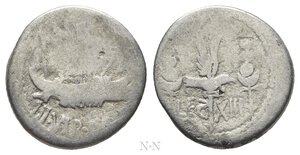
MARK ANTONY. Denarius (32-31 BC). Patrae(?). Legionary issue. Obv: ANT AVG / III VIR R P C. Galley right.Rev: LEG XIII. Aquila between two legionary standards.Crawford 544/27; CRI 367; RBW 1844. Condition: Fine.Weight: 3.48 g. Diameter: 17 mm.
Lot # 521
-
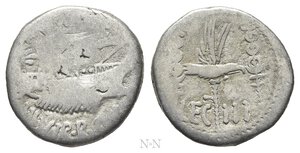
MARK ANTONY. Denarius (32-31 BC). Patrae(?). Legionary issue. Obv: ANT AVG / III VIR R P C. Galley right.Rev: LEG - III. Aquila between two legionary standards.Crawford 544/15; CRI 350; RBW 1839. Condition: Fine.Weight: 3.36 g. Diameter: 16 mm.
Cleopatra´s Portrait
Lot # 520
-
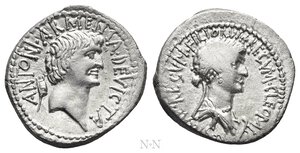
MARK ANTONY and CLEOPATRA (34 BC). Denarius. Military Mint traveling with M. Antony. Obv: ANTONI ARMENIA DEVICTA. Bare head of Mark Antony right; Armenian tiara to left.Rev: CLEOPATRAE REGINAE REGVM FILIORVM REGVM. Diademed and draped bust of Cleopatra right; to lower right, prow right.Crawford 543/1; CRI 345; RBW 1832.Cleopatra VII, the last queen of the Ptolemaic dynasty in Egypt, was described by sources as an excellent political strategist, clever and cultured. She was always committed to maintaining the independence of her kingdom in the face of the growing threat of Roman expansion and knew how to use her charisma to build alliances and consolidate her power, first with Caesar and then with Antony. Her union with Antony was not only a bond of love, but also a strategic alliance that aimed to strengthen the positions of both against internal and external enemies.
They met officially for the first time in 41 BC, when Antony, eager to strengthen his position in the East, summoned the queen to Tarsus. Cleopatra, trying to impress the Roman general, arrived in the city with a lavish procession, displaying all the symbols of Egyptian power and wealth. The queen presented herself as the reincarnation of Isis, using a symbolic and cultural strategy that deeply fascinated Antony. Antony then followed Cleopatra to Egypt, where he spent several months at her side, strengthening their bond. Their relationship scandalized Rome, where it was considered inappropriate for a Roman general to be influenced by a foreign queen, especially at a time of political crisis.
The bond between Antony and Cleopatra grew even stronger when their children, Alexander Helios and Cleopatra Selene, were born, symbolizing the alliance between Rome and Egypt. However, tensions with Rome were mounting: Octavian, eager to consolidate his power, used their relationship to paint Antony as a traitor, accusing him of wanting to divide the Empire to create an eastern kingdom with Cleopatra.
This denarius was struck in 34 BC when Antony, returning from his campaign in Armenia, celebrated his triumph with the entire royal family in Alexandria. Cleopatra, who had already received substantial concessions and territories, was proclaimed queen of Egypt, Cyprus, Libya, and part of Syria. Her son Ptolemy XV (Caesarion) was associated with his mother in the government of these territories with the title of “King of Kings.” The sons she had with Antony received Armenia, the territories of the Parthians, Cyrenaica, Libya, and Cilicia. The legend on this coin names Cleopatra “REGINAE REGUM [MATRI] FILIORUM REGUM” (= Queen of Kings and of her Sons, being Kings). The portrait of Antony is associated with the Armenian crown, recalling the victory achieved and the triumph over Armenia.
In 32 BC, tensions between Antony and Octavian erupted into open conflict. Cleopatra sided with Antony, supporting him with troops and resources, and the two fought together in the Battle of Actium in 31 BC. However, the battle ended in disastrous defeat for the pair, who were forced to retreat to Alexandria. In 30 BC, when Octavian's troops arrived at the gates of Alexandria, Antony took his own life. Cleopatra, captured by Octavian, attempted to negotiate the safety of her children and her kingdom, but soon realized that she would be taken to Rome as a prisoner and chose to take her own life, probably with the poison of an asp. Condition: Very fine.Weight: 3.41 g. Diameter: 19 mm.
Lot # 519
-
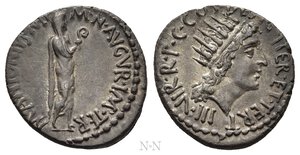
MARK ANTONY. Denarius (38 BC). Uncertain mint in Greece (Athens?). Obv: M ANTONIVS M F M N AVGVR IMP TER. Veiled and togate Mark Antony advancing right, holding lituus.Rev: IIIVIR R P C COS DESIG ITER ET TERT. Radiate head of Sol right.Crawford 533/2; CRI 267; RBW 1820. Condition: Near extremely fine.Weight: 3.33 g. Diameter: 19 mm.
Excellent Style
Lot # 518
-
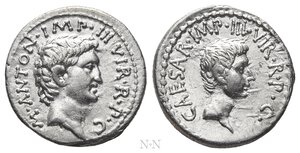
MARK ANTONY and OCTAVIAN. Denarius (39 BC). Military mint travelling with Mark Antony. Obv: M ANTON IMP III VIR R P C. Bare head of Mark Antony right.Rev: CAESAR IMP III VIR R P C. Bare head of Octavian right.Crawford 528/2b; CRI 261a; RBW 1814.RareFollowing the assassination of Julius Caesar (44 BC), the city celebrated the feat of the conspirators who had ended the dictator's life. Mark Antony, by reading the deceased's will and delivering an eloquent speech, managed to win to his side the Roman people, forcing the Caesaricides to leave Rome, but allowing Brutus to move to Mantua where he gained control of Gallia Comata.
The political scene changed when Octavian, Caesar's great-nephew, came to power. Using his family name and wanting to get revenge for his dad, he got a lot of support in the Senate and pushed for tougher measures against Caesar's killers. Antony then moved against Brutus and started the siege of Modena, but he lost more and more support in the Senate, partly because of Cicero's Philippics, and was declared a “public enemy.” This led to a confrontation between the armies of Antony and Octavian at Modena, where the two consuls, Hirtius and Pansa, lost their lives. Octavian won the battle but eventually made peace with Antony.
This agreement led to the creation of the Second Triumvirate (43 BC) together with the Magister Equitum, Marcus Lepidus. Unlike the First Triumvirate, the Second was a genuine political office lasting five years and approved by law. The triumvirs drew up a list of citizens believed to be Caesar's killers or their accomplices and brutally restored order in Rome, then turned their attention to Greece, where Sextus Pompey (son of Pompey the Great) had gathered an army. The Caesaricides were defeated at Philippi in 42 BC, and Brutus and Cassius killed themselves to avoid capture.
Following these events, the triumvirs were finally able to divide up the empire: Octavian secured the West, Antony the East, and Lepidus Africa. This denarius was struck during that period of truce, bearing the portraits of both Antony and Octavian, before the events that led to the breakdown of this alliance and the Battle of Actium. Condition: Extremely fine.Weight: 3.52 g. Diameter: 19 mm.
Lot # 517
-
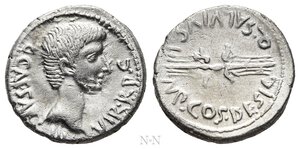
OCTAVIAN. Denarius (40 BC). Military mint traveling with Octavian in Italy; Q. Salvius, moneyer. Obv: C CAESAR III VIR R P C. Bare head right.Rev: Q SALVIVS IMP COS DESIG. Winged thunderbolt.Crawford 523/1a; CRI 300; RBW 1808. Condition: Very fine; hair partially tooled.Weight: 3.97 g. Diameter: 18 mm.
Ex Ratto 1932
Lot # 516
-
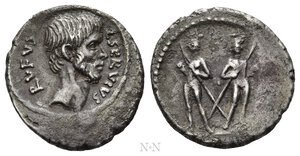
L. SERVIUS RUFUS. Denarius (43 BC). Rome. Obv: L SERVIVS RVFVS. Bare head (of Brutus?) right.Rev: The Dioscuri standing facing, each holding spear, sword hanging from waist.Crawford 515/2; CRI 324; RBW 1793.Very rareFrom the E.H. Schwing collection, ex Ratto M. Paris (1 December 1932) Condition: Very fine.Weight: 3.64 g. Diameter: 19 mm.
Lot # 515
-
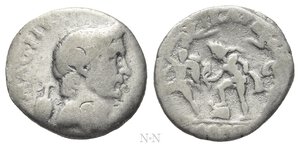
SEXTUS POMPEIUS MAGNUS PIUS. Denarius (37/6 BC). Uncertain Sicilian mint. Obv: MAG PIVS IMP ITER. Bare head right; jug to left, lituus to right.Rev: PRAEF / CLAS ET ORAE / MARIT EX S C. Neptune standing left, foot set on prow, holding aplustre; Catanean brothers to left and right, each bearing one of their parents on their shoulders.Crawford 511/3a; RBW 1785. Condition: Fine.Weight: 3.39 g. Diameter: 17 mm.
Lot # 514
-
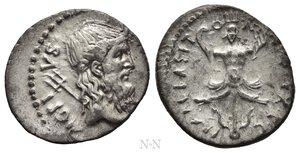
SEXTUS POMPEY MAGNUS PIUS. Denarius (37/6 BC). Uncertain Sicilian mint. Obv: MAG PIVS IMP ITER. Diademed head of Neptune right, with trident over shoulder.Rev: PRÆF CLAS ET ORÆ MARIT EX S C. Naval trophy set upon anchor.Crawford 511/2b; RBW 1784. Condition: Very fine.Weight: 3.52 g. Diameter: 21 mm.
Ex Ratto 1927
Lot # 513
-
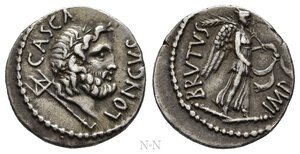
M. JUNIUS BRUTUS. Denarius (42 BC). P. Servilius Casca Longus, moneyer. Obv: CASCA LONGVS. Laureate head of Neptune right; trident below.Rev: BRVTVS IMP. Victory advancing right on broken sceptre, holding palm frond and filleted diadem.Crawford 507/2; CRI 212; RBW 1780.Ex Ratto R., Lugano (1927) Condition: Good very fine.Weight: 3.85 g. Diameter: 18 mm.
Lot # 512
-
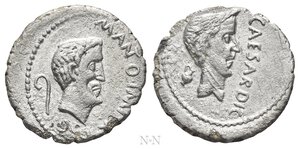
MARK ANTONY, with JULIUS CAESAR. Denarius (43 BC). Military mint traveling with Antony in Cisalpine Gaul. Posthumous Caesar issue. Obv: M ANTO IMP R P C. Bare head of Antony right; lituus to left.Rev: CAESAR DIC. Head of Caesar right; capis to left.Crawford 488/2; CRI 123; RBW -.Following the assassination of Julius Caesar (44 BC), the city celebrated the feat of the conspirators who had ended the dictator's life. Mark Antony, by reading the deceased's will and delivering an eloquent speech, managed to win to his side the Roman people, forcing the Caesaricides to leave Rome, but allowing Brutus to move to Mantua where he gained control of Gallia Comata.
The political scene changed when Octavian, Caesar's great-nephew, came to power. Using his family name and wanting to get revenge for his dad, he got a lot of support in the Senate and pushed for tougher measures against Caesar's killers. Antony then moved against Brutus and started the siege of Modena, but he lost more and more support in the Senate, partly because of Cicero's Philippics, and was declared a “public enemy.” This led to a confrontation between the armies of Antony and Octavian at Modena, where the two consuls, Hirtius and Pansa, lost their lives. Octavian won the battle but eventually made peace with Antony.
This agreement led to the creation of the Second Triumvirate (43 BC) together with the Magister Equitum, Marcus Lepidus. Unlike the First Triumvirate, the Second was a genuine political office lasting five years and approved by law. The triumvirs drew up a list of citizens believed to be Caesar's killers or their accomplices and brutally restored order in Rome. This denarius, which also bears Caesar's portrait, is intended to remind the people of Antony's role alongside the beloved dictator and his commitment to avenging his assassination. Condition: Good very fine; edge faults.Weight: 3.54 g. Diameter: 19 mm.
Lot # 511
-
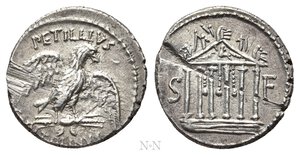
PETILLIUS CAPITOLINUS (41 BC). Denarius. Rome. Obv: PETILLIVS / CAPITOLINVS. Eagle, with wings spread, standing right on thunderbolt.Rev: S - F. Hexastyle temple of Jupiter Capitolinus, with eagle in pediment and hanging garlands; acroteria along roof line.Crawford 487/2b; CRI 174a; RBW 1706.Ex Aureo & Calicó 224 (2010), lot 2217 Condition: Good very fine.Weight: 3.65 g. Diameter: 18 mm.
Lot # 510
-
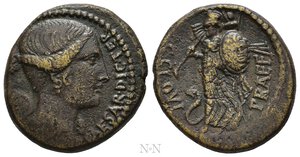
JULIUS CAESAR. Dupondius (46-45 BC). Rome. C. Clovius, prefect. Obv: CAESAR DIC TER. Winged and draped bust of Victory right.Rev: C CLOVI / PRAEF. Minerva advancing left, holding spears, shield and trophy; to left, serpent coiled left.Crawford 476/1a; CRI 62; RPC I 601. Condition: Good fine.Weight: 14.02 g. Diameter: 27 mm.
Lot # 509
-
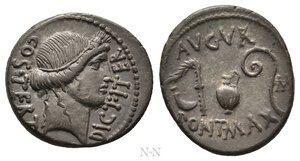
JULIUS CAESAR. Denarius (46 BC). Uncertain mint in North Africa, possibly Utica. Obv: DICT ITER COS TERT. Head of Ceres right, wearing grain wreath.Rev: AVGVR / PONT MAX. Emblems of the augurate and pontificate: simpulum, aspergillum, guttus and lituus; M to right.Crawford 467/1b; CRI 57; RBW 1638. Condition: Good very fine.Weight: 3.35 g. Diameter: 19 mm.
Lot # 508
-
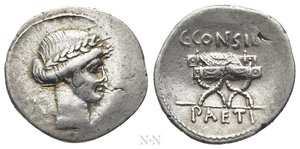
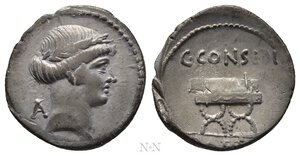
C. CONSIDIUS PAETUS. Denarius (46 BC). Rome. Obv: Laureate head of Apollo right; A behind.Rev: C CONSIDI / PAETI. Wreath on garlanded curule chair.Crawford 465/2a; CRI 77b; RBW 1624. Condition: Near very fine.Weight: 3.60 g. Diameter: 21 mm.
Lot # 507
-
C. CONSIDIUS PAETUS. Denarius (46 BC). Rome. Obv: Laureate head of Apollo right; A behind.Rev: C CONSIDI / PAETI. Wreath on garlanded curule chair.Crawford 465/2a; CRI 77b; RBW 1624. Condition: Near very fine; small edge fault.Weight: 3.44 g. Diameter: 19 mm.
Lot # 506
-
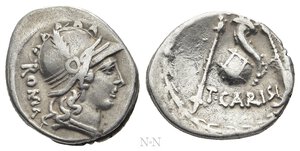
T. CARISIUS. Denarius (46 BC). Rome. Obv: ROMA. Helmeted head of Roma right.Rev: T CARISI. Sceptre, cornucopia on globus and rudder; all within wreath.Crawford 464/3a; CRI 71a; RBW -. Condition: Near very fine.Weight: 3.86 g. Diameter: 18 mm.
The Sphinx
Lot # 505
-
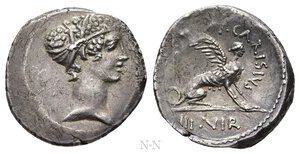
T. CARISIUS. Denarius (46 BC). Rome. Obv: Head of Sibyl Herophile right.Rev: T CARISIVS / III VIR. Sphinx seated right.Crawford 464/1; CRI 69; RBW -.Ex Gerhard Hirsch Nachfolger 352 (2019), lot 2577 Condition: Near extremely fine.Weight: 3.86 g. Diameter: 18 mm.
Lot # 504
-
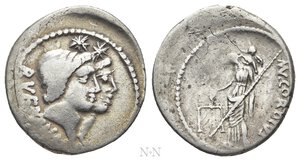
MN. CORDIUS RUFUS. Denarius (46 BC). Rome. Obv: RVFVS III VIR. Jugate busts of the Dioscuri right, wearing pilei surmounted by stars.Rev: MN CORDIVS. Venus, with Cupid on shoulder, standing left, holding scales and sceptre.Crawford 463/1b; RBW -. Condition: Good fine.Weight: 3.57 g. Diameter: 21 mm.
Lot # 503
-
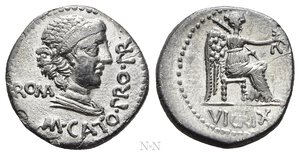
M. PORCIUS CATO. Denarius (47-46 BC). Utica. Obv: ROMA / M CATO PRO PR. Draped bust of Roma right.Rev: VICTRIX. Victory seated right on throne, holding patera and palm frond.Crawford 462/1b; RBW -. Condition: Very fine; hair partially tooled.Weight: 3.42 g. Diameter: 17 mm.
Lot # 502
-
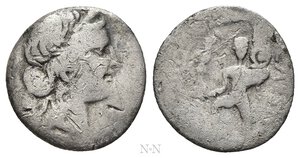
JULIUS CAESAR. Denarius (48-47 BC). Military mint traveling with Caesar in North Africa. Obv: Diademed head of Venus right.Rev: CAESAR. Aeneas advancing left, holding palladium and carrying Anchises on his shoulder.Crawford 458/1; CRI 55; RBW 1600. Condition: Fair.Weight: 2.84 g. Diameter: 17 mm.
Results from 4201 to 4250 of 10423