Monete Barbariche
Risultati da 1 a 23 di 23
Lotto n. 458
-
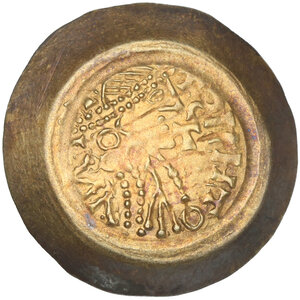
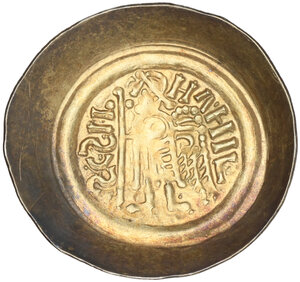
The Lombards at Pavia. Liutprand (712-744 AD). AV Tremissis. D/ VM LIVTPRHT. Diademed, draped and cuirassed bust right; T to right. R/ SCSII HΛHIL. St. Michael, winged, standing left, holding staff ending in trefoil and round shield. Bernareggi 116 var. (legends); cf. Bernareggi, Moneta 8; Cf. MEC 1, 322. AV. 1.17 g. 22.5 mm. R. Rare. In very good condition for issue. Good VF/About EF. The Lombards were a Germanic people who were known since the time of Tacitus. By the early sixth century the Lombards had settled in Pannonia, and adopted the Arian religion. In 568 AD/9, the Lombards began to invade Italy and quickly took control of the region from the Alps to the Po valley (later known as Lombardy), and established their capital at Pavia in 571 AD under their king, Alboin. Following the death of his successor in 574 AD, the dukes could not agree on a new king, resulting in an interregnum of ten years. During this interval, two other independent Lombard duchies were founded in Spoleto and Benevento. With the exception of Liutprand (712-744 AD), the kings of Lombardy were weak and ineffectual, and the kingdom was finally crushed by Charlemagne in 774 AD. The Lombards of Benevento thrived under its first dukes, Zotto and Arichis (571-641 AD), and its control expanded to the whole of southern Italy except Apulia and Calabria. Afterward, the hostilities of Lombardy, followed by the Carolingians, Byzantines, Papal States, and finally the Arab invaders, kept Benevento on the defensive, and its power waned. A civil war following the murder of Sicard in 839 AD resulted in the breakup of the greater duchy, and a number of insignificant Lombard dukes intermittently ruled over a greatly reduced Benevento until the mid-eleventh century. Like Benevento, the Lombard duchy of Spoleto was constantly assailed from all sides, and lost its independence after falling to Charlemagne in 776 AD. Unlike Lombardy and Benevento, Spoleto has no known coinage. (CNG inv. n. 998953).
Osserva:
Base d'asta: € 1'000
Offerta attuale: € 1'000
Offerte asta: :
1
Prossima offerta minimo : €
1'050
Diritti d'asta: 22.00%
Chiusura alle: 2026-10-25T14:00:00 ora di Roma
Lotto n. 457
-
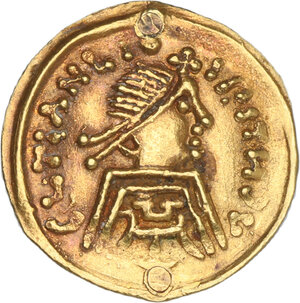
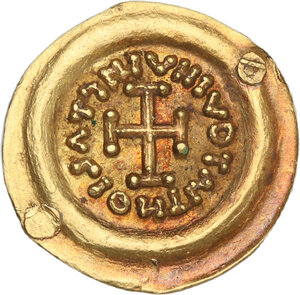
The Lombards in Tuscany. Uncertain King. AV Tremissis in the name of Byzantine Emperor. Uncertain mint in Tuscany, c. 620-700. D/ Diademed and draped bust right; pseudo-legend around. R/ Cross potent; pseudo-legend around. Cf. BMC Vandals p. 133, 44; Cf. Bernareggi, Moneta 16; Cf. MEC 1, 312. AV. 1.47 g. 16 mm. RRR. Very rare. Toned; holed and repaired, otherwise. EF.
Osserva:
Base d'asta: € 500
Offerta attuale: € 550
Offerte asta: :
2
Prossima offerta minimo : €
600
Diritti d'asta: 22.00%
Chiusura alle: 2026-10-25T14:00:00 ora di Roma
Lotto n. 456
-
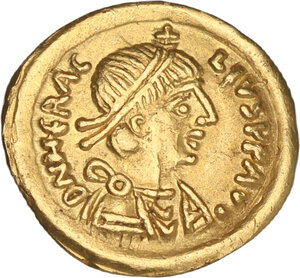
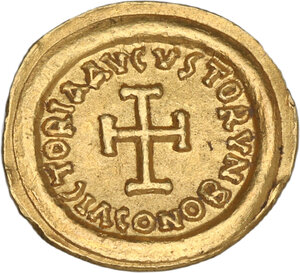
The Lombards. Tuscany (?). Pseudo-Imperial Coinage. The Lombards. Tuscany (?). Pseudo-Imperial Coinage. In the name of Heraclius, 610-641. Tremissis circa 620-700, uncertain italian mint imitating Ravenna. D/ D N HЄRACLIVS PP AVG. Diademed, draped and cuirassed bust right, small cross above front of diadem; heavy annular border. R/ VICTORIA AVGVSTORVM. Cross potent; beneath, CONOB; heavy annular border. BMC Vandals 34; MEC 1, 307; Cf. D.O. 276; Cf. Sear 902; Cf. Ranieri 572. AV. 1.49 g. 15 mm. RR. Very rare and in excellent condition for issue. EF.
Osserva:
Base d'asta: € 700
Offerta attuale: € 700
Offerte asta: :
1
Prossima offerta minimo : €
750
Diritti d'asta: 22.00%
Chiusura alle: 2026-10-25T14:00:00 ora di Roma
Lotto n. 455
-
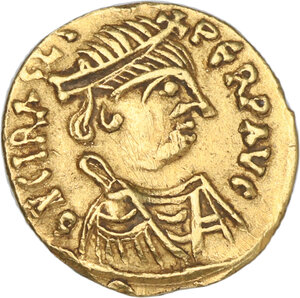
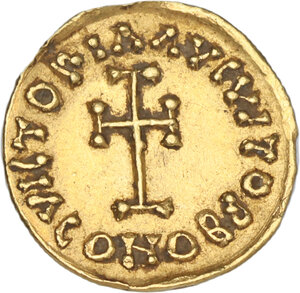
The Lombards in Tuscany. Uncertain King. AV Tremissis. Pseudo-Imperial Imitating a Ravenna mint issue of Heraclius, c. 620-700. D/ DN HЄRACLI PЄRP AVC. Diademed, draped and cuirassed bust right. R/ VIITORIA AVGVSTOR. Cross potent; beneath, CONOB. Cf. BMC Vandals 40 (for type); Cf. MIBE X6 and X11. AV. 1.49 g. 14 mm. RR. Very rare and superb example, with pleasant toning. Good VF/About EF.
Osserva:
Base d'asta: € 600
Offerta attuale: € 700
Offerte asta: :
3
Prossima offerta minimo : €
750
Diritti d'asta: 22.00%
Chiusura alle: 2026-10-25T14:00:00 ora di Roma
Lotto n. 454
-
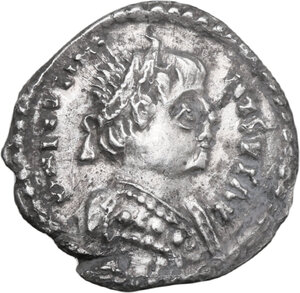
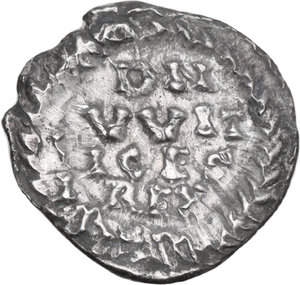
Ostrogothic Italy, Witigis (536-539 AD). AR Half Siliqua. Pseudo-Imperial Coinage. In the name of Justinian I. Ravenna mint. D/ DN IVSTINI-NVS ΡΓ ΛV. Diademed, draped and cuirassed bust right. R/ DN/ VVIT/ ICES/ REX within laurel wreath. COI 63; MIB 57; MEC 1, 151. AR. 1.26 g. 14.5 mm. RR. Very rare. Nicey toned. VF.
Osserva:
Base d'asta: € 300
Offerta attuale: € 300
Offerte asta: :
1
Prossima offerta minimo : €
320
Diritti d'asta: 22.00%
Chiusura alle: 2026-10-25T14:00:00 ora di Roma
Lotto n. 453
-
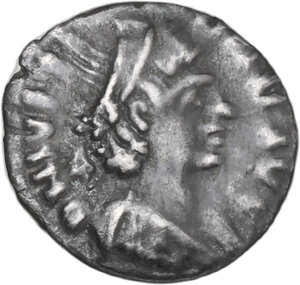
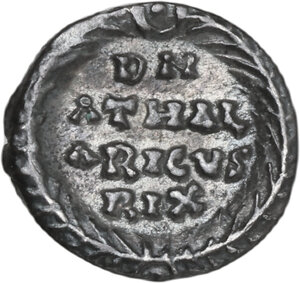
Ostrogothic Italy. Athalaric (526-534 AD). AR 1/4 Siliqua in the name of Justinian I, Ravenna mint. D/ DN IVSTI-N[IAN AV]G. Diademed, draped and cuirassed bust of Justinian right. R/ DN/ATHAL/ARICVS/RIX within laurel wreath. MIB 54; COI 59; Ranieri 282; MEC 1, 127. AR. 0.7 g. 11 mm. RR. Very rare in this condition. Dark tone. Good VF/EF.
Osserva:
Base d'asta: € 300
Offerte asta: :
-
Prossima offerta minimo : €
300
Diritti d'asta: 22.00%
Chiusura alle: 2026-10-25T14:00:00 ora di Roma
Lotto n. 452
-
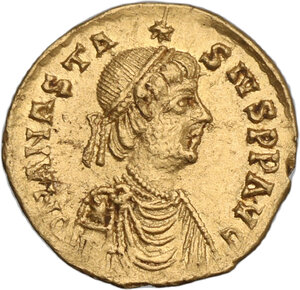
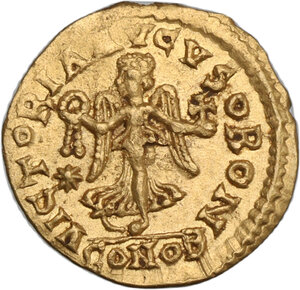
Ostrogothic Italy, Athalaric (526-534 AD). AV Tremissis in the name of Anastasius, Mediolanum mint, c. 491-518 AD. D/ D N ANASTASIVS P P AVG. Pearl-diademed, draped and cuirassed bust right. R/ VICTORIA AVGVSTORVM. Victory advancing right, head left, holding wreath and cross; star in left field; COMOB in exergue. BMC Vandals 6; COI 27; MIB 23; MEC 1, 116. AV. 1.45 g. 14 mm. R. Rare and choice example. EF. Ex NAC 92, 2016, lot 901.
Osserva:
Base d'asta: € 500
Offerte asta: :
-
Prossima offerta minimo : €
500
Diritti d'asta: 22.00%
Chiusura alle: 2026-10-25T14:00:00 ora di Roma
Lotto n. 451
-
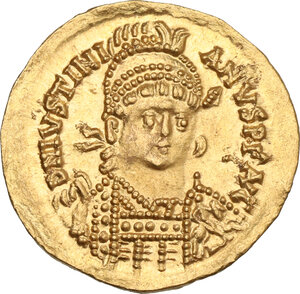
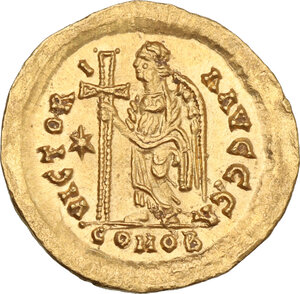
Ostrogothic Italy, Athalaric (526-534 AD). AV Solidus. Pseudo-Imperial Coinage. In the name of Justinian I, Rome mint, c. 527-530 AD. D/ D N IVSTINIANVS P F AVG. Diademed, helmeted and cuirassed bust facing slightly right, holding spear and shield. R/ VICTORIA AVGGG A. Victory standing left, holding long, jeweled cross; star to left; in exergue, COMOB. BMC Vandals, 1-4 and pl. VII, 16-17 (Ravenna); COI 34; MEC 1, 122; MIB 28. AV. 4.43 g. 21 mm. R. An exceptional example; well struck and centered. Good EF/About FDC.
Osserva:
Base d'asta: € 1'200
Offerta attuale: € 1'200
Offerte asta: :
1
Prossima offerta minimo : €
1'300
Diritti d'asta: 22.00%
Chiusura alle: 2026-10-25T14:00:00 ora di Roma
Lotto n. 450
-
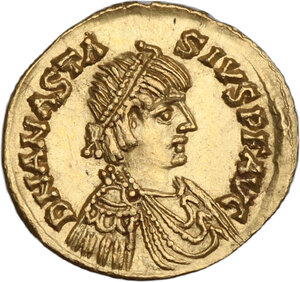
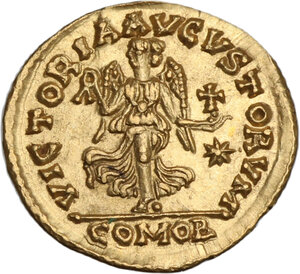
Ostrogothic Italy, Theoderic (493-526 AD). AV Tremissis in the name of Anastasius I, Rome mint, 493-518 AD. D/ D N ANASTASIVS P F AVG. Diademed, draped and cuirassed bust right. R/ VICTORIA AVGVSTORVM. Victory advancing right, head left, holding wreath and globus cruciger; to right, star; in exergue, COMOB. MIB 10; COI 13b; MEC 1, 114-115. AV. 1.47 g. 14.5 mm. R. Rare and in excellent condition for issue, brilliant and superb. Rare as such. About FDC/FDC.
Osserva:
Base d'asta: € 500
Offerta attuale: € 950
Offerte asta: :
6
Prossima offerta minimo : €
1'000
Diritti d'asta: 22.00%
Chiusura alle: 2026-10-25T14:00:00 ora di Roma
Lotto n. 449
-
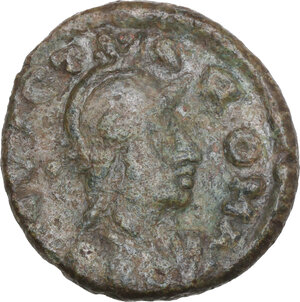
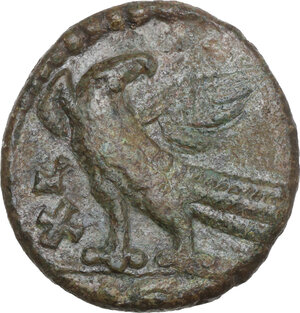
Ostrogothic Italy. Municipal bronze coinage of Rome, light series. AE 40 Nummi. Rome mint. Struck c. 493-518 AD. D/ INVICTA ROMA. Helmeted and cuirassed bust of Roma right. R/ XL. Eagle standing left, head reverted; in exergue, •Γ•. COI 76b; MIB 74a (Theodoric and Athalaric); MEC 1, 107. AE. 9.08 g. 24 mm. Nice for issue. Good VF.
Osserva:
Base d'asta: € 200
Offerte asta: :
-
Prossima offerta minimo : €
200
Diritti d'asta: 22.00%
Chiusura alle: 2026-10-25T14:00:00 ora di Roma
Lotto n. 677
-
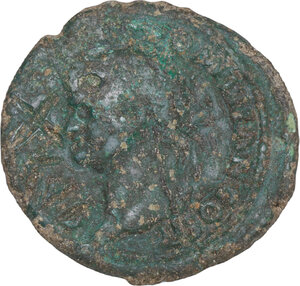
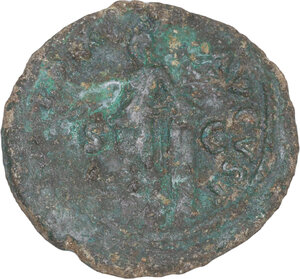
Ostrogothic Italy. Non-Regal Bronze Issue from the time of Theoderic and Athalaric. AE Follis. Early to mid 6th century. 'Countermarked' early Imperial bronze issue. XLII (mark of value = 42 Nummi) cut into obverse of AE As of Domitian. D/ [CAESAR AVG F] DOMITIAN COS II. Laureate head of Domitian left, XLII cut to left. R/ PAX AVGVST S C. Pax standing left leaning on column, holding caduceus and branch. RIC II-p. 1 (2nd ed.) (Vesp.) 670 (for undertype). AE. 10.46 g. 29.5 mm. R. Rare and interesting. Good F. These countermarked issues have long been considered as made in Vandalic North Africa, but the hoard evidence and the results of the latest studies makes it seem that they were, in fact, made in the Ostrogothic Italy, and were in use there during the first quarter or first half of the 6th century (Cf, NAC, May 1993, 457). The mark of value XLII refer to a twelfth of a silver unit valued at 500 nummi, which itself amount to the 24th fraction of a gold solidus valued at 12,000 nummi. (Cf. Grierson, MEC, p.28-31). These are not countermarked coins in the usual sense of word, since the LXII figure was not punched or stamped with a single instrument, but seems to have been cut or incised with several chisel strokes. (C. Morrisson,1983). J. Friedlander suggested that for the more finely incised series the pieces were certainly softened by fire in order to be able to engrave more easily the deep and crude strokes. (“Die Erwerbungen des Konigl. Munzkabinets vom 1.Jan.1877 bis 31 Marz 1878” ZfN VI, 1879, p.1-26). Such crude workmanship seem to point to the markings being done by private persons, at least in the case of the most anomalous countermarks. While for the more finely incised countermarks – like our outstanding example – the role of some official authority cannot be excluded. (C. Morrisson). Tentatively, Morrisson suggests that an official practice of marking and re-issuing older bronzes was followed with varying success by private individuals as and when they came into possession of similar pieces. The only paper devoted solely to these countermarked coins is : Morrisson, C. “The re-use of obsolete coins : the case of Roman imperial bronzes revived in the late fifth century” in: ed. C.N.L. (Brooke et al. Studies in Numismatic Method presented to Philip Grierson, Cambridge 1983).XLVI, 487.
Osserva:
Base d'asta: € 80
Offerte asta: :
-
Prossima offerta minimo : €
80
Diritti d'asta: 22.00%
Chiusura alle: 2026-10-04T14:00:00 ora di Roma
Lotto n. 676
-
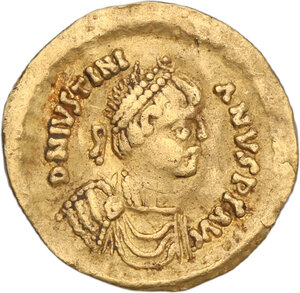
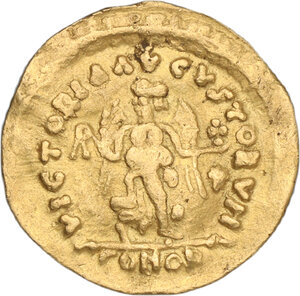
Ostrogothic Italy, Athalaric to Witigis (526-540 AD). AV Tremissis. Pseudo-Imperial Coinage. In the name of Justinian I. Rome or Ravenna mint, c. 527/30-539 AD. D/ DN IVSTINI-ANVS PP AVG. Pearl-diademed, draped and cuirassed bust right. R/ VICTORIA AVGVSTORVM. Victory advancing right, head left, holding wreath and globus cruciger; to right, star; in exergue, CONOB. COI 37 (Rome or Ravenna); MEC 1, 123 (Ostrogoths) and 298 (Lombards). ; MIB 29 (Rome). AV. 1.48 g. 16 mm. RR. Minor marks. VF.
Osserva:
Base d'asta: € 400
Offerta attuale: € 555
Offerte asta: :
9
Prossima offerta minimo : €
605
Diritti d'asta: 22.00%
Chiusura alle: 2026-10-04T14:00:00 ora di Roma
Lotto n. 675
-
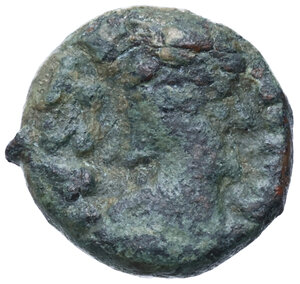
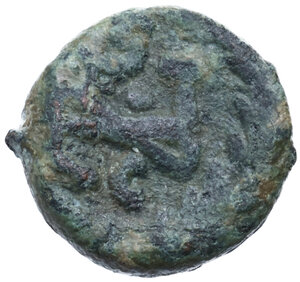
Ostrogothic Italy, Athalaric (526-534 AD). AE Minimus, Rome mint. D/ Diademed, draped and cuirassed bust of Justinian I right. R/ Monogram of Athalaric within wreath. MIB 80. AE. 1.29 g. 11 mm. Good F.
Osserva:
Base d'asta: € 50
Offerte asta: :
-
Prossima offerta minimo : €
50
Diritti d'asta: 22.00%
Chiusura alle: 2026-10-04T14:00:00 ora di Roma
Lotto n. 674
-
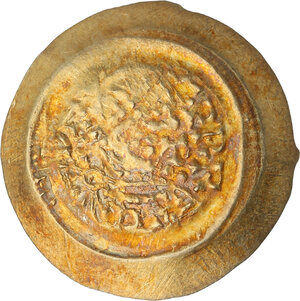
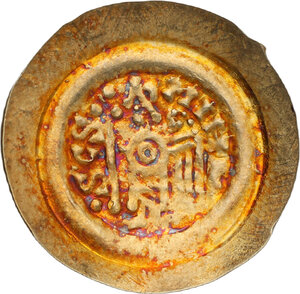
The Lombards at Pavia. Liutprand (712-744 AD). AV Tremissis. D/ [DN LIV]TPRΛ. Diademed, draped and cuirassed bust right; T to right; on bust, Rx ligate. R/ SCS MIHIL. St. Michael, winged, standing left, holding staff ending in trefoil and round shield. CNI 19. AV. 1.21 g. 21 mm. R. VF. The Lombards were a Germanic people whose existence was already recorded by Tacitus. By the beginning of the sixth century, they had established themselves in Pannonia and had embraced Arian Christianity. In 568-569 AD, they launched their invasion of Italy, rapidly gaining control of the territory stretching from the Alps to the Po Valley, an area that would later become known as Lombardy. Under King Alboin, Pavia became the capital of their kingdom in 571 AD. After the death of Alboin’s successor in 574 AD, the Lombard dukes failed to agree on a new ruler, leading to a ten-year period without a king. During this time, two autonomous Lombard duchies emerged at Spoleto and Benevento. Apart from the reign of Liutprand (712-744 AD), the Lombard kings were generally unable to exercise strong and effective authority, and the kingdom was ultimately conquered by Charlemagne in 774 AD. The Duchy of Benevento, meanwhile, prospered under its earliest dukes, Zotto and Arichis (571-641 AD), extending its influence over much of southern Italy, with the exception of Apulia and Calabria. Its position later weakened as it faced repeated conflicts with the Lombard kingdom, the Carolingians, the Byzantines, the Papal States, and eventually Arab forces. Following the assassination of Sicard in 839 AD, a civil war caused the larger duchy to fragment. Thereafter, a succession of minor Lombard rulers intermittently governed a much-reduced Benevento until the middle of the eleventh century. The Lombard Duchy of Spoleto experienced similar pressures, being repeatedly threatened by neighboring powers. It eventually lost its independence when it fell under Charlemagne’s control in 776 AD. In contrast to Lombardy and Benevento, however, no coinage is known to have been issued by the Duchy of Spoleto.
Osserva:
Base d'asta: € 800
Offerta attuale: € 800
Offerte asta: :
1
Prossima offerta minimo : €
850
Diritti d'asta: 22.00%
Chiusura alle: 2026-10-04T14:00:00 ora di Roma
Lotto n. 673
-
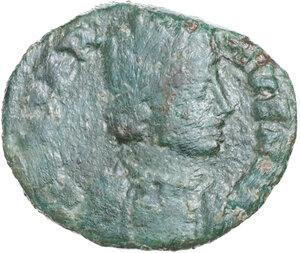
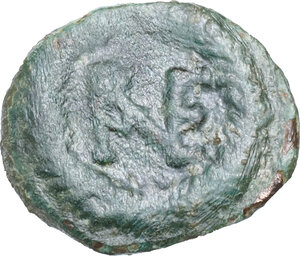
Ostrogothic Italy, Theoderic (493-526 AD). AE Decanummium, Ravenna or Rome mint, 512-522 AD. D/ Turreted and draped bust of Felix Ravenna right. R/ Monogram within wreath. MIB 72a. AE. 2.33 g. 16.5 mm. Pleasant glossy dark green patina. Good F.
Osserva:
Base d'asta: € 40
Offerta attuale: € 40
Offerte asta: :
1
Prossima offerta minimo : €
45
Diritti d'asta: 22.00%
Chiusura alle: 2026-10-04T14:00:00 ora di Roma
Lotto n. 2973
-
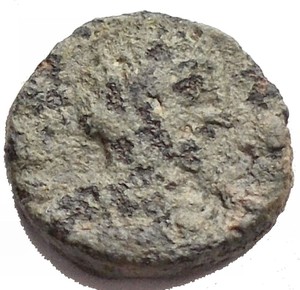
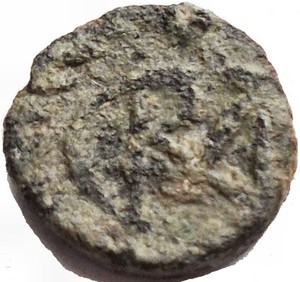
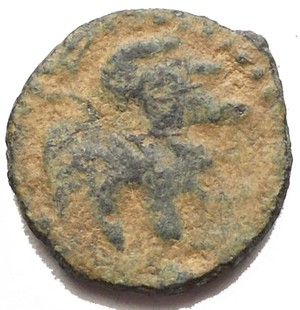
VANDALS. Gelimer, 530-534. Nummus (Bronze, 9.62 mm, 0.57 g), Carthage. Diademed, draped and cuirassed bust of Gelimer to right; around, traces of legend. Rev. Monogram of Gelimer within wreath. BMC Vandals 4ff. MEC 1, 28-30. Rare
Osserva:
oppure
Lotto n. 389
-
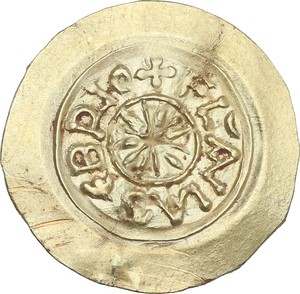
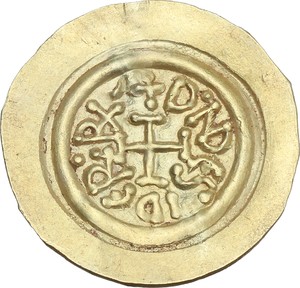
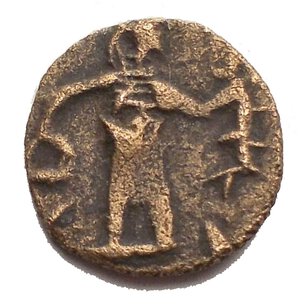
Lombardic Italy. Desiderius (757-774). AV Tremissis, Castelsebrio mint. D/D•(DS)ЄSIDЄR:(RX). Cross potent. R/ +FLAVIA SЄBRIO. Stellate symbol within circle. Cf. CNI 8; MIR (Lombardia, zecche) 128; Cf. Bernareggi 176; MEC 1, -. AV. 1.05 g. 19 mm. RRR. Very rare. Scratches on obverse and slightly bent flan, otherwise. About EF. The last of the Lombard kings to rule in Italy, Desiderius was not a member of the royal family, but an important officer in the royal court. Upon the death of his predecessor, Aistulf, Desiderius was appointed king. Like his predecessors, Desiderius hoped to expand Lombardic power in Italy, but this policy led to conflict with the papacy and the southern Italian dukedoms, including Benevento and Spoleto, all of whom had been moving closer to the Carolingian sphere of influence. Desiderius was able to exercise control over the southern dukedoms. His attempt to intervene in papal affairs was less successful; his appointee, the Antipope Philip reigned for only a single day. And to achieve a rapprochement with the Carolingians, Desiderius gave his daughter, Desiderata, in marriage to Charlemagne. The marriage lasted only briefly and Desiderata was soon returned to her father. This, combined with Desiderius’ support of Gerberga, the widow of Charlemagne’s brother, Carloman I, resulted in a war between the Carolingians and the Lombards. Desiderius was eventually defeated and forced to retire to a monastery where he died.
Osserva:
oppure
Osserva:
oppure
Lotto n. 2958
-
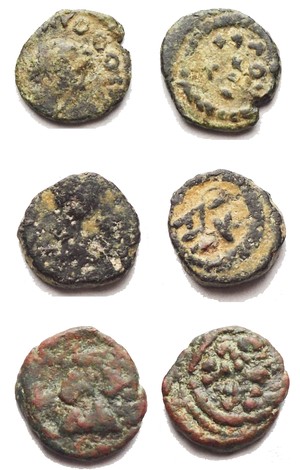
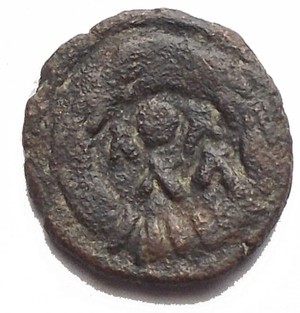
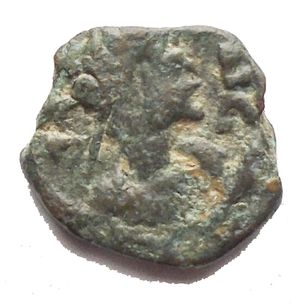
Nummo Barbarico in Ae da catalogare d/ Busto a ds r/ Legenda corrotta in corona g 0,56 mm 9,5
Osserva:
oppure
Lotto n. 2970
-
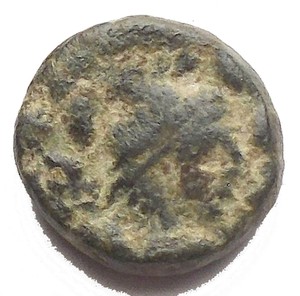
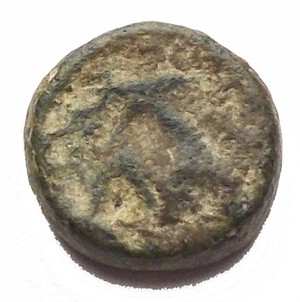
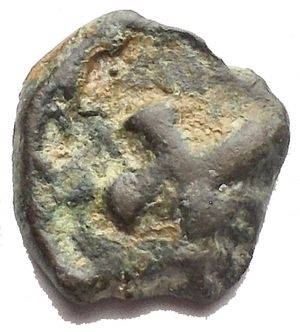
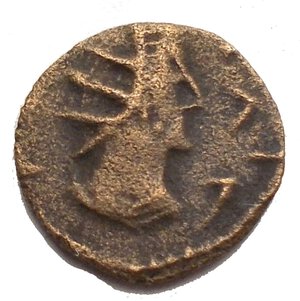
VANDALS. Pseudo-Imperial coinage. Circa 6th century AD. Æ Nummus (9.15mm, 1.07 g). In the name of Justinian I. Uncertain North African mint. Diademed, draped, and cuirassed bust right / Large A. MEC 1, –; BMC Vandals 141-8. VF, earthen green patina.
Osserva:
oppure
Osserva:
oppure
Osserva:
oppure
Osserva:
oppure
Risultati da 1 a 23 di 23