Greek Coins
Results from 8701 to 8750 of 8751
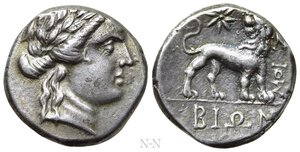
Lot # 217
-
IONIA. Miletos. Drachm (Circa 225-190 BC). Bion, magistrate. Obv: Laureate head of Apollo right.Rev: BIΩΝ. Lion standing right, head left; to right, monogram above MOI; star above.Deppert-Lippitz 673 var. (lion left). Condition: Very fine.Weight: 4.84 g. Diameter: 18 mm.
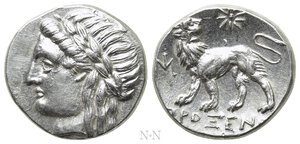
Lot # 216
-
IONIA. Miletos. Drachm (Circa 340-325 BC). Proxenos, magistrate. Obv: Laureate head of Apollo left.Rev: ΠΡΟΞΕΝΟΣ. Lion standing left, head right; monogram to left, star above.Deppert-Lippitz 232-6. Condition: Extremely fine.Weight: 3.64 g. Diameter: 16 mm.
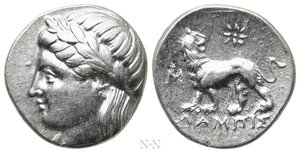
Lot # 215
-
IONIA. Miletos. Drachm (Circa 353-323 BC). Lampis, magistrate. Obv: Laureate head of Apollo left.Rev: ΛΑΜΠΙΣ. Lion standing left, head right; star above, monogram in left field.Deppert-Lippitz 207-210; BMC 59-60. Condition: Good very fine.Weight: 3.55 g. Diameter: 16 mm.
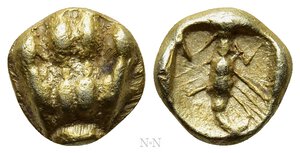
Lot # 214
-
IONIA. Miletos. EL 1/48 Stater (Circa 600-546 BC). Obv: Paw of lion.Rev: Scorpion within incuse square.Hilbert Phase 1; Weidauer 166-7; SNG Kayhan I 925-7 (Uncertain of Caria). Condition: Extremely fine.Weight: 0.25 g. Diameter: 5 mm.
Lot # 213
-
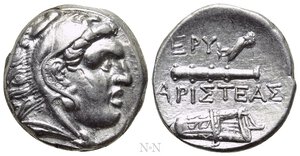
IONIA. Erythrai. Drachm (Circa 325-315 BC). Aristeas, magistrate. Obv: Head of Herakles right, wearing lion skin.Rev: EPY / APIΣTEAΣ. Club and bow in bowcase; to left, owl standing left, head facing.SNG Copenhagen 618. Condition: Extremely fine.Weight: 3.65 g. Diameter: 16 mm.
Lot # 212
-
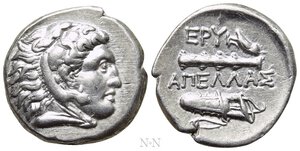
IONIA. Erythrai. Drachm (Circa 325-315 BC). Apellas, magistrate. Obv: Head of Herakles right, wearing lion skin.Rev: EPY / AΠEΛΛAΣ. Club and bow in bowcase; to left, owl standing right, head facing.SNG Copenhagen 583. Condition: Near extremely fine.Weight: 3.61 g. Diameter: 17 mm.
Lot # 211
-
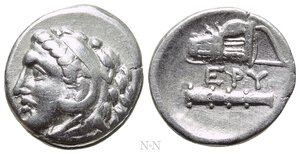
IONIA. Erythrai. Hemidrachm (Circa 330-300 BC). Obv: Head of Herakles left, wearing lion skin.Rev: EPY. Club and bow in bow-case.SNG Copenhagen 682; BMC 152. Condition: Good very fine.Weight: 1.69 g. Diameter: 13 mm.
Lot # 210
-
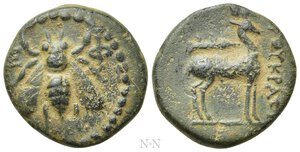
IONIA. Ephesos. Ae (Circa 200 BC). Eutykrates, magistrate. Obv: Ε - Φ. Bee.Rev: EYΘYKPAT[...]. Stag standing right; horizontal quiver above.SNG Copenhagen 263. Condition: Very fine.Weight: 3.25 g. Diameter: 16 mm.
Lot # 209
-
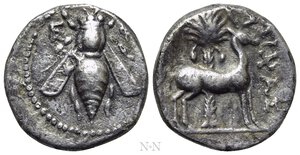
IONIA. Ephesos. Drachm (Circa 202-150 BC). Lichas, magistrate. Obv: Ε - Φ. Bee.Rev: ΛIXAΣ. Stag standing right; palm tree in background.SNG Copenhagen -; BMC 131. Condition: Very fine.Weight: 3.61 g. Diameter: 17 mm.
Lot # 208
-
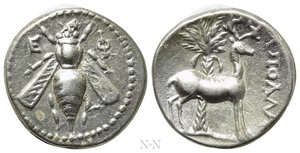
IONIA. Ephesos. Drachm (Circa 202-150 BC). Apollas, magistrate. Obv: Ε - Φ. Bee.Rev: ΑΠΟΛΛΑΣ. Stag standing right; palm tree in background.Kinns 3.2-3; SNG Copenhagen -; SNG von Aulock -. Condition: Extremely fine.Weight: 4.23 g. Diameter: 17 mm.
Lot # 207
-
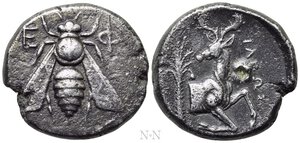
IONIA. Ephesos. Tetradrachm (Circa 390-325 BC). Ileos, magistrate. Obv: Ε - Φ. Bee.Rev: IΛEΩΣ. Forepart of stag right, head left; palm tree to left.Karwiese II, Series 11.1; Pixodarus Class G. Condition: Very fine.Weight: 14.65 g. Diameter: 25 mm.
Lot # 206
-
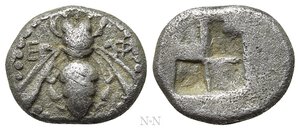
IONIA. Ephesos. Diobol (Circa 500-420 BC). Obv: E - Φ. Bee.Rev: Quadripartite incuse square.Karwiese Series VI, 2B; SNG Kayhan 124. Condition: Very fine.Weight: 1.07 g. Diameter: 11 mm.
Lot # 205
-
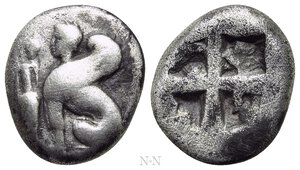
IONIA. Chios. Drachm (Circa 400-380 BC). Obv: Sphinx seated left; to left, grape bunch above amphora.Rev: Quadripartite granulated incuse square.Mavrogordato 33; HGC 6, 1124. Condition: Fine.Weight: 3.26 g. Diameter: 14 mm.
Well Centered
Lot # 204
-
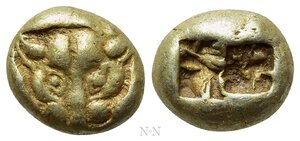
IONIA. Uncertain. EL Hekte - 1/6 Stater (Circa 600-550 BC). Obv: Facing head of lion or panther within triangular incuse.Rev: Two incuse square punches.Weidauer 160; Boston MFA 1753; SNG Kayhan 711. Condition: Good very fine.Weight: 2.39 g. Diameter: 10 mm.
Lot # 203
-
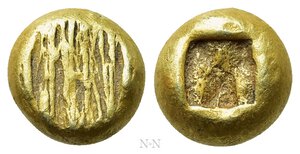
IONIA. Uncertain. EL 1/12 Stater (Circa 650-600 BC). Obv: Flattened striated surface.Rev: Incuse square punch.Weidauer 9; Traité I 13; Rosen 268; SNG Kayhan I 681; SNG von Aulock 7766. Condition: Very fine.Weight: 1.16 g. Diameter: 7 mm.
Lot # 202
-
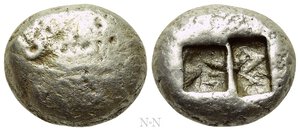
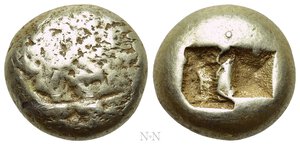
IONIA. Uncertain. EL Trite or 1/3 Stater (Circa 650-600 BC). Obv: Roughened convex surface.Rev: Two incuse squares.Weidauer -; SNG von Aulock 7761; Boston MFA 1749; Rosen 253. Condition: Very fine.Weight: 4.70 g. Diameter: 13 mm.
Lot # 201
-
IONIA. Uncertain. EL Trite or 1/3 Stater (Circa 650-600 BC). Obv: Roughened convex surface.Rev: Two incuse squares.Weidauer -; SNG von Aulock 7761; Boston MFA 1749; Rosen 253. Condition: Very fine.Weight: 4.59 g. Diameter: 12 mm.
Lot # 200
-
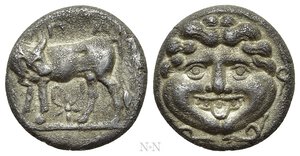
MYSIA. Parion. Hemidrachm (4th century BC). Obv: ΠΑ / ΡΙ. Cow standing left, head right; star below.Rev: Gorgoneion.SNG BN 1368; SNG Copenhagen 263. Condition: Very fine.Weight: 2.32 g. Diameter: 13 mm.
Rare Symbol
Lot # 199
-
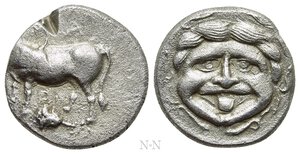
MYSIA. Parion. Hemidrachm (4th century BC). Obv: ΠΑ / ΡΙ. Bull, with head right, standing left; below, rose left.Rev: Facing gorgoneion within incuse circle.SNG BN 1356-91 var. (symbol); CN online 21237. Condition: Near very fine.Weight: 2.20 g. Diameter: 13 mm.
Lot # 198
-
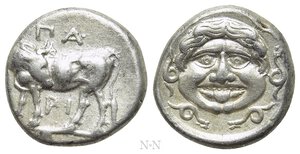
MYSIA. Parion. Hemidrachm (4th century BC). Obv: ΠΑ / ΡΙ. Bull, with head right, standing left on ground line.Rev: Facing gorgoneion within incuse circle.SNG BN 1356-7. Condition: Very fine.Weight: 2.47 g. Diameter: 13 mm.
Lot # 197
-
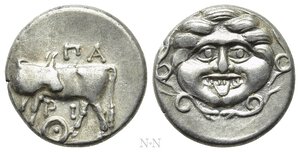
MYSIA. Parion. Hemidrachm (4th century BC). Obv: ΠΑ / ΡΙ. Bull standing left, head reverted; Θ below.Rev: Facing gorgoneion.SNG BN 1385-6. Condition: Good very fine.Weight: 2.40 g. Diameter: 14 mm.
Lot # 196
-
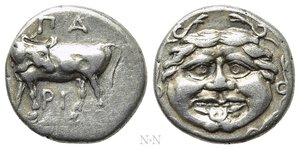
MYSIA. Parion. Hemidrachm (4th century BC). Obv: ΠΑ / ΡΙ. Bull, with head right, standing left on ground line; branch(?) below.Rev: Facing gorgoneion.SNG BN 1364. Condition: Good very fine.Weight: 2.33 g. Diameter: 13 mm.
Lot # 195
-
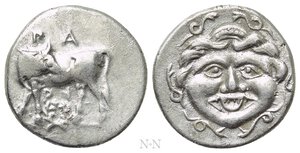
MYSIA. Parion. Hemidrachm (4th century BC). Obv: ΠA / PI. Bull standing left, head right. Control: Wreath below.Rev: Facing gorgoneion.SNG BN -; BMC 38-9. Condition: Very fine.Weight: 2.44 g. Diameter: 15 mm.
Lot # 194
-
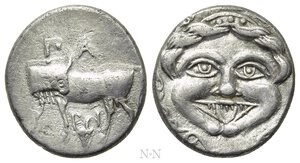
MYSIA. Parion. Hemidrachm (4th century BC). Obv: ΠΑ / ΡΙ. Bull standing left, head reverted; bunch of grapes below.Rev: Facing gorgoneion.SNG BN -; SNG von Aulock 1321; BMC 24. Condition: Near very fine.Weight: 2.15 g. Diameter: 15 mm.
Lot # 193
-
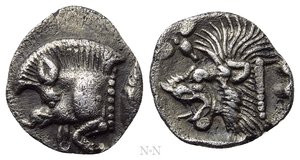
MYSIA. Kyzikos. Hemiobol (Circa 450-400 BC). Obv: Forepart of boar left; to right, tunny upward.Rev: Head of roaring lion left; star to upper left; all within incuse square.SNG BN 375. Condition: Good very fine.Weight: 0.39 g. Diameter: 10 mm.
Spectacular Type
Lot # 192
-
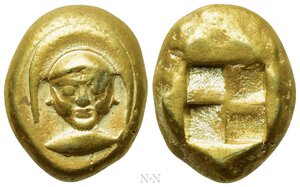
MYSIA. Kyzikos. EL Stater (Circa 500-450 BC). Obv: Facing head of Athena(?), wearing crested helmet; below, tunny left.Rev: Quadripartite incuse square.Von Fritze 69, pl. II, 21; SNG BN 196; Traité 2611; Greenwell 30.Extremely rare Condition: Good very fine.Weight: 15.98 g. Diameter: 20 mm.
Lot # 191
-
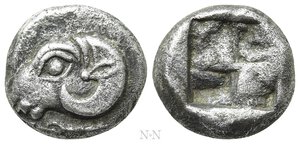
TROAS. Kebren. Hemidrachm (Circa 5th century BC). Obv: Head of ram left; below, bird left.Rev: Quadripartite incuse square.Asia Minor Coins Online #15543 = Naumann 78, lot 162; Roma Numismatics E-64, lot 338.Rare Condition: Extremely fine.Weight: 2.38 g. Diameter: 11 mm.
Lot # 190
-
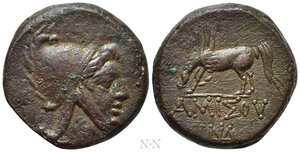
PONTOS. Amisos. Time of Mithradates VI Eupator (Circa 100-95 or 80-70 BC). Ae. Obv: Head of Perseus right, wearing Phrygian cap.Rev: AMIΣOY. Pegasos grazing left; monogram below.SNG BM Black Sea 1212ff. var. (monogram); HGC 7, 239. Condition: Good very fine.Weight: 13.44 g. Diameter: 23 mm.
Lot # 189
-
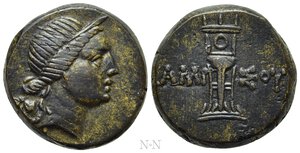
PONTOS. Amisos. Ae (Circa 125-100 BC). Time of Mithradates VI Eupator. Obv: Bust of Artemis right, bow and quiver over shoulder.Rev: AMIΣOY. Tripod.SNG BM Black Sea 1139-40; HGC 7, 240. Condition: Extremely fine.Weight: 8.18 g. Diameter: 19 mm.
Lot # 188
-
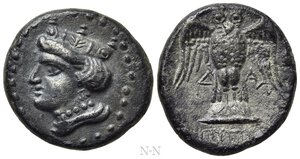
PONTOS. Amisos. Drachm (Circa 4th century BC). Da-, magistrate. Obv: Head of Hera left, wearing mural crown decorated with palmette.Rev: Δ - A. Owl, with wings spread, standing facing on shield.SNG BM Black Sea 1099ff. var. (controls); HGC 7, 232. Condition: Very fine.Weight: 4.09 g. Diameter: 19 mm.
Lot # 187
-
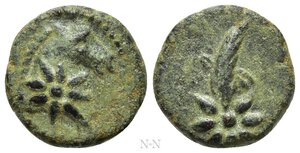
PONTOS. Uncertain, possibly Amisos. Ae. Struck under Mithradates VI (Circa 119-100 BC). Obv: Eight-pointed star on head of horse right.Rev: Eight-rayed comet star.SNG BM Black Sea 984; HGC 7, 317. Condition: Extremely fine.Weight: 2.10 g. Diameter: 13 mm.
Lot # 186
-
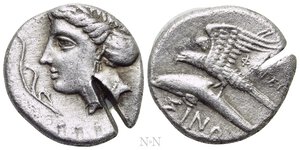
PAPHLAGONIA. Sinope. Drachm (Circa 330-300 BC). Phageta-, magistrate. Obv: Head of nymph left, with hair in sakkos; aphlaston to left.Rev: ΦΑΓΕΤΑ / ΣINΩ. Sea-eagle standing left, with wings spread, on dolphin left.SNG BM Black Sea 1479; SNG Copenhagen 281; HGC 7, 391. Condition: Near very fine.Weight: 5.81 g. Diameter: 20 mm.
Lot # 185
-
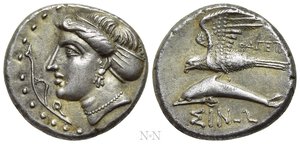
PAPHLAGONIA. Sinope. Drachm (Circa 330-300 BC). Phageta-, magistrate. Obv: Head of nymph left, with hair in sakkos; aphlaston to left.Rev: ΦΑΓΕΤΑ / ΣINΩ. Sea-eagle standing left, with wings spread, on dolphin left.SNG BM Black Sea 1479; SNG Copenhagen 281; HGC 7, 391. Condition: Good very fine.Weight: 6.06 g. Diameter: 19 mm.
Attractive Collection Toning
Lot # 184
-
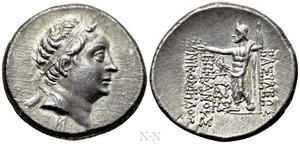
KINGS OF BITHYNIA. Nikomedes IV Philopator (94-74 BC). Tetradrachm. Dated BE 208 (91/0 BC). Obv: Diademed head right.Rev: ΒΑΣΙΛΕΩΣ / ΕΠΙΦΑΝΟΥΣ ΝΙΚΟΜΗΔΟΥ. Zeus standing left, holding wreath and sceptre. Controls: To inner left, eagle standing left on thunderbolt, monogram and HΣ (date).RG 40; Callataÿ p. 63; HGC 7, 646. Condition: Extremely fine.Weight: 14.33 g. Diameter: 32 mm.
Lot # 183
-
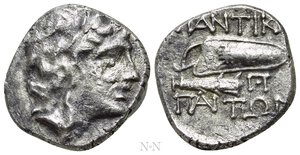
CIMMERIAN BOSPOROS. Pantikapaion. Drachm (Circa 120-109/5 BC). Obv: Laureate head of Apollo right.Rev: ΠANTIKAΠAITΩN. Bow in gorytos; club and monogram below.MacDonald 152/15 var. (sword instead of club); HGC 7, 99.Extremely rare variant Condition: Near very fine.Weight: 3.20 g. Diameter: 17 mm.
Lot # 182
-
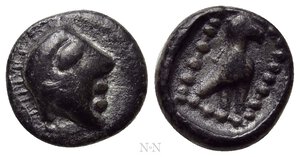
ASIA MINOR. Uncertain. Hemiobol (Circa 5th century BC). Obv: Helmeted head of Athena right.Rev: Bird (eagle?) standing right within pelleted square border; all within incuse square.Unpublished in the standard references. Condition: Very fine.Weight: 0.36 g. Diameter: 7 mm.
Lot # 181
-
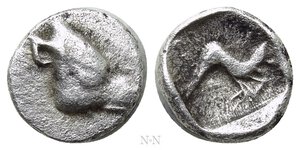
ASIA MINOR. Uncertain. Hemiobol or Tetartemorion (Circa 5th century BC). Obv: Head of boar right.Rev: Crawfish or shrimp right within incuse square.Klein 797.Very rare Condition: Very fine.Weight: 0.17 g. Diameter: 6 mm.
Lot # 180
-
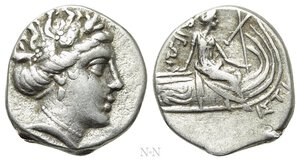
EUBOIA. Histiaia. Tetrobol (3rd-2nd centuries BC). Obv: Wreathed head of the nymph Histiaia right.Rev: IΣTIAIEΩN. Nymph seated right on stern of galley; wing on prow.BCD Euboia 387ff.; HGC 4, 1524. Condition: Very fine.Weight: 2.38 g. Diameter: 14 mm.
Lot # 179
-
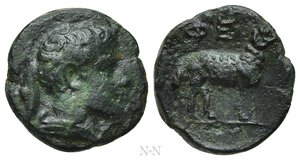
ARKADIA. Pheneos. Ae Chalkous (Circa 370-340 BC). Obv: Draped bust of young Hermes right, petasos tied around neck.Rev: ΦE. Ram standing right.BCD Peloponnesos 1603; HGC 5, 991.Rare Condition: Very fine.Weight: 2.07 g. Diameter: 14 mm.
Lot # 178
-
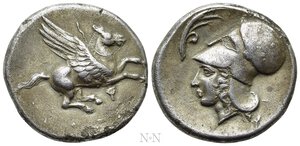
CORINTHIA. Corinth. Stater (Circa 400-375 BC). Obv: Pegasos flying right, wearing bridle with rein trailing above; koppa below.Rev: Head of Athena left, wearing Corinthian helmet; aphlaston to upper left.Pegasi 163; BCD Corinth -; HGC 4, 1835. Condition: Near very fine.Weight: 8.27 g. Diameter: 23 mm.
Lot # 177
-
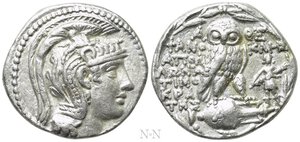
ATTICA. Athens. Tetradrachm (111/0 BC). New Style Coinage. Phanokles, Apollonios and Timokrates, magistrates. Obv: Head of Athena Parthenos right, wearing triple crested Attic helmet decorated with Pegasos and floral pattern.Rev: A - ΘE / ΦANO - KΛHΣ / AΠOΛ / ΛONIOΣ / TIMO / KPA / THΣ. Owl standing right on amphora, head facing. Controls: A on amphora and ΣO below; to right, Artemis Phosphoros standing facing, holding torch with both hands; all within wreath.Thompson 698; HGC 4, 1602.Among the Greek poleis, Athens is undoubtedly the city that denotes the greatest monetary development. The earliest coinage followed the reforms attributed to Solon on the introduction of Attic weights to replace the Eginetic ones. These early coins, called "Wappenmünzen," were replaced by the "owls" at the end of the 6th century: tetradrachms marked with the head of Athena and the owl, next to which is now the ethnic of the Athenians. These types will last, with variations in style, until the end of silver production (c. mid-1st century). The most noticeable change occurs with the so-called "new style," established from the beginning of the 2nd century BC. In these issues the owl is surrounded by an olive wreath, which is why the tetradrachms are referred to in the inscriptions as "stephanephoroi" (= wreath bearers). Coins of new style also bear inscriptions with the names of magistrates. Condition: Near extremely fine.Weight: 16.77 g. Diameter: 30 mm.
Lot # 176
-
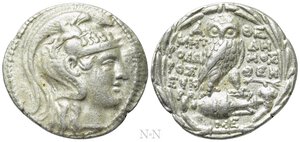
ATTICA. Athens. Tetradrachm (115/4 BC). New Style Coinage. Metrodoros, Demosthenes and Eukra-, magistrates. Obv: Head of Athena Parthenos right, wearing triple crested Attic helmet decorated with Pegasos and floral pattern.Rev: A - ΘE / MHT / POΔΩ / POΣ - ΔH / MOΣ / ΘE - EY / KPA. Owl, with head facing, standing right on amphora. Controls: I on amphora, ME below, grape bunch to right; all within wreath.Thompson 640d-e; HGC 4, 1602.Among the Greek poleis, Athens is undoubtedly the city that denotes the greatest monetary development. The earliest coinage followed the reforms attributed to Solon on the introduction of Attic weights to replace the Eginetic ones. These early coins, called "Wappenmünzen," were replaced by the "owls" at the end of the 6th century: tetradrachms marked with the head of Athena and the owl, next to which is now the ethnic of the Athenians. These types will last, with variations in style, until the end of silver production (c. mid-1st century). The most noticeable change occurs with the so-called "new style," established from the beginning of the 2nd century BC. In these issues the owl is surrounded by an olive wreath, which is why the tetradrachms are referred to in the inscriptions as "stephanephoroi" (= wreath bearers). Coins of new style also bear inscriptions with the names of magistrates. Condition: Good very fine.Weight: 16.73 g. Diameter: 30 mm.
Lot # 175
-
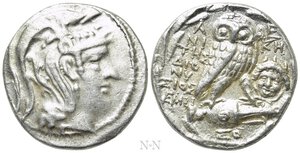
ATTICA. Athens. Tetradrachm (130/129 BC). New Style Coinage. Niketes, Dionysios and Embi-, magistrates. Obv: Head of Athena Parthenos right, wearing triple crested Attic helmet decorated with Pegasos and floral pattern.Rev: A-ΘΕ / NI - KH / THΣ / ΔΙΟ / NY / ΣΙΟΣ / EMBI. Owl standing right on amphora, head facing. Controls: Θ on amphora, ΣO below; gorgoneion in right field; all within wreath.Thompson 954; HGC 4, 1602.Among the Greek poleis, Athens is undoubtedly the city that denotes the greatest monetary development. The earliest coinage followed the reforms attributed to Solon on the introduction of Attic weights to replace the Eginetic ones. These early coins, called "Wappenmünzen," were replaced by the "owls" at the end of the 6th century: tetradrachms marked with the head of Athena and the owl, next to which is now the ethnic of the Athenians. These types will last, with variations in style, until the end of silver production (c. mid-1st century). The most noticeable change occurs with the so-called "new style," established from the beginning of the 2nd century BC. In these issues the owl is surrounded by an olive wreath, which is why the tetradrachms are referred to in the inscriptions as "stephanephoroi" (= wreath bearers). Coins of new style also bear inscriptions with the names of magistrates. Condition: Good very fine.Weight: 16.55 g. Diameter: 29 mm.
Lot # 174
-
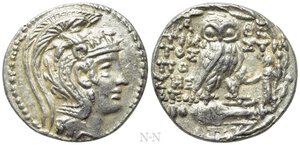
ATTICA. Athens. Tetradrachm (134/3 BC). New Style Coinage. Timostratos, Poses and Apol-, magistrates. Obv: Head of Athena Parthenos right, wearing triple crested Attic helmet decorated with Pegasos and floral pattern.Rev: A - ΘE / TIMO - ΣTPA / TOΣ / ΠO / ΣHΣ / AΠOΛ. Owl standing right on amphora, head facing. Controls: uncertain letter on amphora, AΠ below; to right, Dionysos standing left, holding mask and sceptre; all within wreath.Cf. Thompson 835; HGC 4, 1602.Among the Greek poleis, Athens is undoubtedly the city that denotes the greatest monetary development. The earliest coinage followed the reforms attributed to Solon on the introduction of Attic weights to replace the Eginetic ones. These early coins, called "Wappenmünzen," were replaced by the "owls" at the end of the 6th century: tetradrachms marked with the head of Athena and the owl, next to which is now the ethnic of the Athenians. These types will last, with variations in style, until the end of silver production (c. mid-1st century). The most noticeable change occurs with the so-called "new style," established from the beginning of the 2nd century BC. In these issues the owl is surrounded by an olive wreath, which is why the tetradrachms are referred to in the inscriptions as "stephanephoroi" (= wreath bearers). Coins of new style also bear inscriptions with the names of magistrates. Condition: Extremely fine; luster in field.Weight: 16.59 g. Diameter: 30 mm.
Lot # 173
-
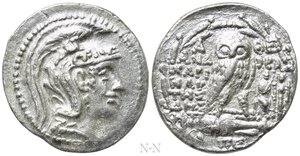
ATTICA. Athens. Tetradrachm (136/5 BC). New Style Coinage. Andreas, Charinautes and Demetr-, magistrates. Obv: Head of Athena Parthenos right, wearing triple crested Attic helmet decorated with Pegasos and floral pattern.Rev: A - ΘE / ANΔ - PEAΣ / XAPI / NAY / THΣ / ΔHM / HTP. Owl standing right on amphora, head facing. Controls: H on amphora, ME (or ΠE) below; to right, Dionysos and Demeter standing facing; all within wreath.Thompson 808a; HGC 4, 1602.Among the Greek poleis, Athens is undoubtedly the city that denotes the greatest monetary development. The earliest coinage followed the reforms attributed to Solon on the introduction of Attic weights to replace the Eginetic ones. These early coins, called "Wappenmünzen," were replaced by the "owls" at the end of the 6th century: tetradrachms marked with the head of Athena and the owl, next to which is now the ethnic of the Athenians. These types will last, with variations in style, until the end of silver production (c. mid-1st century). The most noticeable change occurs with the so-called "new style," established from the beginning of the 2nd century BC. In these issues the owl is surrounded by an olive wreath, which is why the tetradrachms are referred to in the inscriptions as "stephanephoroi" (= wreath bearers). Coins of new style also bear inscriptions with the names of magistrates. Condition: Good very fine.Weight: 16.69 g. Diameter: 32 mm.
Lot # 172
-
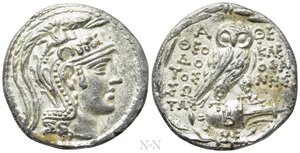
ATTICA. Athens. Tetradrachm (138/7 BC). New Style Coinage. Theodotos, Kleophanes and Sotas, magistrates. Obv: Head of Athena Parthenos right, wearing triple crested Attic helmet decorated with Pegasos and floral pattern.Rev: A - ΘE / ΘEO / ΔO / TOΣ - KΛE / OΦA / NHΣ / ΣΩ / TAΣ. Owl standing right on amphora, head facing. Controls: B on amphora, ME below; all within wreath.Thompson 764b; HGC 4, 1602.Among the Greek poleis, Athens is undoubtedly the city that denotes the greatest monetary development. The earliest coinage followed the reforms attributed to Solon on the introduction of Attic weights to replace the Eginetic ones. These early coins, called "Wappenmünzen," were replaced by the "owls" at the end of the 6th century: tetradrachms marked with the head of Athena and the owl, next to which is now the ethnic of the Athenians. These types will last, with variations in style, until the end of silver production (c. mid-1st century). The most noticeable change occurs with the so-called "new style," established from the beginning of the 2nd century BC. In these issues the owl is surrounded by an olive wreath, which is why the tetradrachms are referred to in the inscriptions as "stephanephoroi" (= wreath bearers). Coins of new style also bear inscriptions with the names of magistrates. Condition: Extremely fine.Weight: 17.04 g. Diameter: 29 mm.
Lot # 171
-
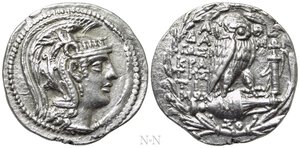
ATTICA. Athens. Tetradrachm (141/0 BC). New Style Coinage. Damon, Sosikrates and Timon, magistrates. Obv: Head of Athena Parthenos right, wearing triple crested Attic helmet decorated with Pegasos and floral pattern.Rev: A - ΘE / ΔA - MΩN / ΣΩΣI / KPI / THΣ / TI / MΩN. Owl standing right on amphora, head facing. Controls: M on amphora, ΣO below; to right bow and quiver; all within wreath.Thompson 729d; HGC 4, 1602.Among the Greek poleis, Athens is undoubtedly the city that denotes the greatest monetary development. The earliest coinage followed the reforms attributed to Solon on the introduction of Attic weights to replace the Eginetic ones. These early coins, called "Wappenmünzen," were replaced by the "owls" at the end of the 6th century: tetradrachms marked with the head of Athena and the owl, next to which is now the ethnic of the Athenians. These types will last, with variations in style, until the end of silver production (c. mid-1st century). The most noticeable change occurs with the so-called "new style," established from the beginning of the 2nd century BC. In these issues the owl is surrounded by an olive wreath, which is why the tetradrachms are referred to in the inscriptions as "stephanephoroi" (= wreath bearers). Coins of new style also bear inscriptions with the names of magistrates. Condition: Extremely fine.Weight: 16.90 g. Diameter: 32 mm.
Lot # 170
-
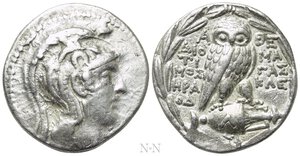
ATTICA. Athens. Tetradrachm (146/5 BC). New Style Coinage. Diotimos, Magas and Herakleod-, magistrate. Obv: Head of Athena Parthenos right, wearing triple crested Attic helmet decorated with Pegasos and floral pattern.Rev: A - ΘE / ΔIO / TI / MOΣ - MA / ΓAΣ / HPA / OΔ. Owl, with head facing, standing right on amphora. Controls: Λ on amphora, ΣΦ below; all within wreath.Thompson 663e; HGC 4, 1602.Among the Greek poleis, Athens is undoubtedly the city that denotes the greatest monetary development. The earliest coinage followed the reforms attributed to Solon on the introduction of Attic weights to replace the Eginetic ones. These early coins, called "Wappenmünzen," were replaced by the "owls" at the end of the 6th century: tetradrachms marked with the head of Athena and the owl, next to which is now the ethnic of the Athenians. These types will last, with variations in style, until the end of silver production (c. mid-1st century). The most noticeable change occurs with the so-called "new style," established from the beginning of the 2nd century BC. In these issues the owl is surrounded by an olive wreath, which is why the tetradrachms are referred to in the inscriptions as "stephanephoroi" (= wreath bearers). Coins of new style also bear inscriptions with the names of magistrates. Condition: Good very fine.Weight: 16.56 g. Diameter: 29 mm.
Lot # 169
-
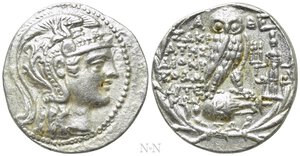
ATTICA. Athens. Tetradrachm (148/7 BC). New Style Coinage. Sokrates, Dionysodo and Artemon, magistrates. Obv: Head of Athena Parthenos right, wearing triple crested Attic helmet decorated with Pegasos and floral pattern.Rev: Α - ΘΕ / ΣΩKΡ / ATHΣ / ΔIONY / ΣOΔΩ / APTE / MΩN. Owl standing right on amphora, head facing. Controls: To right, Apollo Delios standing left, holding Three Graces and bow; K on amphora, ΣΩ below; all within wreath.Thompson 623b; HGC 4, 1602.Among the Greek poleis, Athens is undoubtedly the city that denotes the greatest monetary development. The earliest coinage followed the reforms attributed to Solon on the introduction of Attic weights to replace the Eginetic ones. These early coins, called "Wappenmünzen," were replaced by the "owls" at the end of the 6th century: tetradrachms marked with the head of Athena and the owl, next to which is now the ethnic of the Athenians. These types will last, with variations in style, until the end of silver production (c. mid-1st century). The most noticeable change occurs with the so-called "new style," established from the beginning of the 2nd century BC. In these issues the owl is surrounded by an olive wreath, which is why the tetradrachms are referred to in the inscriptions as "stephanephoroi" (= wreath bearers). Coins of new style also bear inscriptions with the names of magistrates. Condition: Extremely fine; some luster in field.Weight: 16.82 g. Diameter: 30 mm.
Lot # 168
-
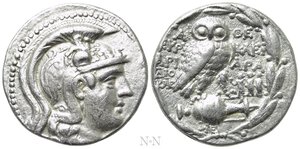
ATTICA. Athens. Tetradrachm (154/3 BC). . New Style Coinage. Euryklei-, Ariara- and Diokle-, magistrates. Obv: Head of Athena Parthenos right, wearing triple crested Attic helmet decorated with Pegasos and floral pattern.Rev: A - ΘE / EYPY - KΛEI / API - APA / ΔIO / KΛE. Owl standing right on amphora, head facing. Controls: I(?) on amphora, ME below; to right, the three Graces; all within wreath.Thompson 512d var. (controls); HGC 4, 1602.Among the Greek poleis, Athens is undoubtedly the city that denotes the greatest monetary development. The earliest coinage followed the reforms attributed to Solon on the introduction of Attic weights to replace the Eginetic ones. These early coins, called "Wappenmünzen," were replaced by the "owls" at the end of the 6th century: tetradrachms marked with the head of Athena and the owl, next to which is now the ethnic of the Athenians. These types will last, with variations in style, until the end of silver production (c. mid-1st century). The most noticeable change occurs with the so-called "new style," established from the beginning of the 2nd century BC. In these issues the owl is surrounded by an olive wreath, which is why the tetradrachms are referred to in the inscriptions as "stephanephoroi" (= wreath bearers). Coins of new style also bear inscriptions with the names of magistrates. Condition: Good very fine.Weight: 16.73 g. Diameter: 29 mm.
Results from 8701 to 8750 of 8751