Greek Coins
Results from 4851 to 4900 of 15716
Lot # 135
-
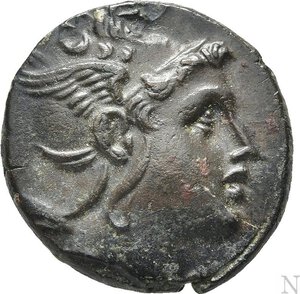
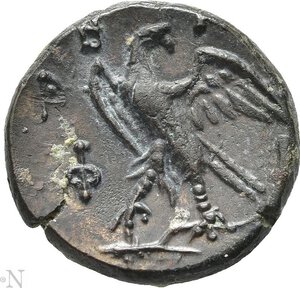
KINGS OF MACEDON. Philip V (221-179 BC). Ae. Pella or Amphipolis. Obv: Helmeted head of the hero Perseus right, with harpa over shoulder.Rev: B - A. Eagle, with head right and wings spread, standing left on plough; P / Φ - I across fields.SNG Alpha Bank 1105; Mamroth, Bronzemünzen 19c; HGC 3.1, 1070. Condition: Extremely fine.Weight: 7.79 g. Diameter: 21 mm.
Lot # 134
-
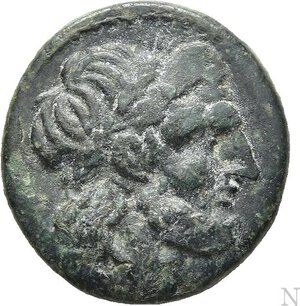
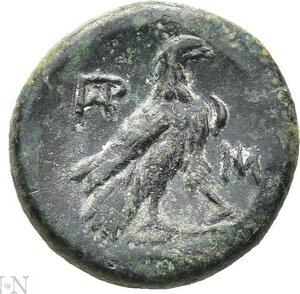
KINGS OF MACEDON. Ptolemy Keraunos (281-279 BC). Ae. Cassandrea(?). Obv: Laureate head of Zeus right.Rev: Eagle standing right on thunderbolt; ΠAP monogram to left, MI monogram to right.Lorber B161 var. (control in right field). Condition: Very fine.Weight: 3.73 g. Diameter: 16 mm.
Lot # 133
-
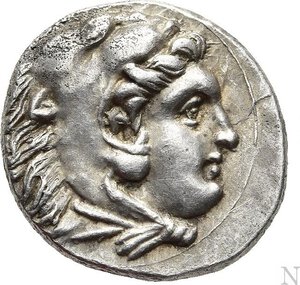
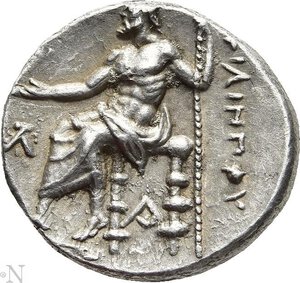
KINGS OF MACEDON. Philip III Arrhidaios (323-317 BC). Drachm. Sardes. Obv: Head of Herakles right, wearing lion skin.Rev: ΦΙΛΙΠΠΟΥ. Zeus seated left on throne, holding eagle and sceptre. Controls: Bee in left field, monogram below throne.Price P104. Condition: Good very fine.Weight: 4.28 g. Diameter: 17 mm.
Lot # 132
-
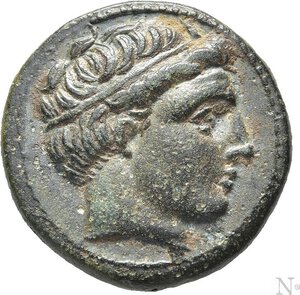
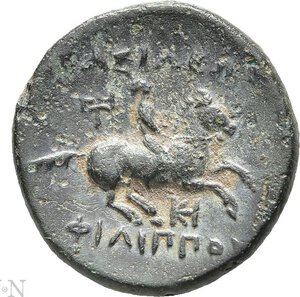
KINGS OF MACEDON. Philip III Arrhidaios (323-317 BC). Ae. Miletos. Obv: Diademed head of Apollo right.Rev: BAΣIΛEΩΣ ΦΙΛΙΠΠΟΥ. Horseman galloping right, holding spear. Controls: Labrys to left, monogram below.Price P64; SNG München 981. Condition: Good very fine.Weight: 5.29 g. Diameter: 19 mm.
Lot # 131
-
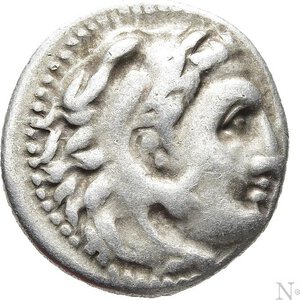
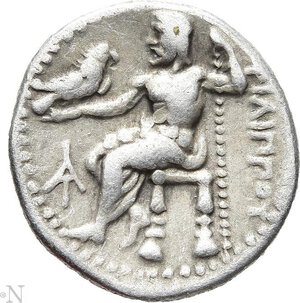
KINGS OF MACEDON. Philip III Arrhidaios (323-317 BC). Drachm. Magnesia ad Maeandrum. Obv: Head of Herakles right, wearing lion skin.Rev: ΦΙΛΙΠΠΟΥ. Zeus seated left on throne, holding eagle and sceptre. Control: Monogram in left field.Price P56. Condition: Good fine.Weight: 4.26 g. Diameter: 17 mm.
Lot # 130
-
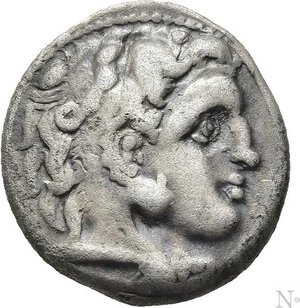
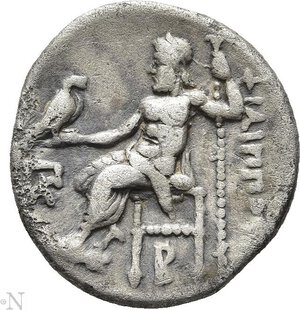
KINGS OF MACEDON. Philip III Arrhidaios (323-317 BC). Drachm. Kolophon. Obv: Head of Herakles right, wearing lion skin.Rev: ΦΙΛΙΠΠΟΥ. Zeus seated left on throne, holding eagle and sceptre. Controls: Monogram in left field; below throne, B below strut.Price P48. Condition: Good fine.Weight: 4.13 g. Diameter: 17 mm.
Lifetime Issue of Babylon
Lot # 129
-
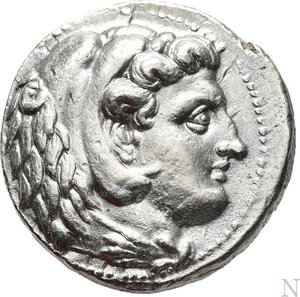
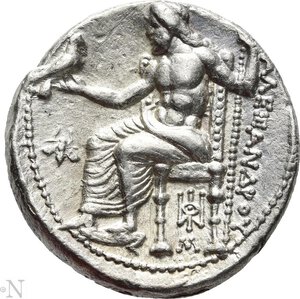
KINGS OF MACEDON. Alexander III 'the Great' (336-323 BC). Tetradrachm. Babylon. Lifetime issue. Obv: Head of Herakles right, wearing lion skin.Rev: AΛΕΞΑΝΔΡΟΥ. Zeus seated left on throne, holding eagle and sceptre. Controls: Bee in left field; below throne, monogram above M.Price 3620 var. (strut on throne). Condition: Good very fine.Weight: 17.16 g. Diameter: 25 mm.
Lifetime Issue of Babylon
Lot # 128
-
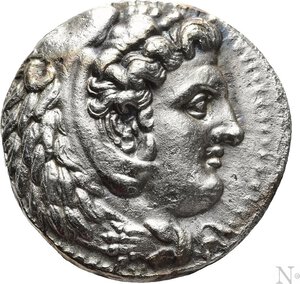
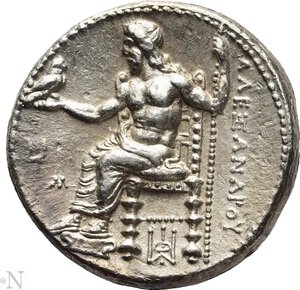
KINGS OF MACEDON. Alexander III 'the Great' (336-323 BC). Tetradrachm. Babylon. Lifetime issue. Obv: Head of Herakles right, wearing lion skin.Rev: AΛΕΞΑΝΔΡΟΥ. Zeus seated left on throne, holding eagle and sceptre. Controls: In left field, dolphin right and M; below throne, monogram.Price 3617. Condition: Good very fine.Weight: 17.13 g. Diameter: 26 mm.
Lot # 127
-
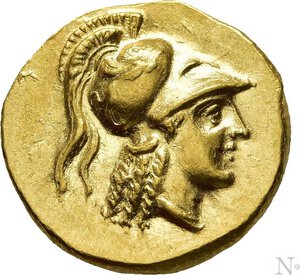
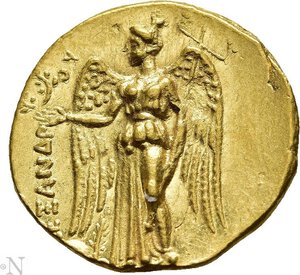
KINGS OF MACEDON. Alexander III 'the Great' (336-323 BC). GOLD Stater. Sidon. Lifetime issue. Obv: Head of Athena right, wearing crested Corinthian helmet decorated with griffin.Rev: AΛEΞANΔPOY. Nike standing left, holding wreath and stylis. Control: Filleted palm below right wing.Price 3471.Very rareAlready with Philip II the occupation of the Mount Pangaion region with its rich gold mines had made possible the abundant emission of gold coins, something that until then had been throughout Greece rather rare and linked to extraordinary circumstances or moments of crisis. Alexander, who imposed a single coinage throughout his vast empire, was able to issue Staters and their fractions in gold, using the Attic weight as the unit of measure. On the Staters the head of the goddess Athena with Corinthian helmet was depicted on the obverse, while a winged Nike was reproduced on the reverse. On silver tetradrachms, on the other hand, the head of Herakles with lion skin was depicted on the obverse and Zeus seated on a throne on the reverse (Phidian model). Toward the end of his reign there is an assimilation of the ruler with Herakles. The practice, derived from the Eastern world of reproducing the portrait of the ruler on the coin, represents a change with Alexander's coinage. But as if the human figure did not dare to suddenly replace that of the gods, the image is clothed with religious content, through its deification or identification with the deity. Even after his death for a long time Tetradrachms with the effigy of Alexander continued to be issued by his successors. The Macedonian king had the possibility to exploit for his coinage a large amount of precious metal from the vast empire he had conquered. The extremely rich mines scattered throughout this territory also made his successors self-sufficient. The coin from that time became a symbol of the ruler's power and absolute authority; no longer protected by the image of deities, it became an instrument of propaganda and power. Condition: Mint State.Weight: 8.61 g. Diameter: 19 mm.
Rare Lifetime Stater
Lot # 126
-
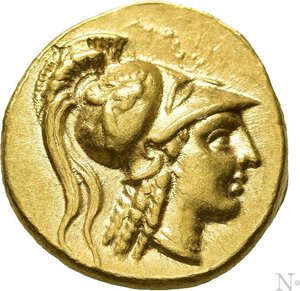
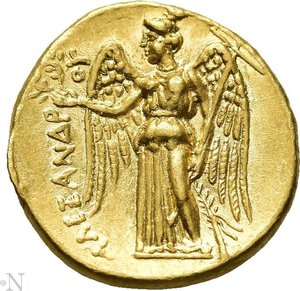
KINGS OF MACEDON. Alexander III 'the Great' (336-323 BC). GOLD Stater. Sidon. Lifetime issue. Obv: Head of Athena right, wearing crested Corinthian helmet decorated with griffin.Rev: AΛEΞANΔPOY. Nike standing left, holding wreath and stylis. Control: Filleted palm below left wing.Price 3470.Very rareAlready with Philip II the occupation of the Mount Pangaion region with its rich gold mines had made possible the abundant emission of gold coins, something that until then had been throughout Greece rather rare and linked to extraordinary circumstances or moments of crisis. Alexander, who imposed a single coinage throughout his vast empire, was able to issue Staters and their fractions in gold, using the Attic weight as the unit of measure. On the Staters the head of the goddess Athena with Corinthian helmet was depicted on the obverse, while a winged Nike was reproduced on the reverse. On silver tetradrachms, on the other hand, the head of Herakles with lion skin was depicted on the obverse and Zeus seated on a throne on the reverse (Phidian model). Toward the end of his reign there is an assimilation of the ruler with Herakles. The practice, derived from the Eastern world of reproducing the portrait of the ruler on the coin, represents a change with Alexander's coinage. But as if the human figure did not dare to suddenly replace that of the gods, the image is clothed with religious content, through its deification or identification with the deity. Even after his death for a long time Tetradrachms with the effigy of Alexander continued to be issued by his successors. The Macedonian king had the possibility to exploit for his coinage a large amount of precious metal from the vast empire he had conquered. The extremely rich mines scattered throughout this territory also made his successors self-sufficient. The coin from that time became a symbol of the ruler's power and absolute authority; no longer protected by the image of deities, it became an instrument of propaganda and power. Condition: Mint State.Weight: 8.56 g. Diameter: 17 mm.
Lot # 125
-
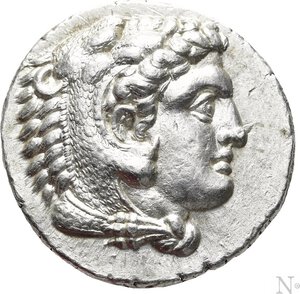
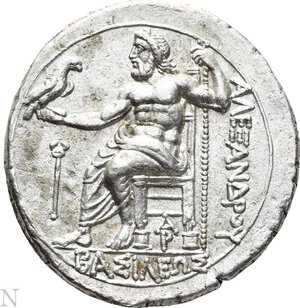
KINGS OF MACEDON. Alexander III 'the Great' (336-323 BC). Tetradrachm. Arados. Obv: Head of Herakles right, wearing lion skin.Rev: AΛΕΞΑΝΔΡΟΥ / ΒΑΣΙΛΕΩΣ. Zeus seated left on throne, holding eagle and sceptre. Controls: Kerykeion in left field; below throne, AP monogram below struts.Price 3332. Condition: Near extremely fine.Weight: 17.21 g. Diameter: 27 mm.
Unusual Legend Arrangement
Lot # 124
-
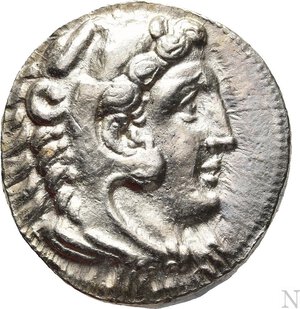
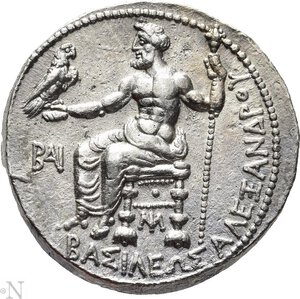
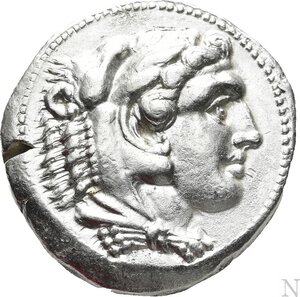
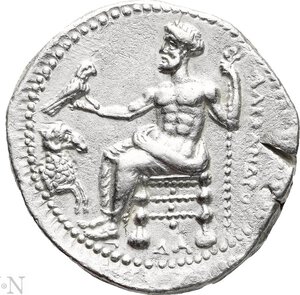
KINGS OF MACEDON. Alexander III 'the Great' (336-323 BC). Tetradrachm. Myriandros or Issos. Lifetime issue. Obv: Head of Herakles right, wearing lion skin.Rev: ΒAΣIΛEΩΣ AΛEΞANΔPOY. Zeus seated left on throne, holding eagle and sceptre. Controls: BAI monogram in left field and MI monogram below throne.Price 3228. Condition: Good very fine.Weight: 17.18 g. Diameter: 25 mm.
Lot # 123
-
KINGS OF MACEDON. Alexander III 'the Great' (336-323 BC). Tetradrachm. Damaskos. Obv: Head of Herakles right, wearing lion skin.Rev: AΛΕΞΑΝΔΡΟΥ. Zeus seated left on throne, holding eagle and sceptre. Controls: In left field, forepart of ram right; pellets and ΔA below throne.Price 3205. Condition: Good very fine.Weight: 17.11 g. Diameter: 26 mm.
Lustrous Mint State
Lot # 122
-
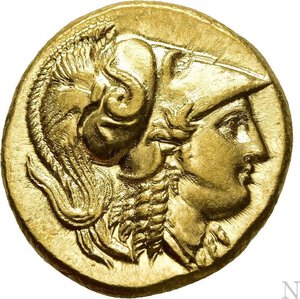
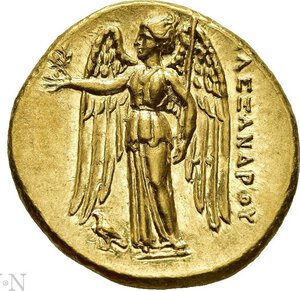
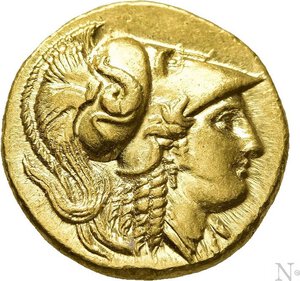
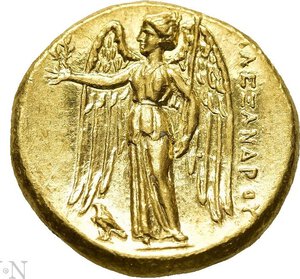
KINGS OF MACEDON. Alexander III 'the Great' (336-323 BC). GOLD Stater. Uncertain mint in western Asia Minor. Lifetime issue. Obv: Head of Athena right, wearing Corinthian helmet decorated with serpent.Rev: AΛEΞANΔPOY. Nike standing left, holding wreath and stylis Control: to lower left, eagle standing left with closed wings.Price 3125 (Salamis).Already with Philip II the occupation of the Mount Pangaion region with its rich gold mines had made possible the abundant emission of gold coins, something that until then had been throughout Greece rather rare and linked to extraordinary circumstances or moments of crisis. Alexander, who imposed a single coinage throughout his vast empire, was able to issue Staters and their fractions in gold, using the Attic weight as the unit of measure. On the Staters the head of the goddess Athena with Corinthian helmet was depicted on the obverse, while a winged Nike was reproduced on the reverse. On silver tetradrachms, on the other hand, the head of Herakles with lion skin was depicted on the obverse and Zeus seated on a throne on the reverse (Phidian model). Toward the end of his reign there is an assimilation of the ruler with Herakles. The practice, derived from the Eastern world of reproducing the portrait of the ruler on the coin, represents a change with Alexander's coinage. But as if the human figure did not dare to suddenly replace that of the gods, the image is clothed with religious content, through its deification or identification with the deity. Even after his death for a long time Tetradrachms with the effigy of Alexander continued to be issued by his successors. The Macedonian king had the possibility to exploit for his coinage a large amount of precious metal from the vast empire he had conquered. The extremely rich mines scattered throughout this territory also made his successors self-sufficient. The coin from that time became a symbol of the ruler's power and absolute authority; no longer protected by the image of deities, it became an instrument of propaganda and power. Condition: Mint State.Weight: 8.61 g. Diameter: 19 mm.
Lustrous Mint State
Lot # 121
-
KINGS OF MACEDON. Alexander III 'the Great' (336-323 BC). GOLD Stater. Uncertain mint in western Asia Minor. Lifetime issue. Obv: Head of Athena right, wearing Corinthian helmet decorated with serpent.Rev: AΛEΞANΔPOY. Nike standing left, holding wreath and stylis Control: to lower left, eagle standing left with closed wings.Price 3125 (Salamis).Already with Philip II the occupation of the Mount Pangaion region with its rich gold mines had made possible the abundant emission of gold coins, something that until then had been throughout Greece rather rare and linked to extraordinary circumstances or moments of crisis. Alexander, who imposed a single coinage throughout his vast empire, was able to issue Staters and their fractions in gold, using the Attic weight as the unit of measure. On the Staters the head of the goddess Athena with Corinthian helmet was depicted on the obverse, while a winged Nike was reproduced on the reverse. On silver tetradrachms, on the other hand, the head of Herakles with lion skin was depicted on the obverse and Zeus seated on a throne on the reverse (Phidian model). Toward the end of his reign there is an assimilation of the ruler with Herakles. The practice, derived from the Eastern world of reproducing the portrait of the ruler on the coin, represents a change with Alexander's coinage. But as if the human figure did not dare to suddenly replace that of the gods, the image is clothed with religious content, through its deification or identification with the deity. Even after his death for a long time Tetradrachms with the effigy of Alexander continued to be issued by his successors. The Macedonian king had the possibility to exploit for his coinage a large amount of precious metal from the vast empire he had conquered. The extremely rich mines scattered throughout this territory also made his successors self-sufficient. The coin from that time became a symbol of the ruler's power and absolute authority; no longer protected by the image of deities, it became an instrument of propaganda and power. Condition: Mint State.Weight: 8.65 g. Diameter: 18 mm.
Paphos Mint !
Lot # 120
-
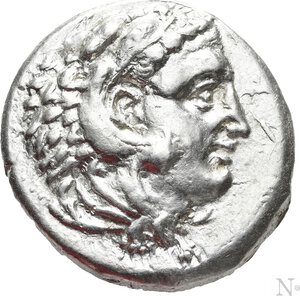
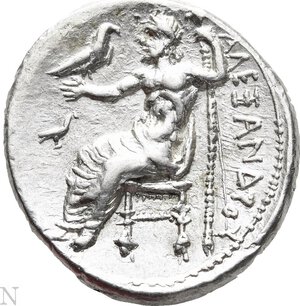
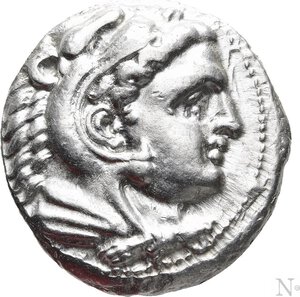
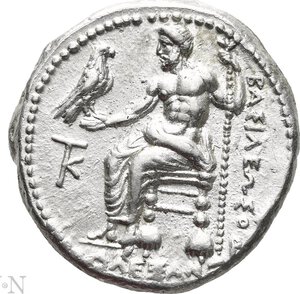
KINGS OF MACEDON. Alexander III 'the Great' (336-323 BC). Tetradrachm. Paphos. Obv: Head of Herakles right, wearing lion skin.Rev: AΛΕΞΑΝΔΡΟΥ. Zeus seated left on throne, holding eagle and sceptre. Controls: in left field, dove standing right.Price 3116. Condition: Very fine.Weight: 17.17 g. Diameter: 26 mm.
Lot # 119
-
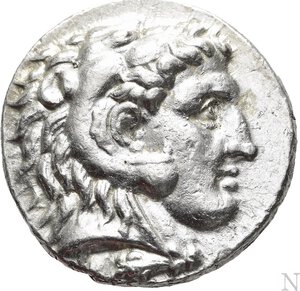
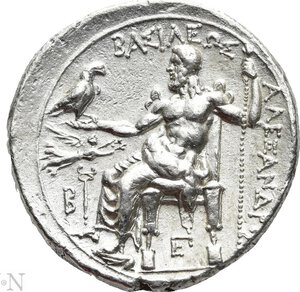
KINGS OF MACEDON. Alexander III 'the Great' (336-323 BC). Tetradrachm. Kition. Possible lifetime issue. Obv: Head of Herakles right, wearing lion skin.Rev: BAΣIΛEΩΣ / AΛΕΞΑΝΔΡΟΥ. Zeus seated left, holding sceptre and eagle. Control: KT monogram in left field.Price 3107. Condition: Very fine.Weight: 17.16 g. Diameter: 25 mm.
Lot # 118
-
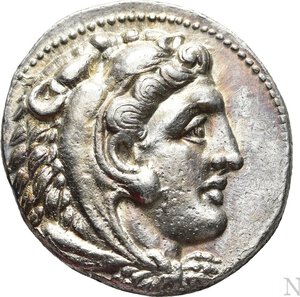
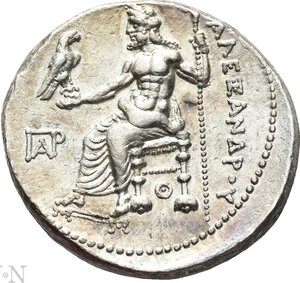
KINGS OF MACEDON. Alexander III 'the Great' (336-323 BC). Tetradrachm. Tarsos. Obv: Head of Herakles right, wearing lion skin.Rev: BAΣIΛEΩΣ AΛΕΞΑΝΔΡΟΥ. Zeus seated left on throne, holding eagle and sceptre. Controls: in left field, crowning Nike flying right above B and kerykeion; monogram below throne.Price 3051. Condition: Near extremely fine.Weight: 17.24 g. Diameter: 27 mm.
Lot # 117
-
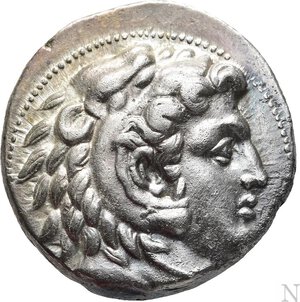
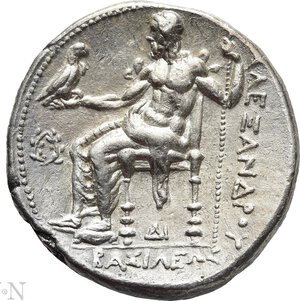
KINGS OF MACEDON. Alexander III 'the Great' (336-323 BC). Tetradrachm. Tarsos. Obv: Head of Herakles right, wearing lion skin.Rev: ΒΑΣΙΛΕΩΣ / AΛEΞANΔPOY. Zeus seated left, holding sceptre and eagle. Controls: Monogram in left field, Θ below throne.Price 3036. Condition: Very fine; hair partially tooled.Weight: 17.12 g. Diameter: 28 mm.
Lot # 116
-
KINGS OF MACEDON. Alexander III 'the Great' (336-323 BC). Tetradrachm. Uncertain mint in Cilicia. Obv: Head of Herakles right, wearing lion skin.Rev: AΛΕΞΑΝΔΡΟΥ / ΒΑΣΙΛΕΩΣ. Zeus seated left on throne, holding eagle and sceptre. Controls: Wreath in left field, ΔΙ below throne.Price 2949 (Side?). Condition: Very fine.Weight: 17.12 g. Diameter: 27 mm.
Lustrous Mint State
Lot # 115
-
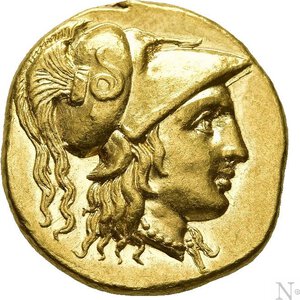
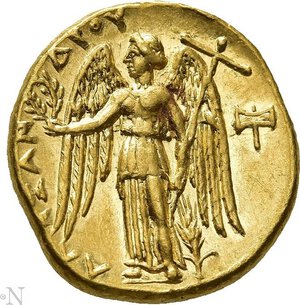
KINGS OF MACEDON. Alexander III 'the Great' (336-323 BC). GOLD Stater. Miletos. Obv: Head of Athena right, wearing Corinthian helmet decorated with serpent.Rev: AΛEΞANΔPOY. Nike standing left, holding wreath and stylis Control: Labrys in right field, grain ear below wing.Price 2094.Very rareAlready with Philip II the occupation of the Mount Pangaion region with its rich gold mines had made possible the abundant emission of gold coins, something that until then had been throughout Greece rather rare and linked to extraordinary circumstances or moments of crisis. Alexander, who imposed a single coinage throughout his vast empire, was able to issue Staters and their fractions in gold, using the Attic weight as the unit of measure. On the Staters the head of the goddess Athena with Corinthian helmet was depicted on the obverse, while a winged Nike was reproduced on the reverse. On silver tetradrachms, on the other hand, the head of Herakles with lion skin was depicted on the obverse and Zeus seated on a throne on the reverse (Phidian model). Toward the end of his reign there is an assimilation of the ruler with Herakles. The practice, derived from the Eastern world of reproducing the portrait of the ruler on the coin, represents a change with Alexander's coinage. But as if the human figure did not dare to suddenly replace that of the gods, the image is clothed with religious content, through its deification or identification with the deity. Even after his death for a long time Tetradrachms with the effigy of Alexander continued to be issued by his successors. The Macedonian king had the possibility to exploit for his coinage a large amount of precious metal from the vast empire he had conquered. The extremely rich mines scattered throughout this territory also made his successors self-sufficient. The coin from that time became a symbol of the ruler's power and absolute authority; no longer protected by the image of deities, it became an instrument of propaganda and power. Condition: Mint State.Weight: 8.63 g. Diameter: 18 mm.
Mint State Drachm
Lot # 114
-
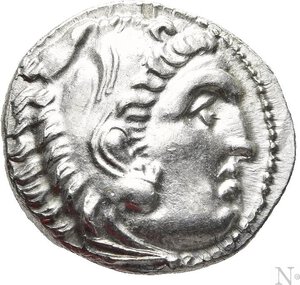
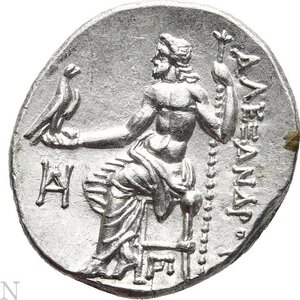
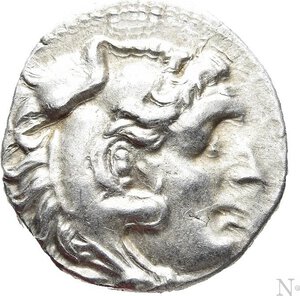
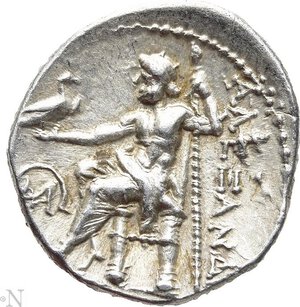
KINGS OF MACEDON. Alexander III 'the Great' (336-323 BC). Drachm. Teos. Obv: Head of Herakles right, wearing lion skin.Rev: AΛEΞANΔPOY. Zeus seated left, holding eagle and sceptre. Controls: monogram in field left and below throne.Price 2290. Condition: Mint State.Weight: 4.78 g. Diameter: 18 mm.
Lot # 113
-
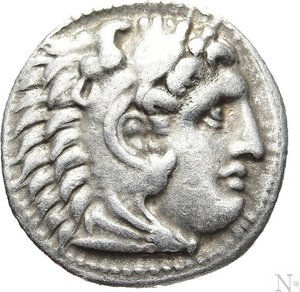
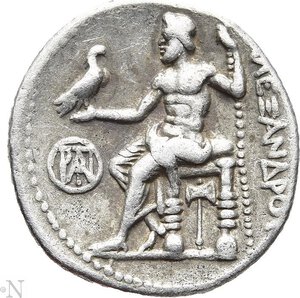
KINGS OF MACEDON. Alexander III 'the Great' (336-323 BC). Drachm. Mylasa. Obv: Head of Herakles right, wearing lion skin.Rev: AΛEΞANΔPOY. Zeus seated left on throne, holding eagle and sceptre. Controls: Monogram in left field.Price 2486. Condition: Very fine.Weight: 4.27 g. Diameter: 18 mm.
Lot # 112
-
KINGS OF MACEDON. Alexander III 'the Great' (336-323 BC). Drachm. Miletos. Obv: Head of Herakles right, wearing lion skin.Rev: AΛEΞANΔPOY. Zeus seated left on throne, holding eagle and sceptre. Controls: monogram within circle in left field and double axe below throne.Price 2148. Condition: Near very fine.Weight: 4.17 g. Diameter: 19 mm.
Lot # 111
-
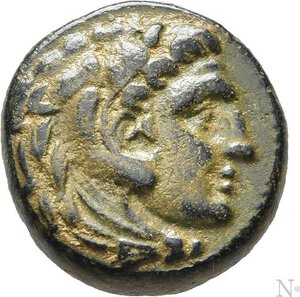
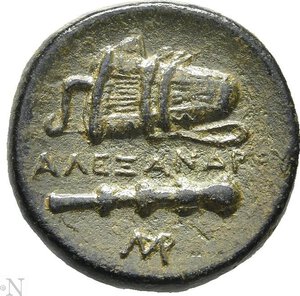
KINGS OF MACEDON. Alexander III 'the Great' (336-323 BC). Ae Unit. Miletos. Obv: Head of Herakles right, wearing lion skin.Rev: AΛEΞANΔPOY. Bow in quiver left; below, club right above monogram.Price 2110. Condition: Very fine.Weight: 6.66 g. Diameter: 17 mm.
Lot # 110
-
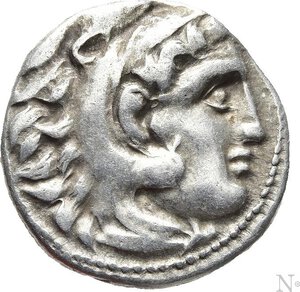
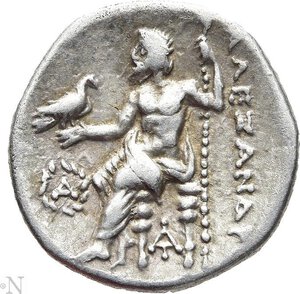
KINGS OF MACEDON. Alexander III 'the Great' (336-323 BC). Drachm. Magnesia ad Maeandrum. Obv: Head of Herakles right, wearing lion skin.Rev: AΛEΞANΔPOY. Zeus seated left on throne, holding eagle and sceptre. Controls: In left field, A within wreath; monogram below throne.Price 1978. Condition: Very fine.Weight: 4.24 g. Diameter: 17 mm.
Lot # 109
-
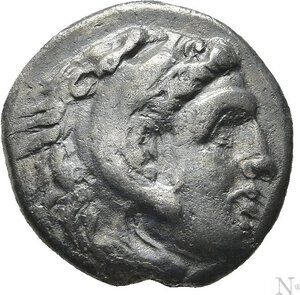
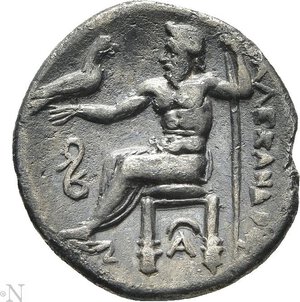
KINGS OF MACEDON. Alexander III 'the Great' (336-323 BC). Drachm. Lampsakos. Obv: Head of Herakles right, wearing lion skin.Rev: ΑΛΕΞΑΝΔΡΟΥ. Zeus seated left on throne, holding eagle and sceptre. Controls: In left field, buckle left; below throne, inverted crescent above A.Price 1372. Condition: Near very fine.Weight: 3.69 g. Diameter: 17 mm.
Lot # 108
-
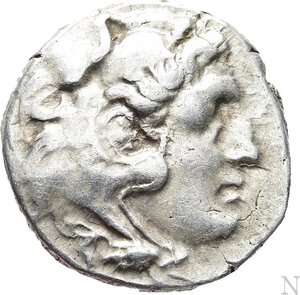
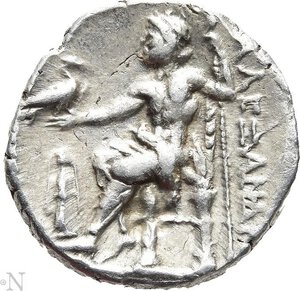
KINGS OF MACEDON. Alexander III 'the Great' (336-323 BC). Drachm. Lampsakos. Obv: Head of Herakles right, wearing lion skin.Rev: AΛΕΞΑΝΔΡΟΥ. Zeus seated left with eagle and sceptre. Control: In left field, Artemis standing facing, holding torch in each hand.Price 1352. Condition: Near very fine.Weight: 4.26 g. Diameter: 17 mm.
Lot # 107
-
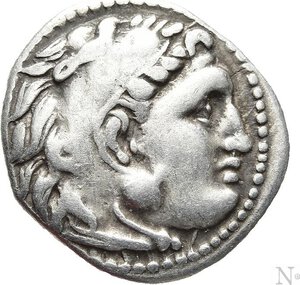
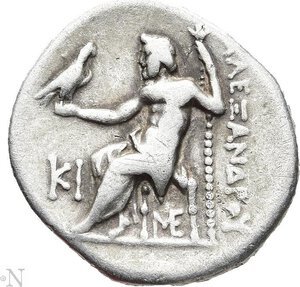
KINGS OF MACEDON. Alexander III 'the Great' (336-323 BC). Drachm. Lampsakos. Obv: Head of Herakles right, wearing lion skin.Rev: AΛΕΞΑΝΔΡΟΥ. Zeus seated left on throne, holding eagle and sceptre. Controls: KI in left field, ME monogram below throne.Price 1406. Condition: Good fine.Weight: 4.16 g. Diameter: 18 mm.
Lot # 106
-
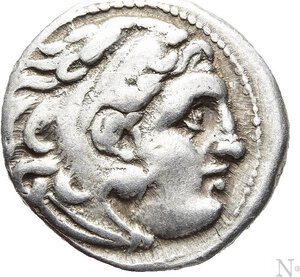
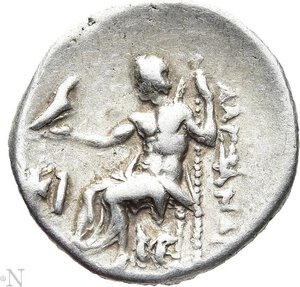
KINGS OF MACEDON. Alexander III 'the Great' (336-323 BC). Drachm. Lampsakos. Obv: Head of Herakles right, wearing lion skin.Rev: AΛEΞANΔPOY. Zeus seated left on throne, holding eagle and sceptre. Controls: KI in left field, ME monogram below throne.Price 1406. Condition: Good fine.Weight: 4.19 g. Diameter: 18 mm.
Lot # 105
-
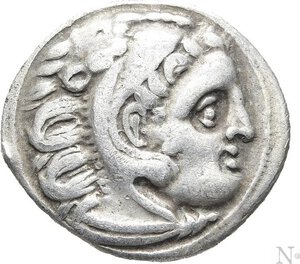
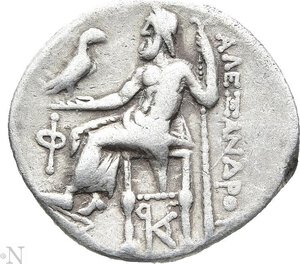
KINGS OF MACEDON. Alexander III 'the Great' (336-323 BC). Drachm. Kolophon. Obv: Head of Herakles right, wearing lion skin.Rev: AΛEΞANΔPOY. Zeus seated left on throne, holding eagle and sceptre Controls: Φ in left field, monogram below throne.Price 1828. Condition: Near very fine.Weight: 4.12 g. Diameter: 19 mm.
Lot # 104
-
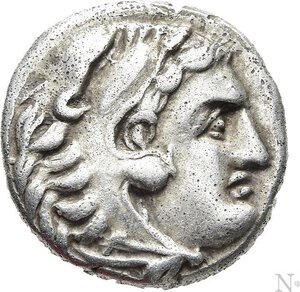
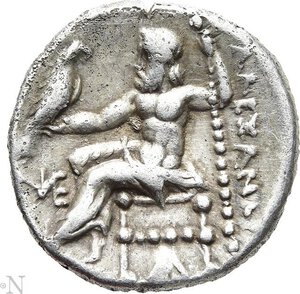
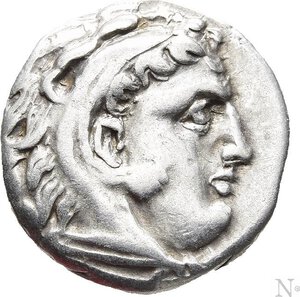
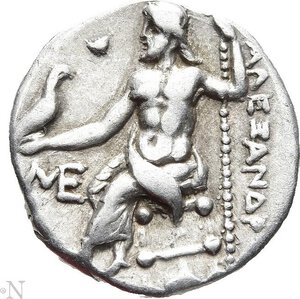
KINGS OF MACEDON. Alexander III 'the Great' (336-323 BC). Drachm. Abydos. Obv: Head of Herakles right, wearing lion skin.Rev: AΛΕΞΑΝΔΡΟΥ. Zeus seated left on throne, holding eagle and sceptre. Controls: ME monogram in left field, ivy leaf below throne.Price 1560. Condition: Near very fine.Weight: 4.38 g. Diameter: 17 mm.
Lot # 103
-
KINGS OF MACEDON. Alexander III 'the Great' (336-323 BC). Drachm. Abydos. Obv: Head of Herakles right, wearing lion skin.Rev: AΛΕΞΑΝΔΡΟΥ. Zeus seated left on throne, holding eagle and sceptre. Controls: ME monogram in left field, ivy leaf below throne.Price 1560. Condition: Near very fine.Weight: 4.19 g. Diameter: 17 mm.
Lot # 102
-
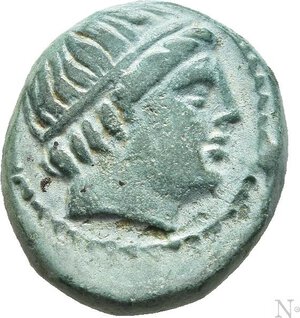
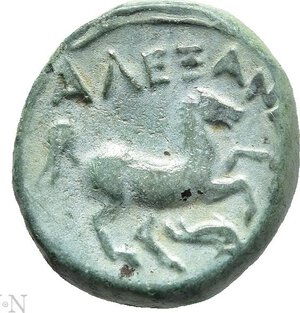
KINGS OF MACEDON. Alexander III 'the Great' (336-323 BC). Ae Half Unit. Uncertain mint in Macedon. Obv: Diademed head of Apollo right.Rev: ΑΛΕΞΑΝΔ. Horse galloping right. Control: below, dolphin swimming right.Price 339. Condition: Very fine.Weight: 3.84 g. Diameter: 16 mm.
Lot # 101
-
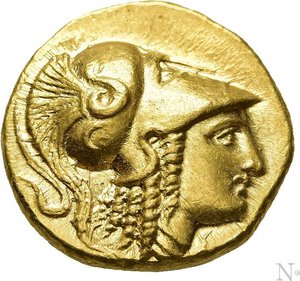
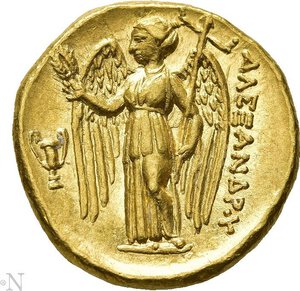
KINGS OF MACEDON. Alexander III 'the Great' (336-323 BC). GOLD Stater. Amphipolis. Possibly lifetime issue. Obv: Head of Athena right, wearing Corinthian helmet decorated with serpent.Rev: AΛEΞANΔPOY. Nike standing left, holding wreath and stylis Control: Kantharos in left field.Price 168.Already with Philip II the occupation of the Mount Pangaion region with its rich gold mines had made possible the abundant emission of gold coins, something that until then had been throughout Greece rather rare and linked to extraordinary circumstances or moments of crisis. Alexander, who imposed a single coinage throughout his vast empire, was able to issue Staters and their fractions in gold, using the Attic weight as the unit of measure. On the Staters the head of the goddess Athena with Corinthian helmet was depicted on the obverse, while a winged Nike was reproduced on the reverse. On silver tetradrachms, on the other hand, the head of Herakles with lion skin was depicted on the obverse and Zeus seated on a throne on the reverse (Phidian model). Toward the end of his reign there is an assimilation of the ruler with Herakles. The practice, derived from the Eastern world of reproducing the portrait of the ruler on the coin, represents a change with Alexander's coinage. But as if the human figure did not dare to suddenly replace that of the gods, the image is clothed with religious content, through its deification or identification with the deity. Even after his death for a long time Tetradrachms with the effigy of Alexander continued to be issued by his successors. The Macedonian king had the possibility to exploit for his coinage a large amount of precious metal from the vast empire he had conquered. The extremely rich mines scattered throughout this territory also made his successors self-sufficient. The coin from that time became a symbol of the ruler's power and absolute authority; no longer protected by the image of deities, it became an instrument of propaganda and power. Condition: Mint State.Weight: 8.62 g. Diameter: 18 mm.
Lot # 100
-
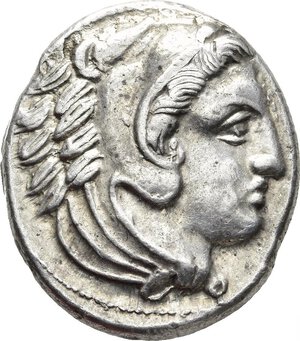
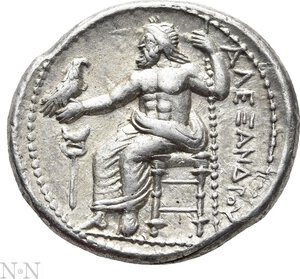
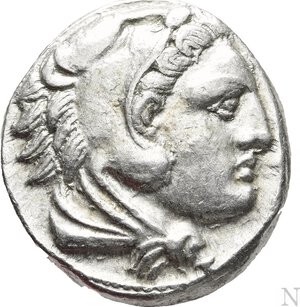
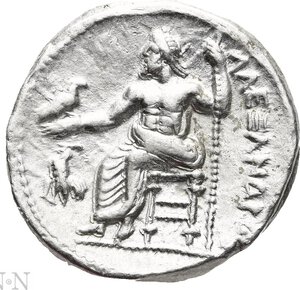
KINGS OF MACEDON. Alexander III 'the Great' (336-323 BC). Tetradrachm. Amphipolis. Possible lifetime issue. Obv: Head of Herakles right, wearing lion skin.Rev: AΛΕΞΑΝΔΡΟΥ. Zeus seated left, holding sceptre and eagle. Control: kerykeion in left field.Price 99. Condition: Very fine; hair partially tooled.Weight: 17.25 g. Diameter: 27 mm.
Lot # 99
-
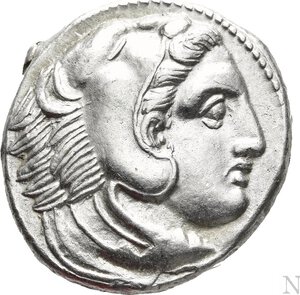
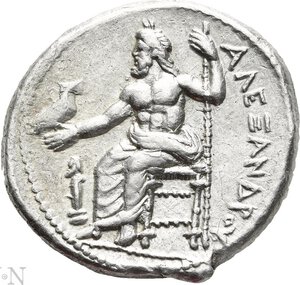
KINGS OF MACEDON. Alexander III 'the Great' (336-323 BC). Tetradrachm. Amphipolis. Possible lifetime issue. Obv: Head of Herakles right, wearing lion skin.Rev: AΛEΞANΔPOY. Zeus seated left on throne, holding sceptre and eagle. Control: In left field, cock standing left.Price 79. Condition: Very fine.Weight: 17.20 g. Diameter: 26 mm.
Lot # 98
-
KINGS OF MACEDON. Alexander III 'the Great' (336-323 BC). Tetradrachm. Amphipolis. Possible lifetime issue. Obv: Head of Herakles right, wearing lion skin.Rev: AΛΕΞΑΝΔΡΟΥ. Zeus seated left on throne, holding eagle and sceptre. Control: In left field, herm left.Price 78. Condition: Good very fine.Weight: 17.17 g. Diameter: 26 mm.
Lot # 97
-
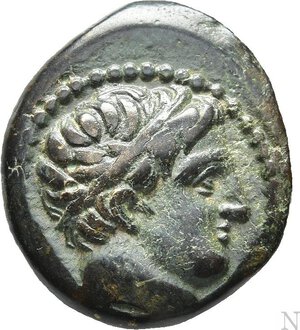
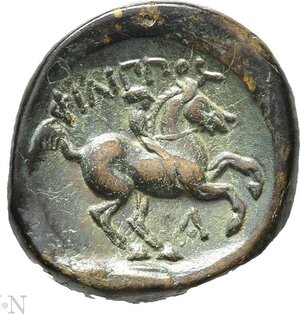
KINGS OF MACEDON. Philip II (359-336 BC). Ae Unit. Uncertain mint in Macedon. Obv: Diademed head of Apollo right.Rev: ΦΙΛΙΠΠΟΥ. Naked youth on horse right, wearing petasos. Control: A below.SNG ANS 935; SNG Alpha Bank 386-7; HGC 3.1, 882. Condition: Very fine.Weight: 6.56 g. Diameter: 19 mm.

Lot # 96
-
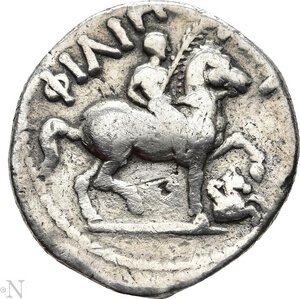
KINGS OF MACEDON. Philip II (359-336 BC). Tetradrachm. Amphipolis. Obv: Laureate head of Zeus right.Rev: ΦΙΛΙΠΠΟΥ. Youth riding horse right, holding palm frond. Controls: Pegasus forepart below raised foreleg.Le Rider -; SNG ANS -; Numismatik Naumann 86, lot 74. Condition: Fine.Weight: 14.11 g. Diameter: 24 mm.
Lot # 95
-
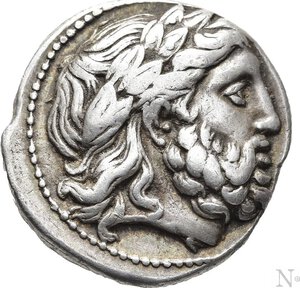
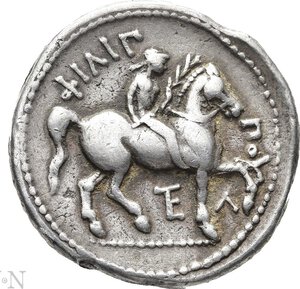
KINGS OF MACEDON. Philip II (359-336 BC). Tetradrachm. Amphipolis. Obv: Laureate head of Zeus right.Rev: ΦΙΛΙΠΠΟΥ. Youth riding horse right, holding palm frond. Controls: below, forepart of Pegasos right; TE monogram below horse; Λ below raised foreleg.Le Rider pl. 45, 15-16; SNG ANS 643-9. Condition: Very fine.Weight: 14.25 g. Diameter: 25 mm.
Lot # 94
-
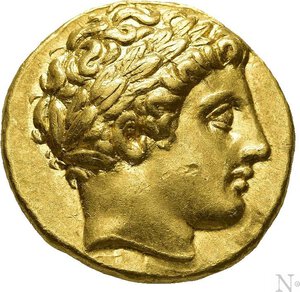
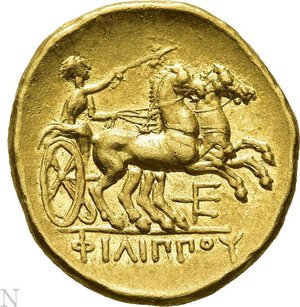
KINGS OF MACEDON. Philip II (359-336 BC). GOLD Stater. Pella. Obv: Laureate head of Apollo right.Rev: ΦΙΛΙΠΠΟΥ. Charioteer driving biga right. Controls: Below horses, trident head right.Le Rider 326 (D148/R249); SNG ANS 144-54.In the Classical period throughout Greece silver coinage predominated, while gold was minted by a few cities. In Asia Minor electrum coins were still struck in three mints (Kyzikos, Mytilene and Phokaia) until the Athenian hegemony that followed the victory over the Persians. In 405 BC the issue of Lampsakos gold staters based on the Persian weight system began. Athens produced the first and only precious metal issues toward the end of the Peloponnesian War, in 407-6 BC, at a time of severe crisis when silver mining in Laurion began to fail and it was forced to melt down the Parthenon's gold statues. Aside from these cases, the first important and massive gold coinage in the Greek context was that of Philip II of Macedon. He minted abundant series of coins in several mints. Having conquered the city of Krenides, where the Thasians had already exploited gold mines, Philip renamed the city Philippi and started the production of philippéioi, gold staters weighing two Attic drachms. Apollo's youthful head appears on the obverse, a galloping chariot on the reverse, types glorifying the Macedonian ruler who had triumphed at the Olympian Games in 356 BC. The series also includes fractions. Condition: Near extremely fine.Weight: 8.61 g. Diameter: 19 mm.
Lot # 93
-
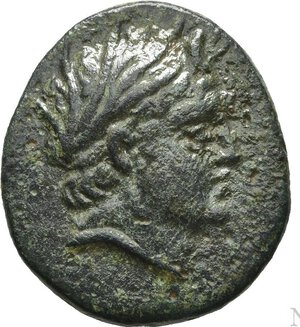
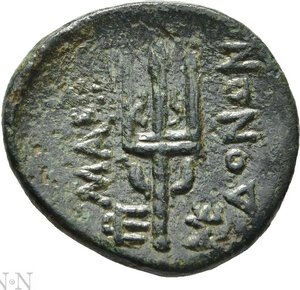
MACEDON. Amphipolis. Ae (Late 2nd century BC). Obv: Head of the river god Strymon right, wearing wreath of reeds.Rev: MAKE / ΔONΩN. Ornamented trident; monogram to inner left and right.Kremydi Variety 23; HGC 3.1, 334. Condition: Good very fine.Weight: 7.80 g. Diameter: 23 mm.
Lot # 92
-
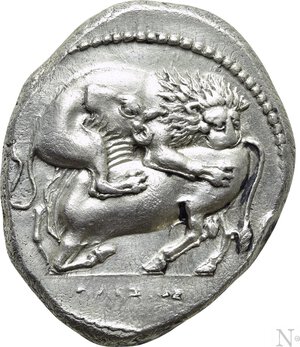
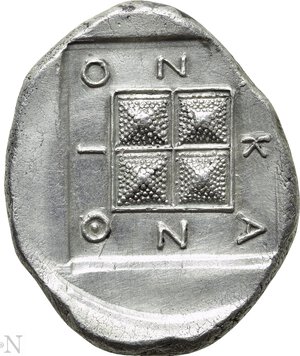
MACEDON. Akanthos. Tetradrachm (Circa 370-360 BC). Alexios, magistrate. Obv: AΛEΞIOΣ. Lion right, attacking bull crouching left.Rev: AKANΘION. Quadripartite square with granulated raised fields; all within incuse square.Desneux 151; HGC 3.1, 391. Condition: Extremely fine.Weight: 14.31 g. Diameter: 27 mm.
Lot # 91
-
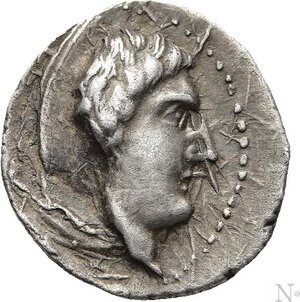
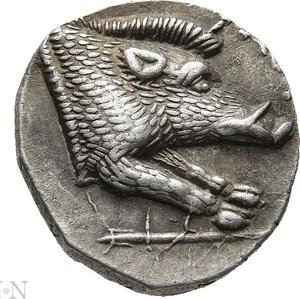
KINGS OF PAEONIA. Patraos (Circa 335-315 BC). Drachm. Astibos or Damastion. Obv: Diademed head of Apollo right.Rev: ΠATPAOY. Forepart of boar right.Peykov E2270; HGC 3.1, 149.Rare Condition: Extremely fine.Weight: 3.09 g. Diameter: 16 mm.
Lot # 90
-
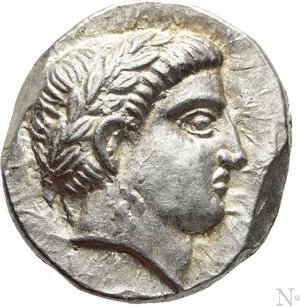
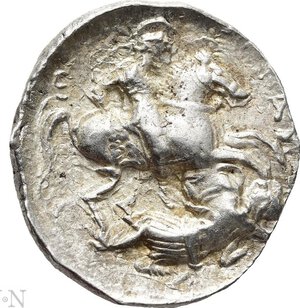
KINGS OF PAEONIA. Patraos (Circa 335-315 BC). Tetradrachm. Astibos or Damastion mint. Obv: Laureate head of Apollo right.Rev: ΠΑΤΡΑΟΥ. Warrior on horse rearing right, thrusting spear at enemy below who defends with shield.Paeonian Hoard 454; Peykov E2160; HGC 3.1, 148. Condition: Near extremely fine.Weight: 12.60 g. Diameter: 24 mm.
Lot # 89
-
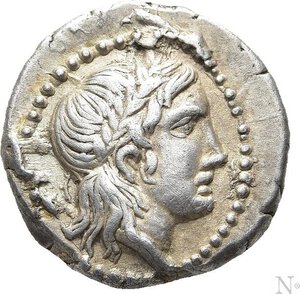
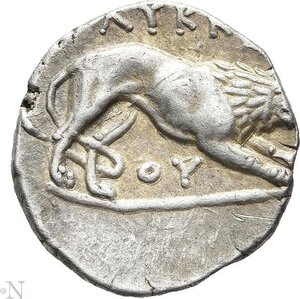
KINGS OF PAEONIA. Lykkeios (Circa 358/6-335 BC). Drachm. Astibos or Damastion. Obv: Laureate head of Apollo right.Rev: ΛΥΚΚEΙΟΥ. Lion crouching right.SNG Ashmolean 3352; HGC 3.1, 143.Very rare Condition: Very fine.Weight: 3.16 g. Diameter: 15 mm.
Lot # 88
-
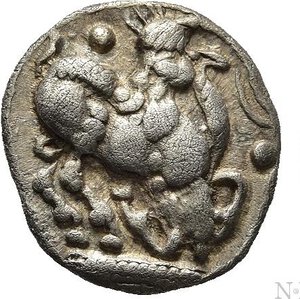
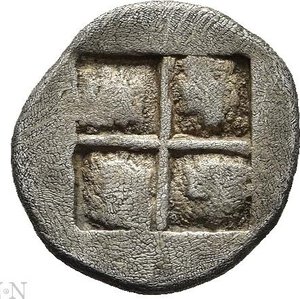
THRACO-MACEDONIAN TRIBES. Mygdones or Krestones. Diobol (Circa 485-470 BC). Obv: Goat kneeling right, head left; pellets around.Rev: Quadripartite incuse square.SNG ANS 59-64 (Aigai); HGC 3.1, 368. Condition: Very fine.Weight: 0.98 g. Diameter: 12 mm.
Lot # 87
-
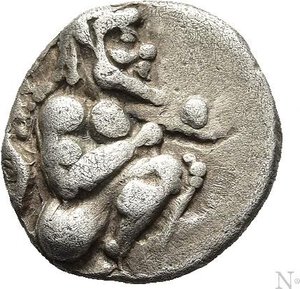
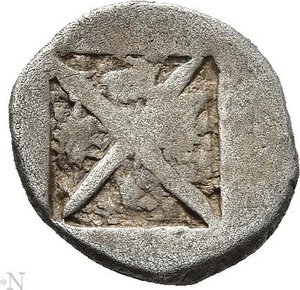
THRACO-MACEDONIAN REGION. Siris. 1/8 Stater - Trihemiobol (Circa 525-480 BC). Obv: Satyr with tail crouching right; pellet to left and right.Rev: Quadripartite incuse square divided diagonally.HPM 19; SNG ANS (under “Lete”) 973. Condition: Very fine.Weight: 1.06 g. Diameter: 11 mm.
Lot # 86
-
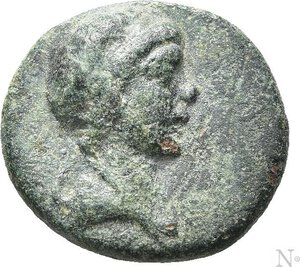
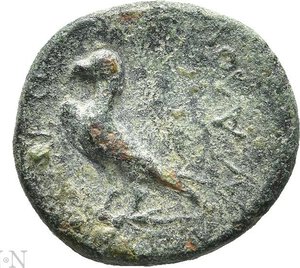
KINGS OF THRACE (Odrysian [Astaian]). Sadalas II (48-42 BC). Ae. Odessos or Bizye. Obv: Diademed and draped bust right.Rev: ΒΑΣΙΛΕΩΣ / ΣΑΔΑΛOY. Eagle standing left on thunderbolt.SNG BM Black Sea 314; HGC 3.2, 1738.Scarce Condition: Very fine.Weight: 2.61 g. Diameter: 16 mm.
Results from 4851 to 4900 of 15716