Roman Imperial Coins
Results from 19651 to 19700 of 32902
Lot # 5615
-
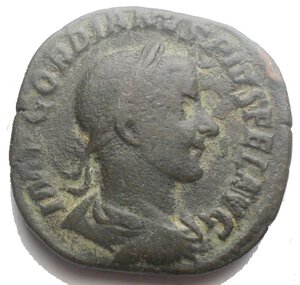
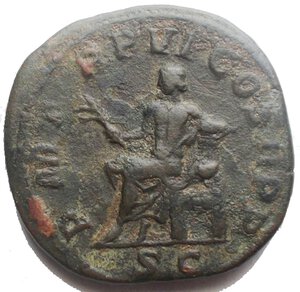
Gordianus III (238-244 AD). AE Sestertius (28.8 mm, 17.52 g), Roma 242 AD. Obv. IMP GORDIANVS PIVS FEL AVG, laureate, draped and cuirassed bust right. Rev. P M TR P VI COS II P P / S C, Apollo seated left, holding brancht and resting elbow on lyre. VF

Lot # 5934
-
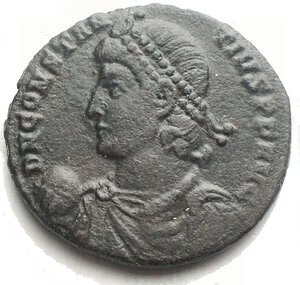
Costanzo II (337-361 d.C.). Ae follis Costantinopoli 348-350. D N CONSTAN-TIVS P F AVG Busto di Costanzo II, con diadema di perle, drappeggiato e corazzato, a sinistra, che regge un globo nella mano destra. r / FEL TEMP REPARATIO, Costanzo II, in abiti militari, in piedi a sinistra, regge il labaro con la mano destra e appoggia la sinistra su uno scudo appoggiato a terra; davanti a lui, a sinistra, due prigionieri inginocchiati con le mani legate e il berretto a visiera. BB+
Lot # 5794
-
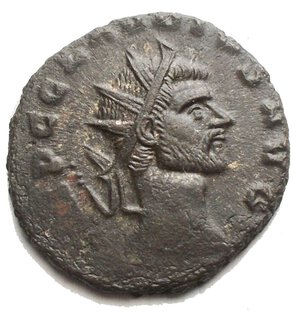
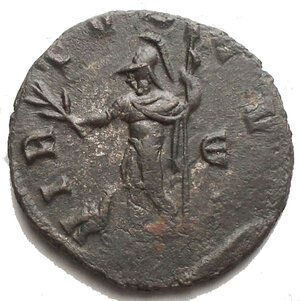
Claudio II il Gotico, 268-270. Antoniniano (19,37 mm, 3,71 g) d/ IMP C CLAVDIVS AVG Busto radiato di Claudio il Gotico a destra. r/ VIRTVS AVG Virtus in piedi a sinistra, con ramo d'ulivo nella mano destra e lancia nella sinistra. BB-qSPL
Lot # 5961
-
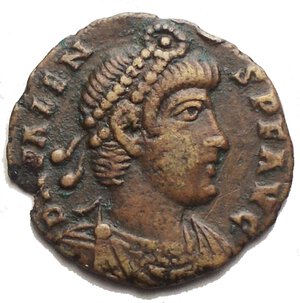
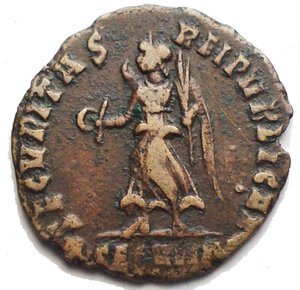
Valens. (364-367 AD). Æ Follis. Obv: D N VALENS P F AVG. perl-diademed bust of Valens right. Rev: SECVRITAS REIPUBLICAE. Securitas holding wreath. Weight 1.7 gr - Diameter 17.16 mm
Lot # 5972
-
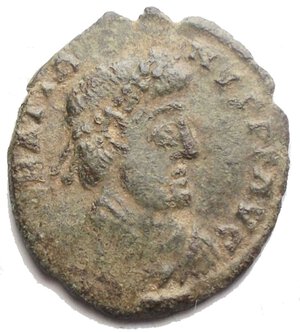
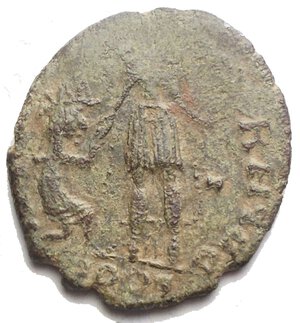
Graziano (367 - 383) AE Busto diademato e drappeggiato a d. /R L'Imperatore stante a s. con Vittoria aiuta una donna ad alzarsi g. 4,13 qBB. Patina verde
Lot # 5897
-
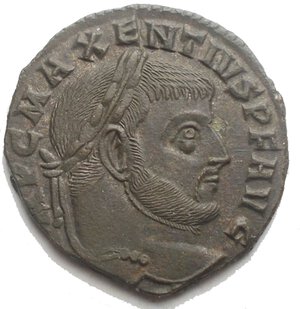
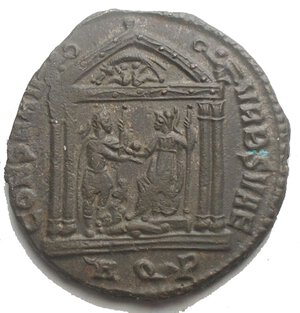
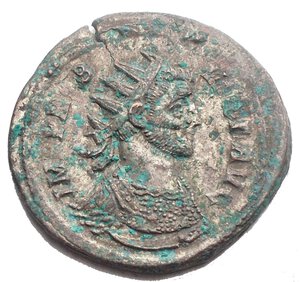
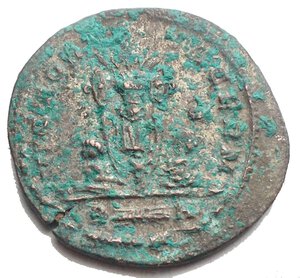
Maxentius (306-312 AD). AE Follis (25-26 mm, 6.38 g), Aquileia, late Summer 307. Obv. IMP C MAXENTIVS P F AVG, Laureate head right. Rev. CONSERV VRB SVAE, Roma seated left on shield in tetrastyle temple, right handing globe to Maxentius (in military dress, stading right), left holding sceptre; seated captive between; Victories as acroteria; the lupa and twins in pediment; AQP in exergue. RIC VI Aquileia 113. Almost extremely fine.
Lot # 5576
-
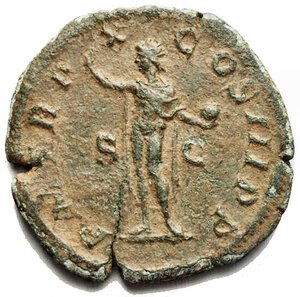
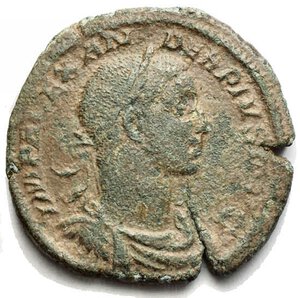
Severus Alexander, 222-235. Sestertius Ae 31.35 mm, 13.91 g Rome 231 IMP ALEXANDER PIVS AVG Laureate, draped and cuirassed bust of Severus Alexander to right. Rev. P M TR P X COS III P P / S - C Sol standing left, raising his right hand and holding globe in his left. BMC 866. Cohen 412. RIC 515. Very fine. Green patina
Lot # 5756
-
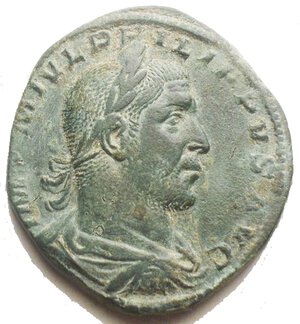
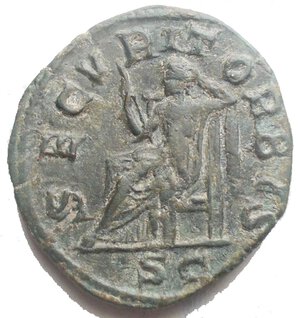
Philip I, 244-249. Sestertius (28,5 x 30,9 mm. 17,95 g) d/ IMP M IVL PHILIPPVS AVG Laureate, draped and cuirassed bust of Philip I to right, seen from behind. r/ SECVRIT ORBIS / S C Securitas seated left, holding short scepter in her right hand and propping her head on her left. Cohen 216. RIC 190. VF-EF. Green patina
Lot # 5550
-
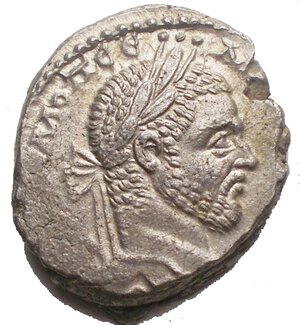
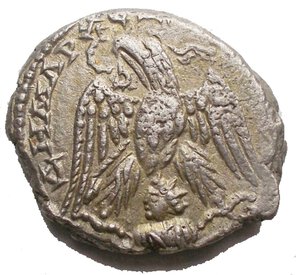
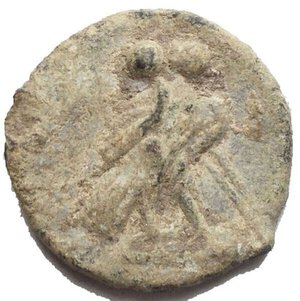
Roman Provincial Syria, Seleucis and Pieria Macrinus (217-218), Tetradrachm, Emesa mint Obverse: laureate, draped and cuirassed bust right Reverse: eagle standing facing, head and tail left, with wings spread, holding wreath in beak, radiate and draped bust of Shamash left between legs Diameter 22.7 x 26.8 mm, weight 13.02 g
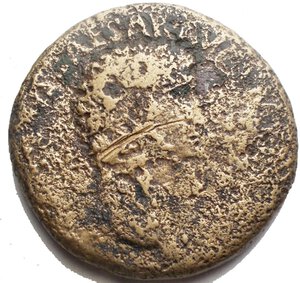
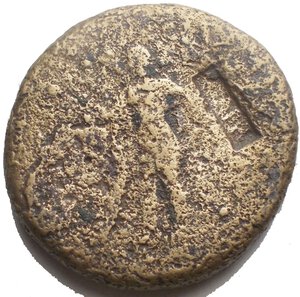
Lot # 5786
-
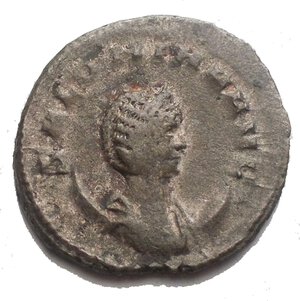
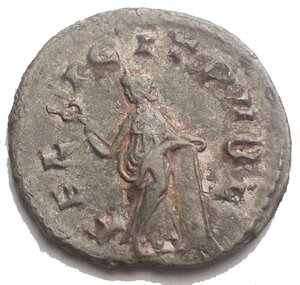
Salonina. Augusta, AD 254-268. Antoninianus (21.7mm, 2.83 g). Mediolanum (Milan) SALONINA AVG, diademed and draped bust right on crescent / FELICIT PVBLI, Felicitas standing facing, head left, holding caduceus and leaning on column. VF
Lot # 5772
-
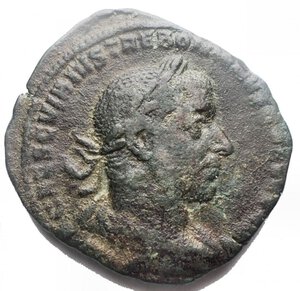
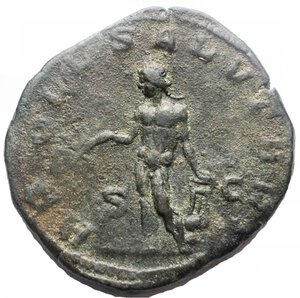
Impero Romano - Treboniano Gallo (251-253). Sesterzio Ae. Roma. g 19,22. mm 30,8. d/ IMP CAES C VIBIVS TREBONIANVS GALLVS AVG Busto a ds con testa laureata r/ APOLL SALVTARI/ S C Apollo stante a sn con ramo e lira. RIC 103 C 21. Buon BB+. Patina verde. Intonso

Lot # 4724
-
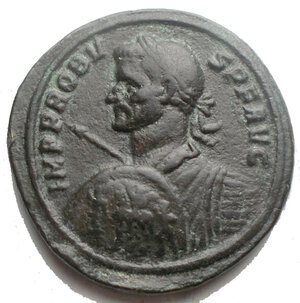
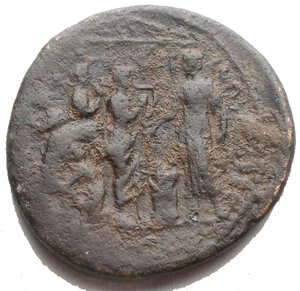
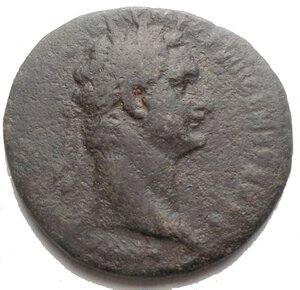
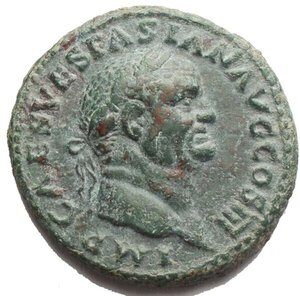
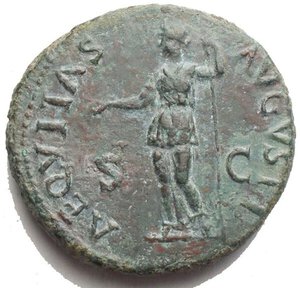
Vespasian (69-79). AE As. Obv. IMP CAES VESPASIAN AVG COS III. Laureate head right. Rev. AEQVITAS AVGVSTI SC. Aequitas standing left, holding scales and rod. g 12,24. mm 27,55. R. Good VF. Rare. Good example.
Lot # 5143
-
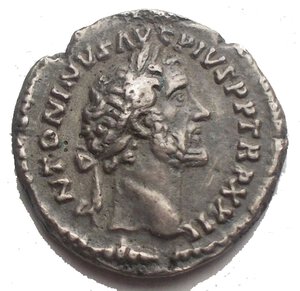
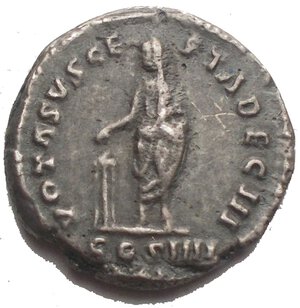
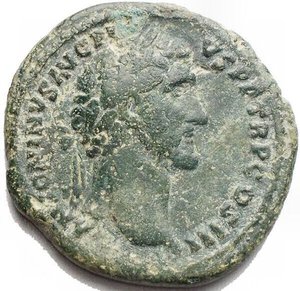
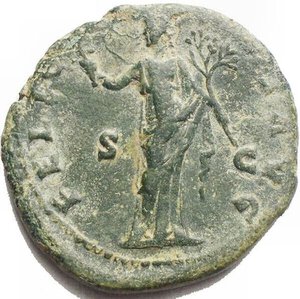
Impero Romano. Antonino Pio (138-161). Asse, ca. 140-144. D/ ANTONINVS AVG PIVS P P TR P COS III. Testa laureata a destra. R/ FELICITAS AVG S-C. Felicitas stante di fronte con il capo volto a sinistra tiene caduceo e ramo. RIC 679. C. 366. AE. g 11,69. mm 27,46. Bel BB+. Splendida patina verde
Lot # 5124
-
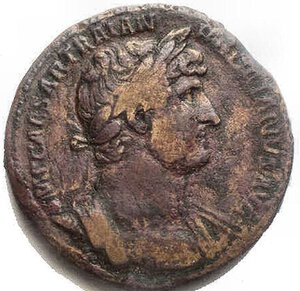
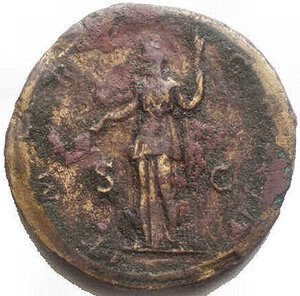
Hadrian Æ Sestertius. Rome, AD 122-125. IMP CAESAR TRAIAN HADRIANVS AVG, laureate, draped and cuirassed bust of Hadrian right / P M TR P COS III, S C across field, Ceres standing facing, head left, holding grain ears and long torch. RIC 610; BMC 1247; Cohen 1075. 22.1g, 34.02mm. aVF
Lot # 5834
-
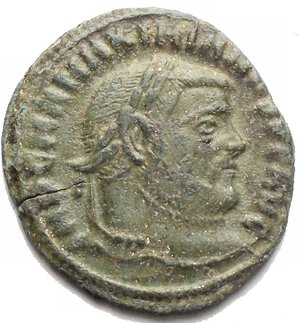
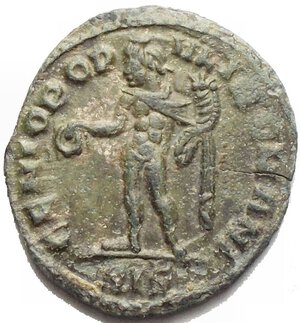
Maximianus Herculius AD 286-305. Siscia Follis Æ 18,67 x 19,77 mm. 2,2 g. d/IMP C MA MAXIMIANVS PF AVG, laureate head right r/ GENIO POPV-L[I] ROMANI, Genius standing left, modius on head, naked except for chlamys over left shoulder, holding patera in right and cornucopiae in left hand; mintmark SIS. Very Fine - nearly extremely fine. Green patinaRIC.146 var.
Lot # 5840
-
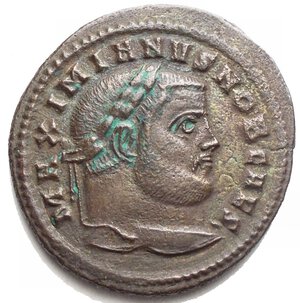
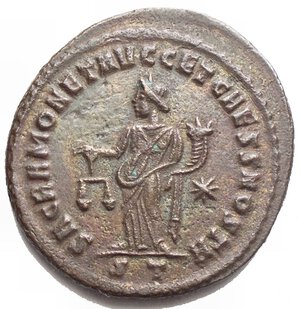
Roman Imperial Galerius, as Caesar, BI Nummus. Ticinum, AD 304-305. MAXIMIANVS NOB CAES, laureate head right / SACRA MONET AVGG ET CAESS NOSTR, Moneta standing left, holding scales and cornucopiae; star in right field, ST in exergue. RIC 48b. 10.22g, 27,9 x 28,9 mmalmost Extremely Fine. Rare.
Lot # 4614
-
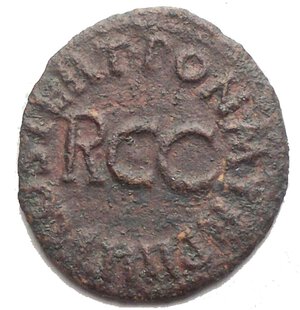
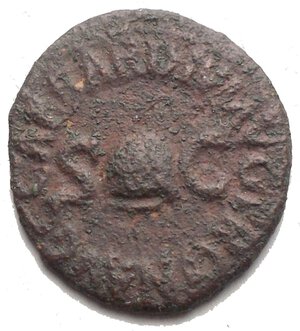
Caligola (37-41 d.c.) Quadrante databile agli anni 39-40 d.C. Zecca Roma - Diritto: pileo tra le lettere S e C, il tutto entro leggenda circolare - Rovescio: RCC entro leggenda circolare - gr. 1,87. mm 16,38 x 17,85
Lot # 5194
-
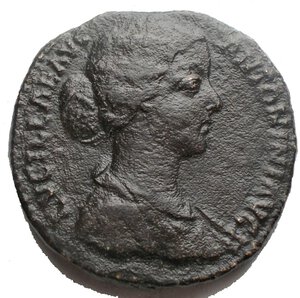
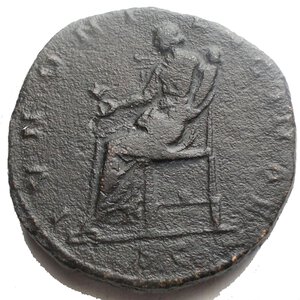
Annia Lucilla Augusta (161-169) Sesterzio 166 Roma Ae mm 29,67. g 23,98 C.37 (8f.) - RIC.1747 - BMC/RE.1154 d/ LVCILLAE AVG ANTONINI AVG F Busto drappeggiato di Lucille a destra con un piccolo chignon legato dietro la testa r/ IVNONI - LVCINAE / SC. Giunone, diademata e drappeggiata, seduta a sinistra, tiene un fiore nella mano destra e un bambino fasciato nella sinistra. Patina scura. qBB
Lot # 5179
-
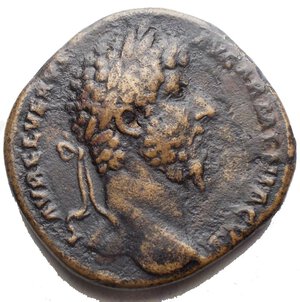
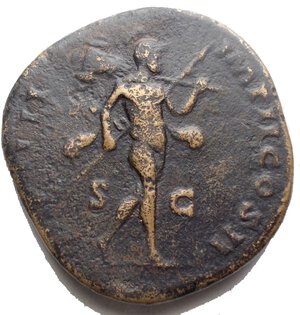
LUCIUS VERUS, (161-169 A.D.) AE sestertius (22.93 g, 32.16 mm) issued A.D. 164 d/ L AVREL VERVS AVG ARMENIACVS laureate head of Lucius Verus to right r/around TR P IIII IMP II COS II / S C Mars helmeted, naked except for cloak, advancing right, holding spear and trophy ( C.227, RIC III 1382). VF
Lot # 1158
-
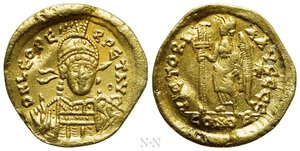
LEO I (457-474). GOLD Solidus. Constantinople. Obv: D N LEO PERPET AVG. Helmeted and cuirassed bust facing slightly right, holding spear and shield decorated with horseman motif.Rev: VICTORIA AVGGG S / CONOB. Victory standing left, holding jeweled cross; star to right.RIC 605; Depeyrot 93/1. Condition: Very fine.Weight: 4.30 g. Diameter: 20 mm.
Lot # 1157
-
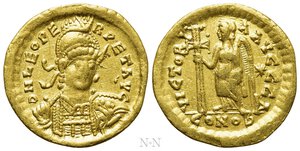
LEO I (457-474). GOLD Solidus. Constantinople. Obv: D N LEO PERPET AVG. Helmeted and cuirassed bust facing slightly right, holding spear and shield decorated with horseman motif.Rev: VICTORIA AVGGG Δ / CONOB. Victory standing left, holding jeweled cross; star to right.RIC 605; Depeyrot 93/1. Condition: Very fine.Weight: 4.37 g. Diameter: 20 mm.
Lot # 1156
-
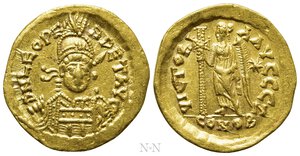
LEO I (457-474). GOLD Solidus. Constantinople. Obv: D N LEO PERPET AVG. Helmeted and cuirassed bust facing slightly right, holding spear and shield decorated with horseman motif.Rev: VICTORIA AVGGG Z / CONOB. Victory standing left, holding jeweled cross; star to right.RIC 605; Depeyrot 93/1. Condition: Good very fine.Weight: 4.52 g. Diameter: 20 mm.
Lot # 1155
-
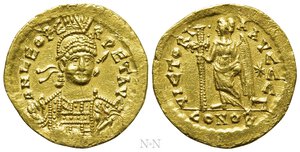
LEO I (457-474). GOLD Solidus. Constantinople. Obv: D N LEO PERPET AVG. Helmeted and cuirassed bust facing slightly right, holding spear and shield decorated with horseman motif.Rev: VICTORIA AVGGG Γ / CONOB. Victory standing left, holding jeweled cross; star to right.RIC 605; Depeyrot 93/1. Condition: Very fine.Weight: 4.47 g. Diameter: 21 mm.
Lot # 1154
-
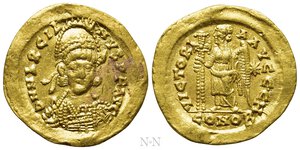
MARCIAN (450-457). GOLD Solidus. Constantinople. Obv: D N MARCIANVS P F AVG. Diademed, helmeted and cuirassed bust facing slightly right, holding spear and shield decorated with horseman.Rev: VICTORIA AVGGG H / CONOB. Victory standing left, holding long jewelled cross; star in right field.RIC 508; Depeyrot 87/1. Condition: Very fine.Weight: 4.34 g. Diameter: 21 mm.
Lot # 1153
-
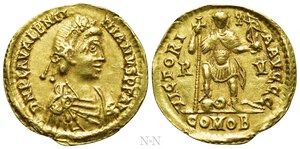
VALENTINIAN III (425-455). GOLD Solidus. Ravenna. Obv: D N PLA VALENTINIANVS P F AVG. Rosette-diademed, draped and cuirassed bust right.Rev: VICTORIA AVGGG / R - V / COMOB. Valentinian standing facing, with foot set upon serpentine human head, holding long cross and crowning Victory on globus.RIC 2018; Ranieri 96; Depeyrot 17/1.Flavius Placidius Valentinianus was born in 419 to Constantius III and Galla Placidia, placed very young on the throne after the death of Honorius, who had left no heir, while the court of Ravenna had chosen Johannes as augustus in an attempt to free itself from the control of the Eastern Empire. Appointed caesar in 424, he was crowned augustus of the West in Rome the following year, but his mother Galla ruled in his stead for more than a decade. Despite her diplomatic prowess Galla Placidia was in trouble when she faced the valiant general Flavius Aetius, who had sided with Johannes and for him gained the support of the Huns. After the defeat of the usurper Galla could not put the general to death, but she put him back to work in the Gauls, where he displayed great military experience and earned the title of 'magister militum'. Flavius Aetius, in fact, found himself in charge of a power greater even than that of the young emperor and his mother, and did his best to contain barbarian pressure on the Rhine and Danube fronts, while he could do nothing against Genseric's Vandals who conquered Carthage. Another serious threat was posed by the Huns who, having renounced tribute from the Eastern Empire under Marcian control, turned to the West: the sister of Valentinian III, Justa Grata Honoria, unwilling to marry the man for whom her family had destined her, sent a plea for help to Attila, in some ways legitimizing his coming to the West. This started a war in Gaul. Aetius prevailed in the battle near the Catalaunian Fields (451) but Attila, although defeated, managed to sack Mediolanum. Here occurred the famous and mysterious meeting with pope Leo I the Great, who succeeded in getting him to desist from an invasion of Italy (453). Attila died shortly afterward, however. The end of Valentinian III's reign came, however, at the hands of his most trusted advisers. Jealous of the power Aetius was gaining, the eunuch Heraclius and the prefect of the praetorium in Rome, Petronius Maximus, persuaded the emperor to get rid of him (454). Without Aetius Valentinian had deprived himself of his own power and was murdered the following year by two assassins sent by Maximus. Condition: Good very fine.Weight: 4.37 g. Diameter: 22 mm.
Lot # 1152
-
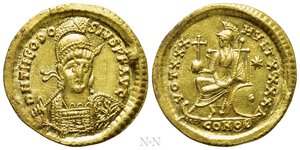
THEODOSIUS II (402-450). GOLD Solidus. Constantinople. Obv: D N THEODOSIVS P F AVG. Helmeted and cuirassed bust facing slightly right, holding spear and shield decorated with horseman motif.Rev: VOT XXX MVLT XXXX Δ / CONOB. Constantinopolis seated left on throne, with foot upon prow, holding globus cruciger and sceptre, and resting elbow upon shield; star to right.RIC 257; Depeyrot 81/1. Condition: Near extremely fine.Weight: 4.47 g. Diameter: 21 mm.
Lot # 1151
-
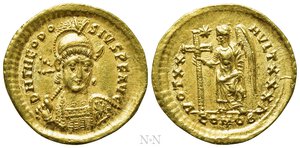
THEODOSIUS II (402-450). GOLD Solidus. Constantinople. Obv: D N THEODOSIVS P F AVG. Helmeted and cuirassed bust facing slightly right, holding spear and shield decorated with horseman motif.Rev: VOT XX MVLT XXX A / CONOB. Victory standing left, holding jeweled cross; star to left.RIC 225; Depeyrot 75/1. Condition: Extremely fine.Weight: 4.41 g. Diameter: 21 mm.
Lot # 1150
-
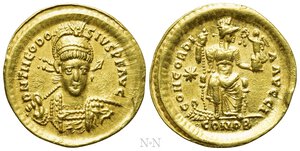
THEODOSIUS II (402-450). GOLD Solidus. Constantinople. Obv: D N THEODOSIVS P F AVG. Helmeted and cuirassed bust facing slightly right, holding spear and shield decorated with horseman motif.Rev: CONCORDIA AVGG I / CONOB. Constantinopolis seated facing on throne, head right, with foot set upon prow and holding sceptre and globus surmounted by crowning Victory; star to left.RIC 202; Depeyrot 73/2. Condition: Extremely fine.Weight: 4.42 g. Diameter: 21 mm.
Lot # 1149
-
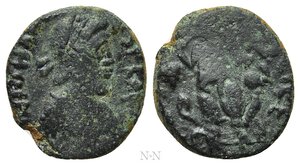
JOHANNES (Usurper, 423-425). Ae Nummus. Rome. Obv: D N IOHANNES P F AVG. Diademed, draped and cuirassed bust right.Rev: SALVS REI PVBLICE / [...]. Victory advancing left, holding trophy and dragging captive; staurogram and Q to left.RIC 1916-7. Condition: Very fine.Weight: 1.42 g. Diameter: 13 mm.
Lot # 1148
-
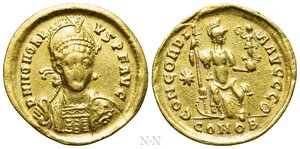
HONORIUS (393-423). GOLD Solidus. Constantinople. Obv: D N HONORIVS P F AVG. Helmeted and cuirassed bust facing slightly right, holding spear and shield decorated with horseman motif.Rev: CONCORDIA AVGGG Θ / CONOB. Constantinopolis seated facing on throne, head right, with foot set upon prow, holding sceptre and victoriola; star to left.RIC 30; Depeyrot 57/2. Condition: Good fine.Weight: 4.33 g. Diameter: 21 mm.
Lot # 1147
-
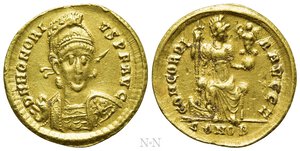
HONORIUS (393-423). GOLD Solidus. Constantinople. Obv: D N HONORIVS P F AVG. Diademed, helmeted and cuirassed bust facing slightly right, holding spear and shield decorated with horseman motif.Rev: CONCORDIA AVGG Z / CONOB. Constantinopolis seated facing on throne, head right, with foot set upon prow, holding sceptre and victoriola.RIC 8; Depeyrot 55/2.Honorius became Augustus of the West at the age of ten at the behest of his father Theodosius I, who was intent on establishing the succession before his death. Given his young age, however, he was assisted by the valiant general Stilicho, who was half Vandal in origin and unlikely to have been aiming for the throne. The East, on the other hand, was entrusted to Honorius's brother Arcadius, and this was home to unrest because the two brothers did not like each other and were both assisted by cunning and manipulative advisers. By now there was no longer talk of a western and eastern part of the empire, but of two separate empires. Theodosius' project of a united empire in solidarity with the barbarian peoples, integrated into the Roman army, had failed. According to some historians Arcadius was the first Byzantine emperor. Stilicho faced great difficulties on the eastern front, mainly due to Alaric's Goths and other tribes crossing into Gaul. The situation precipitated and the Senate refused to pay a large sum of money to Alaric, further accusing Stilicho of conspiring with the enemy and condemning him to death in 408. It was the beginning of the end for the West, because the most valuable politician and general was lost. Honorius resided in Ravenna, where he treacherously attempted to murder Alaric, who was there to renew the 'foedus' with the emperor. This caused him to break off all negotiations and led to the famous 'sack of Rome' in 410, which marked the end of the city as capital. The news of Rome's fall represented a trauma for the empire and the collapse of the certainty of its invincibility. Honorius also did not recognize the marriage between his half-sister Galla Placidia and Ataulf, Alaric's successor. This marriage was strongly desired by the Goths and may have been a response to the crisis in the empire, as Ataulf intended to settle permanently in Roman territories by offering protection to the emperor instead of fighting him. In 413 General Flavius Constantius defeated four usurpers in the western provinces, succeeded in signing a peace treaty with Ataulf, and became associate emperor under the name Constantius III (421) but, unrecognized by the eastern empire, died shortly thereafter. In 423 Honorius also died, marking the final surrender, the birth of the Romano-Barbarian kingdoms and the first steps of medieval history. Condition: Very fine.Weight: 4.46 g. Diameter: 20 mm.
Lot # 1146
-
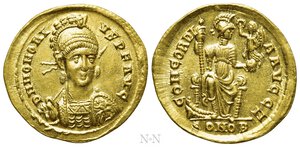
HONORIUS (393-423). GOLD Solidus. Constantinople. Obv: D N HONORIVS P F AVG. Diademed, helmeted and cuirassed bust facing slightly right, holding spear and shield decorated with horseman motif.Rev: CONCORDIA AVGG Z / CONOB. Constantinopolis seated facing on throne, head right, with foot set upon prow, holding sceptre and victoriola.RIC 8; Depeyrot 55/2.Honorius became Augustus of the West at the age of ten at the behest of his father Theodosius I, who was intent on establishing the succession before his death. Given his young age, however, he was assisted by the valiant general Stilicho, who was half Vandal in origin and unlikely to have been aiming for the throne. The East, on the other hand, was entrusted to Honorius's brother Arcadius, and this was home to unrest because the two brothers did not like each other and were both assisted by cunning and manipulative advisers. By now there was no longer talk of a western and eastern part of the empire, but of two separate empires. Theodosius' project of a united empire in solidarity with the barbarian peoples, integrated into the Roman army, had failed. According to some historians Arcadius was the first Byzantine emperor. Stilicho faced great difficulties on the eastern front, mainly due to Alaric's Goths and other tribes crossing into Gaul. The situation precipitated and the Senate refused to pay a large sum of money to Alaric, further accusing Stilicho of conspiring with the enemy and condemning him to death in 408. It was the beginning of the end for the West, because the most valuable politician and general was lost. Honorius resided in Ravenna, where he treacherously attempted to murder Alaric, who was there to renew the 'foedus' with the emperor. This caused him to break off all negotiations and led to the famous 'sack of Rome' in 410, which marked the end of the city as capital. The news of Rome's fall represented a trauma for the empire and the collapse of the certainty of its invincibility. Honorius also did not recognize the marriage between his half-sister Galla Placidia and Ataulf, Alaric's successor. This marriage was strongly desired by the Goths and may have been a response to the crisis in the empire, as Ataulf intended to settle permanently in Roman territories by offering protection to the emperor instead of fighting him. In 413 General Flavius Constantius defeated four usurpers in the western provinces, succeeded in signing a peace treaty with Ataulf, and became associate emperor under the name Constantius III (421) but, unrecognized by the eastern empire, died shortly thereafter. In 423 Honorius also died, marking the final surrender, the birth of the Romano-Barbarian kingdoms and the first steps of medieval history. Condition: Very fine.Weight: 4.46 g. Diameter: 21 mm.
Lot # 1145
-
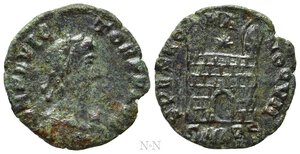
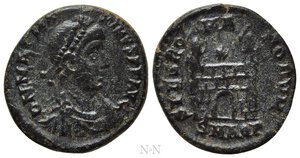
FLAVIUS VICTOR (387-388). Ae. Aquileia. Obv: D N FL VICTOR P F AVG. Diademed, draped and cuirassed bust right.Rev: SPES ROMANORVM / SMAQS. Camp gate with two turrets; star above.RIC 55b.2. Condition: Good very fine.Weight: 1.00 g. Diameter: 14 mm.
Lot # 1144
-
MAGNUS MAXIMUS (383-388). Ae. Aquileia. Obv: D N MAG MAXIMVS P F AVG. Diademed, draped and cuirassed bust right.Rev: SPES ROMANORVM / SMAQP. Camp gate, with open door and two towers; star above.RIC 55a.1. Condition: Very fine.Weight: 1.30 g. Diameter: 14 mm.
Lot # 1143
-
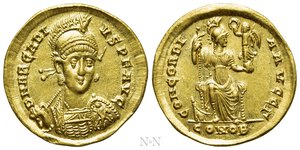
ARCADIUS (383-408). GOLD Solidus. Constantinople. Obv: D N ARCADIVS P F AVG. Helmeted and cuirassed bust facing slightly right, holding spear and shield decorated with horseman motif.Rev: CONCORDIA AVGG Γ / CONOB. Constantinopolis seated facing on throne, head right, with foot set upon prow, holding sceptre and victoriola.RIC 7; Depeyrot 55/1.The eldest son of Theodosius I from Spain, Arcadius became augustus at the age of six. When his father left to end the usurpation of Eugenius and did not return, Arcadius remained in Constantinople in his stead and became augustus of the East at eighteen, while his brother Honorius got the West. The empire was now divided, Theodosius I was first seen as the unifier and then as the one who divided it forever. From this time on, the two empires had independent lives and slowly became more and more distinct from each other, and Arcadius was recognized as the first Byzantine emperor. Initially Arcadius reigned under his patron Rufinus, an ambitious politician from Aquitaine who frowned upon his equivalent in the West, Stilicho. The latter made a secret agreement with the Visigoth leader Gainas, who had been welcomed to Constantinople by Arcadius, and killed Rufinus. Stilicho thus prevailed in this dispute but was sentenced to death in 408, accused among other things of the murder of Rufinus himself. His place was then taken by the eunuch Eutropius, remembered in the sources as a cruel and vicious man. Eutropius tried to forge an alliance with Alaric, who now hold the balance of power between East and West. By putting his opponents to death and confiscating their wealth, he succeeded in getting Stilicho declared a public enemy and bring Africa under the control of the East in order to secure its grain, bringing the West to its knees and starving it. In any case, Arcadius was persuaded by the court to get Eutropius, who was in fact acting as the real emperor, out of the way and hit with damnatio memoriae as well. In his place was chosen Gainas himself, the Visigoth leader, who, however, was short-lived. The anti-barbarian mood that was fueled by influential figures, such as Patriarch John Chrysostom, resulted in a revolt in Constantinople against the Goths and, therefore, also against Gainas, and led to a massacre of the barbarians and the escape of their leader. At this point the reins of the empire were taken over by the emperor's wife, Aelia Eudoxia, as Arcadius proved incapable of governing. Aelia pushed Alaric to invade the West, receiving in turn fierce criticism from the patriarch and the hatred of much of the people. However, she died in 404 from an abortion, while Arcadius died of illness four years later. Condition: Good very fine.Weight: 4.49 g. Diameter: 20 mm.
Lot # 1142
-
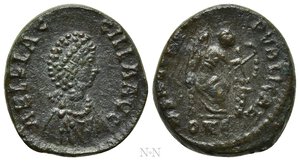
AELIA FLACCILLA (Augusta, 379-386/8). Ae. Constantinople. Obv: AEL FLACCILLA AVG. Diademed and draped bust right.Rev: SALVS REI PVBLICAE / CONЄ. Victory seated right on chair, inscribing Christogram upon shield set upon short column to right.RIC 61.3. Condition: Extremely fine.Weight: 1.50 g. Diameter: 13 mm.
Lot # 1141
-
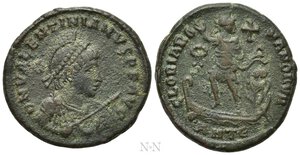
VALENTINIAN II (375-392). Ae. Antioch. Obv: D N VALENTINIANVS P F AVG. Helmeted, diademed, draped and cuirassed bust right, holding shield and spear.Rev: GLORIA ROMANORVM / (wreath) - (cross) / ANTЄ. Valentinian standing left in galley left, head right, raising hand; to right, Victory rowing.RIC 40b.3. Condition: Good very fine.Weight: 6.43 g. Diameter: 23 mm.
Lot # 1140
-
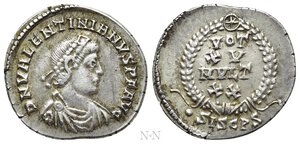
VALENTINIAN II (375-392). Siliqua. Siscia. Obv: D N VALENTINIANVS P F AVG. Diademed, draped and cuirassed bust right.Rev: VOT/XV/MVLT/XX in four lines within wreath; •SISCPS.RIC 19c var. (mintmark). Condition: Very fine.Weight: 2.30 g. Diameter: 17 mm.
Lot # 1139
-
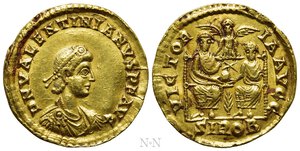
VALENTINIAN II (375-392). GOLD Solidus. Sirmium. Obv: D N VALENTINIANVS P F AVG. Pearl-diademed, draped and cuirassed bust right.Rev: VICTORIA AVGG / SIROB. Two emperors seated facing on double throne, holding globus between them; behind and between, Victory standing front with outspread wings, palm frond below.RIC 9b (R3); Depeyrot 28/2.RareWith old collector's ticket Condition: Very fine.Weight: 4.45 g. Diameter: 21 mm.
Expressive Portrait
Lot # 1138
-
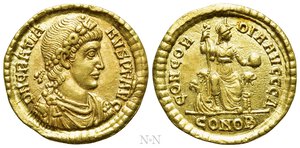
GRATIAN (367-383). Gold Solidus. Constantinople. Obv: D N GRATIANVS P F AVG. Rosette-diademed, draped and cuirassed bust right.Rev: CONCORDIA AVGGG Δ / CONOB. Constantinopolis seated facing, head right, on lion throne, foot on prow, holding sceptre and globe.RIC 45a.2; Depeyrot 32/1. Condition: Extremely fine.Weight: 4.46 g. Diameter: 20 mm.
Lot # 1137
-
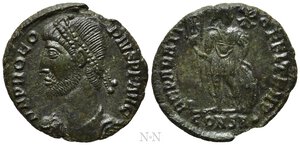
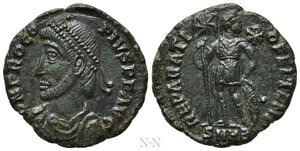
PROCOPIUS (365-366). Follis. Constantinople. Obv: D N PROCOPIVS P F AVG. Diademed, draped and cuirassed bust left.Rev: REPARATIO FEL TEMP / CONSA•. Procopius standing left, head right, holding labarum and resting hand upon shield; christogram to upper right; unidentified object to lower left.RIC 17a.3. Condition: Extremely fine.Weight: 2.83 g. Diameter: 20 mm.
Lot # 1136
-
PROCOPIUS (365-366). Follis. Heraclea. Obv: D N PROCOPIVS P F AVG. Diademed, draped and cuirassed bust left.Rev: REPARATIO FEL TEMP / SMHB. Procopius standing facing, head right, holding labarum and resting hand upon shield; pellet to right, Chi-Rho to upper right.RIC 7.6. Condition: Extremely fine.Weight: 2.89 g. Diameter: 18 mm.
Lot # 1135
-
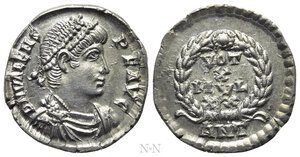
VALENS (364-378). Siliqua. Antioch. Obv: D N VALENS P F AVG. Pearl-diademed, draped and cuirassed bust right.Rev: VOT / X / MVL / XX / ANT. Legend in four lines within wreath.RIC 33c. Condition: Near mint state.Weight: 2.18 g. Diameter: 18 mm.
Results from 19651 to 19700 of 32902