Roman Imperial Coins
Results from 20351 to 20400 of 32599
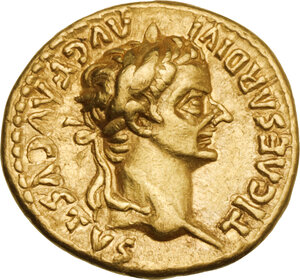
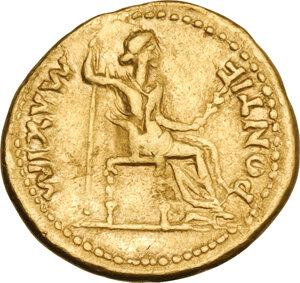
Lot # 520
-
Tiberius (14-37). AV Aureus 'Tribute Penny' type. Lugdunum mint, 36-37 AD. Obv. TI CAESAR DIVI AVG F AVGVSTVS. Laureate head right. Rev. PONTIF MΛXIM. Livia (as Pax) seated right on chair, feet on footstool, holding sceptre and olive branch. RIC I (2nd ed.) 29; SNG BN 22-7; Calicò 305 b. AV. 7.66 g. 19.5 mm. R. Rare and choice, with delicate tone. Good VF/VF.
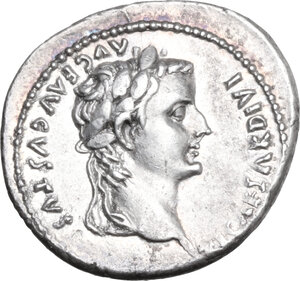
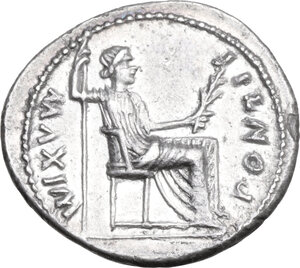
Lot # 519
-
Tiberius (14-37). AR Denarius 'Tribute Penny' type. Lugdunum mint, 36-37. Obv. TI CAESAR DIVI AVG F AVGVSTVS. Laureate head right. Rev. PONTIF MΛXIM. Livia as Pax, seated right, holding reversed spear and olive branch. RIC I (2nd ed.) 26. AR. 3.64 g. 20 mm. Choice example, struck on broad flan. Nicely toned. EF. The tribute penny was the coin that was shown to Jesus when he made his famous speech 'Render unto Caesar the things that are Caesar's, and unto God the things that are God's.' The phrase comes from the King James Version of the gospel account: Jesus is asked, 'Is it lawful to give tribute to Caesar, or not?' (Mark 12:14) and he replies, 'bring me a penny, that I may see it' (Mark 12:15).
Spintria
Lot # 518
-
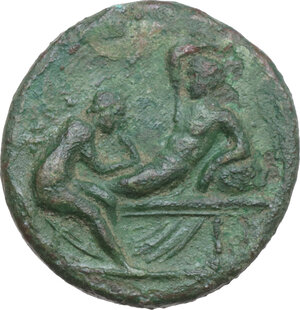
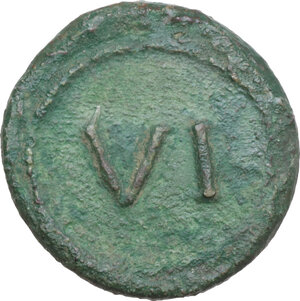
Time of Tiberius. AE Spintria, c. 22-37. Obv. Scene of fellatio by a heterosexual couple. Rev. Numeral VI within pelleted circle. Simonetta-Riva 15/A; Buttrey 6; Campana, serie 14. 5.21 g. 21 mm. RR. Artificially adjusted patina with subtle pigment enhancement. A rare and intriguing issue, displaying precise centering and well-executed strike. Good VF. Spintriae were small, token-like objects used in the Roman Empire, typically made of bronze or brass, featuring erotic imagery on one side and a numeral (usually I to XVI) on the other. Their exact function remains debated; while some scholars suggest they served as brothel tokens or vouchers, others propose they were gaming pieces or objects of private amusement. Their standardized design and widespread discovery, particularly in Pompeii, indicate a structured purpose within Roman society, offering insight into the empire's attitudes toward sexuality and commerce.
Lot # 517
-
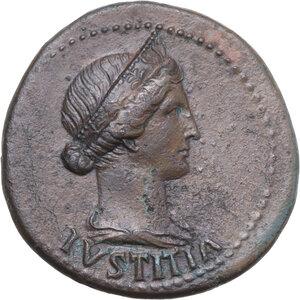
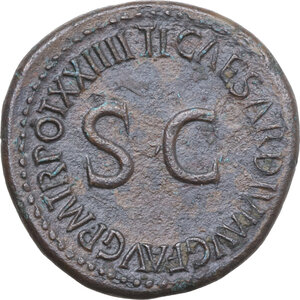
Livia, wife of Augustus (died 29 AD). AE As. Struck under Tiberius, 22-23. Obv. Diademed and draped bust of Livia (as Justitia) right; IVSTITIA below. Rev. TI CAESAR DIVI AVG F AVG PM TR POT XXIIII around large SC. RIC I (2nd ed.) (Tib.) 46. AE. 13.1 g. 30.5 mm. R. Rare and superb example, with enchanting brown patina. Delicate and detailed portrait of Livia. About EF.
Lot # 516
-
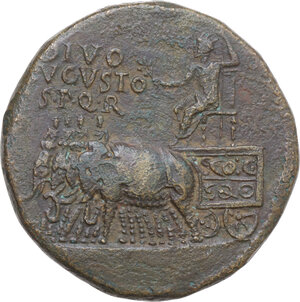
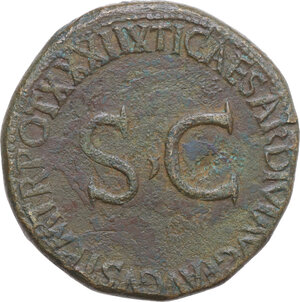
Divus Augustus (died 14 AD). AE Sestertius. Struck under Tiberius, 36 AD. Obv. DIVO/AVGVSTO/SPQR. Funeral car bearing enthroned statue of Divus Augustus, drawn left by four elephants. Rev. TI CAESAR DIVI AVG F AVGVST PM TR POT XXXIIX around large SC. RIC I (2nd ed.) (Tib.) 68. AE. 28.08 g. 34 mm. R. Rare and good example, with delicate green patina. Slightly rough surfaces and minor traces of tooling.. Good VF.
Lot # 515
-
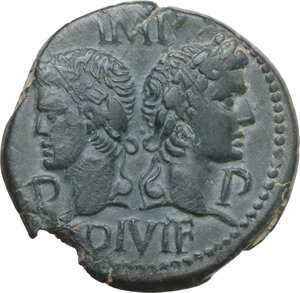
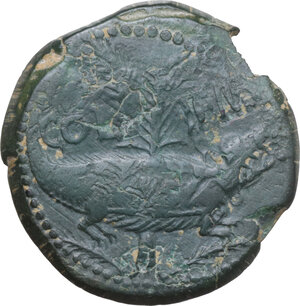
Augustus (27 BC - 14 AD) with Agrippa. AE As, Nemausus mint, c. 10-14 AD. Obv. Heads of Agrippa, wearing combined rostral crown and laurel wreath, to left and Augustus, laureate, to right, back to back; IMP above, DIVI F below, P P across field. Rev. Crocodile right, chained to palm tree; above, wreath with long ties; COL NEM across field. RIC I (2nd ed.) 159; RPC I 525. AE. 11.93 g. 27 mm. A handsome example. Lovely dark olive green patina. Light graffiti as usual, and a die swift on reverse. Chipped edge. Good VF/About EF. This coin type was first issued to commemorate Augustus’ establishment of the colony Colonia Augusta Nemausus in southern Gaul in 27 BC. However, this particular example comes from a later reissue, struck two years after Agrippa’s death. The presence of P P (Pater Patriae) on the obverse indicates it was minted after Augustus received this title in 2 BC, confirming it as a subsequent emission of the well-known 'crocodile dupondius.'.
Lot # 514
-
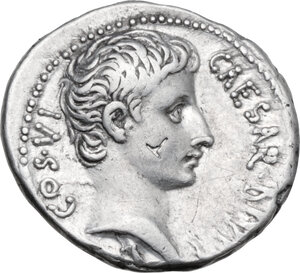
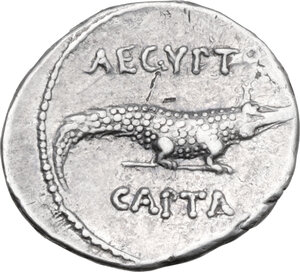
Augustus (27 BC - 14 AD). AR Denarius, 28 BC. Uncertain mint (Pergamum ?). Obv. CAESAR DIVI F COS VI. Bare head right, small capricorn below. Rev. Crocodile right; AEGVPTO above, CAPTA below. RIC I (2nd ed.) 545. AR. 3.84 g. 20.5 mm. RRR. Very rare and in excellent condition for issue. Brilliant, lightly toned and with a hint of iridescence. Rare as such. Small banker's marks on both sides. Good VF. This fascinating issue records the subjugation of Egypt after the battle of Actium and the death of Marcus Antonius and Cleopatra.
Lot # 513
-
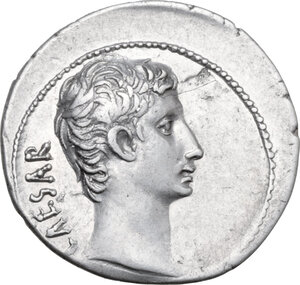
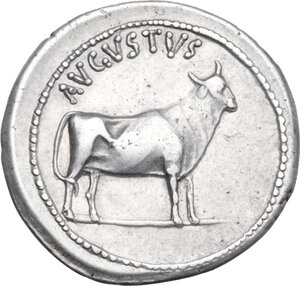
Augustus (27 BC - 14 AD). AR Denarius, 21-20 BC. Obv. CAESAR. Bare head right. Rev. AVGVSTVS. Young bull standing right, head erect. RIC I (2nd ed.) 475. AR. 3.77 g. 20 mm. RR. Very rare. Superb example, struck on broad flan. Lightly toned, with bright fields. Minor metal flaw on obverse. About EF/EF. The animal depicted has been identified by some authors as a heifer, while others describe it as a cow. The horns and the thick, pleated neck are more characteristic of a bull. The two main deities honored at Samos were Hera and Poseidon ταυρεος. Augustus stayed in Samos between the winter of 21 and the winter of 20 BC. For information regarding these coins, see C.H. Sutherland, 'The Attribution of Augustan Denarii to the Types of the Temple, the Crown, and the Young Bull,' in RN (1974), pp. 58-62.
Lot # 512
-
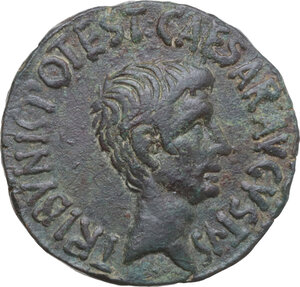
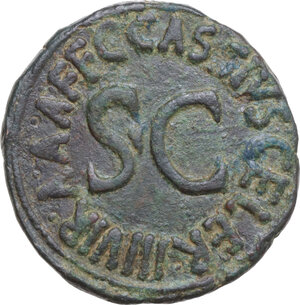
Augustus (27 BC - 14 AD) . AE As, Rome mint. C. Cassius Celer, moneyer. Struck 16 BC. Obv. CAESAR AVGVSTVS TRIBVNIC POTEST. Bare head right. Rev. C CASSIVS C F CELER IIIVIR A A A F F, around S C. RIC I (2nd ed.) 376. AE. 11.44 g. 28.5 mm. Well centred and choice. Enchanting brown and green patina. About EF.
Lot # 511
-
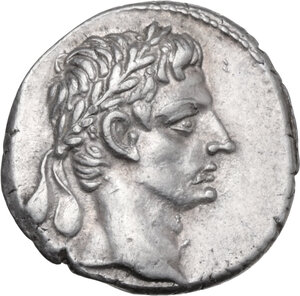
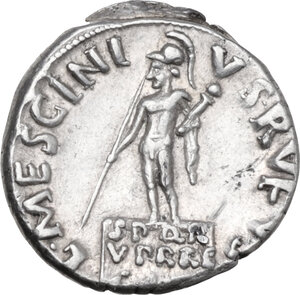
Augustus (27 BC - 14 AD). AR Denarius, L. Mescinius Rufus, moneyer, 16 BC. Obv. Laureate head right. Rev. L. MESCINIVS RVFVS. Mars, helmeted and cloaked, holding spear and parazonium, standing l. on pedestal inscribed S P Q R / V PR RE / CAES. RIC I (2nd ed.) 351; C. 463. AR. 4.04 g. 18.5 mm. RR. Very rare and well centred. Enchanting tone, with golden hues. Impressive bold portrait. EF.
Lot # 510
-
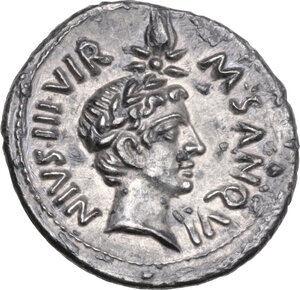
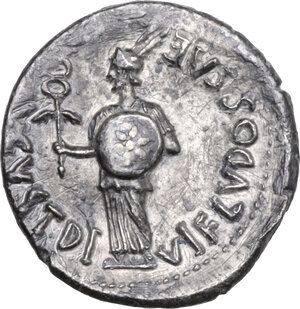
Augustus (27 BC - 14 AD). AR Denarius, 17 BC. Coinage of M. Sanquinius. Obv. M SANQVINIVS•III•VIR. Youthful and laureate head of Divus Julius Caesar to right; above, comet star. Rev. AVGVST•DIVI F LVDOS•SAE. Herald of the secular games, in long robe and feathered helmet, standing left, holding winged caduceus in his right hand and round shield decorated with six-pointed star in his left. RIC I (2nd ed.) 340; C. 6. AR. 3.72 g. 20.5 mm. RR. Very rare and fascinating issue. Lightly toned, with underlying luster. Cleaning marks. About EF. A fascinating and historically intriguing issue. The comet immortalized by the magistrate M. Sanquinius on the reverse of this denarius, struck during the Secular Games of 17 BC, is the so called “Comet of Caesar” (Sidus Iulium or Caesaris astrum : numerical designation C/-43k1) widely considered the most famous of antiquity; this comet shone in the skies of Rome following the assassination of Julius Caesar and was interpreted by Romans as a sign of the deification of the dictator. Suetonius (Divus Julius, 88) writes : (Julius Caesar) 'periit sexto et quinquagensimo aetatis anno atque in deorum numerum relatus est, non ore modo decernentium sed et persuasione volgi. Siquidem ludis, quos primos consecratos ei heres Augustus edebat, stella crinita per septem continuos dies fulsit exoriens circa undecimam horam, creditumque est animam esse Caesaris in caelum recepti; et hac de causa simulacro eius in vertice additur stella'. (He died in the fifty-sixth year of his age, and was ranked amongst the Gods, not only by a formal decree, but in the belief of the populace. For during the first games which Augustus, his heir, consecrated to his memory, a comet blazed for seven days, rising always about eleventh hour (five pm o'clock); and it was credited to be the soul of Caesar, now received into heaven: for which reason he is, likewise, represented on his statue with a star on his brow) Many centuries later, Shakespeare may also have made oblique reference to it in the play Julius Caesar. However Shakespeare was mistaken about the time of its appareance or he took artistic license with history, as he had the comet appearing prior to Caesar's murder. In fact, in the second scene of Act II, Caesar's wife, Calpurnia, warns her husband of a portentous event which she interprets as an ill omen for him.
Lot # 509
-
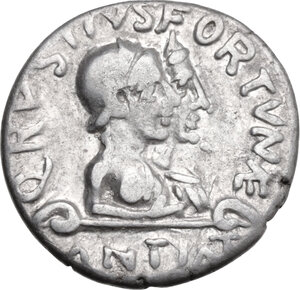
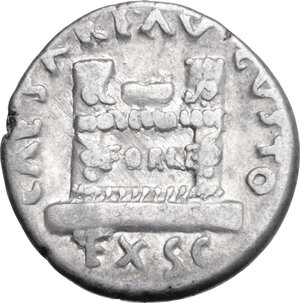
Augustus (27 BC-14 AD). AR Denarius. Q. Rustius moneyer, c. 19-16 BC. Obv. Q. RVSTIVS FORTVNAE ANTIAT. Conjoined busts of Fortuna Victrix and Fortuna Feliz right, on base between two rams heads. Rev. CAESARI AVGVSTO EX SC. Ornamented rectangular altar inscribed FOR RE. RIC I (2nd ed.) 322. AR. 3.79 g. 18.5 mm. RR. Very rare and good example. Well centred and lightly toned. VF. It was to the goddess Fortuna that Augustus attributed his successes, and also his recovery from his frequent illnesses. She was worshipped under two aspects, as Fortuna Victrix and Fortuna Felix, hence receiving the name of Fortuna Antiates. (RSC I,p.158, 513 note). The altar celebrating Augustus' return from the East, 19th October 19, was decreed by the Senate and dedicate on 15th December of the same year. (I.Vecchi,Nummorum Auctiones 9, 1997, 90 note).
Lot # 508
-
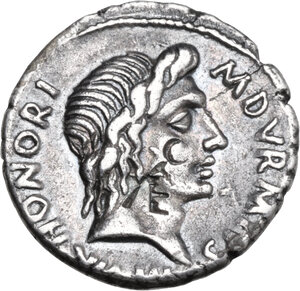
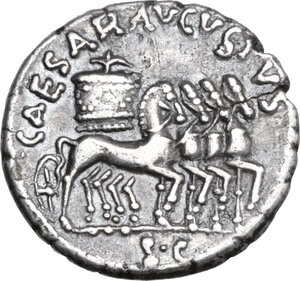
Augustus (27 BC - 14 AD). AR Denarius, M. Durmius moneyer, 18 BC. Obv. M. DVRMIVS III VIR HONORI. Head of Honos right. Rev. CAESAR AVGVSTVS. Slow quadriga right pulling modius shaped car, on top of which three corn ears; in exergue, SC. RIC I (2nd ed.) 313; C. 429. AR. 3.67 g. 18.5 mm. RR. Very rare and choice, sound metal. Perfectly centred, with pleasant tone. Bankers's marks on obverse, hairline flancrack. Good VF.
Lot # 507
-
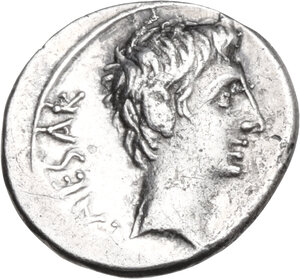
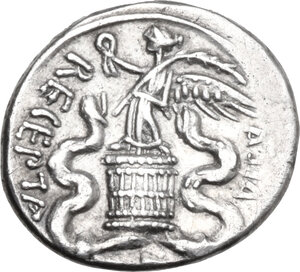
Augustus (27 BC - 14 AD). AR Quinarius, uncertain mint, 29-26 BC. Obv. CAESAR IMP VII. Bare head right. Rev. ASIA RECEPTA. Victory, draped, standing left, holding wreath in right hand and palm in left, on cista mystica between two snakes. RIC I (2nd ed.) 276. AR. 1.73 g. 15 mm. Choice example, lightly toned. Slightly porous surface on obverse and light weak strike areas. Nice example lightly toned. Good VF.
Lot # 506
-
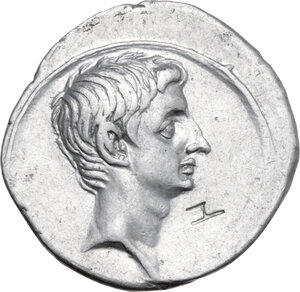
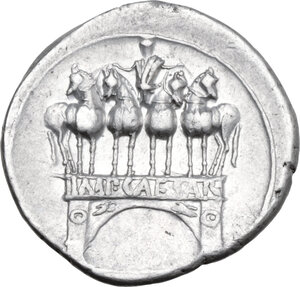
Augustus (27 BC - 14 AD). AR Denarius, 29-27 BC. Obv. Bare head right. Rev. IMP•CAESAR upon architrave of triumphal arch, the Actian arch in the Forum Romanum. RIC I (2nd ed.) 267; C. 125. AR. 3.78 g. 20 mm. R. Rare and choice, with bold portrait. Lightly toned. Banker's mark on obverse. EF.
Lot # 505
-
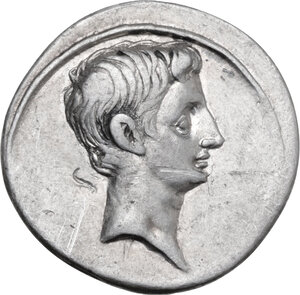
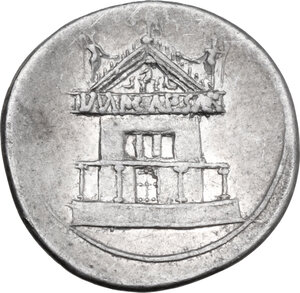
Augustus (27 BC - 14 AD). AR Denarius, Italian (Rome?) mint., 29-27 BC. Obv. Bare head right. Rev. Facade of the Roman Curia with a tetrastyle porch; IMP CAESAR on the architrave; figure seated between animals, vis-à-vis, in pediment; Victory standing facing on globe, holding wreath and vexillum, on apex of roof; statues, each holding a parazonium and sceptre, standing at each end of architrave. RIC I (2nd ed.) 266; C. 122. AR. 3.81 g. 20 mm. R. A superb example, sharply struck on a broad flan. Well centered. Lovely iridescent cabinet tone. Banker's mark on obverse and a light scuff. Good VF/About EF. For a long time, this structure was mistakenly believed to be the temple dedicated to the deified Julius Caesar. However, modern research has now definitively identified it as the Curia Julia, the Senate house initiated by Julius Caesar shortly before his assassination in 44 BC. The construction was later completed and officially dedicated by his adopted son Octavian (the future Emperor Augustus) on August 28, 29 BC. This building served as a political center of the Roman Republic, reflecting Caesar's ambitious plans for reform and Octavian's eventual consolidation of power.
Lot # 504
-
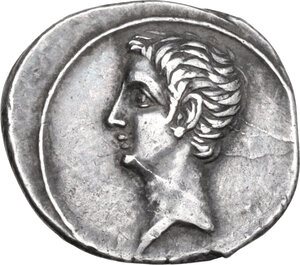
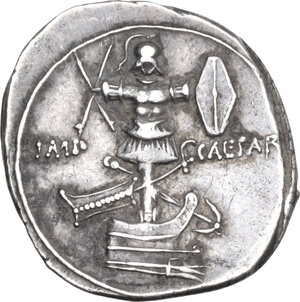
Augustus (27 BC - 14 AD). AR Denarius, Italian (Rome?) mint, 29-27 BC. Obv. Bare head left. Rev. Naval and military trophy facing, composed of helmet, cuirass, shield, and crossed spears, set on prow of galley right; crossed rudder and anchor at base. RIC I (2nd ed.) 265b. AR. 3.84 g. 21 mm. R. Well centred and choice, with attractive cabinet tone and minor blackish deposits. About EF.
Lot # 503
-
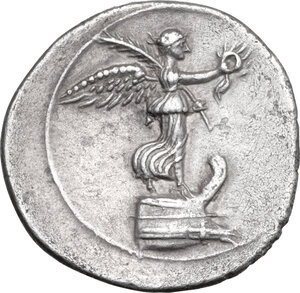
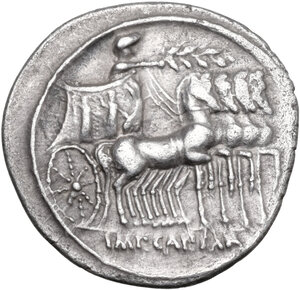
Augustus (27 BC - 14 AD) . AR Denarius, Italian (Rome?) mint. Obv. Victory, draped, standing right on prow, holding palm frond over left shoulder in left hand and wreath in extended right hand. Rev. Octavian driving triumphal quadriga right, the car ornamented with figures on its front and side panels, holding reins in left hand and branch in right; IMP CAESAR in exergue. RIC I (2nd ed.) 264; C. 115. AR. 3.53 g. 21 mm. R. Choice example of this fascinating issue, well centred. Good VF/About EF. This coin commemorates Octavian’s fresh victory at Actium. The obverse, showing Victory standing on a prow, is reminiscent of the type featured on the coins of Demetrius Poliorcetes, and reflects the manner of Octavian’s victory. The reverse displays Octavian as the victor, involved in the triumphal procession in Rome, which wended its way from the Forum to the Temple of Jupiter Optimus Maximus. This victory, however, was portrayed as being over the foreign queen Cleopatra, rather than Antony and those Romans who supported him. (Triton XI, 2008, 649 note).
Lot # 502
-
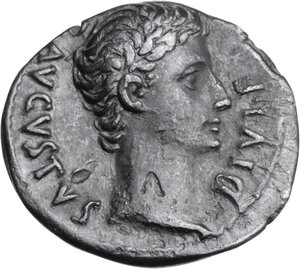
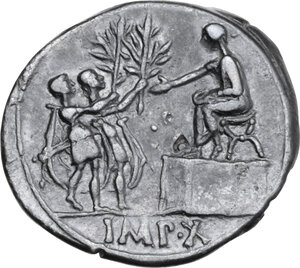
Augustus (27 BC - 14 AD). AR Denarius. Lugdunum (Lyon) mint. Struck 15 BC. Obv. AVGVSTVS DIVI F. Bare head right. Rev. Augustus seated left on curule chair set on daïs, extending hand toward two soldiers, each carrying parazonium and presenting laurel branches; in exergue, IMP X. RIC I (2nd ed.) 165a. AR. 3.73 g. 20 mm. R. Choice example with impressive dark tone, perfectly centred. Banker's marks. Good VF.
Lot # 501
-
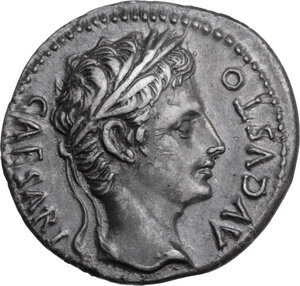
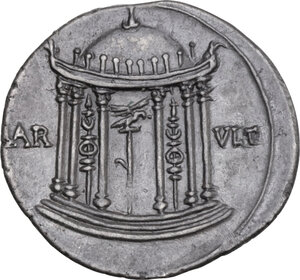
Augustus (27 BC - 14 AD). AR Denarius. Spanish mint, (Colonia Patricia?), c. 18 BC. Obv. CAESARI AVGVSTO. Laureate head right. Rev. MAR - VLT. Temple of Mars Ultor containing aquila flanked by two signa. RIC I (2nd ed.) 105a; C. 190. AR. 3.83 g. 20.5 mm. R. Faint marks on obverse. An impressive example with enchanting tone. Well centred and very attractive. EF/Good EF.
Lot # 5270
-
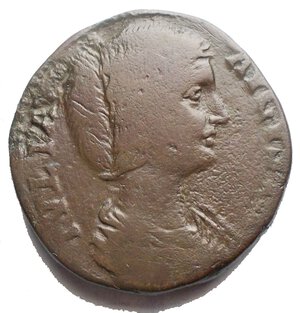
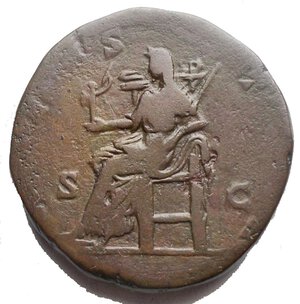
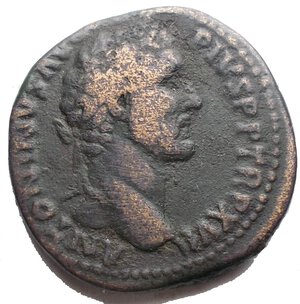
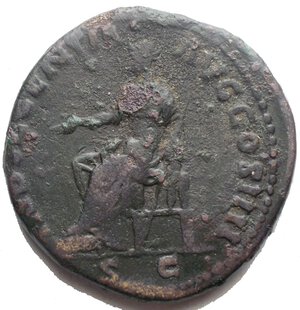
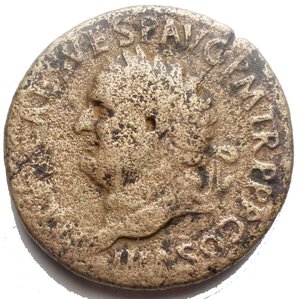
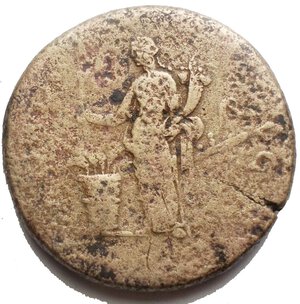
Giulia Domna, moglie di Settimio Severo (Augusta, 193-217 d.C.). Sesterzio AE (28,1 x 28,5 mm, 23,01 g). Roma, 196-211 d.C. IVLIA-AVGVSTA, busto drappeggiato di Giulia Domna a destra, capelli ondulati e legati dietro la testa in un ampio chignon / VE-S-TA, Vesta in trono a sinistra, palladio nella mano destra, scettro nella sinistra; S-C attraverso i campi. RIC IV, Parte I, 867 (Settimio Severo).
Lot # 5774
-
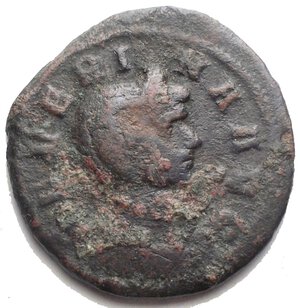
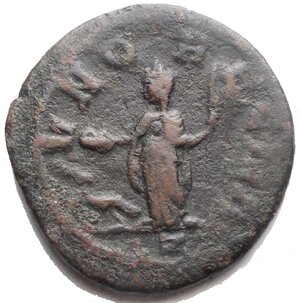
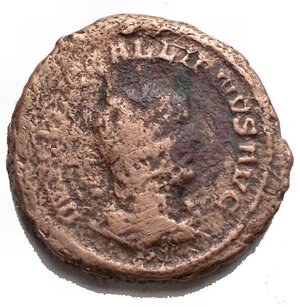
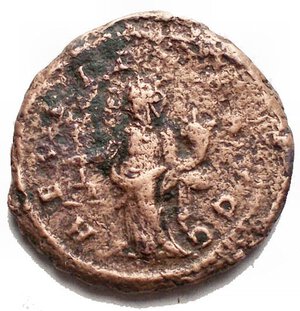
Gallienus Æ As. Antioch, AD 253-4. IMP C P LIC GALLIENVS AVG, laureate, draped and cuirassed bust right / AEQVITAS AVGG, Aequitas standing left, holding scales and cornucopiae. RIC 462; MIR 36, 1558. 9.65g, 26.3mm. F/aVF. Rare
Lot # 5968
-
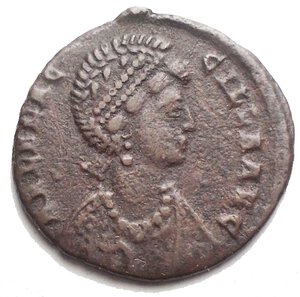
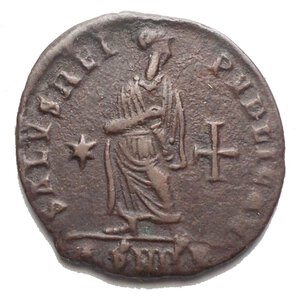
AELIA FLACCILLA (+386) moglie di Teodosio I, madre di Arcadio e Onorio - Augusta (383-386) Maiorina pecunia o nummo. mm 22,16. g 3.67 d/ AEL FLAC CILLA AVG. Busto diademato e drappeggiato di Aelia Flaccilla a destra, vista di tre quarti in avanti, con orecchini e collana. r/ SALVS REI - PVBLICAE Flaccilla in piedi, rivolta in avanti, con la testa girata verso destra e le braccia incrociate sul petto. BB+
Aelia Flacilla, non comparirà nella monetazione prima del 383, dopo la scomparsa di Graziano. In effetti, è possibile che le officine orientali abbiano operato prima di questa data, in particolare a Costantinopoli. Ricevette il titolo di Augusta con l'elevazione di Arcadio e morì nel 386.
Lot # 5932
-
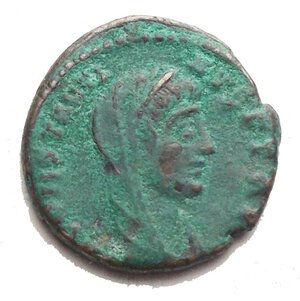
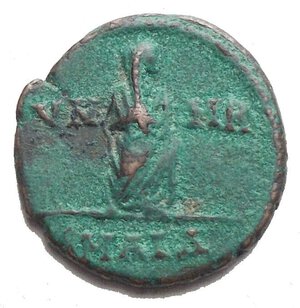
Constantius II. A.D. 337-361. AE 4 centenionalis (15.5 mm, 2.23 g). posthumous commemorative for Divus Constantine I (Died A.D. 337). d/ Veiled head of Constantine I right / VN - MR, dedication in fields to left and right of Constantine, veiled and togate standing facing, head right VF, untouched green patina
Lot # 5890
-
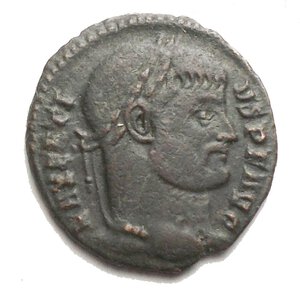
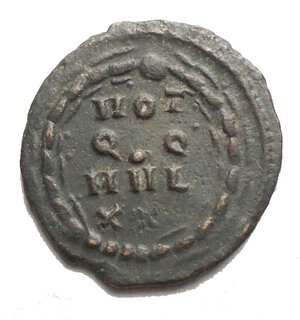
Maxentius (307-312). Æ Quarter Follis (15.98 mm, 1.94g). Rome, 310-2. Laureate head r. R/ VOT/QQ/MVL/XX within wreath. Dark green patina. VF/Good VF
Lot # 5892
-
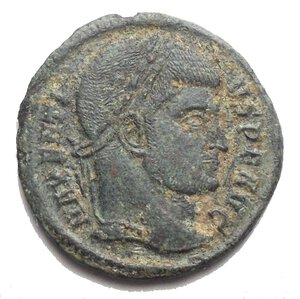
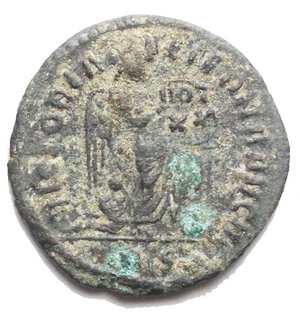
Maxentius (307-312 AD) Rome AE Half Follis (20.24 mm, 2.86g) Obv: MAXENTIVS P F AVG. Laureate head right. Rev: VICTORIA AETERNA AVG N Victory standing right, inscribing shield with VOT/ XX in two lines and set upon pillar; to left, captive seated left. RIC 227 var. Untouched green patina
Lot # 5894
-
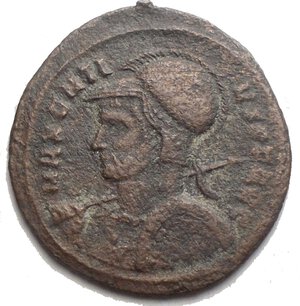
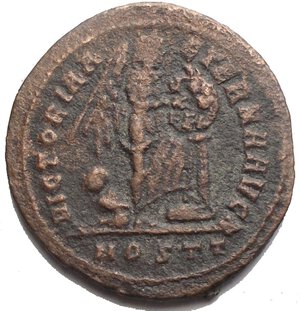
MASSENZIO Mezzo-follis o mezzo-nummus 310 d.C. Ostia Ae mm 20,6. g 3.06 Rarità: R3 Legenda dritto: MAXENTI-VS P F AVG Busto di Massenzio, elmato e corazzato, visto di tre quarti in avanti, a sinistra, con lancia trasversale nella mano destra e scudo nella sinistra Legenda inversa: VICTORIA - AETERNA AVG N/ VOT/XV/FEL// MOSTT Vittoria drappeggiata, in piedi a destra, con le ali spiegate, che appoggia il piede destro su un cippo e sostiene uno scudo posto su una colonna; dietro, un prigioniero seduto a sinistra, girato a sinistra, mani legate dietro la schiena
Lot # 5978
-
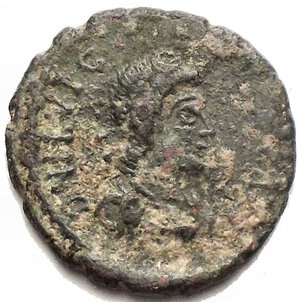
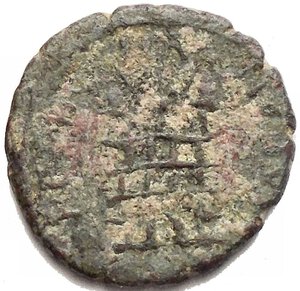
Flavius Victor. AD 387-388. Æ (13.7mm, 1.23 g). Pearl-diademed, draped, and cuirassed bust right / Camp gate with two turrets; star above; untoched
Lot # 4766
-
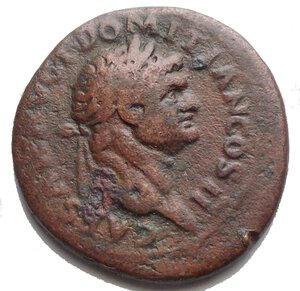
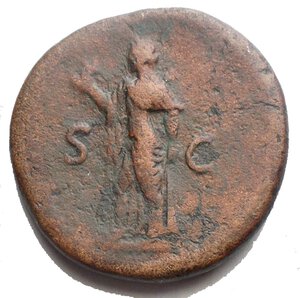
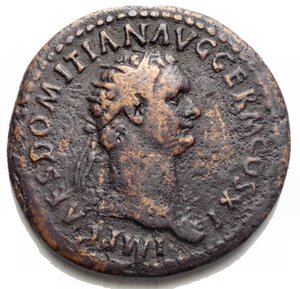
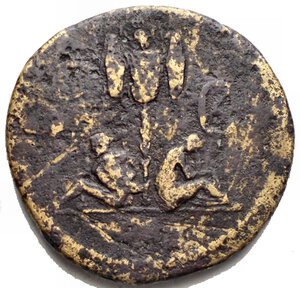
ROMAN EMPIRE. DOMITIANUS, Augustus 81-96. AE-Dupondius (85) g 12.43. mm 28.75 head with aegis and crown d/ IMP CAES DOMITIAN AVG GERM COS XI r / S - C Tropaeum between seated Germania n.r. and German prisoners n.l. . RIC 266, new 295, BMC 310, C. 539. . brown patina, VF - a VF
Lot # 5898
-
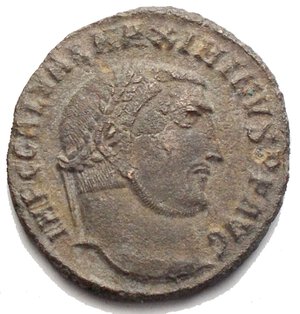
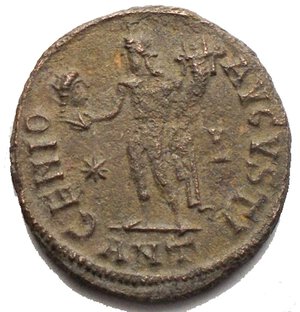
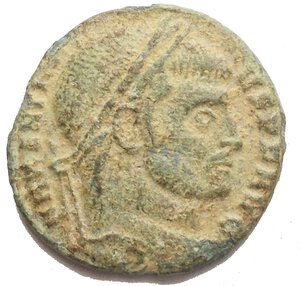
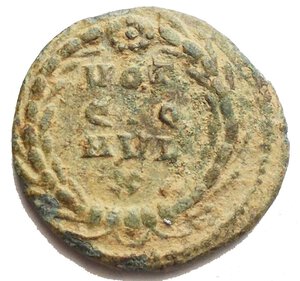
Maximinus Daia Antioch, 312 AD. Æ follis, 4,48 gr. IMP C GAL VAL MAXIMINVS P F AVG laureate head of Maximinus Daia right / GENIO AVGVSTI Genius standing left, with head of Sol and cornucopiae; in fields: * Δ; in exergue: ANT. RIC 164b.
Lot # 5893
-
Maxentius (307-312). Æ Quarter Follis (15.84 mm, 1.84g). Rome, 310-2. Laureate head r. R/ VOT/QQ/MVL/X within wreath. RIC VI 281a. Good patina. Good VF
Lot # 5780
-
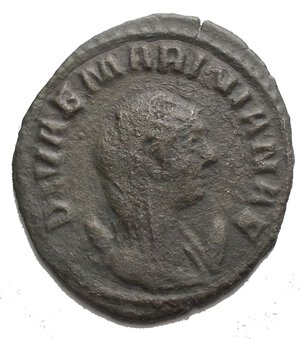
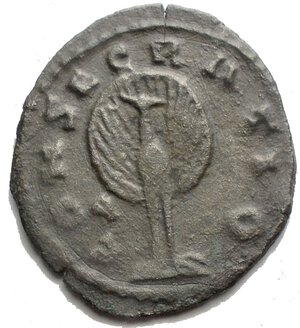
MARINIANA 257-258 Antoninianus Rome mm 20.3 x 22.6. g 2.71. R2 d/DIVAE MARINIANAE Veiled and draped bust of Mariniane facing right, resting on a crescent r/ CONSECRATIO Peacock showing its tail, head turned left RCV.10067 ($250) - MIR.36/217 b (1 ex.) - RIC.4 - C.6
Lot # 5951
-
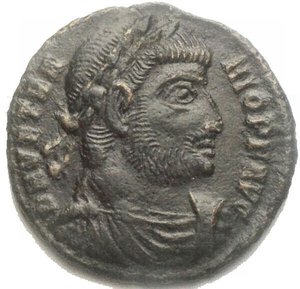
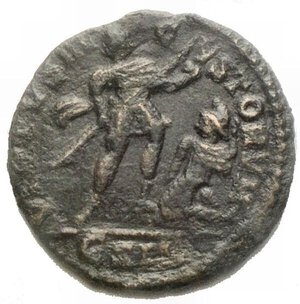
Vetranio. 350 d.C. AE 18.3 mm. Siscia. D/ DN VETRANIO PF AVG. Busto laureato, drappeggiato e corazzato a destra. Dietro, A. R/ VIRTVS AVGVSTORVM. L'imperatore stante verso destra armato ai suoi piedi un nemico. Zecca Sciscia. Peso 2,21 gr. Diametro BB- qBB. R.
Lot # 1026
-
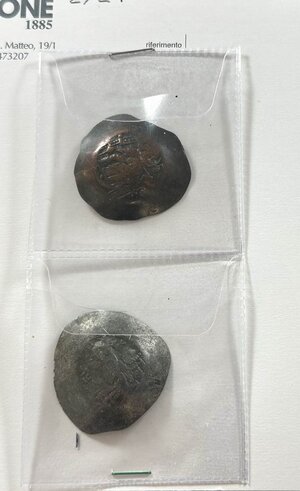
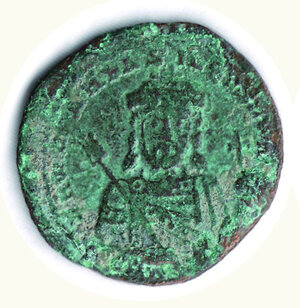
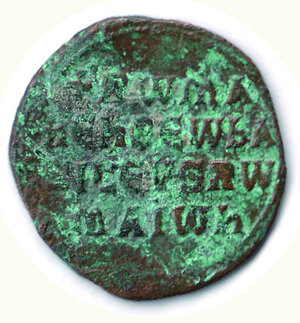
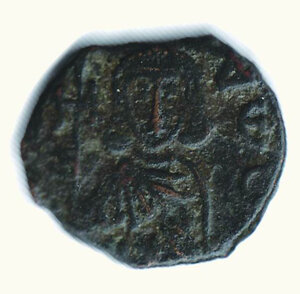
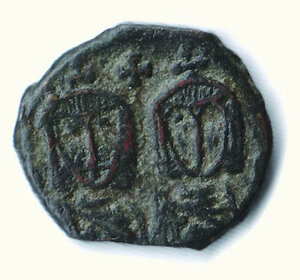
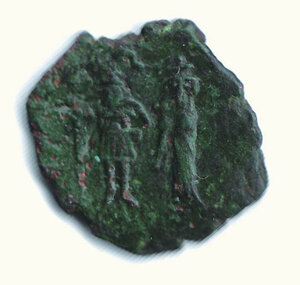
TEOFILO (con Michele II e Costantino) (829-842) - Follis (ridotto) - Zecca di Siracusa (?) - Ratto 1837. Ae MB
Lot # 1025
-
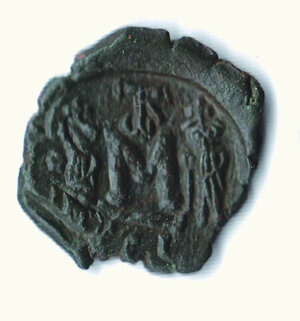
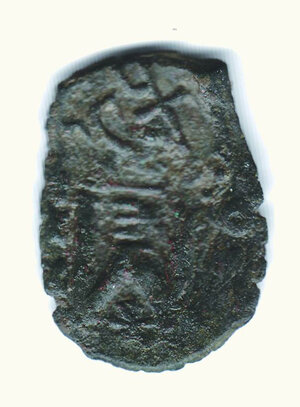
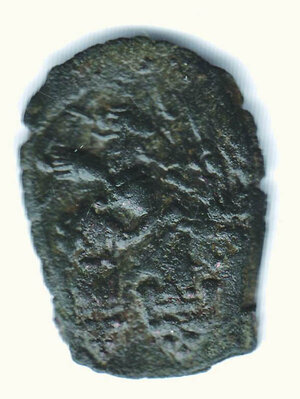
COSTANTE II con COSTANTINO IV (659-668) - 40 Numm per Siracusa; D/ I due imperatori stanti; R/ Eraclio e Tiberio tra M e monogramma, sotto, SCL - Patina verde - Sphir 159. Ae MB/BB+
Lot # 1024
-
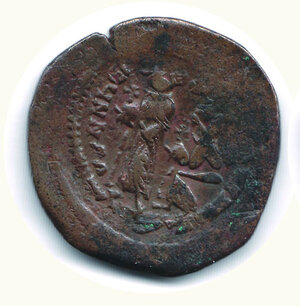
ERACLIO con E. COSTANTINO (610-641) - Follis con contromarca per Siracusa - g. 4,7 - Sphar 54. Ae MB
Lot # 1023
-
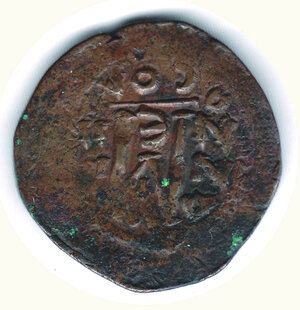
ERACLIO e ERACLIO COSTANTINO (613-630) - Follis A.III - Zecca di Costantinopoli - Ribattuto su altro Follis (Maurizio Tiberio?) - diam. 34 mm. - Ratto sin. 1400. NC Ae MB/q.BB
Lot # 1021
-
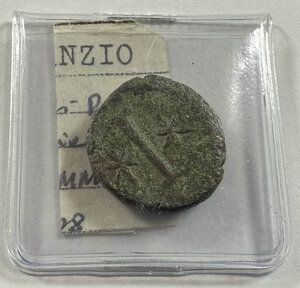
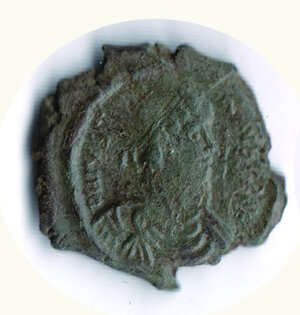
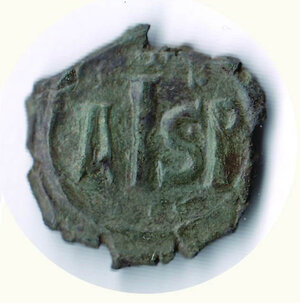
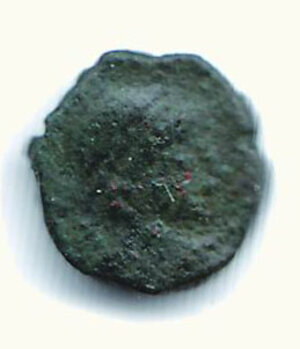
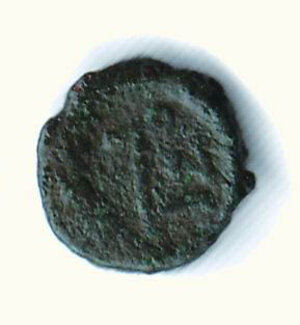
GIUSTINIANO (527-565) - 16 Nummi per Tessalonica - Patina verde - Sabatier 179. Ae MB/q.BB
Lot # 1020
-
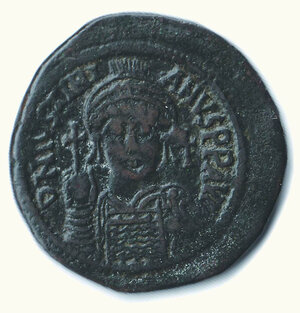
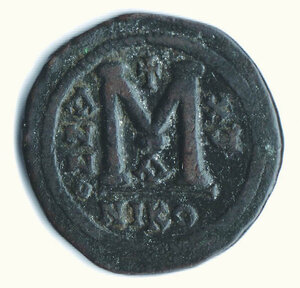
GIUSTINIANO I (527-565) - Follis - Anno XVI - Zecca di Nicomedia - Ratto 590 var. Ae BB+
Lot # 1018
-
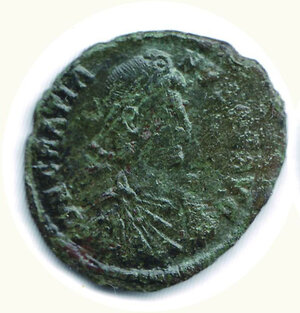
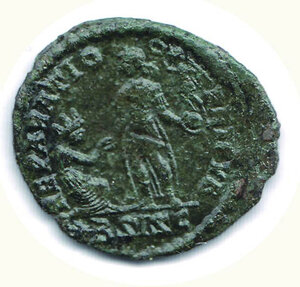
ROMA - IMPERO - Graziano - Maiorina "Reparatio rei pub"- Sciscia AD 379/383 - Sear 20008. Ae q.BB
Lot # 1016
-
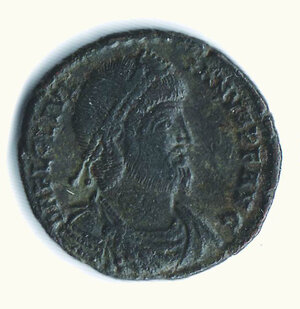
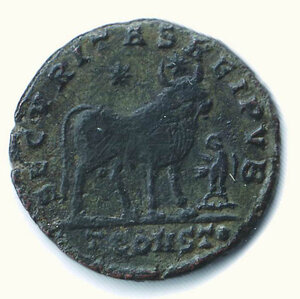
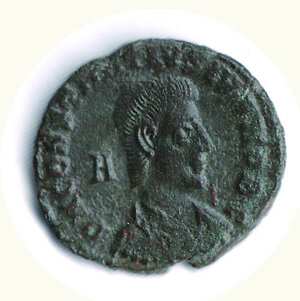
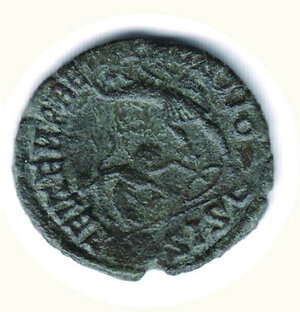
ROMA - IMPERO - Costanzo Gallo - Maiorina "Fel temp reparatio" - Sciscia AD 351/353 - Sear 18969. R Ae q.SPL/BB
Results from 20351 to 20400 of 32599