Info & contatti
Le mie offerte
Lotti osservati
Condizioni di vendita
Prezzi di spedizione
Metodi di pagamento
Esito stampabile
Sessione Live 20/7/2025 15:00:00 CET
Celtic (1-6)
Greek (7-192)
Roman Provincial (193-217)
Roman Republic (218-233)
Roman Empire (234-274)
Byzantine (275-285)
Seals and Tesserae (286-301)
Austria (302-302)
Croatia (303-303)
France (304-304)
Germany (305-306)
Hungary (307-327)
Italy (328-355)
Netherlands (356-356)
Poland (357-357)
Russia (358-358)
USA (359-360)
French Medals (361-362)
Papal Medals (363-370)
Bourbon Medals (371-373)
Italian Medals (374-377)
Large Lots (378-389)
Study Forgeries (390-400)
Antiquities (401-410)

Risultati: 10
Lotto n. 401
-
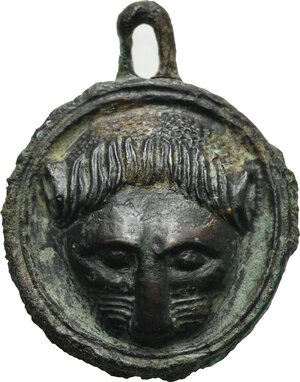
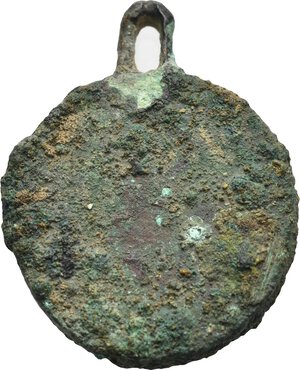
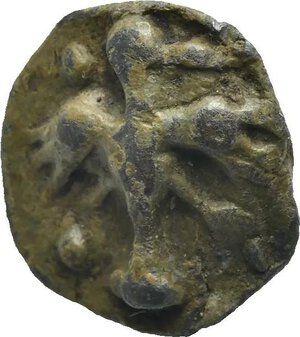
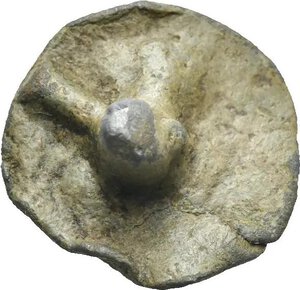
Magna Graecia applique element with a facing lion mask. Circa 4th-3rd centuries BC (Bronze, 35.14 x 44.97 mm, 43.98 g). Professionally restored—with some minor tooling—on the obverse, while the reverse retains its original patina with deposits. It features the same iconography as the coinage of Rhegion.
Lotto n. 402
-
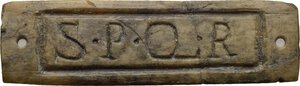
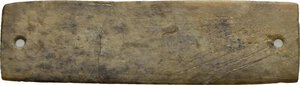
Roman tag marked "S P Q R". Circa 1st - 3rd centuries AD (Bone, 57.96 x 16.51 mm). Two small nail holes at sides indicate it was meant to be affixed. Fractured and repaired.
Lotto n. 403
-
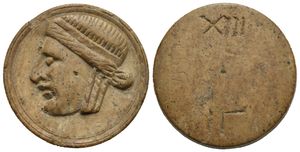
Roman Theater Admission Token. Circa 1st - 3rd centuries AD (Bone, 30.34 mm, 4.45 g). Tragic mask facing left. Rev. Blank, with graffiti: XIII above and IΓ below - likely indicating row and seat number. Nicely patinated. Fascinating piece. Very Rare.
Lotto n. 404
-
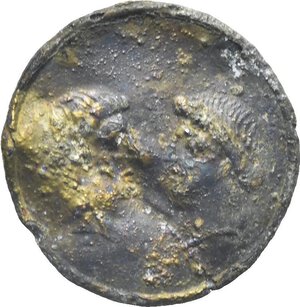
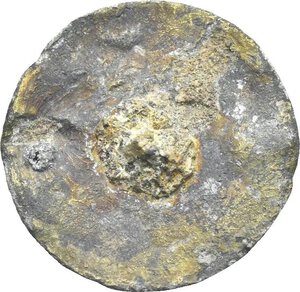
Roman Military Bronze Button with the Portraits of Mark Antony and Octavia. Circa 40 BC. (21.23 mm, 2.36 g). River patina with deposits. Very Rare.
Lotto n. 405
-
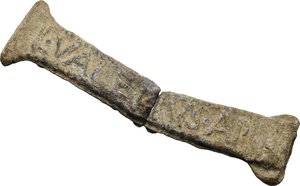
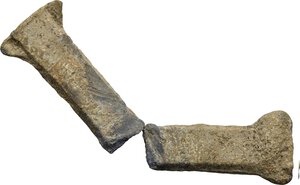
Roman handle of a lead lamp holder, inscribed with the producer's name: L VALERIVS APO(...). Circa 1st - 2nd centuries AD. Cf. G. Baratta, "Porta-lucerne in piombo: considerazioni sulla classe di materiale alla luce degli esemplari iscritti", in G. Baratta (ed.), Instrumenta inscripta VIII. Plumbum litteratum. Studia epigraphica Giovanni Mennella oblata (Armariolum 3), Rome 2021, pp. 261-276. (7.0 x 1.7 cm). Originally ring-shaped, later unfolded, resulting in the break of the central section.
Lotto n. 406
-
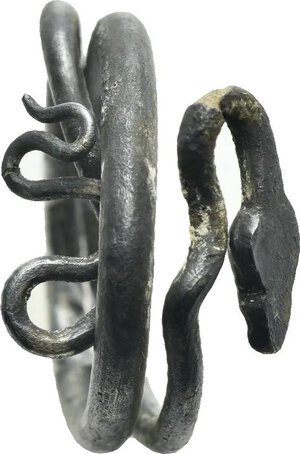
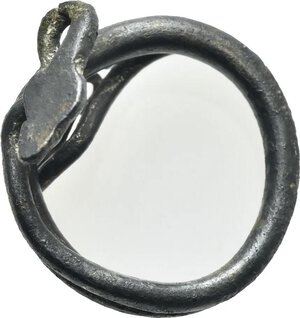
Roman silver ring in the shape of a coiled snake. Circa 3rd - 2nd centuries BC. (inner diam. 2.0 cm). Crystallized object, snake's head twisted and fragile.
Lotto n. 407
-
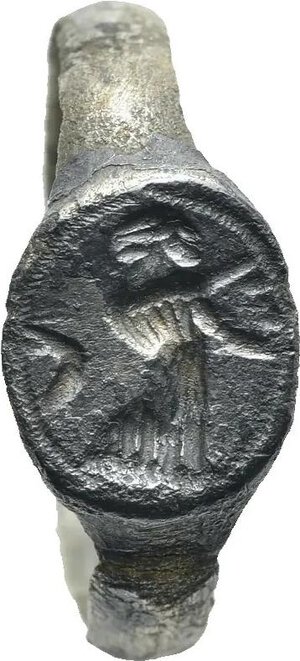
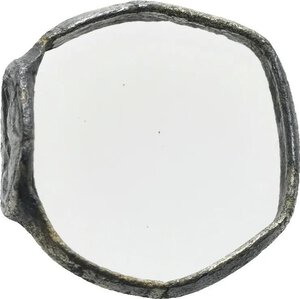
Roman silver ring featuring a woman and a crescent (?). Circa 2nd century BC. (inner diam. 1.8 cm). Deformed and crystallized rod, with a surface crack on one side extending toward the bezel.
Lotto n. 408
-
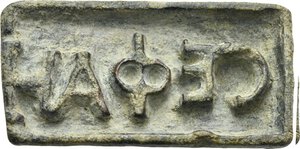
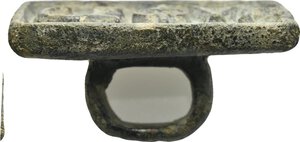
Byzantine Bronze Bread Stamp, with high handle. Circa 4th - 7th centuries (5.4 x 2.7 cm). CEΦAH (retrograde), name in relief set in deep incuse. Attractive and natural green patina.
The name “CEΦAH” is of Aramaic origin, derived from the Jewish/Aramaic word Kepha (כֵּיפָא), meaning “rock.” It corresponds to Cephas, the original Semitic name of Saint Peter in the New Testament. Its presence on a Byzantine bread stamp reflects the multicultural and multilingual environment of the Eastern Roman Empire, where Semitic names were often rendered in Greek script. It may refer either to a person named Cephas or to a religious invocation linked to Saint Peter.
Lotto n. 410
-
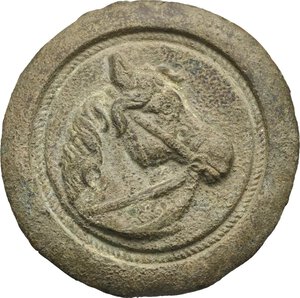
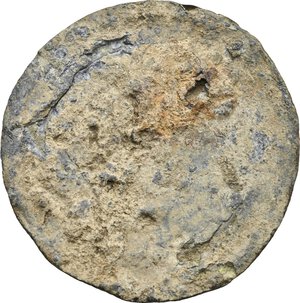
Modern large stud with bridled horse head. After the antique (Bronze and lead, 57.02 mm, 46.71 g). Two iron pins covered by lead.
Caricamento altri risultati...