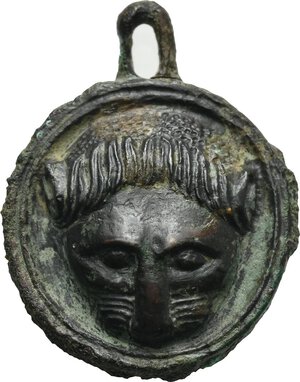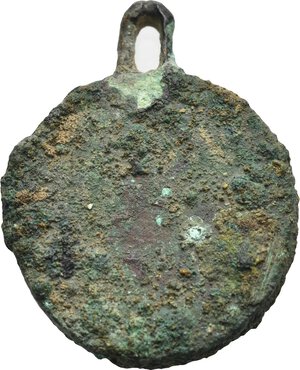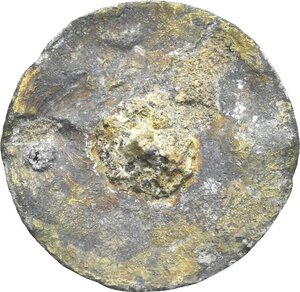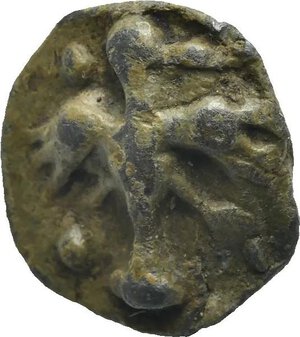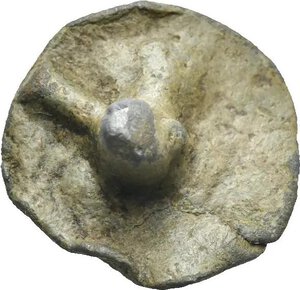
Magna Graecia applique element with a facing lion mask. Circa 4th-3rd centuries BC (Bronze, 35.14 x 44.97 mm, 43.98 g). Professionally restored—with some minor tooling—on the obverse, while the reverse retains its original patina with deposits. It features the same iconography as the coinage of Rhegion. - Magna Graecia applique element with a facing lion mask. Circa 4th-3rd centuries BC (Bronze, 35.14 x 44.97 mm, 43.98 g). Professionally restored—with some minor tooling—on the obverse, while the reverse retains its original patina with deposits. It features the same iconography as the coinage of Rhegion.
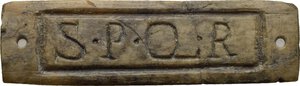
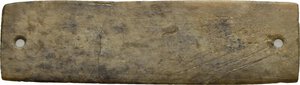
Roman tag marked "S P Q R". Circa 1st - 3rd centuries AD (Bone, 57.96 x 16.51 mm). Two small nail holes at sides indicate it was meant to be affixed. Fractured and repaired. - Roman tag marked "S P Q R". Circa 1st - 3rd centuries AD (Bone, 57.96 x 16.51 mm). Two small nail holes at sides indicate it was meant to be affixed. Fractured and repaired.
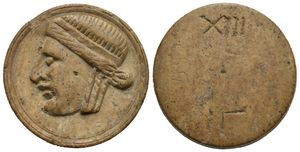
Roman Theater Admission Token. Circa 1st - 3rd centuries AD (Bone, 30.34 mm, 4.45 g). Tragic mask facing left. Rev. Blank, with graffiti: XIII above and IΓ below - likely indicating row and seat number. Nicely patinated. Fascinating piece. Very Rare. - Roman Theater Admission Token. Circa 1st - 3rd centuries AD (Bone, 30.34 mm, 4.45 g). Tragic mask facing left. Rev. Blank, with graffiti: XIII above and IΓ below - likely indicating row and seat number. Nicely patinated. Fascinating piece. Very Rare.
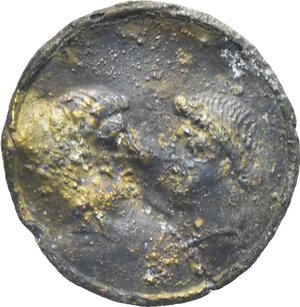
Roman Military Bronze Button with the Portraits of Mark Antony and Octavia. Circa 40 BC. (21.23 mm, 2.36 g). River patina with deposits. Very Rare. - Roman Military Bronze Button with the Portraits of Mark Antony and Octavia. Circa 40 BC. (21.23 mm, 2.36 g). River patina with deposits. Very Rare.
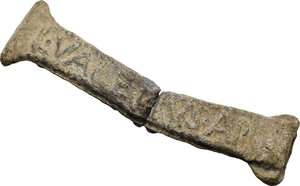
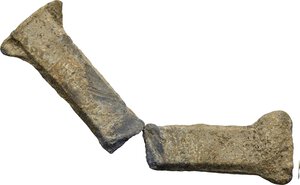
Roman handle of a lead lamp holder, inscribed with the producer's name: L VALERIVS APO(...). Circa 1st - 2nd centuries AD. Cf. G. Baratta, "Porta-lucerne in piombo: considerazioni sulla classe di materiale alla luce degli esemplari iscritti", in G. Baratta (ed.), Instrumenta inscripta VIII. Plumbum litteratum. Studia epigraphica Giovanni Mennella oblata (Armariolum 3), Rome 2021, pp. 261-276. (7.0 x 1.7 cm). Originally ring-shaped, later unfolded, resulting in the break of the central section. - Roman handle of a lead lamp holder, inscribed with the producer's name: L VALERIVS APO(...). Circa 1st - 2nd centuries AD. Cf. G. Baratta, "Porta-lucerne in piombo: considerazioni sulla classe di materiale alla luce degli esemplari iscritti", in G. Baratta (ed.), Instrumenta inscripta VIII. Plumbum litteratum. Studia epigraphica Giovanni Mennella oblata (Armariolum 3), Rome 2021, pp. 261-276. (7.0 x 1.7 cm). Originally ring-shaped, later unfolded, resulting in the break of the central section.
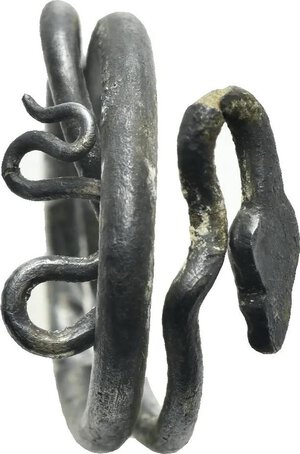
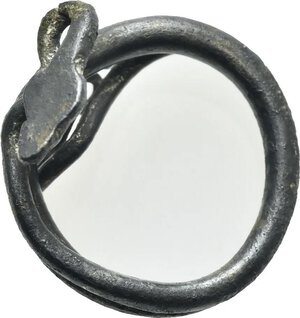
Roman silver ring in the shape of a coiled snake. Circa 3rd - 2nd centuries BC. (inner diam. 2.0 cm). Crystallized object, snake's head twisted and fragile. - Roman silver ring in the shape of a coiled snake. Circa 3rd - 2nd centuries BC. (inner diam. 2.0 cm). Crystallized object, snake's head twisted and fragile.
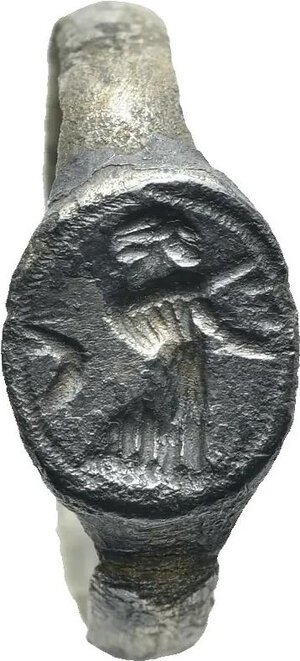
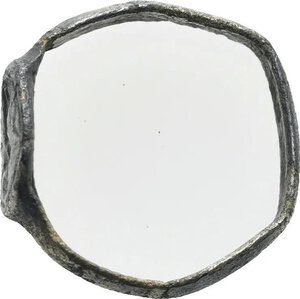
Roman silver ring featuring a woman and a crescent (?). Circa 2nd century BC. (inner diam. 1.8 cm). Deformed and crystallized rod, with a surface crack on one side extending toward the bezel. - Roman silver ring featuring a woman and a crescent (?). Circa 2nd century BC. (inner diam. 1.8 cm). Deformed and crystallized rod, with a surface crack on one side extending toward the bezel.
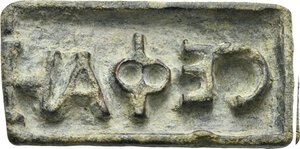
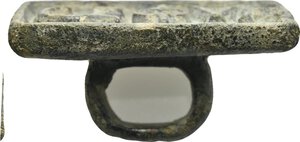
Byzantine Bronze Bread Stamp, with high handle. Circa 4th - 7th centuries (5.4 x 2.7 cm). CEΦAH (retrograde), name in relief set in deep incuse. Attractive and natural green patina.
The name “CEΦAH” is of Aramaic origin, derived from the Jewish/Aramaic word Kepha (כֵּיפָא), meaning “rock.” It corresponds to Cephas, the original Semitic name of Saint Peter in the New Testament. Its presence on a Byzantine bread stamp reflects the multicultural and multilingual environment of the Eastern Roman Empire, where Semitic names were often rendered in Greek script. It may refer either to a person named Cephas or to a religious invocation linked to Saint Peter. - Byzantine Bronze Bread Stamp, with high handle. Circa 4th - 7th centuries (5.4 x 2.7 cm). CEΦAH (retrograde), name in relief set in deep incuse. Attractive and natural green patina.
The name “CEΦAH” is of Aramaic origin, derived from the Jewish/Aramaic word Kepha (כֵּיפָא), meaning “rock.” It corresponds to Cephas, the original Semitic name of Saint Peter in the New Testament. Its presence on a Byzantine bread stamp reflects the multicultural and multilingual environment of the Eastern Roman Empire, where Semitic names were often rendered in Greek script. It may refer either to a person named Cephas or to a religious invocation linked to Saint Peter.
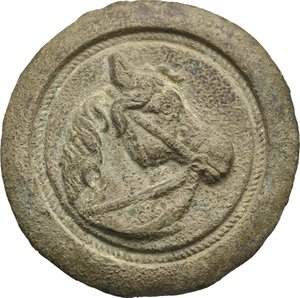
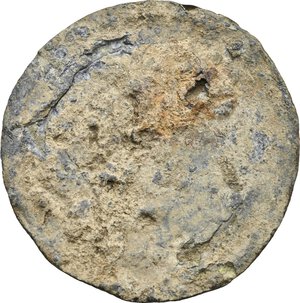
Modern large stud with bridled horse head. After the antique (Bronze and lead, 57.02 mm, 46.71 g). Two iron pins covered by lead. - Modern large stud with bridled horse head. After the antique (Bronze and lead, 57.02 mm, 46.71 g). Two iron pins covered by lead.
Caricamento altri risultati...
Caricamento...
Notifiche web-push
Per abilitare le notifiche push su questo browser, premere il pulsante abilita.