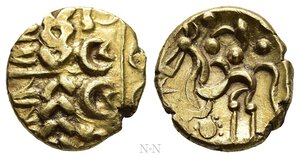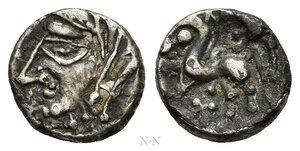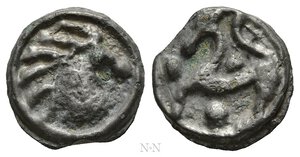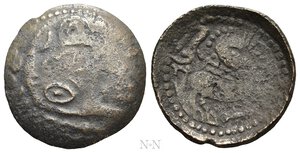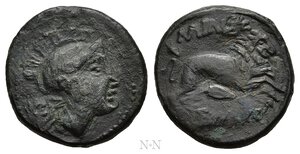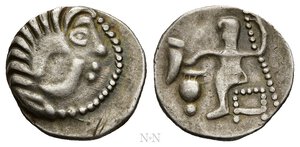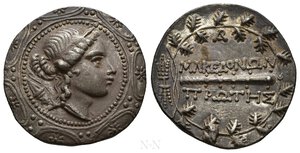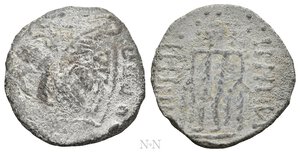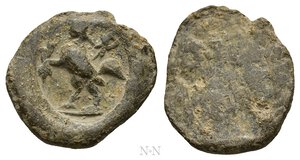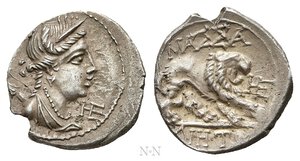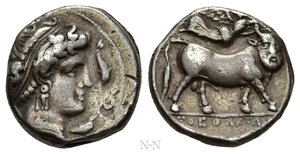
WESTERN EUROPE. Central Gaul. Bituriges Cubi. Quinarius (1st century BC) - WESTERN EUROPE. Central Gaul. Bituriges Cubi. Quinarius (1st century BC). Obv: Head left.Rev: Horse prancing left; boar above; cross below.D&T 3449; Depeyrot, NC III 52. Condition: Very fine.Weight: 1.73 g. Diameter: 17 mm.Estimate: € 75.
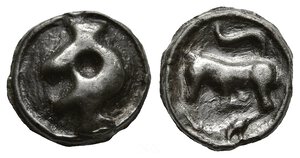
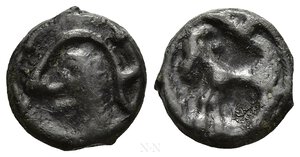
WESTERN EUROPE. Central Gaul. Turones. Potin Unit (Circa 80-50 BC) - WESTERN EUROPE. Central Gaul. Turones. Potin Unit (Circa 80-50 BC). Obv: Crude head left.Rev: Stylized bull charging left.D&T 3509. Condition: Extremely fine.Weight: 2.40 g. Diameter: 16 mm.Estimate: € 50.
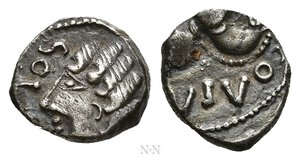
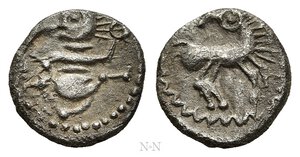
WESTERN EUROPE. Northeast Gaul. Leuci. Quinarius (1st century BC) - WESTERN EUROPE. Northeast Gaul. Leuci. Quinarius (1st century BC). Obv: SOLIMA. Head left.Rev: COLIMA. Horse prancing left; fish below.D&T 3268. Condition: Very fine.Weight: 1.83 g. Diameter: 13 mm.Estimate: € 80.
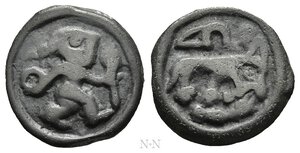
WESTERN EUROPE. Northeast Gaul. Remi. Potin (1st century BC) - WESTERN EUROPE. Northeast Gaul. Remi. Potin (1st century BC). Obv: Figure advancing right, holding torque and spear.Rev: Beast right; fibula above and below.Depeyrot, NC VII, 29; D&T 155. Condition: Good fine.Weight: 4.19 g. Diameter: 21 mm.Estimate: € 50.
WESTERN EUROPE. Northeast Gaul. Senones. Potin (1st century BC) - WESTERN EUROPE. Northeast Gaul. Senones. Potin (1st century BC). Obv: Stylized head right.Rev: Horse left, pellets in field.Depeyrot, NC V, 147; D&T 2640. Condition: Very fine.Weight: 4.20 g. Diameter: 18 mm.Estimate: € 50.
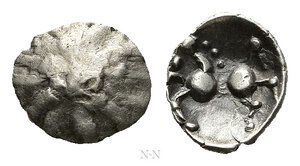
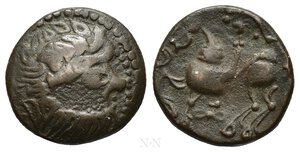
CENTRAL EUROPE. Boii. Obol (1st century BC). 'Karlstein' type - CENTRAL EUROPE. Boii. Obol (1st century BC). 'Karlstein' type. Obv: Stylized head.Rev: Horse prancing left.Kostur & Gaspar 167. Condition: Good very fine.Weight: 0.29 g. Diameter: 18 mm.Estimate: € 50.
EASTERN EUROPE. Uncertain tribe. Tetradrachm (Circa 2nd-1st century BC). Mint in Carpanthian region. 'Herakleskopf' type - EASTERN EUROPE. Uncertain tribe. Tetradrachm (Circa 2nd-1st century BC). Mint in Carpanthian region. 'Herakleskopf' type. Obv: Head of Herakles right, wearing lion skin.Rev: Stylized horseman right.Lanz 566-7; Flesche 696. Condition: Near very fine.Weight: 10.41 g. Diameter: 30 mm.Estimate: € 80.
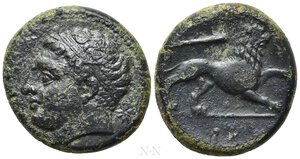
EASTERN EUROPE. Imitations of Lysimachos. Ae (Circa 3rd century BC) - EASTERN EUROPE. Imitations of Lysimachos. Ae (Circa 3rd century BC). Obv: Helmeted head of Athena right.Rev: Lion leaping right; spearhead below.Cf. Müller 61-2 (for prototype). Condition: Very fine.Weight: 6.20 g. Diameter: 20 mm.Estimate: € 50.
EASTERN EUROPE. Imitations of Alexander III 'the Great' of Macedon. Drachm (3rd-2nd century BC) - EASTERN EUROPE. Imitations of Alexander III 'the Great' of Macedon. Drachm (3rd-2nd century BC). Obv: Stylized head of Herakles right, wearing lion skin.Rev: Stylized Zeus seated left with eagle and sceptre. Control: amphora in left field.Lanz 896; OTA 577. Condition: Good very fine.Weight: 3.20 g. Diameter: 19 mm.Estimate: € 100.
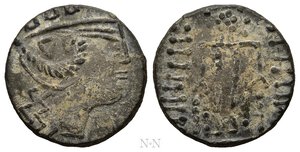
EASTERN EUROPE. Imitations of Macedonian First Meris Coinage. Tetradrachm (Circa 2nd century BC) - EASTERN EUROPE. Imitations of Macedonian First Meris Coinage. Tetradrachm (Circa 2nd century BC). Obv: Diademed and draped bust of Artemis right, with bow and quiver over shoulder; all in center of Macedonian shield.Rev: MAKEΔONΩN / ΠΡΩTHΣ. Club; AP monogram above; all within oak wreath; thunderbolt to left.Cf. Prokopov 788-9; cf. HGC 3.1, 1103 (for prototype). Condition: Good very fine.Weight: 16.91 g. Diameter: 32 mm.Estimate: € 250.
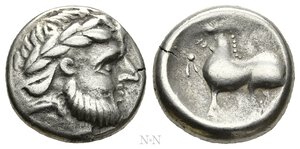
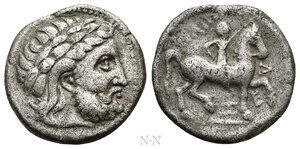
EASTERN EUROPE. Imitations of Philip II of Macedon (2nd-1st centuries BC). Tetradrachm. 'Kugelwange ohne Ringel' type - EASTERN EUROPE. Imitations of Philip II of Macedon (2nd-1st centuries BC). Tetradrachm. 'Kugelwange ohne Ringel' type. Obv: Stylized laureate head of Zeus right.Rev: Stylized horse prancing left.OTA 193/6; Lanz -; Karl 479. Condition: Near very fine.Weight: 12.00 g. Diameter: 21 mm.Estimate: € 200.
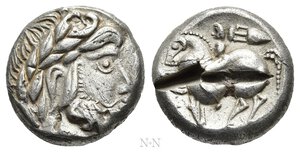
EASTERN EUROPE. Imitations of Philip II of Macedon (2nd century BC). Tetradrachm. 'Dachreiter' type - EASTERN EUROPE. Imitations of Philip II of Macedon (2nd century BC). Tetradrachm. 'Dachreiter' type. Obv: Laureate head of Zeus right.Rev: Stylized horse and rider left; amphora above.Lanz -; Dembski -; cf. Flesche 603.Very rare Condition: Good very fine.Weight: 10.67 g. Diameter: 20 mm.Estimate: € 100.
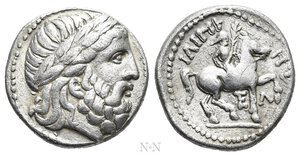
EASTERN EUROPE. Imitations of Philip II of Macedon (2nd-1st centuries BC). Tetradrachm - EASTERN EUROPE. Imitations of Philip II of Macedon (2nd-1st centuries BC). Tetradrachm. Obv: Laureate head of Zeus right.Rev: ΦΙΛΙΠΠOY (blundered). Youth riding horse right, holding palm frond. Controls: below, forepart of Pegasos right; TE monogram below horse; Λ below raised foreleg.Cf. Le Rider pl. 45, 15-16 (for prototype). Condition: Near very fine.Weight: 13.62 g. Diameter: 25 mm.Estimate: € 100.
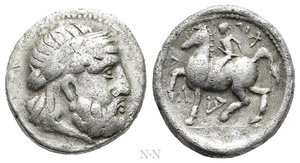
EASTERN EUROPE. Imitations of Philip II of Macedon (2nd-1st centuries BC). Tetradrachm - EASTERN EUROPE. Imitations of Philip II of Macedon (2nd-1st centuries BC). Tetradrachm. Obv: Laureate head of Zeus right.Rev: Blundered legend. Youth riding horse left; monogram below.Lanz -; Flesche -. Condition: Near very fine.Weight: 13.81 g. Diameter: 25 mm.Estimate: € 100.
EASTERN EUROPE. Imitations of Philip II of Macedon (2nd-1st centuries BC). Tetradrachm - EASTERN EUROPE. Imitations of Philip II of Macedon (2nd-1st centuries BC). Tetradrachm. Obv: Laureate head of Zeus right.Rev: Youth on horse right, holding palm frond Controls: Z below horse, dolphin below raised foreleg.OTA 10/4 var. (no Z); Lanz 354 var. (thunderbolt above Z). Condition: Very fine.Weight: 13.34 g. Diameter: 25 mm.Estimate: € 100.
EASTERN EUROPE. Imitations of Philip II of Macedon (2nd-1st centuries BC). AE Tetradrachm. 'Kapostaler' type - EASTERN EUROPE. Imitations of Philip II of Macedon (2nd-1st centuries BC). AE Tetradrachm. 'Kapostaler' type. Obv: Stylized laureate head of Zeus right.Rev: Stylized horse with rider left.Lanz 776-780. Condition: Very fine.Weight: 8.40 g. Diameter: 20 mm.Estimate: € 50.
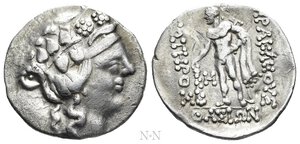
EASTERN EUROPE. Imitations of Thasos. Tetradrachm (2nd-1st centuries BC) - EASTERN EUROPE. Imitations of Thasos. Tetradrachm (2nd-1st centuries BC). Obv: Head of Dionysos right, wearing ivy wreath.Rev: Blundered legend. Herakles standing left, holding club and lion skin.OTA Class IV; cf. Castelin 1367.Ex Emporium Hamburg Alpha Auction 5 (2021), lot 7 Condition: Very fine.Weight: 14.26 g. Diameter: 24 mm.Estimate: € 80.
EASTERN EUROPE. Imitations of Thasos. Lead Tetradrachm (2nd-1st centuries BC) - EASTERN EUROPE. Imitations of Thasos. Lead Tetradrachm (2nd-1st centuries BC). Obv: Head of Dionysos right, wearing ivy wreath.Rev: Blundered legend. Herakles standing left, holding club and lion skin.Cf. OTA Class IV (AR Tetradrachm).Rare Condition: Near very fine.Weight: 16.72 g. Diameter: 26 mm.Estimate: € 50.
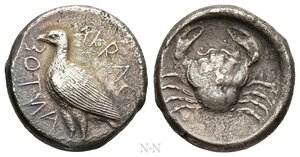
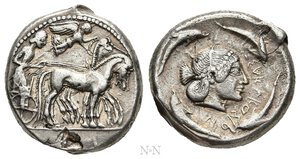
SICILY. Akragas. Tetradrachm (Circa 465/0–445/0 BC) - SICILY. Akragas. Tetradrachm (Circa 465/0–445/0 BC). Obv: AKPAΓANTOΣ. Eagle standing left.Rev: Crab.Westermark Period II, Group II, 343 (O9/R32); SNG ANS 964; HGC 2, 78.Historical sources give the date of Akragas' founding as the 50th Olympiad (585-580 BC), placing it among the last Greek colonies established in Sicily. The settlers probably came from Rhodes and Gela, under the command of the ecists Aristonoo and Pistilos, who located a site not far from the sea on the Akragas River, after which the city was named. During the tyranny of Phalaris (570-555 BC) the city built walls and began an expansionist campaign, later continued by Theron (488-473), who won an important battle victory over the Carthaginians at Himera, gaining a vast territory. From that time Akragas experienced enormous political, economic and cultural development, culminating in the period of democratic rule, which was established after the death of Theron. In 406 BC the city was besieged by the Carthaginians, who finally sacked and burned it several times, without however, favoring the establishment of a Punic colony. With Timoleon's victory over Carthage in 339, the city was rebuilt on the same site, then taken back by the Carthaginians and remained under their influence until 210, when it passed into Roman hands at the end of the Second Punic War. The eagle depicted on the obverse of this coin, and on most of the issues of Akragas, is surely to be related to Zeus, to whom the inhabitants dedicated the most important temple in the city. The crab, on the other hand, which appears on all the reverses, is associated with Poseidon, demonstrating the city's great connection with the sea from the time of its founding, which was important for its economy related to maritime trade. On some silver coins, a human face appears on the carapace of the crab, most likely depicting the river god Akragas in an original way. Condition: Good very fine.Weight: 16.49 g. Diameter: 25 mm.Estimate: € 2000.
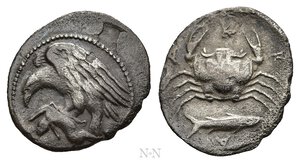
SICILY. Akragas. Hemidrachm (Circa 420-406 BC) - SICILY. Akragas. Hemidrachm (Circa 420-406 BC). Obv: Eagle standing left on hare.Rev: A K P A. Crab; below, fish right.Westermark 554 (O9/R9); SNG ANS 1005; HGC 2, 104. Condition: Very fine.Weight: 1.91 g. Diameter: 17 mm.Estimate: € 200.
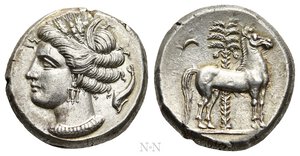
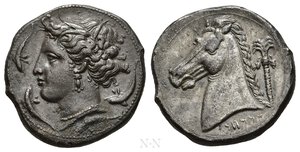
SICILY. Entella. Punic Issues. Tetradrachm (Circa 345/38-320/15 BC) - SICILY. Entella. Punic Issues. Tetradrachm (Circa 345/38-320/15 BC). Obv: Wreathed head of Arethusa left, wearing triple-pendant earring and pendant necklace; to right, dolphin swimming downward.Rev: Horse standing right; palm tree in background, crescent to left.Jenkins, Punic, Series 2c, 121 (O41/R109); CNP 174; HGC 2, 278.The foundation of Entella is traced back to Acestes, son of the river god Krimisos and a Trojan woman or, according to other sources to Prince Elymus, son of Anchises and brother of Aeneas. The city stood on a summit overlooking the Belice valley. Records are scarce until the arrival of the Campanian mercenaries, recruited in 410 BC by the Carthaginians and discharged after the 405 BC treaty, then passed into the pay of Dionysius I of Syracuse. After liberating Dionysius on the island of Ortigia from the Punic siege, the were discharged with rich gifts and settled in various cities on the island. In 404 a group of these mercenaries seized Entella, exterminating the entire male population, and began to mint their own coinage. From then on they implemented a generally pro-Carthaginian policy and, in 398 B.C., were able to stop Syracusan siege attempts with the help of the Punic. The strategic location of the fortress of Entella was coveted for its control of the valley below, and this led to several siege attempts: in 345 it was attacked by the Carthaginians led by General Annon, then in 342 the city was taken by the Syracusans commanded by Timoleon, but in 338 it fell back under Punic influence. During the First Punic War the city was destroyed by the Carthaginians. The “Decrees of Entella,” which were requests for help engraved on bronze slabs, from the inhabitants to neighboring cities, date from this period. In 263 Entella was conquered by the Romans and enjoyed a new period of prosperity until the second century BC when it was abandoned. Condition: Near uncirculated .Weight: 17.09 g. Diameter: 24 mm.Estimate: € 12000.
SICILY. Entella. Punic Issues. Tetradrachm (Circa 320/15-300 BC) - SICILY. Entella. Punic Issues. Tetradrachm (Circa 320/15-300 BC). Obv: Head of Arethousa left, wearing grain-ear wreath, triple-pendant earring and pearl necklace; four dolphins around.Rev: Head of horse left; palm tree to right.Jenkins, Punic, 149 (O47/R134); CNP 267; HGC 2, 284.NGC 4934013-001 (with ticket)
The foundation of Entella is traced back to Acestes, son of the river god Krimisos and a Trojan woman or, according to other sources to Prince Elymus, son of Anchises and brother of Aeneas. The city stood on a summit overlooking the Belice valley. Records are scarce until the arrival of the Campanian mercenaries, recruited in 410 BC by the Carthaginians and discharged after the 405 BC treaty, then passed into the pay of Dionysius I of Syracuse. After liberating Dionysius on the island of Ortigia from the Punic siege, the were discharged with rich gifts and settled in various cities on the island. In 404 a group of these mercenaries seized Entella, exterminating the entire male population, and began to mint their own coinage. From then on they implemented a generally pro-Carthaginian policy and, in 398 B.C., were able to stop Syracusan siege attempts with the help of the Punic. The strategic location of the fortress of Entella was coveted for its control of the valley below, and this led to several siege attempts: in 345 it was attacked by the Carthaginians led by General Annon, then in 342 the city was taken by the Syracusans commanded by Timoleon, but in 338 it fell back under Punic influence. During the First Punic War the city was destroyed by the Carthaginians. The “Decrees of Entella,” which were requests for help engraved on bronze slabs, from the inhabitants to neighboring cities, date from this period. In 263 Entella was conquered by the Romans and enjoyed a new period of prosperity until the second century BC when it was abandoned. Condition: Good very fine.Weight: 17.15 g. Diameter: 27 mm.Estimate: € 2000.
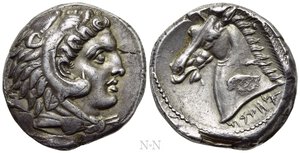
SICILY. Entella. Punic issues. Tetradrachm (Circa 300-289 BC) - SICILY. Entella. Punic issues. Tetradrachm (Circa 300-289 BC). Obv: Head of Herakles right, wearing lion skin.Rev: Head of horse left; palm tree to right; Punic legend below.Jenkins, Punic, Series 5b, 370 (O115/R293) and pl. 10, 370M (this coin) = MMAG 1971 hoard; CNP 271; HGC 2, 293.Ex Münzen & Medaillen AG Basel (1971).
The foundation of Entella is traced back to Acestes, son of the river god Krimisos and a Trojan woman or, according to other sources to Prince Elymus, son of Anchises and brother of Aeneas. The city stood on a summit overlooking the Belice valley. Records are scarce until the arrival of the Campanian mercenaries, recruited in 410 BC by the Carthaginians and discharged after the 405 BC treaty, then passed into the pay of Dionysius I of Syracuse. After liberating Dionysius on the island of Ortigia from the Punic siege, the were discharged with rich gifts and settled in various cities on the island. In 404 a group of these mercenaries seized Entella, exterminating the entire male population, and began to mint their own coinage. From then on they implemented a generally pro-Carthaginian policy and, in 398 B.C., were able to stop Syracusan siege attempts with the help of the Punic. The strategic location of the fortress of Entella was coveted for its control of the valley below, and this led to several siege attempts: in 345 it was attacked by the Carthaginians led by General Annon, then in 342 the city was taken by the Syracusans commanded by Timoleon, but in 338 it fell back under Punic influence. During the First Punic War the city was destroyed by the Carthaginians. The “Decrees of Entella,” which were requests for help engraved on bronze slabs, from the inhabitants to neighboring cities, date from this period. In 263 Entella was conquered by the Romans and enjoyed a new period of prosperity until the second century BC when it was abandoned. Condition: Good very fine.Weight: 16.40 g. Diameter: 24 mm.Estimate: € 1500.
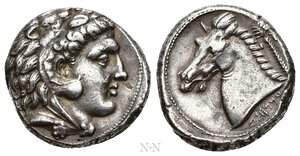
SICILY. Entella. Punic issues. Tetradrachm (Circa 300-289 BC) - SICILY. Entella. Punic issues. Tetradrachm (Circa 300-289 BC). Obv: Head of Herakles right, wearing lion skin.Rev: Head of horse left; palm tree to right; Punic legend below.CNP 272; HGC 2, 295.The foundation of Entella is traced back to Acestes, son of the river god Krimisos and a Trojan woman or, according to other sources to Prince Elymus, son of Anchises and brother of Aeneas. The city stood on a summit overlooking the Belice valley. Records are scarce until the arrival of the Campanian mercenaries, recruited in 410 BC by the Carthaginians and discharged after the 405 BC treaty, then passed into the pay of Dionysius I of Syracuse. After liberating Dionysius on the island of Ortigia from the Punic siege, the were discharged with rich gifts and settled in various cities on the island. In 404 a group of these mercenaries seized Entella, exterminating the entire male population, and began to mint their own coinage. From then on they implemented a generally pro-Carthaginian policy and, in 398 B.C., were able to stop Syracusan siege attempts with the help of the Punic. The strategic location of the fortress of Entella was coveted for its control of the valley below, and this led to several siege attempts: in 345 it was attacked by the Carthaginians led by General Annon, then in 342 the city was taken by the Syracusans commanded by Timoleon, but in 338 it fell back under Punic influence. During the First Punic War the city was destroyed by the Carthaginians. The “Decrees of Entella,” which were requests for help engraved on bronze slabs, from the inhabitants to neighboring cities, date from this period. In 263 Entella was conquered by the Romans and enjoyed a new period of prosperity until the second century BC when it was abandoned. Condition: Good very fine.Weight: 17,22 g. Diameter: 24 mm.Estimate: € 500.
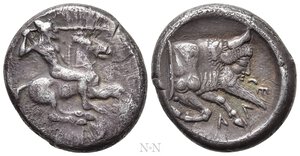
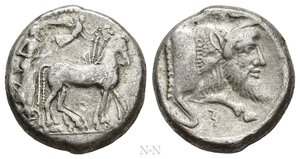
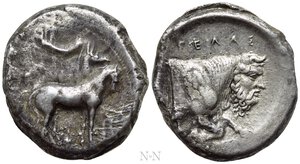
SICILY. Gela. Didrachm (485-475 BC) - SICILY. Gela. Didrachm (485-475 BC). Obv: Horseman riding right, preparing to cast javelin.Rev: CΕΛΑΣ. Forepart of man-headed bull right within incuse circle.Jenkins, Gela 69A (O21/R32A); SNG ANS 13; HGC 2, 363.From the Nicholas V. Jamgochian Collection, ex Dr. Busso Peus Nachfolger 340 (1994), lot 107 Condition: Very fine.Weight: 8,57 g. Diameter: 20 mm.Estimate: € 500.
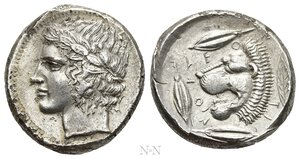
SICILY. Leontinoi. Tetradrachm (Circa 430-425 BC) - SICILY. Leontinoi. Tetradrachm (Circa 430-425 BC). Obv: Laureate head of Apollo left.Rev: LEONTINON. Lion head with open jaws; three barleycorns and laurel leaf around.Boehringer 55; SNG ANS 256-7; HGC 2, 671.From the Dr. Fritz Reiff Collection, ex Auktionen GM 31 (1985), lot 51; ex Fritz Rudolf Künker 94 (2004), lot 317.
The coinage of Leontinoi in the 5th century BC, especially the tetradrachms, represents one of the highest achievements of Sicilian engraving art. The city’s monetary series display a coherent and refined evolution in which two images dominate and define its visual identity: the head of Apollo and the lion’s protome.
The head of Apollo is the principal type on the obverse dies. The image is rendered with increasing elegance: at first more archaic and rigid, then progressively softer, more harmonious, and classically proportioned. Apollo is not merely an aesthetic motif; he embodies the Chalcidian cultural heritage, the Greek origins of the city, and an ideal of order, balance, and civic identity. The presence of several engravers, including the renowned “Master of Leontinoi”, contributes to an extraordinary stylistic variety, a sign of a lively and innovative mint.
The lion is the oldest and most deeply rooted symbol of Leontinoi, already linked to the city’s name and local tradition. On the coins it appears as a lion’s protome, often accompanied by barley grains, or as a running lion in earlier issues. It serves a dual purpose: it evokes the very name of the city and expresses strength, pride and autonomy, even in periods when the polis was politically subordinate to Syracuse.
This combination creates a powerful visual language that blends indigenous tradition, Greek culture, and artistic ambition. Leontinoi, though not one of Sicily’s great powers, thus succeeds in expressing a distinctive and original voice within the island’s numismatic landscape. Condition: Near extremely fine.Weight: 16.87 g. Diameter: 26 mm.Estimate: € 1000.
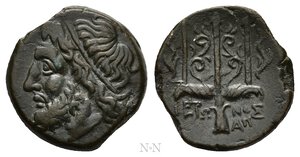
SICILY. Syracuse. Hieron II (275-215 BC). Ae - SICILY. Syracuse. Hieron II (275-215 BC). Ae. Obv: Head of Poseidon left, wearing tainia.Rev: ΙΕΡΩ - ΝΟΣ. Ornamented trident head flanked by two dolphins; AΠ to lower right.CNS 194 R1 2; HGC 2, 1550. Condition: Good very fine.Weight: 6.32 g. Diameter: 19 mm.Estimate: € 100.
Caricamento altri risultati...
Loading…
Web-push notifications
To enable push notifications on this browser, press the enable button.