Roman Republican Coins
Results from 1851 to 1900 of 10423
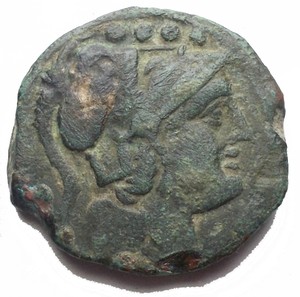
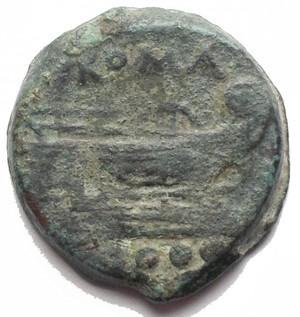
Lot # 4045
-
Roman Republic Anonymous issues. After 211 BC. AE triens 7.85 gm. Uncertain mint. d/ Helmeted head of Minerva right; four pellets above r/ ROMA, prow right; four pellets below. Cf. Crawford 56/4. Sydenham 143b. RBW 208. VF. Green patina
Watch:
or
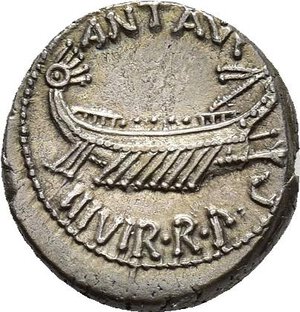
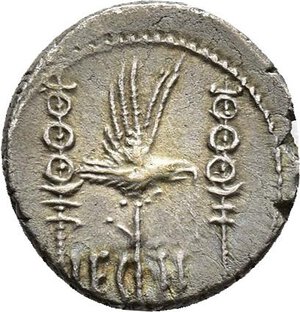
Lot # 299
-
Marcus Antonius. Autumn 32-Spring 31 BC. Denarius (Silver, 17 mm, 3.62 g). Legionary mint moving in Greece (Aegae or Patrae). ANT AVG / III VIR R P C, Praetorian galley right, with filleted scepter on prow. Rev. LEG - II, Legionary eagle between two standards. Crawford 544/14. Babelon (Antonia) 105. Sydenham 1216. Cabinet toned. About Extremely Fine.
Lot # 298
-
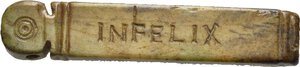
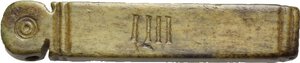
Late Republican Period. Circa 2nd - 1st centuries BC. Tessera Lusoria of the Unlucky. (Bone, 53 x 6 x 3,5 mm, 7.18 g). Rod-shaped, with a rectangular cross-section and one rounded end decorated with concentric circles, pierced by a tiny hole at the junction with the body of the plaque; at both ends, horizontally, two pairs of incised lines can be seen as decoration. Inscription on two sides: INFELIX / IIII. Cf. C. Hülsen, "Miscellanea epigrafica, XXI. Tessere lusorie", in "Mitteilungen des Deutschen Archäologischen Instituts, Römische Abteilung", Vol. 11, 1896, pp. 227-257. L. Pedroni, G. Devoto, "Tessere da una collezione privata", in "Archeologia Classica", Vol. 47, 1995, pp. 178-179, figg. 5c-6c (this specimen). Cf. G. Baratta, "Un set di Tesserae Lusoriae da Corfinium", in "Anuari de filologia. Antiqua et mediaevalia", Vol. 8, 2018, pp. 134‐147. Excellent state of preservation, with no evident fractures or chips. Very Rare specimen.
From a British private collection, later passing into a Swiss collection in the early 2000s.
The Tesserae Lusoriae were small rectangular rods, mostly made of bone and more rarely of ivory, engraved on both sides: on one face appeared a name, an adjective, or a playful epithet, while the other bore a Roman numeral. The known numbering ranges from I to LX, but the evidence suggests an organized game, with pieces numbered from I to XXV, accompanied by special tokens bearing the numbers XXX and LX, and possibly also counters numbered between XXVI and XXIX. The numerical variations and the presence of distinctive pieces indicate a structured game, although its rules and purpose remain unknown and perhaps forever lost. In Spain and Italy, specimens have been found both as isolated pieces and as complete sets placed within rich burials (for instance, at Vaste – 17 tesserae; Perugia – 16; Syracuse – 8; Corfinio – 6), suggesting a circulation among the upper-middle classes. While the deposition of a single piece may have held an apotropaic or commemorative meaning - linked to the fortune of the deceased or an ancestor, thus serving as an amulet - the inclusion of an entire set within a tomb may point to more complex symbolism. In the case of the 16 tesserae discovered in Perugia, their association with glass hemispheres, a mirror, decorative fragments from a cista, and inscribed pebbles has led scholars to suggest that the deceased, likely an extraordinary individual, might have been a magician in life.
In short, one could almost say that these tesserae were either oracular tools used to divine the will of the gods, or the ancient precursors of Magic: The Gathering, created by Richard Garfield.
Lot # 297
-
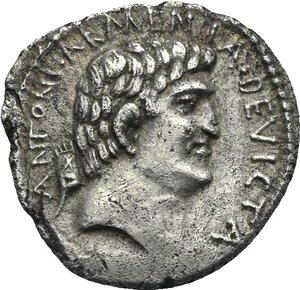
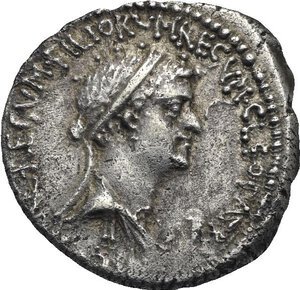
Marcus Antonius and Cleopatra VII. Denarius (Silver, 18.72 mm, 3.66 g), mint moving with M. Antonius, Autumn 34 BC. ANTONI ARMENIA DEVICTA Head of Marcus Antonius right, Armenian tiara behind neck. Rev. CLEOPATRAE REGINAE REGVM FILIORVM REGVMDiademed and draped bust of Cleopatra right, stem of prow before. Craw 543/1. Sear 345. Sydenham 1210. BMCCRR East 179. Babelon Antonia 9.Newman 34.3. Cohen 1. Toned and with two splendid portraits of fine style. Slightly porous, otherwise, Good Very Fine.
Mark Antony and Cleopatra’s relationship was one of the most famous and controversial romances of ancient history. Their political and personal alliance challenged Rome’s power structure and ultimately contributed to the fall of the Roman Republic. Cleopatra, the last queen of Egypt, used her intelligence and charm to secure her kingdom’s future. Mark Antony, a powerful Roman general, was torn between duty to Rome and his love for Cleopatra. Their dramatic downfall symbolized the end of an era and inspired countless works of art and literature.
Lot # 296
-
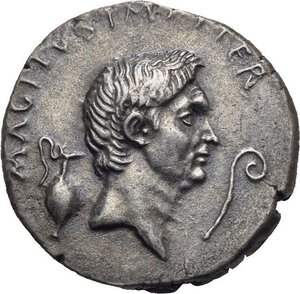
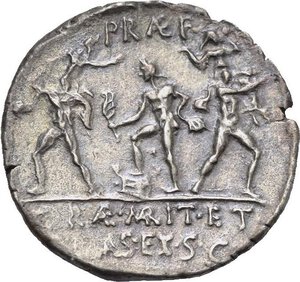
Sextus Pompey, 37-36 BC. Denarius. (Silver, 20.04 mm, 3.53 g), uncertain Sicilian mint circa 42-40 BC. MAG PIVS IMP ITER, Bare head of Cn. Pompeius Magnus right; behind, jug; before, lituus. Rev. Neptune standing left, holding aplustre and resting his right foot on prow; on either side, the brothers Anapias and Amphinomus, with their parents on their shoulders, running in opposite directions. Above, PRÆF; in exergue, ORÆ MARIT ET / CLAS EX S C. Crawford 511/3b. Sydenham 1345. Babelon (Pompeia) 27. BMCRR 7. RBW Coll. 1785 var (rev. legend). Cohen 18. Sear Imperators 334a. Wonderful high relief portrait of remarkable quality. Traces of old delicate cleaning. Lovely toned. Extremely Fine. Very Rare variant.
Lot # 295
-
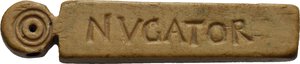
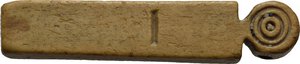
Late Republican Period. Circa 2nd - 1st centuries BC. Tessera Lusoria of the Fool. (Bone, 52 x 6 x 3 mm, 5.35 g). Rod-shaped, with a rectangular cross-section and one rounded end decorated with concentric circles, pierced by a tiny hole at the junction with the body of the plaque; at both ends, horizontally, two pairs of incised lines can be seen as decoration. Inscription on two sides: NUGATOR / I. Cf. C. Hülsen, "Miscellanea epigrafica, XXI. Tessere lusorie", in "Mitteilungen des Deutschen Archäologischen Instituts, Römische Abteilung", Vol. 11, 1896, pp. 227-257. L. Pedroni, G. Devoto, "Tessere da una collezione privata", in "Archeologia Classica", Vol. 47, 1995, pp. 178-179, figg. 5a-6a (this specimen). Cf. G. Baratta, "Un set di Tesserae Lusoriae da Corfinium", in "Anuari de filologia. Antiqua et mediaevalia", Vol. 8, 2018, pp. 134‐147. Excellent state of preservation, with no evident fractures or chips. Very Rare specimen.
From a British private collection, later passing into a Swiss collection in the early 2000s.
The Tesserae Lusoriae were small rectangular rods, mostly made of bone and more rarely of ivory, engraved on both sides: on one face appeared a name, an adjective, or a playful epithet, while the other bore a Roman numeral. The known numbering ranges from I to LX, but the evidence suggests an organized game, with pieces numbered from I to XXV, accompanied by special tokens bearing the numbers XXX and LX, and possibly also counters numbered between XXVI and XXIX. The numerical variations and the presence of distinctive pieces indicate a structured game, although its rules and purpose remain unknown and perhaps forever lost. In Spain and Italy, specimens have been found both as isolated pieces and as complete sets placed within rich burials (for instance, at Vaste – 17 tesserae; Perugia – 16; Syracuse – 8; Corfinio – 6), suggesting a circulation among the upper-middle classes. While the deposition of a single piece may have held an apotropaic or commemorative meaning - linked to the fortune of the deceased or an ancestor, thus serving as an amulet - the inclusion of an entire set within a tomb may point to more complex symbolism. In the case of the 16 tesserae discovered in Perugia, their association with glass hemispheres, a mirror, decorative fragments from a cista, and inscribed pebbles has led scholars to suggest that the deceased, likely an extraordinary individual, might have been a magician in life.
In short, one could almost say that these tesserae were either oracular tools used to divine the will of the gods, or the ancient precursors of Magic: The Gathering, created by Richard Garfield.
Lot # 294
-
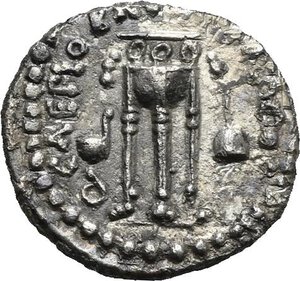
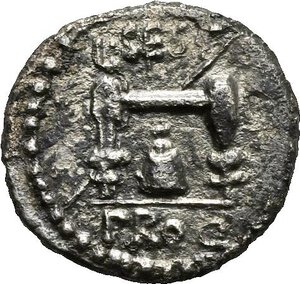
Q. Servilius Caepio (M. Junius) Brutus with L. Sestius. Circa 43-42 BC. Quinarius. (Silver, 13.65 mm, 1.27 g), military mint moving with Brutus and Cassius in southwestern Asia Minor. L SESTI / PRO Q, Transverse staff resting against sella, modius below. Rev. Q CAEPIO BRVTVS PRO COS, Tripod lebes with leonine feet; on left, culullus; on right, apex. Crawford 502/4. Babelon (Junia) 39 and (Sestia) 4. Sydenham 203. BMC East 47. Deeply toned. Minor roughness on obverse. Good Very Fine. Very Rare.
Lot # 293
-
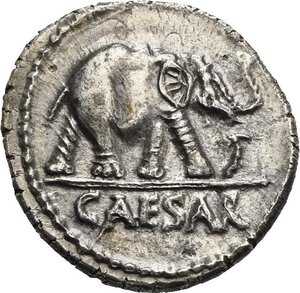
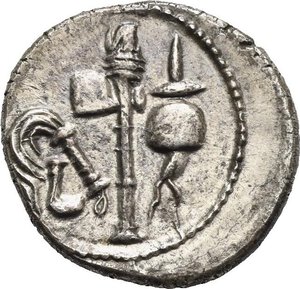
C. Julius Caesar. April - August 49 BC. Denarius. (Silver, 18.37 mm, 3.84 g), military mint moving with Caesar in Gallia or Spain. CAESAR, Elephant advancing right, trampling dragon. Rev. Pontifical implements: simpulum, aspergillum, securis surmounted by wolf’s head and apex. Crawford 443/1. Babelon (Julia) 9. Sydenham 1006. BMC Gaul 27-30. Nicely toned. Good Very Fine.
Lot # 292
-
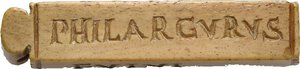
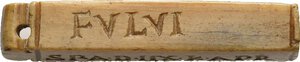
Time of the First Triumvirate. Tessera Nummularia dated 25 March 60 BC (Bone, 51 x 11 x 9 mm, 9.78 g). Inscription on all four sides: PHILARGVRVS / FVLVI / SP(ectavit) A(nte) D(iem) IIX K(alendas) APR(iles) / L AFR(anio) Q MET(ello) (Consulibus). Translation: Inspection carried out by Philargurus, slave of Fulvius, on the eighth day before the Kalends of April, in the year of the consulship of Lucius Afranius and Quintus Caecilius Metellus Celer. L. Pedroni, G. Devoto, “Tessere da una collezione privata”, in "Archeologia Classica", Vol. 47, 1995, pp. 164-169, figg. 1a-4a (this specimen). Pierced at the top to be tied to a bag containing coins. Very Rare, with around 150 known examples worldwide - each bearing a different inscription.
From a British private collection, later passing into a Swiss collection in the early 2000s.
This is a "tessera nummularia", carved from bone and featuring a central perforation that allowed it to be tied directly to a bag of coins. Such objects were not intended for circulation but served as guarantees of the verification of coins by professional money-changers or assayers (nummularii) in ancient Rome. They often certified the weight, purity, and authenticity of a batch of currency. Tesserae like this represent a rare glimpse into the control mechanisms of Roman financial practices. Their utilitarian nature and material suggest daily use in commercial settings.
Philargyrus, a speaking name from Greek meaning “lover of silver”, functions here as both a personal and professional designation: Apuleius (Metamorphoses IV, 9) mentions a Theban money-changer named Chryseros, an etymological counterpart illustrating how monetary slaves and attendants were often identified by names evoking metals or wealth. His master, Fulvius, belonged to the homonymous gens Fulvia, one of the foremost Roman families involved in extensive financial operations, which could easily justify the employment of slaves for monetary control. According to Pliny the Elder (N.H. XXI, 6, 8), the first argentarius of Rome was a Fulvius, reportedly condemned during the Hannibalic era for displaying a wreath of roses on his counter - a gesture regarded as an act of ostentatious luxury. Another member of the same family, also a Fulvius, was responsible for constructing the celebrated Basilica Fulvia in the Roman Forum.
Lot # 291
-
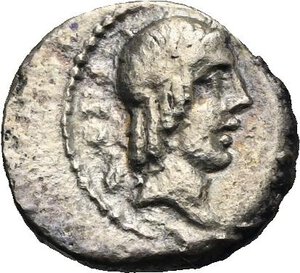
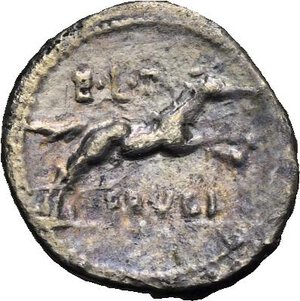
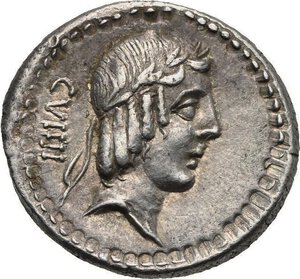
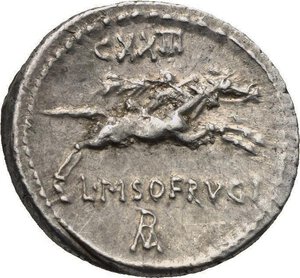
L. Calpurnius Piso Frugi. Sestertius. Rome. 90 BC (Silver, 11.89 mm, 0.71 g). Laureate head of Apollo right. Rev. E L P / FRVGI, Bridled horse galloping right. Crawford 340/3b. Babelon (Calpurnia) 16. Sydenham 676a. Iridescent toning. Very Fine. Very Rare.
From a Swiss collection, formed before 2005.
Lot # 290
-
L. Calpurnius Piso Frugi. 90 BC. Denarius. (Silver, 19.66 mm, 4 g), Rome. Laureate head of Apollo right; behind, CVIIII (control numeral). Rev. Horseman galloping right, holding palm branch and reins; above, CXXIII (control numeral); below, ROMA in monogram. Crawford 340/1. Babelon (Calpurnia) 12. Sydenam 661. Attractive toning. Rusty reverse die. Good Very Fine.
Lot # 289
-
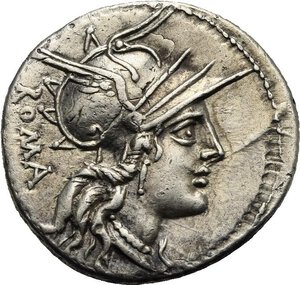
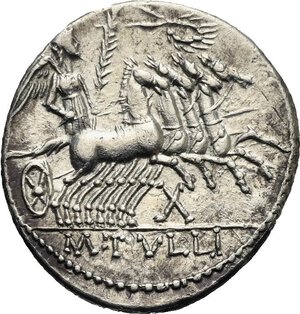
M. Tullius. 119 BC. Denarius. (Silver, 20.54 mm, 3.90 g), Rome. ROMA, Helmeted head of Roma right. Rev. M TVLLI, Victory on quadriga right, holding palm branch and reins; above, wreath; below, X (mark of value). Crawford 280/1. Babelon (Tullia) 1. Sydenham 531. Attractive toning. Near Extremely Fine.
Lot # 288
-
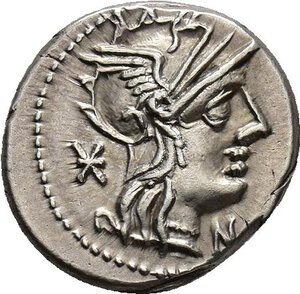
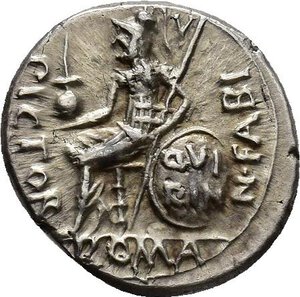
N. Fabius Pictor, 126 BC. Denarius (Silver, 18 mm, 3.88 g). Rome. Helmeted head of Roma right; behind, *; below, control letter. Rev. N FABI PICTOR Q, Quintus Fabius Pictor (Flamen Quirinalis and Praetor in Sardinia in 189 BC), wearing cuirass and helmet, seated left on chair, holding apex and spear; beside, shield inscribed QVI / RIN; above, control letter; in exergue, ROMA. Crawford 268/1b. Babelon (Fabia) 11. Sydenham 517a. BMC 1177 = Crawford, NC 1965 (control letters combination N-V). Lustrous. Good Extremely Fine.
Lot # 287
-
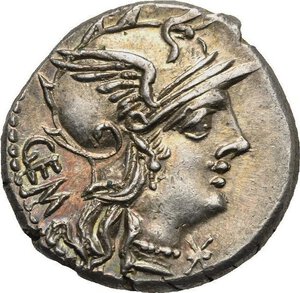
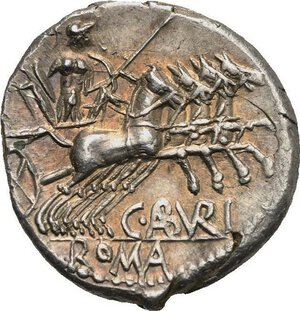
C. Aburius Geminus. 134 BC. Denarius. (Silver, 18.51 mm, 3.87 g), Rome. GEM, Helmeted head of Roma right; below chin, * (mark of value). Rev. C ABVRI / ROMA, Helmeted Mars on quadriga right, holding reins, spear, shield and trophy. Crawford 244/1. Babelon (Aburia) 1. Sydenham 490. Nice iridescent toning. Traces of overstriking and minor marks. Otherwise, Good Extremely Fine.
Lot # 286
-
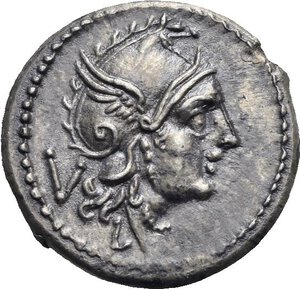
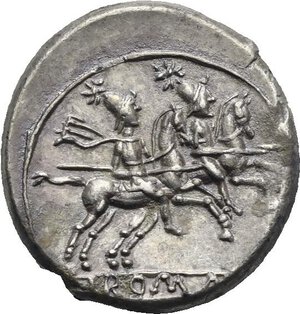
Anonymous. Circa 210 BC. Quinarius. (Silver, 15.91 mm, 2.08 g), uncertain Apulian mint (Salapia?). Helmeted head of Roma right; behind, V (mark of value). Rev. ROMA, The Dioscuri on horseback riding right, each holding spear, wearing flowing cloak and pilei surmounted by star. Crawford 102/2b. Debernardi Bq63. Sydenham 141 var. Lovely toned. Well struck. Good Extremely Fine.
Lot # 285
-
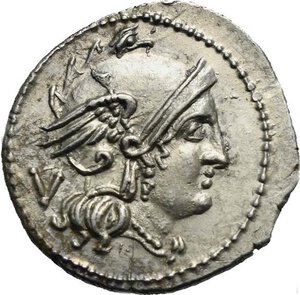
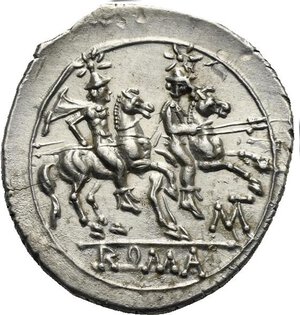
Anonymous. Circa 210 BC. Quinarius (Silver, 16.89 mm, 2.07 g), uncertain mint in Apulia. Head of Roma to right, wearing winged helmet; in field to left, V (mark of value). Rev. ROMA, The Dioscuri, each holding spear, on horseback galloping right; above their heads, two stars; the Dioscurus on the right looks towards the observer. in field to lower right, MT. Crawford 103/2b. Debernardi Bq 60. King 27. RBW 464. Sydenham 183. Nicely toned, lustrous with a sharp strike. An impressive coin. Virtually as struck.
Lot # 284
-
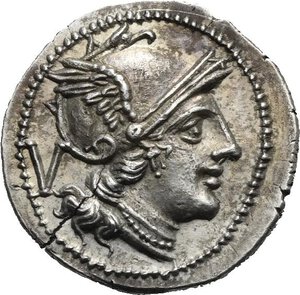
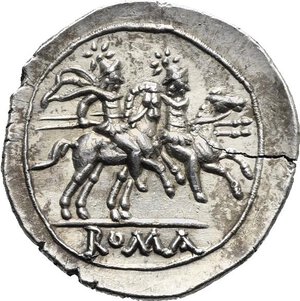
Anonymous. Circa 211-208 BC. Quinarius. (Silver, 16.64 mm, 2.11 g), Rome. Helmeted head of Roma right; behind, V (mark of value). Rev. ROMA, The Dioscuri on horseback riding right, each holding spear, wearing flowing cloak and pilei surmounted by star. Crawford 48/1. Debernardi Bq34. Sydenham 166. Lightly toned. Flan crack. Otherwise, Good Extremely Fine.
Lot # 283
-
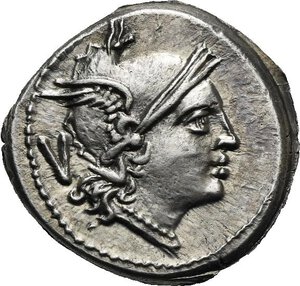
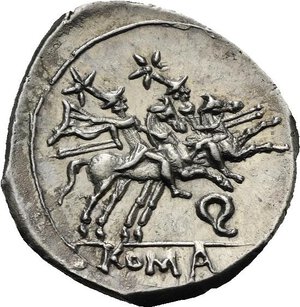
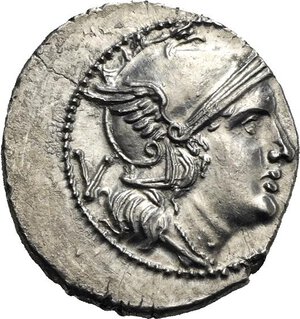
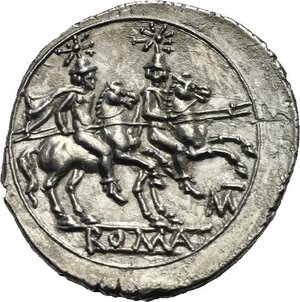
Anonymous (Q series). 211-210 BC. Quinarius (Silver, 16.58 mm, 2.36 g), mint in Apulia. Head of Roma to right, wearing winged Phrygian helmet; behind, V (mark of value). Rev. ROMA, Dioscuri charging to right on horseback, with couched spears; below, Q (mark of value). Cfr. Crawford 102/2b obverse and 102/2c reverse. Debernardi Bq62. King 18. RBW 358. Very rare. attractive iridescent toning, virtually as struck.
Lot # 282
-
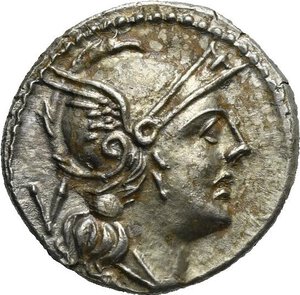
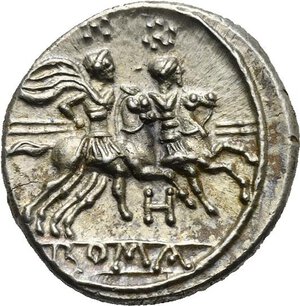
Anonymous (MT series). Circa 211 BC. Quinarius. (Silver, 15.13 mm, 2.01 g), uncertain mint in southeast Italy (Tarentum Arx?). Helmeted head of Roma right; behind, V (mark of value). Rev. ROMA, The Dioscuri on horseback riding right, each holding spear, wearing flowing cloak and pilei surmounted by star; below horses, monogram MT. Crawford 103/2a. Debernardi Bq45. Sydenham 183. Amazing patina. Superb example with a detailed, handsome portrait. Small flan crack. Otherwise, About Fdc. Very Rare.
Lot # 281
-
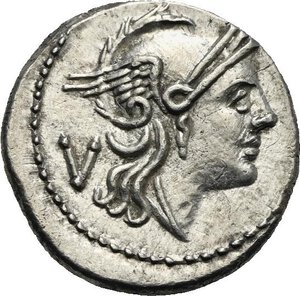
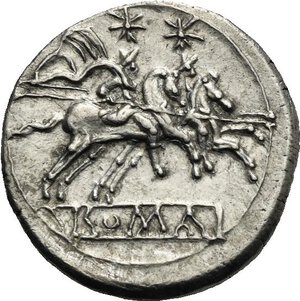
Anonymous (H series). 211/210 or 214 BC. Quinarius (Silver, 15.67 mm, 2.31 g), uncertain mint in Southeast Italy. Head of Roma to right, wearing winged Phrygian helmet; behind, V (mark of value). Rev. ROMA Dioscuri charging to right on horseback, with couched spears; below, H. Crawford 85/1a. Debernardi Bq14. King 16. Sydenham 174. RBW 347. RSC 33b. Attractive iridescent toning. Good Extremely Fine. Rare.
Lot # 280
-
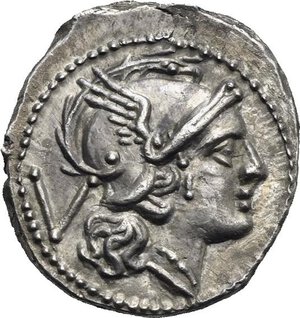
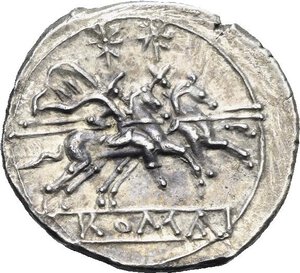
Anonymous. Circa 215 BC. Quinarius (Silver, 15.82 mm, 2.34 g), uncertain Campanian mint (Castra Claudiana?). Helmeted head of Roma right; behind, V (mark of value). Rev. ROMA, The Dioscuri on horseback riding right, each holding spear, wearing flowing cloak and pilei surmounted by star. Crawford 44/6. Debernardi Bq2.8. Sydenham 169. Lightly toned. About Extremely Fine.
Lot # 279
-
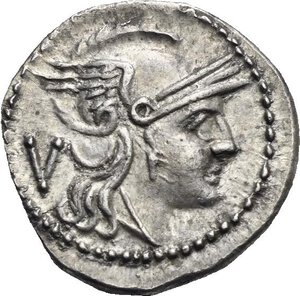
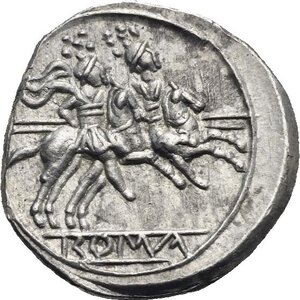
Anonymous. Circa 215 BC. Quinarius (Silver, 15.27 mm, 2.27 g), uncertain Campanian mint (Castra Claudiana?). Helmeted head of Roma right; behind, V (mark of value). Rev. ROMA, The Dioscuri on horseback riding right, each holding spear, wearing flowing cloak and pilei surmounted by star. Crawford 44/6. Debernardi Bq2. Sydenham 169. Lightly toned. Extremely Fine.
Lot # 278
-
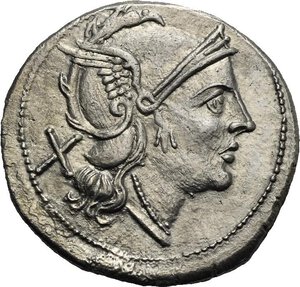
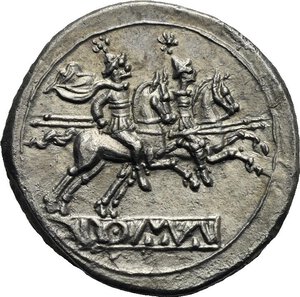
Anonymous. Circa 215 BC. Quinarius (Silver, 16.46 mm, 2.38 g), uncertain Campanian mint (Castra Claudiana?). Circa 215 BC. Helmeted head of Roma right; behind, V (mark of value). Rev. ROMA, The Dioscuri on horseback riding right, each holding spear, wearing flowing cloak and pilei surmounted by star. Crawford 44/6. Debernardi Bq2. Sydenham 169. Toned. About Extremely Fine.
Lot # 277
-
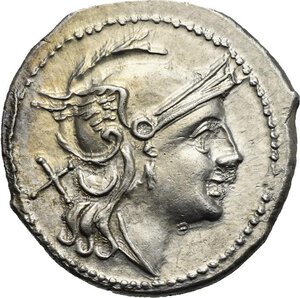
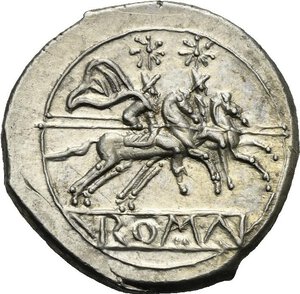
Anonymous. Circa 215 BC. Denarius (Silver, 20.94 mm, 4.38 g), uncertain Campanian mint (Castra Claudiana?). Helmeted head of Roma right; behind, X (mark of value). Rev. ROMA, The Dioscuri on horseback riding right, each holding spear, wearing flowing cloak and pilei surmounted by star. Crawford 44/5. De Bernardi B2.7. Sydenham 140. Toned. Extremely Fine.
Lot # 276
-
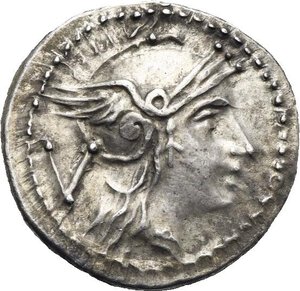
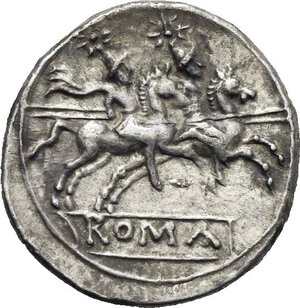
Anonymous. Circa 215 BC. Denarius (Silver, 20.00 mm, 4.37 g), uncertain Campanian mint (Castra Claudiana?). Helmeted head of Roma right; behind, X (mark of value). Rev. ROMA, The Dioscuri on horseback riding right, each holding spear, wearing flowing cloak and pilei surmounted by star. Crawford 44/5. Debernardi B2.5. Sydenham 140. Light iridescent toning. Beautifully struck with fine details. Extremely Fine.
Lot # 275
-
Anonymous. Circa 216 BC. Quinarius (Silver, 15.98 mm, 2.28 g), uncertain Campanian mint (Cales?). Helmeted head of Roma right; behind, V (mark of value). Rev. ROMA, The Dioscuri on horseback riding right, each holding spear, wearing flowing cloak and pilei surmounted by star. Crawford 45/2. Debernardi Bq1.1. Sydenham 169. Toned. Minor weakness. Good Very Fine. Very Rare.
Lot # 274
-
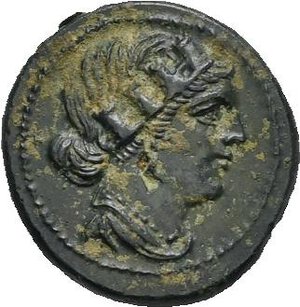
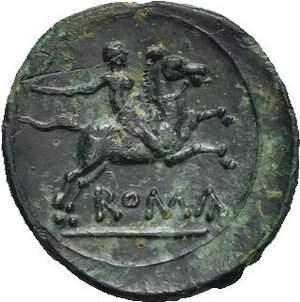
Anonymous (Semilibral Standard). 217-215 BC. Semuncia (Bronze, 20.8 mm, 5.34 g), Rome. Draped female bust right, possibly Cybele, wearing turreted crown. Rev. ROMA, Horseman galloping right, holding whip and reins. Crawford 39/5. Sydenham 97. BMC Romano-Campanian 136. Amazing glossy emerald patina. Minor lack of metal on obverse. Well centered specimen. Good Extremely Fine.
Lot # 273
-
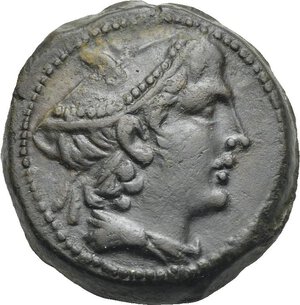
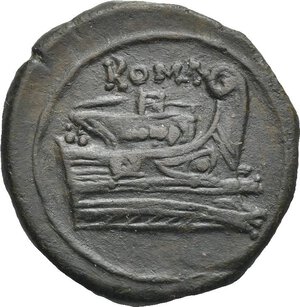
Anonymous (Semilibral Standard). Circa 217-215 BC. Semuncia (Bronze, 20.38 mm, 7.07 g). Rome. Head of Mercury right, wearing winged petasos. Rev. ROMA, Prow of galley right. Crawford 38/7. McCabe, Group AA -. Sydenham 87. Brownish patina gently smoothed. Well centered. Near Extremely Fine.
Lot # 272
-
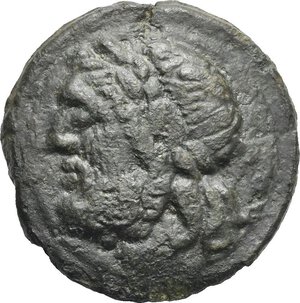
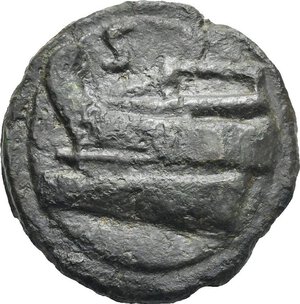
Anonymous (Janus/Prow to left Series). Circa 225-217 BC. Cast Semis (Bronze, 52 mm, 123 g), Rome. Laureate head of Saturn left. Rev. Prow of galley left; above, S (mark of value). Crawford 36/2. Sydenham AG 9. HN Italy 338. ICC 87. Dark patina. Good Very Fine.
Lot # 271
-
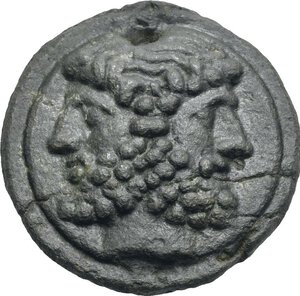
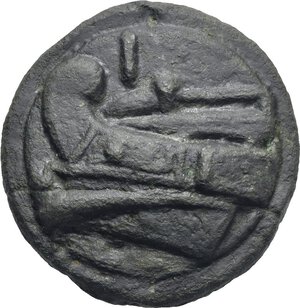
Anonymous (Janus/Prow to left Series). Circa 225-217 BC. Cast As (Bronze, 58.87 mm, 220 g), Rome. Circa 225-217 BC. Bearded and laureate head of Janus. Rev. Prow of galley left; above, I (mark of value). Crawford 36/1. Sydenham AG 8. HN Italy 337. ICC 86. Attractive dark patina. Impressive coin. Minor metal flaws on obverse. Otherwise, Good Extremely Fine. Rare in this condition.
Lot # 270
-
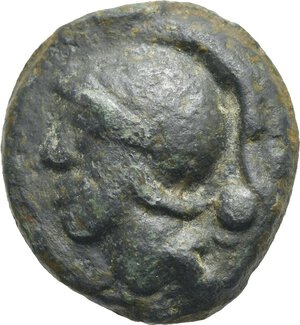
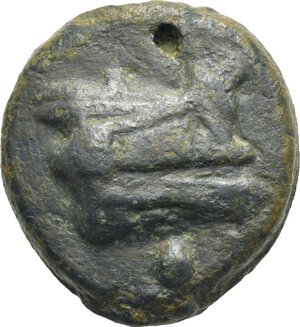
Anonymous (Janus/Prow to right Series). Circa 225-217 BC. Cast Uncia (Bronze, 25.01 mm, 22.64 g), Rome. Helmeted head of Roma left; behind pellet (mark of value). Rev. Prow of galley right; below, pellet (mark of value). Crawford 35/6. Sydenam AG 7. HN Italy 342. ICC 83. Green patina. Very Fine.
Lot # 269
-
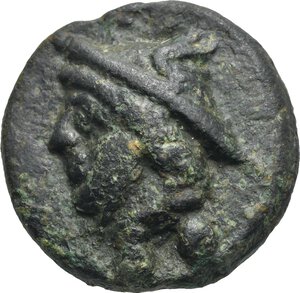
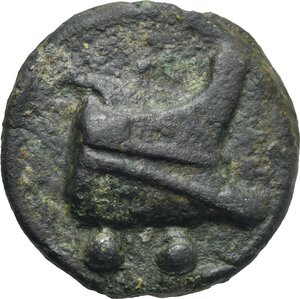
Anonymous (Janus/Prow to right Series). Circa 225-217 BC. Cast Sextans (Bronze, 35.11 mm, 41.74 g), Rome. Head of Mercury left, wearing winged petasus; below, two pellets (mark of value). Rev. Prow of galley right; below, two pellets (mark of value). Crawford 35/5. Sydenham AG 6. HN Italy 341. ICC 82. Dark green patina. Good Very Fine.
Lot # 268
-
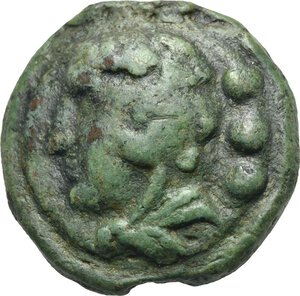
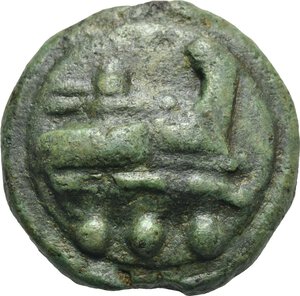
Anonymous (Janus/Prow to right Series). Circa 225-217 BC. Cast Quadrans (Bronze, 38.36 mm, 68 g), Rome. Head of Hercules left, wearing lion's skin headdress; behind, three pellets (mark of value). Rev. Prow of gally right; below, three pellets (mark of value). Crawford 35/4. Sydenham AG 5. HN Italy 340. ICC 80. Lovely green patina. Good Very Fine.
Lot # 267
-
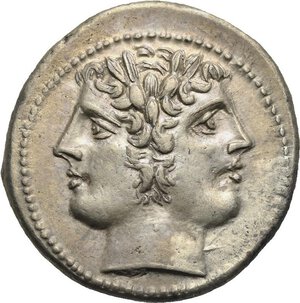
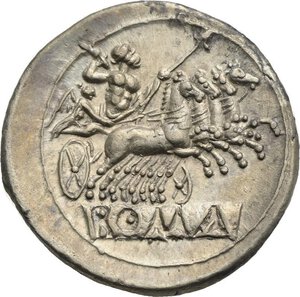
Anonymous, late 217 BC. Didrachm or Quadrigatus. (Silver, 22.48 mm, 6.66 g), Capua. Janiform, laureate, head of the Dioscuri. Rev. ROMA (incuse on raised tablet), Jupiter, holding sceptre and hurling thunderbolt, standing in fast quadriga driven right by Victory. Crawford 28/3. Debernardi Q15.4. Nicely toned. Sharp details. Good Extremely Fine.
Lot # 266
-
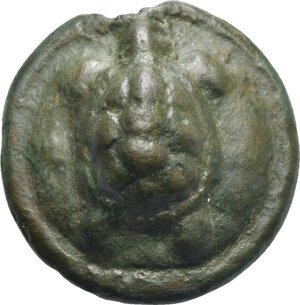
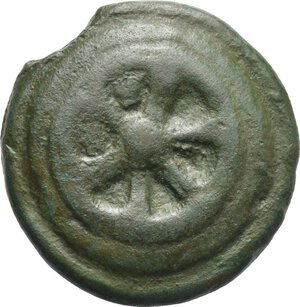
Anonymous (Roma/Wheel Series). Circa 230 BC. Cast Sextans (Bronze, 31.40 mm, 34.66 g), Rome. Tortoise. Rev. Wheel of six spokes; within, two pellets ? (mark of value). Crawford 24/7. Sydenham AG 90-91. HN Italy 330. ICC 71. Green patina. Excellent cast with obverse in high relief. Near Extremely fine.
Lot # 265
-
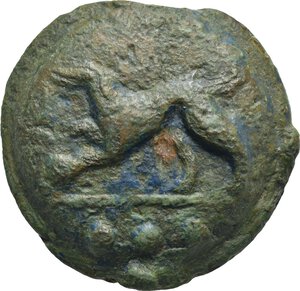
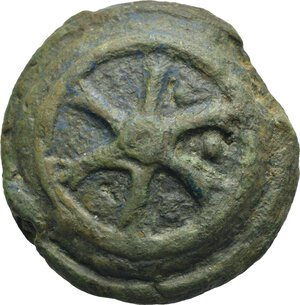
Anonymous (Roma/Wheel Series). Circa 230 BC. Cast Quadrans (Bronze, 39.60 mm, 69 g), Rome. Dog standing left; below, three pellets (mark of value). Rev. Wheel of six spokes; within, three pellets (mark of value). Crawford 24/6a. Sydenham AG 89. HN Italy 329. ICC 69. Green patina. Very Fine.
Lot # 264
-
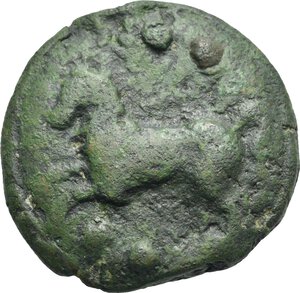
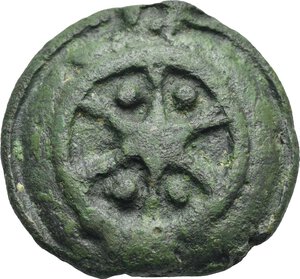
Anonymous (Roma/Wheel Series). Circa 230 BC. Cast Triens (Bronze, 44.55 mm, 87 g), Rome. Horse prancing left; above and below, four pellets (mark of value). Rev. Wheel of six spokes; within, four pellets (mark of value). Crawford 24/5. Sydenham AG 88. HN Italy 328. ICC 68. Green patina. About Very Fine.
Lot # 263
-
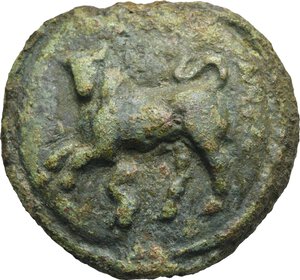
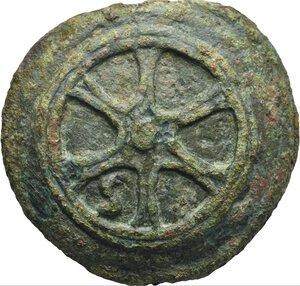
Anonymous (Roma/Wheel Series). Circa 230 BC. Cast Semis (Bronze, 51.71 mm, 132 g), Rome. Bull leaping left; below, S. Rev. Wheel of six spokes; between two spokes, S. Crawford 24/4. Sydenham AG 87. HN Italy 327. ICC 67. Green patina. Near Extremely Fine.
Lot # 262
-
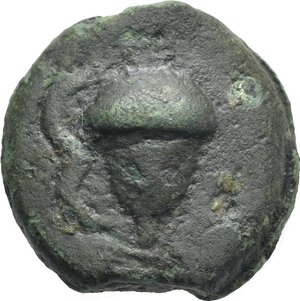
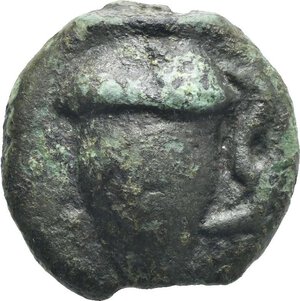
Anonymous (Roma/Roma Series). Circa 265 BC. Cast Semuncia (Bronze, 21.94 mm, 13.75 g), Rome. Acorn; beside, Σ. Rev. Same type. Crawford 21/7. Sydenham AG 69. HN Italy 294. ICC 47. Green patina. Very Fine.
Lot # 261
-
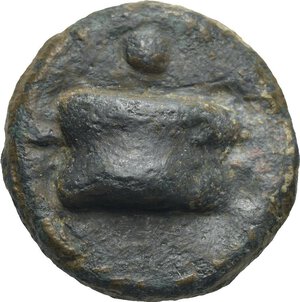
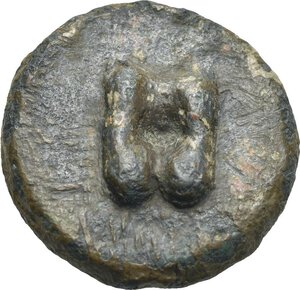
Anonymous (Roma/Roma Series). Circa 265 BC. Cast Uncia (Bronze, 26.05 mm, 19.28 g), Rome. Astragalus seen from outside; beside, pellet (mark of value). Rev. Astragalus (knucklebone) seen from inside. Crawford 21/6. Sydenham AG 67. HN Italy 293. ICC 46. Green patina. Cleaning marks. Near Extremely Fine.
Lot # 260
-
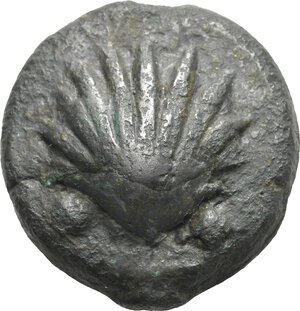
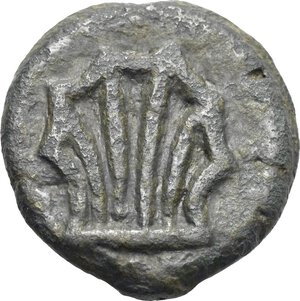
Anonymous (Roma/Roma Series). Circa 265 BC. Cast Sextans (Bronze, 35.46 mm, 45.72 g), Rome. Scallop shell seen from outside; below, two pellets (mark of value). Rev. Scallop shell seen from inside. Crawford 21/5. Sydenham AG 66. HN Italy 292. ICC 45. Dark patina. Good Very Fine.
Lot # 259
-
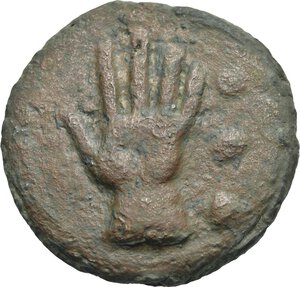
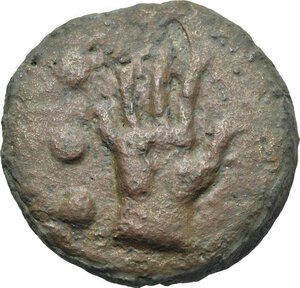
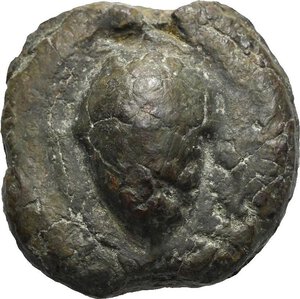
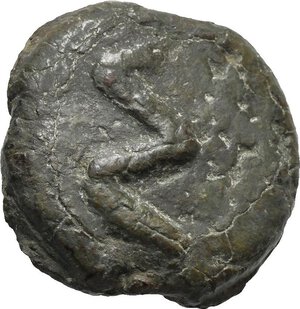
Anonymous (Roma/Roma Series). Circa 265 BC. Cast Quadrans (Bronze, 41.67 mm, 54.81 g), Rome. Open right hand; beside, three pellets (mark of value). Rev. Open left hand; beside, three pellets (mark of value). Crawford 21/4. Sydenham AG 65. HN Italy 291. ICC 44. Brownish-reddish patina. Very Fine.
Lot # 258
-
Anonymous (Dioscuri/Mercury Series). Circa 280 BC. Cast Semuncia (Bronze, 22.96 mm, 16.30 g), Rome. Acorn. Rev. Large Σ. Crawford 14/7. Sydenham AG 42. HN Italy 274. ICC 32. Green patina. Near Very Fine.
Lot # 257
-
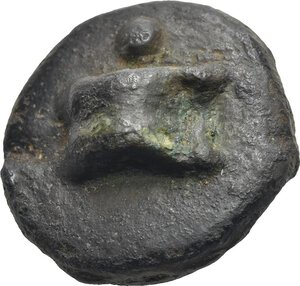
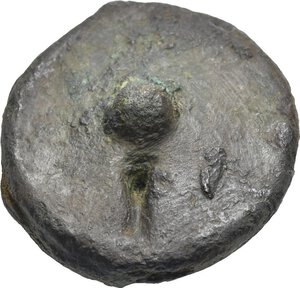
Anonymous (Dioscury/Mercury Series). Circa 280 BC. Cast Uncia (Bronze, 28.31 mm, 32.22 g), Rome. Astragalus (knucklebone); beside, pellet (mark of value). Rev. Pellet (mark of value). Crawford 14/6. Sydenham AG 41. HN Italy 273. ICC 31. Dark patina. Cleaning marks. Near Extremely Fine.
Lot # 256
-
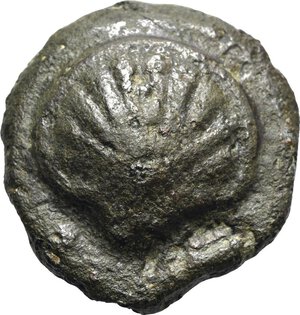
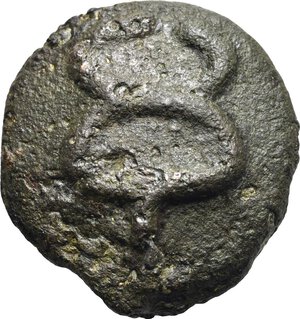
Anonymous (Dioscury/Mercury Series). Circa 280 BC. Cast Sextans (Bronze, 34.70 mm, 59 g), Rome. Scallop shell; below, two pellets (mark of value). Rev. Caduceus; across field, two pellets (mark of value). Crawford 14/5. Sydenham AG 40. HN Italy 272. ICC 30. Green patina. Very Fine.
Lot # 255
-
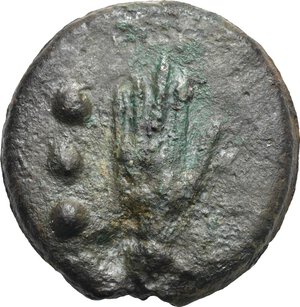
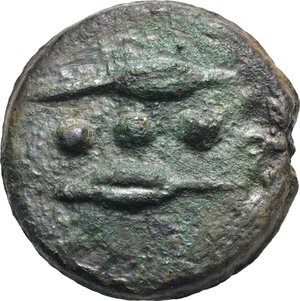
Anonymous (Dioscury/Mercury Series). Circa 280 BC. Cast Quadrans (Bronze, 43.85 mm, 86 g), Rome. Open right hand; beside, three pellets (mark of value). Rev. Two barley grains; between, three pellets (mark of value). Crawford 14/4. Sydenham AG 39. HN Italy 271. ICC 29. Green patina. Very Fine.
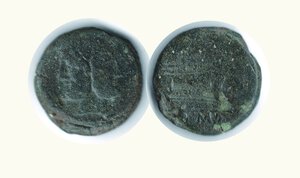
Lot # 743
-
ROMA - Repubblica (169-57 a.C.) - Asse - Sear 693; D/ Testa laureata di Giano; R/ Prora di Galera, al di sotto, ROMA - Peso gr 21,8. Ae MB
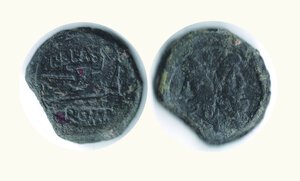
Lot # 742
-
ROMA - Repubblica (169-57 a.C.) - Dupondio; D/ Testa laureata di Giano; R/ Prora di Galera, al di sotto, ROMA, al di sopra, P BLAS - Peso gr 26,5. Ae MB+
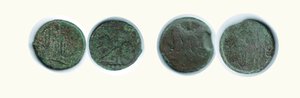
Lot # 741
-
ROMA - Repubblica - Triente (215-211 a.C.) - S. 604 (MB); Dupondio (206-194 a.C.) - S. 664 (B+) - Peso g. 21,3 e 33,7. R Ae B+/MB
Results from 1851 to 1900 of 10423