Roman Imperial Coins
Results from 7351 to 7400 of 32902
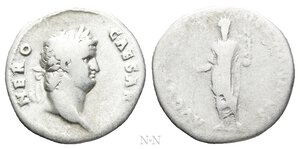
Lot # 331
-
NERO (54-68). Denarius. Rome. Obv: NERO CAESAR. Laureate head right.Rev: AVGVSTVS GERMANICVS. Nero as Sol standing facing, holding branch and crowning Victory on globe.RIC² 47. Condition: Fair.Weight: 3.16 g. Diameter: 18 mm.
Exceptional Denarius
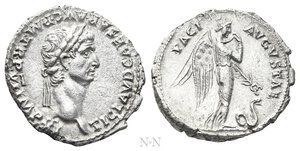
Lot # 330
-
CLAUDIUS (41-54). Denarius. Lugdunum. Obv: TI CLAVD CAESAR AVG P M TR P VI IMP XI. Laureate head right.Rev: PACI AVGVSTAE. Pax-Nemesis advancing right, holding winged caduceus pointing down at snake to right.RIC² 39 (Rome).The reverse type of this rare Denarius may be related to Claudius' expedition to Britain beginning in 43 AD, when the depiction of Nemesis on his coins also began. The emperor placed Aulus Plautius in command and traveled overland to Marseille, then sailed to Britain, where he crossed the Thames and took part in the capture of Camulodunum, obtaining the surrender of several local leaders. He then returned to Rome and celebrated a magnificent triumph in 44.
Nemesis was the goddess of justice and vengeance, daughter of Nyx (Night). She ensured that anyone guilty of a crime would inevitably be punished. The etymology of the name is connected to the verb meaning “to divide,” linking her vengeance to a principle of distributive justice. Nemesis, usually depicted as a winged woman, was often associated on Roman coins with figures such as Aeternitas and Fortuna, emphasizing the role of divine justice, legitimization of power, and celebration of security.
The connection with Pax in this case, also mentioned in the legend PACI AVGVSTAE, could be a reference to Claudius punishing the hubris and arrogance of the local tribes and establishing peace in Britannia. Condition: Extremely fine.Weight: 3.61 g. Diameter: 20 mm.
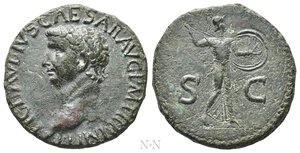
Lot # 329
-
CLAUDIUS (41-54). As. Rome. Obv: TI CLAVDIVS CAESAR AVG P M TR P IMP P P. Bare head left.Rev: S - C. Minerva advancing right, brandishing spear and shield.RIC² 116. Condition: Very fine.Weight: 11.44 g. Diameter: 26 mm.
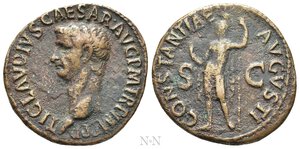
Lot # 328
-
CLAUDIUS (41-54). As. Rome. Obv: TI CLAVDIVS CAESAR AVG P M TR P IMP P P. Bare head left.Rev: CONSTANTIAE AVGVSTI / S - C. Constantia standing left, raising hand and holding spear.RIC² 111. Condition: Very fine.Weight: 10.64 g. Diameter: 29 mm.
Lot # 327
-
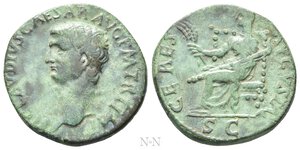
CLAUDIUS (41-54). Dupondius. Rome. Obv: TI CLAVDIVS CAESAR AVG P M TR P IMP. Bare head left.Rev: CERES AVGVSTA / S C. Ceres seated left on throne, holding grain ears and torch.RIC² 94. Condition: Very fine.Weight: 12.98 g. Diameter: 27 mm.
Lot # 326
-
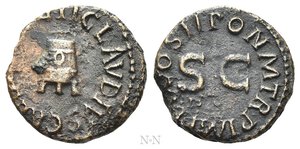
CLAUDIUS (41-54). Quadrans. Rome. Obv: TI CLAVDIVS CAESAR AVG. Modius.Rev: PON M TR P IMP P P COS II. Large S C.RIC² 90. Condition: Good very fine.Weight: 2.81 g. Diameter: 18 mm.
Lot # 325
-
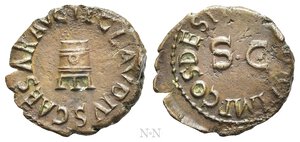
CLAUDIUS (41-54). Quadrans. Rome. Obv: TI CLAVDIVS CAESAR AVG. Modius.Rev: PON M TR P IMP COS DES IT. Large S C.RIC² 84. Condition: Extremely fine.Weight: 2.58 g. Diameter: 18 mm.
Attractive Claudius Denarius
Lot # 324
-
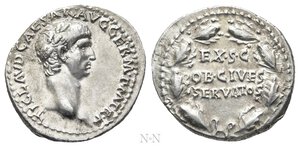
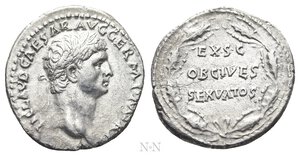
CLAUDIUS (41-54). Denarius. Lugdunum. Obv: TI CLAVD CAESAR AVG GERM P M TR P. Head right, wearing oak wreath.Rev: EX S C / OB CIVES / SERVATOS. Legend in three lines within wreath (corona civica).RIC² 16 (Rome).In the Roman world, wreaths were normally awarded in the distribution of military spoils, by the commander to those who had distinguished themselves in action. Although this was an award usually reserved for simple soldiers, it became a much desired goal for emperors as well.
Claudius was awarded the 'corona civica' for having freed Rome from the tyranny of his predecessor, Caligula. Condition: Extremely fine.Weight: 3.80 g. Diameter: 20 mm.
Lot # 323
-
CLAUDIUS (41-54). Denarius. Lugdunum. Obv: TI CLAVD CAESAR AVG GERM P M TR P. Head right, wearing oak wreath.Rev: EX S C / OB CIVES / SERVATOS. Legend in three lines within wreath (corona civica).RIC² 16 (Rome).In the Roman world, wreaths were normally awarded in the distribution of military spoils, by the commander to those who had distinguished themselves in action. Although this was an award usually reserved for simple soldiers, it became a much desired goal for emperors as well.
Claudius was awarded the 'corona civica' for having freed Rome from the tyranny of his predecessor, Caligula. Condition: Near extremely fine.Weight: 3.57 g. Diameter: 19 mm.
Lot # 322
-
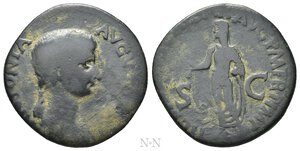
ANTONIA II (Augusta, 37 & 41). Dupondius. Rome. Obv: ANTONIA AVGVSTA. Draped bust right.Rev: TI CLAVDIVS CAESAR AVG P M TR P IMP / S - C. Claudius standing left, veiled, holding simpulum.RIC² 92 (Claudius). Condition: Fine.Weight: 9.92 g. Diameter: 18 mm.
Lot # 321
-
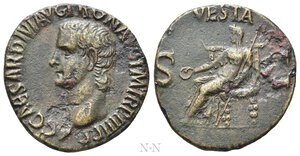
CALIGULA (37-41). As. Rome. Obv: C CAESAR DIVI AVG PRON AVG P M TR P IIII P P. Bare head left.Rev: VESTA / S - C. Vesta seated left on throne, holding patera and sceptre.RIC² 54. Condition: Very fine.Weight: 10.19 g. Diameter: 28 mm.
Lot # 320
-
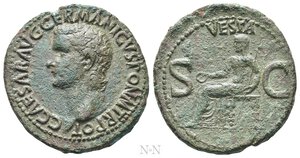
CALIGULA (37-41). As. Rome. Obv: C CAESAR AVG GERMANICVS PON M TR POT. Bare head left.Rev: VESTA / S - C. Vesta seated left on throne, holding patera and sceptre.RIC² 38. Condition: Very fine.Weight: 11.17 g. Diameter: 29 mm.
Lot # 319
-
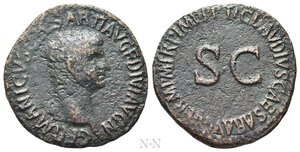
GERMANICUS (Died 19). As. Rome. Struck under Claudius. Obv: GERMANICVS CAESAR TI AVG F DIVI AVG N. Bare head right.Rev: TI CLAVDIVS CAESAR AVG GERM P M TR P IMP P P. Large S C.RIC² 106 (Claudius). Condition: Near very fine.Weight: 8.59 g. Diameter: 18 mm.
Lot # 318
-
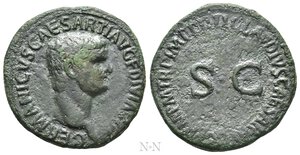
GERMANICUS (Died 19). As. Rome. Struck under Claudius. Obv: GERMANICVS CAESAR TI AVG F DIVI AVG N. Bare head right.Rev: TI CLAVDIVS CAESAR AVG GERM P M TR P IMP P P. Large S C.RIC² 106 (Claudius). Condition: Near very fine.Weight: 11.40 g. Diameter: 29 mm.
Lot # 317
-
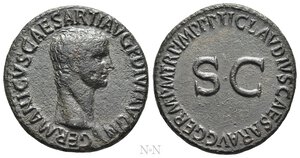
GERMANICUS (Died 19). As. Rome. Struck under Claudius. Obv: GERMANICVS CAESAR TI AVG F DIVI AVG N. Bare head right.Rev: TI CLAVDIVS CAESAR AVG GERM P M TR P IMP P P. Large S C.RIC² 106 (Claudius). Condition: Very fine.Weight: 11.99 g. Diameter: 29 mm.
Lot # 316
-
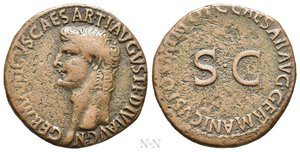
GERMANICUS (Died 19). As. Rome. Struck under Caligula. Obv: GERMANICVS CAESAR TI AVGVST F DIVI AVG N. Bare head left.Rev: C CAESAR AVG GERMANICVS PON M TR POT. Large S C.RIC² 35 (Caligula). Condition: Near very fine.Weight: 10.65 g. Diameter: 27 mm.
Mother of Claudius
Lot # 315
-
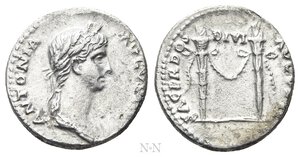
ANTONIA MINOR (37-41). Denarius. Rome. Obv: ANTONIA AVGVSTA. Draped bust right, wearing wreath of corn ears.Rev: SACERDOS DIVI AVGVSTI. Two lighted torches, garland between.RIC² 68 (Claudius).Antonia was the youngest daughter of Mark Antony and Octavia Minor (Augustus sister), and mother of the future emperor Claudius. So-called "Minor" to distinguish her from her older sister Antonia Mayor. In 16 BC she married Nero Claudius Drusus, who was the stepson of Augustus and brother of the future emperor Tiberius. Drusus died in 9 BC after the campaign against Marcomanni and Cherusci, and Antonia refused to remarry, deciding to raise her sons in Rome. She unfortunally outlived many of them. Condition: Near extremely fine.Weight: 3.31 g. Diameter: 18 mm.
Father of Claudius
Lot # 314
-
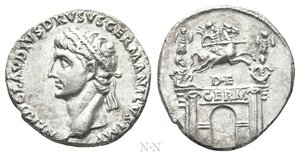
NERO CLAUDIUS DRUSUS (Died 9 BC). Denarius. Lugdunum. Struck under Claudius (41-54). Obv: NERO CLAVDIVS DRVSVS GERMANICVS IMP. Head left, wearing oak wreath.Rev: DE / GERM. Triumphal arch surmounted by equestrian statue right between two trophies and two seated captives with tied hands behind their backs; the one on left looking right, the one on right facing.RIC² 70 (Claudius).Very rareNero Claudius Drusus Germanicus was a member of the Julio-Claudian dynasty, son of Augustus' third wife, Livia Drusilla, and younger brother of the future emperor Tiberius. Augustus granted him numerous privileges, allowing him to hold various public offices several years before the age permitted by law. He married Antonia Minor, daughter of Mark Antony and Octavia Minor (sister of Augustus). She bore him several children, including Germanicus and the future emperor Claudius.
Drusus is remembered above all as a great Roman general. In 16 BC, he took part in the Rhaetian campaign, defeating the Isarci, Breoni, and Reti tribes and, together with Tiberius, the Vindelici, contributing to the creation of new Roman provinces (Rhaetia and Noricum) in the Alpine region.
He was then sent to Transalpine Gaul in 14 BC to build roads and fortified bases along the Rhine. In 13 BC, he successfully commanded military operations against the rebellious tribes of the Rhine.
Finally, he took part in campaigns in Germany, where the Romans subjugated Frisi and Batavi. Drusus led the legions in several offensive operations and successfully defended himself against numerous ambushes. Upon his return to Rome in 11 BC, he received triumphal honors and his soldiers conferred on him the title of “imperator.”
Back in Germany, his brilliant military career was suddenly interrupted in 9 BC by a fall from his horse. The injury to his femur ultimately led him to death, watched over by Tiberius, who celebrated his funeral. Condition: Near extremely fine.Weight: 3.69 g. Diameter: 18 mm.
Rare and Interesting Type
Lot # 313
-
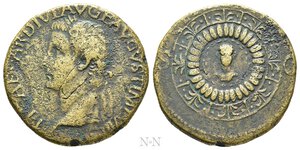
TIBERIUS (14-37). Dupondius. Rome. Obv: TI CAESAR DIVI AVG F AVGVST IMP VIII. Laureate head left.Rev: CLEMENTIAE / S - C. Small bust of Tiberius facing within wreath set on round shield.RIC² 38. Condition: Good fine.Weight: 13.20 g. Diameter: 28 mm.
Lot # 312
-
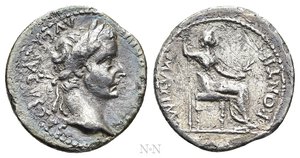
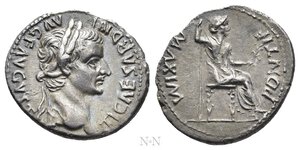
TIBERIUS (14-37). Denarius. "Tribute Penny" type. Lugdunum. Obv: TI CAESAR DIVI AVG F AVGVSTVS. Laureate head right.Rev: PONTIF MAXIM. Livia (as Pax) seated right on throne, holding sceptre and olive branch.RIC² 30. Condition: Fine.Weight: 3.24 g. Diameter: 17 mm.
Lot # 311
-
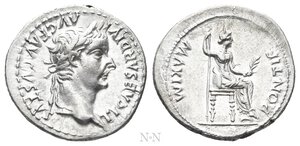
TIBERIUS (14-37). Denarius. "Tribute Penny" type. Lugdunum. Obv: TI CAESAR DIVI AVG F AVGVSTVS. Laureate head right.Rev: PONTIF MAXIM. Livia (as Pax) seated right on throne, holding sceptre and olive branch.RIC² 30. Condition: Very fine.Weight: 3.65 g. Diameter: 19 mm.
Superb Tiberius
Lot # 310
-
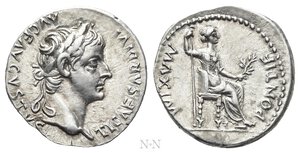
TIBERIUS (14-37). Denarius. "Tribute Penny" type. Lugdunum. Obv: TI CAESAR DIVI AVG F AVGVSTVS. Laureate head right.Rev: PONTIF MAXIM. Livia (as Pax) seated right on throne, holding sceptre and olive branch.RIC² 30. Condition: Extremely fine.Weight: 3.70 g. Diameter: 20 mm.
Lot # 309
-
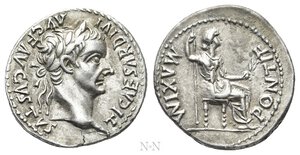
TIBERIUS (14-37). Denarius. "Tribute Penny" type. Lugdunum. Obv: TI CAESAR DIVI AVG F AVGVSTVS. Laureate head right.Rev: PONTIF MAXIM. Livia (as Pax) seated right on throne, holding sceptre and olive branch.RIC² 30. Condition: Near extremely fine.Weight: 3.65 g. Diameter: 19 mm.
Bold Portrait
Lot # 308
-
TIBERIUS (14-37). Denarius. "Tribute Penny" type. Lugdunum. Obv: TI CAESAR DIVI AVG F AVGVSTVS. Laureate head right.Rev: PONTIF MAXIM. Livia (as Pax) seated right on throne, holding sceptre and olive branch.RIC² 30. Condition: Good very fine.Weight: 3.77 g. Diameter: 19 mm.
Lot # 307
-
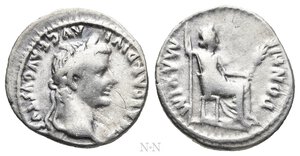
TIBERIUS (14-37). Denarius. "Tribute Penny" type. Lugdunum. Obv: TI CAESAR DIVI AVG F AVGVSTVS. Laureate head right.Rev: PONTIF MAXIM. Livia (as Pax) seated right on throne, holding sceptre and olive branch.RIC² 26. Condition: Near very fine.Weight: 3.65 g. Diameter: 19 mm.
Lot # 306
-
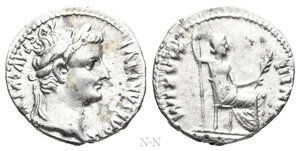
TIBERIUS (14-37). Denarius. "Tribute Penny" type. Lugdunum. Obv: TI CAESAR DIVI AVG F AVGVSTVS. Laureate head right.Rev: PONTIF MAXIM. Livia (as Pax) seated right on throne, holding sceptre and olive branch.RIC² 26. Condition: Very fine.Weight: 3.81 g. Diameter: 18 mm.
Lot # 305
-
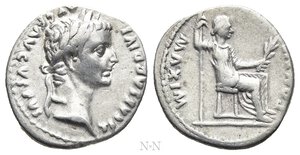
TIBERIUS (14-37). Denarius. "Tribute Penny" type. Lugdunum. Obv: TI CAESAR DIVI AVG F AVGVSTVS. Laureate head right.Rev: PONTIF MAXIM. Livia (as Pax) seated right on throne, holding sceptre and olive branch.RIC² 26. Condition: Very fine.Weight: 3.77 g. Diameter: 18 mm.
Lot # 304
-
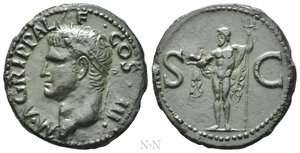
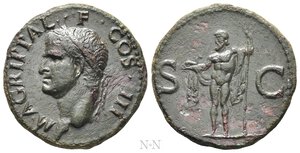
AGRIPPA (Died 12 BC). As. Rome. Struck under Caligula (37-41). Obv: M AGRIPPA L F COS III. Head left, wearing rostral crown.Rev: S - C. Neptune standing left, holding small dolphin and trident.RIC² 58 (Caligula). Condition: Tooled; repatinated.Weight: 12.20 g. Diameter: 29 mm.
Lot # 303
-
AGRIPPA (Died 12 BC). As. Rome. Struck under Caligula (37-41). Obv: M AGRIPPA L F COS III. Head left, wearing rostral crown.Rev: S - C. Neptune standing left, holding small dolphin and trident.RIC² 58 (Caligula). Condition: Very fine; cleaning marks.Weight: 11.35 g. Diameter: 28 mm.
Lot # 302
-
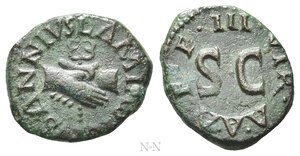
AUGUSTUS (27 BC-14 AD). Quadrans. Rome. Lamia, Silius & Annius, moneyers. Obv: LAMIA SILIVS ANNIVS. Clasped hands over caduceus.Rev: III VIR A A A F F. Large S C.RIC² 420. Condition: Very fine.Weight: 2.81 g. Diameter: 16 mm.
Lot # 301
-
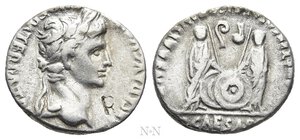
AUGUSTUS (27 BC-14 AD). Denarius. Lugdunum. Obv: CAESAR AVGVSTVS DIVI F PATER PATRIAE. Laureate head right.Rev: C L CAESARES AVGVSTI F COS DESIG PRINC IVVENT. Caius and Lucius Caesar standing facing; two shields, two sceptres; lituus and simpulum above.RIC² 210. Condition: Very fine.Weight: 3.69 g. Diameter: 18 mm.
Lot # 300
-
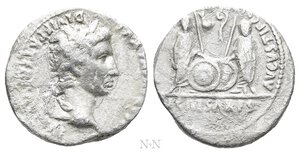
AUGUSTUS (27 BC-14 AD). Denarius. Lugdunum. Obv: CAESAR AVGVSTVS DIVI F PATER PATRIAE. Laureate head right.Rev: C L CAESARES AVGVSTI F COS DESIG PRINC IVVENT. Gaius and Lucius Caesar standing facing; two shields and two sceptres between; above, simpulum and lituus.RIC² 207. Condition: Good fine.Weight: 3.69 g. Diameter: 19 mm.
Lot # 299
-
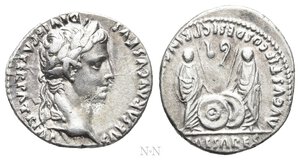
AUGUSTUS (27 BC-14 AD). Denarius. Lugdunum. Obv: CAESAR AVGVSTVS DIVI F PATER PATRIAE. Laureate head right.Rev: C L CAESARES AVGVSTI F COS DESIG PRINC IVVENT. Gaius and Lucius Caesar standing facing; two shields and two sceptres between; above, simpulum and lituus.RIC² 207. Condition: Very fine.Weight: 3.86 g. Diameter: 19 mm.
Lot # 298
-
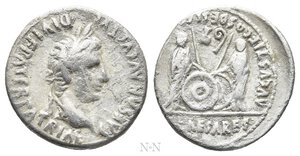
AUGUSTUS (27 BC-14 AD). Denarius. Lugdunum. Obv: CAESAR AVGVSTVS DIVI F PATER PATRIAE. Laureate head right.Rev: C L CAESARES AVGVSTI F COS DESIG PRINC IVVENT. Gaius and Lucius Caesar standing facing; two shields and two sceptres between; above, simpulum and lituus.RIC² 207. Condition: Very fine.Weight: 3.65 g. Diameter: 19 mm.
Lot # 297
-
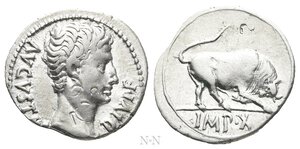
AUGUSTUS (27 BC-14 AD). Denarius. Lugdunum. Obv: AVGVSTVS DIVI F. Bare head right.Rev: IMP X. Bull butting right.RIC² 167a. Condition: Very fine.Weight: 3.73 g. Diameter: 20 mm.
Lot # 296
-
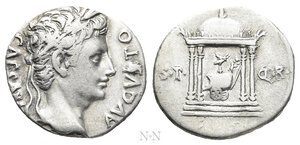
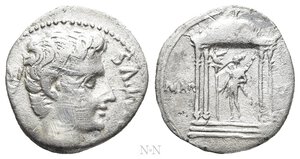
AUGUSTUS (27 BC-14 AD). Denarius. Uncertain Spanish mint, possibly Colonia Patricia. Obv: AVGVSTO CAESARI. Laureate head right.Rev: S P - Q R. Temple of Mars Ultor: round-domed, tetra-style temple set on podium of three steps, within which is a chariot right, carrying an aquila and miniature galloping horses.RIC² 119. Condition: Near very fine.Weight: 3.75 g. Diameter: 18 mm.
Lot # 295
-
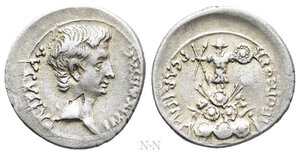
AUGUSTUS (27 BC-14 AD). Denarius. Uncertain Spanish mint, possibly Colonia Patricia. Obv: CAESAR AVGVSTVS. Bare head right.Rev: MAR - VLT. Domed tetrastyle temple, containing statue of Mars standing left, holding aquila and trophy.RIC² 69a. Condition: Near very fine.Weight: 3.53 g. Diameter: 18 mm.
Lot # 294
-
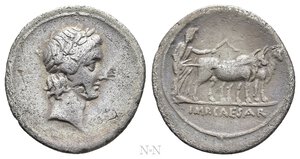
AUGUSTUS (27 BC-14 AD). Denarius. Emerita. P. Carisius, legatus. Obv: IMP CAESAR AVGVST. Bare head right.Rev: P CARISIVS LEG PRO PR. Trophy of Celtiberian arms.RIC² 4a.This denarius was struck during the Cantabrian Wars, which saw the Roman armies engaged for at least a decade, from 29 BC to 19 BC. Augustus aimed to subdue the fierce Cantabrian and Asturian tribes in order to complete the conquest of the Iberian Peninsula and to stop the constant enemy incursions into the central region, rich in gold and iron mines. Eight legions were involved, along with a large number of auxiliary troops and even the Roman fleet, which set sail from nearby Aquitaine and proved decisive in resolving the conflict by blocking the main ports of Cantabria and allowing a complete encirclement.
Knowing they were inferior in open combat, the Cantabrians and Asturians adopted guerrilla tactics, avoiding field battles with terrible surprise attacks, facilitated by the natural conformation of those impervious and montane territories. In the end, the Romans prevailed, thanks in part to the arrival of Agrippa in 20-19 BC, who defeated the Cantabrians at Iuliobriga and forced the tribes to abandon their strongholds. Despite this, Iberian resistance continued to cause problems, and Rome had to maintain two legions in the region for almost a century.
The Cantabrians were lightly armed with spears, small wooden shields, daggers, axes, and the typical Iberian weapon: the falcata. The reverse side of this denarius proudly displays the weapons of the enemy defeated on the battlefield. Condition: Good very fine.Weight: 3.71 g. Diameter: 20 mm.
Lot # 293
-
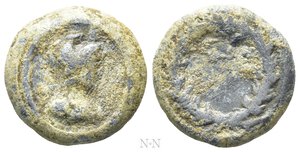
OCTAVIAN. Denarius (30-29 BC). Uncertain mint in Italy, possibly Rome. Obv: Laureate head of Apollo of Actium right, with features of Octavian.Rev: IMP CAESAR. Octavian, as city founder and holding whip and plow handle, plowing with yoke of oxen right.RIC² 272; CRI 424. Condition: Good fine.Weight: 3.49 g. Diameter: 20 mm.
Lot # 263
-
EGYPT. Oxyrhynchus. PB Tessera (2nd-3rd century AD). Obv: Draped bust of Athena right, wearing Corinthian helmet.Rev: Wreath.Milne 5317-9; Dattari (Savio) -; Köln 3557-8. Condition: Good fine.Weight: 10.46 g. Diameter: 21 mm.
Lot # 262
-
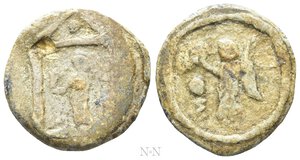
EGYPT. Oxyrhynchus. PB Tessera (2nd-3rd century AD). Obv: Athena standing left, holding Victory and long sceptre; all within distyle temple with pellet in pediment.Rev: Nike advancing left, holding palm frond and wreath; O/Ξ to left.Milne 5312-4; Dattari (Savio) -; Köln 3532-9. Condition: Very fine.Weight: 12.18 g. Diameter: 26 mm.
Lot # 261
-
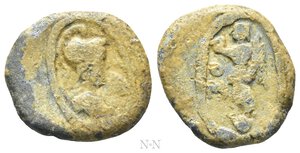
EGYPT. Oxyrhynchus. PB Tessera (2nd-3rd century AD). Obv: Helmeted and cuirassed bust of Athena right.Rev: Nike flying left, holding wreath and palm frond; O/Ξ to left.Milne 5302; Dattari (Savio) 11719; Köln 3521. Condition: Good fine.Weight: 9.26 g. Diameter: 22 mm.
Lot # 260
-
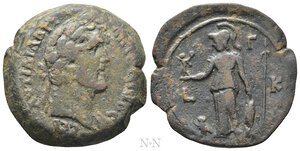
EGYPT. Alexandria. Antoninus Pius (138-161). Ae Drachm. Dated RY 23 (AD 159/60). Obv: ΤΙ ΑΙ ΑΔΡΙ ΑΝΤΩΝΙΝΟϹ ϹЄΒ ЄΥ. Laureate bust right, with slight drapery.Rev: L ΚΓ (date). Athena standing left, holding Nike, resting arm on shield; owl to left, spear to right.RPC IV.4 2151; Dattari (Savio) 8346; Emmett 1475.Rare Condition: Near very fine.Weight: 23.78 g. Diameter: 34 mm.
Lot # 259
-
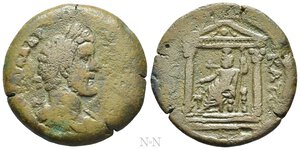
EGYPT. Alexandria. Antoninus Pius (138-161). Ae Drachm. Dated RY 12 (AD 148/9). Obv: ΑΥΤ Κ Τ ΑΙΛ ΑΔΡ ΑΝΤωΝ(Є)ΙΝΟϹ ϹЄΒ ЄΥϹ(ЄΒ). Laureate, draped and cuirassed bust right.Rev: L ΔωΔЄΚΑΤΟY (date). Distyle temple with globe in pediment, enclosing Serapis seated left, holding sceptre; to left, Cerberus.RPC IV.4 1117; Dattari (Savio) 8904-5; Emmett 1668.12. Condition: Good fine.Weight: 22.08 g. Diameter: 34 mm.
Lot # 258
-
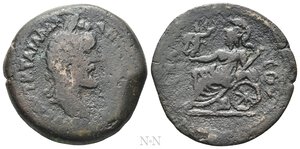
EGYPT. Alexandria. Antoninus Pius (138-161). Ae Drachm. Dated RY 9 (AD 145/6). Obv: ΑΥΤ Κ Τ ΑΙΛ ΑΔΡ ΑΝΤωΝЄΙΝΟϹ ϹЄΒ ЄΥ(Ϲ). Laureate head right.Rev: L ЄΝΑΤΟΥ (date). Roma seated left on cuirass and shield, holding Nike and parazonium.RPC IV.4 932; Dattari (Savio) 8661-3; Emmett 1645.9. Condition: Good fine.Weight: 21.39 g. Diameter: 33 mm.
Zodiac Series - Sun in Leo
Lot # 257
-
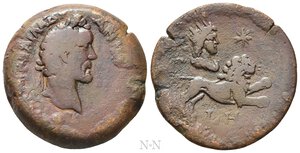
EGYPT. Alexandria. Antoninus Pius (138-161). Ae Drachm. Dated RY 8 (AD 144/5). Zodiac series. Obv: ΑΥΤ Κ Τ ΑΙΛ ΑΔΡ ΑΝΤωΝ(Є)ΙΝΟϹ ϹЄΒ ЄΥϹ. Laureate head right.Rev: L H (date). Zodiac, Sun in Leo: radiate and draped bust of Helios right; below, lion running right; star above.RPC IV.4 858; Dattari (Savio) 2968; Emmett 1530.8.In ancient times, people measured time using two main methods: observing the sun or the moon. The Egyptians were an exception because they used both methods at the same time, creating a civil calendar and a religious one.
The civil calendar was based on Sothis, which moves parallel to the sun and, with its sunrise, marked the beginning of the annual flooding of the Nile. The entire civil year revolved around the river and its fertility. In fact, farmers divided the year into three seasons: flooding, sowing, and harvesting. The religious year, on the other hand, was based on the lunar calendar. Each month was dedicated to a different divinity who was celebrated during that period.
However, the two calendars had different lengths, being based on different calculations, and coincided again after 1460 years, on July 19, AD 139, when the star Sothis aligned perfectly with the Sun on the horizon. This phenomenon marked the end of an era and the beginning of a new cycle during the reign of Antoninus Pius, and was celebrated with the special issue of a series of coins centered on the Zodiac.
All the signs of the zodiac were represented on these coins, but they began with the Phoenix, as it was believed that the exceptional, millennial alignment of Sothis with the Sun also corresponded to the mythical rebirth of this sacred animal, symbol of eternal regeneration. Condition: Fine.Weight: 25.07 g. Diameter: 33 mm.
Zodiac Series - Sun in Leo
Lot # 256
-
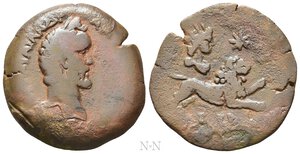
EGYPT. Alexandria. Antoninus Pius (138-161). Ae Drachm. Dated RY 8 (AD 144/5). Zodiac series. Obv: ΑΥΤ Κ Τ ΑΙΛ ΑΔΡ ΑΝΤωΝ(Є)ΙΝΟϹ ϹЄΒ ЄΥϹ. Laureate head right.Rev: L H (date). Zodiac, Sun in Leo: radiate and draped bust of Helios right; below, lion running right; star above.RPC IV.4 858; Dattari (Savio) 2968; Emmett 1530.8.In ancient times, people measured time using two main methods: observing the sun or the moon. The Egyptians were an exception because they used both methods at the same time, creating a civil calendar and a religious one.
The civil calendar was based on Sothis, which moves parallel to the sun and, with its sunrise, marked the beginning of the annual flooding of the Nile. The entire civil year revolved around the river and its fertility. In fact, farmers divided the year into three seasons: flooding, sowing, and harvesting. The religious year, on the other hand, was based on the lunar calendar. Each month was dedicated to a different divinity who was celebrated during that period.
However, the two calendars had different lengths, being based on different calculations, and coincided again after 1460 years, on July 19, AD 139, when the star Sothis aligned perfectly with the Sun on the horizon. This phenomenon marked the end of an era and the beginning of a new cycle during the reign of Antoninus Pius, and was celebrated with the special issue of a series of coins centered on the Zodiac.
All the signs of the zodiac were represented on these coins, but they began with the Phoenix, as it was believed that the exceptional, millennial alignment of Sothis with the Sun also corresponded to the mythical rebirth of this sacred animal, symbol of eternal regeneration. Condition: Fine.Weight: 20.04 g. Diameter: 33 mm.
Lot # 255
-
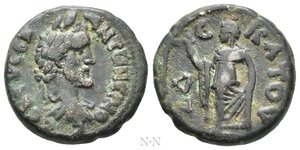
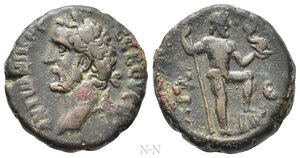
EGYPT. Alexandria. Antoninus Pius (138-161). BI Tetradrachm. Dated RY 10 (AD 146/7). Obv: ΑΝΤωΝЄΙΝΟϹ ϹЄΒ ЄΥϹЄΒ. Laureate, draped and cuirassed bust right, seen from side.Rev: L ΔЄΚΑΤΟΥ (date). Elpis advancing left, holding flower and lifting fold of dress.RPC IV.4 968; Dattari (Savio) 2229; Emmett 1383.10. Condition: Very fine.Weight: 12.35 g. Diameter: 23 mm.
Lot # 254
-
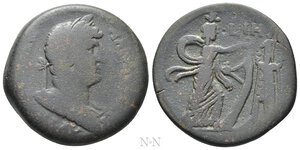
EGYPT. Alexandria. Antoninus Pius (138-161). BI Tetradrachm. Dated RY 5 (AD 141/2). Obv: ΑΝΤωΝΙΝΟϹ ϹЄΒ ЄΥϹΒ. Laureate head left.Rev: L - Є (date). Poseidon, nude, standing right with foot on prow, holding trident and dolphin.RPC IV.4 363; Dattari (Savio) 8223; Emmett 1422.5. Condition: Very fine.Weight: 13.40 g. Diameter: 23 mm.
Lot # 253
-
EGYPT. Alexandria. Hadrian (117-138). Ae Drachm. Dated RY 18 (AD 133/4). Obv: ΑΥΤ ΚΑΙϹ ΤΡΑΙΑΝ ΑΔΡΙΑΝΟϹ ϹЄΒ. Laureate, draped and cuirassed bust right.Rev: L IH (date). Isis Pharia advancing right, holding sistrum and sail; to right, Pharos.RPC III 5895; Dattari (Savio) 1767; Emmett 1002.18.The Lighthouse of Alexandria was named after the island of Pharos, located in front of the city, on which it stood, and is one of the Seven Wonders of the Ancient World, a list compiled in the Hellenistic age. In reconstructing the appearance of the lighthouse, the description of Strabo, who speaks of a multi-story tower built of white stone, dedicated by Sostratus of Knidos to ensure the safety of sailors, is essential. Ancient representations of the lighthouse are rather general and dated to the 1st-2nd centuries AD. For this purpose numismatic documentation proves the most useful. On coins, such as this Hadrian's drachm, some essential features of the monument can be recognized, such as the square plan of the upper lower body, equipped with overlapping windows. The two upper levels, often reduced to one, were octagonal and cylindrical in shape respectively. On the top was located the large burning fire and sculptural groups. Condition: Fine.Weight: 24.94 g. Diameter: 33 mm.
Results from 7351 to 7400 of 32902