Roman Imperial Coins
Results from 13301 to 13350 of 32990
Lot # 453
-
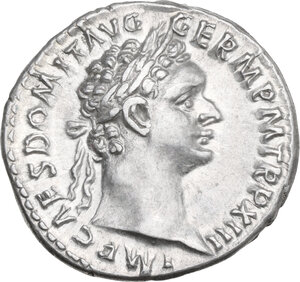
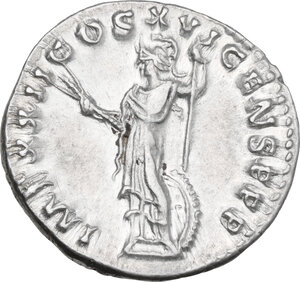
Domitian (81-96). AR Denarius, Rome mint, 93-94. Obv. IMP CAES DOMIT AVG GERM P M TR P XIII. Laureate head right. Rev. IMP XXII COS XVI CENS P P P. Minerva standing left, holding thunderbolt spear; shield at her side. RIC II-p. 1 (2nd ed.) 763. AR. 3.63 g. 19 mm. Scarce. Lightly toned, with underlying luster. About EF/EF.
Lot # 452
-
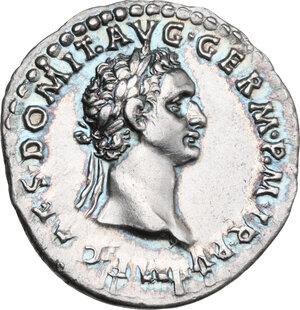
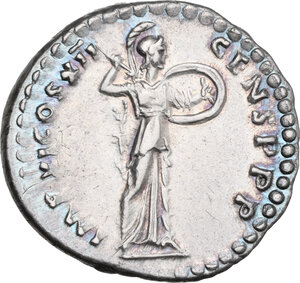
Domitian (81-96). AR Denarius, Rome mint, 86 AD. Obv. IMP CAES DOMIT AVG GERM P M TR P V. Laureate head right. Rev. IMP XI COS XII CENS P P P. Minerva advancing right, holding spear and shield. RSC 273; RIC II-p. 1 (2nd ed.) 425. AR. 3.46 g. 20.5 mm. R. Rare issue. Sound metal and well centred. Lightly toned, with iridescent bluish hues. Good EF/About FDC.
Lot # 451
-
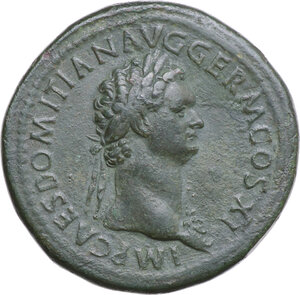
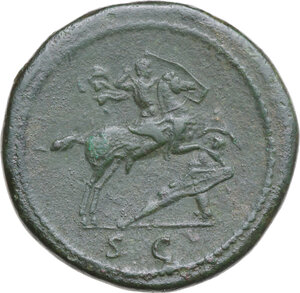
Domitian (81-96). AE Sestertius, Rome mint, 86 AD. Obv. IMP CAES DOMITIAN AVG GERM COS XI. Laureate head right, wearing aegis. Rev. S C across field. Emperor on horseback, holding shield and brandishing spear, trampling kneeling Germanic warrior. RIC II-p. 1 (2nd ed.) 280; C. 483. AE. 27.5 g. 36.5 mm. Choice large flan specimen of a rare type, with only minor touch-ups in the fields. About EF/Good VF.
Lot # 450
-
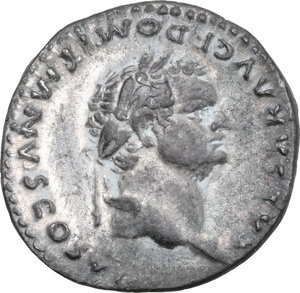
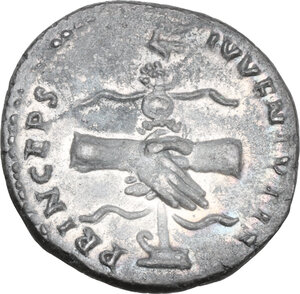
Domitian as Caesar (69-81). AR Denarius, Rome mint. Struck under Vespasian, 79 AD. Obv. CAESAR AVG F DOMITIANVS COS VI. Laureate head right. Rev. PRINCEPS IVVENTVTIS. Clasped hands holding aquila set in prow. RIC II-p. 1 (2nd ed.) (Vesp.) 1081. AR. 3.02 g. 18.5 mm. Pleasant tone, with underlying luster. Oxidation. About EF/EF.
Lot # 449
-
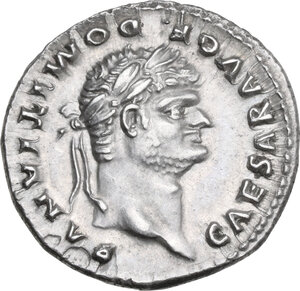
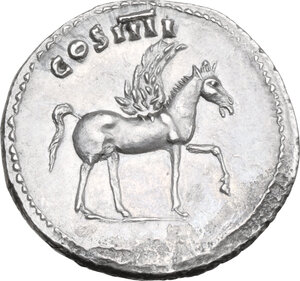
Domitian as Caesar (69-81). AR Denarius, Rome mint. Struck under Vespasian, 76 AD. Obv. CAESAR AVG F DOMITIANVS. Laureate head right. Rev. COS IIII. Pegasus right. RIC II-p. 1 (2nd ed.) 922. AR. 3.21 g. 19.5 mm. RR. Very rare and superb example, with delicate tone. Virtually as struck. Porous area on reverse. About FDC.
Lot # 448
-
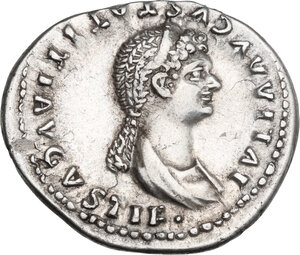
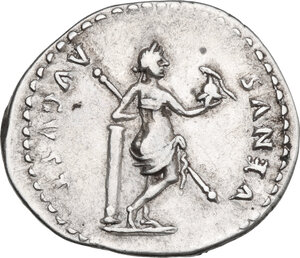
Julia Titi, daughter of Titus (died in 90 AD). AR Denarius, Rome mint. Struck under Titus, 79-81. Obv. IVLIA AVGVSTA TITI AVGVSTI F. Diademed and draped bust right, hair in long plait down back. Rev. VENVS AVGVST. Venus, drapery hanging loosely below waist, standing right, seen from behind, leaning back on column, cradling long sceptre in left arm and holding crested helmet in outstretched right hand. RIC II-p. 1 (2nd ed.) (Titus) 388. AR. 3.37 g. 21 mm. R. Rare issue. Attractive portrait, with delicate tone. Minor nick on obverse, light marks. About EF/Good VF. Though Julia was an Augusta, she was secondary in importance to Domitia, the wife of her uncle Domitian, who was then the reigning emperor. None the less, the future was brimming with hope for Julia, a woman who has come down to us in the historical tradition as less than scrupulous. She was young enough to hope for an elevation from her position of honor to one of actual authority, especially since she was having a secret affair with her uncle Domitian, who was childless and in a difficult marriage. In 83 Julia’s prospects brightened considerably: Domitian exiled his wife and Julia could pursue her affair with Domitian more completely by living with him in the palace. This did not bode well for Julia’s unfortunate husband, her second cousin Flavius Sabinus, who Domitian soon executed on an invented charge. The incestuous couple shared their lives until 90 or 91, when Julia died of a failed abortion attempt.
Lot # 447
-
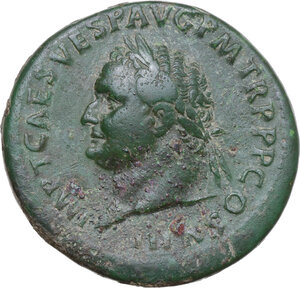
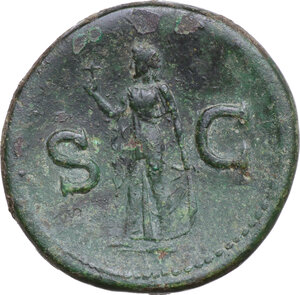
Titus (79-81). AE Sestertius, Rome mint, 80-81 AD. Obv. IMP T CAES VESP AVG P M TR P P P COS VIII. Laureate head left. Rev. S C. Spes standing left, holding flower in right and raising skirt with left. RIC II-p. 1 (2nd ed.) 170. AE. 23.48 g. 34.5 mm. Mesmerizing green and dark patina. Minor corrosion spots on reverse. Good VF.
Judaea Capta
Lot # 446
-
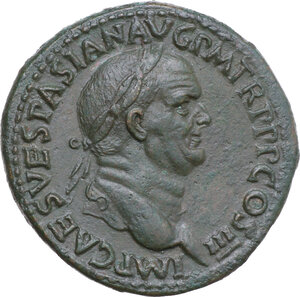
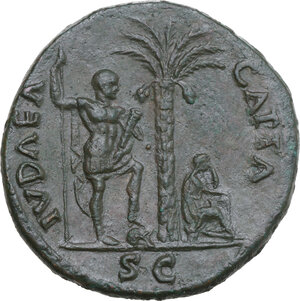
Vespasian (69-79). AE Sestertius, Rome mint, 71 AD. Obv. IMP CAES VESPASIAN AVG P M TR P P P COS III. Laureate head right. Rev. IVDAEA CAPTA S C. Vespasian, in military dress, standing right, holding spear and parazonium, foot on helmet; Judaea, right, seated right, under palm-tree. RIC II-p. 1 (2nd ed.) 167. AE. 20 g. 34 mm. R. Rare and extraordinary example, surely among the finest specimens known. Minor smoothing. EF.
Lot # 445
-
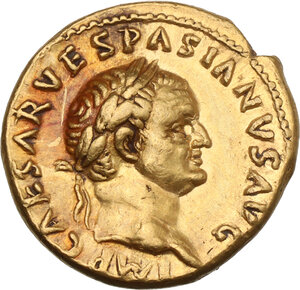
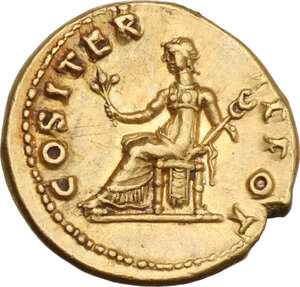
Vespasian (69-79). AV Aureus, Rome mint, 70 AD. Obv. IMP CAESAR VESPASIANVS AVG. Laureate head right. Rev. COS ITER TR POT. Pax seated to left, holding branch and caduceus. Calicó 607; RIC II-p. 1 (2nd ed.) 28. AV. 7.54 g. 18.5 mm. Scarce. Choice example, with good details. Area of reddish tone on obverse. Almost invisible nick on obverse and faint marks on reverse, otherwise. EF.
Lot # 444
-
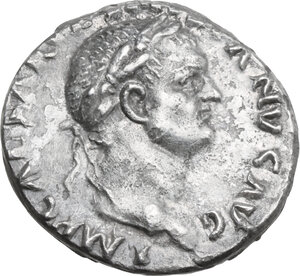
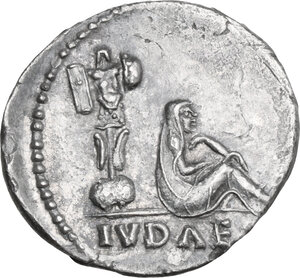
Vespasian (69-79). AR Denarius, Rome mint, 69-70. Judaea Capta issue. Obv. IMP CAESAR [VESPASI]ANVS AVG. Laureate head right. Rev. IVDAE[A]. Judaea seated right, in attitude of mourning; trophy, left. RIC II-p. 1 (2nd ed.) 2. AR. 3.11 g. 17 mm. R. Rare and choice example. Slightly rough surfaces but nice details. Good VF/About EF.
Vitellius Sestertius
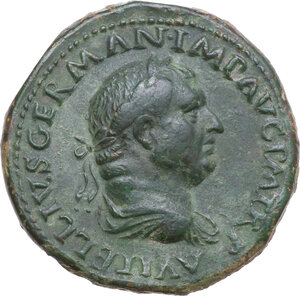
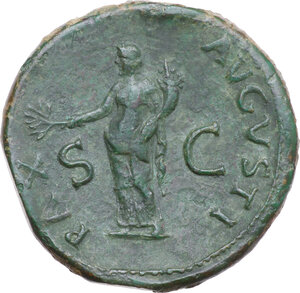
Lot # 443
-
Vitellius (69 AD). AE Sestertius, Rome mint. Obv. A VITELLIVS GERMAN IMP AVG PM TR P. Laureate head right. Rev. PAX AVGVSTI, S-C. Pax draped, standing left, holding branch and cornucopia. RIC I (2nd ed.) 118. AE. 26.56 g. 34.5 mm. RR. Very rare. A fine specimen in unusually good preservation, with strong strike and attractive green patina. Bold portrait. Minor restorations in the fields of the reverse. About EF/Good VF.
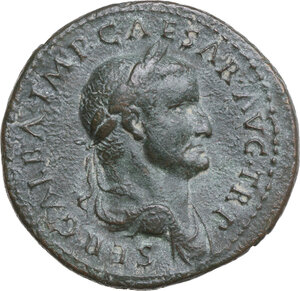
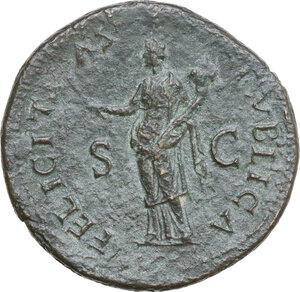
Lot # 442
-
Galba (68-69). AE Dupondius, Rome mint. Obv. SER GALBA IMP CAESAR AVG TRP. Laureate head right. Rev. FELICITAS PVBLICA SC. Felicitas, draped, standing left, holding caduceus and cornucopiae. RIC I (2nd ed.) 411; C. 67. AE. 11.99 g. 28.5 mm. Scarce. Nice portrait. Roughness. VF.
Lot # 441
-
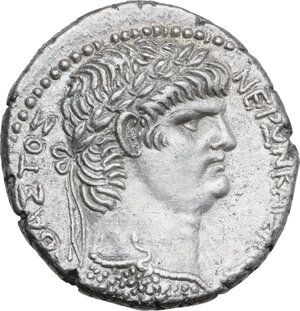
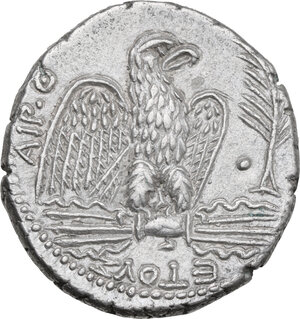
Nero (54-68). AR Tetradrachm, Antioch mint, Seleucis and Pieria, Syria. Obv. ΝΕΡΩΝ ΚΑΙΣΑΡ ΣΕΒΑΣΤΟΣ. Laureate bust right, wearing aegis. Rev. ΕΤΟΥΣ ΑΙΡ Θ. Eagle standing right on thunderbolt, wings open; to right, pellet and palm branch. Prieur 85; McAlee 261; RPC I 4185. AR. 14.78 g. 26 mm. Superb example with detailed and attractive portrait. Pleasant light tone. EF.
Lot # 440
-
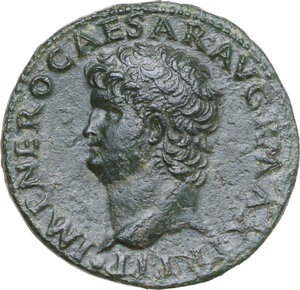
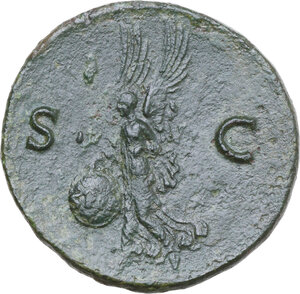
Nero (54-68). AE As, Lugdunum mint, 62-68. Obv. IMP NERO CAESAR AVG P MAX TR P PP. Laureate head left. Rev. Victoria advancing left, holding shield with SPQR inscribed. RIC I (2nd ed.) 544. AE. 10.36 g. 28 mm. Choice example with superb portrait. Lovely green patina. About EF.
Lot # 439
-
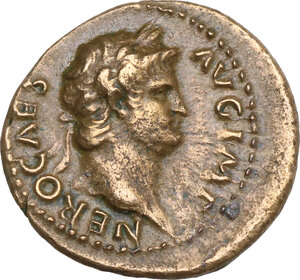
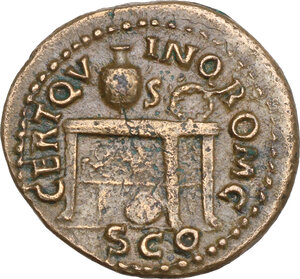
Nero (54-68). AE Semis, Rome mint, 62-68. Obv. NERO CAES AVG IMP. Laureate head right. Rev. CER QVINQ ROM CO S C. Table decorated with two sphinxes or gryphons confronting; on top, urn and wreath; round shield resting on leg. RIC I (2nd ed.) 228. AE. 3.22 g. 19 mm. Attractive 'river' patina. About EF.
Lot # 438
-
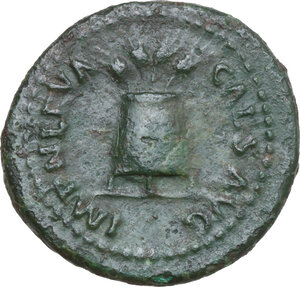
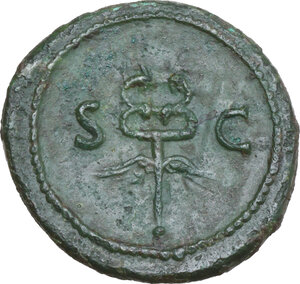
Nerva (96-98). AE Quadrans, 98 AD. Obv. Modius with four corn-ears. Rev. Winged caduceus. RIC II 113. AE. 2.19 g. 18 mm. Perfectly centred and choice example. About EF/EF.
Lot # 437
-
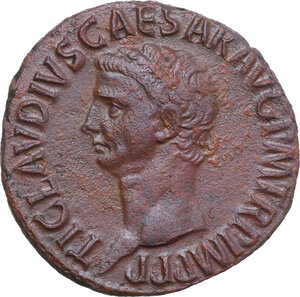
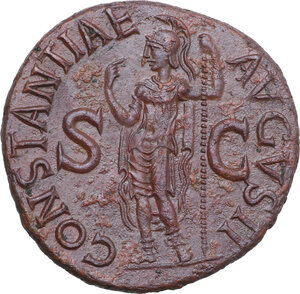
Claudius (41-54). AE As, Rome mint, 50-54. Obv. TI CLAVDIVS CAESAR AVG PM TR P IMP PP. Bare head left. Rev. CONSTANTIAE AVGVSTI SC. Constantia, helmeted and in military dress, standing left, right raised, left holding spear. RIC I (2nd ed.) 111. AE. 11.07 g. 28.5 mm. Superb example with enchanting reddish patina. Exquisite style. EF/Good EF.
Lot # 436
-
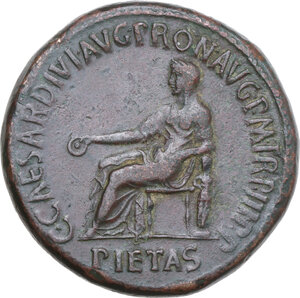
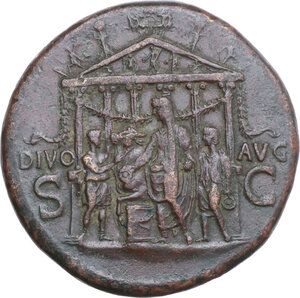
Gaius (37-41). AE Sestertius, Rome mint, 39-40. Obv. C CAESAR DIVI AVG PRON AVG PM TR P III PP. Pietas, veiled and draped, seated left, holding patera, resting left arm on small facing figure; in exergue, PIETAS. Rev. DIVO AVG SC. Hexastyle garlanded temple, before which Gaius veiled and togate, sacrifices over altar; one attendant leads bull to the altar; a second holds patera. RIC I (2nd ed.) 44. AE. 29.1 g. 35.5 mm. R. Rare and choice example, with enchanting brown patina. About EF.
Lot # 435
-
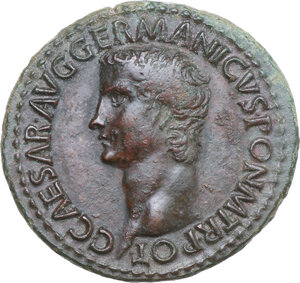
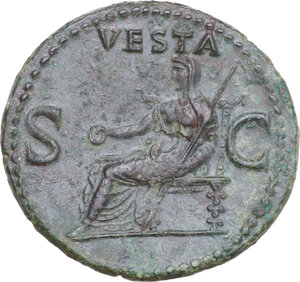
Gaius (Caligula) (37-41). AE As, Rome mint, 37-38. Obv. C CAESAR AVG GERMANICVS PON M TR POT. Bare head left. Rev. VESTA S C. Vesta, veiled and draped, seated left on throne with ornamented back and legs, holding patera in right hand and long transverse sceptre in left. RIC I (2nd ed.) 38. AE. 11.27 g. 30 mm. Gently cleaned. Superb example with mesmerizing brown and green patina. EF.
Lot # 434
-
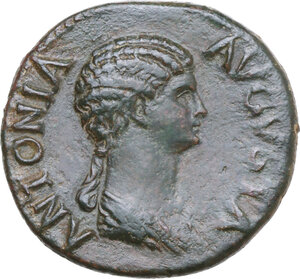
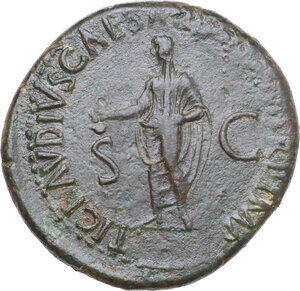
Antonia, daughter of Mark Anthony and Octavia (died 45 AD). AE Dupondius, Rome mint, 41-42. Obv. ANTONIA AVGVSTA. Draped bust right. Rev. TI CLAVDIVS CAESAR AVG PM TR P IMP, SC. Claudius, veiled and togate, standing left, holding simpulum. RIC I (2nd ed.) (Claud.) 92. AE. 13.7 g. 29 mm. R. Rare and choice example, lovely green patina. Good VF.
Spintria V
Lot # 433
-
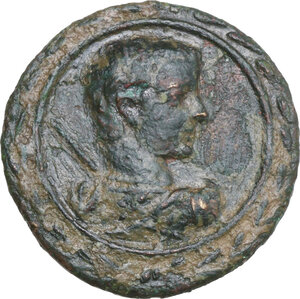
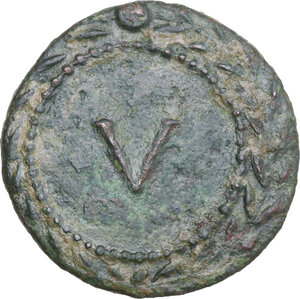
Time of Tiberius. AE Spintria, Rome mint, c. 22-37. Obv. Cuirassed bust of Tiberius right, with spear on shoulder in linear border, all within wreath. Rev. V in dotted border, within wreath. Cf. Buttrey ('The Sprintiae as a Historical Source' Numismatic Chronicle, 1973), p. 62, n. 17. AE. 4.11 g. 21 mm. RRR. Extremely rare and fascinating example. Dark patina with green and reddish spots. Minor corrosion spots on obverse. VF/Good VF. Ex Kunker 124, 2007, 8804.
Hexastyle Temple of Concordia
Lot # 432
-
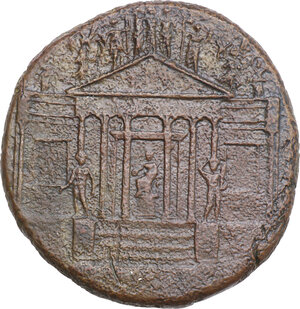
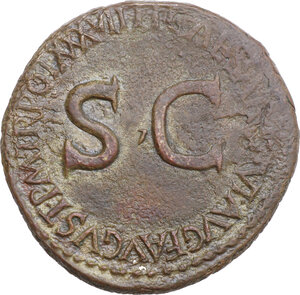
Tiberius (14-37). AE Sestertius, Rome mint, 36-37. Obv. The hexastyle Temple of Concordia, enclosing Concordia seated left on throne, holding patera and sceptre, between statues on podium of Hercules and Mercury; on pediment, statues of Jupiter, Juno and Minerva; Victories as acroteria. Rev. TI CAESAR DIVI AVG F AVGVST P M TR POT XXXVII around large SC. RIC I (2nd ed.) 61. AE. 26.03 g. 35.5 mm. RR. Very rare and fascinating architectural issue. Brown patina. Rough surfaces. VF.
Lot # 431
-
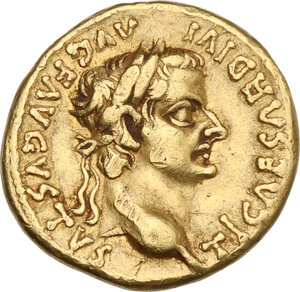
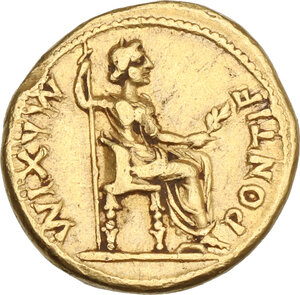
Tiberius (14-37). AV Aureus 'Tribute Penny' type. Lugdunum mint, 36-37. Obv. TI CAESAR DIVI AVG F AVGVSTVS. Laureate head right. Rev. PONTIF MΛXIM. Livia (as Pax) seated right on chair, feet on footstool, holding sceptre and olive branch. Calicò 305 b; RIC I (2nd ed.) 29; SNG BN 22-7. AV. 7.69 g. 19 mm. R. Rare and good example. Small gash on obverse and nick on edge on reverse. VF/Good VF.
Superb Livia As Pietas
Lot # 430
-
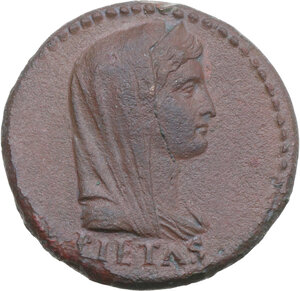
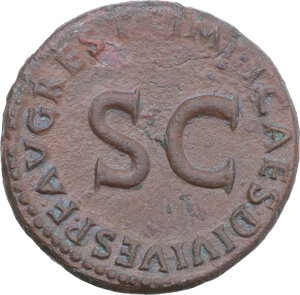
Julia Augusta (Livia), Augusta, (14-29). AE Dupondius. Restitution issue under Titus, AD 80-81. Obv. Diademed, draped and veiled bust of Livia as Pietas, right. Rev. IMP T CAES DIVI VESP F AVG REST around large S C. RIC II-p. 1 (2nd ed.) 426. AE. 12.86 g. 28.5 mm. Light brown tone with green highlights. Slightly rough surface on obverse. Choice example. EF.
Lot # 429
-
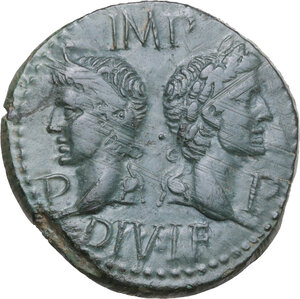
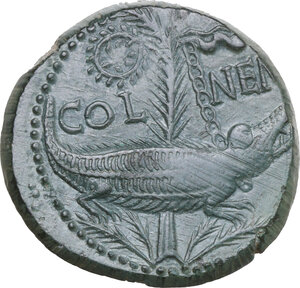
Augustus (27 BC - 14 AD) with Agrippa. AE As, Nemausus mint, c. 10-14 AD. Obv. Heads of Agrippa, wearing combined rostral crown and laurel wreath, to left and Augustus, laureate, to right, back to back; IMP above, DIVI F below, P P across field. Rev. Crocodile right, chained to palm tree; above, wreath with long ties; COL NEM across field. RIC I (2nd ed.) 159; RPC I 525. AE. 13.24 g. 27 mm. A handsome example. Lovely olive green patina. Light weight adjustment scratches as usual for this issue. EF. This coin type was first issued to commemorate Augustus’ establishment of the colony Colonia Augusta Nemausus in southern Gaul in 27 BC. However, this particular example comes from a later reissue, struck two years after Agrippa’s death. The presence of P P (Pater Patriae) on the obverse indicates it was minted after Augustus received this title in 2 BC, confirming it as a subsequent emission of the well-known 'crocodile dupondius.'.
Lot # 428
-
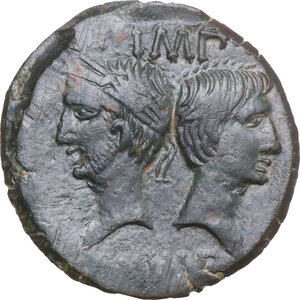
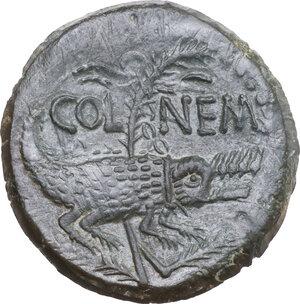
Augustus (27 BC - 14 AD) with Agrippa. AE As, Nemausus mint, 20-10 BC. Obv. IMP DIVI F. Heads of Agrippa (left) and Augustus (right) back to back, Agrippa wearing combined rostral crown and laurel wreath and Augustus is bare-headed. Rev. COL NEM. Crocodile chained to palm-shoot with tip right; above on left a wreath with long ties. RIC I (2nd ed.) 157. AE. 10.89 g. 27.5 mm. Choice example with fascinating coarse style. Lovely dark patina. EF.
Lot # 427
-
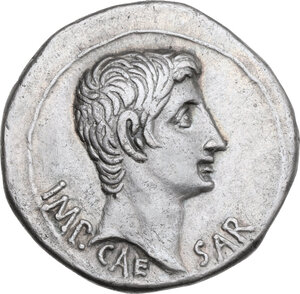
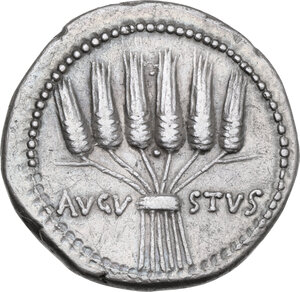
Augustus (27 BC - 14 AD). AR Cistophorus, Ephesus mint, 24-20 BC. Obv. IMP – CAE – SAR. Bare head right. Rev. AVGV-STVS. Six grain ears. RIC I (2nd ed.) 481; RPC I 2214. AR. 11.74 g. 26 mm. R. Rare and choice example, with delicate cabinet tone. Good VF/About EF.
Lot # 426
-
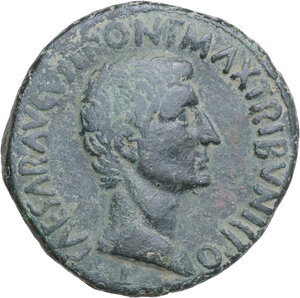
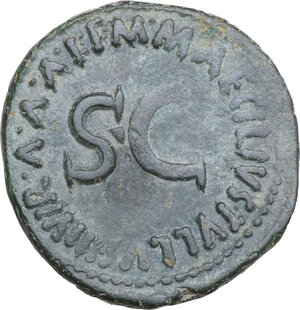
Augustus (27 BC - 14 AD). AE As, Rome mint, 7 BC. Obv. CAESAR AVGVST PONT MAX TRIBVNIC POT. Bare head right. Rev. M MAECILIVS TVLLVS III VIR AAAFF around large S•C. RIC I (2nd ed.) 435. AE. 10.93 g. 28 mm. Nice portrait. Lovely dark patina. VF/Good VF.
Lot # 425
-
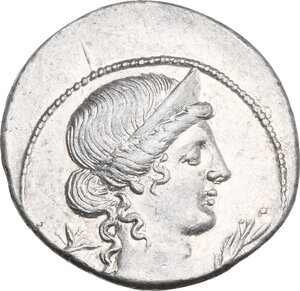
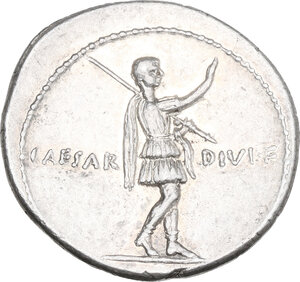
Augustus (27 BC - 14 AD). AR Denarius, Uncertain mint in Italy (Rome?), 32-31 BC. Obv. Diademed head of Pax right; cornucopia to left, olive branch to right. Rev. [C]AESAR - DIVI F. Octavian in military attire advancing right, right hand extended and holding transverse spear in left. RSC 72; RIC I (2nd ed.) 253. AR. 3.95 g. 20.5 mm. Sharply struck with lovely warm toning. Few light marks on obverse. About FDC/Good EF. Issue minted before the Battle of Actium in 31 BC, when Octavian still had to claim descent from Julius Caesar (hence the legend that names him as son of Divus Julius).
Lot # 424
-
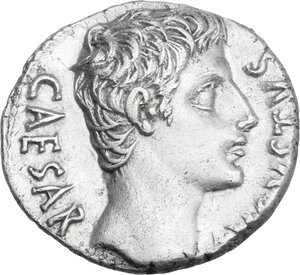
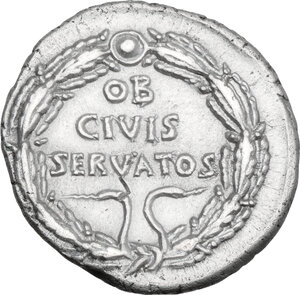
Augustus (27 BC - 14 AD). AR Denarius, Uncertain Spanish mint (Colonia Patricia?), c. 19 BC. Obv. CAESAR AVGVSTVS. Bare head right. Rev. OB / CIVIS / SERVATOS in three lines; all within oak wreath. RIC I (2nd ed.) 77a; C. 208 (Fr.5). AR. 3.74 g. 18.5 mm. Well centred and superb example, sound metal. Banker's mark on reverse. EF.
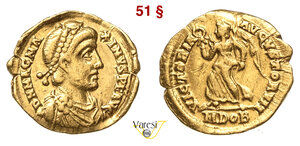
Lot # 51
-
MAGNO MASSIMO (335-388 d.C.) Tremisse, Mediolanum D/ Busto diademato, drappeggiato e corazzato volto a d. R/ La Vittoria con lunga veste incedente a s. con corona di alloro e ramo di palma. All'esergo MDOB Ulrich-Bansa manca come tipo Toffanin 468 RIC 18a Au 1,40 g 14 mm RRRR • Di questo imperatore sono noti Solidi, Tremissi, Silique e divisionali in bronzo. Il nominale più raro é certamente il tremisse; presente fra le grandi collezioni del passato solo nella Montagu e nella d'Amecourt ed assente nelle più recenti tra cui la Biaggi De Blasys. La zecca consueta, per i pochi esemplari passati in asta in anni relativamente recenti, é sempre quella di Treviri, eletta da Magno Massimo a sua capitale. La zecca di Mediolanum, attiva attorno al 366 durante un assedio, é nota soprattutto per la produzione di silique in argento mentre le sue emissioni auree, assolutamente esigue, sono note solo dal RIC. Della più grande rarità, forse solo 2/3 esemplari conosciuti BB+
Non spediamo questo lotto fuori dall'Italia - We do not ship this lot outside Italy.
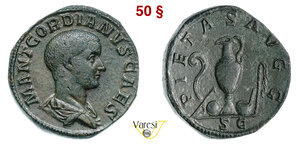
Lot # 50
-
GORDIANO III, Cesare (238) Sesterzio D/ Busto drappeggiato e corazzato R/ Strumenti sacrificali RIC 3 Coh. 183 Ae 22,68 g 30 mm R • Bel ritratto BB
Non spediamo questo lotto fuori dall'Italia - We do not ship this lot outside Italy.
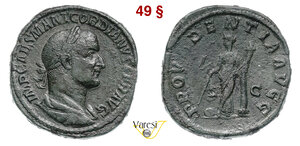
Lot # 49
-
GORDIANO I, l'Africano (238) Sesterzio D/ Busto laureato, drappeggiato e corazzato R/ La Providentia, con bacchetta e cornucopia, appoggiata ad una colonna RIC 9 Coh. 6 Ae 18,75 g 30 mm RR BB
Non spediamo questo lotto fuori dall'Italia - We do not ship this lot outside Italy.
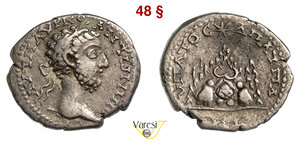
Lot # 48
-
CARACALLA (198-217) Dracma Caesarea di Cappadocia D/ Testa laureata R/ Monte Argaeus e, in alto, una stella Ag 4,11 g 21 mm BB
Non spediamo questo lotto fuori dall'Italia - We do not ship this lot outside Italy.
Lot # 47
-
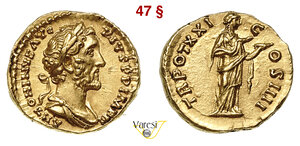
ANTONINO PIO (138-161) Aureo D/ Busto laureato e drappeggiato R/ La Salus stante, nutre un serpente Coh. 1044 RIC 279 Au 7,30 g 18 mm • Ex Varesi 70/98, ex Triton 2005/1143 ed ex Collezione Brandt (asta Sotheby's 1982/17) SPL
Non spediamo questo lotto fuori dall'Italia - We do not ship this lot outside Italy.
Lot # 46
-
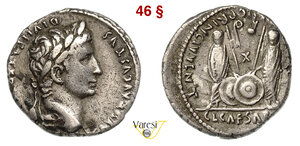
AUGUSTO (27 a.C.-14 d.C.) Denario, Lugdunum D/ Testa laureata R/ Caio e Lucio stanti con scudi e lance; tra di loro lituus, simpulum e X RIC 211 Ag 3,55 g 18 mm BB
Non spediamo questo lotto fuori dall'Italia - We do not ship this lot outside Italy.
Lot # 5836
-
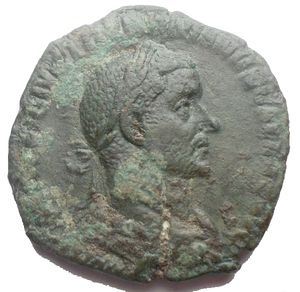
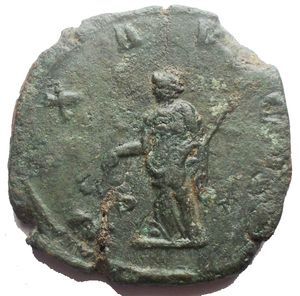
Trebonianus Gallus (251-253), Sestertius, Rome, AD 251-253; AE (g 12,94; mm 28,1 x 28,8) d/ laureate, draped and cuirassed bust r., Rv. PAX AVGG, Pax standing l., holding branch and transverse sceptre; in field, S - C. RIC 115a; C 78. Green patina
Watch:
or
Lot # 1236
-
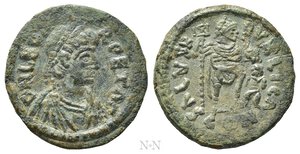
LEO I (457-474). Nummus. Constantinople or Cherson. Obv: D N LEO PERPET AG. Diademed, draped and cuirassed bust right.Rev: SALVS R PVRLICA / CON. Leo standing right, holding labarum and globus; captive to right.RIC 659. Condition: Very fine; heavy cleaning marks.Weight: 4.64 g. Diameter: 21 mm.
Lot # 1235
-
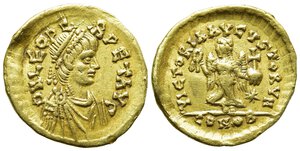
LEO I (457-474). GOLD Tremissis. Constantinople. Obv: D N LEO PERPET AVG. Diademed, draped and cuirassed bust right.Rev: VICTORIA AVGVSTORVM / CONOB. Victory advancing right, head left, holding wreath and globus cruciger; star to right.RIC 611. Condition: Very fine.Weight: 1.46 g. Diameter: 15 mm.
Lot # 1234
-
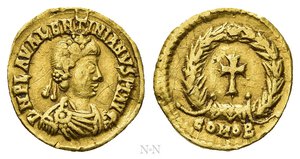
VALENTINIAN III (425-455). GOLD Tremissis. Rome or Ravenna. Obv: D N PLA VALENTINIANVS P F AVG. Rosette-diademed, draped and cuirassed bust right.Rev: COMOB. Latin cross within wreath with central jewel.RIC 2060; Depeyrot 47/7. Condition: Very fine.Weight: 1.35 g. Diameter: 13 mm.
Lot # 1233
-
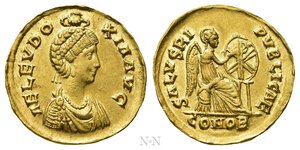
AELIA EUDOXIA (Augusta, 400-404). GOLD Solidus. Constantinople. Obv: AEL EVDOXIA AVG. Diademed and draped bust right; manus Dei above, crowning her.Rev: SALVS REI PVBLICAE / CONOB. Victory seated right on throne, inscribing Christogram on shield set upon a column.RIC 12; Depeyrot 55/4. Condition: Good very fine; ex jewelry.Weight: 4.08 g. Diameter: 19 mm.
Lot # 1232
-
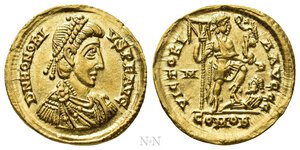
HONORIUS (393-423). GOLD Solidus. Mediolanum. Obv: D N HONORIVS P F AVG. Pearl-diademed, draped and cuirassed bust right.Rev: VICTORIA AVGGG / M - D / COMOB. Honorius standing right, with foot set on captive, holding vexillum and victoriola.RIC 1206; Depeyrot 16/2.Honorius became Augustus of the West at the age of ten at the behest of his father Theodosius I, who was intent on establishing the succession before his death. Given his young age, however, he was assisted by the valiant general Stilicho, who was half Vandal in origin and unlikely to have been aiming for the throne. The East, on the other hand, was entrusted to Honorius's brother Arcadius, and this was home to unrest because the two brothers did not like each other and were both assisted by cunning and manipulative advisers. By now there was no longer talk of a western and eastern part of the empire, but of two separate empires. Theodosius' project of a united empire in solidarity with the barbarian peoples, integrated into the Roman army, had failed. According to some historians Arcadius was the first Byzantine emperor. Stilicho faced great difficulties on the eastern front, mainly due to Alaric's Goths and other tribes crossing into Gaul. The situation precipitated and the Senate refused to pay a large sum of money to Alaric, further accusing Stilicho of conspiring with the enemy and condemning him to death in 408. It was the beginning of the end for the West, because the most valuable politician and general was lost. Honorius resided in Ravenna, where he treacherously attempted to murder Alaric, who was there to renew the 'foedus' with the emperor. This caused him to break off all negotiations and led to the famous 'sack of Rome' in 410, which marked the end of the city as capital. The news of Rome's fall represented a trauma for the empire and the collapse of the certainty of its invincibility. Honorius also did not recognize the marriage between his half-sister Galla Placidia and Ataulf, Alaric's successor. This marriage was strongly desired by the Goths and may have been a response to the crisis in the empire, as Ataulf intended to settle permanently in Roman territories by offering protection to the emperor instead of fighting him. In 413 General Flavius Constantius defeated four usurpers in the western provinces, succeeded in signing a peace treaty with Ataulf, and became associate emperor under the name Constantius III (421) but, unrecognized by the eastern empire, died shortly thereafter. In 423 Honorius also died, marking the final surrender, the birth of the Romano-Barbarian kingdoms and the first steps of medieval history. Condition: Near mint state; luster in field.Weight: 4.39 g. Diameter: 21 mm.
Lot # 1231
-
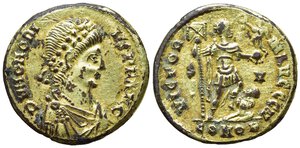
HONORIUS (393-423). Fourrèe Solidus. Contemporary imitation of Sirmium. Obv: D N HONORIVS P F AVG. Diademed, draped and cuirassed bust right.Rev: VICTORIA AVGGG A / S - M / COMOB. Honorius standing right, with foot upon captive, holding labarum and victoriola.Cf. RIC 15d (for prototype). Condition: Very fine.Weight: 2.86 g. Diameter: 20 mm.
Lot # 1230
-
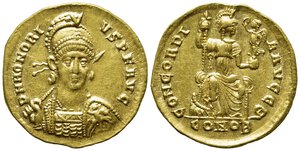
HONORIUS (393-423). GOLD Solidus. Constantinople. Obv: D N HONORIVS P F AVG. Diademed, helmeted and cuirassed bust facing slightly right, holding spear and shield decorated with horseman motif.Rev: CONCORDIA AVGG Θ / CONOB. Constantinopolis seated facing on throne, head right, with foot set upon prow, holding sceptre and victoriola.RIC 8; Depeyrot 55/2.Honorius became Augustus of the West at the age of ten at the behest of his father Theodosius I, who was intent on establishing the succession before his death. Given his young age, however, he was assisted by the valiant general Stilicho, who was half Vandal in origin and unlikely to have been aiming for the throne. The East, on the other hand, was entrusted to Honorius's brother Arcadius, and this was home to unrest because the two brothers did not like each other and were both assisted by cunning and manipulative advisers. By now there was no longer talk of a western and eastern part of the empire, but of two separate empires. Theodosius' project of a united empire in solidarity with the barbarian peoples, integrated into the Roman army, had failed. According to some historians Arcadius was the first Byzantine emperor. Stilicho faced great difficulties on the eastern front, mainly due to Alaric's Goths and other tribes crossing into Gaul. The situation precipitated and the Senate refused to pay a large sum of money to Alaric, further accusing Stilicho of conspiring with the enemy and condemning him to death in 408. It was the beginning of the end for the West, because the most valuable politician and general was lost. Honorius resided in Ravenna, where he treacherously attempted to murder Alaric, who was there to renew the 'foedus' with the emperor. This caused him to break off all negotiations and led to the famous 'sack of Rome' in 410, which marked the end of the city as capital. The news of Rome's fall represented a trauma for the empire and the collapse of the certainty of its invincibility. Honorius also did not recognize the marriage between his half-sister Galla Placidia and Ataulf, Alaric's successor. This marriage was strongly desired by the Goths and may have been a response to the crisis in the empire, as Ataulf intended to settle permanently in Roman territories by offering protection to the emperor instead of fighting him. In 413 General Flavius Constantius defeated four usurpers in the western provinces, succeeded in signing a peace treaty with Ataulf, and became associate emperor under the name Constantius III (421) but, unrecognized by the eastern empire, died shortly thereafter. In 423 Honorius also died, marking the final surrender, the birth of the Romano-Barbarian kingdoms and the first steps of medieval history. Condition: Near extremely fine.Weight: 4.38 g. Diameter: 20 mm.
Lot # 1229
-
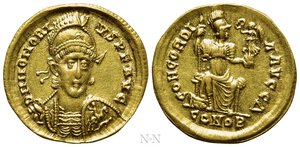
HONORIUS (393-423). GOLD Solidus. Constantinople. Obv: D N HONORIVS P F AVG. Diademed, helmeted and cuirassed bust facing slightly right, holding spear and shield decorated with horseman motif.Rev: CONCORDIA AVGG Δ / CONOB. Constantinopolis seated facing on throne, head right, with foot set upon prow, holding sceptre and victoriola.RIC 8; Depeyrot 55/2.Honorius became Augustus of the West at the age of ten at the behest of his father Theodosius I, who was intent on establishing the succession before his death. Given his young age, however, he was assisted by the valiant general Stilicho, who was half Vandal in origin and unlikely to have been aiming for the throne. The East, on the other hand, was entrusted to Honorius's brother Arcadius, and this was home to unrest because the two brothers did not like each other and were both assisted by cunning and manipulative advisers. By now there was no longer talk of a western and eastern part of the empire, but of two separate empires. Theodosius' project of a united empire in solidarity with the barbarian peoples, integrated into the Roman army, had failed. According to some historians Arcadius was the first Byzantine emperor. Stilicho faced great difficulties on the eastern front, mainly due to Alaric's Goths and other tribes crossing into Gaul. The situation precipitated and the Senate refused to pay a large sum of money to Alaric, further accusing Stilicho of conspiring with the enemy and condemning him to death in 408. It was the beginning of the end for the West, because the most valuable politician and general was lost. Honorius resided in Ravenna, where he treacherously attempted to murder Alaric, who was there to renew the 'foedus' with the emperor. This caused him to break off all negotiations and led to the famous 'sack of Rome' in 410, which marked the end of the city as capital. The news of Rome's fall represented a trauma for the empire and the collapse of the certainty of its invincibility. Honorius also did not recognize the marriage between his half-sister Galla Placidia and Ataulf, Alaric's successor. This marriage was strongly desired by the Goths and may have been a response to the crisis in the empire, as Ataulf intended to settle permanently in Roman territories by offering protection to the emperor instead of fighting him. In 413 General Flavius Constantius defeated four usurpers in the western provinces, succeeded in signing a peace treaty with Ataulf, and became associate emperor under the name Constantius III (421) but, unrecognized by the eastern empire, died shortly thereafter. In 423 Honorius also died, marking the final surrender, the birth of the Romano-Barbarian kingdoms and the first steps of medieval history. Condition: Extremely fine.Weight: 4.48 g. Diameter: 20 mm.
Lot # 1228
-
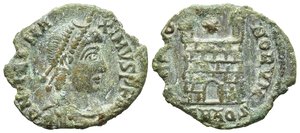
MAGNUS MAXIMUS (383-388). Ae. Aquileia. Obv: D N MAG MAXIMVS P F AVG. Diademed, draped and cuirassed bust right.Rev: SPES ROMANORVM / SMAQS. Camp gate, with open door and two towers; star above.RIC 55a.2. Condition: Good very fine.Weight: 0.95 g. Diameter: 14 mm.
Lot # 1227
-
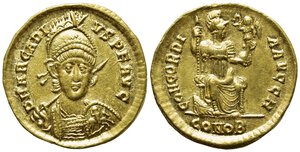
ARCADIUS (383-408). GOLD Solidus. Constantinople. Obv: D N ARCADIVS P F AVG. Diademed, helmeted and cuirassed bust facing slightly right, holding spear and shield decorated with horseman motif.Rev: CONCORDIA AVGG H / CONOB. Constantinopolis seated facing on throne, head right, with foot set upon prow, holding sceptre and victoriola.RIC 7; Depeyrot 55/1.The eldest son of Theodosius I from Spain, Arcadius became augustus at the age of six. When his father left to end the usurpation of Eugenius and did not return, Arcadius remained in Constantinople in his stead and became augustus of the East at eighteen, while his brother Honorius got the West. The empire was now divided, Theodosius I was first seen as the unifier and then as the one who divided it forever. From this time on, the two empires had independent lives and slowly became more and more distinct from each other, and Arcadius was recognized as the first Byzantine emperor. Initially Arcadius reigned under his patron Rufinus, an ambitious politician from Aquitaine who frowned upon his equivalent in the West, Stilicho. The latter made a secret agreement with the Visigoth leader Gainas, who had been welcomed to Constantinople by Arcadius, and killed Rufinus. Stilicho thus prevailed in this dispute but was sentenced to death in 408, accused among other things of the murder of Rufinus himself. His place was then taken by the eunuch Eutropius, remembered in the sources as a cruel and vicious man. Eutropius tried to forge an alliance with Alaric, who now hold the balance of power between East and West. By putting his opponents to death and confiscating their wealth, he succeeded in getting Stilicho declared a public enemy and bring Africa under the control of the East in order to secure its grain, bringing the West to its knees and starving it. In any case, Arcadius was persuaded by the court to get Eutropius, who was in fact acting as the real emperor, out of the way and hit with damnatio memoriae as well. In his place was chosen Gainas himself, the Visigoth leader, who, however, was short-lived. The anti-barbarian mood that was fueled by influential figures, such as Patriarch John Chrysostom, resulted in a revolt in Constantinople against the Goths and, therefore, also against Gainas, and led to a massacre of the barbarians and the escape of their leader. At this point the reins of the empire were taken over by the emperor's wife, Aelia Eudoxia, as Arcadius proved incapable of governing. Aelia pushed Alaric to invade the West, receiving in turn fierce criticism from the patriarch and the hatred of much of the people. However, she died in 404 from an abortion, while Arcadius died of illness four years later. Condition: Extremely fine.Weight: 4.36 g. Diameter: 19 mm.
Lot # 1226
-
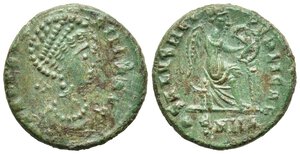
AELIA FLACCILLA (Augusta, 379-386/8). Ae. Heraclea. Obv: AEL FLACCILLA AVG. Diademed and draped bust right.Rev: SALVS REIPVBLICAE / •SMHA. Victory seated right on chair, inscribing Christogram upon shield set upon short column to right.RIC 17.2. Condition: Extremely fine.Weight: 1.62 g. Diameter: 13 mm.
Lot # 1225
-
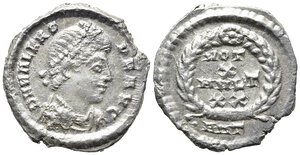
VALENS (364-378). Siliqua. Antioch. Obv: D N VALENS P F AVG. Pearl-diademed, draped and cuirassed bust right.Rev: VOT / X / MVLT / XX / •ANT. Legend in four lines within wreath.RIC 34b.2. Condition: Very fine.Weight: 2.69 g. Diameter: 19 mm.
Lot # 1224
-
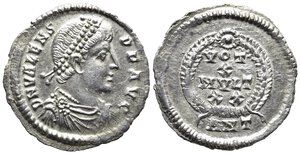
VALENS (364-378). Siliqua. Antioch. Obv: D N VALENS P F AVG. Pearl-diademed, draped and cuirassed bust right.Rev: VOT / X / MVLT / XX / ANT. Legend in four lines within wreath.RIC 34b.1. Condition: Extremely fine.Weight: 1.45 g. Diameter: 19 mm.
Results from 13301 to 13350 of 32990