Roman Imperial Coins
Results from 27201 to 27250 of 32902
Lot # 573
-
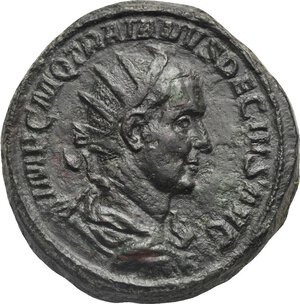
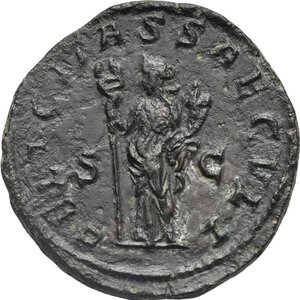
Trajan Decius, 248-251. Double Sestertius (Bronze, 37.22 mm, 42.09 g) Rome, 4th officina, 3rd emission, early-mid 250. IMP C M Q TRAIANVS DECIVS AVG Radiate, draped and cuirassed bust of Decius right. Rev. FELICITAS SAECVLI Felicitas draped standing facing, head turned to left, holding long caduceus in the right hand, drapery and cornucopia on the left arm, S C across fields. RIC IV.3, 115c. Banti 10. Cohen V, 40. Dark tone. Some corrosion, otherwise, About Extremely Fine.
Lot # 572
-
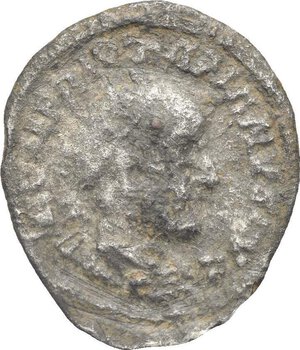
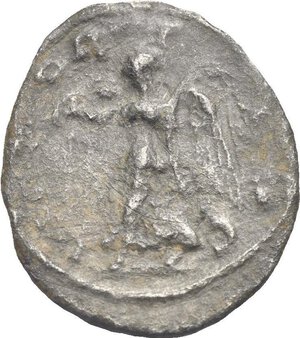
Jotapian, usurper, circa 248-249. Antoninianus (Silver, 24.47 mm, 3.05 g). Nicopolis in Seleucia (?). IM C M F R IOTAPIANVS AVG Radiate, draped and cuirassed bust right. Rev. VICT OR I A AV G Victory advancing left, holding wreath and palm branch. Bland - (OVII/R -). RIC IV.3, 2b var. (obverse legend). Cohen V, 1b var. (obverse legend). Fine. Extemely rare.
Lot # 571
-
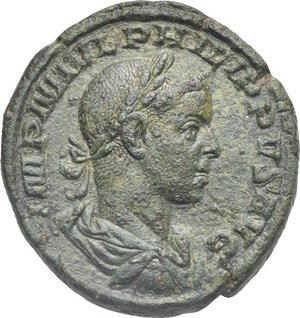
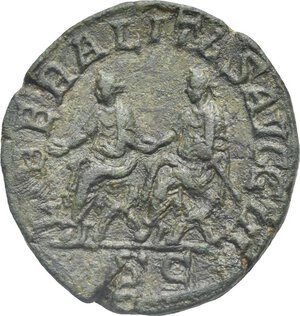
Philip II, 247-249. Sestertius (Orichalcum, 30.00 mm, 17.18). Rome, 3rd officina, 249. IMP M IVL PHILIPPVS AVG Laureate, draped, and cuirassed bust right. Rev. LIBERALITAS AVGG III Philip I and II seated left on sella curulis, each extending hand, Philip I holding short scepter or parazonium; S C in exergue. RIC IV, 267a (Philip I). Cohen V, 162, 18. Banti 1. Green patina, minor roughness. Good Very Fine.
Lot # 570
-
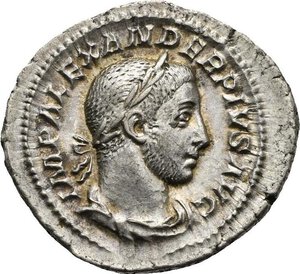
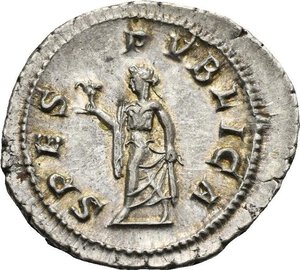
Severus Alexander, 222-235. Denarius (Silver, 22.40 mm, 3.11 g). Rome. 232. IMP ALEXANDER PIVS AVG Laureate, draped, and cuirassed bust right bust right. Rev. SPES PVBLICA Spes advancing left, holding flower and raising hem of skirt. RIC IV/2, 254. Cohen 543. BMCRE 897-8. Nicely Toned. Extremely Fine.
Lot # 569
-
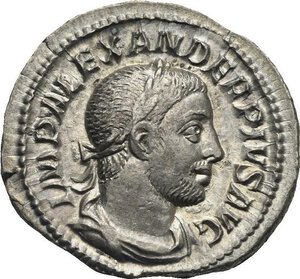
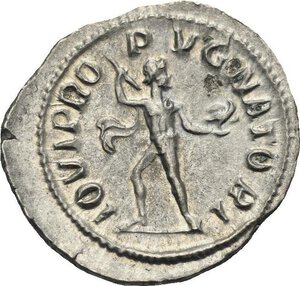
Severus Alexander, 222-235. Denarius (Silver, 20.74 mm, 2.79 g). Rome, circa 231-235. IMP ALEXANDER PIVS AVG Laureate and draped bust of Severus Alexander to right. Rev. IOVI PRO-PVGNATORI Jupiter advancing to left with head turned to right, preparing to hurl thunderbolt held in his right hand, extending his left before him holding and eagle. RIC IV.2, 239. BMCRE VI, 825. Cohen IV, 410, 84. Lightly toned. About Extremely Fine.
Lot # 568
-
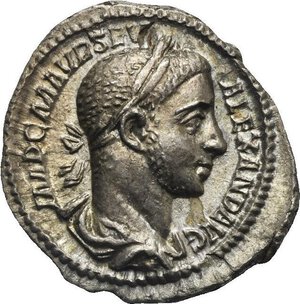
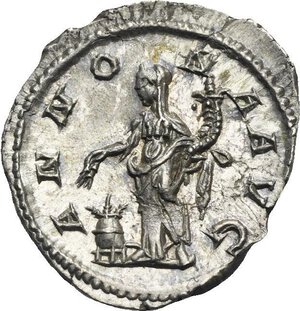
Severus Alexander, 222-235. Denarius (Silver, 19.50 mm, 3.01 g). Rome, circa 222-228. IMP C M AVR SEV ALEXAND AVG Laureate and draped bust of Severus Alexander to right. Rev. ANNONA AVG Annona standing left, holding corn-ears in right hand and cornucopia in her left; at her feet to left, modius. RIC IV.2, 133. BMCRE VI, 341. Cohen IV, 404, 23. Deeply toned. Minor peeling on obverse and an invisible area of flattening on reverse. Anyway About FDC.
Lot # 567
-
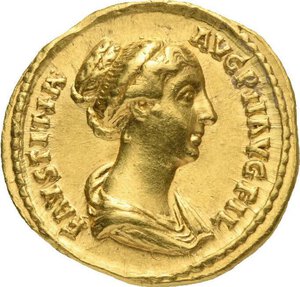
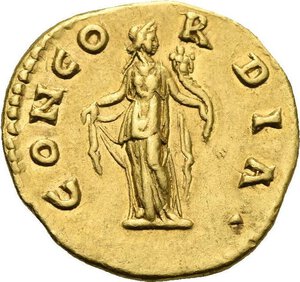
Faustina Minor, wife of Marcus Aurelius. Aureus struck under Antoninus Pius (Gold, 19.45 mm, 7.21 g). Rome, AD 138-161. FAVSTINAE (ligate) - AVG PII AVG FIL Draped bust right. Rev. CONCO - RDIA Concordia standing facing, head to right, holding cornucopiae and raising skirt. RIC III, 500a (Pius). Cohen 43. Calicó 2041a. Mazzini 41 (same obverse die). BMCRE 1084 (Pius). Lovely portrait. Nearly Extremely Fine. Scarce.
Lot # 566
-
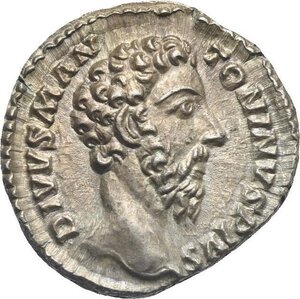
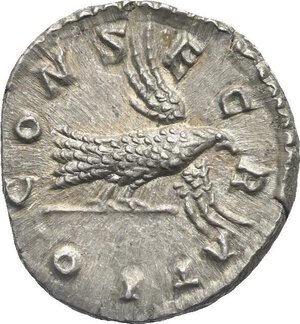
Divus Marcus Aurelius. Denarius struck under Commodus (Silver, 18.29 mm, 3.32 g). Rome, 170-171. DIVVS M AN - TONINVS PIVS Bare head right. Rev. CONS - ECR - ATIO Eagle flying right, holding sceptre in its talons. RIC 268. Cohen 81. Lightly toned. About FDC. Rare.
Lot # 565
-
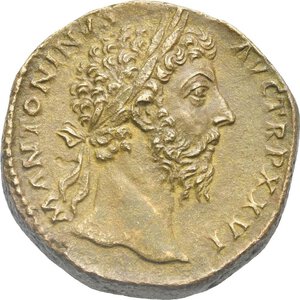
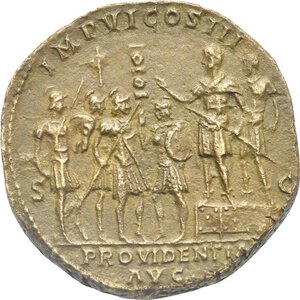
Marcus Aurelius, 161-180. Sestertius (Bronze, 30.77 mm, 26.10 g). Rome, AD 171-172. M ANTONINVS - AVG TR P XXVI Laureate head right. Rev. IMP VI COS III "Adlocutio" scene: Aurelius and Commodus, both in military dress, standing left on platform with one attendant holding standard, Aurelius holds transverse spear and raises hand addressing three soldiers standing right before, one holding a signum and the others shields and spears; S-C on either sides; PROVIDENTIA AVG in exergue. RIC III, 1046; Cohen III, 529. BMCRE IV, 624, 1426. Banti 254. Brownish tone. About Extremely fine. Extremely rare.
Lot # 564
-
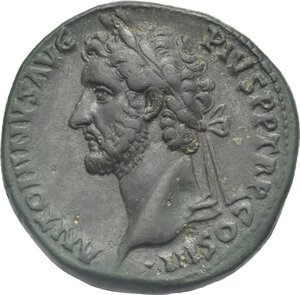
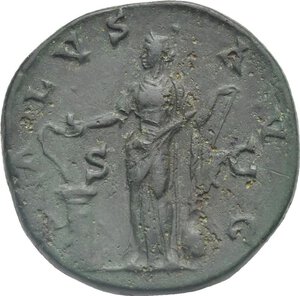
Antoninus Pius, 138-161. Sestertius (Bronze, 32.60 mm, 27.06 g). Rome, AD 140-144. ANTONINVS AVG - PIVS P P TR P COS III Laureate head left. Rev. SALVS - AVG / S - C Salus standing left, holding sceptre and feeding out of patera snake coiled round altar. RIC 635c. Cohen -. BMCRE -. Natural green patina, compact and solid, with minimal porosity on the reverse. Good Very Fine. Extremely rare, with very few known specimens.
Lot # 563
-
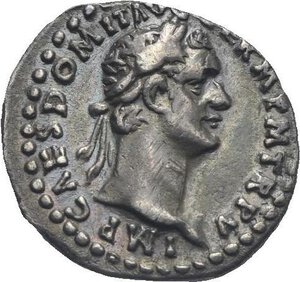
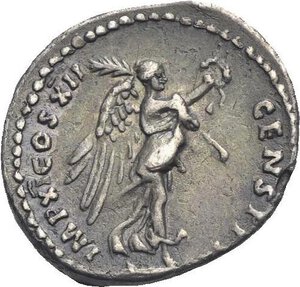
Domitian, 81-96. Quinarius (Silver, 15.21 mm, 1.60 g). Rome, AD 86. IMP CAES DOMIT AVG GERM P M TR P V Laureate head right. Rev. IMP XI COS XII CENS P P P Victory advancing right, holding wreath and palm branch. RIC 433. Cohen 197. Old cabinet tone. Good Very Fine. Scarce.
Lot # 562
-
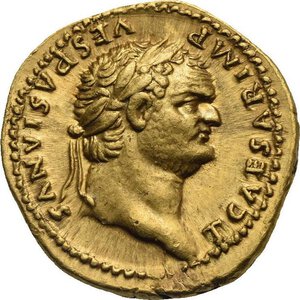
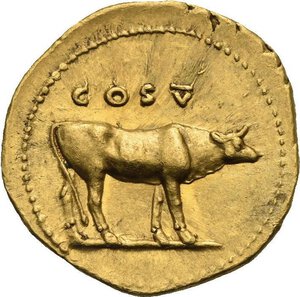
Titus, as Caesar, 69-79. Aureus struck under Vespasian (Gold, 20.00 mm, 7.32 g). Rome, 76. T CAESAR IMP VESPASIANVS Laureate head of Titus right. Rev. COS V Cow standing right. Calicò I, 734. RIC II.1, 868 (Vespasian). Cohen I, 53. BMC 188. A wonderful portrait of fine style struck in high relief. Glistening flan retaining its original shine. Good Extremely Fine.
The reverse type has been compared to the heifer of Myron, the famous Athenian sculptor of the 5th century BC. C. Mattingly in the British Museum catalog states that "The heifer is indisputably the famous statue of Myron which was placed by Augustus in the 'Porticus Apollinis' and which was transferred by Vespasian to the temple of Peace" (BMC p. xxxviii). Carradice and Buttrey in the revised edition of the Roman Imperial Coinage are more cautious, suggesting that the connection with Myron is hypothetical (RIC p. 30). However, the reverse draws inspiration from the previous series of aurei depicting bulls or heifers issued by Augustus.
Lot # 561
-
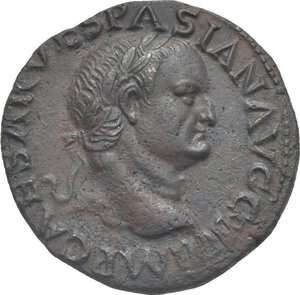
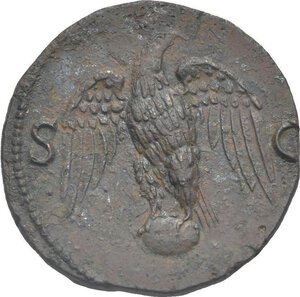
Vespasian, 69-79. As (Bronze, 28.00 mm, 9.65 g) Lugdunum, 71. IMP CAESAR VESPASIAN AVG COS III Laureate head of Vespasian right. Rev. Eagle facing with open wings on globe, head turned to right, S C across fields. RIC II.1², 1170. Cohen I, 480. Reddish-brown patina. Some porosity, otherwise, Extremely Fine.
Lot # 560
-
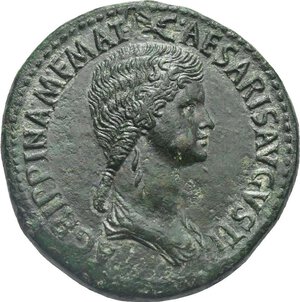
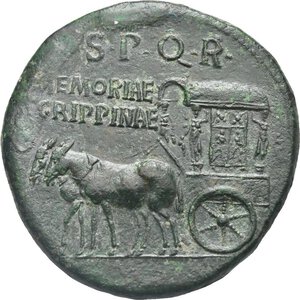
Agrippina Maior, mother of Caligula. Sestertius struck under Caligula (Bronze, 36.20 mm, 27.93 g). Rome, circa AD 37-41. AGRIPPINA M F MAT C CAESARIS AVGVSTI Draped bust right, hair falling in long plait at the back. Rev. S P Q R / MEMORIAE / AGRIPPINAE Carpentum drawn left by two mules; the cover supported by standing figures at each corner, with ornamented side. RIC Gaius 55. BMC Gaius 81. CBN Gaius 129. Cohen 1. Green patina. Gently smoothed fields, and possibly a filled hole on the upper edge. Otherwise About Extremely Fine.
Lot # 559
-
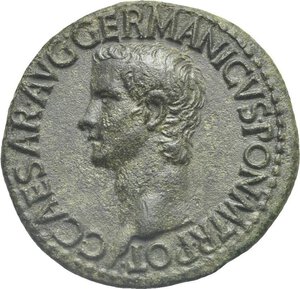
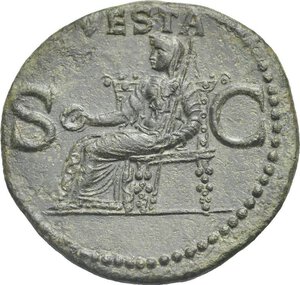
Gaius Caligula, 37-41. As (Bronze, 27.52 mm, 8.69 g). Rome, AD 37-38. C CAESAR AVG GERMANICVS PON M TR POT Bare head left. Rev. VESTA / S - C Vesta draped seated left on throne, holding patera and sceptre. RIC I², 38. Cohen I, 27. BMC 45. Green patina. Extremely Fine.
Lot # 558
-
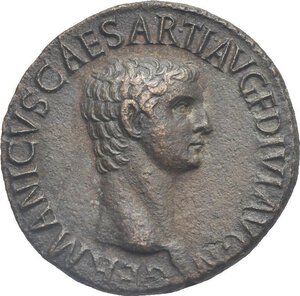
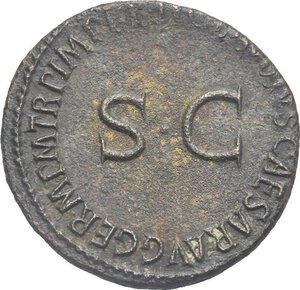
Germanicus, father of Caligula. As struck under Claudius (Bronze, 28.00 mm, 10.00 g). Rome, AD 42-43. GERMANICVS CAESAR TI AVG F DIVI AVG N Bare head right. Rev. TI CLAVDIVS CAESAR AVG GERM P M TR P IMP P P, legend around large S C. RIC 106. Cohen 9. Brownish patina. Attractive and fine portrait. Slightly off center on reverse. About Extremely Fine.
From a Swiss collection, formed before 2005.
Lot # 557
-
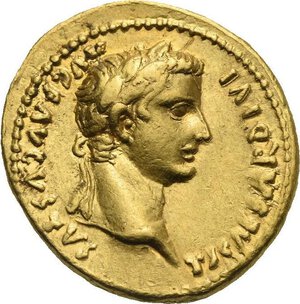
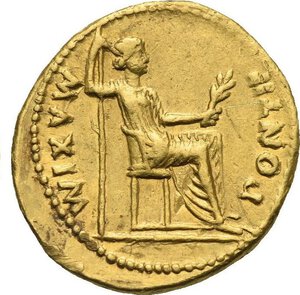
Tiberius, 14-37. Aureus (Gold, 19.51 mm, 7.79 g). Lugdunum, circa AD 14-17. TI CAESAR DIVI - AVG F AVGVSTVS Laureate head right. Rev. PONTIF - MAXIM Livia, as Pax, seated right, holding sceptre and olive branch. Calicó 305d. RIC I, 25. Cohen I, 191, 15. Fine youthful portrait of the Emperor. Minor surface marks. Otherwise About Extremely Fine.
Lot # 556
-
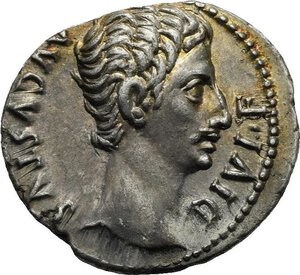
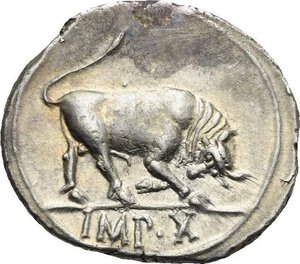
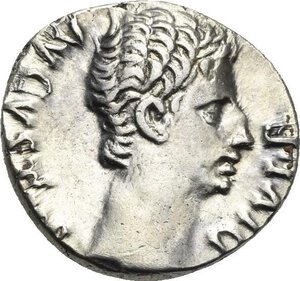
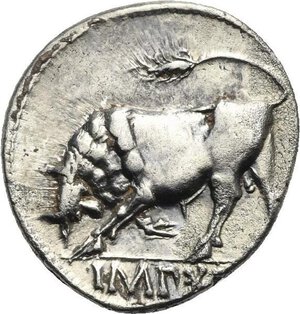
Augustus, 27 BC-AD 14. Denarius (Silver, 20.08 mm, 3.60 g). Lugdunum, 15-13 BC. AVGVSTVS DIVI F Bare head right. Rev. IMP X Bull butting right. RIC 167a. Cohen 137. Attractive iridescent tone. Good Extremely Fine.
Ex Dr. Busso Peus Nachfolger 429, 3 November 2021, lot 285.
Lot # 555
-
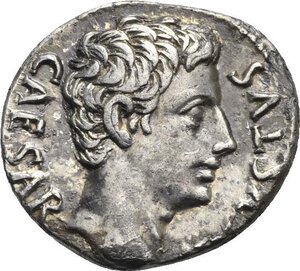
Augustus, 27 BC-AD 14. Denarius (Silver, 17.80 mm, 3.55 g). Lugdunum, 11. AVGVSTVS DIVI F Bare head right. Rev. IMP XII Bull butting left. RIC 178a. Giard, Lyon 31. BMCRE 476. Cohen 158. Lustrous, with some deposits. About Extremely Fine.
Lot # 554
-
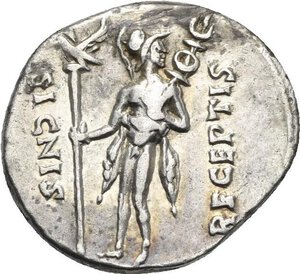
Augustus, 27 BC-14 AD. Denarius (Silver, 18.70 mm, 3.56 g). Colonia Patricia, circa 19-18 BC. CAESAR AVGVSTVS Bare head right. Rev. SIGNIS RECEPTIS Mars helmeted and cloaked, standing left, head right, holding aquila and standard over left shoulder. Cohen 259. RIC 82a. BMCRE 414. BNC 1118. Deposits. Good Very Fine - About Extremely Fine.
Lot # 553
-
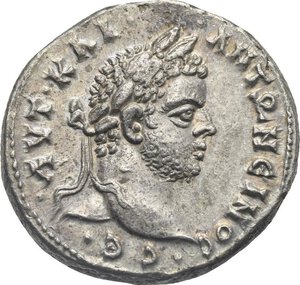
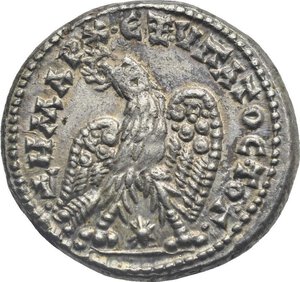
Seleucis and Piera. Laodicea ad Mare. Caracalla, 198-217. Tetradrachm (Billon, 27.48 mm, 14.83 g). 209-211. •AYT•KAI•ANTΩNЄINOC•CЄ• Laureate and draped bust of Caracalla to right. Rev. ΔHMAPX•ЄΞ•YΠATOC•TO•Γ• Eagle with spread wings standing right, head to left and holding wreath in beak; between the eagle's legs, star. Prieur 1165. Bellinger 63. McAlee, Group IV, 32. Bold strike, perfectly centered, attractive toning. Good Very Fine.
Lot # 552
-
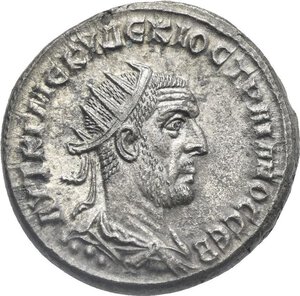
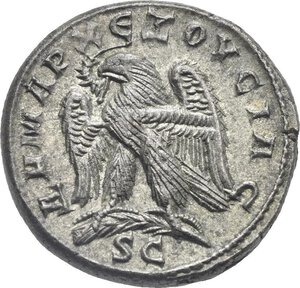
Seleucis and Pieria. Antioch. Trajan Decius, 248-251. Tetradrachm (Billon, 26.14 mm, 12.57 g), circa AD 248-251. AYT K Γ ΜE ΚΥ ΔEΚΙΟC TPAIANOC CЄB Radiate, draped and cuirassed bust of Decius right, four pellets below bust. Rev. ΔΗΜΑΡΧ EΞΟΥCIAC Eagle standing left with open wings on palm branch, holding wreath in beak, SC in exergue. RPC IX, 1654. McAlee 1120d. Prieur 542. Toned. Full legend. Extremely Fine.
Lot # 551
-
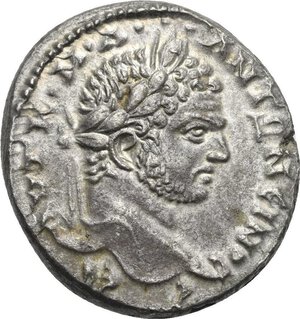
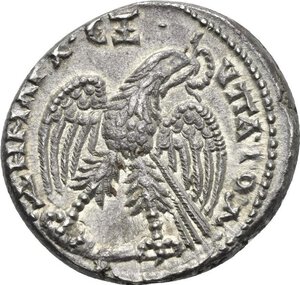
Seleucis and Pieria. Antioch. Caracalla, 198-217. Tetradrachm (Billon, 27 mm, 14.25 g). AD 214-215. ΑΥΤ Κ Μ Α ΑΝΤΩΝEΙΝΟC - CEΒ Laureate head of Caracalla right. Rev. ΔΗΜΑΡΧ EΞ - ΥΠΑ ΤΟ Δ Eagle with spread wings standing facing on leg and thigh of a sacrificial animal, head to right and holding wreath in beak. Mc Alee 677. Prieur 217. Lightly toned. Extremely Fine.
Ex V.L. Nummus 15, 25 October 2020, lot 158.
Lot # 550
-
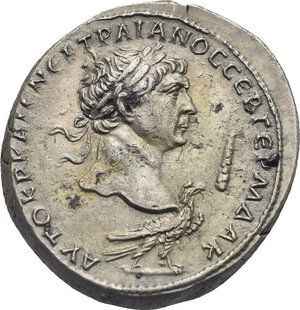
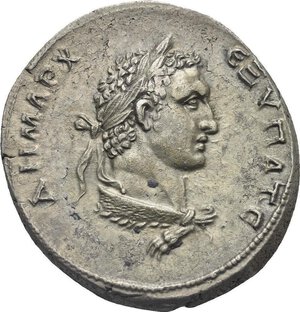
Seleucis and Pieria. Antioch. Trajan, 98-117. Tetradrachm (Silver, 27.25 mm, 12.52 g), AD 103-111. ΑΥΤΟΚΡ ΚΑΙϹ ΝEΡ ΤΡΑΙΑΝΟϹ ϹEΒ ΓEΡΜ ΔΑΚ Laureate bust of Trajan right; below, eagle standing right with closed wings; on the right, club. Rev. ΔΗΜΑΡΧ EΞ ΥΠΑΤ E Laureate head of Melqart right, wearing lion skin tied around neck. RPC III, 3528. Prieur 1495 (Tyre). Wruck 150. Lightly toned. Two portraits of enchanting beauty, the work of a very talented engraver. Extremely Fine.
Ex Tauler-Fau 118, 22 November 2022, lot 118, purchased from Tkalec in 2008.
Lot # 549
-
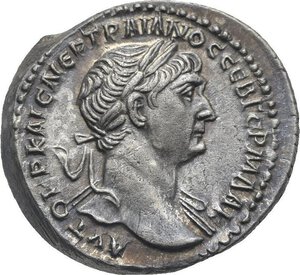
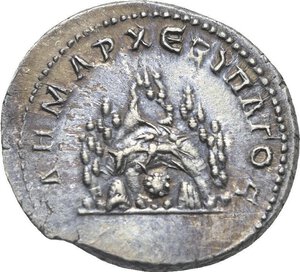
Cappadocia. Caesaraea-Eusebia. Trajan, 98-117. Didrachm (Silver, 24.37 mm, 7.38 g ), AD 112-114. ΑΥΤΟΚΡ ΚΑΙС ΝEΡ ΤΡΑΙΑΝΟС СEΒ ΓEΡΜ ΔΑΚ Laureate, head of Trajan right, drapery on left shoulder. Rev. ΔHMAPX EΞ YΠATO ς Mount Argaios, with grotto at bottom containing cult stone, flanked by two pyramidal objects; at top, a second grotto. Trees on slope of mountain. RPC III, 3018. Sydenham Cappadocia 210a. Henseler 6.61. Well toned and perfectly centered. Extremely Fine.
Lot # 548
-
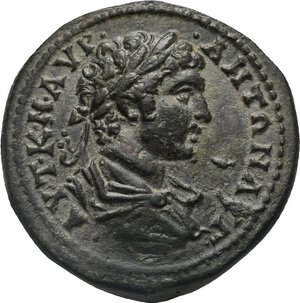
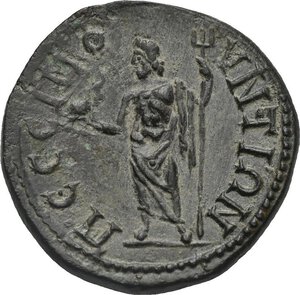
Galatia. Pessinus. Elagabalus, 218-222. Tetrassarion (Bronze, 30.56 mm, 16.00 g). Circa AD 218-222. AYT K M AYP - ANTΩΝ ΑΥΓ Laureate, draped and cuirassed bust of Elagabalus right. Rev. ΠECCINO - YNTIΩΝ Poseidon standing facing, head left, holding prow (?) and trident. Dark green and sandy patina. About Extremely Fine. Apparently unpublished in the standard references.
Lot # 547
-
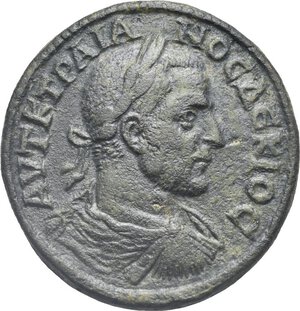
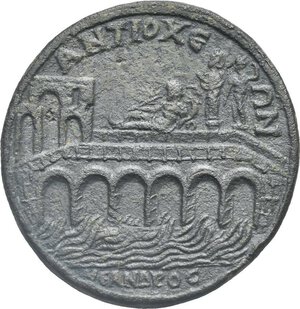
Caria. Antioch ad Maeandrum. Traianus Decius, 248-251. Bronze (34.16 mm, 21.51 g). Circa AD 248-251. AYT K TPAIA - NOC ΔЄΚΙΟC Laureate, draped and cuirassed bust of Decius right. Rev. ANTIOXЄ - ΩΝ above, ΜЄΑΝΔΡΟC below. Bridge with six arches over Maeander river with tumultuous waters, bridge gateway above to left, the river god Maeandros reclining right in the center, holding cornucopia on the left arm and reed in the right hand, beside him to right, two standing figures to left. RPC IX, 766. BMC 52. Greenish-gray patina. Good Very Fine. Extremely rare: the fifth known specimen.
Lot # 546
-
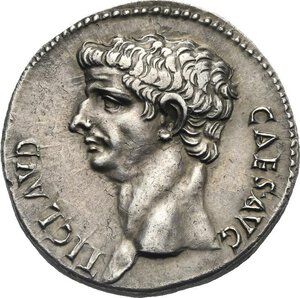
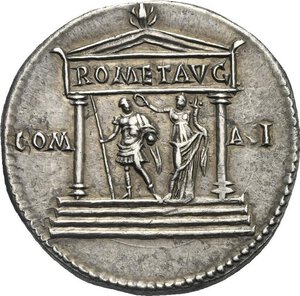
Lydia. Ephesus. Claudius, 41-54. Cistophorus (Silver 25.70 mm, 11.28 g). Circa AD 41-42. TI CLAVD - CAES AVG Bare head of Claudius left. Rev. Distyle temple inscribed ROM ET AVG on entablature and containing figure of Augustus, standing facing on left, holding spear, being crowned by female figure on right, holding cornucopiae; COM - ASI across fields. RIC 120 (Pergamum). RPC I, 2221. Nicely toned. Well centered. Good Extremely Fine.
Ex Roma Numismatics XXVII, 22 March 2023, lot 473.
More than sixty years after the stunning and diverse issues of Augustus, the Romans once again minted cistophori under Claudius, with two short-lived series likely intended for commemorative purposes rather than general circulation. This particular coin, from the first series, is thought to depict the temple of Roma and Augustus in Pergamum, although there is evidence linking this type and the temple of Diana at Ephesus. Such connections suggest that despite the differing reverse designs, all coins were likely struck at a single mint, probably Ephesus, where the second Claudian issue also seems to have been produced.
Lot # 545
-
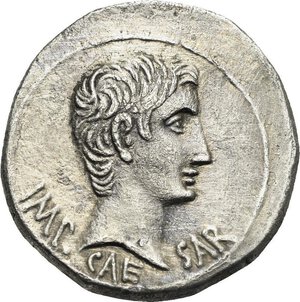
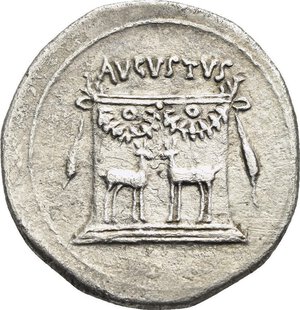
Lydia. Ephesus. Augustus, 27 BC-AD 14. Cistophorus (Silver, 25.61 mm, 11.73 g). Circa 25-20 BC. IMP. CAE - SAR Bare head of Augustus to right. Rev. AVGVSTVS Garlanded and filleted altar; on the front, two stags facing each other. RIC I, 482. Cohen I, 67, 33. BMCRE 694. RPC I, 2215. Sutherland Group VI. Minor porosity, otherwise, Good Very Fine.
Lot # 544
-
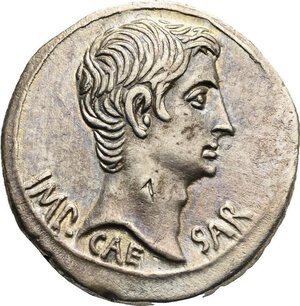
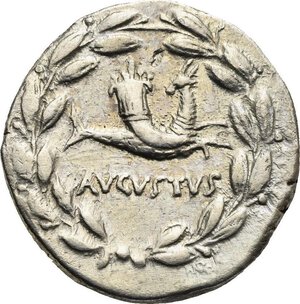
Lydia. Ephesus. Augustus, 27 BC-AD 14. Cistophorus (Silver, 25.60 mm, 11.76 g). Circa 25-20 BC. IMP CAE - SAR Bare head of Augustus right. Rev. AVGVSTVS Capricorn right, head reverted, carrying cornucopia on its back; all within laurel wreath. RIC 480. RPC I, 2213. Banker's mark on obverse. Good Very Fine.
Ex Naville Numismatics 70, 12 December 2021, lot 398.
Lot # 543
-
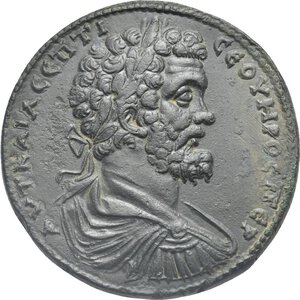
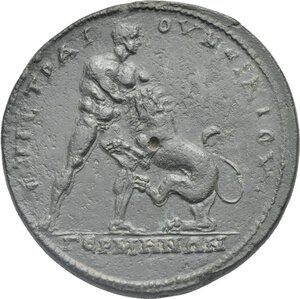
Mysia. Germe. Septimius Severus, 193-211. Medallion (Bronze, 43.72 mm, 41.14 g). Circa AD 193-211. AVT KAI Λ CEΠTI - CEOYHPOC ΠEP Laureate, draped and cuirassed bust of Septimius Severus right. Rev. EΠI CTP (...) - (...)IOY Hercules, nude, standing right, wrestling with a lion; ΓEPMHNΩN in exergue. RPC - . SNG Copenhagen -. SNG von Aulock . Mionnet II -. Lovely dark patina. Sublime style, with stunning details. Likely unique, essentially unpublished in the standard references.
Lot # 542
-
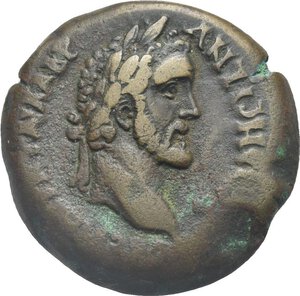
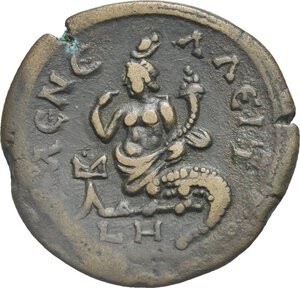
Egypt. Alexandria. Antoninus Pius, 138-161. Drachm (Bronze, 33.2 mm, 21.63 g). Menelaites Nome, dated RY 8 (= 144/5). Laureate head right. Rev. MЄNЄ ΛAЄITHC Harpokrates of Canopus as a youth, nude from the waist up with the lower body of a crocodile, holding cornucopia with his left arm, right hand raised to his mouth, wearing skhent and standing left; lit altar to left; L H (date) in exergue. Emmett 1819 (1). Geissen-Weber p. 278, Plate XIX, 185. RPC IV.4, 787.81 (this coin cited). Extremely fine.
Ex Bonhams IV, 04.12.1980, lot 440.
Drachm issued for the nome Menelaite (Lower Egypt) by Antoninus Pius in his eighth year of reign (144-145 AD), the last of the series of the nomes Alexandrian coinage. On the obverse is a refined laureate bust of the emperor. On the reverse is depicted in fine style Harpokrates right half-naked, with half-human and half-crocodile body. He has the Upper and Lower Egypt double crown on head, the finger of the left hand in the mouth, while holding a cornucopia with his left arm. It is an image of the local Horus in the hybrid form of the godlike crocodile Sobek. Specimen mentioned in RPC IV. 4.
Lot # 541
-
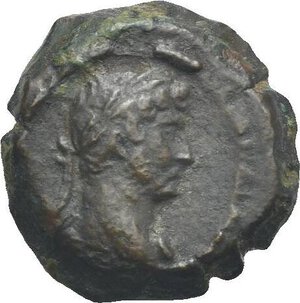
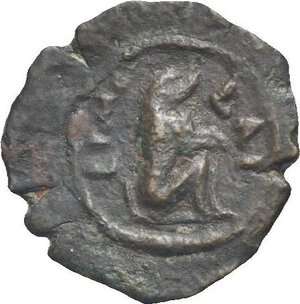
Egypt. Alexandria. Hadrian, 117-138. Dichalkon (Bronze, 13.4 mm, 1.77 g). Hermopolites Nome, dated RY 11 (= 126/7). Laureate bust right, slight drapery. Rev. EPMO L IA Cynocephalus seated right, without wearing moon disk. Geissen 3401. Dattari 6270 var. BMC 85. Emmett 1294. Geissen-Weber p. 154, Plate VI, 59. RPC III, 6288. Extremely fine.
Ex Harmer Rooke Galleries, The Hoffer and the Brandenburg Sale, 12-13 december 1986, lot 1037. Ex Kerry K. Wetterstrom Collection, CNA Ltd. XIII, 04.12.1990, lot 254.
Here is another dichalkon of super preservation issued in the nome Hermopolite (Upper Egypt) in the year 11 of Hadrian (126-127 AD). Excellent laureate bust of the emperor on the obverse, while on the reverse we notice the dog-headed sacred to Hermes -Thot sitting right on the exergue, in a version lacking in the moon disc on head.
Lot # 540
-
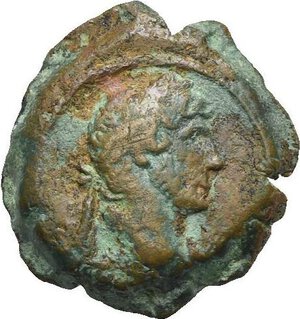
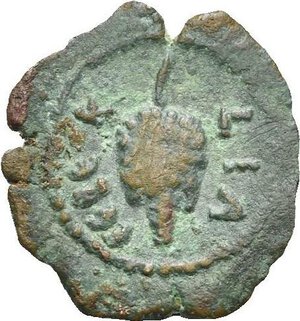
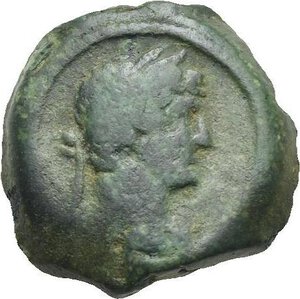
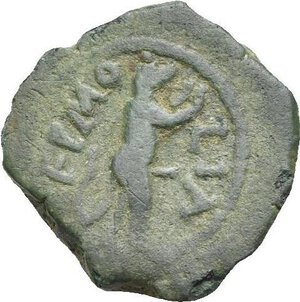
Egypt. Alexandria. Hadrian, 117-138. Dichalkon (Bronze, 12.80 mm, 1.28 g) Dated RY 11 (= 126-127) Laureate bust of Hadrian right, slightly draped on left shoulder. Rev. CEBE K in semicircle to right (Sebennyte Inferior, name of Lower Egypt). Bunch of grapes, L IA (date) in semicircle to left. RPC III, 6486. Dattari-Savio - . BMC 61. Dem. 3571. Emmett 1301. Geissen-Weber p. 314, Plate XXV, 236. Very Fine.
Ex Kerry K. Wetterstrom Collection, CNA Ltd. XIII, 12.04.1990, lot 275.
Pleasant specimen of dichalkon belonging to nome Sebennyte Lower (Lower Egypt) minted in the eleventh year of Hadrian’s reign (126-127 AD). Small portrait easily recognizable of the emperor on the obverse and a bunch of grapes on the reverse, reminding the wide vineyard cultivations in the region of the nome, already from the Pharaonic era to the Roman period, so much so that Pliny the Elder praises the wine produced in Sehennytos as the synthesis of three noble vines.
Lot # 539
-
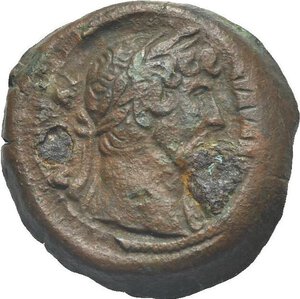
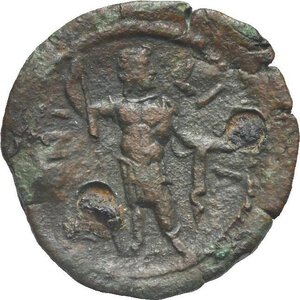
Egypt. Alexandria. Hadrian, 117-138. Dichalkon (Bronze, 12.0 mm, 2.11 g). Hermopolites Nome, dated RY 11 (= 126/7). Laureate bust right, slight drapery. Rev. EPMO L IA Cynocephalus standing right, wearing sun disk. Geissen-Weber p. 154, Plate VI, 60. Emmett 1294. RPC III, 6287. Geissen 3400. Very fine.
Ex Italo Vecchi 15.06.1994.
It is nome Hermopolite’s turn with a pretty dichalkon always of the year 11 of Hadrian (126-127 AD) showing a green-emerald original patina and a nice miniaturized bust of Hadrian on the obverse. The local Pharaonic deity of this nome was Thot, turned in the Greek pantheon in Hermes and put in the reverse of our dichalkon in the shape of a dog-headed ithyphallic canid, with the lunar-disk on head and front paw in sign of worship.
Lot # 538
-
Egypt. Alexandria. Hadrian, 117-138. Obol (Bronze, 18.6 mm, 5.11 g). Leontopolite Nome, dated RY 11 ( = 126/7). Α[ΥΤ] ΚΑΙ [ΤΡΑΙ ΑΔΡΙΑ CЄΒ] Laureate head of Hadrian to right, with slight drapery on his left shoulder. Rev. [ΛЄΟ]ΝΤ L ΙΑ Ares-Mahes standing front, head to right, holding spear in his right hand and lion in his left. Emmett 1240. Dattari 6282. Geissen-Weber p. 304, plate XXIII, 218. RPC III, 6470.
Ex Michel Dürr Roland Michel, 16 November 1998, lot 758.
Let us move to the nome Leontopolite of the Lower Egypt with this obol of the year 11 of Hadrian (126-127 AD) showing on the reverse the personification of the greatest local divinity Mahes – Miysis meaning “lion” or “Osiris the lion”, son of the feline goddess Bastet or Sachmet. Here is portrayed as Ares – Mahes, bellicose, standing right with cuirass, jambes and spear but without helm. Such an iconography is very similar to that on the coins with Horus – Mahes, combative like Ares. The coin has two coeval holes restored.
Lot # 537
-
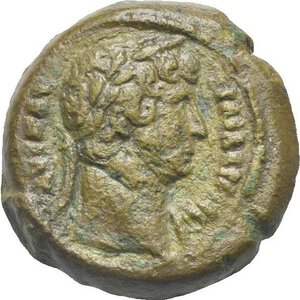
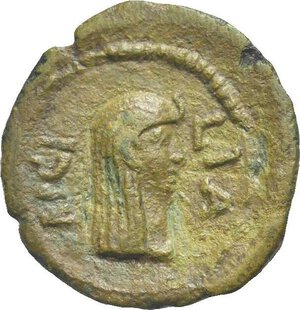
Egypt. Alexandria. Hadrian, 117-138. Obol (Bronze, 18.50 mm, 5.05 g) Dated RY 11 (= 126-127) ΑΥΤ ΚΑΙ ΤΡΑΙ ΑΔΡΙΑ ϹΕΒ Laureate bust of Hadrian right, slightly draped on the left shoulder. Rev. APCI vertical to left (Arsinoite, name of Upper Egypt). Head of Premarres (Amenemhet III) right, wearing nemes with uraeus, L IA (date) vertical to right. RPC III, 6296. Dattari 6210. Geissen 3381/82. BMC 72/73. Emmett 122. Geissen-Weber p.194-5, n 2b, plate XI, 104. Extremely fine.
Ex Numismatica Aretusa, lugano, (Franco Chiesa), September 1992.
Obol of excellent conservation struck in the year 11 of Hadrian (126-127 AD) for the nome Arsinoite of the Upper Egypt. Fine laureate head of the emperor on the obverse. On the reverse at right is the worshipful head of Pharaoh Amenemhet III (1846-1801 BC) of the XII Egyptian dynasty with Nemet on head and Ureus snake peeping out. This Pharaonic subject, a real exception in the Alexandrian coinage, refers to the draining works of the vast Fajum oasis, belonging to the land of nome Arsinoite, carried out in the time of the 12th dynasty and in particular during the reign of Pharaoh Amenemhet III, whose memory is still honoured on the coin after almost two millennia.
Lot # 536
-
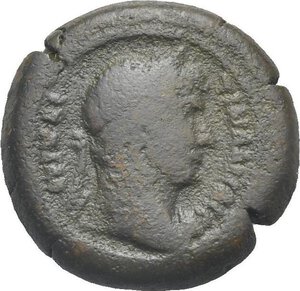
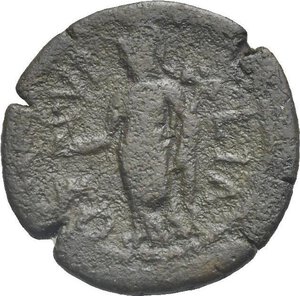
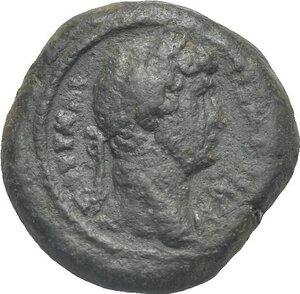
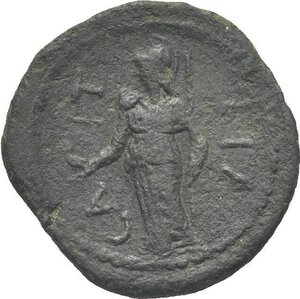
Egypt. Alexandria. Hadrian, 117-138. Obol (Bronze, 19.1 mm, 5.13 g). Oxyrhynchite Nome, dated RY 11 (= 126/7). ΑΥΤ ΚΑΙ ΤΡΑΙ ΑΔΡΙΑ CЄΒ Laureate head of Hadrian to right, with slight drapery on his left shoulder. Rev. ΟΞ-ΥΡ L ΙΑ Athena standing left, wearing helmet, holding double axe in left hand and Nike with crown and palm in right hand. Geissen 3413. Dattari 6337. Emmett 1218. RPC III, 6357. Geissen-Weber p. 170, plate VIII, 74, A-B. Very Fine.
Ex Jean-Pierre Righetti Collection 2003.
Another obol of the year 11 of Hadrian (126-127) coming from the nome Ossirinchite (Upper Egypt) with on the reverse the deity Thoeris – Athena standing at left with her usual attributes (chiton, peplum, helm) plus the addition of the double axe in the left hand and in the right one, a victorious Nike with wreath and palm branch. Thoeris, female Egyptian deity looking like a hippopotamus, protectress of motherhood, was subject of cult at Oxyrhyncus.
Lot # 535
-
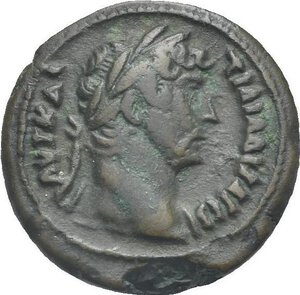
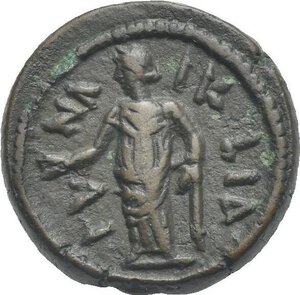
Egypt. Alexandria. Hadrian, 117-138. Obol (Bronze, 18.7 mm, 4.72 g). Saite Nome, dated RY 11 (= 126/7). ΑΥΤ ΚΑΙ ΤΡΑΙ ΑΔΡΙΑ CЄΒ Laureate head of Hadrian to right, with slight drapery on his left shoulder. Rev. CA-IT L ΙΑ Athena-Neith standing front, head to left, holding owl in her right hand and spear in her left. Geissen-Weber p. 246, plate XV, 144. Dattari 6370 var. RPC III, 6417. Emmett 1219. Very fine.
Ex Jean-Pierre Righetti 2003.
To the nome Saite, always of the Lower Egypt, belongs also this pretty obol of the year 11 (126-127 AD) of Hadrian with on the obverse a stylish and realistic portrait of the sovereign, while on the reverse Athena – Neith shows up, dressed in chiton and peplum, standing at left with Corinthian helm and aegis and holding in her right hand the owl, symbol of Athens, and a spear in her left. The coin is wholly covered by a brilliant green-emerald original patina. The Greek Athena is related to Egyptian Isis and Neith; the latter had at Sais her own temple where the cult of Isis was also active with its own priestly college.
Lot # 534
-
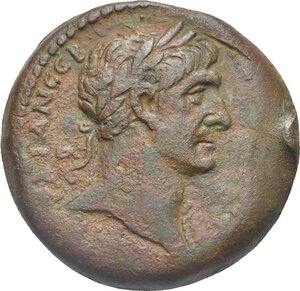
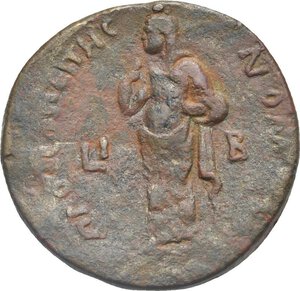
Egypt. Alexandria. Hadrian, 117-138. Obol (Bronze, 17.3 mm, 5.37 g). Gynaikopolites Nome, dated RY 11 (= 126/7). ΑΥΤ ΚΑΙ ΤΡΑΙ ΑΔΡΙΑ CЄΒ Laureate head of Hadrian to right, with slight drapery on his left shoulder. Rev. ΓV-NAIK L IA Isis standing left, holding a ram on outstretched right hand. Dattari 6244, plate XXV, (this coin). Emmett 1245. Geissen - Weber p. 226, plate XIII, 123. RPC III 6394.8 (this coin cited). Very fine.
Ex Giovanni Dattari Collection 6244. Ex Giuseppe Nascia, Milano. Ex Athos Moretti collection, Bellinzona, May 1987.
Here is a small but precious obol of the nome Gynaicopolite (Lower Egypt) struck in the year 11 of the reign of Hadrian (126-127 AD) with on the obverse the laureate head of the emperor engraved in beautiful style, while on the reverse the pertinent deity Hathor–Aphrodite standing at left, dressed in chiton and peplum, holding in her right hand the ram horns of Ammon. Everything perfectly centred and plunged in a splendid brown original patina with emerald hues. Specimen coming from the famous collection of Giovanni Dattari.
Lot # 533
-
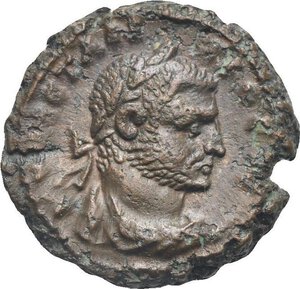
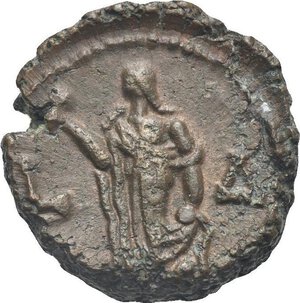
Egypt. Alexandria. Traianus, 98-117. Drachm (Bronze, 33.40 mm, 25.05 g) Dated RY 12 (= 108-109). [AYT T]PAIAN CEB [ΓΕΡΜ ΔΑΚΙΚ] Laureate bust of Traianus right, wearing aegis on the left shoulder. Rev. ΠΡΟCωΠΕΙΤΗC NOM[OC] Harpocrates, bare chest, standing facing, bust turned to left, holding the right hand to mouth, wearing crown of disk and horns, drapery on the left arm, LI B (date) across fields. Emmett 748. Geissen - Weber pp. 233-234, plate XIII, 125 b (this coin). Dattari -. BMC -. RPC III 6397.4 (this coin cited) and illustrated). Good very fine.
Ex Kerry K. Wetterstrom Collection. Ex CNA XIII, 12.04.1990, lot 227.
The first coin of the series of nomes is a very rare drachm of the year 12 of Trajan (108-109 AD) issued by nomo Prosopite from Lower Egypt. The obverse presents a laureate bust of the sovereign of excellent style and conservation, very realistic, while on the reverse is the Hellenistic-Egyptian personification of Hermanubis to left, dressed in chiton and himation, Nemes and Hem-hem crown on head, while putting a finger of the right hand in his mouth. In fact, it is the Greek rendering of the local Pharaonic deity Harsomtus, corresponding to the combination of Horus, son of Osiris, with Somtus, the “Unifier of the Upper and Lower Egypt”. This drachm is so important and so well preserved as to be cited and illustrated in RPC III 6797, referring of only four specimens extant, and also to have been described, chosen and illustrated by Geissen – Weber pp. 233-234, Plate XIII, n. 125 b.
Lot # 532
-
Egypt. Alexandria. Constantius I as Caesar, 293-305. Tetradrachm (Billon, 20.30 mm, 8.52 g) dated RY 4 (= 295-296) ΚωΝϹΤΑΝ ΤΙΟϹ Κ Laureate, draped and cuirassed bust of Constantius right. Rev. Elpis advancing left, raising her skirt with the left hand in apotropaic gesture and holding flower in the right hand, L Δ (date) across fields. Geissen, 3354. Dattari-Savio pl. 289, 10758 (this coin). Milne 5208. Emmett 4185. Good Very Fine.
Ex Giovanni Dattari Collection 10758. Ex Naville Numismatics Ltd. 47, 03.03.2019, lot 342.
This tetradrachm, once again dedicated to Constantius I Caesar, is of the fourth year (295-296 AD) and shows on the obverse one of his worthy physiognomic portraits of high relief, of mint state, in practice proof as well as the reverse, where the usual peacemaker Elpis stands out. Splendid specimen, as the previous one, coming from the titled Dattari collection.
Lot # 531
-
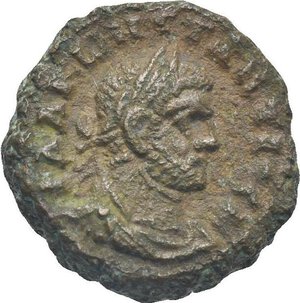
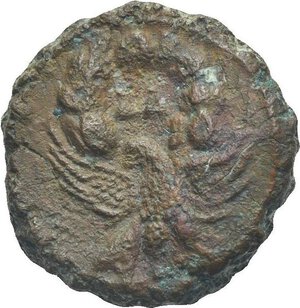
Egypt. Alexandria. Constantius I as Caesar, 293-305. Tetradrachm (Billon, 18.60 mm, 7.30 g) dated RY 4 (= 295-296) ΦΛΑ ΚωΝϹΤΑΝΤΙΟϹ Κ Laureate, draped and cuirassed bust of Constantius right, wearing short beard. Rev. Eagle standing facing with open wings, head turned to left, holding wreath behind and above wings, with LΔ (date) inscribed. Geissen - . Dattari-Savio pl. 290, 10779 (this coin). Emmett 4179. Good Very Fine. Very rare.
Ex Giovanni Dattari Collection 10779. Ex Naville Numismatics Ltd. 43, 23.09.2018, lot 338.
A gorgeous and very rare tetradrachm of Constantius I Caesar minted during the fourth year of his institutional position (295-296 AD) corresponding to the last of the autonomous Alexandrian monetary production. Coin of impressive origin from the Giovanni Dattari collection with images engraved in high relief and the imperial portrait of realistic style.
Lot # 530
-
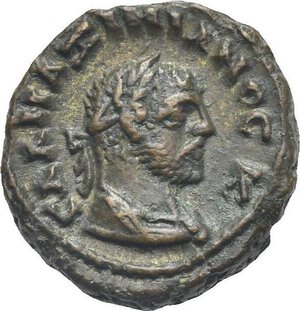
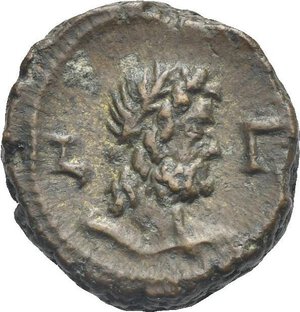
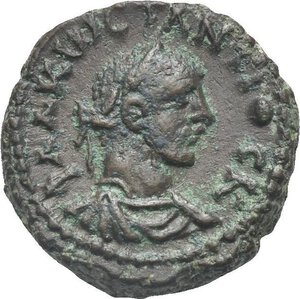
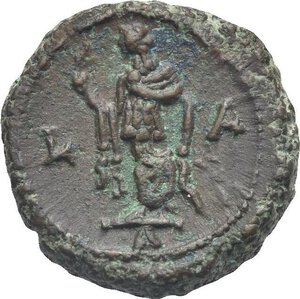
Egypt. Alexandria. Galerius as Caesar, 293-305. Tetradrachm (Billon, 17.70 mm, 7.74 g) dated RY 3 (= 294-295) ΓΑΛ ΜΑΞΙΜΙΑΝΟϹ Κ Laureate and cuirassed bust of Galerius right. Rev. Bust of Zeus right, wearing taenia and drapery on left shoulder, L Γ (date) across fields. Geissen - . Milne - . BMC - . Dattari - . Emmett 4240. Apparently unpublished. Good Very Fine.
Ex CNA IV 21 September 1988, lot 355.
In the first tetrarchy (293-305 AD) Galerius, a brave general, was the Caesar of Diocletian, whose daughter Galeria Valeria he had married in second marriage. This exceptional tetradrachm of the third year (294-295 AD) is still to be considered the only known specimen and in excellent conditions of conservation, minting and well-centred with original patina. Lively the portrait of the leader Caesar on the obverse, and austere the laureate bust of Roman Zeus turned right on the reverse.
Lot # 529
-
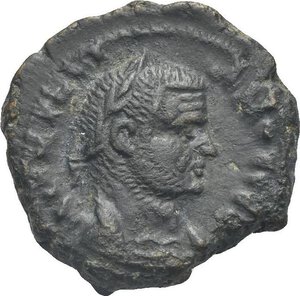
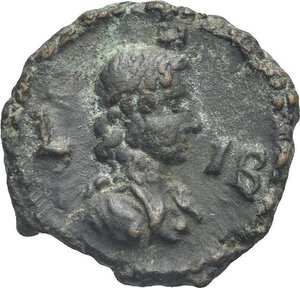
Egypt. Alexandria. Constantius I, as Caesar, 293-305. Tetradrachm (Billon, 19.1 mm, 7.39 g). Dated RY 1 (292/293). ΦΛΑ ΚⲰCΤΑΝΤΙΟC K Laureate head right. Rev. Elpis standing left, holding lotus blossom and raising a fold of her skirt; L A (date) across field, palm frond to left. Geissen -. Dattari-Savio 6049. Emmett 4185. Dark brown patina, minor roughness. Very Fine.
Ex numismatica Aretusa SA, Lugano (Franco Chiesa), January 1989.
Constantius I Chlorus, general of Illyrian origin, in the tetrarchy was the Caesar vice-emperor of the Augustus Maximian and father of Costantine I, and responsible for the Gauls, Spain and Britain as well. On the reverse of this rare tetradrachm, the peaceful Elpis is offering her support to the new Caesar in his installation’s year. At the exergue, the mark with the letter A, suggests us the first mint’s workshop.
Lot # 528
-
Egypt. Alexandria. Diocletian, 284-305. Tetradrachm (Billon, 20.60 mm, 7.06 g) dated RY 12 (= 295-296) ΔΙΟΚΛΗΤΙ ΑΝΟϹ ϹЄΒ Laureate, draped and cuirassed bust of Diocletian right, wearing short beard. Rev. Draped bust of Isis right, L IB (date) across fields. Dattari 5710/11. Curtis X-2006. Geissen - . Milne - . Emmett 4145. Very Fine.
Ex CNG XXXI, 9-10 september 1994, lot 1444.
The autonomous monetary production of the mint of Alexandria of Egypt stops during the year 12 of Diocletian (295-296 AD). The emperor’s disputed centralist monetary reform came into full force only 2 years later, in 298 AD, following the repression of Domitian’s revolt. Magnificent physiognomic portrait of Diocletian on the obverse of this rare tetradrachm and a pretty image of Isis on the reverse.
Lot # 527
-
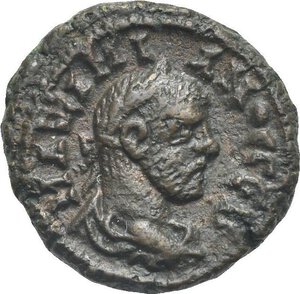
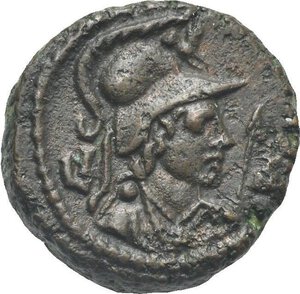
Egypt. Alexandria. Maximianus, first reign, 286-305. Tetradrachm (Billon, 18.90 mm, 8.16 g). Dated RY 11 (= 295/296). MAΞIMIANOC CЄB Laureate, draped, and cuirassed bust right, seen from behind. Rev. Draped and cuirassed bust of Athena right, wearing Corinthian helmet, holding spear forwards; LI A (date) across field. Geissen -. Dattari-Savio 10699. Emmett 4097. Brown patina. Good Very Fine. Extremely rare, the third example known.
Ex Auctiones AG 26 -- Münzen u. Medaillen, 16/19.09.1996, lot 560.
Very rare, centred and perfectly engraved is this tetradrachm of year 11 of Maximian (295-296 AD), showing on the reverse a vibrant and imposing cuirassed bust of victorious Athens wearing Corinthian helm, spear and shield: perhaps a hint at the successes in the Britannic war in progress that year. A coin known in only three specimens.
Lot # 526
-
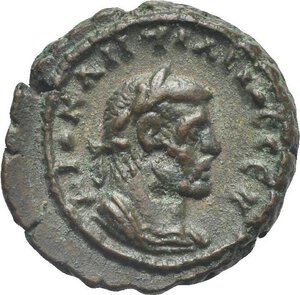
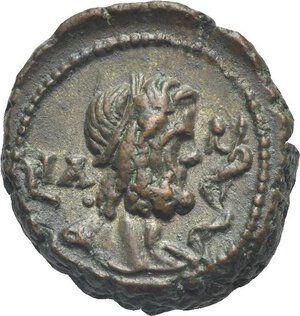
Egypt. Alexandria. Diocletian, 284-305. Tetradrachm (Billon, 19.90 mm, 8.60 g) dated RY 11 (= 294-295) ΔΙΟΚΛΗΤΙΑΝΟϹ ϹЄΒ Laureate and cuirassed bust of Diocletian right. Rev. Laureate bust of Asklepios right slightly draped, serpent-entwined staff before to right, LIA (date) to left. BMC - . BMC Suppl. - . Curtis 1957. Dattari 5625. Dattari-Savio pl. 282, 5625 and 10629. Geissen - . Milne - . Emmett 4027. Very Fine. Extremely rare.
Ex Künker 89, 08/09.03.2004, lot 1862.
Here we are again with a tetradrachm of Diocletian of absolute rarity, excellent preservation and precise minting. The limpid bust of the sovereign on the obverse makes a pendant on the reverse to the peculiar laureate bust of Asclepius with the usual staff and the twined snake round it.
Lot # 525
-
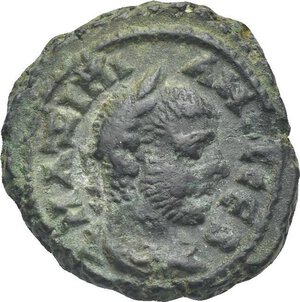
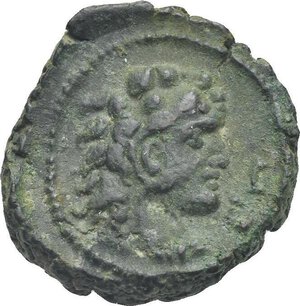
Egypt. Alexandria. Maximianus Herculius, 286-310, first reign, 286-305. Tetradrachm (Billon, 18.86 mm, 8.74 g). Dated RY 10 (= 294-295) MAΞΙΜΙ ΑΝΟC CЄB Laureate, draped and cuirassed bust of Maximianus right. Rev. Bust of young Herakles right, wearing lion skin headdress, L I (date) across fields. Geissen 3337. Dattari 5899 var. Vogt II, 176. Emmett 4129. Very Fine.
Ex Auctiones AG 26 - Münzen und Medaillen, Basel, 16/19.09.1996, lot 558.
This uncommon tetradrachm, too, belongs to the “decennalia” of Maximian (294-295 AD) showing on the reverse an iconic representation, unusual in the Alexandrian context, of the youthful bust of Heracles beardless and clad in the lion skin. The engraving is of appreciated quality considering the period of artistic decay. A wonderful coin and rare in this conservation.
Lot # 524
-
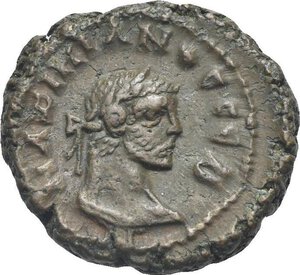
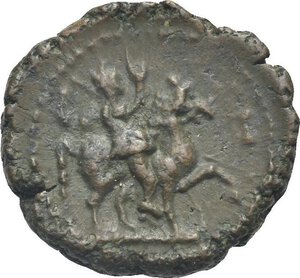
Egypt. Alexandria. Maximianus Herculius, 286-310, first reign, 286-305. Tetradrachm (Billon, 20.90 mm, 6.99 g) dated RY 10 (= 294-295) MAΞΙΜΙΑΝΟC CЄB Laureate and draped bust of Maximianus right. Rev. Maximianus in military dress on horseback to right, holding spear in the left hand and raising the right arm, L I (date) across fields. Dattari-Savio 5826. Emmett 4117. Very Fine.
Ex Karel De Geus 10, 17-18.10.2000, lot 2339.
Another interesting tetradrachm of Maximian depicting on the reverse the emperor on horse in military uniform in the act of a celebration parade for the "decennalia" of his advent to the imperial throne (294-295 AD) alongside Diocletian. A coin of large size with a clear and complete engraving on both sides.
Results from 27201 to 27250 of 32902